The Muslim Districts That Hold West Bengal Up

West Bengal Hindus have a real grievance, and it should be stated plainly. East Bengal’s Hindu share fell from 28% in 1941 to under 8% in the 2022 Bangladesh census. West Bengal’s Muslim share rose from 19.85% in 1951 to 27% in the 2011 Census, and is estimated higher today.

The Nehru–Liaquat Pact of 1950 was meant to be reciprocal. It was not. One side kept its minorities; the other did not. Three refugee waves, 1950, 1964, 1971, landed on West Bengal alone. The frustration is not communal; it is actuarial.

But the conclusion drawn from it is often wrong. The three Muslim-majority border districts, Murshidabad, Malda, Uttar Dinajpur, are not a demographic problem to be solved. They are the reason the state functions.

Murshidabad holds the Bhagirathi offtake at Jangipur and the Farakka Barrage beyond it. Farakka diverts the Ganga’s dry-season flow into the Hooghly; without that diversion, Kolkata Port silts up, the Hooghly becomes seasonal, and the salinity line marches inland into the 24 Parganas. Malda anchors the Sealdah–New Jalpaiguri trunk line and the rail spine to Assam; lose it and North Bengal is an island.

Uttar Dinajpur sits directly below the Siliguri Corridor and carries NH 27. These were not given to India by accident in 1947. Radcliffe overrode demography for infrastructure, and the engineering logic has only deepened since.

The Muslims of these districts are weavers, beedi workers, masons, farmers on the most fertile alluvium in eastern India. Murshidabad silk, Malda mangoes, the Farakka catchment; the productive base of three districts rests on a workforce the state would struggle to replace at scale.

Frustration is fair. Cession is not. The districts that look like the problem are the ones holding the system together.

Plus ça change, plus c’est la même chose

The 2020 Open thread spent a whole afternoon on whether vegetarian biryani, vegetarian haleem and vegetarian paya could exist. Saurav declared the abominations should be banned.

Qureishi extolled the centrality of beef in Pakistani cuisine. The 2026 thread relitigates the same question with Nihari as the exhibit and the Modi diplomatic menu as the provocation.

BB’s argument is that Mughlai cuisine remains Indian property because it is Indian restaurants that carry it globally; the Pakistani versions are cover songs, the originals are still in Awadh and Old Delhi. As BB speaks to the strength of Indian soft power, this comment by Ali Choudhury six years earlier perfectly illustrates it:

Our local Pakistani takeaway does not serve beef dishes partly because they have a fair amount of Indian Hindu customers who don’t want the cross-contamination.

We had guessed this independently. The complexion of Mughlai food in the diaspora, or rather traditional Indo-Islamicate food, is buckling under three constraints: no pork, no beef, halal.

So all restaurants peddling the food of the Indian Subcontinent will converge toward lamb, chicken and goat, the “speciality meat”, as the offerings of choice, with a vast array of vegetarian options alongside. It maximises the customer base, and it is fascinating to see how the syncretic culture survives, despite attempts to destroy it.

The thread and Homelands perform partition. The market and Diaspora quietly un-does it.

Open Thread: Pakistan’s Demons are The Daughters of God

Q writes on Pakistani source confirms US, Iran closing in on one-page memo to end war:

  1. Total Pakistani victory. If Pakistan pulls off the mediation, this will its greatest diplomatic victory ever. Lifting of Iranian sanctions will allow cheaper Iranian oil to flow directly to Pakistan, and the oil pipeline can be finally completed. Complete eradication of Indian influence from Iran is now achieved, and this will also eliminate any support to BLA from across the border.

Pakistan post Sindoor is on a winning streak. The mediation is real, the memo is real, and if it holds, the diplomatic ledger for the year goes firmly into Rawalpindi’s column. Iranian oil at the door, IP pipeline thinkable for the first time in fifteen years, BLA lifelines into Sistan throttled, Chabahar quietly demoted. A Victorious month?

But the question is whether she can conquer her demons. And the demons are not in the foreign ministry. They are in the drama studios.

Q again, on Pakistani dramas:

Women low-key love abusive behaviour from attractive men. Pretty much all women fantasy porn is about this. (What they don’t love is abusive aggressive behaviour from ugly or poor men) Since females are the primary target audience of these dramas, they tend to show this because that’s what the market demands. I would not read too much into this. What’s more concering was that foreign funded NGOs were trying implement anti-family messaging in the last 15 years – and that messaging has suddenly dried up after their funding dried up.

Fantasy is not preference. A woman reading a brooding-billionaire romance is not auditioning for one. To collapse the two is to flatten the female imagination into a market signal, which is exactly what the Pakistani dramas do and exactly why they rot the culture that consumes them.

Daughters of God Continue reading Open Thread: Pakistan’s Demons are The Daughters of God

Biggest takeaway of Assembly elections


I was listening to this interview of pollster Pradeep Gupta with Barkha Dutt and this line stuck out. {Copied at relevant point}

Last few assembly elections including the Maharashtra landslide were suggesting that direct cash transfers to women 1 year prior to elections was turning elections sharply in favor of incumbent. Notable examples being BJP in MP in 2023, JMM in Jharkhand 2025, BJP in MH 2025 etc.

All 5 states went into handout mode in late 2025-2026 for this election, but incumbents have only one in 2 small states out of the 5 states. Most notably – DMK which has spend significant amount from state funds last year {apart from usual vote for Cash campaign} has lost big. My contacts in TN tell me that both DMK and AIADMK had spend their significant party coffers on cash for votes – whereas T Vijay had not – only giving away flags and whistles. {not sure if this is 100% true but seemed to be the sentiment}.

If true this truly is the biggest positive of these election results.

Also appending Shekhar Gupta’s post
Key takeaways from West Bengal, Tamil Nadu, Kerala elections

Matuas – Dalits mostly from Bangladesh – who are one of the communities specifically touched by SIR had backed BJP despite that – owling to increased violence against them in Bangladesh :

Why Bangladesh played a big role in BJP’s West Bengal win

Ayan Guha, British Academy International Fellow at the Department of Anthropology, University of Sussex, told ThePrint that while it is a fact that a substantial section of the Matuas has suffered exclusion from electoral rolls due to SIR, it seems they have chosen to stay with the BJP this election. The reason, Guha believes, is Bangladesh.

“While this exclusion has created anxiety and frustration, it is quite evident that the BJP still remains their preferred choice. It clearly appears that widespread violence and atrocities committed on the Hindus in post-Hasina Bangladesh have made them vote as Hindu refugees,” Guha said.


The Hindification of East India

The Saffron Block

The map of East India has changed colour. Bihar fell to the NDA in November 2025 with 202 of 243 seats, and Samrat Choudhary now sits as the first BJP Chief Minister Bihar has ever had. Odisha went saffron in 2024 under Mohan Charan Majhi. On 4 May 2026 Mamata Banerjee lost Bengal after fifteen years; the BJP took 206 seats and will form its first government in Kolkata. Himanta Biswa Sarma returned in Assam with 82 seats, a two-thirds majority and a third consecutive term. The old Bengal Presidency, once the largest province of British India, is now a single saffron block.

This is the completion, by ballot, of a partition the British attempted by map.

1905

In 1905 Curzon split Bengal. The eastern half was to be Muslim and centred on Dhaka; the western half was to be joined to Bihar and Orissa, which made the Bengalis a linguistic minority in their own province. The Bengali Hindu elite, the bhadralok who ran Bengal’s commerce and letters, fought it bitterly. They did not want to be drowned by Bihari and Oriya numbers. In 1911 the British relented and reunited Bengal.

The Biharis, for their part, had spent two decades campaigning to escape Bengali domination. The 1912 reorganisation that gave them their own province, jointly with Orissa, was their reward.

Linguistic identity then was the prime axis. Hindu and Muslim mattered, but not as much as Bengali, Bihari, Oriya.

The Historical Axis Flipped

A century on, that axis has flipped. The Bengali, the Bihari, the Oriya and the Assamese are voting as Hindus, and they are voting for the same party. The two-nation theory, which Bengal once threw off, is doing its work the long way round.

Hindi,, Hindu, Hindustan

Continue reading The Hindification of East India

Gurdaspur and Siliguri: The Two Necks That Held

A precedent post on Pakistan’s self-exile from the subcontinent, and the geography that outlasted it

This is not anti-Pakistan polemic. Pakistan can flourish in the role she has chosen, and may continue to do so (Pakistan’s pivotal role in the US-Iran war is, on any honest reading, a legitimisation win for the current hybrid government)). The point being made here is structural, not personal.

Pakistanis are a subset of the British Raj’s Muslim population. As Punjabis, as inheritors of the Mughal cultural complex (alas one cannot destroy his Masjid and simultaneously claim to be his heir), as native carriers of the Hindustani register that becomes Urdu under one stylisation and Hindi under another, they began with a favoured position inside the subcontinent. They have traded it for a subordinate position inside the wider Muslim world. The internal hierarchies of the Islamicate, where Pakistanis rank against Arabs, Turks, and Persians, are dense and unflattering and deserve their own treatment another day.

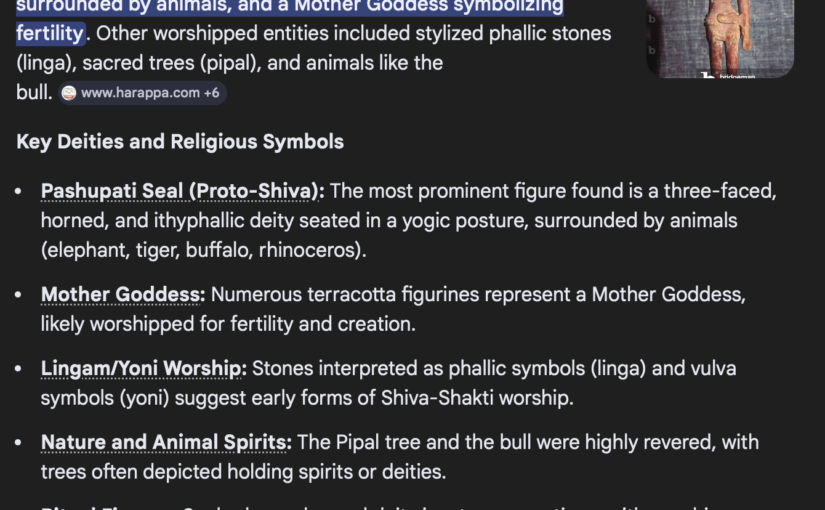
The cause of the trade, in the end, is theological. The subcontinent runs on iconographic generosity, painted shrines, sung saints, plural deities, devotional excess. Strict iconophobia cannot live inside that civilization without breaking it. Pakistan chose the stricter line in 1947 and has progressively tightened it since. The Urdu denial, the recent insistence in some Pakistani quarters that Urdu is not really an Indian language, is the cleanest evidence of the opt-out.

Irreducibly Indo-Persian

Continue reading Gurdaspur and Siliguri: The Two Necks That Held

India and Pakistan Are Playing Chicken; simply to hurt themselves

Two comments are worth picking up on, and one claim worth interrogating.

N disagrees that contact ameliorates ties. EK suggests the only Islamicate voices the Indian RW respects are those who have “debased their own civilizational integrity.” We do not know who he is shadow-tweeting. It could be us, the Founders of this blog, who are Islamicate by heritage and recognisably friendly to Hindu right-wing readings. Either way, the framing is off. And then there is Q, on the thread as we write, claiming Pakistanis “will eventually take over the Islamicate world.

The cost of distance

The dominant idea of the last decade is that less contact means more security. Fewer visas. Less trade. No cricket. No artistic exchange. Reduced diplomatic warmth. This is sold as realism. It is, in large part, self-harm.

Distance does not produce clarity. It produces mythology. When people stop meeting one another, they begin imagining one another. The imagined neighbour is always simpler, darker, and easier to hate than the real one.

He is also, as Dhurandhar showed, sexier. Hatred and desire run on the same current. The more villainous the Pakistani on screen, the more the Indian audience leans in.

Civility is built by proximity. Not sainthood. Habituation. When people share space, study, trade, marriage, and culture, the room for fantasy narrows. One can still dislike the other side. But one dislikes actual people, not cartoons.

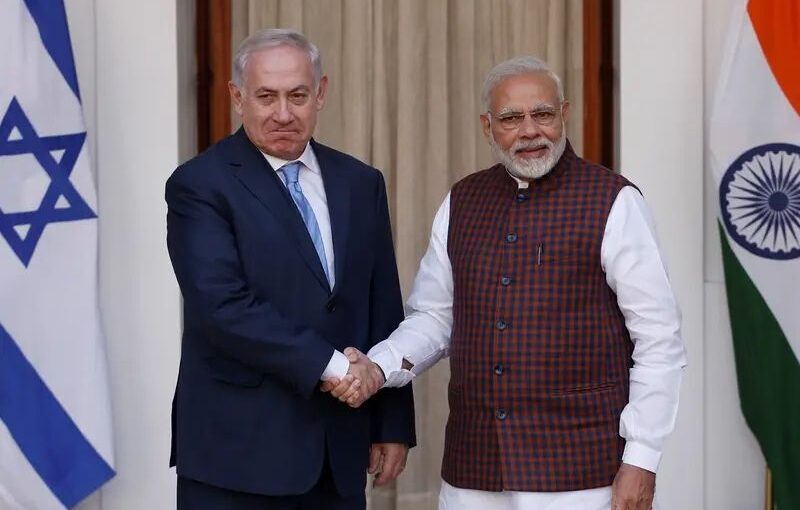
N’s response to this is that contact theory is “akin to blaming a victim for not engaging with the perpetrator.” That feels like the Israeli security story applied to the Indian Sub-continent. It assumes Pakistanis are a permanent terror-source requiring permanent counter-violence.

Pakistan obliges the narrative by behaving badly enough often enough to keep it alive. India obliges the frame by treating every bad actor as the median Pakistani. Both governments are now invested in the loop.

Pakistanis no longer defend hybrid Islamicate culture Continue reading India and Pakistan Are Playing Chicken; simply to hurt themselves

Pakistani Centrists, Not Muslim Extremists

A Precedent note

The most important thing to understand about the Pakistani voices on this site is that they are centrists, not extremists. Kabir, El Khawaja, S Qureishi: none of them is a fringe figure in Pakistani society. They are roughly where a literate, urban, employed Pakistani sits, and that fact deserves attention.

It deserves attention because India, over the last decade, has stopped engaging with Pakistanis altogether. Visas have collapsed. Cricket is gone. Cinema is gone. Academic exchange is gone. The everyday oxidation of one society against another, the slow correction by which extreme positions get rounded down through exposure to people who hold different ones, has been switched off. What is left is each side talking to itself about the other.

Brown Pundits is one of the few places where that has not happened.

The thread that prompted this note will illustrate. A week ago, S Qureishi observed that the only downside of the Islamic Revolution was that “there is no OnlyFans.” We were deeply offended by this line seriously enough to write the next piece on counterfactual analysis of Iranian society. Q then returned, under another post, with a fuller thesis: female sexuality must be controlled to sustain a civilisation. Pressed on enforcement, he listed disownment, violence, lawsuits, vandalism. Finally when pressed on honour killing, he admitted it was “horrible” and “immoral.”

Three voices took shape on the thread. The most salient asked that the comment be deleted as misogynist.

We are not deleting it.

We disagree with Q on almost every line he wrote. The thesis that female autonomy is the load-bearing crack in civilisation is one we reject in full. The post on Virginity Policing that triggered this thread was our own. But Q is not a Taliban spokesman. He is a Pakistani who, when challenged in writing by other commenters, was forced to articulate his position, defend it under hostile examination, and concede that violence is wrong. That is not platforming. That is engagement. It is the slow work India has decided it no longer needs to do.

Continue reading Pakistani Centrists, Not Muslim Extremists

Why is Pakistani Culture obsessed with Policing Female Virginity?

We were at our favourite Persian restaurant. A young woman two tables away, not Persian herself, was telling her Persian father about her female friend in continental Europe.

The friend was Pakistani-origin. She had started dating a Latino man. The Pakistani friend’s mother, somehow, had a dream. In the dream, her daughter had lost her virginity.

The dream was the trigger.

The mother went into a spiral. The father, it was said, lost his job. The mother had a nervous breakdown. A trip back to the Muslim homeland was arranged. The daughter refused to board until she saw the return flight in her hand. Only then did she get on the plane. When she returned to the Muslim country, they told her she wasn’t going back to Europe.

We lost the rest of the story, and, over the rest of the meal, we thought about Sana Cheema.


What Sana Cheema Saw

Sana Cheema was a twenty-six-year-old Italian-Pakistani who had lived in Brescia since 2002. She wanted to marry a second-generation Italian-Pakistani man of her own choosing. Her father took her back to Gujrat, in Punjab, under the pretext of a visit.

She was strangled the day before her return flight to Italy. Her neck was broken. Her hyoid bone dislocated. Her father, her brother, and her uncle were charged. They had buried her quickly, without autopsy, and told relatives she had died of natural causes. The body had to be exhumed on a magistrate’s order after Italian media forced the case into daylight.


Qandeel Baloch, in the Same Line Continue reading Why is Pakistani Culture obsessed with Policing Female Virginity?

Does the average muslim ‘dislike hindus’?

Admin Note: This is a Precedent Post.

“You seem to be underestimating how much the average Muslim dislikes Hindus (and vice versa). This is a sad reality.”

This comment on a thread conversation – yet again discussing partition on BP, jumped out at me. And I think it deserves to be dissected.

I for one, strongly disagree with the projection of personal animus, extrapolated all the way into the ‘average muslim’. And vice versa. I’m going to assume that Kabir is ‘only’ deigning to speak on behalf of the ‘average muslim’ of the subcontinent, and not beyond. But even then, I think this assertion is utterly inaccurate.

I do not believe that ‘disliking Hindus’ is baked into the character or mindset of the muslims of the subcontinent, whether in India, or beyond it, into Bangladesh of Pakistan. Now, I am aware of the ‘kufr’ attack lines that those suffering from Islamophobia often deploy and may even believe. But I am confident that this is the usual weaponization of the fringe by those with ignorant, or intentionally jaundiced agendas.

The Problem with Monolithic Thinking

To say that “Muslims dislike Hindus” is to treat over 500 million people across multiple countries as if they share a single mindset. This kind of thinking ignores differences in geography, class, education, political views, and personal experiences.

Communities are not monoliths. A Muslim family in Kerala may have vastly different social interactions and attitudes compared to one in Lahore or Dhaka. The same is true for Hindus across regions. Reducing such diversity to a single emotional stance erases individual agency and lived reality.

Historical Context Matters—but So Does Interpretation

It’s true that the subcontinent has witnessed periods of conflict, most notably during the Partition of 1947. That traumatic event left deep scars and continues to influence inter-community perceptions. However, it is a mistake to project historical violence onto present-day relationships without acknowledging the decades of peaceful coexistence that have followed.

In fact, millions of Hindus and Muslims continue to live side by side, working together, forming friendships, and even intermarrying. Everyday life in much of the subcontinent is not defined by hostility but by routine interaction.

The Role of Politics and Media

Modern tensions, where they exist, are often amplified by political rhetoric or media framing. Narratives that emphasize division can serve specific agendas, making it appear as though distrust is more widespread than it actually is.

It’s important to distinguish between politically motivated discourse and the attitudes of ordinary people. The loudest voices are not always the most representative.

Lived Reality: Coexistence Over Conflict

Walk through neighborhoods in cities like Mumbai, Delhi, Karachi, or Dhaka, and you’ll find markets, schools, and workplaces where Hindus and Muslims interact daily. Festivals are sometimes shared, businesses are jointly run, and friendships cross religious lines.

These everyday examples rarely make headlines, but they represent the true fabric of society.

Why Generalizations Are Harmful

Broad claims about mutual dislike do more than misrepresent reality—they can actively contribute to division. When people are told repeatedly that another group harbors negative feelings toward them, it can create suspicion where none existed.

Challenging such narratives is not about denying that tensions exist, but about refusing to let those tensions define entire populations.

A More Nuanced Understanding

A more accurate perspective acknowledges that:

Historical conflicts exist, but so does long-term coexistence
Political narratives can distort social realities
Individual experiences vary widely
Cultural interdependence is a defining feature of the region

If we are to understand the subcontinent honestly, we must move beyond simplistic narratives and recognize the complexity—and humanity—of its people. Resorting to ignorant tropes about ‘muslims dislike hindus and vice versa’ not only should be avoided, but deserves to be countered forcefully.

Brown Pundits