Brown Pundits Is Not a Cesspit. Keep It That Way.

Brown Pundits exists to test ideas against evidence. That is not happening consistently. Four contributors have split into two camps. Threads are filling with video links and recycled assertions. Serious readers are leaving. This post explains what changes and why.

Effective immediately, all four authors have been moved to commentator status until each individually promises they can maintain the same standard in comments as in posts; high signal, evidence-based, no exceptions.

On genocide specifically Continue reading Brown Pundits Is Not a Cesspit. Keep It That Way.

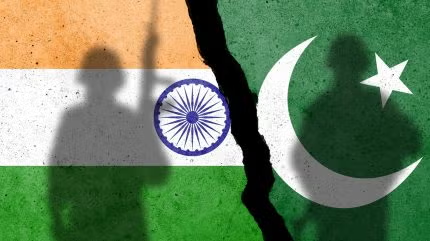
Poorer Pakistan OutFoxes Richer India?

“No one wants a strong India. But PM Modi opened doors. He strengthened the military, advanced the economy, maintained balanced relations with the West, Russia, and China. That is serious statecraft” –Aleksandar Vučić, President of Serbia

India is richer

Strip away the noise and a simple asymmetry remains. India will almost certainly remain richer than Pakistan for the foreseeable future. The gap in GDP, fiscal depth, technology, and demographic scale is widening, not narrowing. On material indicators, India has the advantage. Yet material advantage does not always translate into strategic dominance.

India is louder

India is a mass democracy. It is electorally accountable, media-saturated, and sensitive to public opinion. Governments must justify escalation. Markets react to instability. Voters punish miscalculation. This imposes restraint.

Pakistan is tighter

Pakistan is structured differently. Power is narrower. Decision-making is concentrated within a smaller elite, with the military as the central institution. That creates rigidity in some domains but flexibility in others. Strategic continuity does not reset every five years. Public opinion matters, but it does not directly determine policy in the same way it does across the border.

Structural Differences

This structural difference shapes behaviour. India must think about global markets, coalition politics, and reputational cost. Pakistan can absorb economic stress more easily because its political system is already insulated from full electoral volatility. That insulation produces durability, even under strain.

The list gets smaller. There are six countries who sent the head of state/government to all three: 1) Beijing military parade 2) Davos Board of Peace launch 3) Washington BOP 1st meeting They are: Armenia | Azerbaijan | Indonesia | Kazakhstan | Pakistan | Uzbekistan

Like Israel Continue reading Poorer Pakistan OutFoxes Richer India?

Pakistan Does Not Need to Imitate India to Be Stable

I would like Pakistan to be a secular democracy and give up its ambitions on Kashmir. Badshah

Similarly the core Hindu-Dharmic civilizational nature of India, that is Bharat, is for Indians to decide. Outsiders demanding secularism often mistake their own preferences for universal law.

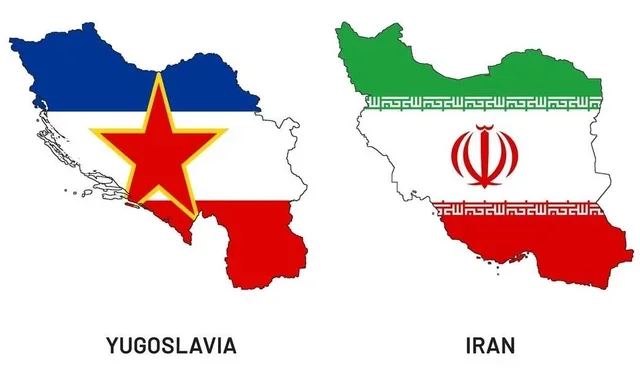
Pakistan Is Not Yugoslavia

There is a recurring Saffroniate habit, when it comes to Pakistan, that deserves to be named plainly. It assumes collapse. It treats Pakistan as a Yugoslavia-in-waiting, a state held together only by force and denial. This is not analysis. It is projection, reinforced by confirmation bias.

Pakistan is not Yugoslavia. It is, in many ways, the opposite.

Yugoslavia fractured once the external logic binding it disappeared. Pakistan was born under siege and continues to organise itself around that fact. Whatever one thinks of this psychology, it has consequences. States that internalise permanent vulnerability do not casually dissolve. They centralise, harden, and adapt. That is not a moral defence. It is an empirical observation.

Continue reading Pakistan Is Not Yugoslavia

Pakistan’s Civilisational Orphanhood

The argument over Balochistan exposed something deeper than maps or borders. It revealed a confusion about what Pakistan is supposed to belong to.

Formally, Pakistan is one of the most nationalistic states on earth. Its red lines are absolute. Its territorial language is uncompromising. Its founding trauma has hardened into doctrine. And yet, beneath this rigidity sits a quieter truth: Pakistan’s elite does not actually live inside a closed nation-state imagination. They live in English.

They think in Western legal categories, read Western literature, speak the language of international institutions, and send their children into global circuits of education and finance. At the same time, their social world remains unmistakably South Asian; family-centred, hierarchical, ritualised, and deeply embedded in subcontinental habit. They are neither fully Western nor comfortably Indic. This produces a tension that Pakistan has never resolved.

The Nation-State After 1945: A Container That No Longer Holds

Continue reading Pakistan’s Civilisational Orphanhood

South Asia Is an Ugly Postcolonial Euphemism

There is something faintly ridiculous about how often educated people insist on using the term South Asia as if it were a neutral, hygienic improvement on an older and supposedly “problematic” word. It is neither neutral nor an improvement. It is a bureaucratic euphemism invented to manage post-Partition discomfort, and it collapses the civilizational reality of the region rather than clarifying it.

The Indian subcontinent has had a name for millennia. It was called India because it lay beyond the Indus. Greeks used it. Persians used it. Arabs used it. Medieval Muslims, early modern Europeans, and the British all used it. The word survived because it described a geographic and civilizational unit, not because it flattered any modern state. The fact that the Republic of India later adopted the name does not retroactively invalidate its older meaning. Belgium did not abolish the word “Europe,” and Serbia’s existence does not make “European” offensive.

South Asia, by contrast, is not an ancient term misused by a nation-state. It is a late–Cold War academic construction, popularised by American area studies departments that were uncomfortable saying “India” once India no longer meant a single polity. It is a word designed to avoid an argument, not to resolve one. Like “Middle East,” it describes nothing from within the region itself. No one historically lived in “South Asia.” No one spoke “South Asian.” No one cooked “South Asian food.” Continue reading South Asia Is an Ugly Postcolonial Euphemism

Pakistan and the Act of Union

A Cold Comparison, Not a Romantic One

There is only one historical analogy worth using when discussing Pakistan “rejoining” India: the Act of Union of 1707 between Scotland and England. Not Rome and Greece. Not Yugoslavia. Not German reunification. And certainly not civilizational nostalgia. The reason is simple. The 1707 Union was not about love, memory, or reconciliation. It was about bankruptcy, security, elite survival, and managed loss of sovereignty without humiliation. That is the only way such a union could ever happen.

Union Is an Elite Exit, Not a Popular Dream

Scotland did not join England because it felt British. It joined because it was broke. The Darien Scheme collapsed. The Scottish state was insolvent. The elite faced personal ruin. England controlled capital, markets, and trade. The Act of Union absorbed Scottish debt, protected elite property, preserved law and church, dissolved sovereignty while preserving status. The public opposed it. It passed anyway. Unions are not plebiscites. They are elite exits under pressure.

Pakistan’s Position Is Structurally Similar

Pakistan today is not Scotland in 1707. But the resemblance is close enough to matter. Pakistan is chronically indebted, permanently IMF-dependent, over-militarised by design, economically capped by scale and FX limits. It is run by elites whose lives are already offshore, Like Scotland, the state is failing faster than rents can be extracted, sovereignty has become expensive, security dominates fiscal policy and there is no credible independent growth path. This is not ideology. It is arithmetic.

Why India Is England in This Analogy Continue reading Pakistan and the Act of Union

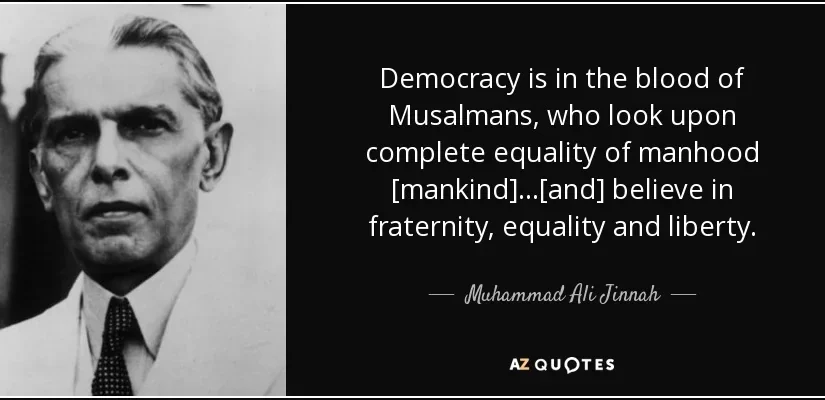
Why Zia, Munir, Ayub, and Even Modi, Are Jinnah’s Children

The heirs of Jinnah are not liberal Pakistani nationalists or English-speaking Karachi elites.

His true heirs are:

  • Zia-ul-Haq
  • Asim Munir and the modern Pakistan Army
  • Ayub Khan
  • And Narendra Modi

This is not provocation. It is structural observation.


I. Jinnah Created a Logic That Outlived His Liberal Aesthetics Continue reading Why Zia, Munir, Ayub, and Even Modi, Are Jinnah’s Children

Red Fort Attack and Aftermath: Initial Thoughts by Manav S.


Red Fort Attack and Aftermath: Initial Thoughts by Manav S.

Last evening’s devastating car-explosion near the Red Fort in Delhi is not only a cruel assault on innocent lives but an assault on the very symbolism of our nation. According to early reports, a vehicle detonated close to the busy metro zone at the historic Red Fort complex, killing at least eight people and injuring more than twenty.  The government has invoked anti-terror legislation and launched a full probe under the Unlawful Activities (Prevention) Act (UAPA). 

First, we must recognise the human tragedy behind the headlines. Lives shattered, families devastated, fear spreading in a city already grappling with chronic insecurity. For those of us of South Asian heritage who carry memories of communal strife, of migration and displacement, this attack touches a deeper chord of vulnerability and of collective memory. Hospitals have reported frantic cries, missing persons, relatives screaming for loved ones. 

Second, the choice of location amplifies the message. The Red Fort is not just another landmark: it is an emblem of India’s sovereignty, its layered history, its identity. To strike here is to strike at the heart of public confidence and to send a message of audacious defiance. As scholars writing on “brown diasporic publics” know, our public spaces carry meaning not just for those inside India, but for those of us abroad who anchor our identity in ‘homeland’ narratives. This attack disrupts that anchor.

Third, we must resist both fear and simplistic narratives. The invocation of terror laws suggests the state is treating this as a planned act of violence, not an accident.  But let us guard against quick binaries: Us vs Them, Hindus vs Muslims, India vs Outsiders. In a plural society like ours, sweeping communal attributions too often deepen fault-lines rather than heal them. Our commentary must demand both justice and wisdom: meticulous investigation, transparent process, and safeguarding civil rights in the process.

Fourth, what does this mean for our shared public culture? For someone born in Punjab and now living across borders, the explosion challenges our sense of movement, of belonging, of normalcy. We think of carrying family across continents, of re-configuring identity in Washington–DC and Delhi , how do such apparently random acts of terror recalibrate the psychic cost of migration and the distance between home and homeland? The answer is: they make the cost higher, the emotional freight heavier.

Finally, the path forward must hold three imperatives: one, empathy – for all victims, irrespective of religion, class or residence; two, accountability – for whoever plotted, financed or enabled this attack; and three, renewal – of the public realm, the shouting panic, the fear-laden sighs, with something stronger: resilient civic culture, public institutions we trust, cross-community solidarity.

As a brown pundit, I urge our readership to see beyond the flashes of violence, beyond the political spin, and to ask the deeper questions: What kind of society are we building? What kind of public spaces do we imagine, and what cost are we willing to pay for them? For if we shrug now, the symbolic scar will grow — far after the immediate blast damage is repaired.

In that moment of stillness after the blast, we owe to our fellow citizens not just sorrow, but vigilant hope.

Brown Pundits