Hindu nationalism amongst the nationalisms

Much of the discussion over the last few weeks on this weblog (see “Open Thread”) has involved the internal politics of India, and its clearer trajectory in regards to a Hindu sense of self. Most of the comments are not really worth reading, as they repeat platitudes. I have said little because I know very little which would add much to the discussion.

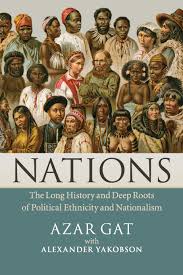
That being said, let me take a break from pre-Christmas activities, and just express the framework or “filter” which I use to understand what’s going on in India (and elsewhere) today. I am not someone who believes that to understand modern social-political ideologies in post-colonial nations all you need to do is understand the colonial experience. On the contrary, I lean toward the position that many national identities have deep roots and histories (e.g., China, Iran, and England, to name three). For more on this perspective, see Azar Gat’s Nations.

But, neither is it true colonial, Western, and international, currents are irrelevant in understanding notionally primal and indigenous nationalists and pan-nationalisms. To give three examples. Chinese nationalism in the early 20th-century explicitly looked to the West, and east toward the success of Japan, in attempting to create a post-imperial identity. Iran in the early 20th-century coalesced around a resurgent Persian national identity in a multi-ethnic society which had heretofore been bound together by Shia Islam (imposed on Iran by Turkic Safavids in the 16th and 17-century). Finally, the emergence of the German nation-state under the Kleindeutschland vision is hard to understand without the French Revolution, and the shock it imposed on German elites, and in particular the Prussians.

These three instances are clear, distinct, and organic nationalisms. In many ways, elements and configurations of these nationalisms were preexistent to the 19th/20th-century variety. The Safavid state under Shah Abbas I to me served as a template for the Pahlavi project. There were inchoate elements of German nationalism in various polities of the Holy Roman Empire, in particular in the Habsburg domains, where aristocratic cosmopolitanism was always balanced with the hegemony of German culture around Vienna. Finally, the imperial Chinese state in various forms was already proto-modern quite early. I would emphasize the Northern Song period, around 1000 A.D.

But there are other nationalisms developed in the 20th-century which created something de novo in a very real sense. Kemal Ataturk attempted to fashion a form of Turkish post-Ottoman identity explicitly modeled on a Western European template. Though Ottoman Turks did have an ethnic identity, and some level of ethnic chauvinism, the reality is that the Ottoman identity was primarily one of religion. Modern Turkish is written in a Roman alphabet. This means that modern Turks are detached psychologically from the literature of the Ottoman period, which is written in Arabic script. This was clearly a conscious attempt by Ataturk to fashion something new and unmoored from the past.

Even more nebulously, Pan-Turkism and Pan-Arabism appealed to an ethnonationalism more organically suited to the European context and history.  Though Pan-Turkism never became much more than moral and logistical support by the Turkish government for various national resistance movements (Turkey has long supported a community of Uighurs), Pan-Arabism was influential in much of the Arab world in the middle of the 20th-century.

Pan-Arabism was closely connected to Arab Nationalism and in particular the Ba’ath parties.  A reductive way to describe Ba’athism is that it was a escape valve for religious minorities to espouse a form of nationalism that united them with Muslims, and often Sunni, majorities. But Ba’athism became popular for a reason. The rationale for Ba’athism may have some connection to the discomfort with majoritarianism by minority elites in the Arab world, but the 20th-century demanded a form of social cohesion beyond what Sunni Islam had earlier provided (the radical Leftism of some Arab nationalist movements is another path).

Because of Arab opposition to Western imperialism in the early 20th-century, it is not surprising that Ba’athism has been connected in some way to fascism. The problem with our understanding of fascism and right-wing nationalism in the early 20th-century is that Nazism has overshadowed all other forms. But movements to challenge Communism’s appeal to the young and radical were diverse and widespread. For example, right-wing Zionism of the Revisionist school (the ideological ancestors of the Likud party) had connections to these broader trends.

Which brings me to three ideologies which also arose in the modern period: Hindu nationalism, Pan-Islamism, and the “Two-nation theory.” Hindu nationalism and Pan-Islamism arose at the same time, as notables and intellectuals within Hindu and Muslim traditions reacted to the shock of Western modernity. Both these traditions have a mythos of being primal, but the reality is that many elements are quite modern.

To illustrate this, the Iranian Islamic Republic was an explicit attempt to turn back toward indigenous forms and values, but it retains a broad democratic system of governance (democracy being Western). The Shia movement in Iran clearly had resonances with earlier Pan-Islamists, in particular in its early ambitions, and over the past few centuries had integrated and reacted to stimuli from the West far more extensively that modern traditionalist Shia establishments.

Hindu nationalism is in a similar boat. On the one hand, its roots are ancient, and it reflects a vision with deep local roots. But it has had to adapt and develop tools which are quite modern, and only comprehensible in the modern context. Which brings us back to some associations of right-wing Hindus with right-wing movements elsewhere…and a connection to Nazis and genocide.

You could present the case that Hindu nationalism is particularly pernicious at the root. It is brown Nazism of a sort. I am very skeptical of this take, because Hindu nationalism has a rationale of its own, and must be viewed as an indigenous reaction to Western imperialism. Palestine’s Zionist Revisionists associated with Italian fascists in the 1930s. If you know the history of Italian fascism this is not so peculiar. Similarly, various Arab notables and nationalists expressed pro-fascist, and later even pro-Nazi views. Some of this is due to shared affinity because of common enemies, while some are purely mercenary and situational.

This brings me to the “Two Nation Theory.” As above, this is based on a myth. The collapse of Ashraf hegemony, the rise of Indian Muslims, reconfigured the social and political landscape. Muhammed Ali Jinnah was the grandson of a Hindu merchant of ambiguous sectarian affiliation who was personally not particularly pious. The idea of an Indian Muslim nation makes sense for such a man, but not the Turco-Persian grandees of yore.

For various reasons, the Indian republic rejected this vision. I believe that in doing so they rejected the march of history, which has been toward greater sectarian identity and passion. Western commentators attempt to understand Hindu Nationalism on their terms, but just like the rise of an indigenous Indian Muslim identity is now stripped of West Asian accretions in the substance*, Hindu Nationalism is not comprehensible without understanding the interests and foci of native elites.

Where does this leave us? Everywhere and nowhere. In the past and looking to the future. Extracted out of the context of world history over the past 200 years Hindu Nationalism can seem uniquely invidious. But I doubt it is so unique at all. Rather, it is a novel cultural complex that draws deeply on indigenous atavisms. It is part of a broader waxing of local movements the world over.

* Pakistanis may claim West Asian origins or associations, but the national language is Urdu and Indo-Aryan dialect. The Ashraf of yore would have enshrined Persian as the national language.
Why Aryan Migration Theory (“AMT”) is probably true, but it might not matter

People now and then ask me why JR contributes to this weblog when I think he’s profoundly wrong on some issues. First, being wrong is no sin. Even being offensive is no sin. I am a traditionalist in regards to expression.

Second, JR presents what I believe to be the wrong position with a reasonable command of the sources and in a logical and coherent manner. He has not convinced me, but I have sharpened my own views (and to be frank, I believe that both of us have changed positions over the last four years as new data has emerged). Unfortunately, this is in contrast with the bluster, ad hominem and incoherence of many opponents of the idea of the exogenous origins of the Indo-Aryans. I used to think these people were malicious, but I think a lot of them are just stupid. So I hold it less against them.

JR presents what strikes me as an Indocentric view. He is quite clear that he sees his project as compensatory and reactive to the traditional Eurocentric view. My own position is quite naively positivistic, and I attempt to be cross-cultural. Of course in the details, I fail because to be subjective is to be human (my own view is going to be Eurocentric because my cultural orientation is American). Knowledge of the empirical world accumulates despite our shortcomings. JR has made an appeal to me as a person of subcontinental origin on occasion, but this lever is pulling on a string of emptiness. I am one of the Last Men who are weak in regards to racial self-conception.

Sometimes you really know what people are about by what they don’t talk about. Americans don’t talk directly about money, but we care about it a great deal. Indians don’t talk about caste directly in personal detail, but clearly they care about it a great deal. And the converse is also true. Much of my bluster about R1a1a-Z93 is that I find lineage to be a humorous and frivolous fixation, though I am latitudinarian is accepting that others may differ with me on this. It is a matter of disposition for me, not a deep principle. AMT or OIT has little emotional valence for me.

Finally, I have to admit that I have become disillusioned with the calm and conscious lying and obfuscation which I know to occur in sciences with which I am familiar. When Westerners have strong ideological priors and beliefs at stake, scholars abandon fidelity to the truth so as to tack to the winds and align themselves with the regnant ideologies of the age. They are servile creatures who bend to power. I do not have it within me to look down upon Indians for their bias and motivated reasoning when I know that Janus reigns supreme in Western academia. I thought “we” were better than this. I know now that that was a delusion. The courage of men fails. They will forsake friends and break bonds of fellowship. The truth is nothing next to these betrayals.

But I still vainly hold to the ideals of the old religion. Truth above all, strive for it even when it discomfits, and when you miss the mark so often. Knowledge is its own regard.

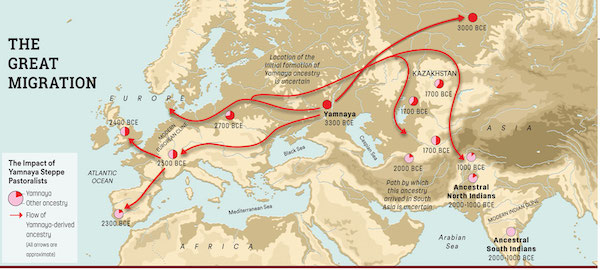
JR’s post, The Unravelling of the AMT, consists primarily of marshaling evidence from archaeology and linguistics (genetics being secondary). The contention is that the lack of archaeological disruption during the period between 2000 BC and 1000 BC, as well as no evidence in the extant literature of Indo-Aryan recollections of foreign homeless, should argue against an exogenous origin for Indo-Aryans. As I have no deep knowledge of these two fields, let us grant these assertions.

The reason that JR’s extensive argumentation does not convince me is that even granting the low probability of AMT conditional on the facts which he brings to the table, the probability of OIT is even lower conditional on the facts we know about other Indo-European societies. Alone, and isolated, if I grant the level of archaeological disruption to be minor, and if I grant that indeed Indian oral history does not record an external homeland, the model of mass migration in the period between 2000 and 1000 BC does strike me as unlikely (let’s put the genetics to the side).

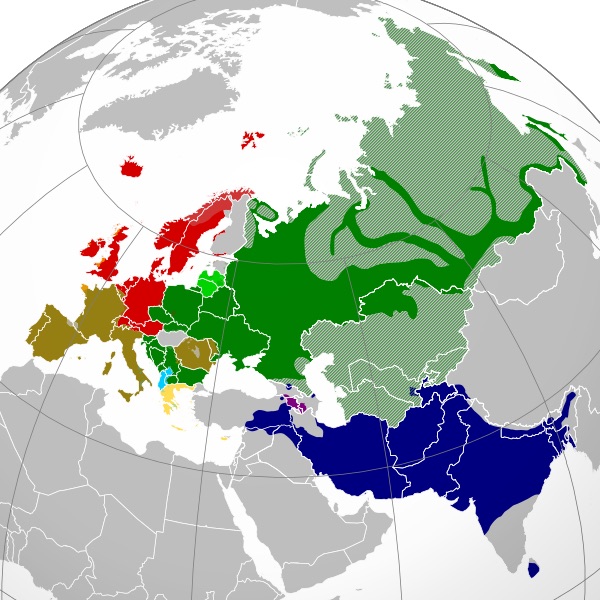
But, if you reject AMT for this period, then we must explain Indo-Europeans in Europe and in the Near East. Logically the rejection of AMT entails OIT, and OIT presents far greater problems to me than AMT. From a cross-cultural perspective, a model that explains the current distribution of Indo-European languages must explain all of the different branches and their locations as parsimoniously as possible. There will be errors and loose ends in the model, but we have to iterate from a plausible starting point. AMT resolves more problems than it creates. OIT creates more problems than it resolves.

And yet to be entirely frank…I do think JR’s arguments will gain more and more traction with Indians. Indians are entirely Indocentric quite often, so arguments that operate within this framework will be persuasive. I find this personally uncongenial, but I am getting the sense as I get older that I have an abnormal interest in a disparate array of cultures and societies (some commentators, who may or may not have low IQs, express frustration that I refer to other societies and cultures since they are clearly ignorant of things beyond their shores). Here in the United States, there are “Ethnic Studies” departments that seem to exist so that people of a particular ethnicity can study their own history. They are quite popular and ideologically motivated.

The broad world out there is fading for the positivist vision. The age of science is giving way to the age of magic. The time for public discussion and calm inquisition of the facts has probably passed us by. Truth, understanding the shape of reality for its own sake, is a small cultic affair. And yet do well to remember, the lies that give you comfort are lies nevertheless!

The CAB Battle – Who Is An Indian (Citizen)?

The feverish pitch over the Citizenship Amendment Bill has reached a crescendo. The Indian lower house of parliament has overwhelmingly passed it with it now reaching the upper house. Most likely, it will pass with the support of “neutral” parties pushing the bill over majority.

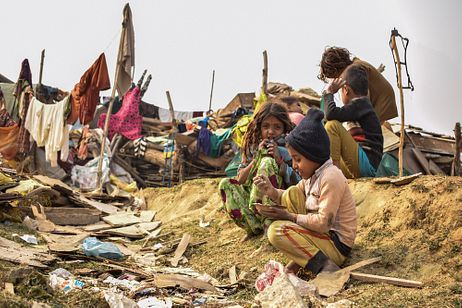
Safe But Betrayed: Pakistani Hindu Refugees in India
Pakistani Hindu Refugee Camp in Delhi. Formalization of CAB may aid these currently destitute conditions.

Under the CAB – Hindus, Sikhs, Buddhists, and Christians (basically persecuted communities of Afghanistan, Pakistan, Bangladesh) will receive asylum and an accelerated path to citizenship.

Critics label this bill as anti-Muslim and rhetoric from certain BJP members does not help in the  defense against this accusation.

But again consistent with the common theme of international coverage of India, we are missing context (or more accurately, outlets are leaving it out purposefully).

What’s A Partition?

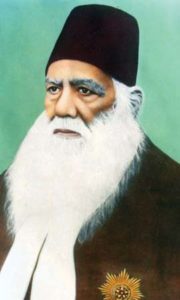
Not the Beyoncé song. If you have an inkling of knowledge about subcontinental history, you know about the partition and the Two Nation Theory (TNT). TNT was proposed by an Islamist ideologue named Syed Ahmed Khan of Aligarh Muslim University in the late 1800s. Muhammed Ali Jinnah ran with the idea and eventually convinced enough Muslims to vote for partition (Hindus, Sikhs, etc… were not polled for their vote). In the midst of continued violence (much of it encouraged by Jinnah’s Muslim League), the Indian National Congress would acquiesce to partition. Massive violence followed with millions of Hindus, Muslims, and Sikhs dead.

Sir Syed Ahmed Khan – First proponent of the Two Nation Theory

However, while Pakistan became an Islamic state, India remained secular (though its minority appeasement down the line really pushes that definition).

India had given up 1/3 of its land to satisfy (separatist) Muslims yet still had 9% of its population as Muslims post-partition. The Muslim population in India would grow to around 15% today while a trident of partition, Pakistani civil war, and persistent persecution would annihilate the Hindu population in Pakistan and Bangladesh (From 1941 to present, the land containing current day Bangladesh’s Hindu population dropped from 28% to 9% while Pakistan’s Hindu population dropped from 14% to 2%.)

It is the shadow of partition that looms large over the CAB.

The Entry Rules?

Defenders of the CAB say it gives refuge to persecuted minorities in true Indian tradition (Baghdadi Jews, Syrian Christians, Persian Zoroastrians, and Tibetan Buddhists have all received refuge in India over thousands of years). However it brings to point the case of Islamic minorities (Shias, Ahmediyas, Ex-Muslims, etc…). Many of these minorities face horrid persecution in the Islamic subcontinental states. Why should India also turn them back?

Now is where the acceptance of partition arrives. CAB critics say by rejecting persecuted Muslims, India validates Jinnah and the TNT. I can honestly understand this perspective. Why should these Muslims pay for the sins and mistakes of their ancestors?

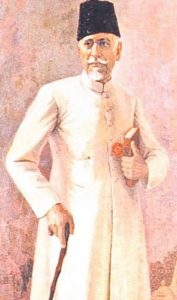
Portrait of Maulana Abul Kalam Azad – India’s first Education Minister and lauded Indian Muslim freedom fighter.

On the flip side, CAB supporters return with saying they are merely accepting realities. Threats of national security, demographic change, as well as a cold hard perspective that India owes nothing to those related to its partition (non-Indian Muslims) are valid reasoning no matter how un-PC they are. In addition, the CAB has no bearing on Indian Muslims.

Even deeper, CAB supporters see this as India fulfilling its duty as a refuge of Dharma in the case of Hindus, Buddhists, and Sikhs. The near complete obliteration of Dharmic religion from these lands is not forgotten and won’t be any time soon.

Perceptions

The legalese with regards to the bill seems iffy on its constitutionality. The Indian constitution bars discrimination based on religion within India. However it doesn’t bar discrimination with regards to non-Indian citizens.

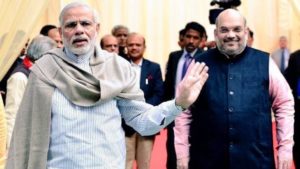
India’s Home Minister Amit Shah (and probably next Prime Minister), has foreseen this. During a firebrand speech recently, Shah pointed out the litany of laws favoring minorities in India thereby showing a mirror to the Indian state’s institutional religious discrimination. This poses a major problem for the opposition. Add to the fact that the BJP has massive political capital after the Kashmir and Ram Mandir episodes, the centre possesses an insurmountable high ground over its opponents.

The dichotomy between the West’s seething hatred and doomsaying of Modi-Shah versus their ascension as India’s most powerful and popular political figures in decades is fascinating.

But what about a moral high ground?

Western media laments at how India has degenerated to fascism these days. Is this perception reality? Probably not in my opinion.

I think what irks many of these outlets is an assertive India that no longer looks for the approval of the West (or a deracinated brown sahib/a in their place).

What has caught my mind recently is how Western coverage of India is affecting perceptions of India abroad. While some saw Modi as an aberration of a “secular, democratic, and liberal” Indian ethos, now they are beginning to realize Modi and Hindutva are here to stay. Does that mean India will slide into fascism?

On the other hand, many domestic Modi supporters would say that Modi is fulfilling a “secular, democratic, and liberal” ethos that India lacked for so long under Congress rule! Of course in both of these scenarios, I am speaking of white collar middle class folks’ perspectives. Other demographics would say Modi is fulfilling his role as  a Hindu leader giving refuge to the persecuted Hindus in lost lands (this may honestly be the biggest vote catcher for the CAB and primary driver of the BJP’s push).

Then comes the thought – how will policy towards India be affected? While Western foreign policy hasn’t been egregiously affected by bipartisan slants, we are now entering a highly polarized era. The latest incarnation of Western right wing governments seem to favor India, but future demographics are hilariously skewed in favor of the left wing across a number of Western countries.

As the world becomes more globalized, it will be interesting how influential Western media outlets will be on the increasingly connected youth of developing nations including India (the caveat is India’s youth are more pro BJP than older generations). 

Yes, opinions can change as we age but it is fairly apparent that your average millennial takes the word of BBC/NYT/Wash Post as gospel.  We will have to see how a Western left wing government reacts to India, especially one whose constituency is in congruence with this “India = Fascist” narrative. Throwing in the wrench of India’s rising economic clout, these parties will have a bit of a conundrum.

Though it must be said, do that many Westerners even really care about India?

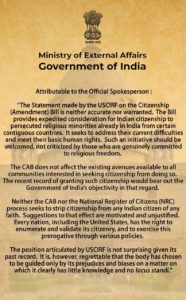
Official Indian justification and response to recent criticism from the USCRIF over the CAB

Find more about Indian, American, and Geopolitics at my blog – The Emissary. Thanks again to the Brown Pundits!

All that matters is which way you are punching

I have little value to add on the many comments around “Modi is bad to the bone” piece in The New Yorker, except that this passage jumped out at me:

Other coverage on Republic TV showed people dancing ecstatically, along with the words “Jubilant Indians celebrate Modi’s Kashmir masterstroke.” A week earlier, Modi’s government had announced that it was suspending Article 370 of the constitution, which grants autonomy to Kashmir, India’s only Muslim-majority state. The provision, written to help preserve the state’s religious and ethnic identity, largely prohibits members of India’s Hindu majority from settling there. Modi, who rose to power trailed by allegations of encouraging anti-Muslim bigotry, said that the decision would help Kashmiris, by spurring development and discouraging a long-standing guerrilla insurgency. To insure a smooth reception, Modi had flooded Kashmir with troops and detained hundreds of prominent Muslims—a move that Republic TV described by saying that “the leaders who would have created trouble” had been placed in “government guesthouses.”

From the broadly Left/liberal internationalist perspective, Hindu nationalists express a majoritarian and ethnoreligious self-consciousness. They don’t want what in India is termed “secularism” to be ascendant. I believe that some Hindu nationalists do want for India what was the original vision of Pakistan, a nation-state that has at its core a particular ethnoreligious identity (I believe this is distinct from a “Islamic fundamentalist” vision properly understood in the modern context).

And yet this passage simply glosses over the fact that legal fiat was preserving a particular sub-national identity, that of Kashmiris, the vast majority of whom are Muslims.

The Ayodhya Verdict

November 09, 2019 was a momentous date in the history of modern India. An end to the decades and centuries old Ayodhya dispute has likely happened. The Supreme Court of India has, by a unanimous verdict of 5-0, pronounced that the disputed site of 2.77 acres be given for the building of a Ram temple while at the same time allotting a land of 5 acres somewhere else for the construction of a mosque.

In all respects this was a very fine judgement by the Supreme Court. However, there are mischief mongers who are busy spreading falsehoods about this judgement for their own vested interests. Let me here share a few videos which give us a very clear picture of why the SC judgement is neither biased nor is it giving precedence to faith over evidence.


https://www.youtube.com/watch?v=FoelD28UV28

Please also watch these two long presentations as they explain the available evidence at length.

The Case For Ram Mandir at Ayodhya

What Do The Ram Janmabhoomi Excavations Tell Us?

To put it briefly :-

Ayodhya is one of the seven holy cities of ancient India and for Hindus or Sanatan Dharmis. Its holy precisely because it is associated with the birth and life of Lord Ram, one of the most revered figures of Hinduism.

Now what exactly is the significance of Ayodhya for Muslims ?

Particularly with regard to the Ram Janmabhoomi/Babri Masjid site, it is clear and the SC judgement also points out that the Babri Masjid was not built on a vacant land but was built over a large pre-existing non-Islamic structure. Archaeologists and scholars have pointed out that this structure was most likely a Vishnu temple built by a feudatory of the Gahadavala King Govindchandra, the most powerful king of North India in his time and the grandfather of none other than Jayachand of Prithviraj/Samyukta fame.

While the SC has acknowledged the existence of this temple structure since the 12th century, it points out that between the 12th century and the early 16th century when the Babri Mosque was built on the site, we do not have records documenting what was happening at the site. The SC also states that the Archaeological Survey of India (ASI) could not prove that this earlier temple was destroyed to build the mosque i.e. perhaps the temple was already destroyed & lying in ruins. However, proving it conclusively is a tough ask.

Nevertheless, it has already been proven without a shadow of doubt that the remains of the pre-existing temple, including its pillars were used in the construction of the mosque.

Lastly, there are numerous eye-witness and other accounts in English, Persian, Arabic & Urdu from the 16th, 17th & 18th centuries which clearly prove that the particular site was holy for the Hindus and that the mosque was built by destroying the mandir or temple, and the site is often referred to in the accounts as the Ram Janamsthan.

Hindus were able to show that they were worshipping at the site for several centuries and people used to flock the site particularly on Ram Navami, the date of Lord Ram’s birth. They were also able to show the outer courtyard was always under the control of Hindus while there was often disputes between Hindus and Muslims for the inner courtyard of the mosque.

One may ask, what is the evidence that Lord Ram was born at this very site. And infact we don’t have any. But it can be shown that for several centuries it has been a Hindu belief that this very site was the birthplace of Lord Ram and that there is no other site at Ayodhya or elsewhere for which such a belief exists or has existed.

When one looks at this evidence in totality it is clear that the claim of Hindus on the site as an important place of worship for several centuries is supported by much more substantial evidence than anything the Muslim side could muster.

Therefore, the Verdict was a foregone conclusion. The Supreme Court has merely gone by the balance of evidence and has not buckled under the pressure of majoritarianism nor has the rights of the Muslim minority been suppressed by it, as alleged by some unscrupulous lot who perpetually want to keep the communal cauldron burning.


The Archaeological Evidence for OIT – I

(source)

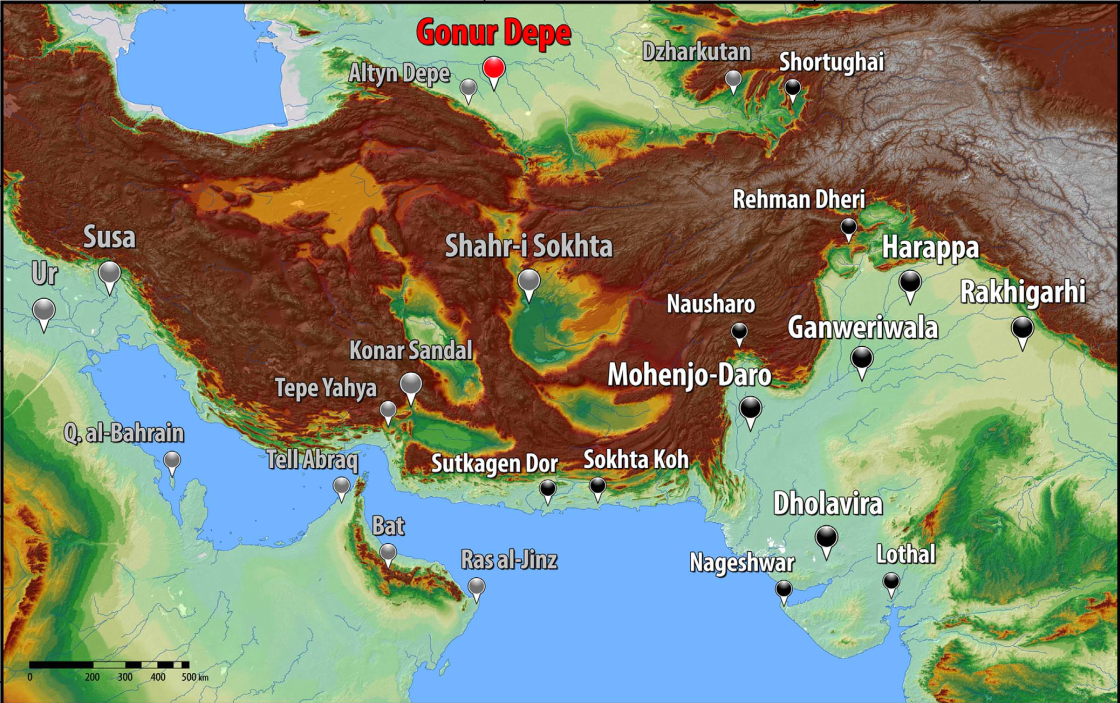
The Chalcolithic & Bronze Age civilizations geographically closest to the Harappan or the Saraswati-Sindhu civilization were the twin Eastern Iranian civilizations of Helmand and Halil Rud/Jiroft and the Central Asian civilization of BMAC spread over the southern margins of Turkmenistan & Uzbekistan and as far east as Tajikistan.

We have discussed the genetic evidence which showed profound Harappan influence in Helmand and BMAC while the aDNA from Halil Rud civilization, situated in the Kerman province of modern Iran, further west of Shahr-i-Sokhta, remains to be sequenced and published.

After having had a look at the genetic data that supports an Out of India migration into these adjacent regions of Eastern Iran & Central Asia, it would be in the fitness of things to also have a brief encounter with the archaeological evidence that can prop up the above said genetic evidence.

The archaeological data is much varied and quite interesting. However there is a lot more to learn and perhaps we have so far just scratched the surface.


Helmand & Halil Rud

The twin civilizations of Helmand and Halil Rud, situated to the west of the Harappan civilization, were not known until a few decades ago and even today we know very little about them. In many ways, we know even less about them than what we know about the Harappan civilization itself.

From what we know it is fairly clear that both of these Eastern Iranian civilizations preceded by several centuries the BMAC civilization and were roughly contemporaneous with the Harappan civilization. All of these southern civilizations, including the Harappan, are in turn considered to have played a defining role in the formation of the BMAC, a proposition which has been confirmed by ancient DNA evidence.

Both the Helmand civilization and its western neighbour, the Halil Rud civilization were intimately in contact with their geographically massive eastern neighbouring civilization of the Harappans.

In order to avoid an unduly long post, I shall limit myself over here to the very intriguing linkages of Harappans with the Helmand civilization only.

Helmand & Harappan


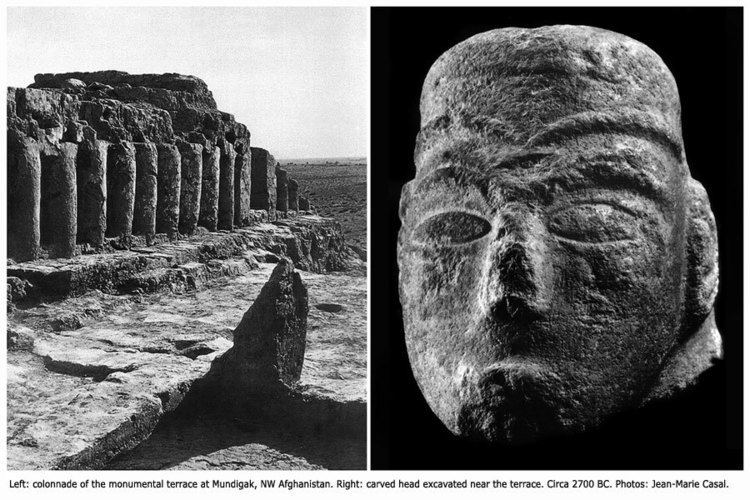
(Mundigak, Afghanistan)

(Burnt Building, Shahr-i-Sokhta)

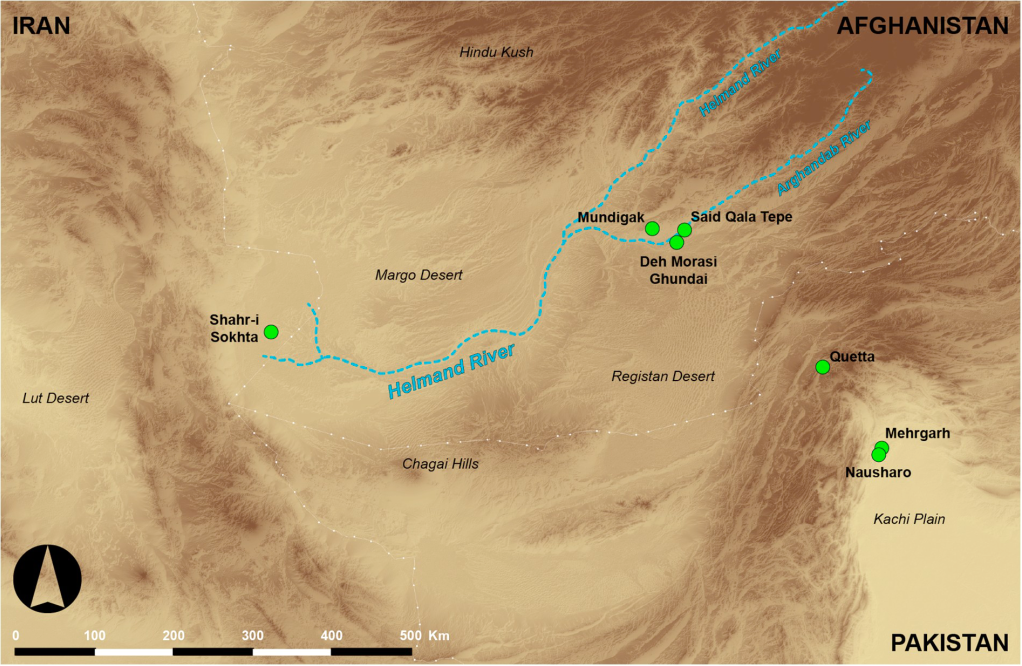
The Helmand civilization centred on the river Helmand which flows from Afghanistan into Sistan province of Eastern Iran. We know atleast two of its major sites – Mundigak in Afghanistan and Shahr-i-Sokhta in eastern Iran.

The genetic evidence from Shahr-i-Sokhta, the biggest Helmand site, confirms that the relations with the Harappans were quite strong with nearly half of all ancient samples from that site considered to have been migrants from the Harappan region, especially from Baluchistan and the rest of the ancient samples showing admixture from these migrants.

According to the French archaeologist, Jean Francois Jarrige, the principle excavator of Mehrgarh, as stated in this article, the foundation of Mundigak, the other Helmand site, can be interpreted as the settling of people from Baluchistan of the Mehrgarh Chalcolithic tradition and the remains of Period I at Mundigak fit almost perfectly the cultural assemblage of Mehrgarh Period III.

It is also significant that the pottery of Mundigak I, the earliest occupation of the “Helmand” cultural complex, corresponds to the Mehrgarh III pottery, in technique—quality of the paste and manufacture— as well in the shapes and decoration, probably within a phase dated to the end of the 5th millennium. The pottery of Mundigak I-II (fi g. 2: 3-5, 7-8) can also be related to the context of Balochistan ceramic productions, especially from Mehrgarh IV around 3500 BC. (link)

The foundation of Mundigak, incidentally dates to around 5000 BC and is therefore significantly older to the foundation of Shahr-i-Sokhta, its sister site in Helmand more than 400 kms to its west, whose earliest dates go only upto 3300 BC and where we have already seen that the Harappan or Baluchistani migrants were already present from the earliest period.

While , “..there is general agreement that Shahr-i Sokhta and Mundigak have the same material culture including similar buff ceramic material, validating the existence of a Helmand Valley archaeological culture at the time corresponding to Period I at the former and Period III at the latter…” it also needs to be understood that “Shahr-i-Sokhta I nonetheless has inter-regional connections that are not recorded at Mundigak. In particular, a series of objects point to contacts to the west…”(link)

With regard to Shahr-i-Sokhta, which in its most expansive phase was atleast around 150 hect. it should be noted that “…Shahr-i-Sokhta I is the foundation period of this site and that no other site (or no context at this site) has been observed thus far in Seistan with older archaeological deposits. Since no evidence for an older settlement is observed in this region, the most rational reconstruction is that Shahr-i Sokhta was founded by communities coming from (an)other area(s) in the late fourth millennium BCE.” (link same as above).

An important provenance study of the Shahr-i-Sokhta ceramics also indicated a strong influence from the west from the Baluchistani region and Mundigak. Almost all of the deluxe pottery that was found at the site and associated with elite graves was of non-local origin and were imports from the Iranian and Pakistani Baluchistan region.

The authors of this study also observe, “The possibility indeed remains that, for instance, the cultural assemblage at Mundigak, or  a part of it, belonged to people who later moved to Shahr-i-Sokhta.”

We have already noted earlier how, Mundigak itself likely derives from the Mehrgarh Chalcolithic tradition of Pakistani Baluchistan. This tradition, also known as Damb Sadat or Quetta pottery tradition is one of the 4 major early pottery traditions of Early Harappans.

Continue reading The Archaeological Evidence for OIT – I

The Indo-Aryan enigma

A friend sent me this piece, Aryan Debate: Do the recent genetic studies validate Aryan invasion theory? The conclusion:

To sum up, how exactly the Indo-Aryanization India happened would remain unclear unless we get more ancient DNA samples, especially that of male individuals, from various Harappan sites and Gangetic regions as well. Until detailed studies are conducted on them, we can only speculate about the ancient events. Thus, far from validating AIT, these two papers, both Narasimhan et al and Shinde et al, leaves out many unresolved issues.

In my opinion, based on the current genetic data we have, we can now safely reject the kulturkugel BMAC proxy theory and the theory of large scale male dominant invasion into Swat valley which were modelled by the Indo-Europeanists and Indologists for Aryan expansions into India. Also since Indus periphery/Harappan ancestry overwhelmingly peaks among ANI group whose closest descendants are North Indian Indo-Aryan speakers, it is likely that the Indus periphery/Harappan ancestry would have represented some early Indo-Aryan or perhaps other related groups.

A common refrain for several years has been “let’s wait for ancient DNA.” Now that it’s here, is there more clarity?

On some questions, yes. On others, no. It seems now that while the Bactria-Margiana Archaeological Complex (BMAC) was influenced culturally and demographically by the Indus Valley Civilization (IVC), the BMAC did not impact South Asia demographically (though perhaps culturally via the Indo-Aryans; e.g., soma). This is definitely something that was learned.

But ancient DNA has not, and may not, solve the “Aryan question” in regards to origins and impact. Ultimately a synoptic take is probably necessary, where many disciplines and regional histories and archaeology are brought to bear. The main critique I have of the “Indian take” is that it is often substituting Indocentrism for Eurocentrism.

The reality is that the categories at issue, European or Indian, didn’t really make sense before the Iron Age, at the earliest (I would argue that a modern European self-identity really comes into being with the rise of Islam and the sundering of the Mediterranean). The early Indo-Europeans helped create the categories of the world around us, they were not of it.

Brown Pundits