Open Thread

The boycott has made Brown Pundits quieter, almost peaceful. I don’t mind it. Every few years the site reaches this point; it grows, gains noise, and starts to feel less like a hobby and more like an obligation. Then it falls back to something smaller and saner.

I’ve also realised that the Indo-Pak frame doesn’t really fit my life anymore. It was useful once because that’s where the conversation was; it gave the blog an audience. But most of that talk is stale now; the same arguments, just louder.

What interests me instead are the wider patterns: how post-colonial societies move in a world that is no longer unipolar. The Gulf’s rise, Africa’s experiments, China’s reach, India’s own breadth. How old hierarchies break down, and new ones form.

I don’t like following the news. So perhaps BP will drift in that direction. Fewer posts, less noise, more reflection. A space for thinking about what comes after the post-colonial age, when the world starts to finally balance itself again.

Zia-Era Pakistan & Today’s India

There are actual leftists and other folks who don’t regurgitate PakMil propaganda – of this I’m aware. But even amongst those, illiteracy on India is rife. I laugh with bemusement at the number of times self-appointed Pakistani intellechawals sagely nod their heads and compare Zia-Era Pakistan to present-day Hindootva. I ‘get’ that such comparisons soothes Pakistani insecurities vis-a-vis its larger, democratic neighbor, but it really destroys their credibility.

Kabir removed three of Dave’s comments, and while I felt it was over-moderation, I’ve kept my promise not to interfere unnecessarily in his threads.

The excerpt above, though, is interesting — the comparison between Zia’s Pakistan and Modi’s India. What’s striking about both is the twin emphasis on capitalism and cultural conservatism: the promise of economic growth wrapped in moral revival. It raises a deeper question — whether right-wing politics are, paradoxically, the only antidote societies find to extreme inequality.

Class, even more than caste or creed, is the fundamental distinction in any society. The bottom half ultimately has more in common with each other than with the top half. Yet society endures only when that bottom half is so compromised that it cannot mount effective resistance. When the Establishment promise uplift but depend on the passivity of the lower half, then the “distribution of prosperity”, twinned with ideology, itself becomes the subtlest form of control.

Hijab: Between Revelation and Regulation

When Bahá’u’lláh wrote that every word of the Qur’ān bears meaning and intention, he was reminding us that revelation, properly read, resists reduction.  Scripture, like language itself, is alive; it breathes, it hesitates, it renews.  Yet somewhere between the living word and the legislated code, the hijab became a symbol, of modesty, of defiance, of cultural siege, of theological purity, until its nuance was lost to politics.

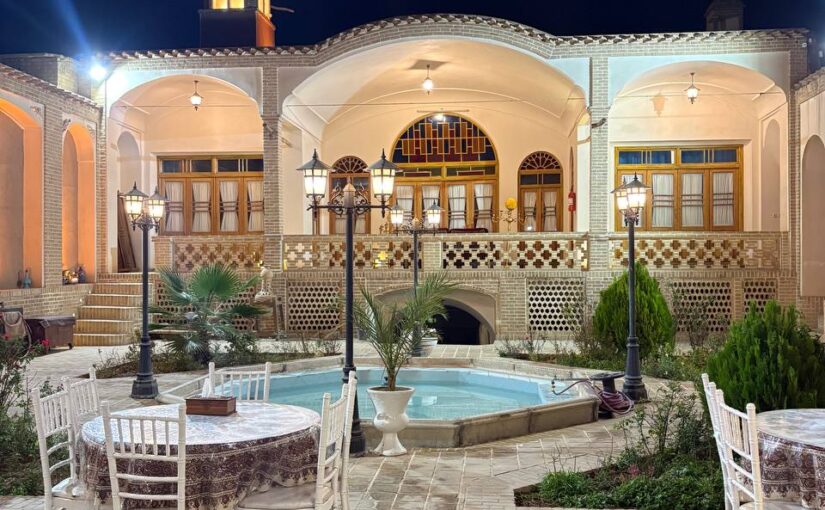
My friend is in Kashan, a city of gardens and scholars, and perhaps among the most traditional pockets of Iran.  She forgot her hijab back in her home city and now cannot step out of her hotel.  The irony is sharp: the veil that once signified spiritual privacy has become an enclosure of space.  Kashan’s cobbled lanes whisper poetry, but they also enforce silence.

Meanwhile, the liberal axis of Iran, Shiraz, Tehran, Gilan, Mazandaran, Semnan, walks the tightrope between revelation and rebellion.  The North dresses as Europe, the Centre prays as Qom.  Mahsa Amini’s martyrdom was Kurdish, and therefore doubly liminal: ethnically marginal, religiously symbolic (the Kurds are very secular as a rule of thumb; more Zoroastrian than the Persians).  Her death reopened a question the Qur’ān itself leaves open — what, after all, does ḥijāb mean?

1. The Qur’ānic Vocabulary of Modesty Continue reading Hijab: Between Revelation and Regulation

Vantara, Caste, and the Fragile Commons

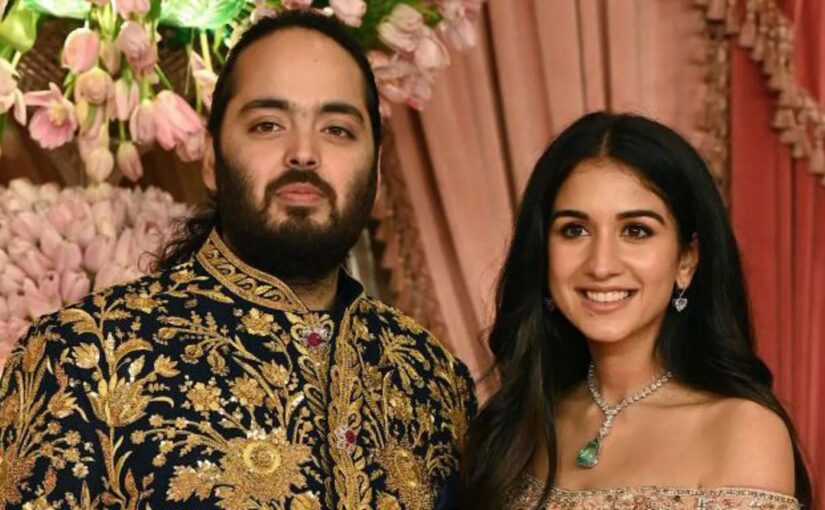
I was speaking with Dr. Lalchand about a number of things, from Anant Ambani’s wildlife project to the recent caste discourse on Brown Pundits. Both, strangely enough, converge around the theme of scrutiny; of who gets to build, who gets to critique, and who sets the rules of engagement.

Let’s start with Vantara. Anant Ambani’s wildlife refuge is coming under sustained criticism. But I ask: why shouldn’t Bharat, arguably the only major civilisation that views animals as divinely inspired, have a world-class zoo or rescue center? If done with sensitivity and vision, this could be a profound expression of India’s Hindu civilisational ethos.

Vantara houses over 200 elephants, 50 bears, 160 tigers, 200 lions, 250 leopards, and 900 crocodiles; albeit imported from across the world into the baking flatlands beside an oil refinery. The scale is staggering. Yes, there are questions: about captive animal welfare, about the case of Pratima the elephant, about transparency. But we should also be able to think of Indian megafauna conservation at global scale especially in a nation where sacred animals are part of dharmic memory.

America had its Gilded Age. The robber barons left behind libraries, parks, and museums. Can’t India do the same? Or do we reflexively dismiss anything built by wealth as vanity? Can there not be a deeper Dharma behind patronage?

And that brings me yet again to caste, controversy, and the structure of Brown Pundits. Continue reading Vantara, Caste, and the Fragile Commons

Homebound with Ishaan Khatter

Last night Dr. Lalchand & I watched Homebound, India’s submission to the Oscars, at Apple Cinemas in Cambridge, Mass. This sad film follows a Dalit (Chandan Kumar) and a Muslim (Mohammed Shoaib Ali) struggling against the odds during the pandemic, their solidarity fictionalized as a fragile bridge across India’s deepest divides.

On the surface, it is a familiar story: the disenfranchised facing systemic barriers. But what struck me was how privilege itself performed disenfranchisement. Ishaan Khatter, brother to Shahid Kapoor, plays the marginalized Muslim. Janhvi Kapoor, descended from Bollywood royalty, embodies a Dalit woman. Vishal Jethwa, a bright-eyed Gujarati, portrays the Bhojpuri Dalit lead. This is not unique to India; Hollywood, too, casts elites as workers. Yet it raises the question: when poverty is performed rather than lived, is it “Dalit-washing”?


Poverty, Emotion, and Representation

Watching the film, I reflected on poverty’s emotional landscape. For elites, emotions can be expansive, indulgent, aestheticized into art. For the working poor, emotions are often constrained by survival — narrowed into necessity. Homebound tried to humanize its characters, but I wondered whether it romanticized what in practice is a relentless narrowing of possibility.

The West rewards this narrative. Parasite in Korea, Iranian cinema, Slumdog Millionaire — poverty & Global South tribulations as spectacle becomes “poverty porn.” The Guardian gave Homebound four stars. Great art often tilts melancholic, yes, but here the melancholia is curated for Western consumption.


Identity, Vectors, and Islamicate Selfhood

More unexpectedly, the film stirred something personal. I realized how much I have vacated my own Islamic identity. It was not traumatic. As a Bahá’í with Persian cultural roots, I found overlap — even comfort — in Hindu traditions. Dalits, in their rapid Hinduization, represent one vector of assimilation; Muslims and scheduled-caste Muslims, often in tension, another. Homebound imagines solidarity, but in life these vectors pull unequally. Continue reading Homebound with Ishaan Khatter

Travelling – Open Thread

🔗 Links shared from the comments


💬 Keep the links and thoughts coming — BP works best when the Commentariat bring their own sources into the mix.

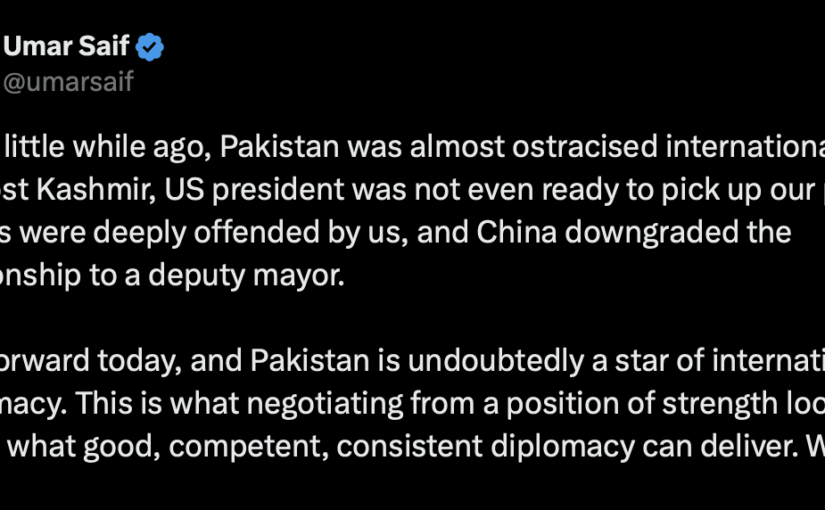
Pakistan: The Realpolitik State

In a recent exchange, Kabir suggested that Pakistanis often feel unwelcome in our discussions on Brown Pundits, and that constant criticism of their country creates a sense of unease. It is worth pausing to reflect on this. Pakistanis, like all of us, are shaped by history and circumstance. And yet, there is something in the cultural tenor of Pakistan that makes open engagement difficult.

I say this not to provoke but to observe. Pakistan, as a society, often leans heavily on hierarchism, patronage, and a culture of deference. To borrow an old saying about the Somalis, that every man thinks himself a Sulṭán, one might say that Pakistanis often view themselves through the prism of status and validation. This instinct is hardly unique; Indians, too, have their caste-bound privileges and invisible hierarchies. But in India, these structures are embedded in a dense cultural fabric; family, caste, neighbourhood, ritual, that, for all their flaws, anchor society. Pakistan, by contrast, feels less rooted. It is a younger country (with old traditions), with fewer inherited cultural layers to draw on.

This is not simply an abstract point. When I married, we drew freely from Hindu rituals (dual ceremonies, Bahá’í incl.), Persian customs, and Sindhi traditions, blending them into something whole. But I realised there was nothing distinctly “Pakistani” to contribute; no cultural motif that stood outside India or Iran (we didn’t do a Walima, which is Muslim). Pakistan is, in many ways, a derivation: a state forged through separation, rather than a civilization with deep roots of its own. The cultural space it occupies has been overlaid with militant nationalism and, too often, Hindu-phobia (Kabir is so inured to it that he isn’t able to recognise that but on the flipside so is the Commentariat towards Islam).

To acknowledge this is not to deny the prejudices of Indians toward Muslims, which are very real and enduring. Nor is it to ignore the deracinated, secular archetype embodied by figures like Benazir Bhutto, who seemed neither fully Muslim nor fully Western, suspended between worlds and who are the cultural elite of Pakistan (what they give up on their bridge is their Hindu origins; more than being half-Persian, Benazir’s nani was Hindu). It is simply to note that Pakistan’s cultural story remains unsettled & thus interesting.


Validation and Audience Continue reading Pakistan: The Realpolitik State

Links on My Browser Right Now – Open Thread

A few pieces I’ve been reading this week:


Reflections

On the Ummah: Muslims have often failed to concede ground in internal debates, which has left them politically boxed in. One reform across all denominations would be to return directly to the Quran as the primary authority. That alone would dissolve many cultural accretions, halal (animals should be stunned before slaughter), hijab (a Sassanian trait), and other practices, into something more adaptive.

And here’s a more speculative question: if the “Satanic Verses” were reconsidered if Al-Lat, Al-Uzzah, and Al-Manat were understood as sacred divinities at the threshold of the Lote Tree, would that make Islam more fluid, especially for minority-majority dynamics?

On Kabir: I’m not moderating him out, but readers should be aware that he frames everything through Muslim-rights activism. Engage, but don’t get gaslit into endless provocations. Everyone is entitled to their nationalisms — but they can’t claim liberalism at the same time. That tension makes it worth examining how plurality is treated within the Hindu fold itself. Dharma, unlike the Abrahamic Faiths, tends to all for multiple truths co-existing with each other (Buddhism and indigenous East Asian religions).


👉 Over to you. I’m retreating from heavy moderation — I see BP’s strength in letting the commentariat lead. Biases are fine. Gratuitous abuse is not.

Image

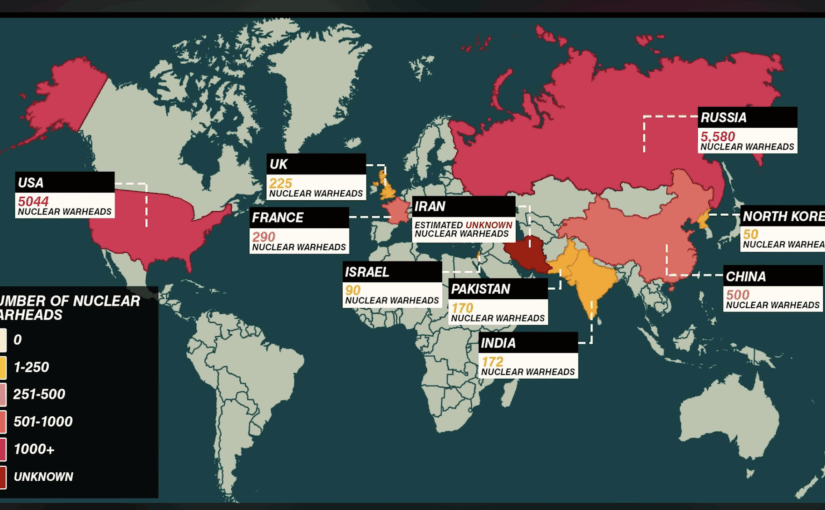
“In March 1998 the Indian PM Gujral, told … “Pakistan was not capable of making atomic bombs.” he had been convinced by Indian Intelligence and Dr Raja Raman, the head of Indian Atomic Energy Commission, who had publicly claimed that nuclear weapon were beyond Pakistan’s reach.”
Brown Pundits