Open Thread + A Note on Standards

Brown Pundits has always been a forum for the kind of thinking that most outlets are too timid or too tribal to publish. We intend to keep it that way. But that standard cuts both ways, and we are raising it.

Effective immediately, the moderation policy is zero tolerance.

This is not a crackdown on opinion. We welcome disagreement; sharp, even uncomfortable disagreement. What we will no longer tolerate is noise dressed up as insight.

What does noise look like? You know it when you read it. It is the rattling of nuclear talking points that have not been updated since 1998. It is the reduction of a civilisation of 220 million people, or of a billion-and-a-half, to a single variable: the Crescent, or the Saffron. It is venom without weight, and venting without argument.

Pakistan is complex. India is complex. Every human society is, at its foundation, irreducibly complex.

Any comment that treats either as otherwise will be moderated; sometimes publicly, sometimes silently. We apply the sniff test: does it smell right, given the context? Given how tight our Editorship and Commentariat is, we will be judicious, as we have always been; for instance the Precedent post on the controversial Dhuruandar sequel remains Gaurav Lele’s.

This applies to both sides of every line we cover; geographical, civilisational, sectarian, or political.

We are not asking for bookishness. We are not asking for academic caution or diplomatic hedging. We are asking for the one thing that separates a pundit from a troll: considered thought. If you are going to cast aspersions, earn them. Make the case. Bring the weight. If you cannot, do not post.

We have a large and growing commentariat. That is something to be proud of. It is also a responsibility; to each other, and to the readers who come here because they expect better than what they can find elsewhere.

We expect better. We will enforce it.

Thank you for your attention to this matter.

— The Editors, Brown Pundits Continue reading Open Thread + A Note on Standards

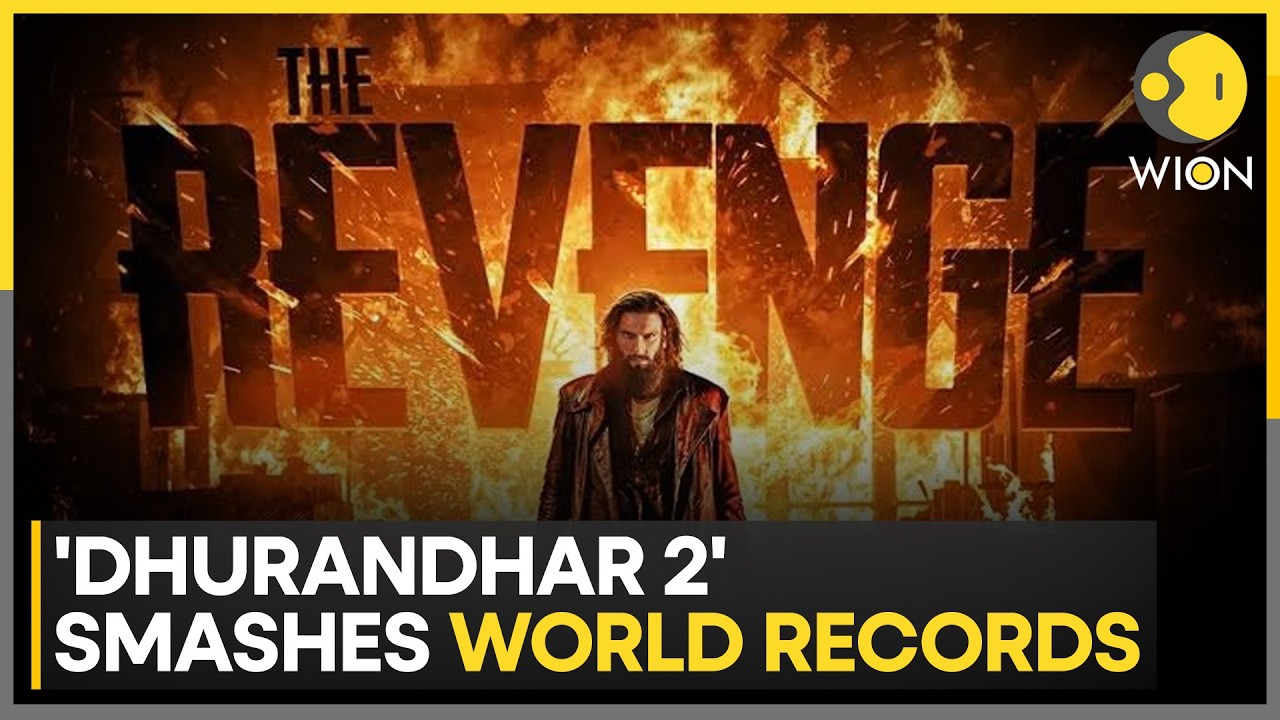
Dhurandhar, Politics of Bollywood & India Pakistan

I had avoided the Dhurandhar hype for the last four months. I finally watched the first movie on Netflix and then read XTM’s review and watched the 2nd part in theatre. I profoundly disagreed with it—especially the line:

“By routing this grief through an anti-Pakistan narrative, the film asks Hamza to deny his Sikhness in order to become fully Indian, and frames that erasure as redemption.”

I’m not writing a formal review of the movie, but I will try to respond to a few generic questions raised on this forum and across social media regarding Dhurandhar.


Is the villain missing?

I agree with XTM that a central villain is missing in Part 1, but perhaps we should see Dhurandhar as a 7‑hour film split into two parts, rather than a standalone first installment.


Part 1 vs Part 2

Personally, I felt Part 1 was more tightly written and better dramatized. While some reviewers saw the love story as a needless distraction, I viewed it as a way to explore Hamza’s humanity despite his profession.


Is Dhurandhar Anti‑Islam?

On the contrary, I felt the filmmakers went out of their way to separate the issue of anti‑India terrorism from Islam—despite the fact that some terror groups do draw on fundamentalist interpretations of religion.
The villains are not portrayed as devout Muslims; they are not shown praying before missions. Rehman Dakait’s wife lighting his cigarette as a good‑luck gesture is a good example.

One could even argue that Dhurandhar focuses almost entirely on political motivations within Pakistan, while ignoring any potential religious motivations behind the Indo‑Pak conflict. I don’t know exactly how the ISI thinks, but I would wager that at least some religious motivations do exist—it cannot be purely political.


Is Dhurandhar Anti‑Pakistan?

Obviously, it is—but I disagree with XTM’s assertion that it dehumanizes Pakistani Muslims.
I didn’t enjoy the montage of political killings by “unknown gunmen”; it felt shallow. But it wasn’t the sort of random, gleeful violence we saw with Gaitonde in Sacred Games during the 1993 riots.

The film definitely leans dark, but I would still call it shades of grey, especially because of Hamza’s conversations with his wife.

I also believe that Major Iqbal’s character is humanized. He carries the burden of his father’s sins, and the mental torture he undergoes—while still maintaining a link to his wife and child—would break almost anyone. We can see why Major Iqbal becomes who he is. Ironically, this humanization also makes him a less effective villain than Rehman Dakait, as many reviewers have noted.


Is Dhurandhar pro‑Modi propaganda?

I may be wrong, but I felt the film used real politics—like demonetization—to weave its plot. Using real events increases impact, and I think that’s what the filmmakers were aiming for.

Does this mean it has no propaganda effect? Of course not. But compared to the list of A‑list Bollywood movies I’ve seen over the years, this is nothing unusual. We will probably see Hollywood films justifying the Iran war in a decade or so—that has always been the pattern.

If you pay attention, the film also touches upon how previous governments—Indira Gandhi’s as well as Manmohan Singh’s—played roles in shaping certain outcomes. It is not a “Modi or bust” narrative.
However, it would be blind to deny that the film does portray the Modi government’s actions toward Pakistan and terrorism in a positive light.


Jaskirat’s Arc

While I found certain aspects of the film underwhelming, I thoroughly enjoyed Jaskirat’s arc. Here, I completely disagree with XTM. The movie does not celebrate Jaskirat’s transformation into a killer—it shows the cost he pays at every step. It also explicitly shows how he is used by the establishment.

Jaskirat doesn’t become an intelligence operative because Pakistan “earned his hatred.” He becomes one because it was the best choice available to him. The film wants viewers to see the price soldiers pay for their “jobs.”

Also i absolutely do not understand why XTM thinks Jaskirat’s Sikhness is erased in the movie. Rather Jaskirat choses to travel back to Pathankot as a tired  Sikh in full Pagdi not macho silky muscly Hamza. I think going beyond this straightforward narrative into the alleged drugs, land dispute, Khalistan angle while thinking erasure of Sikhness or History is something i absolutely do not get.


On Hatred Being ‘Installed’

XTM claims:

“The hatred is not earned. It is installed.”

I disagree. You do see Hamza’s transformation through Lyari’s horrific violence, the betrayal of the Baloch by Rehman, and 26/11. You can see a monster being born in Lyari, but even then he retains his humanity—which becomes evident again when he reacts to killing his friend.

The movie does not end with a “happily ever after” for either Hamza or Jaskirat. It wants you to examine that, not ignore it.


My Take

I enjoyed both movies. Like XTM and many others, I agree that Part 2 has more flaws while Part 1 is far more seamless. Still, Jaskirat Singh Rangi’s arc in Part 2 is the highlight of the entire seven hours.


On India–Pakistan

Contrary to what social media suggests, India as a whole has moved on from Pakistan. You can see this from the declining obsession with India–Pakistan cricket matches compared to the 1990s and 2000s.

Yet, a significant number of Indians derive a kind of sadistic pleasure from Pakistan’s struggles. You see this reflected in reactions to news, such as Pakistan mediating in the Iran crisis—where both the Hindu right wing and the opposition twist the narrative for political ends.

If you once hated your neighbour in the slum you grew up in, would you still mock his poverty after moving into a middle‑class apartment? Or should you aspire to grow on your own terms?

This attitude towards Pakistan is self‑defeating. I honestly pity it.
My message to fellow Indians: Grow up and move on. Look East.

What if Pakistan successfully mediates in the Iran crisis? What if Pakistan continues to punch above its weight diplomatically?

If their mediation helps solve an energy crisis—unlikely, but possible—shouldn’t I, as an energy‑deficient Indian, be happy? If Pakistan’s rise ever poses a genuine risk to India, I will worry about it then. Until that point, I prefer to leave it to the agencies and the government. If Pakistan becomes richer and doesn’t support terrorism against India why would that be a bad thing ? I am not being naive but i think there is a marginal chance of Ind- Bangladesh level relations with Pakistan in 20 years if not 10. Inshallah

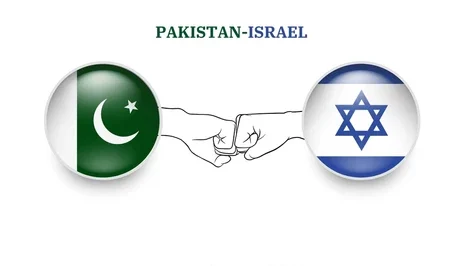
Pakistan is the Israel of the Subcontinent

A Brown Pundits Precedent Post

I. The Ideology Before the Nation

Pakistan has a birth certificate: a 1933 pamphlet by Choudhry Rahmat Ali. Israel has the Basel Programme of 1897. Both nations emerged not from an ancient territorial consciousness but from an ideological project; one that required, as its sustaining premise, the claim that a religious minority could not coexist within a pluralist polity. This is not a slur; it is the historical record.

What makes both nations structurally similar is that their nationalism is grievance-generative by design. Israel requires the Palestinian question; Pakistan requires Kashmir. Without the wound, the ideology loses its cohering force. This is why, as Kabir inadvertently demonstrates in thread after thread, Kashmir is not merely a territorial dispute for Pakistan; it is an existential necessity. Indian nationalism has no equivalent. India does not need Kashmir to know what it is. Pakistan does.

II. Organic vs. Constructed Nationalism

Omar has made the point that durable nationalism must be organic; rooted in geography, language, ethnicity, or long civilisational memory. Bangladesh is a useful comparison: Bengali Muslim nationalism is at least tethered to a linguistic and territorial reality. The Bengalis of East Pakistan had a mother tongue, a delta, a literary tradition. When Pakistan tried to impose Urdu on them, they revolted; because Bengali identity had roots.

Pakistan’s tragedy is that Urdu itself is borrowed. It is a prestige creole, Persianised, Arabicised North Indian court language, that is the mother tongue of perhaps 7% of Pakistan’s population (the Muhajir elite but Urdu had admittedly very deep roots in Lahore). It was imposed as a national language precisely because it belonged to no one’s soil, and could therefore function as a neutral imperial medium. The irony is that Urdu is a derivative of Persian, and Persian, the language Pakistan’s nationalism effectively displaced, was the actual civilisational glue of the entire region from Kabul to Lucknow. In the Golestan framework, Persian would resume its natural role as the prestige link language. Pakistan’s nationalism requires its absence.

III. A Core-Periphery Imperial Topology Continue reading Pakistan is the Israel of the Subcontinent

Pakistan must not treat Afghanistan like Gaza

[A note to readers: BB’s open thread is taking a short break while he recalibrates to high-signal posting]

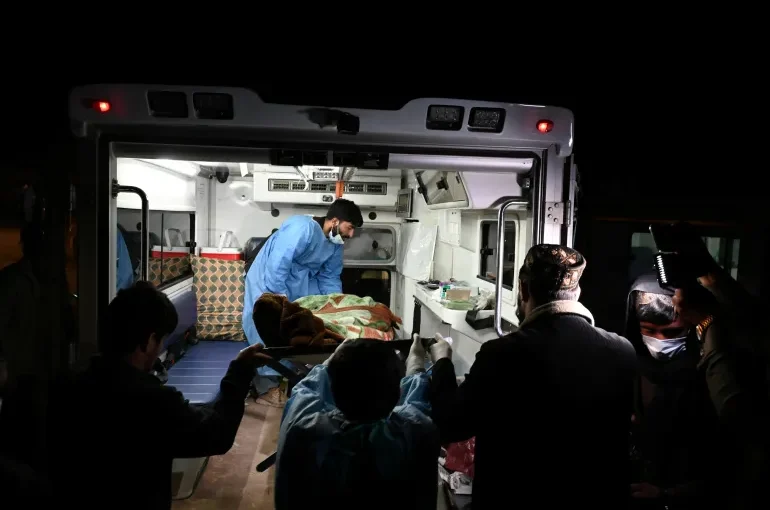
Pakistan Strikes a Hospital in Kabul.

Late on Monday night, the 28th night of Ramadan,  a missile struck the Omid (“Hope”) Addiction Treatment Hospital in Kabul. It is a 2,000-bed facility built in a former NATO camp, housing thousands of young Afghans receiving treatment for drug dependency. Witnesses said they heard three explosions just as patients were completing evening prayers. Two bombs struck patient rooms directly. “The whole place caught fire. It was like doomsday,” one survivor told Reuters. Al Jazeera

Taliban authorities say 408 were killed and 265 injured; figures that remain unverified by any independent party, though the physical destruction of the hospital and the ongoing rescue operation are not in dispute. Rescuers were still pulling bodies from rubble by flashlight through the night. The UN human rights expert for Afghanistan, Richard Bennett, said he was “dismayed” and urged all parties to “respect international law, including the protection of civilians and civilian objects such as hospitals.ABC News

Pakistan insists its strikes “precisely targeted military installations and terrorist support infrastructure” in Kabul and Nangarhar, with targeting “carefully undertaken to ensure no collateral damage.CP24

One witness at the scene noted military units were positioned around the hospital perimeter; which may explain the targeting logic, if not excuse it. No secondary explosions consistent with an arms depot were filmed.

Afghanistan-Pakistan border: new centre of the 'war on terror', by Philippe Rekacewicz (Le Monde diplomatique - English edition, December 2009)
the war

The pattern matters as much as the incident.

Continue reading Pakistan must not treat Afghanistan like Gaza

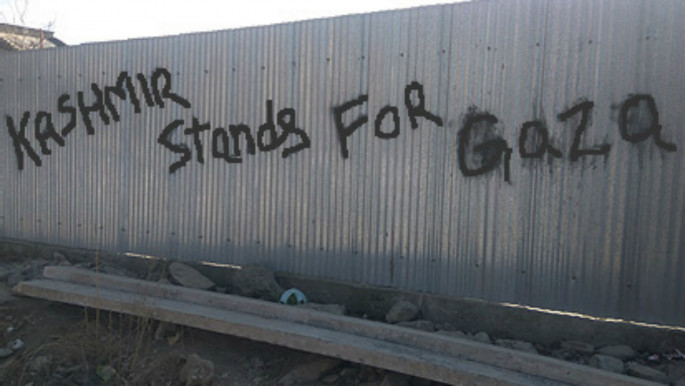
Kashmir is not Palestine.

It seems apparently that Kashmir is Palestine. That India is Israel. That Kashmiri Muslims are Palestinians.

Why the Return of Kashmiri Pandits Is Still a Distant Dream - The New York  Times
Displaced from their Vatan

First The Pandits were actually displaced. 100,000-200,000 people (estimates vary) fled the Valley in 1990 under explicit death threats, targeted assassinations, mosque loudspeakers announcing their departure was required. This is the closest thing to actual ethnic cleansing the Valley has seen in living memory, and it was directed at Hindus, by militants operating with Pakistani ISI support.

We are not arguing that everything is fine in the Valley. It is not that Delhi’s approach to Kashmir has been faultless, or that the revocation of Article 370 was without consequence for Kashmiri identity. Nor can it be denied that there is genuine anguish among Kashmiri Muslims.

Kashmiri Muslim Women Pray Relic Displayed Editorial Stock Photo - Stock  Image | Shutterstock Editorial
Kashmiri Muslim Women Pray

However the analogy to Palestine is not merely imprecise, for instance the Abdullah family chose India over Pakistan, whereas no Palestinian chose Israel. However this argument is increasingly offensive.

The Gaza Test

Start with the simplest possible question: what is actually happening to the Palestinians?

Gaza before

Continue reading Kashmir is not Palestine.

Kleptocratic Pakistan versus Oligarchic India

A word was flagged in our comments last night. I think it deserves its own post.

Kabir called RNJ’s use “kleptocracyoffensive, when used to describe Pakistan. I understand the instinct. Words carry weight. But here’s my problem: in the High Signal era of Brown Pundits, we don’t retire words because they sting. We interrogate them.

So let’s interrogate this one.

I. What Does the Military Actually Own?

Fauji Fertilizer Company Office PhotosNot metaphorically. Literally. The Fauji Foundation operates across fertiliser, cement, food, banking, and energy. Revenues exceeding $1.5 billion annually. The Army Welfare Trust adds real estate, insurance, agriculture. Neither answers to civilian audit. Neither tables accounts in Parliament. DHA schemes, Defence Housing Authority, operate in every major Pakistani city. Land acquired below market rate. Sold at market rate. The differential isn’t commerce. It’s transfer. Ayesha Siddiqa documented this in Military Inc. back in 2007, estimating military business interests at $20 billion. That figure is now considered conservative. The military controls an estimated 12% of all state land. In a country where land is wealth, that number is not incidental.

II. But Is That Kleptocracy?

Avenfield House, Park Lane by Bree Day Ltd
Continue reading Kleptocratic Pakistan versus Oligarchic India

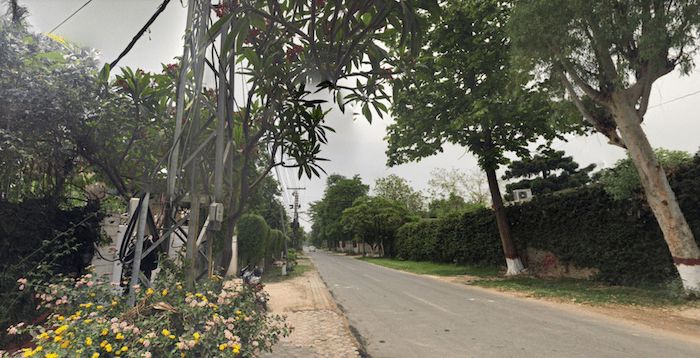
The Cantonment and the Clean Street: Why Pakistan’s Punjab Looks More Ordered Than India’s

A dispatch from a quieter Brown Pundits

The Observation

My Urdu teacher said something that lodged itself in my brain. India is vastly richer than Pakistan; and yet Pakistan’s Punjab, in his experience, feels cleaner. More ordered. Less like South Asia. I pushed back. Then I stopped.

The Numbers

In 2024, India’s GDP per capita was $2,695 against Pakistan’s $1,479; roughly 1.8 times higher on a nominal basis, and India’s total economy at $3.9 trillion is approximately ten times Pakistan’s $372 billion. Until 2008, Pakistan was actually richer per person; India led that measure for only 14 of the 60 years after independence. The divergence is real but recent and accelerating.

The sanitation data cuts against the perception: 81% of Indians have access to basic sanitation versus 72% of Pakistanis (WHO/UNICEF, 2024). On paper, India leads. So the paradox isn’t statistical. It is visual. The question isn’t who has more toilets. It is why certain Pakistani streets feel more governed.

The Answer: 41 Cantonments Continue reading The Cantonment and the Clean Street: Why Pakistan’s Punjab Looks More Ordered Than India’s

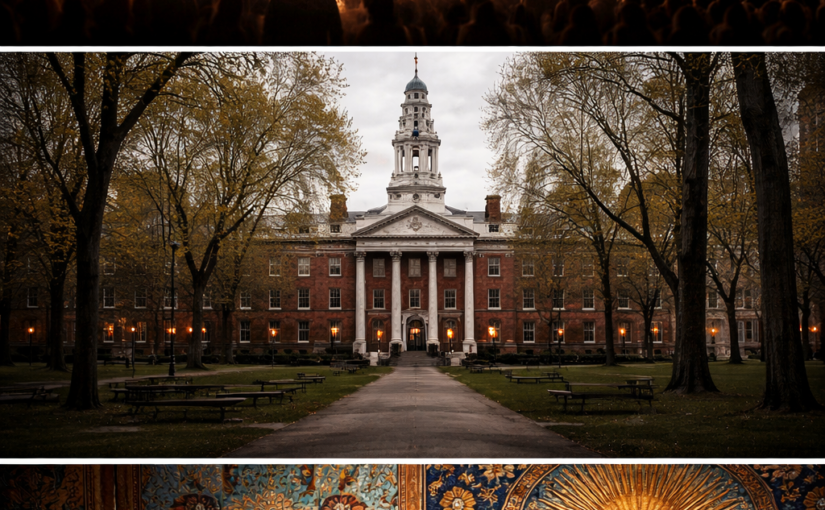
What Tehran and Harvard Have in Common; And Why Trump Is Letting Both Burn


BRAHM Newsletter is back after a hiatus, and the first piece connects three things that don’t usually appear in the same sentence: the Lion and Sun flag flying on Tehran campuses this week, Lisa Randall on Epstein’s jet, and Trump’s noose-without-tightening strategy on Iran.

The argument is simple. Both the Iranian clerical class and the American academic establishment ran the same transaction; moral authority traded quietly for proximity to power. When that transaction becomes visible, as it has in both cases, the institution doesn’t recover quickly. Trump, whatever one thinks of him, has understood this about Iran in a way his predecessors didn’t. He is letting the regime exhaust itself.

BP readers will recognise the geopolitical thread. The BRAHM audience is wider and less South-Asia-focused. While written for them, the analysis however will be familiar here.

Iran Is Burning From Within. Trump Didn’t Light the Match — But He’s Holding It. Just Like He Did With Harvard.

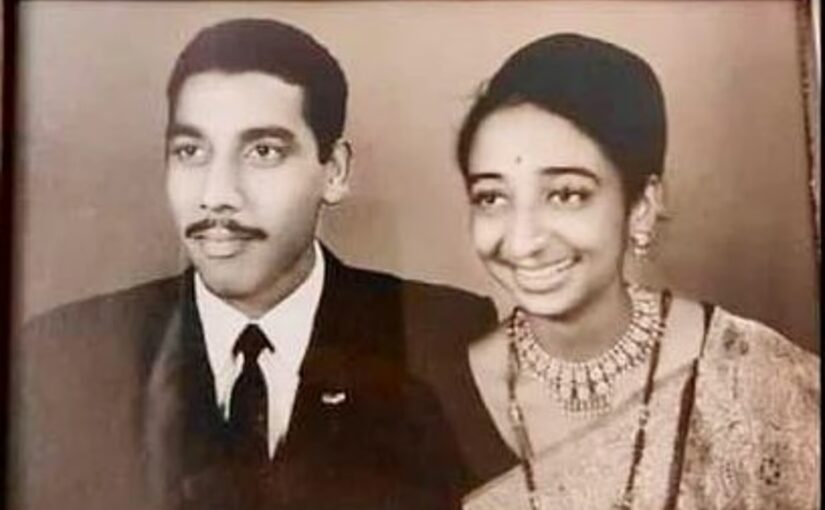
She Parked a Car With Her Husband. Fifty Years Later, She Is Still Waiting.

Before anything about this blog, its standards, or its arguments, I want to begin with a story; because sometimes a single human life cuts through every debate and reminds us what any of this is actually for.

Damayanti Tambay was 21 years old, a three-time national badminton champion, when she married Flight Lieutenant Vijay Tambay in April 1970. Twenty months later, war broke out. On 3 December 1971, they drove together to a garage in Ambala cantonment to park their bottle-green Fiat. That was the last time she saw him.

On 5 December, flying a strike mission over Shorkot Airbase in West Pakistan, Vijay was hit by anti-aircraft fire and ejected. Radio Pakistan later broadcast his name among those captured. Damayanti heard it alone. She felt relief. A prisoner of war comes home eventually, she thought.

He never did.

A Loving Wife’s Unending Search Continue reading She Parked a Car With Her Husband. Fifty Years Later, She Is Still Waiting.

Brown Pundits Is Not a Cesspit. Keep It That Way.

Brown Pundits exists to test ideas against evidence. That is not happening consistently. Four contributors have split into two camps. Threads are filling with video links and recycled assertions. Serious readers are leaving. This post explains what changes and why.

Effective immediately, all four authors have been moved to commentator status until each individually promises they can maintain the same standard in comments as in posts; high signal, evidence-based, no exceptions.

On genocide specifically Continue reading Brown Pundits Is Not a Cesspit. Keep It That Way.

Brown Pundits