Iranic-origin dynasties of the Christian Caucasus

Saint Shushanik – Ardēan Store

The histories of Armenia and Georgia are intricately intertwined with Greater Iran, as evidenced by several dynasties with Iranian origins. Georgia shares a similar historical profile, indicating close ties between the two regions (I won’t even touch on Azerbaijan, which to my mind is simply Russified Iran). With regards to the North Caucasus, notwithstanding Russian ethnic cleansing & genocide (apparently what inspired Dune), there is heavy Persian-Iranian influence (though of course I don’t know nearly enough of the history of the region).

All three of the Great Houses of the Kingdom of Armenia (331 BC to 428 AD) were Iranian origin.

  • Orontid Dynasty (potential ancestral ties to the Achaemenians): Dating back to the 6th century BCE, the Orontids were influential rulers in ancient Armenia during the Achaemenid Persian Empire’s reign.
  • Artaxiad Dynasty (descendants of the previous Orontids, the clue is in the Iranian-loaded name Arta): Succeeding the Orontids, the Artaxiads governed the Kingdom of Armenia from the 2nd century BCE to the 1st century CE, overseeing its territorial expansion and cultural flourishing.
  • Arsacid Dynasty (Armenia): A branch of the Parthian Arsacid dynasty in Iran, the Armenian Arsacids ruled from the 1st to the 4th century CE, with periods of Roman influence interspersed with periods of independence.

There are many other dynasties like the Chosroid, Mihranids, Bagratid (the clues are so obvious in the names) and then even in the Kingdom of Cilician Armenian (the region & inhabitants suffered genocide under the Young Turks) the RubenidHethumid Dynasty had Iranian-links even in the Middle Ages. There is an exotic dynasty, the Mamikonians, who apparently had Chinese-origins but even they intermarried with Iranian nobility eventually.

However, the case of St. Shushanik (pictured above & below) highlights the tension between Christianity in the Caucasus, with its Eastern roots but “West-facing” orientation, and Iranianism, particularly Zoroastrianism.

undefined

Continue reading Iranic-origin dynasties of the Christian Caucasus

Hardliner Who Also Liked Going To The Movies

Author’s Note: This is not an academic or objective essay; rather a personalised opinion on the recent Bharat Ratna awardee. 

Lets begin with two excerpts:

First one:

Then out spake brave Horatius,

The Captain of the Gate:

“To every man upon this earth

Death cometh soon or late.

And how can man die better

Than facing fearful odds,

For the ashes of his fathers,

And the temples of his Gods.”

From Horatius by Thomas Babington Macaulay

Second:

“Mardania! eh Ajudhia nagari Sri Ramchandra Ji ki hai. So, chal, iska darshan kari ”, which translates to: “Mardana! This Ayodhya city belongs to Sri Ramchandra Ji. So let us go for his darshan.”

From Bhai Man Singh’s Janam Sakhi which states that Guru Nanak visited Ayodhya.

Considering the aforementioned excerpts it is perhaps unsurprising that it was a Nanakapanthi Macaulayputra who charioted the movement to reclaim the birthplace of Lord Ram in Ayodhya and rebuild the Ram Temple. Additionally it was his organisational and political manoeuvring skills that shifted the political balance of India from the dominant secular leadership of the Congress party to the widely popular and ascendant Bharatiya Janata Party. It was for all that and many other activities that the current regime awarded him the land’s highest honour the Bharat Ratna. What made the moment more momentous was that it came days after the  consecration of the Ram Temple in Ayodhya. 
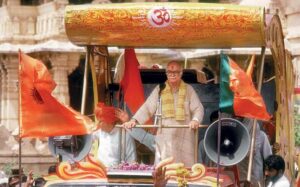
Though currently, the immensely popular Prime Minister Narendra Modi is synonymous with the BJP’s dominance across India’s political landscape, it was the Lal Krishna Advani who acted as one of the chief characters to shift the political levers of the country. Before proceeding further, it is necessary to give the reason behind his moniker – Nanakapanthi Macaulayputra.

LK Advani belonged to a Sindhi Amil Nanakpanthi family whose religious tradition “used to be Sikh rituals”, the holy book at his home being the Sri Guru Granth Sahib. He was educated at St. Patrick’s High School, Karachi, and by his own admission was unfamiliar with Hindi, preferring to speak his mother tongue Sindhi at home, while preferring English as functional language. Even his introduction to the so-called dreaded Rashtriya Swayamsevak Sangh was for lack of a better word, bourgeois one, in his own words:

During my vacation and before joining college, I started playing tennis. One of my regular partners on the tennis court was a friend, Murli Mukhi. One day, right in the middle of the game, he said, ‘I am going’. Utterly surprised, I asked him, ‘How can you go like this, without even completing the set?’ He replied, ‘I have joined the RSS a few days ago. I cannot be late for the shakha because punctuality is very important in that organisation’.

A contextual point to mention here would be the view that the RSS also had certain inspirations behind it. Many scholars quote contemporary accounts about how senior political figures of the early 20th Century like Madan Mohan Malviya and Dr Moonje wanted an organisation fashioned after the British boy scout and army, including but not limited to their marching songs. The RSS march as seen today was inspired by that of British voluntary  forces in areas of trouble to warn citizens. Supposedly Sangh leaders borrowed English tunes to train the RSS band. The aforementioned figures, besides celebrating native heroic legends like Chhatrapati Shivaji Maharaj and Peshwa Baji Rao, also stated that Indians had to develop patriotism the way the British developed theirs. Important wars fought by the British like the Battle of Waterloo and Trafalgar were given as examples. 

Considering this scenario, it is not strange for a moderate Macaulayputra like LK Advani to familiarise himself with the organisation. Thus he joined the RSS in 1942 besides attending discourses on the Bhagavad Gita by Swami Ranganathananda the president of the Karachi centre of Ramakrishna Mission.  This shows Advani to be the recipient of the Indian, rather Indo-Anglian renaissance that swept British India from 1850’s to 1930’s. Couple that with his Amil Nanakpanthi family roots which is the recipient of Bhakti movement.

Also lesser known is the fact that he was related to famed Sufi poetess Dadi Ganga , in fact Advani mentions in his memoirs that his wife Kamla along with her sister Sarla published Dadi Ganga’s Sufi poetry. All these make him the ideal reformist as opposed to the Hindu hardliner the media likes to portray him as; or would it be a leap of faith to say in certain cases, Hindu hardliner is the ideal reformist. 

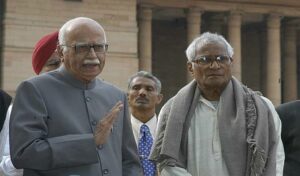
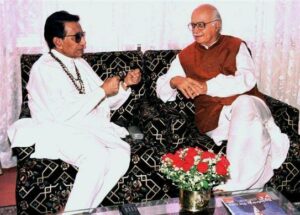
The leap can be taken considering how he organised the political networks connecting the BJP to figures stretching from fiery socialist George Fernandes to Shiv Sena supremo Balasaheb Thackeray.
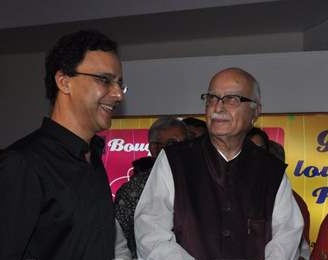
Besides political networking, what is less spoken about Advani (maybe intentionally) is his penchant for films and the filmmakers. As stated by Vidhu Vinod Chopra whose  An Encounter with Faces was nominated for the Academy Award under Best Documentary Short Film in 1979:

 “When I got nominated for an Oscar I had no money, I had nothing and I read in the paper that I was nominated. He gave me an Air India ticket and $ 20 a day and that I owe it to Mr LK Advani. I want the world to know why he is so special to me. Not because he is a politician but because he is the man who sent me to the Oscars.”

On multiple occasions other Hindutva icons like Atal Bihari Vajpayee and Balasaheb Thackeray have been lauded as poets and artists, but Advani as the admiring film buff has been less talked of. Be that as it may, 2024 can be now seen as honouring a Nanakpanthi Macaulayputra who charioted a saffron trail across India’s political landscape and who also liked going to the movies. 

The essay has been published in the following blog as well.

Podcast explores advances in gender equality in India

I highly recommend checking out this podcast as it delves into gender equality advancements deep in rural India (Bihar- site of an upcoming temple). It sheds light on grassroots efforts, including how the birth of a girl child is perceived differently from a boy child, and the barriers girls and women face in education and beyond. Continue reading Podcast explores advances in gender equality in India

Storage and Transport systems of the Great Indian middle class :A “Case“study

Probably during my grandmom’s times the vessels and dabbas were made of stainless steel and the middle class could afford only a few. So the first thing that families did was get their name and date engraved on the dabba/vessel. This also protected the dabba as it was used to identify when found in someone else’s household. During the later years, some of the restaurants also followed the engraving “Stolen from ..”, in the hope that the thief would be ashamed to steal, in vain. The families mostly being joint had only large containers used for storing all staples like dals, flour, and also snacks/sweets made during festivals perhaps

Advent of the tiffin carrier

As time progressed the families became smaller. Also, people started working away from their homes and traveled larger distances each morning making it unviable to get back home for lunch. This was the start of the carry your food to work when you didn’t work in a factory. Most factories served their workers a huge lunch at a very small price. A lot of them made the most of it (more about it sometime else ). So the ones that needed to carry food probably made good with the engraved dabbas either bought or gifted by someone. The gifted dabbas had names of who gifted it to whom and on which date and occasion.Some of the families even had a multi-layer tiffin carrier which helped with the food not getting all mixed up in a single container. The next improvement in this area was the Indian need to eat food hot, while Bombay had the dabbawalas the rest of the country had to procure the “hot case”.The hot case was a show-off in the office and was somehow mistaken to keep food fresh as well.

The just in case dabbas
Indian middle-class households never throw two things, the newspapers, and the dabbas. These dabbas are the ones that have been sent by a restaurant for their food delivery. The dabbas are carefully cleaned, wiped, and stored for a rainy day. When indeed a rainy day happens ,these dabbas are used for packing giveaways of extra food the caterer made to the relatives OR that cake to be packed for children who didn’t turn up.That’s when everyone who wanted to giveaway these lovelies is confronted with the “See I told you”. Builders, and carpenters please take note and build an extra storage space for these temporarily preowned loved ones.The capacity of the storage can be determined based on Swiggy/Zomato order history. I would put the empty glass bottles from Nestle,Nescafe,Nandini etc in the same category though some of them may be actually used to store stuff.

The Russian doll dabbas
Some companies make these dabbas which attract the Indian householder as much as the Russian doll did in the past. A dabba in a dabba in a dabba and more, you get the idea. The purpose apparently is to store stuff to be used in long term in the largest dabba, to the smallest one for immediate daily use and everything in-between left to the owner’s imagination. While the world was recommending Think BIG, the moms were busy thinking how small and cute can these fellas get and kept shopping endlessly .The trouble began when the number of dabbas become too many and one didn’t know which dabba had what. Then came the post-it notes inside the larger dabbas , the cute little fellas were just that ,cute and useless.

The king of dabbas
Last known ,the king of dabbas was released into the world as a panacea for all issues known to mankind. Lasts forever, guaranteed for life , if broken you can get them replaced for new ones so on and so forth. The marketing was the best India has seen perhaps .Every household worth its salt had started to hoard these for every purpose ranging from storage to transportation to tiffin carriers. Some even took household franchises as agents .
Yes, I am talking about Tupperware and the success of the product was so huge that the imitations hit the market immediately with every possible term ending with a ‘ware.. These products were so protected that many children and husbands have gone back to school/work to retrieve the forgotten dabba before they head back home. They would rather lose a limb than the king.

After all this I have stopped thinking of “Dabba nan maga” as an insult .. Proud to be treated as a loved one …Don’t even get me started on the dabbas in the fridge, that needs separate “ treatment “ .

Hurry up! Don’t miss out! Quick!

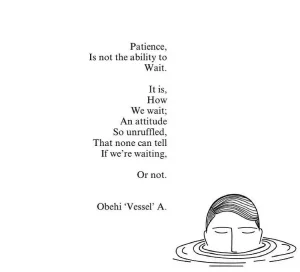
The world is at a frenzied pace in most aspects of our lives! Are we in a sense losing out ( FOMO) if we enjoy doing some things slow and at an enjoyable pace?

We do it to our children :
Hurry up! We are getting late for the bus.
Hurry up! eat your snack soon and start doing your homework
What is 234567 multiplied by 3456? Quick
We have been brainwashing children that they have to be quick at everything they do be it getting ready, displaying a life skill say eating well, or even for that matter all our entrance exams for education/jobs mostly is a race against time

We display it in public places :
The plane has landed, let’s get off fast before it takes off again
The signal will turn red in 2 seconds, let’s cross it anyway, even if we put someone else at risk
Jump queues, I am more important than the others, my time is precious

Based on what we were told when we were children we still want to be First ( faster than the rest) to get to something. While there would be situations that are an emergency, are we wired so strongly that we want to be ahead of others irrespective of our situation or theirs?

We are doing it to our banking system:
My google pay is down, can you please check yours
Don’t have google pay, can you pay from Phone pay
I paid, can you please check now !!!

There was a time when cheques were issued across banks and the clearing cycle could even run into weeks. We got that to a couple of hours and now we have instant payments. The challenge is not that we have instant payments, but are we ready to manage things when the “Instant” is down for an instant?

We are doing to our food/grocery/things delivery
I can see your location, What is taking you so long
Just 1 km from my house, for idli. vade why 30 min to deliver?
Why not 10 minute delivery of groceries and food?

We walked across to the groceries stores to fetch stuff we needed and planned, We hated parcels unless it was an emergency. The fresh food and extra chutney /sambar at the restaurant ending with a strong filter coffee was a delight.

We seem to be in a hurry in every aspect of our lives, from everyday tasks, food, etc to buying a car, a home in our early 20s.

Not at all against the fast-paced life and changes that are evolving with it, Just some questions that arise

Are there some aspects/things that we want to still do well and slowly?

Most of us tend to slow down, observe things, chat leisurely while we wait for our drink/food, read, do nothing during our vacations, and are happy doing so, Is there a Malgudi* kind of city/town life possible in today’s world?

Are we and our next generation ready to wait if something doesn’t work OR when someone else is really in hurry?

The 10-minute food delivery from Zomato triggered this piece

Hurry H(om)e !!


Thuglaq turns 54 and The Forgotten art of Dialectic!


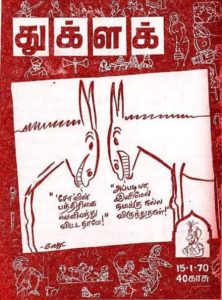
The late “Cho” Ramaswamy was a Indian actor, comedian, editor, political satirist, playwright, film director , Member of Parliament and lawyer . in 1970 he had an argument with his friends who dared him to start a magazine  and to win the bet , he launched a political magazine that turned 54 this year. The first issue had this iconic cartoon where one donkey says to the other ” Looks like this Cho fellow has launched a magazine” and the other replies “Great , we will have a feast then!”.  The cartoon donkeys make their appearance once in a few years while all of us readers have been reading Thuglaq for decades !

I happened to attend the 54th annual meet of Thuglaq, the one-of-a-kind event where the entire rank and file of the magazine meet with its readers, on Pongal day ,as it always happens. This unique practice was started by Cho and after his death in 2016, S. Gurumurthy, the Chartered Accountant, Journalist and RSS Idealogue has been successfully running the magazine while maintaining such traditions as well. Cho, while his sympathies for the right wing and Modi was always transparent , also was known for changing his views as the situation on the ground demanded and did not hesitate to critique even sharply the parties he supported. He was famously responsible for the TMC (Tamil Manila Congress – Moopanar and P.C Chidambaram led) formation and TMC – DMK alliance and helped in shaping the BJP-DMK Alliance during Vajpayee’s time as well when he went against his childhood friend Jayalalitha. Under Gurumurthy, while Thuglaq retains most of the founding tenets of the magazine, discussing mostly only politics and a sliver of spirituality, the irrepressible and at times irreverent humor of Cho is definitely missing. Gurumurthy seems to have almost made it a dry right leaning political magazine to the mild disappointment of long-time readers like me.


In spite of the strong shift to the right, Gurumurthy has retained and even strengthened some unique features of Thuglaq. One being inviting political leaders of all hues including the ones he opposes like DMK, Congress, Communists to share their experiences and points of view in the magazine. And to continue and strengthen this annual unique event on Pongal day when the Editor of the magazine and his entire staff meet and interact with all the readers and invite political leaders to address and interact with the audience as well. Who’s who of Indian politics have attended these meetings – Advani, Modi and most of the BJP Leaders, the erstwhile Janata leaders like VP Singh,  senior communist leaders and Tamil Nadu leaders across political parties.


For this year’s event, the two main guests were Shashi Tharoor from Congress and K Annamalai, the firebrand BJP Tamil Nadu Chief. Sadly, since Annamalai was coming in from a meeting at Delhi, his flight was delayed and by the time he entered the Music Academy Hall, Shashi had finished his speech and had left. The program began the way it always does, with the editor introducing the entire staff of the magazine on stage starting from the veteran reporters like Ramesh whom most of Tamil Nadu knows to the attenders.  This is again a unique gesture that surely must be appreciated. Then selected readers from the audience come to the stage and make their comments, queries and criticisms to which Gurumurthy replies. This year, apart from the  regular questions about state and national politics , there were a few questions and concerns regarding the Maldives standoff and Guru gave his opinion and also deferred to the veteran diplomat and politician and ex Minister that Shashi is and requested him to give his point of view when his turn came. The audience as expected was mostly sympathetic to BJP’s cause.

Shashi spoke well, noting down all the key concerns and objections raised by the audience against Congress and addressed them valiantly. He also accused Modi government of subsidizing North at the cost of the South, lamented the subjugation of federalism and also explained the Maldives situation in an objective way without blaming the BJP government but cautioning it to be careful not to push Maldives into the axis of China.   Ram temple issue being a topical one, he took it head on saying that he will visit the temple but not on the 22nd as he has in any case not been invited and would not want to go even if he were as he felt it was made into a political event. This caused some unrest in the audience as it did when he was overly critical of Modi. Overall, it was a measured speech, fully knowing it was a partisan audience who were against his world view, Shashi Tharoor, I felt stood his ground gracefully.  It was comforting to see Gurumurthy come up to the stage after and admonishing the audience for interrupting Tharoor’s speech, commenting that since Dr Shashi Tharoor maintained the decorum of the forum, it behooves the audience too to do the same even if they believe he is all wrong.


Then came the star of the show, Annamalai who has caught the imagination of the public in the state especially those who desire an alternative to the Dravidian parties. His was a systematic take down of the DMK, its history and all that he felt was wrongs done by them. He also attempted to answer all the criticisms laid by Dr Tharoor, replying to the preferential treatment to the North charge, gave a population-based defense of the budget allocations favoring the North. He explained the BJP’s plans for the south and Tamil Nadu in particular.  Gurumurthy too jumped on to the same North – South subject later and gave a historical perspective based on argument that the north suffered more from the partition which at least I could not buy fully.


A few broad inferences for me from the event

For Congress, it appears as though this boycotting of hostile TV Channels and media is a petulant and self-defeating act. I too cannot stand some of these loud TV Channels and can understand the reasoning but if one is running a political party, surely one needs a thicker skin and like Shashi Tharoor showed, one can hold their point of view even among a partisan hostile crowd and come out with head held high! I overheard a lot of the audience commenting that “Tharoor is a good leader but will he survive in the Congress”. It is up to the Congress to convince people of that and give such leaders more responsibilities and have them engage with people more.


For BJP, this preferential treatment of North over South and the damage to the federal structure narrative is hitting home to the audiences in this part of the world and even to those who are favorably disposed towards it. The narratives countering it, the ones I heard from Annamalai and Gurumurthy were not entirely convincing. There have been other arguments on this subject which have featured in BP Podcasts by folks like Maneesh about Freight Equalization policies and such which seems to have some merit in them but are seldom heard here. Are those too nuanced and complex arguments, am not sure but the ones that I listened to now still leave me with the feeling that we in the south have been hard done by both the Congress and more so by the BJP Government.

Interacting with the audience live, especially if it is a large one and answering them impromptu seems to be a rare occurrence and should be celebrated more. The audience too needs to learn to respect the speaker and not jeer if an opposing point is presented. The audience in this event have been that historically and when they went a bit haywire, they were immediately pulled up. Politicians, those who are well qualified (Please note I do not say educated!) and passionate about a subject can still convey their stances without resorting to name calling and hyperbole. Both Shashi Tharoor and Annamalai were strong but objective and respectful in their speeches.

The argumentative Indian can also be objective and respectful and can engage in constructive dialogue and achieve much more!

The YouTube Recording of the entire event.

The Laughing Buddha


Raju and Kamala man and wife, hailed from a brahmin priest family of Dakshina Kannada (South Canara, coastal region of Karnataka). They had moved to   Bangalore looking for better prospects. Bangalore had more people, and more temples, hence more ceremonies, and were seen as a multitude of opportunities.

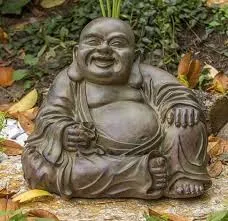
Raju’s guru had given him a laughing Buddha -” Laugh and the world will laugh with you “. Raju believed in the concept and had even started a laughter club at the park close to his temple to beat the stress. He practiced the art of laughing every morning with the regulars. He would always carry the small Buddha as a good luck charm which got him enough business to lead a comfortable life.

After their son, Mahesha was born a favorite pastime was to sit on the ledge outside their house and dream of the younger ones’ future. Every time this conversation led to them giving up the city life and moving back to their ancestral village in Dakshina Kannada to run the family temple. After all, Dakshina Kannada was the best district when it came to results of Class X, both averages and the sheer number of rank holders. Rajus’ wanted to give their son the best possible education. It was also important to them that Mahesha learnt about the rich culture, and heritage of the land. As he grew to be 12 they started getting worried that he would fall into bad company in Bangalore. They bid goodbye to neighbors, the laughter club patrons, and temple regulars, They made the move.

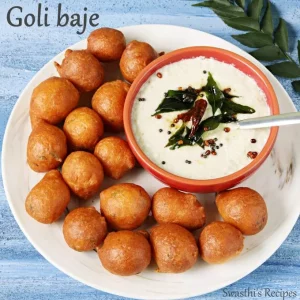
Mahesha apart from helping around with work at home and the temple turned out to be a studious boy, making the Rajus’ proud. A few years later one happy morning they were all decked up to take a bus to Manipal university for Mahesha admissions. The whole trip was planned by Raju and Kamala the previous night. It would be a stopover at Udupi Sree Krishna Mutt to seek his blessings before finishing Manipal admissions. Celebrations would begin at Woodlands with Mangalore buns /Goli Baje* and end at Diana with a cutlet and a Gudbad*.

Mahesha stayed at the Manipal hostel and would make weekly visits to the village to spend time with his parents, get his clothes washed, eat home-cooked food, and meet his local friends. Rajus’ were feeling blessed with the move they made and the life they had set up around the village. Every evening they thanked God for this.

4 years later on Yugadi(Kannada new year’s day), Mahesha’s final results would be out. Kamala had woken up early to make the Bevu Bella* and also started preparations to make two kinds of Holige*. It was indeed a big day, they had dreamt of this all their lives.

Raju reached home early, finished his evening prayers picked his lucky charm and they waited for Mahesha to bring home that degree. They were filled with a sense of pride to have an engineer in the house, a first of the kind in the family.

Mahesha bowed down to God, then his parents, and gave his father the 2 documents. Raju saw the first and tears rolled down his eyes seeing the marks card. He moved slowly to the second document; a million thoughts now ran through his mind.

Why did God do this to them? What would he tell his relatives and friends back in Bangalore? Mahesha had married his classmate, Rashmi from a different caste.  The laughing Buddha slipped from his hand and shattered into a thousand pieces as Rashmi walked in to seek their blessings.

Is this the real meaning of the Ugadi bevu bella?

What about you, is your laughing buddha still intact?

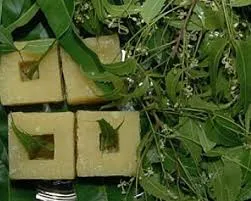
Bevu bella– a traditional mixture of neem and jaggery — a bittersweet reminder that the year ahead will have its share of ups and downs too


Goli baje are crisp fried fritters made with flour, curd, spices and herbs


Gadbud — Gadbad is a much loved Mangalorean ice cream dessert that’s made with more than one flavor of ice cream, nuts, chopped fruits, jelly, syrup & tutti Frutti. It’s served layered in a tall glass ,

Two different stories support the birth of this delicious Gadbad Ice cream.

“Gadibadi” the slang in Kannada for mayhem, chaos or confusion led to the name “Gadbad”.Gadbad Ice cream is believed to have originated in Diana Restaurant in Udupi, Mangalore, Karnataka

One day a customer became furious when he ordered an ice cream in the restaurant & was served with meagre amount.To calm him down the cook of the restaurant dumped various left over scoops of ice cream in a bowl & dressed it up with nuts, jelly, fruits & syrup. It was brought to him as a compensation.This accidental ice cream dessert was much loved by the angry customer & thus found a permanent place in the menu of Diana restaurant.

The second story claims that the founder of the Diana restaurant Mr. Mohandas Pai accidentally invented Gadbad Ice cream.

One fine day when he ran out of several flavors of ice cream he decided to give a group of customers what he had as a left over.He scooped out the left over ice creams in a bowl & threw some nuts, fruits, jelly & syrup to make it more appealing & than served them the dessert.The customers loved it so much that they came back for that lovely invention of Mr. Mohandas Pai.


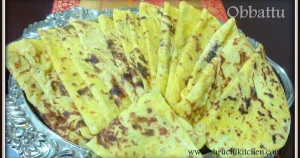
Holige – Different varieties of Indian sweet flatbread are served in Karnataka during Ugadi specifically. The most common is the one prepared with yellow gram and sugar or jaggery. Holige is also prepared using coconut and jaggery as ingredients. Also called Puran poli in Maharastra


A Brown Pundit Visits China


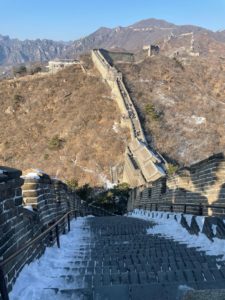
I spent five days in China, a first visit to the mainland.

My first visit to a country I have read about, is a mix of fact checks, search for stereotypes and surprises.

I visited two cities Shanghai and Beijing, and did not get a chance to speak to as many locals I would have liked to.

Some observations and musings from the trip.

Time to get the obvious out of the way- It is a large country and what I saw, is akin to a pothole in an ocean. None the less here goes.

The scale and quality of hard, physical infrastructure is imposing. The maglev train from Shanghai’s Pudong international airport, the orderly never-ending traffic on endless roads that crisscross Shanghai and Beijing, the extensive metro network, the omnipresent taxis- regular and via the cab hailing app and the digital ecosystem of Universal apps- WeChat and Alipay. The high-speed railway that takes you from Shanghai to Beijing- a journey of about 1300 kilometers in four and a half hours. Movement of people and information is fast. That it happens at a scale unmatched anywhere else in the world and the time in which this whole infrastructure has been built- is awe inspiring.

The state is everywhere, it is watching you from cameras in every corner but you do not see the state.  No hoardings that tell you about the Chinese communist party or of one Xi Jinping. No cops on the roads, especially true for Shanghai.  The state is unobtrusive. It knows where you are and what are you up to but all you get is the power of the state capacity- well organized and clean super cities. You live the force of state capacity but do not get to see the state.

Talking of hoardings, you do not see commercial ones nudging you to buy that new car or an apartment or the latest…. (Insert shoe/ phone/ perfume/bag). All outdoor advertising is on the facades of the stores and even there it looks understated. Miles and miles of roads without outdoor advertising takes getting use to, if one has landed from Delhi.

Labour is abundant and female participation is high. There are apps for food and groceries delivery at your doorstep. Delivery staff ride electric two wheelers, that make no sound, and sneak up on you.

Two wheelers, their riders young and old, men and women, abound. The only reckless driving seen in the cities is on two wheelers. Women work in retail and hospitality. They can be found behind immigration counters and at airport security. One place I did not see them was driving taxis. Not one, I hailed multiple taxis in both cities. Never found a woman behind the wheels. Every other job, you see them.

No overt religiosity. The Chinese have done away with the god(s). No places of worship, no congregations, no religious motifs in shops and commercial establishments. To paraphrase a local- money is our god and making money our religion. When asked how does he make peace with the uncertainties and unfairness of life, he answers- by making more money.  Make money and spend money. How do I look, what am I wearing, what am I driving and where am I living? Who needs gods.

Tech has taken care of the language barrier. Get online and use an app that translates and one can get around and engage. Even the cops posted at Tiananmen square indulge your queries.

Lots of youngsters and a few kids. From airports, railway stations to public spaces, the first line of the state machinery is young. No middle-aged potbellied cops and ticket inspectors. You can see the one child policy at work. A child with two sets of grandparents and her adoring parents. Wealth accumulated by six adults being spent on one child.

No Caucasians, no Indians and the rich of the middle east are also missing. Two of the largest cities of in the second largest economy of the world. A country whose presence is felt in every nation and the world is not visiting its cities. No sign of large expat communities. No watering joints that are popular with Americans or Europeans. The weather was not the best for tourism but who is running the Europeans factories and the American banks. Guessing they went home for the Christmas break but are the Caucasians rare or what. The Africans are invisible. Not one African face in 5 days in China’s oldest and biggest cities. Not one.

China is a great example of what state capacity can do. A densely populated country that has been around for millennia, has transformed itself within four decades without hitting the jackpot of a natural bounty. Those running the country did not seek wisdom of the crowds by holding elections/referendums. The economic transformation was forced upon its people. Economic prosperity in exchange of political choice. The state derives its legitimacy from outcomes. That it does not indulge opposition does not make it unaccountable. The nameless and faceless bureaucrats who have built China in the last 40 years- no noble prize-winning economists or Chicago University professors there, have lifted millions out of poverty and within a generation delivered a quality of life most of us will never experience. The scale of transformation is unprecedented in Human history and as an Indian, one cannot but admire and grudge it.

What I would like to know is how they got an ancient civilization to let go of its past, how did they bulldoze consumerism and materialism through societal networks that had evolved over centuries- how did they do away with God.

What did the Chinese Communist party do to retain legitimacy as it pivoted from ideas like collective farming to allowing a tech and finance led millionaire class to flourish within a generation. Perhaps another trip calls.

Is the Chinese model replicable and should we try and replicate it in India.

The Chinese model is not unique and they are not the first ones to pull it off. Sustained economic growth for long periods has always needed some kind of labour and financial repression combined with protectionist trade policies.  All the developed economies of today have indulged in both at some point in their growth trajectory.

Letting a small set of people decide the economic fate of millions is high risk strategy. If the elite are not good enough, the scale of failure is catastrophic. China from 1949 to 1979 is a good example of the magnitude of that disaster.

The result has too many variables we do not understand to give us a templet. Which brings us to the process. In India the state gets it is legitimacy through the process of its election. To forego that for a bet that the unelected elite will deliver on outcomes- think of the political party you loathe and now think of that party always being in power and is unable to deliver on outcomes. Let us stumble along I say.


AI in Defense & Future of Drone Warfare with Abhijit Iyer Mitra

I spoke to Abhijit Iyer Mitra on AI in Defense & Future of Drone Warfare.

The Indic Explorer YouTube channel focusses on the interplay of Indic culture with modernity explored through different facets in the socio-cultural sphere.

Do subscribe to the channel at https://www.youtube.com/theindicexplorer

and follow me here

Twitter- https://twitter.com/theindicexplor1

Instagram- https://www.instagram.com/theindicexplorer/

Substack-https://digitaldharma.substack.com/

Spotify – https://spotifyanchor-web.app.link/e/MobfQp83uzb

Swetha Warrier – India’s Dancing Star talks about Bharatnatyam Fusion

I spoke to Swetha Warrier on her journey as the finalist in two of the premier dancing talent hunt TV shows in India namely – India’s Best Dancer & Dance India Dance. She also spoke about her passion for Bharatnatyam Fusion

The Indic Explorer YouTube channel focusses on the interplay of Indic culture with modernity explored through different facets in the socio-cultural sphere.

Do subscribe to the channel at https://www.youtube.com/theindicexplorer

and follow me here

Twitter- https://twitter.com/theindicexplor1

Instagram- https://www.instagram.com/theindicexplorer/

Substack-https://digitaldharma.substack.com/

Spotify – https://spotifyanchor-web.app.link/e/MobfQp83uzb

Brown Pundits