FlyDie on South India

FlyDie left some excellent comments on the “Tamil” CMs post. I’m reposting them to increase the sabzi and reduce the masala.

The Nayak inheritance. Why does so much of Tamil Nadu’s elite traces to Telugu country? Vijayanagara’s military system let new men rise, and it minted the Nayaks. After Talikota they carved out autonomous states in Tamil lands as “Vadaka-rajahs” and assimilated over generations. The Thanjavur Marathas kept the pattern going. Ethnicity as the three L’s: Land, Lineage, Language.

Against “colonization.” Pre-colonial empires ran on a shared elite culture. Incoming rulers assimilated and left local custom alone. Krishnadevaraya is remembered above all for a Telugu work on the Tamil saint Andal. Telugu in Carnatic music is no stranger than Braj in Hindustani.

The reading list. Heirs of the Vijayanagara, the Nayaka chapter in The Architecture of Sovereignty, Joseph Martin on Telugu Catholic migration in Madras Presidency, and Cynthia Talbot’s Precolonial India in Practice.

India and China. India accepts foreign rulers without demanding assimilation, but never remakes itself for them. China resists outsiders, then lets them rule for centuries once established. The Yuan are a footnote. The Mughals define India’s monuments.

Kerala, the clingy. Onam began in Madurai. Vijayanagara’s caste consolidation passed Kerala by, and Bhakti arrived late. Nestorius was once a revered saint among its Christians, and the Mappilas follow the Shafi school. An ancient land holds on to what everyone else abandoned, communism included.

“Tamil” CMs

Many chief ministers in the past have been of Andhra descent, representing the borderless existence of the Telugu and Tamil speaking people under the broad umbrella of Madras (presidency and then state) for generations. In fact, even today, those living on the border of Andhra and Tamil Nadu speak both languages, allow marriages between them and share several customs and rituals.

The first chief minister of Madras Presidency was Agaram Subbarayalu Reddiar (1920-21). He was born in a Telugu Reddy family domiciled in South Arcot district of Madras Presidency. He was succeeded by the Raja of Panagal Rajarayaningar, from a zamindari in Kalahasti in Andhra Pradesh. It is not clear if he was a pure Tamil, though he was associated with Tamil institutions.

https://www.news18.com/blogs/politics/vvp-sharma/after-series-of-outsider-chief-ministers-sasikala-to-be-first-tamil-cm-after-29-years-14329-1345645.html

It’s fascinating that India’s most “distinct” state has a very strong history of having non-Tamil leaders. It reminds me of Scottish or more saliently “Catalan” nationalism (without the political aspects). Highly civil and linguistic, with a very strong socialist element. The amount of Telugus in Chennai is pretty incredible though they’ve become a blended people.

Telugus from Rayalseema and Coastal Andhra were part of the Madras Presidency while the Telugus of Telangana form a very significant component of the diaspora of Indians in the US.

The Italian of the East: Is It Language or Music?

3 Graphs of Karnataka

Image

It seems that many South Indian Muslims are “Urdufying.” It’s interesting to reflect that if Partition hadn’t happened; the same thing might have happened to East Bengal.

The Muslims of India rallied under the banner of Islam, which was a catch-all term, but instead they could have easily made a linguistic argument for Urdu & Persianate culture.

Continue reading 3 Graphs of Karnataka

South India funds India?

For every Rs 100 paid in direct tax, how much each state gets back : r/india

It’s pretty astonishing to see that it’s the Southern fringe (and the erstwhile Punjab) that’s subsidising the rest of India. There is the Southern coastal theory that AASI moved via Sindh, Gujarat and then the Deccan-Dravidian spaces.

Furthermore what’s fascinating is that Partition, outside of South India, really was a contestation of some of the richest bits of the Subcontinent (Punjab and Bengal).

It would have been good to see the numbers for J&K but it’s fairly apparent the NorthEast aren’t going to see such a sweet deal. It’s tough being a Southerner these days (whether the US, India or even Iran). In Iran, it’s South Iran and her oil & gas fields, which subsidises the rest of the country.

Open Thread: Bharat wins at Norway Chess, but something is off with Bollywood

Our 2026 reader survey is open until 7 June – anonymous, roughly five minutes. Please take a moment.


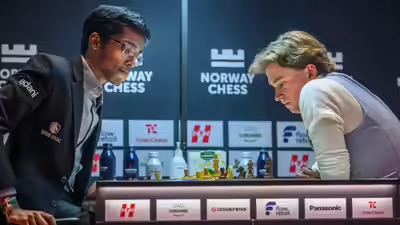
We are travelling, but South Indians, Tamilians?, are crushing it at chess. Praggnanandhaa took Norway Chess in Oslo this week with four straight classical wins to close, past Wesley So and over Gukesh on the way.

Which confirms the theory we have been quipping all trip: India, that is Bharat, owns the letter C. Chess, plainly. Cricket, obviously. Cuisine, beyond dispute. Culture, increasingly. Conversation, certainly (Desis are loud and loquacious). Caste, come to think of it..

However there is one C that has curdled: Cinema.

We caught the otherwise excellent Vadh 2 on the road. One scene was so gratuitously disturbing that we can’t shake it out of our minds.

Since Sacred Games, the sex and gore on Netflix India have not been there to serve a story. They are there to stimulate, and the audience being titillated are India’s masses. A young, idle, frustrated population is easiest to hold with sensation, so that is what is fed. This is not film-making. It is sedation at scale, and a restless country kept watching is silenced from increasing inequity (the largess of the Oligarchics) but perhaps deepening in rage (the constant ire at minorities)?

Ps: The Commentariat may also enjoy our newsletter piece on Mission Chandrayaan (Aug’23) witten prior to our re-engagement with BP, which we essentially inaugurated with Telugu being the Italian of the East (Sep’24).

The Newsletter and BP both started to kick off at roughly the same time; we decided to focus on BP since Substack is full of individual Auteurs but BP has a very venerable community, which we wanted to honour. The survey results are trickling through but what is astonishing is how sticky readers have been over this long decade and a half (BP will be 16 years in December; probably the oldest continuing Brown Blog on the internet).

Pps: Last call on the survey before it closes tomorrow.

Look closely and you may “see” what we have done throughout this post 🙂

.

Brown Pundits