A post from Dr Hamid Hussain. A (typically earthy) comment from military historian Major Agha Amin follows below Dr Hamid Hussain’s post.
Dear Sir;
A while ago, many officers asked about the controversies about Ayub Khan’s selection and I wrote a piece that may interest those raising these questions.
Mr. Ardeshir’s comment about Sam Manekshaw and Ayub Khan is incorrect. It is related to Sam and Yahya Khan. The real story is as follows;
In early 1947, Sam and Yahya were serving together at Military Operations directorate in New Delhi. Sam owned a red James motorcycle that looked like the picture below;
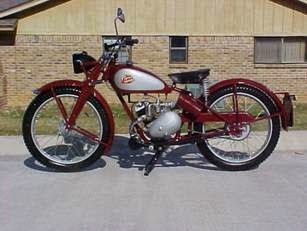
Yahya fell in love with it and Sam agreed to sell it for 1000 Rupees. In the chaos of partition, Yahya left for Pakistan promising to send the money from Pakistan but later forgot about the money. After 1971 war, Sam once joked about the incident stating that ‘”Yahya never paid me the Rs1,000 for my motorbike, but now he has paid with half his country.” In 2001, Pakistani columnist Aredshir Cowasjee went to India and met Sam. Cowasjee remembered Sam’s quip and offered to pay the money Yahya owed along with the interest. Sam replied that ‘Yahya was a good man and a good soldier. We served together and he didn’t have a mean or corrupt bone in his body’.
An additional corollary to the above story is another story. In 1946, Lt. Colonel Sam Manekshaw was GSO-1 (Operations), Major Yahya Khan was GSO-2 (Frontier Defence) and Captain S. K. Sinha was GSO-3 (Internal Security) at Military Operations Directorate in New Delhi. In 1971, General Sam Manekshaw was Indian army chief, Yahya was Pakistan army chief and Lieutenant General S. K. Sinha was head of pay and pension department at army headquarters in Delhi. When war started, Sinha sent a letter to Sam requesting for chance to participate in the war. Sinha wrote, “old G-1 is going to war with old G-2 and G-3 is being left out’.
Regards,
Hamid
Selection of First Native C-in-C in Pakistan
Hamid Hussain
In 1947, India and Pakistan emerged as new independent states and Indian army was divided. There were no senior native officers and both countries decided to keep British officers at senior posts while native officers were given accelerated promotions to prepare them for senior positions. In India, General Robert Lockhart (commissioned in 51st Sikh; now 3 Frontier Force Regiment of Pakistan army) was appointed first C-in-C. He relinquished charge in January 1948 and was succeeded by Lieutenant General Francis Robert Roy Bucher (commissioned in 55th Coke’s Rifles; now 7 Frontier Force Regiment of Pakistan army. He later changed to 32nd Lancers that was amalgamated with 31st Lancers in 1922 to form 13thLancers; now an elite cavalry regiment of Pakistan army). Near the end of 1948, it was decided to appoint an Indian C-in-C to complete the nationalization process and in January 1949, General Cariappa took charge as first Indian C-in-C. In case of Pakistan, General Frank Messervy (he was commissioned in Hodson Horse) was appointed first C-in-C on August 15, 1947. He retired on February 1948 and succeeded by his Chief of Staff (COS) General Douglas Gracey (commissioned in Ist King George’s Own Gurkha Rifles and later commanded 2/3rd Gurkha Rifles). Interestingly, the last two British C-in-Cs of India belonged to regiments that were allotted to Pakistan and the two British C-in-Cs of Pakistan belonged to regiments that went to India.
On the eve of independence, Pakistan inherited only two native Brigadiers; Muhammad Akbar Khan and Nawabzada Agha Muhammad Raza. Several officers were given accelerated promotions and senior positions were filled with Pakistani officers. In 1949, it was decided that Major General Iftikhar Ali Khan will be the first native C-in-C. He was commissioned from Sandhurst in August 1929. His parent regiment was 7 Light Cavalry. Later, he was transferred to 3 Cavalry when later regiment was Indianized and he served as regiment’s Adjutant. During war, he served with newly raised 45 Cavalry. He was junior to several Pakistani officers and the list includes with commission dates in brackets; Muhammad Akbar Khan ‘Rangroot’ was Daly College Indore graduate and not Sandhurst commissioned (December 1919), Faiz Mohammed Khan (July 1921), Mohammad Ishfakul Majid (August 1924), Khairuddin Mohammad Idris (September 1925), Malik Fazal-ur-Rahman Kallue (January 1927), Nawabzada Agha Muhammad Raza (January 1927), Raja Mohammad Afzal Janjua (January 1927), Muhammad Ayub Khan (February 1928), Nasir Ali Khan (February 1928) and Mohammad Yusuf (January 1929). It is important to clarify seniority issue. At every rank, several officers are superseded and seniority alone is never a criterion for senior positions. Some officers when superseded ask for retirement while others continue to serve. Two examples will clarify this position. Mir Haider was commissioned in December 1919 and in 1949, he was Major. Jamaldar Orakzai was commissioned in August 1928 and in 1948 he was Colonel serving at Quarter Master General (QMG) branch. Haider and Orakzai were senior to Iftikhar but in view of their service track and rank, they were not relevant to the selection of army chief. It was decided to send Iftikhar for Imperial Defence Course (IDC) in London to prepare him for his job. In December 1949, his plane crashed near Jangshahi in Karachi killing all on board that included his wife and son and Director Military Operations (DMO) Brigadier Mohammad Sher Khan. Sher was a Sandhurst graduate commissioned in September 1932 and joined 6th Battalion of 13th Frontier Force Rifles (now 1 Frontier Force Regiment).
There are many confusing stories about selection of first native C-in-C of Pakistan but they relate to selection of Ayub and not Iftikhar with the exception that Ayub contended that Iftikhar’s name was floated as possible first native C-in-C but no final decision was made. This may be due to the fact that decision was made but Iftikhar died before any official notification was issued. Very few officers of that time period wrote memoirs therefore written record is very limited. Political leadership of newly independent Pakistan under Prime Minister Liaqat Ali Khan selected Iftikhar on the advice of British senior brass. British considered Iftikhar professionally sound and apolitical. His thoroughly westernized life style was probably a plus. Some suggest that he was tough disciplinarian and may have temper problem. According to Major General A. O. Mitha, he had ‘the reputation of eating a Brigadier or Lt. Colonel for breakfast everyday’. Ayub considered Iftikhar a good officer but ‘a difficult man’ and ‘short-tempered’. Two most credible sources about the subject matter are Major General Sher Ali Khan Pataudi and Major General Syed Shahid Hamid. Pataudi knew Iftikhar for a long period of time starting from the days when two were at Royal Indian Military College (RIMC) at Dehra Dun where Iftikhar was senior to him. In early 1948, Pataudi served as 14 Para Brigade commander under Iftikhar when later was commanding 10 Division. Pataudi was bachelor and stayed at Iftikhar’s house and knew Iftikhar intimately. When Pataudi came to Pakistan in October 1947, he was posted to Gardai Brigade in Waziristan commanded by Ayub. The two were together for three months and developed friendship. When Ayub was C-in-C, he superseded Pataudi therefore he was resentful. Hamid served with Iftikhar in the same 3 Cavalry Regiment. Hamid’s time in 3 Cavalry was not pleasant and he soon left the regiment. He didn’t have good memories as some Indian officers including Iftikhar preferred to interact with British officers rather than fellow Indian officers. Hamid also had friendly relations with Ayub and Ayub used to stay with him. He served as Master General Ordnance (MGO) and Adjutant General (AG) under Ayub.
These two contemporaries of Iftikhar and Ayub give different accounts and these perspectives are based on their own personal relations with the two. It is important to note that during a professional life spanning over two to three decades an officer interacts with several hundred officers in different capacities therefore one can expect quite diverse opinions. Major General Sher Ali Khan Pataudi considered Iftikhar professionally sound, well read and highly intelligent. In contrast, he considered Ayub as a typical battalion officer good at basic soldiering but not cut for higher direction of war. He defended Iftikhar’s aloofness by suggesting that ‘he was a very shy person which gave the impression of his being conceited, which he wasn’t’. Pataudi claims that Iftikhar was concerned about politicization of officers and distrusted politicians. He once commented that ‘it would be better for both of us if we both got out before our hands were stained and garments polluted’. Pataudi is of the view that if Iftikhar had been C-in-C, ‘he would not have allowed the Army to be used for political purposes and ‘would have never used his position as C-in-C, to come into power through the Army’. In contrast, Major General Shahid Hamid is of the view that Iftikhar was a thoroughly westernized officer (he was married to a charming Parsee girl who was number one woman rider in India.), ruthless and hated politicians. Hamid is of the view that Iftikhar would have adopted the same course later adopted by Ayub.
Iftikhar’s choice as first native C-in-C is an established fact and Pataudi states that Prime Minister contacted Iftikhar and informed him about the decision which Iftikhar shared with him. In addition, Pataudi also states that on that day Ayub was also in Lahore and contacted him and asked to arrange for a meeting with Iftikhar to get to know the incoming C-in-C. Ayub was leaving the next day therefore meeting didn’t materialize. Hamid also alludes to the fact that Ayub was always curious about Iftikhar as it was an open secret that Iftikhar would be next C-in-C. An incident narrated by Ayub also gives credence that Prime Minister had considered Iftikhar for C-in-C position. There was a division commander’s conference and Prime Minister Liaqat Ali Khan invited some senior officers to circuit house. He brought up the subject of selection of C-in-C and told the audience that ‘it was possible that the appointment would not go to the most senior officer’. He then elicited opinion of several officers regarding selecting a junior officer as C-in-C.
Among the list of officers senior to Iftikhar, Akbar was commissioned in 1 Brahmans but spent most of his career with Royal Indian Army Service Corps (RIASC) with no command, staff or instructional experience (the only exception was command of Meerut sub area in 1947). In April 1946, British recommended several Indian officers for senior appointments to prepare them for command when British left. Akbar was recommended by the selection board to be Army Commander but it was probably to have a Muslim and not for professional excellence. Akbar was the only senior Muslim officer at Brigadier rank while the remaining six recommend for promotions and coveted postings were Hindus (Cariappa, Rajindra Singhji, Srinagesh, Nathu Singh, A.J. Rudra and B.S. Chimni). In Pakistan, by 1949, several officers have attained accelerated promotions and were considered professionally superior therefore Akbar was not considered for post. He retired at Major General rank in 1950. One other qualified candidate Raza was not liked by British. Brigadier Francis Ingall in the process of establishment of Pakistan a military academy dealt with Raza who was then serving as Adjutant General (AG) and didn’t have high opinion of him. Ingall considered him ‘extremely pompous’, ‘difficult to deal with’, vague’ and ‘hesitant to make decisions’. A junior councilor at British High Commission A. H. Reed remarked that Raza ‘a born intriguer, had been lobbying hard for the Commander-in-Chief position’. He also remarked that Raza was feared by juniors and universally disliked by both British and Pakistani officers. Major General A. O. Mitha who served under Raza summed up the general opinion that Raza was professionally average and ‘had the reputation of being strict and a bit of bully’. However, after a personal encounter he developed great respect for Raza for his ‘large-heartedness’ and ‘broad-mindedness’. Many other officers senior to Iftikhar later retried at Colonel and Brigadier ranks.
In early 1948, Ayub was superseded at the rank of Brigadier and two sources confirm this. Shuja Nawaz was given access to Ayub’s file for his encyclopedic work on Pakistan army and his information removes doubts about seniority. Ayub Khan was sent to command East Pakistan sub area (later designated 14th Division) with the local rank of Major General. This could have caused confusion in terms of seniority and General Gracey sent a note to Military Secretary stating that when Ayub is promoted to Major General rank, this will be antedated to the date of his local Major General rank starting January 08, 1948. Gracey went ahead to clarify the seniority list putting Ayub ‘NEXT below Maj. General Iftikhar Khan, and next above Major General Nasir Ali Khan’. This clearly shows that while Iftikhar was junior as far commission date is concerned but when he was promoted Major General, Ayub was Brigadier with only local Major General rank thus making him junior to Iftikhar. Pataudi was a friend of C-in-C General Frank Messervy and both played polo together. Pataudi states that in early 1948, when he was serving under Iftikhar at Lahore, Ayub on his way to East Pakistan passed a note to him ‘been superseded. Can you do something’? Pataudi went to Rawalpindi and met Frank Messervy and gently raised the subject. Messervy replied that selection of right officers at this stage was crucial as they will lead the army when British officers are gone.
After the death of Iftikhar, selection of C-in-C came up again. The decision was finalized sometime in September 1950 when General Douglas Gracey was C-in-C. Syed Wajahat Hussain (later Major General) served as ADC to General Gracey in 1947-48 at the rank of Lieutenant. In 1956, he visited England and stayed with General Gracey. Wajahat states that Gracey told him that after the death of Iftikhar in plane crash, the choice of C-in-C was narrowed down to Ayub, Raza and Nasir Ali Khan. According to Gracey, Ayub was picked because of his command experience compared to Raza and Nasir although Gracey was worried about Ayub’s political ambitions. Raza was commissioned in 1/7 Rajput Regiment and later commanded 6/7 Rajput and 18/7 Rajput battalions. Raza was the first Pakistani Adjutant General (AG). Nasir was also commissioned in 7th Rajput Regiment and commanded 9/7 Rajput. He was the first Pakistani Military Secretary (MS), Quarter Master General (QMG) and Chief of Staff (COS) of Pakistan army. Nasir spent all post independence time at staff positions and didn’t command a Brigade or Division. Nasir was not particular about military decorum and this may have also gone against him. In summer, sometimes he was seen wearing sandals without socks with his military uniform. In a British trained army, I’m sure this attitude would have horrified not only British but many Pakistani officers.
Gracey’s remark about Raza’s lack of command experience is curious as he commanded 12 Division. 12 Division was raised in Peshawar in November 1948 by Major General Mohammad Yusuf who commanded it until December 1949 (Division was later moved to Batrasi and finally to Murree). Yusuf was succeeded in command by Raza. Major General A. O. Mitha confirms that in his memoirs. He served under Raza when he was Commanding Officer (CO) of 9/8 Punjab Regiment and his battalion was defense battalion of the division at Batrasi. When decision about C-in-C was made in summer of 1950, Raza was in command of the division for about six months and this may have not been thought as adequate. One possibility is that Gracey was referring to mid 1949 time period during consideration for C-in-C position when Iftikhar was chosen as at that time Raza had not yet commanded a division. Prime Minister Liaqat Ali Khan had a favorable view of Raza as Raza’s father was Liaqat’s friend but probably recommendation of General Gracey and favorable input by Secretary of Defence Sikandar Mirza tilted the balance in Ayub’s favor. Sikandar Mirza was Secretary Defence and he weighed in Ayub’s favor. Mirza had spent his long career in Indian Political Service (IPS) on North West Frontier and familiar with the byzantine intrigues. He contacted the head of nascent Inter Services Intelligence (ISI) Colonel (later Major General) Shahid Hamid and asked him to generate an adverse intelligence report about Raza with the intention of getting him out of the race for C-in-C. Shahid refused to oblige.
The command of 14th Division needs some elaboration. At the time of partition, the command in East Pakistan was designated East Pakistan Army. Ironically, this grand title was given to a formation that consisted of a single infantry battalion; 8/12 Frontier Force Regiment. When Ayub assumed command in January 1948, it was called East Pakistan Sub Area and consisted of only two infantry battalions (8/12 Frontier Force Regiment and 2/8 Punjab Regiment). In December 1948, sub area was designated 14th Division and although its command played a major role in the decision of Ayub’s appointment as first C-in-C, technically Ayub’s command consisted of only two infantry battalions.
In September 1950, it was decided that Ayub would be next C-in-C. He was appointed Deputy C-in-C under Gracey to groom him for the top job. He visited military installations in England and Germany. He took charge on January 17, 1951. Lieutenant General Ross McKay was appointed his advisor. Ayub’s appointment as first C-in-C has been criticized by many with the hindsight. This criticism is invariably in the context of Ayub’s coup and long tenure as President with the assumption that another army chief was not likely to launch the coup.
The issue of seniority and a bad report in Second World War is cited against Ayub. As far as seniority is concerned regarding three contenders; Raza, Ayub and Nasir, Raza was senior and Nasir and Ayub from the same course although Nasir was put junior to Ayub in army list. In the argument against Ayub’s professionalism a bad report is cited which is probably ‘tactical timidity’ during Second World War in 1945 by his commander Major General Thomas Wynford ‘Pete’ Rees (Served with 1/3 Madras during First World War, long stint with 5/6 Rajputana Rifles and commanded 3/6 Rajputana Rifles). Rees was commanding 19th Division in Burma. Ayub was serving with First Assam Regiment as second in command (2IC) at the rank of Major. First Assam was a divisional support unit under direct command of Rees. On January 10, 1945, Commanding Officer (CO) of First Assam Lieutenant Colonel W. F. Brown was killed and Ayub Khan assumed command. Ayub was removed from the command by Rees when Ayub suggested that battalion was not fit for the assigned task. Rees considered this as tactical timidity and removed Ayub from command. On March 07 (some accounts give the date of March 15) 1945 Lieutenant Colonel Hugh Parsons took command from Ayub. Parsons was originally from 5/6thGurkha Rifles and had served with First Assam in the past. Ayub stayed in the tent of Risaldar/Honorary Captain Ashraf Khan of Hazara until his departure to India on April 18.
All evidence suggests that Ayub got a bad report during his command of First Assam Regiment although exact nature is not clear. Pataudi states that Ayub discussed this with him when he was working with him in Waziristan. Pataudi also claims that he had seen this report when he was in Delhi. Pataudi opted for Pakistan and came to Pakistan in October 1947. While in Delhi, he was given access to files of Muslim officers opting for Pakistan as he was designated Deputy Military Secretary of Pakistan army. In October 1958, British High Commissioner Sir Gilbert Laithwaite pointed to this in his report about Ayub. Laithwaite wrote, ‘he was according to our records, a failure as a Commanding Officer (Lieutenant Colonel) on active service and had to be relieved’. Ayub survived the bad report of Rees and later re-raised and commanded his parent battalion 1/14 Punjab Regiment (now 5 Punjab of Pakistan Army). Later, he served as President of Army Selection Board tasked with recommending permanent commission to Emergency Commissioned Officers (ECOs). Some suggest that Ayub had this negative report removed from his file when he became C-in-C. Shuja Nawaz who was given access to Ayub’s file communicated to me that he does not recall seeing Rees’s report in the file. Pete Rees and Ayub’s paths crossed again when Rees was commanding Punjab Boundary Force (PBF) and Ayub served under him. Ayub Khan was one of the advisors to Reese at Colonel rank. It is not clear whether two had any problems in view of their previous unpleasant encounter. PBF was severely criticized by Punjab politicians for failure to control law and order. PBF story is another neglected chapter of subcontinent history and very little has been written about it. I have done some work on the subject and in my view it is quite unfair to criticize PBF or Ayub for the tragedy that was a chapter from Dante’s inferno. I think this left a deep mark on Ayub and his extreme distrust of politicians.
Some suggest that country’s founder Jinnah was not in favor of Ayub which is probably not correct. In October 1947, Ayub was Brigadier and commanding Gardai Brigade Group in Waziristan area command. If the assertion that Mr. Jinnah was not happy with Ayub is true then it does not make sense that Ayub is promoted Brigadier against Mr. Jinnah’s wishes and given the task of execution of Operation Curzon; withdrawal of troops from tribal areas. Similarly, Ayub was promoted Major General in January 1948 and posted to East Pakistan when Mr. Jinnah was very well in full control of all affairs. In Pakistan, there is a wrong perception that Operation Curzon was the brainchild of Jinnah. By 1946, it was clear that British were leaving and British high command had put in place a plan for removal of regular troops from tribal areas. This decision was reached before the Cabinet Mission plan when even partition of India was not envisaged. On April 24, 1946, a conference was held at Peshawar. It was attended by Governor North West Frontier Province George Cunningham, Agent to Governor General Baluchistan, Air Officer Commander-in-Chief (AOC-in-C), British minister at Kabul, C-in-C General Claude Aukinleck and senior military and civil officers. It was realized that the status of tribes will be uncertain until the outcome of Cabinet Mission plan. The decision was made that regular troops will be replaced by civil armed forces although the process was to be gradual. It was in this context that decisions such as Indianization of officer Corps of Scouts, raising of Central Waziristan Scouts, Malakand battalion and re-raising of Khyber Rifles was discussed. Gardai brigade was the first to be withdrawn and replaced by local tribal levies; Khassadars. Once Civil Armed Forces were properly organized and equipped then Wana and Razmak brigades withdrawn. Events of sub-continent moved much faster with impending independence of India, emergence of Pakistan and massive migration and slaughter put this issue on the back burner. It is to Jinnah’s credit that he made the decision quickly and swiftly implemented the plan. The caveat is that by that time tribesmen had been directed by Pakistan to greener pastures of Jammu & Kashmir during 1947-48 conflict.
Ayub Khan was an average officer not different from many of his contemporaries. He was trained as a regimental officer and he was neither trained nor did he strive to learn the higher direction of war. His reading was limited to Readers Digest type of publications and Philip Mason’s Men Who Ruled India. He was not known for reading classic or modern military works on history or art of war. This was the reason that Lieutenant General Ross McKay was appointed his advisor. Ayub was mild mannered and humble. He was handsome with an impressive personality and very pleasant. This endeared him to many international leaders.
Ninety percent of officers of Indian army both British and Indian were groomed for regimental service. Selection and training of Indian officers during Indianization of officer corps was focused on basic regimental training. It was envisioned that probably the highest rank an Indian could achieve was command of a battalion. Second World War opened the door wide open and large numbers of Indians were commissioned. War also resulted in accelerated promotions and several Indians commanded battalions. After the war, when it was clear that British Raj would come to an end, then the question of promoting Indians to senior ranks was seriously discussed. In 1947, only a handful of Indians were at colonel and brigadier ranks. Indian subcontinent went through cataclysmic changes with emergence of new states. It had an impact on all institutions including army. In these extraordinary circumstances, officers were given accelerated promotions and first Pakistani C-in-C was selected in these exceptional circumstances. What else describes the anomalies of that time period than the fact that first Indian C-in-C jumped six ranks from Major to four stars General in six years while first Pakistani C-in-C accomplished this feat in five short years?
Notes:
– Major General ® Shaukat Raza. The Pakistan Army 1947-49 (Lahore: Services Book Club, 1989)
– Shuja Nawaz. Crossed Swords: Pakistan, Its Army, and the Wars Within (Karachi: Oxford University Press, 2008)
– Major General Sher Ali Khan Pataudi. The Story of Soldering and Politics in India and Pakistan (Lahore: Wajidalis, 1978)
– Field Marshal Mohammad Ayub Khan. Friends Not Masters (London: Oxford University Press, 1967)
– Interview of Major General ® Syed Wajahat Hussain by Major ® Agha H. Amin, Defence Journal, August 2002
– Lieutenant Colonel Mustasad Ahmad. Living Up To Heritage: The Rajputs 1947-1970 (New Delhi: Lancer Publishers, 1997)
– Major General Shahid Hamid. Disastrous Twilight (London: Leo Cooper, 1986)
– Lt. Colonel ® Gautam Sharma. Nationalization of The Indian Army 1885-1947 (New Delhi: Allied Pubslishers, 1996)
– Brigadier Francis Ingall. The Last of the Bengal Lancers (California: Presidio, 1988)
– Pradeep P. Barua. Gentlemen of the Raj: Indian Army Officer Corps 1817-1949 (New Delhi: Pentagon Press, 2008 Indian Edition)
– Major General S. Shahid Hamid. Early Years of Pakistan (Lahore: Ferozsons, 1993)
– Major General A. O. Mitha. Unlikely Beginnings: A Soldier’s Life (Karachi: Oxford University Press, 2003)
Hamid Hussain
February 13, 2014
The following comment is from Major Agha Amin, (from his website here)
Dear Dr Hamid Hussain
you have simply left out joginder singh who stated that ayub khan was in chamar regiment ? joginder was his unit officer and mentioned this incident in his book behind the scenes
Shuja Nawaz had a vested interest as his brother Asif Nawaz was from Ayub Khans unit.
Also note that Shuja Nawaz in his work referred by you as encycolpedic distorted history and elevated his fatherin laws brother abdul ali malik as main hero of Chawinda while Shaukat Rizas official account maintains that Abdul Ali Malik was indecisive and just implored commanding officer 25 Cavalry “Nisar do something”
Problem is that in biased pakistan army hero had to be from between rivers indus and chenab ! Thus all Nishan i Haidars were awarded to people from this region as most generals were from this area.
I interviewed Major General Tajammul Hussain Malik in 2001 and he stated that Major Aziz Bhattis Nishan i Haidar award was not based on merit.
Even in Battle of Sulaimanke 6 FF Pashtun officer Farooq Afzal or Saeed Afzal was ignored.
I dont think that Nishan i Haidar could have been awarded to Karnal Sher and Lalak both non Punjabis if Pakistan Army had a non Punjabi Chief.
Even General Musharraf acknowledged General Kakars extreme parochialism in his book.
General Khwaja Ziauddin told me that on Asif Nawazs death Kakar requested General Ali Kuli to fly to Pindi to convince his relative President Ghulam Ishaq to appoint Kakar Chief.So Kakar was trying to reward his benefactor Ali Kuli.
It is same General Kakar who as per General Ameer Hamza was thrashed by Major Rasheed Warraich at Sulaimanke.
I remember Kakar was so unpopular for illegally stopping armys election allowance of 1993 elections that he was literally hooted by troops in Darbar held at Fortress stadium .I was on leave and went to this darbar to give company to a friend.
Brigadier Nisar main hero of 1965 war was just ignored by promotion boards as he was from Patiala (Pashtun descent) and not from main Punjabi belt.
It is same Nisar who was praised by Indians for his outstanding performance as commander of Changez Force in 1971.
You see Psc and afwc business came only in 1976 when MG Abdullah Saeed (6 FF) GOC 33 Division asked my father to write a paper and in that analysis it was discovered that most serving generals were non Psc or non afwc.Nisar was bypassed long before that time when Psc or afwc became compulsory.
Frankly much of what is going on in Pakistan is a farce.Pakistan seems to exist only between Indian border and Indus river !
In retrospect one may state that partition of 1947 was a failure .Punjabi Hindus regarded as exploiters were replaced by Lahore Gujranwala Faisalabad Sargodha and Pindi Divisions with some Pashtun low caste Khattak Kammis and Hindko Kakar clowns.LTC Feroz , 33 FF my squash partner in Okara in 1993 recounted that kakar counted cherries of his garden as corps commander and suspected that 33 FF guard was pinching the official residences gardens cherries ?