
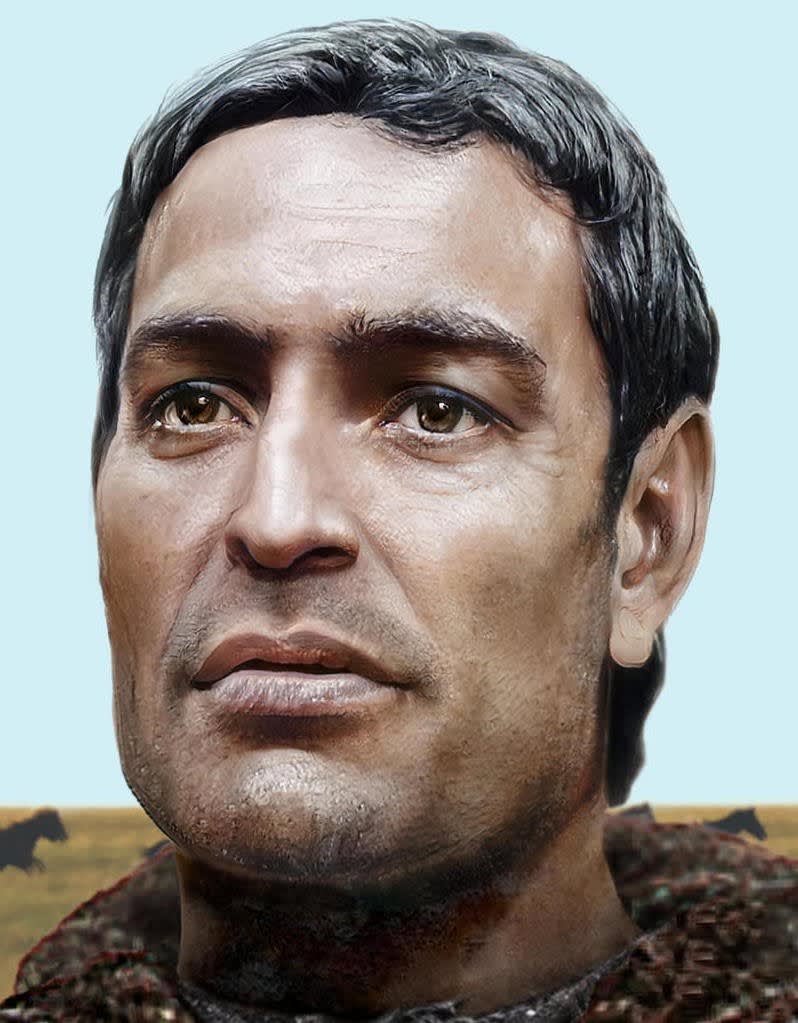
After a long delay, I’ve dropped part 4 of my continuing series on the Eurasian steppe and its history (I am currently planning on going down to the 13th century AD…so this should take me into 2022 since I’ve barely made it beyond 2000 BC as of now). The next installment is planned to be on the early Indo-Iranians and their connection to the Fatyanovo–Balanovo culture, and subsequent expansion in the Andronovo expansion (this will compliment my two pieces on India from last January).
Category: Uncategorized
Afghan National Army Lieutenant General Sami Sadat
Below is an opinion essay in the New York Times by Afghan National Army (ANA) Lieutenant General Sami Sadat. LTG Sami Sadat,only 36, is one of the most loved and respected men in all of Afghanistan. He demonstrated remarkable success as the commander of the 215th Maiwand ANA Corps before being recalled to Kabul. The ANA lost over 70,000 Killed in Action (KIA). Including the MoI (Ministry of Interior) ANP (Afghan National Police), NDS (National Directorate of Security) and Arbekai the total Killed in Action was probably well over 100,000. The exact number is not known since the Afghanistan MoI and MoD (Ministry of Defense) have both classified the numbers since 2010 because they were afraid it would harm morale. In 2020 alone ANDSF KIA was likely over 15,000. I have been told that many of the ghost soldiers in many ANA battalions were actually KIA being kept on the rolls so that their salaries could support their families.
Posting LTG Sami Sadat’s NYT essay for those who can’t read it through the pay wall:
++++++++++++++++++++++++++++++++++++++++++++++++++++++++++++++++
GUEST ESSAY
I Commanded Afghan Troops This Year. We Were Betrayed.
Aug. 25, 2021
By Sami Sadat
General Sadat is a commander in the Afghan National Army.
For the past three and a half months, I fought day and night, nonstop, in southern Afghanistan’s Helmand Province against an escalating and bloody Taliban offensive. Coming under frequent attack, we held the Taliban back and inflicted heavy casualties. Then I was called to Kabul to command Afghanistan’s special forces. But the Taliban already were entering the city; it was too late.
I am exhausted. I am frustrated. And I am angry.
President Biden said last week that “American troops cannot and should not be fighting in a war and dying in a war that Afghan forces are not willing to fight for themselves.”
It’s true that the Afghan Army lost its will to fight. But that’s because of the growing sense of abandonment by our American partners and the disrespect and disloyalty reflected in Mr. Biden’s tone and words over the past few months. The Afghan Army is not without blame. It had its problems — cronyism, bureaucracy — but we ultimately stopped fighting because our partners already had.
It pains me to see Mr. Biden and Western officials are blaming the Afghan Army for collapsing without mentioning the underlying reasons that happened. Political divisions in Kabul and Washington strangled the army and limited our ability to do our jobs. Losing combat logistical support that the United States had provided for years crippled us, as did a lack of clear guidance from U.S. and Afghan leadership.
I am a three-star general in the Afghan Army. For 11 months, as commander of 215 Maiwand Corps, I led 15,000 men in combat operations against the Taliban in southwestern Afghanistan. I’ve lost hundreds of officers and soldiers. That’s why, as exhausted and frustrated as I am, I wanted to offer a practical perspective and defend the honor of the Afghan Army. I’m not here to absolve the Afghan Army of mistakes. But the fact is, many of us fought valiantly and honorably, only to be let down by American and Afghan leadership.
Continue reading Afghan National Army Lieutenant General Sami Sadat
The US and the Taliban
This interview with an American journalist, Lara Logan, who has been reporting on Afghanistan for nearly 2 decades now and has been on the ground, is worth watching.
It is nearly an hour long but I would request people to take some timeout and watch it in full. It is indispensable if you want to get a sense of what has happened in Afghanistan.
There are a few important takeaways from this, as I see it.
First and the most important, the US was actively working towards the creation of the outcome that we see today. That it wanted to leave Afghanistan was already made known by the US a few years back. But the interesting and befuddling aspect is that the US was negotiating its exit plan with the Taliban while keeping the Afghan Govt. out of it. India was also kept out of it while China, Russia and Pakistan were part of it.
It looks pretty certain therefore that the US establishment had already decided that once it leaves, it will hand over the power in Afghanistan to Taliban and leave the Ashraf Ghani Govt. in the cold. So things have likely gone as per the script.
The second important takeaway is how much compromised the US Govt. policy, especially its foreign policy is. I have no idea if Trump was a compromised leader but he was certainly confrontational and ruffled quite a few feathers including that of China. On the other hand, Biden has been much more accommodating towards China. Biden, as stated in the interview, is just an expendable figurehead and a fall guy who gets to take all the blame and shame. It was also evident by the way Biden was selected as the Presidential candidate and then how he won the Presidential election, despite his old age and clearly evident lack of competence for the job, that there were powerful forces working behind the scenes who were deeply interested in Biden getting the top job.
One thing that had me scratching my head while watching an otherwise brilliant interview was when Lara described how influential the Pakistani lobby is in Washington and the Pentagon and how it was mainly responsible in making the US do the things it did in Afghanistan. I find it a little hard to believe for two reasons.
1. Pakistan’s main problem in Afghanistan was India and not the US. Clearly, if Pak was so influential with the US, why did it not lobby and get India out of Afghanistan or atleast diminish its influence. One might say, getting the US out of Afghanistan was the only way to get India out as well but it looks a very long winded way to get your thing.
2. Is it really possible that the Pakistani lobby is so powerful that it could dictate US foreign policy in Afghanistan ? Wouldn’t that be extraordinary ? Why not look for what is more obvious ?
What about the elephant in the room, China ? As Lara agrees, China would be the single most happy country with exit of the US. The rise of China has come about through a strong backing by the US and the interests of the US corporates and the CCP are likely to be aligned together since decades. Nothing can beat the US corporate lobby in Washington. Can it ? Pakistan is a Chinese lackey. It would do so as directed by China. Therefore, while Pakistan may have played its role in handling the Taliban, its role is unlikely to be more than that of a facilitator. The real player pulling the strings could be China and maybe Russia.
China has now a free hand in Central Asia and Afghanistan. It has unrivalled amount of money to through around and buy allegiances everywhere for its BRI project. Besides Pakistan, China had a 400 billion $ deal with Iran recently. And now the Taliban also seems very welcoming towards China.
The question for us Indians is – what has India been doing in all of this ? And did India have a plan all along or does it have any right now ? The US has certainly shown itself to be a very unreliable ally. That is an important lesson I hope New Delhi does not forget.
What do Indians think of the Taliban’s takeover in Afghanistan? Pakistani responses are one thing but what are the Indian “camps”?
The world is surprised, and now even memeing, about the Taliban’s takeover in Afghanistan. In Pakistan, the outside country most responsible for this (unless you count America and the stupidity of its occupation strategies as the most responsible) there have been broadly three camps on this. The majority feeling was one of awkwardness, trepidation and a calling of the equivalent of councils of war. In the Army Chief’s staff rooms, in the Prime Minister’s and Chief Ministers and political party heads’ secretariats and across media stations in Pakistan, the national security and Afghanistan experts were on display and they were giving their council to their respective audiences on what was happening with the fall of Kabul and what it meant.
A smaller minority was one that was sometimes part of this but also openly condemning the takeover of the Taliban. Honourable mention should go to the Women’s Democratic Front for openly condemning the takeover of Afghanistan and various branches of Pakistan’s new-on-the-scene Aurat March (Women’s March) parroted their view. Frankly, I am very happy for the Aurat Marchers to get an explicit foreign policy – that would be cool. The PPP, as far as I can tell did not explicitly condemn the Taliban takeover in Kabul and as far as I know, no Pashtun nationalist formation did either, although if the Pashtun Tahaffuz Movement did, I am waiting for their views.
Lastly, I have to mention the Taliban supporters. From heads of religious groups, to Taliban and ’80’s Afghan Mujahideen fanboys in the Pakistani media, this was, I feel, an even smaller group, restricted by age, that was openly hailing the takeover of Afghanistan by the Taliban. It really was/is a sight to behold to see men in the media, of or beyond retirement age, hailing the takeover of Afghanistan by the Taliban – a sick joke. My guess is younger fans of the Taliban were either intelligently hiding, or more likely taking part in either jihadi ops or doing propaganda or harassment for the Taliban. So the pro-Taliban crowd inside Pakistan might be quieter than its portrayed – a bit like Italy after it switched ides in WWII to join the Allies against Germany.
But that’s Pakistan. What about India? This is one time BP commenters are welcome. Sound off and tell us what the Indians thought about the Taliban, what were the camps inside the country and how large they are.
Postcript — The Pakistan government and establishment’s view:
The official Pakistan government view, of the foreign ministry, the part allegedly controlled by Imran Khan says that they will not stick their neck out as an individual country and will only recognise Taliban control of Afghanistan if a group of countries, likely Russia, China and Iran, all simultaneously recognise the Taliban’s control of Kabul. I used the word alleged, because the foreign ministry takes its marching orders from the Pakistan Army’s General Hear Quarters, Imran Khan is fine with that, and so the foreign ministry’s views are the Army and establishment’s views.
______________________________________________________
You can see the original post at https://these-long-wars.blogspot.com/2021/08/general-bajwa-please-retire.html, also, If you like my work, please support it at https://www.patreon.com/TheseLongWars
Open Thread – 08/20/2021 – Brown Pundits
I might as well mention that I’ll be doing a Pathan genetics and history room on Clubhouse in a bit over 5 hours. Clubhouse is now open to anyone on all major platforms.
Myra MacDonald on Pakistan and Afghanistan
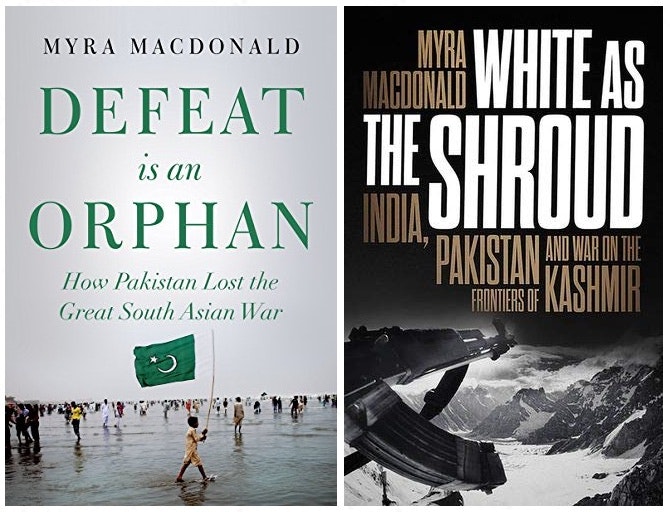
I did an interview with Myra MacDonald on my Substack. It’s gated, but I’ll ungate it for nonsubscribers in two weeks.
General Bajwa, please retire
This blog was previously published on 28 November 2019 and is being re-published, like many recovered blogposts, over here.
There has been a crisis of governance in Pakistan over the last few days as the Pakistan Tehreek-e-Insaaf (PTI) controlled government of Prime Minister Imran Khan has abandoned all its governance reponsibilities to try and get General Qamar Javed Bajwa, the Chief of Army Staff (COAS) an extension of three more years.
Now he is about to begin a period as Army Chief, beyond his entitlement. Unlike calling for his firing, like I did the last time a COAS got an extension, I will take a more measured approach to what should be done here. Let’s look at the era that General Bajwa inhabited as the leader of Pakistan’s 550,000 man army.
Since General Bajwa came to power in late November 2016, (coincidentially, after Donald Trump secured a victory in the 2016 US elections, distracting the US from political developments across the world) he has presided over, in the words of former columnist Cyril Almeida, “the greatest rollback of civil liberties, political rights and media freedom in a generation.” Continue reading General Bajwa, please retire
30 days? That’s an excuse to run consulate shredders — Kabul’s government won’t last the week
I started yesterday with a news article about how US intelligence said that the Taliban could take Kabul in 90 days. After the previous week had been filled with over half a dozen Afghan provincial capitals falling, it became clear that the Taliban were deploying all their strength across the country to capture as much territory and control as they could before US forces pulled out before the 20th anniversary of the September 11th attacks.
While the news of those northern cities falling had been bad, and it was felt that the Taliban were likely trying to prevent a replay of the 1990’s Afghan civil war when the north fought them for five years, 12th August got progressively grim. It started to seem that the Taliban were not just going to put a knife to the Afghan government’s throat (and northern escape routes) by taking Tajik and Uzbek cities, but rather box Kabul in. This became clear when not just small towns but larger Afghan cities were put on the chopping block by the Taliban’s offensive. There is a wave of anti-Shia mobilisation across the region and I suspect that it also might have something to do with the expanded, multi-ethnic Taliban mobilisation in the north of Afghanistan. As these provinces border the ex-Soviet Central Asian states, and ISIS school-shooter sectarianism has had salience in many places where Muslims were previously considered un-radicalised or nominally secular, I suspect Taliban lines might not be a bad place for Central Asian, Afghan or even Pakistani potential ISIS recruits to flee.
As news of more fighting came in, the reports of Herat and Kandahar in the north-west and south of the country respectively, being surrounded and attacked threw whatever strategic calculus the great powers thought they had in Afghanistan, into the bin.

The updates from panicked civilians about the Taliban attacks killed whatever illusions about America having a semi-peaceful withdrawal from Afghanistan, or Pakistan smoothly sliding a re-furbished Taliban into power in Kabul, might have been harboured by the countries that have sponsored destructive wars in that nation since the eighties. The distressed calls, postings, video reports of Afghan citizens, especially educated women trapped in these cities, came flooding out. No one was crying but everyone was deadly serious.
Simultaneously, clips of refugees flooding out of captured cities, camps of the displaced going up in Kabul and where the government stood were broadcast. Among the wretched sights was the Afghan military vehicles zooming out of cities and from among people they were supposed to defend were broadcast as afternoon turned to evening, and then night fell.
The west, south and north of Afghanistan are out of that government’s hand. Kabul is boxed in. If you look at the map above, it’s sitting in the open jaws of Taliban controlled territory.
The BBC generally has the best maps, and frankly the best and most accurate, un-sentimental coverage on the rout in Afghanistan of the Kabul government. Hey, I guess after four disastrous wars into a country, they end up knowing their stuff. The second best coverage is by Al Jazeera, which also sobered up once it stopped sourcing its maps from neo-conservative American outfits, and ditched a sort of mawkish patronising tone for the Afghans.
As for America’s intelligence reports, which we started Thursday with – they have achieved the typical notoriety of stupidity that American intelligence reports are known for. By nightfall, the American bureaucrats had, in typical CYA fashion, re-assessed their estimate down to 30 days. That feels optimistic.
Yup. The business groups have already started removing equipment and personnel.
— Nutellastaan ? (@Nutellastaan) August 12, 2021
As reports come in of Afghan business interests trying to wrap up and send their equipment, personnel and capital out of the country, and the various state and private banks withdrawing funds to forward abroad, it becomes clear that the Kabul government, especially the career of one President Ashraf Ghani, is very over. At least at the prospect of anything beyond 2021.
30 days. According to a close friend with extensive links in Afghan govt. Apparently they are all set.
— Nutellastaan ? (@Nutellastaan) August 12, 2021
What happens to the rest of the Kabul government is anyone’s guess. I don’t know if the Taliban have much to worry about “holding” their territory if part of their offensive was contacting Afghan defence forces commanders and asking them to stop fighting/withdraw or switch sides. A government counter-offensive seems highly unlikely, especially with the hollow, broken Afghan Army that has been described by Major Amin. If the Taliban went in for the kill against the government, then they would win and also be saddled with a lot of prisoners, many extremely high value ones as well as seas of refugees and an isolated country. I suspect they might be willing to live with that. You can visit the link below to see Pashtana Durrani describe the consequences of the Taliban taking over her city.
“This means losing your houses, your dreams, your goals, your ambition… everything.”
Pashtana Durrani, executive director of an NGO for girls' education speaks to @krishgm from Kandahar in Afghanistan, a city under siege by the Taliban. pic.twitter.com/j6qUPzDkP3
— Channel 4 News (@Channel4News) August 12, 2021
How soon will the end happen? The fall of Kabul, the closing of the Taliban’s jaws on what is left of Afghanistan’s government, that is now in the Taliban’s hands.
______________________________________________________
You can see the original post at https://these-long-wars.blogspot.com/2021/08/30-days-thats-excuse-to-run-consulate.html
You can support my Patreon at patreon.com/theselongwars
I will be posting more regularly now.
Is the Mesopotamian world for elephant ‘Dravidian’?
How the Mesopotamian word for ‘elephant’ indicates Dravidian language existed in Indus Civilisation. No time to read the original paper in Nature. I lean toward this being right, but the sequence of logic seems to be pretty contingent…
Council in Support of the Resistance of Herat
Establishing “Council in Support of the Resistance of Herat”
Kabul-09 August 2021
As our beloved country burns in the flames of foreign invasion, and the ancient city of Herat has turned into a stronghold of honor and liberty, a number of Herat youths have come together in Kabul with much love for their homeland to form a support mechanism for a people’s resistance movement against foreign invasion in Herat. The name “Council in Support of the Resistance of Herat” has been agreed for this newly formed council.
The following were agreed in the session on August 9, 2021:
1) While appreciating and supporting the epic resistance by the People’s Resistance Movement of the Western Zone, and Afghanistan National Defense and Security Forces, and also humble thanks to their efforts, sacrifices, and guiding the free and devout people of Afghanistan, especially the people of Herat;
2) Stressing on the important role and leadership of His Excellency Mohammad Ismaeel Khan at these crucial times for the future of the country and defending our land and honor;
3) Realizing the difficult times that the country is going through and stressing on collaboration, compassion, and companionship with the brave soldiers of our country, especially ANDSF, by the political parties and figures, social, political, media and religious institutions, women, businessmen, academics, doctors, and every individual citizen of the country;
4) Believing that the fate of Herat and the West Zone of the country is not separate from the rest of the country;
5) Calling on the central government to localize administrative and security institutions, and strengthen solidarity and coordination between the people’s resistance movement and ANDSF at national and provincial levels;
6) Emphasizing the core mandate of the Council for Integrating and Supporting People’s Resistance in Herat which includes strengthening solidarity, support, and coordination among influential figures and institutions in Kabul to assist people’s resistance movement and ANDSF in Herat and the West Zone;
7) Emphasizing on the responsibility of all citizens, and national, international, regional, provincial, and local institutions in further strengthening national unity and solidarity for defending national integrity of Afghanistan, as well as defending the lives, property, and honor of all citizens of Afghanistan, including Herat and the West Zone;
The Council in Support of the Resistance of Herat is established.
This council has a leadership board, and three functional committees (political, public relations, and fundraiser/financial support). Dr. Rangin Dadfar Spanta is elected as the president of the council unanimously.
More details about the council will be released soon. For more information, please contact Faridoon Azhand at:
WhatsApp: +93 (0) 797416062
Email: faridoonazhand@gmail.com
Continue reading Council in Support of the Resistance of Herat