Moving out of India: The bigger picture

Economic growth in India has made the question of immigrating to the US vexing for a lot of young Indians. The old attraction of more material prosperity no longer holds, you can buy everything in India. The difference between siblings in the two countries is no longer the car, the modern electronics and superior amenities. In many ways, immigrating to the US has become a more ‘experiential’ move, with terms like ‘job satisfaction’, ‘latest technologies’ being used in addition to the touting of cleaner, safer and more hip environs.

So should you, as a young Indian teen or adult seek American shores? I was in the same situation nearly two decades ago, and took the plane to the US very unthinkingly, almost like an instinct. I always wished someone would have told me what the possible implications of such a big decision would be, the doors it would open as well as close. I seek to do so for any young person interested here. This post is not going to be about details of work and life in the US versus India, but rather the big picture.

Today, the cost of moving out of India is more than the loss of family and ‘culture’. India offers opportunities of its own. It is with this context that we move forwards with our analysis.

Career: Technological Leadership in Prescribed Areas vs Flexibility in a Growing Economic Power

US leadership on the technological front is significant and enduring. America attracts smart people not only from India, but from across the world, including other developed markets. Deliberately or unwittingly, America has been marketed to the world as the place a smart person needs to be in to maximize their potential. This is somewhat like the IPL being the cricket league where a cricketer can compete with the best in the world. There is a reason why America is the only country in the world that has a Google and an Apple.
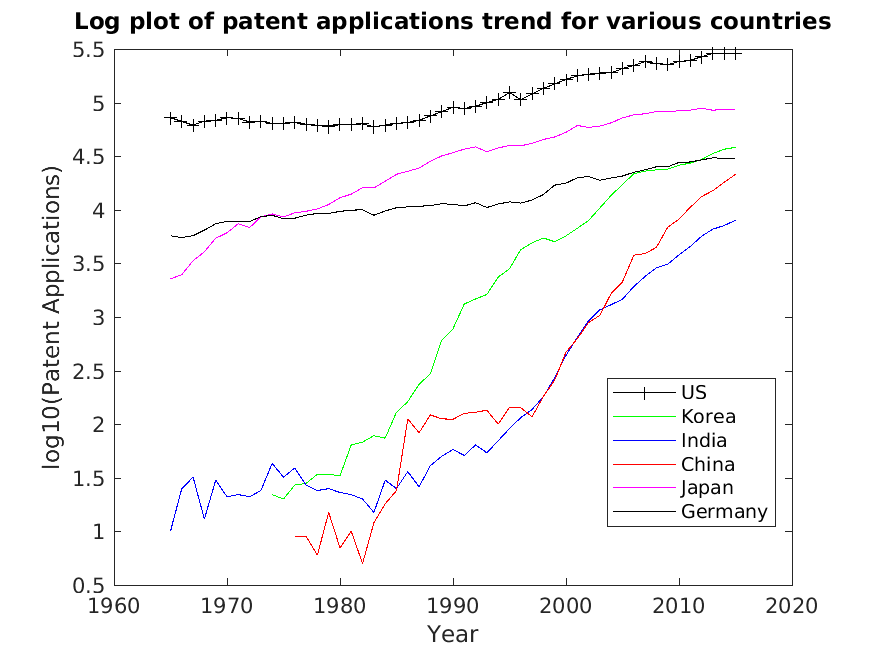
Log plot of US patent applications by various countries.

However, the last two decades have seen a sea change in India’s economic growth, technological prowess and integration with the world. Consider the number of US patents filed from India. From being four orders of magnitude lower than the US, India is now less than two orders of magnitude lower, with continuing growth. Similar trends are seen in the number of scientific papers published in elite journals, where India has moved from 1/20th of US output in 2000 to 1/3rd of US output in 2018. India today offers more opportunities than ever before.

Add to this the fact that the American work visa is exactly that, a visa. The visa is designed to bring in workers in areas where there is a shortage of Americans, so the bulk of opportunities lie in the computer software/data management sector. The flexibility and freedom to explore different career and life paths is severely constrained. You cannot easily leave your software engineering job in a global mega corporation and join a business development role in a start up. You cannot take two months off and wander away to see the world. Your US work visa needs full time employment, every second of your life.

So the trade off here is the opportunity to get a narrow but a truly world class exposure versus exposing yourself to a spectrum of career and life possibilities in India.

Life: Systems vs Services

If there was a one line summary for the difference between life in the US and India, it would be in America you can rely on systems, in India you can get a lot of services.

In America, systems work. The courts, police, municipal authorities all do their job professionally. You will not see mounds of rubble by the roadside and trash everywhere. The air will be clean, government authorities will be professional and accessible. The contrast with India is stark.

When it comes to services, lets just say this, the middle class homes of my relatives in India are a procession of cooks, drivers, maids, gardeners, electricians etc. We have a huge population whom we can now feed very well and transport cheaply around the country to markets which need them. As an example, in India, the service and variety of food on offer in a 3-star hotel buffet for 5 dollars was impressive. On the other hand, there were no Mexican options and stepping out of the hotel, you could literally smell the chemicals in the air.

Spirit: Continuity vs Renewal

Humans are not merely the work they do and the goods and services they consume, transcending our finite selves is a big part of the human experience. This is where notions of family, ethnicity, religion and nationality come into the picture. The US and India offer you contrasting pathways in this regard as well.

Being in India offers continuity and context. You can remain soaked in the arts, sports and traditions you have been familiar with since you were a child, and there is no need to separately make an effort to ‘access India’. You are the market whom the creative and talented people in the economy seek to serve.

America offers the chance for renewal and rebirth. Indeed, for the majority of its existence as a nation, America has offered the tired and beaten people of this planet a chance at reinventing themselves and starting a ‘new life’. The children of those pushed out by their home countries have achieved miracles in the American meritocracy.

So there it is, you can think about these three trade offs while making your decision. Do you want to achieve the summit of computer technology ? Or do you want to explore the world of work before diving into a committed career path ? Do you get annoyed and distressed by the dysfunction of the Indian governments ? Or do you appreciate all the services available to make your life easier ? Finally, do you feel India imprisons you and you need fresh air ? Or can you not bear to sever yourself from your gods and greats ?
Covid Lockdown. Some Questions

When the novel Coronavirus started its spread outside of China very little was known about it and it is no surprise that countries acted to slow or stop the pandemic by locking down their citizens to various extents. Some countries (most notably UK and Sweden) tried to “push through” to herd immunity but then had a LOT of cases and transitioned to various degrees of lockdown. Others like the US tried a “worst of both worlds” response, with the President being skeptical of lockdowns, but reluctantly going along with them for a while  before shifting back to passive-aggressive sabotage of whatever his science advisors were telling him (whether they were correct or not is a separate issue). Pakistan’s PM had Trump-like instincts in this matter and unlike the US, his lockdown did not last long and was never very effective. This led to an early surge of cases and deaths (after Ramadan, when lockdown first failed) but to the surprise of most observers (including me), this outbreak then seemed to slow down and now there are ongoing cases, but the health system is definitely NOT being overwhelmed and the worse seems behind us. Meanwhile India continues to have varying degrees of lockdown (and because Indian officialdom has relatively more ability to enforce such things, these  also seem to have been more real than any Pakistani lockdown ever was) and is seeing a major increase in cases. When people talk about this they frequently bring up the fact that testing and tracking are not necessarily at “first world” levels in either country, so real numbers may be very different from what is being reported. This is true, but we do see what is happening in hospitals, so the fact that the system has not been overwhelmed is still something we can say.  Beyond that, I have no special knowledge or data. So I thought I would put up a post and get some answers from the hive mind:

  1. Where can non-experts like us find the best data on Covid? There are many sites, which ones do commentators prefer and why?
  2. Why is Pakistan NOT experiencing a dramatic health emergency due to Covid in spite of having given up on lockdowns? Is there pre-existing immunity? something else? Or just fewer old people? is there more to come?
  3. IF Pakistan is not seeing a major increase in deaths, should India continue its current level of lockdown? Do we expect Indian immunity and spread characteristics to be very different from Pakistan?
  4. What is the expert consensus now on various details such as “doing X is cost-effective, but Y should be abandoned”.. I mean what is the best source (sources) for answering such questions? One assumes that the “authorities” spend a lot of time analyzing information to determine what worked and what was just a waste of effort? Are the detailed recommendations evidence-based? Should any of them be changed? (for example, why is my dentist open for cleanings, but my barber is not? things like that, are they evidence based? and what does the evidence say?)

I look forward to being enlightened. Meanwhile, stay safe and happy.

Why Hindutva Worries me: Annual Onam debates

This is first in the series of blogposts I plan to write about my worries with Hindutva.

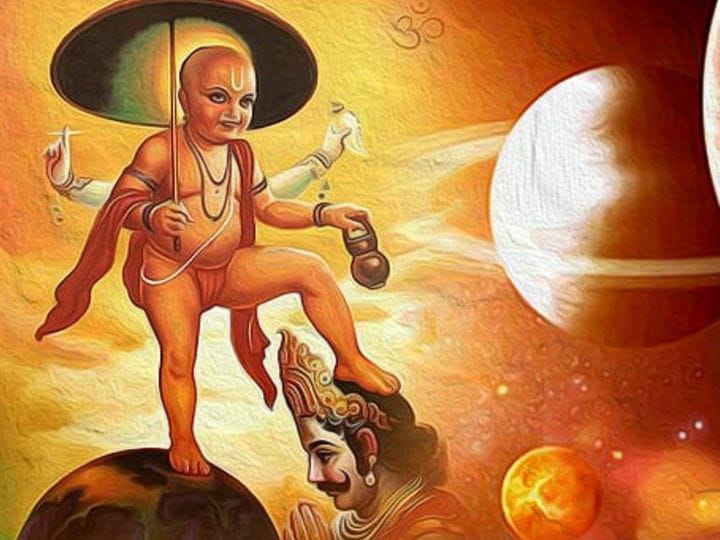
Every year on Onam, social media witnesses flame wars between Hindutva and Anti Hindutva forces. The point of contention often is the Hindutva assertion that Onam is Vamana Jayanti and the counter to that is Onam is a secular harvest festival of Kerala. BJP handles have been tweeting their versions of Onam ever since they have been active on internet. The level to which both sides are unwilling to compromise on occasions of festivals – which ought to reflect human community celebrations, is petty. This year Arvind Kejriwal, flush with his success as modeling himself as a Hindu (or Soft Hindutva), took to twitter with this. It was met with a reply from Shashi Tharoor which in turn was countered by ever growing internet Hindutva – including the widely popular TrueIndology. One cant expect these flame wars to subside anytime soon, given the interest people have been taking in history & hindutva these days.

For decades, liberals have critiqued the Hindutva project as exclusionary. The Hindutva response is – wrt Abhrahamic faiths – if that only these people (religions) connected with the culture on ground and accepted native customs along with their own customs, we wouldn’t protest. For the Hindutvavadis, the said project was always Indianize (not Hinduize they claim) these monotheistic faiths, so that these faiths are more integrated in the larger Indian society. By that train of logic the Hindutvavadis should be happy if Keralites Christians & Muslims celebrate Onam as a Secular festival. Couldn’t this be held as a beacon of syncretic Keralite culture which the country should follow ? For most times, festivals evolve and change with times, their origins though not irrelevant, tend to become less salient as time goes on. The origins of Christmas are testament to the fluid nature of festivals. Onam in Kerala is a truly spectacular festival full of dances, food, music, boat racing and many things, not unlike Diwali. Across the world, harvest seasons have festivals and religious significance because of the underlying material importance. Do contested origins of festivals matter or the human community experience of festivals matters?  Nowruz (whether that is an Iranian mirror of Holi is something that interests me) celebrated by the broader Iranian people, after a millennium of Islam is a testament to the longevity festivals rooted in culture. The insistence of always getting sole ownership of the Onam story comes of as toxic chauvinism & deliberately exclusionary IMO. Yet every year, there are the same debates around Onam with Keralite Christians and Muslims abused for trying to own Onam in a way they have come to define it. (Ricebags and other demeaning words are often used). 

The apparently ironic way the Hindutva movement is becoming very much like its primary enemy is not really unprecedented. VD Savarkar, the foremost and most intellectual ideologue of Hindutva was critical of Muslims and Christians putting their religion above the country. Sadly during the negotiations of princely states, Savarkar himself campaigned for independent Hindu Travancore against the plans of Sardar Patel. It can be alleged he put Hindutva before the country at that moment – exactly what he accused Muslims of for all those years. Yet Hindutvavadis have no qualms putting Patel and Savarkar in the same tent – while claiming Patel and Nehru had irreconcilable differences.

These flames wars were merely part of twitter for a few years but now they’re penetrating larger audiences via whatsapp. While this may be a symptom of taking trivial social media more seriously than it deserves, the point I am arguing is beyond the flame wars of twitter. There is a deliberate and uncompromising framing of Hindutva underway – which covers a variety of tropes from calling Jains/Sikhs Hindus to soft diktats against celebrating Christman/Eid. I consider these manifestations of the nascent ideological moorings, troubling. In  a weird way at times, I hope Hindutva remains REACTIONARY and resists ideological framing, for I am more wary of deep ideological movements than mere reactionary ones.

While its not my argument that their might not be any deliberate maneuvering by the liberals in framing of the Onam as a secular festival – I dont know and I dont care enough to investigate. If the world Hindu is defined as broadly as some do, everything east of the Sindhu will be Hindu & most festivals will have some connection to traditional Hinduism/native religions. At end of the day what matters is Onam is a harvest festival for Keralites.

Post Script:

I personally have tried to indulge in the so-called Dharmic/Indic arguments for India (Harsh Madhusudan& Rajeev Mantri are publishing a book i am looking forward too), put they also indulge in unnecessary labeling IMO. I find the use of these labels – Dharmic/Indic – churlish at times.

As usual all comments short of abuse are welcome.

The Middle Path: Towards a Liberal Conservatism in India (Part 2)

In my previous post, I sought to demonstrate the chain of continuity that has been characteristic of Indian civilization. I also posited that the current political dispensation in India- whose support base can be loosely characterised as “woke Hindutva”- is normatively undesirable. In this post, I build upon my previous arguments to propose a framework I call “liberal conservatism”, which could conserve and promote India’s civilizational heritage within a liberal democratic system.

The limitations of classical liberalism

During the high noon of the post-Soviet Pax Americana era (1990s and 2000s), two books on political philosophy were particularly influential. The first was Francis Fukuyama’s The End of History, which broadly argued in favour of the Hegelian notion of a progressive march of history leading to a global convergence based on free markets and liberal democracy. The other was Samuel Huntington’s Clash of Civilisations which argued that the battle between capitalism and communism would be replaced by a new clash between competing values, customs and traditions of different civilisations. The Huntingtonian thesis was severely criticised at the time. The Fukuyaman idea of a global neoliberal hegemony captured the zeitgeist and seemed inevitable.

In hindsight, the Huntingtonian insight of divergence based on civilizational values has proven to be quite prescient. The idea first gained popularity in China in the last decade. China sees its unique political institutions and public culture as an outcome of Chinese values that have evolved over the centuries. These include Confucianism and the network of social commitments called guanxi. The notion has since become widely popular and adopted by countries as disparate as Russia and France.

Continue reading The Middle Path: Towards a Liberal Conservatism in India (Part 2)

Book Review: Our moon has blood clots

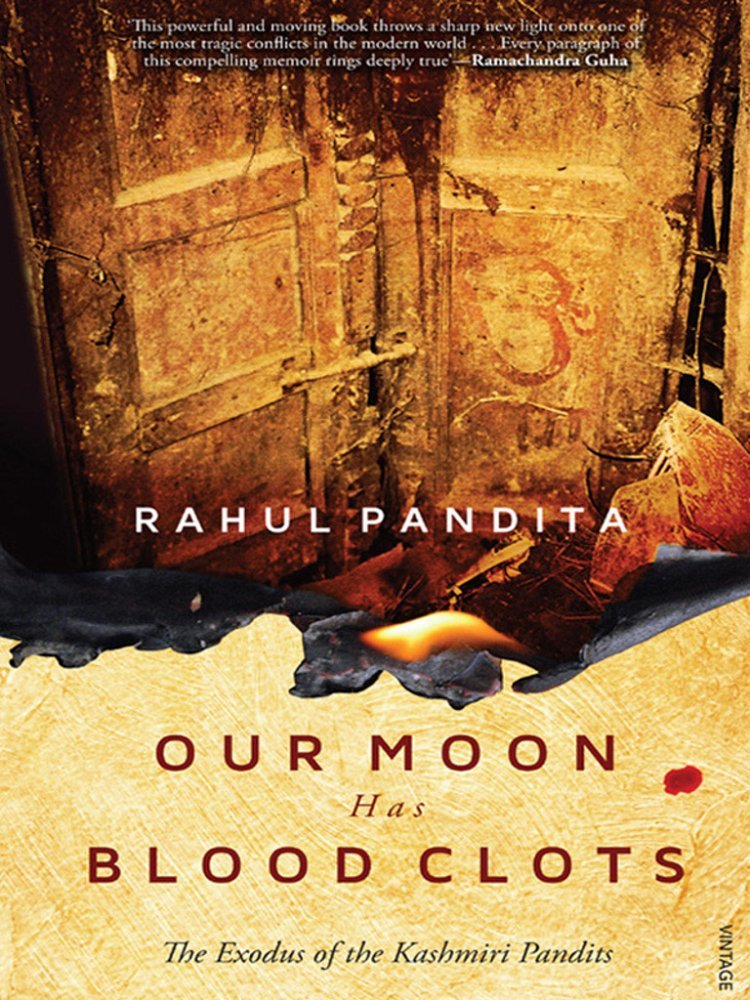
Our moon has blood clots is a gripping biographical tale by journalist Rahul Pandita – which recounts the horrors faced post-1986 Kashmir by the Kashmiri Pandit community at hands of Pakistan aided Islamists. The subtle changes in some Kashmiri attitudes towards the Pandits since the 1980s are brilliantly conveyed through small incidences from the author’s childhood. The book tells the other side of the Kashmir story which has rarely received attention in the global political and even local social circles. The terror emanating nightly from the local mosques jumps out of the pages very effectively. All the killings are from 1989 onwards are told separately and serially which is very impactful in recreating the reign of terror- the pandits must have felt in their ancestral homeland. The Islamist nature of killings is also highlighted (how some pandits were killed with nails hammered to their foreheads). The book also highlights how the silent observers of the valley, who may have not approved the brutalization of Pandits, rarely put up a fight supporting their neighbors. The continuing tragedy of the Pandits at the hands of Jammu residents and negligent central and state government is also narrated from personal and observed experience. The ethnic cleansing of Kashmir in 1947 at hands of Pakistan supported tribesman is also connected to the book narrative through another POV.
The passage where the author narrated his personal journey back to his house leaves the reader in a sad and dazed state. The author’s Hindu culture and heritage are always present in the backstory and hence the pain at the potential loss of Kashmiri pandit culture in the refugees creates a particularly poignant moment in the book. The author’s sufferings, however, aren’t translated into bigotry against Muslims (Kashmiri or non-Kashmiri). The reference to Gujarat 2002 riots (author’s father’s recollections at the lynching of Ehsan Jafri) in the juxtaposition of Pandit anger at suffering is handled with consideration of human rights as the author explained once on television debate. (I have lost my home, not my humanity).

There are few things in the book which could have been handled slightly differently for a better effect IMO. The narrative structure of the book is not perfectly linear – which could’ve been handled differently – but that’s a personal preference and many might view it differently than me. The 1947 story could also be helped a bit by putting it into the larger Partition story of 1947, even though this occurred 2 months after the worst slaughter of 1947. However, these criticisms don’t blunt the impact this book will make on any reader. The book not only makes you feel the pain of the Pandits but also makes you want to work towards preserving the Kashmiri Pandit culture and heritage (especially in the valley). There really is no solution to the Kashmir valley question problem till the Pandits return to their ancestral homeland from where they were brutally driven out.

Post Script: 

The only personal connection I have had to the Pandits is because of the Kashmiri Pandit Quota present in Maharashtra Education enacted by the Shivsena BJP government of 1995 on Balasaheb Thackeray’s insistence. Slapstik or anyone else with Kashmiri connections – Could you please add your comments on Pandita’s telling of the story – both in Book and other media. For me, he serves as a Northstar to navigate polarized debates on twitter and social media in general – for example, his coverage of Delhi Riots & 2019 election. 

Open Thread – 08/29/2020 – Brown Pundits

The usual. Like I said I’m moderating more, so watch yourself.

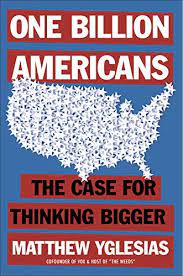
On Monday some of the BP crew (and my friend Josiah Neeley of Urbane Cowboys will be talking to Matthew Yglesias of Vox about his new book One Billion Americans: The Case for Thinking Bigger. Open to questions from the peanut gallery here too. I’ll probably also ask non-book questions toward the end of the hour.

Why Did the Indian and Pakistani Armies fail in 1965?

This is a chapter from Major Amin’s history of the Pakistani army. It is a very long post and there is a lot of repetition (do keep in mind that he wrote it mainly for a Pakistani audience, who may need convincing on some of the points) but I wanted to post it as a historical document and as something  people who are interested in military history may want  to read at leisure. As with any such analysis, there will be no many different opinions.. feel free to add yours in the comments.. Major Amin’s book has some excellent maps and tables that I was unable to transfer successfully. My apologies for that, but the points are pretty clear even without those.

CHAPTER FOURTEEN ANALYSIS – 1965 WAR by Major Agha Humayun Amin

Havelock said that ; “In philosophy, it is not the attainment of the goal that matters, it is the things that are met with by the way”. So it is with war. The most important thing for the student of military history or the art of war is not whether a country lost or won the war but how it was fought, how units performed in action, how decisions were made in face of the stress and strain of battle, the difference between practice and precept in short all matters pertaining to strategy tactics leadership equipment etc. In other words to simply analyze the war to answer the questions like “Whence”? “Whither” ? “Why”? and “How”?

In this analysis of war we have to go beyond probabilities and examine various facets of a particular situation and arrive at conclusions that will assist us in face of a similar crisis situation in future. War is the final audit of an army in which unit efficiency as well as higher and lower leadership is gauged and no book on an army is complete without analyzing in detail the qualitative efficiency of an army in actual War. Unfortunately most books written on both Pakistan and Indian Armies by foreigners and therefore meekly accepted by the subcontinentals who suffer from a subtle inferiority complex; as the final authority; do not discuss the qualitative efficiency of both the Pakistan and Indian Armies in any actual war; both as British Indian Army and as two different armies after 1947!

Instead these books beat round the bush discussing vague and largely irrelevant issues which their authors have decided to highlight, merely because they have decided to write a book and want to write their book without going into the subtleties of actual wars fought by the Indo Pak armies.

In the following paragraphs an attempt has been made to analyze the conduct of 1965 war and to answer certain questions about the qualitative efficiency of the Pakistan Army in a detached manner separating myth from reality and fact from fiction. This analysis is important because a considerable part of Pakistani military history has been deliberately or inadvertently distorted based on nationalistic parochial personal and inter arm prejudices and jealousies.

THE BRITISH COLONIAL LEGACY

We have already discussed in detail the impact of the British military tradition on the Indo Pak armies in our earlier chapters dealing with the armies of the English East India Company and the pre 1947 British Indian Army. This was not something confined to Indo- Pak subcontinent alone but an all Asia trend. From the late eighteenth century the “European Way of Warfare” was generally borrowed and follow as the gospel truth by many East European and Afro-Asian armies. The trend of “importing the European way of war” started around 1600 when the Ottoman Turks came into contact with the European powers in Eastern Europe and Russia.

Till 1500 the Europeans who had as a matter of fact military failed in the Crusades against Asia enjoyed no significant military advantage over Asia. Till the invention of gunpowder the cavalry remained the dominant arm in battle and the infantry was relegated to a secondary role. The ascendancy of European methods of warfare starts with the advent of Gustavus Adolphus(1496- 1560) of Sweden who introduced a renaissance in the art of warfare by “harnessing modern technology to a practical military philosophy” . (1)

Gustavus principal contribution was the introduction of a relatively superior conceptual framework of integrating military organization with weapons and tactics. He created an infantry organized in brigades of two to four regiments each of which had eight battalions of four companies etc. He introduced similar reforms in cavalry and artillery integrating artillery with infantry and cavalry in battle and restructured infantry formations in such a way that their firepower was enhanced. One of his most important reforms was employment of cavalry as a “shock weapon”.

Gustavus’s methods were copied by the French and the British. Gustavus ‘s tactics were improved by Turenne of France and Cromwell and Marlborough of England and were further improved by Napoleon who was able to benefit from the analytical studies of great military thinkers like Gribeauval Maurice de Saxe Bourcet Joseph Du Teil and Guibert. Formal military schools were organized in France where the art of war was studied while similar institutions were founded in Prussian and Sweden.

By 1600 Russia was the first country outside mainland Europe to realize that there was something conceptually and organizationally superior in the West European way of warfare which enabled them to defeat numerically superior but more primitively organized armies. lt may be noted that as late as 1592 the Russians were no match to the Muslim Tartars of the Golden Horde who sacked Moscow in 1571 and managed to penetrate into suburbs of Moscow as late as 1592. 1t may seem unbelievable to many but as late as 1660s the Crimean Muslim Tartars were one of Russia’s most feared enemies.(2)

A similar pattern of imitation was followed in the Ottoman Turk Army fromapproximately 1750 to 1914 when the Ottomans discovered that medieval tactics of cavalry assault were of little utility against relatively numerically superior or equal strength European armies with superior organization’.(3) Continue reading Why Did the Indian and Pakistani Armies fail in 1965?

The counterproductive (il)liberalism


Yesterday I read a piece in Web portal Newslaundry (of which i am a disappointed subscriber). While i agreed with some parts of the argument I found the oversimplification and ideological bias to be very stark and mildly unpalatable. Particularly what struck me was the referring to Yogi Adityanath as Ajay Bisht.

about that time Uttar Pradesh chief minister Ajay Bisht showed up in Karawal Nagar and told a bustling audience that “their ancestors broke this country apart”, meaning Muslims.

Being a reasonable follower of politics I know that Yogi Adityanath was once called Ajay Bisht before he took the name Adityanath as the head of Gorakhpur Muth. The use of name Ajay Bisht is clearly a polemical ploy to get virtual cheers from the people on your side of the debate but what it foolishly ignores IMO is the reverence Hindus in general have for Yogis, Sadhus and Godmen.

The problems of this polemic are twofold:

  • Some people who are uninformed maybe confused by use of name Ajay Bisht. Even a minute incoherence which diverts from the thrust of the argument could be seen as counterproductive.
  • It prejudices minds of readers who are not necessarily partisan but find this un-name calling unpalatable.

In my readings and listenings over the years, the only people who had scornfully referred to un-named religious men have been people like Christopher Hitchens and Richard Dawkins. However one doesn’t need to defend these folks for their consistency as their all out attack on religion is as even handed as humanly possible.

This discussion goes well into the truly sad self goal by the Indian Liberals viz. the Delhi Riots 2020 book launch. One of the arguments for this is made in here. (Again in Newslaundry which to my disappointment is going truly into the Wokesphere). This argument is so lame and so pre-Internet IMO that it doesn’t even bother confronting the real outcome of Bloomsbury de-platforming Delhi Riots 2020 – increased popularity and unnecessary (from liberal pov) martyrdom of the authors. What could’ve been criticized as an one sided and hyperbolic book has become a Free speech issue. And Liberals have ceded a lot of moral ground here. Contrast this with the much more objectively problematic book on 26/11 – RSS ka Shadyantra, 26/11 which did not receive any meaningful criticism from the liberal side despite being the complete PIGSHIT. The book could’ve objectively & legally banned from publishing IMO as it compromised the national position on 26-11 and Pakistan but it wasn’t. The extend to which the RSS opposed that book was that they filed a court complaint and the author/publisher had to apologize – yes its the so called Fascists who take the legal route. The whole outrage over the pulping of Wendy Doniger’s book is put in nice perspective with this incident. The reason I personally endured parts of Doniger’s spurious Freudian extrapolations is because of the noise that book generated. Same will happen with the Delhi Riots 2020 for many non-partisan people.

Some smart liberals have stood up against this virtue signaling masquerading as moral righteousness. Examples – Here and Here  but they have been childishly dismissed by the left as Both-siders between Good and Evil. What is surprising for me is how deracinated some people have become to count this instance as a liberal victory. As if getting plaudits from your own tribe matters as a victory.  But in these polarized echo chambers even a (BOT)tish liberal POV articles by folks like Aakar Patel & Shivam Vij are well received. Lets not even start with how people like Rana Ayyub and Sagarika Ghose earn so much money and fame.

On the whole, based on interactions i have had with Hindutva supporters, most don’t support the extreme narrative espoused in books like Delhi Riots 2020. From a purely reductionist point of view – 40/53 causalities have been Muslim and the overwhelming number of people facing prosecution are also Muslims. Such hard facts are irrefutable even if people on the Right are moderately honest (which most are). However what has enraged most people on the right is the calling of Delhi 2020 riots-  Pogroms or comparing them to Gujarat 2002. Journalists like Rahul Pandita  and even bleeding heart liberals like Rajdeep Sardesai were viciously attacked from the left when they pointed out that both communities had suffered from the riots. If such an atmosphere persists I wouldn’t be surprised if more One sided books like Delhi Riots 2020 are written, published and widely read. Had I been the marketing in-charge of release of Delhi Riots 2020, i couldn’t have come up with a better plan for a wider readership.

What is tragic about these antics is that people on the right are more likely to believe extreme and conspiracy theorist narratives as a natural function of this controversy. But till LIBERALS continue with virtue signaling over readable and nuanced arguments, liberals(like me) are bound to be pushed rightwards.


Why Turks ruled India for so long

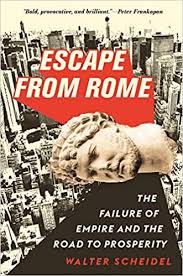
After finishing Escape from Rome: The Failure of Empire and the Road to Prosperity I continue to believe that geography and economics explain the basic reason for the very long ascendance of Turkic people in the Indian subcontinent, and, their eventual eclipse.

The context for this is the fact that many Indian and Indian American friends have posited cultural rationales for the Turkic hegemony. That is, there was a passivity and disunity in Hindu society which made it vulnerable to the Turks, who were also adherents to a separatist hegenomic ideology in the form of Musim. All this may very well be true, but I have always held that the key factor was that Turks and Muslims more general had ready and easy access to warhorses.

Between 500 A.D. and 1500 A.D. was the heyday of the nomadic pastoralist as a geopolitical force in Eurasia for various reasons. Even in the centuries after 1500 A.D. horses remained critical for mobility. The problem is that in much of agricultural Eurasia there is not sufficient pasturage to raise large numbers of horses.

Pretty much every Eurasian society within reach of the steppe (so basically every society except for those in Western Europe, Japan, and Southeast Asia) had to deal with the menace of armed nomads. Sometimes they paid them off. Sometimes they mobilized enormous armies which incurring crushing costs. And sometime they were conquered.

Between 1700 and 1900 this spectre faded. Improvements in military technology, transport, and mass national mobilization, leveled the gap between the steppe and the settled peoples, to the point where by 1900 the steppe was a marginal factor.

Note: the author of Escape from Rome attributes the rise and fall of Vijayanagara explicitly as a function of its access to horses.

Browncast Episodes 121 & 122: Desi-Rae, heterodox Jamaican American, and Anthony, a black American in China

Two new BP Podcast episodes are up. You can listen on Libsyn, Apple, Spotify,  and Stitcher (and a variety of other platforms). Probably the easiest way to keep up the podcast since we don’t have a regular schedule is to subscribe to one of the links above!

You can also support the podcast as a patron. The primary benefit now is that you get the podcasts considerably earlier than everyone else. This website isn’t about shaking the cup, but I have noticed that the number of patrons plateaued a long time ago.

First, we talked to Desi-Rae, a Jamaican American woman who has some heterodox views. Her views on race in Jamaica and the United States, relationships, and the fallout from being so vocal. I apologize that my mic was very low on this episode.

Next, I talk to Anthony, a black American who worked in China. We talk about Chinese perceptions of blackness, his daughter, who is half-Chinese, and the prospects for the China-USA relationship.

Brown Pundits