Why Did the Indian and Pakistani Armies fail in 1965?

This is a chapter from Major Amin’s history of the Pakistani army. It is a very long post and there is a lot of repetition (do keep in mind that he wrote it mainly for a Pakistani audience, who may need convincing on some of the points) but I wanted to post it as a historical document and as something  people who are interested in military history may want  to read at leisure. As with any such analysis, there will be no many different opinions.. feel free to add yours in the comments.. Major Amin’s book has some excellent maps and tables that I was unable to transfer successfully. My apologies for that, but the points are pretty clear even without those.

CHAPTER FOURTEEN ANALYSIS – 1965 WAR by Major Agha Humayun Amin

Havelock said that ; “In philosophy, it is not the attainment of the goal that matters, it is the things that are met with by the way”. So it is with war. The most important thing for the student of military history or the art of war is not whether a country lost or won the war but how it was fought, how units performed in action, how decisions were made in face of the stress and strain of battle, the difference between practice and precept in short all matters pertaining to strategy tactics leadership equipment etc. In other words to simply analyze the war to answer the questions like “Whence”? “Whither” ? “Why”? and “How”?

In this analysis of war we have to go beyond probabilities and examine various facets of a particular situation and arrive at conclusions that will assist us in face of a similar crisis situation in future. War is the final audit of an army in which unit efficiency as well as higher and lower leadership is gauged and no book on an army is complete without analyzing in detail the qualitative efficiency of an army in actual War. Unfortunately most books written on both Pakistan and Indian Armies by foreigners and therefore meekly accepted by the subcontinentals who suffer from a subtle inferiority complex; as the final authority; do not discuss the qualitative efficiency of both the Pakistan and Indian Armies in any actual war; both as British Indian Army and as two different armies after 1947!

Instead these books beat round the bush discussing vague and largely irrelevant issues which their authors have decided to highlight, merely because they have decided to write a book and want to write their book without going into the subtleties of actual wars fought by the Indo Pak armies.

In the following paragraphs an attempt has been made to analyze the conduct of 1965 war and to answer certain questions about the qualitative efficiency of the Pakistan Army in a detached manner separating myth from reality and fact from fiction. This analysis is important because a considerable part of Pakistani military history has been deliberately or inadvertently distorted based on nationalistic parochial personal and inter arm prejudices and jealousies.

THE BRITISH COLONIAL LEGACY

We have already discussed in detail the impact of the British military tradition on the Indo Pak armies in our earlier chapters dealing with the armies of the English East India Company and the pre 1947 British Indian Army. This was not something confined to Indo- Pak subcontinent alone but an all Asia trend. From the late eighteenth century the “European Way of Warfare” was generally borrowed and follow as the gospel truth by many East European and Afro-Asian armies. The trend of “importing the European way of war” started around 1600 when the Ottoman Turks came into contact with the European powers in Eastern Europe and Russia.

Till 1500 the Europeans who had as a matter of fact military failed in the Crusades against Asia enjoyed no significant military advantage over Asia. Till the invention of gunpowder the cavalry remained the dominant arm in battle and the infantry was relegated to a secondary role. The ascendancy of European methods of warfare starts with the advent of Gustavus Adolphus(1496- 1560) of Sweden who introduced a renaissance in the art of warfare by “harnessing modern technology to a practical military philosophy” . (1)

Gustavus principal contribution was the introduction of a relatively superior conceptual framework of integrating military organization with weapons and tactics. He created an infantry organized in brigades of two to four regiments each of which had eight battalions of four companies etc. He introduced similar reforms in cavalry and artillery integrating artillery with infantry and cavalry in battle and restructured infantry formations in such a way that their firepower was enhanced. One of his most important reforms was employment of cavalry as a “shock weapon”.

Gustavus’s methods were copied by the French and the British. Gustavus ‘s tactics were improved by Turenne of France and Cromwell and Marlborough of England and were further improved by Napoleon who was able to benefit from the analytical studies of great military thinkers like Gribeauval Maurice de Saxe Bourcet Joseph Du Teil and Guibert. Formal military schools were organized in France where the art of war was studied while similar institutions were founded in Prussian and Sweden.

By 1600 Russia was the first country outside mainland Europe to realize that there was something conceptually and organizationally superior in the West European way of warfare which enabled them to defeat numerically superior but more primitively organized armies. lt may be noted that as late as 1592 the Russians were no match to the Muslim Tartars of the Golden Horde who sacked Moscow in 1571 and managed to penetrate into suburbs of Moscow as late as 1592. 1t may seem unbelievable to many but as late as 1660s the Crimean Muslim Tartars were one of Russia’s most feared enemies.(2)

A similar pattern of imitation was followed in the Ottoman Turk Army fromapproximately 1750 to 1914 when the Ottomans discovered that medieval tactics of cavalry assault were of little utility against relatively numerically superior or equal strength European armies with superior organization’.(3) Continue reading Why Did the Indian and Pakistani Armies fail in 1965?
The counterproductive (il)liberalism


Yesterday I read a piece in Web portal Newslaundry (of which i am a disappointed subscriber). While i agreed with some parts of the argument I found the oversimplification and ideological bias to be very stark and mildly unpalatable. Particularly what struck me was the referring to Yogi Adityanath as Ajay Bisht.

about that time Uttar Pradesh chief minister Ajay Bisht showed up in Karawal Nagar and told a bustling audience that “their ancestors broke this country apart”, meaning Muslims.

Being a reasonable follower of politics I know that Yogi Adityanath was once called Ajay Bisht before he took the name Adityanath as the head of Gorakhpur Muth. The use of name Ajay Bisht is clearly a polemical ploy to get virtual cheers from the people on your side of the debate but what it foolishly ignores IMO is the reverence Hindus in general have for Yogis, Sadhus and Godmen.

The problems of this polemic are twofold:

  • Some people who are uninformed maybe confused by use of name Ajay Bisht. Even a minute incoherence which diverts from the thrust of the argument could be seen as counterproductive.
  • It prejudices minds of readers who are not necessarily partisan but find this un-name calling unpalatable.

In my readings and listenings over the years, the only people who had scornfully referred to un-named religious men have been people like Christopher Hitchens and Richard Dawkins. However one doesn’t need to defend these folks for their consistency as their all out attack on religion is as even handed as humanly possible.

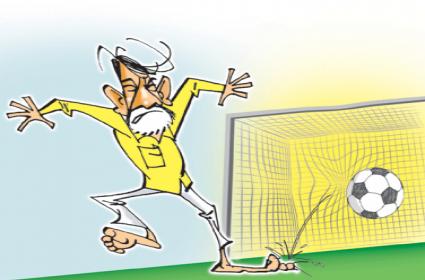
This discussion goes well into the truly sad self goal by the Indian Liberals viz. the Delhi Riots 2020 book launch. One of the arguments for this is made in here. (Again in Newslaundry which to my disappointment is going truly into the Wokesphere). This argument is so lame and so pre-Internet IMO that it doesn’t even bother confronting the real outcome of Bloomsbury de-platforming Delhi Riots 2020 – increased popularity and unnecessary (from liberal pov) martyrdom of the authors. What could’ve been criticized as an one sided and hyperbolic book has become a Free speech issue. And Liberals have ceded a lot of moral ground here. Contrast this with the much more objectively problematic book on 26/11 – RSS ka Shadyantra, 26/11 which did not receive any meaningful criticism from the liberal side despite being the complete PIGSHIT. The book could’ve objectively & legally banned from publishing IMO as it compromised the national position on 26-11 and Pakistan but it wasn’t. The extend to which the RSS opposed that book was that they filed a court complaint and the author/publisher had to apologize – yes its the so called Fascists who take the legal route. The whole outrage over the pulping of Wendy Doniger’s book is put in nice perspective with this incident. The reason I personally endured parts of Doniger’s spurious Freudian extrapolations is because of the noise that book generated. Same will happen with the Delhi Riots 2020 for many non-partisan people.

Some smart liberals have stood up against this virtue signaling masquerading as moral righteousness. Examples – Here and Here  but they have been childishly dismissed by the left as Both-siders between Good and Evil. What is surprising for me is how deracinated some people have become to count this instance as a liberal victory. As if getting plaudits from your own tribe matters as a victory.  But in these polarized echo chambers even a (BOT)tish liberal POV articles by folks like Aakar Patel & Shivam Vij are well received. Lets not even start with how people like Rana Ayyub and Sagarika Ghose earn so much money and fame.

On the whole, based on interactions i have had with Hindutva supporters, most don’t support the extreme narrative espoused in books like Delhi Riots 2020. From a purely reductionist point of view – 40/53 causalities have been Muslim and the overwhelming number of people facing prosecution are also Muslims. Such hard facts are irrefutable even if people on the Right are moderately honest (which most are). However what has enraged most people on the right is the calling of Delhi 2020 riots-  Pogroms or comparing them to Gujarat 2002. Journalists like Rahul Pandita  and even bleeding heart liberals like Rajdeep Sardesai were viciously attacked from the left when they pointed out that both communities had suffered from the riots. If such an atmosphere persists I wouldn’t be surprised if more One sided books like Delhi Riots 2020 are written, published and widely read. Had I been the marketing in-charge of release of Delhi Riots 2020, i couldn’t have come up with a better plan for a wider readership.

What is tragic about these antics is that people on the right are more likely to believe extreme and conspiracy theorist narratives as a natural function of this controversy. But till LIBERALS continue with virtue signaling over readable and nuanced arguments, liberals(like me) are bound to be pushed rightwards.


Why Turks ruled India for so long

After finishing Escape from Rome: The Failure of Empire and the Road to Prosperity I continue to believe that geography and economics explain the basic reason for the very long ascendance of Turkic people in the Indian subcontinent, and, their eventual eclipse.

The context for this is the fact that many Indian and Indian American friends have posited cultural rationales for the Turkic hegemony. That is, there was a passivity and disunity in Hindu society which made it vulnerable to the Turks, who were also adherents to a separatist hegenomic ideology in the form of Musim. All this may very well be true, but I have always held that the key factor was that Turks and Muslims more general had ready and easy access to warhorses.

Between 500 A.D. and 1500 A.D. was the heyday of the nomadic pastoralist as a geopolitical force in Eurasia for various reasons. Even in the centuries after 1500 A.D. horses remained critical for mobility. The problem is that in much of agricultural Eurasia there is not sufficient pasturage to raise large numbers of horses.

Pretty much every Eurasian society within reach of the steppe (so basically every society except for those in Western Europe, Japan, and Southeast Asia) had to deal with the menace of armed nomads. Sometimes they paid them off. Sometimes they mobilized enormous armies which incurring crushing costs. And sometime they were conquered.

Between 1700 and 1900 this spectre faded. Improvements in military technology, transport, and mass national mobilization, leveled the gap between the steppe and the settled peoples, to the point where by 1900 the steppe was a marginal factor.

Note: the author of Escape from Rome attributes the rise and fall of Vijayanagara explicitly as a function of its access to horses.

Browncast Episodes 121 & 122: Desi-Rae, heterodox Jamaican American, and Anthony, a black American in China

Two new BP Podcast episodes are up. You can listen on LibsynAppleSpotify,  and Stitcher (and a variety of other platforms). Probably the easiest way to keep up the podcast since we don’t have a regular schedule is to subscribe to one of the links above!

You can also support the podcast as a patron. The primary benefit now is that you get the podcasts considerably earlier than everyone else. This website isn’t about shaking the cup, but I have noticed that the number of patrons plateaued a long time ago.

First, we talked to Desi-Rae, a Jamaican American woman who has some heterodox views. Her views on race in Jamaica and the United States, relationships, and the fallout from being so vocal. I apologize that my mic was very low on this episode.

Next, I talk to Anthony, a black American who worked in China. We talk about Chinese perceptions of blackness, his daughter, who is half-Chinese, and the prospects for the China-USA relationship.

The Middle Path: Towards a Liberal Conservatism in India (Part 1)

I listened with interest to Brown Pundits’ recent podcasts with Gaurav and Tony on the current state of Indian politics. I could relate to some of their agonies and predicaments, although I profoundly disagree with some aspects of Tony’s worldview.  Slapstik’s recent post Indian woke wears saffron also contains some good insights on the nature and roots of the current Hindutva movement. In this post, I have picked on three strands of Slapstik’s argument: the comparison between Hindutva and woke culture, the genesis of the Bhakti movement and the nature of the leadership of the Indian National Congress both before and after independence.

While I share Slapstik’s assessment of the importance of the Bhakti movement, I do not regard the Bhakti movement as a radical rupture from the pre-Islamic Dharmic traditions. I also argue that by only highlighting the role and influence of the liberal modernist elements of the Indian political leadership in the colonial and early post-colonial periods, Slapstik overlooks the equally if not more salient part of the leadership that sought its inspiration from the country’s indigenous Indic heritage. In doing so, I seek to highlight the deep and abiding roots of India’s Dharmic consciousness that is characterised by cultural continuity.

Continue reading The Middle Path: Towards a Liberal Conservatism in India (Part 1)

Why Indian Americans are not the new Jews

In the 2000s I would have arguments with some Indian American friends about the ethnic trajectory of Indian Americans in terms of their similarity American Jews, where I staked out the position that the analogy was superficial (e.g., on the Sepia Mutiny blog). To understand why the analogy doesn’t work, you need to know the history of American Jews first. Though Judaism in the United States goes back to small Sephardic communities along the eastern seaboard before the Amerian Revolution, to understand the Jewish community in the 20th and 21st centuries one needs to focus on the two Ashkenazi migrations from Central and Eastern Europe that occurred in the 75 years between 1850 and 1925.

The first wave was the “German Jews”, most of whom were Bavarian peddlers. Many of them scattered across the country, starting general stores and the like. Though numerically a very small migration, they founded many Jewish American institutions. There is a reason that the headquarters of Reform Judaism, which is of German origin, is in Cincinnati. This reflects the migration of German Jews along routes of commerce in the 19th century.

The second wave, and the much larger one, is the migration stream that issued out of the expanded Russian Empire, in particular Lithuania and Galicia. These are who the German Jews referred to as the “Ostjuden”, the Eastern Jews. This was a term applied in Germany to Jews from Poland and further east as well. The Ostjuden were often destitute. Those that fled the early 20th century pogroms may have had nothing but the clothes on their backs. In fact, in all likelihood, the richer and more assimilated Jews were the ones who remained in Europe.

America was the destination for the more marginalized.

Continue reading Why Indian Americans are not the new Jews

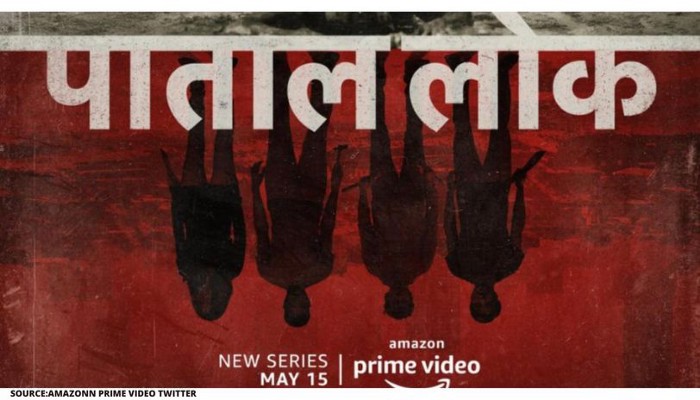
Paatal Lok – Review

Open Thread – 08/22/2020 – Brown Pundits

The usual.

But I’ll make a comment here. I am of the school that thinks facts matter a lot. Many of you trade in standard Hindu nationalist tropes and generalities about Islam. As someone who told Shadi Hamid on our interview, I am not a big personal fan of Islam, I don’t really mind people fearing Islam. I have personal experience of the religion after all.

But, facts matter. And a lot of the “facts” that get bandied about here are false.  I won’t tolerate that. There are two general categories I will point to:

1. First, people take traditional Muslim historiography at face value. You shouldn’t. This is like taking Christians at face value when they talk about the Four Gospels are pure positive history, when they were finally compiled and redacted decades later. Whether Muhammad exists is an empirical question in the same way that whether Jesus exists is an empirical question. As it happens, I’m modestly confident both figures existed in some form but were quite different from what Christians and Muslims depict them as (I do suspect that Josephus was a later interpolation).

The broader issue here is that Muslims on the whole have not gone through the modernist transition in regards to a critical-rationalist take on their religion. In Christianity, traditionalist-fundamentalists exist, but they have to take dialogue with modernists as a given. They exist in large part as reactions to modernism. This is not the case with Islam. Muslims accept that non-Muslims reject their religion, but within Islam, there is not a strong rationalist engagement with their texts that applies the sort of criticism than the Germans pioneered within Protestantism in the 19th century. That means they present a “unified face” about their early history which too many non-Muslims take for granted. Islam with all of its constitutive elements is not truly recognizable to us until about 850 A.D.*

2. Because this is a blog with a South Asian focus a lot of Hindu nationalist tropes and facts get presented at face value. I don’t really mind them as mythologies that give people succor or create their identity, but a lot of them have as much factual basis as a pagan Mecca: not much.

Most of the Hindu nationalist commenters do reflect a reality of “lived experience.” As someone who grew up around South Asian Muslims, I can admit they have total contempt on the whole (there are exceptions) for Hindus and their “bizarre” beliefs. But, as someone who is personally anti-Islam and literally tolerant of diverse views, many people from Hindu backgrounds of all ideologies have told me what they really think of Muslims, and the contempt is returned.

My issue is always when people turn their personal experiences into deep historical insights. Do not do that if you don’t enjoy me jumping down your throat, because if I’m not busy, I will do so.

More broadly, lots of Indian readers would benefit from reading more history. Especially non-Indian history. A broad cross-cultural perspective is essential, so do more!

For the curious here are a few books:

China: A New History
History of Rome
A History of the Byzantine State and Society
A History of the Arab Peoples: Updated Edition

* The Shia-Sunni split starts to become discernible in a way we’d recognize, Hadith culture is already on track to marginalize the “philosophers” and Hellenists, and the ulema centered around madrassas spread from the east to the west.

The Qualitative Destruction of Pakistan Army between 1955 and 1971

From Major Amin. Originally written in 1999

Why Military Defeat in 1971-The Qualitative Destruction of Pakistan Army between 1955 and 1971 Major A.H Amin (Retired) https://www.militaryhistorycentre.com/blogs/news/pakistan-army-between-1965-and-1971
Why Military Defeat in 1971-The Qualitative Destruction of Pakistan Army between 1955 and 1971
• August 2020

Research teaching and writing were unproductive jobs in British India since they did not enable a man to be a deputy collector or barrister or doctor! It was a mad race made further mad by frequent outbursts of communal frenzy, which increased as population increased during the period 1890-1940. All this helped the Britishers who had been traumatically shaken by the Sepoy Rebellion of 1857 when a largely Hindu majority army had rebelled under Muslim leaders! The British were thus happier playing the role of judges resolving Hindu Muslim disputes rather than performing the more unpleasant task of facing a combined political movement of all Indians regardless of race or religion as in 1857, 1919 or 1922! This is the basis of anti-intellectualism in the Indo-Pak Sub-continent. It is truer for Pakistan since the Muslims were educationally more backward and relatively less true, yet still true and applicable to India too! Pakistan and India have produced very few serious military writers. In Pakistan the situation is worse since an unofficial ban was imposed on military writing by various military usurpers who ruled the country for the greater part of its existence.

The finest summarizing of the incalculable qualitative harm inflicted on the Pakistan Army, by the self-promoted Field Marshal of peace, by a contemporary, was done by Major General Fazal I Muqeem, when he described the state of affairs of the Pakistan Army during the period 1958-71; in the following words: “We had been declining according to the degree of our involvement in making and unmaking of regimes. Gradually the officer corps, intensely proud of its professionalism was eroded at its apex into third class politicians and administrators. Due to the absence of a properly constituted political government, the selection and promotion of officers to the higher rank depended on one man’s will. Gradually, the welfare of institutions was sacrificed to the welfare of personalities. To take the example of the army, the higher command had been slowly weakened by retiring experienced officers at a disturbingly fine rate. Between 1955 and November 1971, in about 17 years 40 Generals had been retired, of whom only four had reached their superannuating age. Similar was the case with other senior ranks. Those in the higher ranks who showed some independence of outlook were invariably removed from service. Some left in sheer disgust in this atmosphere of insecurity and lack of the right of criticism, the two most important privileges of an Armed Forces officer. The extraordinary wastage of senior officers particularly of the army denied the services, of the experience and training vital to their efficiency and welfare. Some officers were placed in positions that they did not deserve or had no training for” 1.

Continue reading The Qualitative Destruction of Pakistan Army between 1955 and 1971

Kamala Harris embrace of ‘victim identity’ bothers me

Apparently Kamala Harris was admitted to law school through LEOP:

LEOP offers admission to approximately 50 high-achieving students each year—up to 20 percent of the class—who have experienced major life hurdles, such as educational disadvantage, economic hardship, or disability. The majority are students of color. Besides traditional admissions criteria, such as grades and LSAT scores, the program also considers students’ overall potential and the obstacles they’ve overcome. “These are extraordinary students who have been playing while injured in the game of life, but all they do is win,” McGriff said.

Once students enroll, LEOP supports them throughout their tenure at UC Hastings, offering a weeklong orientation, academic counseling, practice exams, and help preparing for the bar exam and job interviews, among other resources and services.

…. LEOP went on to count many prominent alumni among its ranks, including U.S. Senator Kamala Harris ’89; San Francisco Public Defender Jeff Adachi ’85; Adelmise Warner ’01, chief counsel at Pandora; and Andrew Houston ’07, procurement counsel for the University of California’s Office of the General Counsel.

We know a lot about Kamala Harris’ mother’s family. They are upper-middle-class Tamil Brahmins. Her mother did raise her mostly alone. So she was a single mother. But she was also a Ph.D. biomedical researcher.

Here is a profile about her father, Kamala Harris’s Father, a Footnote in Her Speeches, Is a Prominent Economist:

Dr. Harris was raised in a landowning family on the north coast of Jamaica by a paternal grandmother whom he described as “reserved and stern in look, firm with ‘the strap,’ but capable of the most endearing and genuine acts of love, affection and care.” Reserved and highly intelligent, he was more cut out for academia than activism, contemporaries said.

Basically, on both sides of Harris’ pedigree, there is evidence of sub-elite status. Her utilization of the LEOP program seems to be unfair to students who were genuinely disadvantaged.

Brown Pundits