Book Review: The Universal History of Numbers

A review I wrote 20 years ago.

Georges Ifrah is a Frenchman of Moroccan origin who was an ordinary schoolteacher of mathematics before his students sparked one of the great intellectual quests of our time (or, indeed, of any time). His students asked him where numbers came from? Who invented them and why? How did they take their modern form? When he tried to answer these simple questions, he found that the information found in standard textbooks was highly unsatisfactory and frequently contradictory. Not content with passing on half-truths and conjectures, Mr. Ifrah abandoned his job and embarked on a ten-year quest to uncover the history of numbers. He traveled to the four corners of the world, read thousands of books, visited hundreds of libraries and museums and asked questions of countless scholars. All this research was supported by odd jobs as delivery boy, chauffer, waiter, night watchman and so on. The result was a book called FROM ONE TO ZERO A Universal History of Numbers, (published in English translation in 1985Ā  ). The book was a hit and brought fame and fortune and the chance to do more research. This led to a much larger book, The Universal History of Numbers: From Prehistory to the Invention of the Computer, which was translated into English in 1998 (after initial publication in French in 1994) and is now available in either one or two volumes.

These books have earned Mr. Ifrah the title of ā€œIndiana Jones of numbersā€ and worldwide celebrity. After reading the book, I can only add that he deserves every superlative that has been used, and more. To quote a reviewer from ā€œThe Guardianā€: “Georges Ifrah is the man, and this book, quite simply, rules.ā€ This is not just a history of numbers, it is universal history disguised as the history of numbers. Mr. Ifrah starts with the most basic questions; what kind of ā€œcounting senseā€ do animals possess? What do we know about the number sense of our pre-human ancestors? When we evolved into Homo sapiens sapiens, what kind of numerical ability was ā€œhard-wiredā€ into our brains? He presents fascinating information about the most primitive counting systems, using tally marks, fingers, body parts etc. from these simple beginnings, we move to the abstract concepts of number and its notations. The detail provided is astounding. We learn about the earliest systems of numbers used in the Middle East, India, china, and the ancient Maya etc.etc. And not only do we learn about the numbers, Mr. Ifrah slips in his humanistic, sensitive and very very detailed knowledge of history so smoothly that we hardly notice that we are learning, not just the history of numbers, but the history of mankind; told by a very fair, very balanced and deeply sympathetic observer. Continue reading Book Review: The Universal History of Numbers
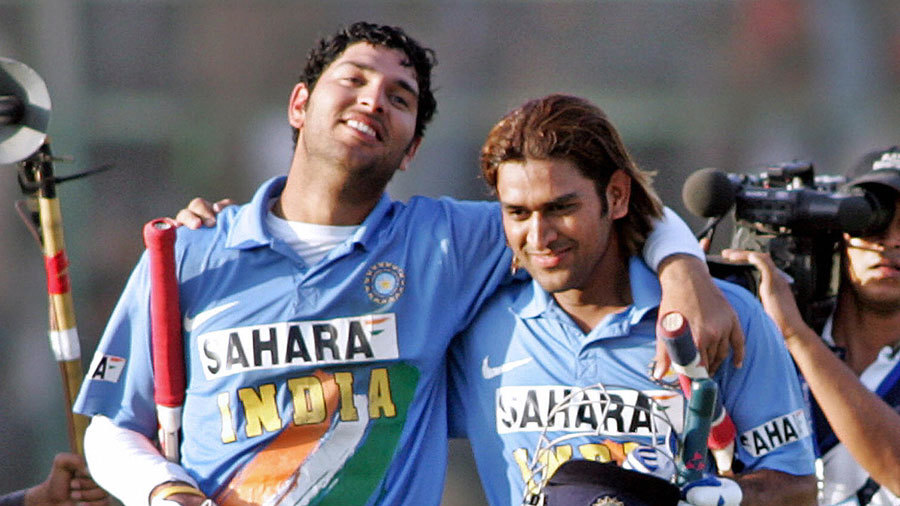
MS Dhoni – the Master of Methodical Madness

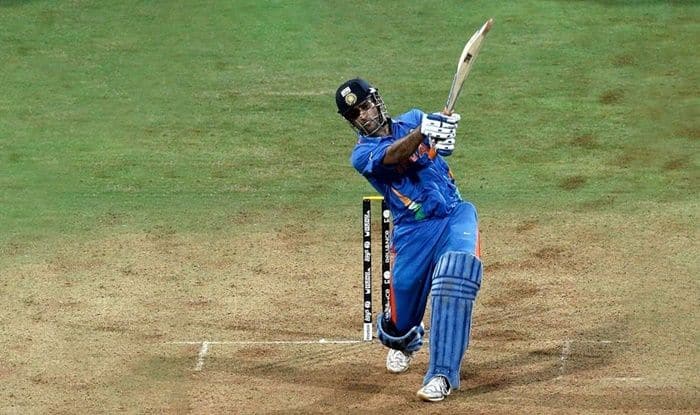
MS Dhoni decided to hang up his boots yesterday after a long and slow decline in his cricketing outputs. It was the COVID pandemic that ensured that we MSD fans don’t get a farewell inning from Mr Cool Captain.

MSD’s cricketing career has been defined by a streak of what I call “Methodical Madness”. He burst on to the scene with a squash buckling century against Pakistan at Vishakhapatnam. Later on, he went to make many more scores that elated the country – like the 183 against Sri-lanka. Perhaps even during these early days, his nerves of steel were often on display, especially during the Indo-Pak ODI series in 2006 , when Dhoni and Yuvraj chased 2 big scores with almost serene calmness that later became Dhoni’s signature.

India in Pakistan 2006

After Dhoni became the captain of a young Indian team for the inaugural T20 World cup, India and Pakistan, both underdogs went into the final against the run of play. The final was a close-fought contest which had truly swung into Pakistan’s favour owing to a splendid inning by Misbah-Ul-Haq. Going into the final over, Pakistan needed 13 from 6 but with the momentum truly in Pakistan’s favour. India had only 2 bowling options, the offspinner Harbhajan Singh and the slower than Shahid Afridi medium-pacer – Joginder Sharma. Harbhajan who had seen 3 sixes fly past him from the blade of Misbah, was not given the final over. Dhoni threw the ball to Joginder. After hitting a clean six, Misbah the last man standing, holed out to S.Sreesanth standing at short fine leg. Throwing the ball to the mediocre (no offence) Joginder looked a gamble, but for Dhoni, it was a calculated risk. Misbah had the bad habit of trying unorthodox shots when none were needed, and such shots are riskier to execute against the bowling of medium-pacers with the old white ball. MSD backed his brains, not his instincts in my opinion.

Continue reading MS Dhoni – the Master of Methodical Madness

Open Thread – 08/15/2020 – Brown Pundits

Dog days of summer..

One of the things with Indian American analysis of Indian culture/politics is the unselfconscious filtering of it through an American lens, rather than Indian. It’s annoying to listen to news shows where they interview an Indian American about Indian culture, and the interviewer and guest proceed to discuss Indian culture through the lens of American concerns, without ever acknowledging what’s going on. To give an example, talking about ‘colorism’, but immediately pivoting to anti-blackness.

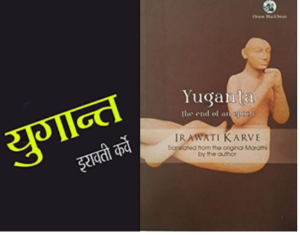
Yugant / ą¤Æą„ą¤—ą¤¾ą¤Øą„ą¤¤ : Book Review/Recommendation

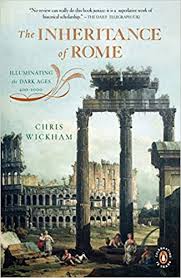
Yugant / ą¤Æą„ą¤—ą¤¾ą¤Øą„ą¤¤ is a critical and rational analysis of Mahabharata by the Irawati Karve – the anthropologist, sociologist, educationist and writer from Maharashtra, India. She was the daughter in law of Dhondo Keshav Karve – a reformer from Maharashtra.

Yugant confronts various versions of Mahabharat analytically and tries to make sense of character arcs and motivations. Intelligently analyzed without religious respect but with literary respect. The motivations of Pandavas for marrying Draupadi as the Royal Queen are very well explained. The literary accounts of chats between Dhritarashtra and Gandhari & those of Draupadi’s death are very well written and move your heart. Krishna (Vasudeva) stands out not only because of the brilliance of his character but the wonderful analysis and the crisp unraveling of his motivations. The Arya (Kshatriya) Dharma is explained in Krishna and Yugant chapters. The author enthralls with deep and intelligent writing in the final chapter that resonates wonderfully even in the 21st-century internet age. The sincere and irreligious comparisons of Mahabharat Era – Arya Dharma to contemporary Hindu religion and other Prophetic Faiths are interesting. Throughout the book, the author refrains from applying current Zeitgeist as a yardstick – something which is refreshing in 21st century polarized analysis and debates which always have political undertones. Even without a direct running story arc – the arrangement of essays offers a wonderful climax – especially Krishna and Yugant chapters.Ā  With recent elevation of Heroic Karna in Indian literature and thought, a look back of the character of Karna as seen in 1950s-60s is a pleasant change.

Surprisingly the argument for conservatism offered at times by the author towards the end – is also a stimulating one.Ā  Further readings of Mahabharata (Bhandarkar critical edition) may lead to various disagreements with author’s positions at various points – but that has to be expected, especially for a text as dense and significant as Mahabharata.

Post Script:

I have not read the English edition. I cant vouch for theĀ  English version. The analysis is very well explained in the original Marathi editions. Some of her work – especially on Anthropology is hotly contested today, but IMHO her MO is very relevant even today.

A recent twitter thread on the Author:

This book is easily available on Amazon in India in both languages. The price on Amazon.com appears unreasonably high.


A note for Traditionally inclined HindusĀ  – None of the analysis is reverential but it avoids the viewing of Mahabharata from western lens.Ā 


Why there will never be an “India Lobby”

Back in the 2000s on the Sepia Mutiny blog I would get frustrated with commenters who would talk about India as if it was analogous to Cuba or Israel, in that a group of American nationals with family ties could influence the shape of American policy. This was always a crazy proposition.

The reason that focused American ethnic lobbies could shape Cuba and Israel policy is that these are small nations which to be frank don’t matter that much.

There’s no Germany lobby. There’s no Russia lobby. There’s no China lobby. These nations are too important to get caught up in pure interest group politics. Similarly, there will never be an “India lobby.” Even personal relationships and affinities between leaders are irrelevant when realpolitik is too important. Think of the fact that Trump clearly has an affinity for Putin, but the American government continues to impose various sanctions on Russia.

Note: Because of its embeddedness in the Great Power jockeying between the USA, China, and India, there will also never be a “Pakistan lobby.”

Browncast Episode 120: Gaurav Lele, Liberal from a soft Hindutva background

Another BP Podcast is up. You can listen onĀ Libsyn,Ā Apple,Ā Spotify,Ā  andĀ StitcherĀ (and a variety of other platforms). Probably the easiest way to keep up the podcast since we don’t have a regular schedule is toĀ subscribeĀ to one of the links above!

You can also support the podcast as aĀ patron. The primary benefit now is that you get the podcasts considerably earlier than everyone else. This website isn’t about shaking the cup, but I have noticed that the number of patrons plateaued a long time ago.

in this episode we talk to Gaurav Lele. Gaurav is a software engineer in Pune who identifies as an liberal Indian from a family with some RSS connections, so he is able to see “both sides” to some extent. He is also an impressive human being in that he seems to be willing to change his mind based on evidence.. Gaurav also writes on Medium and Culture Trip , including a very interesting long post on Pakistan. Ā Gaurav Lele

Why Hinduism is not inchoate paganism

An individual, who I have come to conclude is a troll after further comments (they are banned), mentioned offhand that Hinduism and/or Hindu identity is reactive Islam and the British, and that its origins are in the 19th century. This is a common assertion and presented recently by one of our podcast guests. I myself have entertained it in the past. It’s not prima facie crazy.

But I have come to conclude that this is not the right way to think about it. Or, more precisely, it misleads people on the nature of the dynamic of Indian religious identity and its deep origins. This is why I think Hindus themselves self-labeling ‘polytheists’ or ‘pagan’ can mislead people. Not because these are offensive terms. People can refer to themselves however they want. But these terms have particular relational resonances with other groups, periods, and peoples.

One can point to al-Biruni’s external observations about Indian religion, or Shijavi’s personal opinions in his correspondence, to make a case for Hinduism and Hindu identity (using both terms to avoid troll-semantic ripostes) being older than the 19th century. But this is not the argument that is strongest to me. I have spent many years and books reading about the cross-cultural emergence of religious identity, and its change, in places as diverse as Classical Rome, post-Arab conquest Iran, and 7th century Japan, to name a few places. Many of these places and times had local religious cults and practices. In all of these places, they were assimilated and absorbed into the intrusive “meta-ethnic” religion. In Rome, Tibet, and Japan, the religion had major initial setbacks, but eventually, the meta-ethnic “higher religion” came back and captured the elite.

In the modern world, we see massive Christianization, and to a lesser extent Islamicization, in Sub-Saharan African. The traditional religions persist, in particular in West Africa, but history is clearly against them. Importantly, most of the religious change occurred after the end of colonialization.

The relevance of this is clear. The Indian subcontinent would be an exception for all these above cases if the vast majority of people were unintegrated animists with only local religious cults. The precedent from Europe and the world of Islam is that Brahmins and a few other pan-Indian groups (e.g., Jains) would persist as religious minorities, while the vast majority converted to the newly introduced meta-ethnic religion.

Continue reading Why Hinduism is not inchoate paganism

The Indo-Pakistan problem — To be or Not to be

THIS ESSAY WAS WRITTEN IN 2016 in the immediate aftermath of the URI ATTACKS with the aim of bringing some nuance in the increasingly binary discussions of Pakistan. Looking back at it in 2020 there are a few points in the essay I mildly disagree with but on the whole, I stand by my arguments.Ā 


For anyone willing to read a shorter -TL-DR version find the link HERE:

Note: This is not a scholarly analysis of Indo-Pak question but an essay ((*mildly subjective)) on the question with references being presented for most of the essay.Ā 


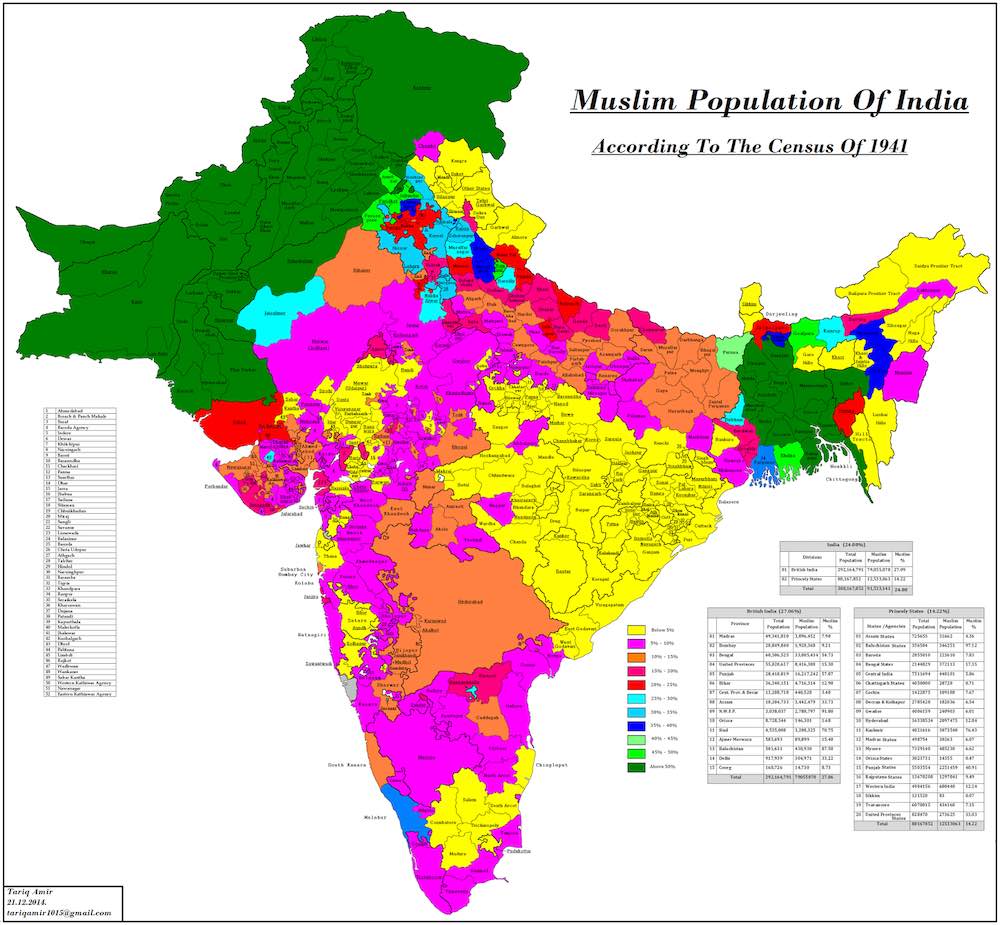
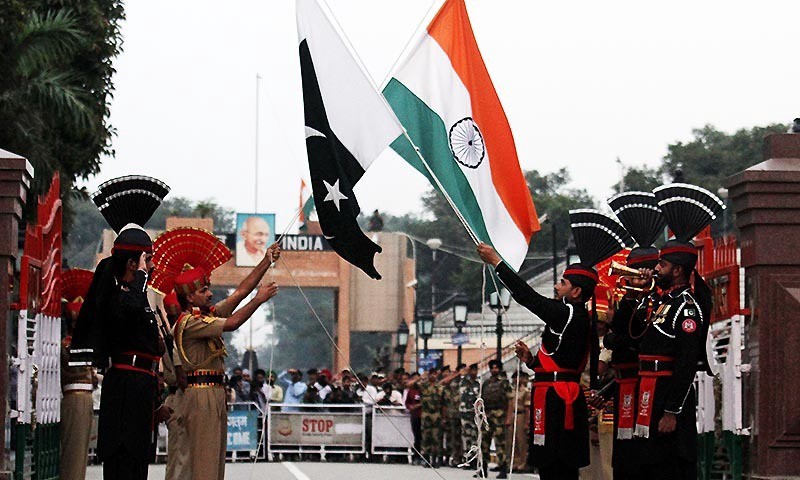
Every well-read Indian who has thought enough about the India-Pakistan issue will have faced Hamlet’s dilemmaā€Šā€”ā€Šā€œTo be or not to beā€. It’s fair to assume that national patience, with everything related to Pakistan, is waning very fast nowadays aided by the explosion of social media. Simply putā€Šā€”ā€Šmost Indians have had enough of this shit for 69 + years (the Idea of Pakistan being older than Pakistan). The leftist solution to the Pakistan problem has always been the ā€œAman ki Ashaā€ narrative. The reactionary position of some of the Right-wing is to totally boycott anything related to Pakistan every-time a terrorist attack takes place in India. This position though backed by popular opinion at times like this seems to be no closer to a permanent solution to the problem. To come up with potential solutions for this problem, we need to discuss both these approaches and we also need to dig deep into the Nation-state of Pakistan.


Continue reading The Indo-Pakistan problem — To be or Not to be

Browncast episode 118: Tony, Indian Liberal

Another BP Podcast is up. You can listen onĀ Libsyn,Ā Apple,Ā Spotify,Ā  andĀ StitcherĀ (and a variety of other platforms). Probably the easiest way to keep up the podcast since we don’t have a regular schedule is toĀ subscribeĀ to one of the links above!

You can also support the podcast as a patron. The primary benefit now is that you get the podcasts considerably earlier than everyone else. This website isn’t about shaking the cup, but I have noticed that the number of patrons plateaued a long time ago.

In this episode we talk to Tony, a self-identified liberal Indian. We talk about how liberal Indians feel about India’s current trajectory and future prospects..

Brown Pundits