 Since about 2006 I’ve had to write the same post again and again due to the nature of my audience: religion is not the purview of technically oriented nerds, and technically oriented nerds just don’t “get” it intuitively. This is something that is relevant to me personally, because I am myself a technically oriented nerd, and I just don’t “get” religion.
A few years ago I was asking a co-worker whey he believed in ghosts, and he stated: “because I’m human.” This is actually a good response, as all societies have the sorts of supernatural beliefs that we might categorize under beliefs about gods, spirits, and demons. This is the cognitive raw material of religion, which is a universal feature of human cultures.
A minority of people lack such intuitions. At least with any strength. I am definitely one of those. My realization that I was an atheist occurred when I was eight, as I thought for a few moments about the idea that God might not exist. At that moment I realized I did not think God existed, and, I also realized I hadn’t really thought about it before because religion was simply something I never really gave much thought to.
When I began to give more thought to religion when I was a teenager in the 1990s it was due to its cultural salience. By this, I mean two things. First, the rise of Islamic terrorism and political violence. Second, the emergence of the Christian Right in the United States. In my personal and private life, I had many conservative Christian friends and would engage them in the discussion from my atheistic vantage point.
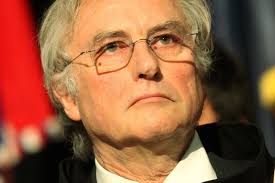 Between 1995 and 2005 I went through a “Richard Dawkins” phase. As it happens, I met Dawkins casually in 1995 at a talk and had been reading his biology works. I was not particularly interested in his religious commentary. Rather, I read books such as Atheism: A Philosophical Justification or relevant portions of Summa Theologica. I plumbed the depths of ontological, teleological, and cosmological arguments. I engaged with the works of men such as Norman Malcolm and Richard Swinburne.
Continue reading Getting beyond the nerd understanding of religion





 Yugant confronts various versions of Mahabharat analytically and tries to make sense of character arcs and motivations. Intelligently analyzed without religious respect but with literary respect. The motivations of Pandavas for marrying Draupadi as the Royal Queen are very well explained. The literary accounts of chats between Dhritarashtra and Gandhari & those of Draupadi’s death are very well written and move your heart. Krishna (Vasudeva) stands out not only because of the brilliance of his character but the wonderful analysis and the crisp unraveling of his motivations. The Arya (Kshatriya) Dharma is explained in Krishna and Yugant chapters. The author enthralls with deep and intelligent writing in the final chapter that resonates wonderfully even in the 21st-century internet age. The sincere and irreligious comparisons of Mahabharat Era – Arya Dharma to contemporary Hindu religion and other Prophetic Faiths are interesting. Throughout the book, the author refrains from applying current Zeitgeist as a yardstick – something which is refreshing in 21st century polarized analysis and debates which always have political undertones. Even without a direct running story arc – the arrangement of essays offers a wonderful climax – especially Krishna and Yugant chapters. With recent elevation of Heroic Karna in Indian literature and thought, a look back of the character of Karna as seen in 1950s-60s is a pleasant change.