
From Major Amin. Originally written in 1999
Why Military Defeat in 1971-The Qualitative Destruction of Pakistan Army between 1955 and 1971 Major A.H Amin (Retired) https://www.militaryhistorycentre.com/blogs/news/pakistan-army-between-1965-and-1971
Why Military Defeat in 1971-The Qualitative Destruction of Pakistan Army between 1955 and 1971
• August 2020
Research teaching and writing were unproductive jobs in British India since they did not enable a man to be a deputy collector or barrister or doctor! It was a mad race made further mad by frequent outbursts of communal frenzy, which increased as population increased during the period 1890-1940. All this helped the Britishers who had been traumatically shaken by the Sepoy Rebellion of 1857 when a largely Hindu majority army had rebelled under Muslim leaders! The British were thus happier playing the role of judges resolving Hindu Muslim disputes rather than performing the more unpleasant task of facing a combined political movement of all Indians regardless of race or religion as in 1857, 1919 or 1922! This is the basis of anti-intellectualism in the Indo-Pak Sub-continent. It is truer for Pakistan since the Muslims were educationally more backward and relatively less true, yet still true and applicable to India too! Pakistan and India have produced very few serious military writers. In Pakistan the situation is worse since an unofficial ban was imposed on military writing by various military usurpers who ruled the country for the greater part of its existence.
The finest summarizing of the incalculable qualitative harm inflicted on the Pakistan Army, by the self-promoted Field Marshal of peace, by a contemporary, was done by Major General Fazal I Muqeem, when he described the state of affairs of the Pakistan Army during the period 1958-71; in the following words: “We had been declining according to the degree of our involvement in making and unmaking of regimes. Gradually the officer corps, intensely proud of its professionalism was eroded at its apex into third class politicians and administrators. Due to the absence of a properly constituted political government, the selection and promotion of officers to the higher rank depended on one man’s will. Gradually, the welfare of institutions was sacrificed to the welfare of personalities. To take the example of the army, the higher command had been slowly weakened by retiring experienced officers at a disturbingly fine rate. Between 1955 and November 1971, in about 17 years 40 Generals had been retired, of whom only four had reached their superannuating age. Similar was the case with other senior ranks. Those in the higher ranks who showed some independence of outlook were invariably removed from service. Some left in sheer disgust in this atmosphere of insecurity and lack of the right of criticism, the two most important privileges of an Armed Forces officer. The extraordinary wastage of senior officers particularly of the army denied the services, of the experience and training vital to their efficiency and welfare. Some officers were placed in positions that they did not deserve or had no training for” 1.
Continue reading The Qualitative Destruction of Pakistan Army between 1955 and 1971

 Since about 2006 I’ve had to write the same post again and again due to the nature of my audience: religion is not the purview of technically oriented nerds, and technically oriented nerds just don’t “get” it intuitively. This is something that is relevant to me personally, because I am myself a technically oriented nerd, and I just don’t “get” religion.
 Between 1995 and 2005 I went through a “Richard Dawkins” phase. As it happens, I met Dawkins casually in 1995 at a talk and had been reading his biology works. I was not particularly interested in his religious commentary. Rather, I read books such as

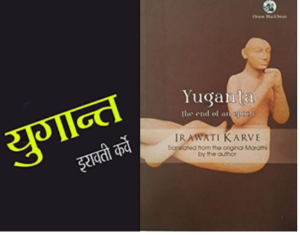 Yugant confronts various versions of Mahabharat analytically and tries to make sense of character arcs and motivations. Intelligently analyzed without religious respect but with literary respect. The motivations of Pandavas for marrying Draupadi as the Royal Queen are very well explained. The literary accounts of chats between Dhritarashtra and Gandhari & those of Draupadi’s death are very well written and move your heart. Krishna (Vasudeva) stands out not only because of the brilliance of his character but the wonderful analysis and the crisp unraveling of his motivations. The Arya (Kshatriya) Dharma is explained in Krishna and Yugant chapters. The author enthralls with deep and intelligent writing in the final chapter that resonates wonderfully even in the 21st-century internet age. The sincere and irreligious comparisons of Mahabharat Era – Arya Dharma to contemporary Hindu religion and other Prophetic Faiths are interesting. Throughout the book, the author refrains from applying current Zeitgeist as a yardstick – something which is refreshing in 21st century polarized analysis and debates which always have political undertones. Even without a direct running story arc – the arrangement of essays offers a wonderful climax – especially Krishna and Yugant chapters. With recent elevation of Heroic Karna in Indian literature and thought, a look back of the character of Karna as seen in 1950s-60s is a pleasant change.