Who can speak for the “Muslim minority” of India?

Public debates on Indian Muslims often make one basic mistake: they collapse all minorities into a single category and then declare that “everyone is thriving because a few individuals have done well”. This flattens history, erases structure, and turns civilisational questions into census arithmetic.

1. Minorities Are Not Interchangeable

Jains, Sikhs, and Buddhists offer no meaningful analogy to Indian Muslims.

  • Jains were never politically central to the subcontinent.

  • Sikhs built a regional power, not a pan-subcontinental order.

  • Buddhists have been demographically marginal for a thousand years.

Indian Muslims were different. For centuries they formed the civilisational elite of North India; shaping courts, languages, music, etiquette, food, architecture, and the ways Indian states understood power. Delhi, Agra, Lucknow, Hyderabad were not enclaves. They were the centre of the political and aesthetic world of the Indo-Gangetic plain. A fall from centrality is not comparable to never having been central at all.

2. Individual Success Is Not Structural Health Continue reading Who can speak for the “Muslim minority” of India?

Cyclone Ditwah November 2025

Cyclone Ditwah may have been a once in a 1,000 year event. However the Oceanographic and Atmospheric Physics implies this could be in all probability a regular even, may be a once in 10 years event.

First, energy for cyclones comes fir the ocean. Usually sea surface temperatures higher then 27 degrees is required. The ocean around Sri Lanka is currently more than 30 degrees. More than sufficient energy.

Second, more importantly the formation history of TC Ditwah. This is from the analysis of  Dr Sarath Wijeratne.The system started with the formation of two low pressure systems: one to the south-east of the Island and the other south-west. The one to the south-west was stronger and moved to the east whist the one south-east moved slowly to the west. Ultimately they joined together to form TC Ditwah. This merging of two low pressure system is called the Fujiwhara effect. This very rare event and has not been documented in this region. The merging of the two low pressure systems intensified TC Ditwah. Now we know the result. (Charitha Pattiarachi)

Watch video

https://web.facebook.com/511554041/videos/pcb.10164281956204042/828565176728130

There are two basic Physics that make the current condition conducive to devastating storms
a) Evaporation becomes exponential around 30C
b) Water holding capacity of Atmosphere too turns exponential around 30C

Thus a small change in air temperature results in a large change in amount of water vapor that can be held in the Atmosphere

The larger the amount of water held in the atmosphere, bigger possibility of it condensing i.e. becoming rain.  Worse because bigger amounts, it will come down in buckets,

Increases in atmospheric water vapor also amplify the global water cycle. They contribute to making wet regions wetter and dry regions drier. The more water vapor that air contains, the more energy it holds. This energy fuels intense storms, particularly over land. This results in more extreme weather events. (This was known by Year 2000 from Climate Models)    For South Asia means wetter Kerala, Tamil Nadu and Sri Lanka.  Drier North India.

Nehru bashing has become very old but is it ineffective yet ?

Priyanka Gandhi Vadra targeted PM Modi over the latter’s repeated Nehru bashing, and i felt a some happiness that someone was voicing what i had felt for 6 odd years now, and done so in a rhetorically effective way (unlike her brother).

“When Done Nehru Bashing, Debate Unemployment”: Priyanka Gandhi’s Top Quotes

You can find the entire speech on YouTube : LIVE: Smt. Priyanka Gandhi ji speaks in Parliament on the 150th anniversary of ‘Vande Mataram’.

Ram Guha has said multiple times that if Rahul and Priyanka were to leave the INC, the charge of dynasty and sins Nehru and Indira (real and alleged) wouldn’t pull the INC back as much as it does. But i think we are at a point where even firm BJP supporters are fed up of BJP’s Nehru bashing and its bound to have diminishing returns.

Its been 12 years and Nehru bashing brings cheers from only the hardcore supporters and none others. Maybe we are at an inflection point, maybe not.

Personally I remain an admirer of Nehru while disagreeing with his decisions profoundly. Maybe i will expand upon my criticisms and praise at some point but i do not think Gandhi erred massively in choosing Nehru over Patel. While i do think Gandhi shouldn’t have gone against democratic nature of congress (which had chosen Patel), I do think Nehru would have been a better PM had Patel remained alive longer into Nehru’s term. A bit cliched but Nehru’s life kind of reminds me of famous lines from Dark knight trilogy.

You die a hero or you stay alive long enough to become a villain.

I am not into fortune telling but i think the path Modi is following is very similar to his great opponent (atleast in his own mind), Jawahar Lal Nehru. I think they’re a bit more alike that their followers think. But all thats for another time.

November Update (Traffic & Activity)

Traffic

We published 76 posts and 1 podcast (Bangladesh) this month.

Traffic fell from ~55–65k (Sept–Oct) to ~33k in November.

However, comment activity remained strong at 819 comments (~27/day).

Continue reading November Update (Traffic & Activity)

Why Hasn’t Pakistan Collapsed Yet?

A cultural explanation, not an institutional one.

The comments on the last post revealed something important: there is a difference between learning about a culture and living inside it. The Indo-Muslim legacy sits precisely in that gap. It is not owned by a census or a successor state. It survives in people whose habits, tastes and instincts are shaped by it, even if they no longer identify with the religion that produced it.

Most arguments in the thread reduced the issue to arithmetic. “India owns the legacy because most Muslims stayed.” “Pakistan can’t own it because Delhi and Lucknow are in India.” These claims are tidy, but they miss the point. Culture does not follow borders. It follows continuity.

My own shift in identity made this clear. As I Hinducised through marriage, I also Persianised. The Islamicate part of me did not vanish; it was absorbed into a Bahá’í frame where contradictions resolved themselves in a Dharmic canvas. It taught me something simple: civilisations are not inherited by territory; they are inherited by people who keep caring.


1. Rushdie and the Islamicate Without Islam

Continue reading Why Hasn’t Pakistan Collapsed Yet?

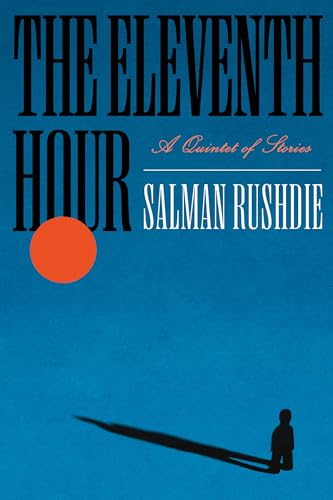
Salman Rushdie on Free Speech, India and How He’s Making the Most of Life|The Mishal Husain Show

Salman Rushdie was nearly killed when he was stabbed 15 times on stage in upstate New York in 2022. His injuries were so severe that he lost an eye. It was an attack that came decades after he was first subjected to death threats over his novel, The Satanic Verses. Once he had recovered, he found he was unable to write fiction. However, after publishing an account of what happened to him, the stories returned, with five brought together in his latest book, The Eleventh Hour. In this conversation with Mishal Husain, Rushdie talks about free speech, the family connection they both share and the places he’s called home, from India to Britain and the US.

On the Question of Who “Owns” the Indo-Muslim Legacy

Reading Sophia Khan’s superb piece on the lost Muslim cities of Hindustan, and then watching the BP comment-thread unfold, a few thoughts crystallised for me; less about “ownership,” and more about the intellectual pattern that keeps resurfacing whenever Indo-Muslim history is discussed.

First: I genuinely did not know that Khan was originally pronounced with a silent n, nor that paan had such a deep Islamicate turn in its social history. Much like music, I had long assumed paan to be a largely Hindu-coded practice. The article forces a re-examination of how intertwined everything actually was. The same goes for Hindustani music: I once thought of it as essentially a Hindu, temple-rooted tradition. Then you realise how much of the courtly synthesis, Persian, Hindavi, Turko-Central Asian, was shaped by Muslims, even if the Vedic lattice underneath remained foundational.

This is partly why I found Bombay Badshah’s objection (“Pakistan cannot claim any of this”) an odd line to draw. One can, of course, make the territorial argument; but it collapses immediately once you observe what India itself is doing: aggressively appropriating the Indo-Muslim aesthetic while deracinating its historical context. If Bollywood, tourism, cuisine, and the Indian cultural machine can freely claim Delhi, Lucknow, Agra, and Hyderabad as national inheritances, then Pakistanis whose families actually come from those cities are hardly crossing an intellectual red line by acknowledging lineage, memory, or loss. Continue reading On the Question of Who “Owns” the Indo-Muslim Legacy

ZA Bhutto Founds the Pakistan People’s Party in Lahore

From the ever wonderful Hasan Mujtaba sahib’s facebook.

When Bhutto founded the People’s Party in Lahore — Hassan Mujtaba

Sheikh Anwar Ul Haq

It was Hameed Nizami, the owner of Nawa-i-Waqt, who introduced Zulfikar Ali Bhutto in Lahore to the brother of Dr. Mubashir Hasan. However, Bhutto developed a friendship with Dr. Mubashir himself, and it was at Dr. Mubashir Hasan’s house that he laid the foundation of his then-new party, the Pakistan People’s Party (PPP).

The first Vice President of the Pakistan People’s Party was the former diplomat J.A. Rahim, who wrote the foundational documents (foundation papers) of the party based on socialist principles. It was the same J.A. Rahim who encouraged Bhutto to stay in the country and politically confront the Ayub regime after resigning from the government. Otherwise, Bhutto — intimidated by the terror and intimidation of Malik Amir Mohammad Khan, the then-Governor of West Pakistan (known as Kalabagh) — was spending his time vacationing in Europe.

The party’s famous slogan “Roti, Kapra aur Makaan” (Bread, Clothing, and Shelter) was actually borrowed from Habib Jalib’s famous poem: “Har insaan maang raha hai roti, kapra aur makaan” (Every person is demanding bread, clothing, and shelter).

In those days, among those who used to meet Zulfikar Ali Bhutto — who spent his evenings at Faletti’s Hotel — were Habib Jalib, and left-wing student leaders from Lahore like Zafaryab Ahmed and Hassan Wasti.

Those who attended the founding meeting of the party at Dr. Mubashir’s house are all present in the historic photograph taken that day. In the photo, Sheikh Rashid — unable to find a seat — can be seen sitting in Bhutto’s lap. Others visible in the picture include Meraj Muhammad Khan, J.A. Rahim, Dr. Mubashir Hasan, Mustafa Khar, Hayat Muhammad Sherpao, Syed Saeed Hasan, Abdul Sattar Gabol, Nafis Siddiqui, Qasim Abbas Patel, Kamal Azfar, and possibly Khursheed Hasan Meer as well.

It is also a tragic chapter that shortly after coming to power, Bhutto became displeased with the same J.A. Rahim. He had J.A. Rahim and his sons arrested, and had them subjected to brutal torture at police stations — including sexual violence against his sons. The man who carried out this violence was the notorious Karachi gangster Suleman Brohi. Suleman Brohi was later killed in the 1990s during the government of Jam Sadiq Ali or Muzaffar Hussain Shah.

Aasiya (Part 2)–Translation from the Urdu

Last week, I shared the first part of my translation of Aasiya, a story from Bilal Hasan Minto’s Urdu short story collection Model Town.  Today, I am posting the second part of the story.


Abba and Naveed Bhai were very angry when they heard this story. Because Abba was an advocate of human rights and other similar causes, he said categorically he would report Apa Sughra to the police. Naveed Bhai agreed.

“This is criminal,” Abba had said in English and his use of this admirable language of global importance impressed me very much and drove home the real significance of this incident. Although I was still hesitant to speak English, I had no doubt of its position. Naveed Bhai also spoke it with great fluency. He would often converse even with me in this important language and it is true that I would sometimes respond spontaneously in it.

“She should go to jail,” Naveed Bhai said, putting English to use again. Continue reading Aasiya (Part 2)–Translation from the Urdu

Brown Pundits