The East Asian ancestry in Bengalis is probably not Munda

There has been some debate about the East Asian ancestry in Bengalis for decades. To me, the most parsimonious explanation 10 years ago is that it was mostly Munda. These are the Austro-Asiatic people of the highlands to the south and west of Bengal. There is also one Austro-Asiatic group to the north of Bangladesh, the Khasi.

I no longer believe this. I’ve looked at the genome-wide data and the signals into the Bangladeshis are much more like a donor population which is Tibeto-Burman. The Khasi in fact have more in common with their Tibeto-Burman neighbors than the Munda. At least genetically. This is one reason I am now leaning to the Munda maritime hypothesis, whereby the Munda actually landed on the coast of Odisha.

But there is a better smoking gun than genome-wide data. With a sample size of 700+ this 2011 paper did not identify any clearly Southeast Asian maternal haplogroups. This is probably an underestimate due to unresolved assignments, but it gives you a flavor. The majority of the Munda Y chromosomes are clearly Southeast Asian. The branch of O associated with Austro-Asiatic people. This 2018 paper using 240 Bangladeshis, with the largest samples coming from the Rangpur area in the northwest of the country, indicates a bit over 10% Southeast Asian haplogroups. This is in the range of the genome-wide admixture estimates.

It could be that in parts of West Bengal, to the south and west, the East Asian ancestry is Munda. But I am pretty skeptical, though willing to be proven wrong.

I do wish I had more non-Brahmin West Bengal samples though.

Note: I think the East Asian ancestry is probably a mix of various groups by the way. In the north clearly more Tibetan. In the southeast more Burman. The Khasi are clear vectors across much of Bangladesh.

Pakistan and Military Rule (and a long interview with General Babar)

The following are two posts (originally written many years ago) from the Pakistani military historian and analys Agha Humayun Amin.  It is interesting to y see that nothing has changed since 2002 (the article is from 2002 and the interview is from early 2001, before the fall of the taliban). Anyway, whether you agree or disagree with his analysis, you will always get interesting nuggets of information from Major Amin… The first post is a newspaper article he wrote. the second is a very detailed interview he conducted with General Naseerullah Babar, an outstanding military officer who served as Zulfi Bhutto’s Governor in NWFP, then as Benazir Bhutto’s interior minister and played a role in the Karachi operation against MQM as well as in the setting up of the Taliban (as IGFC he was also involved in setting up the first Pakistani-sponsored insurgency in Afghanistan way back in 1973). He was an eyewitness to many important events and whatever you may think of his views, his interview is an extremely important historical document..

Essence of the Matter
A.H Amin
August 21 2002
Daily Nation , Lahore
www.nation.com.pk
While analysis of todays Pakistani politics is outwardly subtle and convincing , serious historical analysis remains the weak point. What is lacking is the long view , the inability to penetrate through appearances, the motivation to write with an ulterior motivation to please or to secure personal business objectives, and worse of all, to criticise simply because a writer has acquired the reputation of a cynic and his writings are read simply because his cynicism provides a catharsis for many! This does not mean that all is well or all military or civil rulers are well meaning reluctant coup makers !

This article is an attempt to capture the crux of the whole issue in a few paragraphs! An ambitious but certainly not impossible endeavour! First of all the basis of modern Indo Pak politics was initially a type of liberal set of beliefs based on faith in British parliamentary system and liberalism mixed with the philosophy of self rule. The British introduced Western democracy in India with a view to afford a vent to the Indians desire for participation and sense of involvement ! The urban professional classes picked it up as a means for self realisation or self advancement ! The feudals picked it up as a means of continuing their unfair advantage or position of influence in the Indian society. The middle classes ran after government jobs as a means of self advancement and economic benefit. The Indian soldiers served in the army as mercenaries motivated by economic benefits and in part propelled by espirit de corps. The politicians came into conflict with the British not because all of them were heroes or martyrs but because it was a struggle for power! The civil servants and mercenary pre 1947 Indo Pak soldiers collaborated with the British because it improved their prospects of self advancement ! The pre 1947 Indian Army , the father of the post 1947 Indian and Pakistan Army had nothing to do with Indo Pak political struggle at least in what they voluntarily or deliberately did less a platoon of Garhwal Rifles which refused to open fire on Muslims demonstrating in Peshawar in 1930 ! After all who was shooting down Indo Pak civilians like partridges in Wana , Razmak ,Sindh and Jallianwalla Bagh other than the British Kings Indian Army ! Four brigades in tribal areas , two brigades in Sindh in the Hur Rebellion! The Indian or Muslim civil servant, soldier and policeman till 14th August (and some to date) were collaborators of the Western power which ruled India till the transfer of power!

The Hindus were better organised politically since the Indian National Congress was dominated by a strong Hindu professional and business class while the Muslims were condemned to be politically more backward since because of peculiar historical reasons Mr Jinnah had no choice but to accept the Muslim feudals who dominated Muslim politics! Mr Jinnah was forced to ally with the Unionists in Punjab and the Sindhi landlords in future against the advice of Punjabi Muslim urban leaders like Dr Iqbal because it was a strategic compulsion. Thus from August 1947 India inherited a strong political culture while The Muslim League was destroyed just a few years after Mr Jinnah’s death by the feudals who had joined it out of fear of land reforms and because of being in debt to Hindu money lenders! Here again economics played a major role ! It has been estimated that in pre 1947 Punjab and Sindh money lending was the most important occupation after agriculture and that while the net revenue of Irrigation Department of Punjab was 267 Lakh Rupees that of money lenders was 500 Lakh Rupees! In 1911 out of a total of 803,560 money lenders in India some 25 % or 193,890 lived in Punjab alone! Thus while the total population of pre 1947 Punjab was one eleventh of India ,it had some one fourth of India’s money lenders! All this ensured that the feudal elements jumped on the Muslim League band wagon not out of genuine motivation but because of economic compulsion!

Now the post 1947 era; While post 1947 Indian Congress leaders like Nehru and Patel chided the Indian Army for their un-nationalistic role in British rule and reduced their basic salary Pakistan was condemned to be ruled by a civil military clique within eleven years of independence! Men who had collaborated with the British before 1947 became Pakistan’s rulers within seven years of Independence! Officials of Indian Audit and Accounts Service like Ghulam Mohammad and Mohammad Ali! Feudals like Kalabagh who before 1947 were faithful servants of a man no higher than the British Deputy Commissioner of Mianwali! Compare the fact that while Nehru abolished Cantonment Boards within no time after independence even today a Pakistani civilian living in a plot of land bought by paying through his nose in a cantonment area lives within perpetual awe of the cantonment boards simply because no Pakistani statesman had the courage or the vision to reduce the military or civil bureucrats to size! Continue reading Pakistan and Military Rule (and a long interview with General Babar)

Indian Matchmaking


The Juggernaut has the usual predictable take. Racist, classist, colorist, heterosexist, etc.

Myself, I don’t take these shows as illustrations of how the world should be, but how it is. Anthropology.

When I was younger I was very opposed to an arranged marriage. My parents had an arranged marriage, and I found it to be regressive and backward. Now that I’m older, and married with 3 children, I have more moderate views. Many of my friends have not settled down, and they are not happy about it. Finding a partner can be hard. The dating scene can be Darwinian and brutal. It’s not really that edifying.

I don’t come with any answers. Rather, I think we should give people more grace whatever path they take.

The Western romantic vision of a nuclear family where the parents are an island in the world is the path I took. But I’m far less self-righteous about it than I used to be. If there are negative things about arranged marriages, and there are, we should focus on those things, rather than the whole institution. In some ways, dating apps are now becoming the new matchmakers in any case.

Hindu atheist vs. Secular Jihadists


Just listened to a long podcast between Jarin Jove and the guys who host the Secular Jihadist podcast. Going in I had an open mind, as I myself differ on a lot of priors from the two co-hosts (unlike Ali I am not a Left-liberal, and unlike Armin, I don’t think people should adhere to hyper-rationalism in all cases).

Though I think Jove made some good points (i.e., I think “Hindu nationalism” is now such a big category that it is hard to generalize and extrapolate from simply the views of Sarvakar, for example), on the whole, I found many of his points sophistic and reminded me of the sort of style of argumentation I encounter from American “social justice warriors.” In particular, his objections to international comparisons through some assertion of incommensurability is the exact same tack that I’ve been frustrated with for the past 20 years. There are objective facts. There is a real world. We can disagree about the details, but asserting objective facts is not ipso facto evidence of bias or bigotry. Many beg to differ, and this is a deep chasm of values that I don’t think can ever be bridged.

The intersection between postcolonialism and critical theory and Hindu nationalism that I see in some of Jove’s assertions (e.g., he asserts that rape is a greater problem in the United States than India) is perplexing to me, but it seems surprisingly common. This is not to say that Jove would agree that his views were postcolonial or critical theorist, but the alignment is objectively true.

I would caution all people in non-Western societies to be wary of the temptation to use the critical theorist cudgel to win a particular argument because it is useful at the moment. Critical theory is a cultural acid, and any true civilization will have difficulty putting the genie back in the bottle as it eats into everything you think is precious and valuable.


Chandraseniya Kayastha Prabhu are very similar to Maharashtra Brahmins

I periodically get inquiries on various issues relating to the genetic position/relatedness of various “communities” in the Indian subcontinent. Thanks to the South Asian Genotype Project I’ve got a rather large database to query such questions.
A reader asked about his own community, the Chandraseniya Kayastha Prabhu of Maharashtra. They are Kayasthas. The actress Kajol Mukherjee is also half CKP (on her mother’s side, obviously).

The PCA plots below should make it clear that the CKP is very close to the Maharashtra Brahmins I have in my samples. This is in contrast to the SKP, who are closer to Gujurati Patels.

Also, the generic Maharashtra Brahmin is closer to the CKP (there are two of these, but they are so close you can’t distinguish them) than it is the Maharashtra Sarswati Brahmin. And, these groups are a bit less “North Indian” than Tamil Brahmins.

Finally, I compared to other Kayastha and Brahmin groups. As is easy to predict, Kayasthas are genetically heterogeneous. I have two Bengali Kayastha. One of them is basically like a generic Bangladeshi. The other is between the Bangladeshis and the Bengali Brahmins on the PCA (both have lots of East Asian admixture). The UP Kayastha individual is close to the SKP, not the CKP.

Also, Guju Brahmins are very North Indian. As North Indian, or more so, than UP Brahmins.

Continue reading Chandraseniya Kayastha Prabhu are very similar to Maharashtra Brahmins

Open Thread – Brown Pundits – 7/18/2020

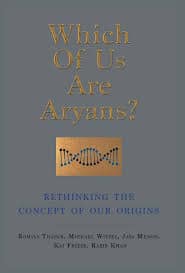
Just a reminder, I contributed a chapter to Which of Us are Aryans? Some of you are probably skeptical of this book because the editor is Romilla Thapar. You know who that reminds me of? Kabir! He, the master of pollution and contagion (perhaps he’s descended from Brahmins?).

I’ve noticed that there is an increase in rudeness recently. I am pretty lax on the “Open Thread”, but if it doesn’t start to get more in control soon I’m going to start randomly deleting comments. Some of you enjoy writing comment-novels, it would be a shame if something happened to those…

Due to the popularity of this website, I’m going to have to spend some time figuring out how we can scale getting 500 comments on one post in 5 days. The WP install I have isn’t really designed to handle that and the front-end scripts are clearly starting to strain under that. In consideration of my time invested, please consider joining the Patreon (which also totally defrays the cost of hosting and editing the podcasts).

Browncast Episode 110: Kala!

Another BP Podcast is up. You can listen on LibsynAppleSpotify,  and Stitcher (and a variety of other platforms). Probably the easiest way to keep up the podcast since we don’t have a regular schedule is to subscribe to one of the links above!

You can also support the podcast as a patron. The primary benefit now is that you get the podcasts considerably earlier than everyone else. This website isn’t about shaking the cup, but I have noticed that the number of patrons plateaued a long time ago.

I would though appreciate more positive reviews! Alton Brown’s “Browncast” has 30 reviews on Stitcher alone! Help make us the biggest browncast! At least at some point.

This episode is a bit of a “brocast”, as Razib, Mukunda, and Suraj, a Bengali, and two Tam-Brahms, talk about being dark-skinned and South Asian. But there are lots of other topics that were touched upon.

– Incomprehension and prejudice from Punjabis toward Tamils
– Is “black Madrasi” really insulting?
– Indian American hypocrisy in terms of “social justice” discourse
– Being the children of immigrants and having to negotiate different value sets
– Is Indian color fixation going to persist?
– What characteristics should people look for in a mate?

Dalit in Silicon Valley

Indian American food

Growing up in the 1980s and 1990s in the United States as brown was different than now. The Indian Americans I knew were a heterodox bunch who, like me, grew up around white people, and habituated themselves to American culture. Though most were Hindu, a fair number enjoyed beef hamburgers, just like other kids.

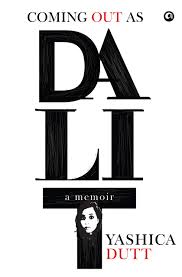
This is why the story of caste discrimination in Silicon Valley is so striking to me. Most of you know already about what is happening with Cisco, but The New York Times covers it well in The Specter of Caste in Silicon Valley. The author of Coming out Dalit, she is herself a Dalit Indian American, and so has a unique perspective.

There is one number which is reported in the piece and aligns with everything I’ve ever seen in the United States of America: 90% of Indian Americans are not lower caste. Of those who are lower caste, whatever that means, I doubt much more than 1% are Dalit. I know this partly because I have a sampling of 300 Indian American genotypes from one of the DTC firms (four parents born in India), and the genetic variation aligns pretty much with the above distribution.

Therefore, I am skeptical of the idea of pervasive caste discrimination because there are just not that many Dalits, period. The last data I have seen shows that 25% of Indian Americans are Brahmin.

That being said since the late 1990s a massive wave of immigrants from India have arrived to work in tech and recreated their home country in the US. When I was in graduate school I met a young woman who was a master’s student with a very mild Indian accent. I asked her when she had arrived from India, and she said that she was born in Cupertino! So it would not surprise me if some people did bring the habits and views of the old country, and without assimilation into diverse workplaces, things such as caste discrimination may occur (I have heard from people that networks of people from the same region and caste are a thing, though not pervasive).

But, I don’t think this will ever be huge in the United States for a simple reason: the number of Indian Americans of 1.5 and 2nd generation who marry within caste/jati is not that high. The last data from the 2010s indicate 35-40% of those born or raised here marry non-Indians. Of the remainder, many of them marry people from other backgrounds than that of their parents. In fact, the majority.

Caste is about pedigree. That is just not maintained in the USA.

Life is a great test

Being Asian American is often about tests. Doing well on tests. That’s what Asian Americans are supposed to do. Two conventionally liberal (“woke”) publications have stories about test-prep, testing, and Asian American academic life.

First, in The Juggernaut, Why Test Scores Can Be a “Proxy for Privilege”. To be franky, I did not like this story, because the conclusions were already there to begin with, and the author was just figuring out how to buttressed the preexistent argument. For example:

Mettu, for example, is well aware of her advantages as the daughter of educated, middle-class Indian immigrants who could invest in her college preparation. She recognizes that few students enjoy such privilege. That is why Mettu sympathizes with efforts at higher education institutions across the country to downplay — or altogether eliminate — test scores as a criterion in admissions. “In terms of equal opportunity,” she said, “it is a good shift.”

That’s the general gist. “Actually, testing is bad for the underprivileged.” Even though standardized testing actually emerged as a way to get around the unfairness of recommendations.

Meanwhile, Refinery29 has a much better story, An Interview with an Asian student at Stuyvestant. Since it’s an interview, most of the talking is given over to the student. That results in more candor and less canned conclusions:

How do students talk about the lack of Black and Latinx students?

When the news came out, it just wasn’t a big thing in Stuy. No one cared about it. We saw it in a random newspaper and everyone was just like, okay. We’re used to places writing about us. I remember one time, one of the chairs broke during one of our theater productions, and that made headlines. Everyone was like why?

Honestly, we were more vocal about school shootings. There was a whole walkout, a lot of us missed class for it, and we went to city hall. We were way more vocal about guns. The reason that Stuy is Stuy is that we’re the smart kids who do well on tests. NYC has LaGuardia, which is for people who are good at dance or music or singing. We have other schools with different talents that anyone else with those talents can get into. I think that’s one of the reasons that everyone in Stuy thinks the SHSAT test should be there, because if the test wasn’t here, what’s the point of Stuy then? What’s the point of even being here?

One thing to note: well-off white New Yorkers send their kids to exclusive private schools like Dalton. Stuyvesant is populated by children of working-class immigrants by and large.

Why the Far Left Is More Dangerous Than the Far Right

I still remember the good old days.

When the biggest internal danger to America was Bible Thumping McDonald’s addicts and a spontaneous KKK takeover of the White House. I was a young brown kid growing up in a post-9/11 America. Politics was one of the last things on my mind and easily summed up as Democrats = “tolerance” and Republicans = “racist.” Barack Obama’s 2008 victory showed me that a minority in the United States could achieve anything.

All was well.

Then an apparent apocalypse happened in 2016 when the Anti-Christ was elected. I still remember watching the CNN panel go from Manhattan arrogance to DC downplaying to Rust Belt frustration to Portland freakout – the coast to coast American experience all within a day. And I kind of shared that fear too. I liked Bernie, voted for Hillary, and was aghast at Trump. I still believed my old Republican and Democrat dichotomy.

Then I decided to take a second look. I started to notice unnerving parallels between American and Indian politics, particularly those on the left end of the spectrum. Looking at it from a different angle, I realized I was misjudging the waves for the tide.

Continue reading Why the Far Left Is More Dangerous Than the Far Right

Brown Pundits