Kashmir: India Tries a Reset
The Machete Killers of Bangladesh
Iran’s Lasting Influence on India
Is it Game Over for the Muslim World?
Mob Murder in Dadri
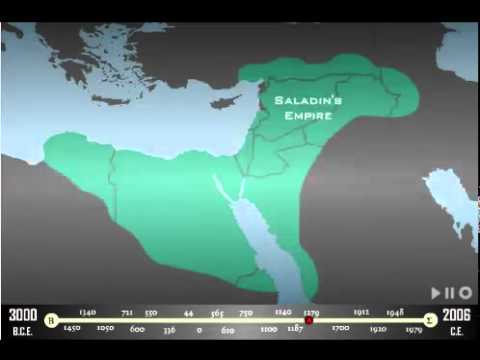
Farewell Sykes-Picot. You will be much missed..
http://www.bloomberg.com/news/articles/2015-06-26/dozens-killed-from-tunisia-to-france-on-caliphate-anniversary
Of course the
collapse of the colonial order (itself built upon the collapse of the Ottoman
empire) is key here. Most Arab
countries were spectacularly
unsuccessful in creating a consistent metanarrative that justified their own
existence AS countries. In fact, most of them taught their newly
schooled populations about Arab nationalism or Islamic nationalism (or both),
both of which were not really explanations for why Jordan (or even Egypt) were
states worth defending. Egypt may be moving towards some sort of return to
Egyptian identity (though these are early days), but in Syria, Iraq and the
Arabian peninsula the game is wide open. Who will fill the vacuum? There are at
least three contenders:
collapse of the colonial order (itself built upon the collapse of the Ottoman
empire) is key here. Most Arab
countries were spectacularly
unsuccessful in creating a consistent metanarrative that justified their own
existence AS countries. In fact, most of them taught their newly
schooled populations about Arab nationalism or Islamic nationalism (or both),
both of which were not really explanations for why Jordan (or even Egypt) were
states worth defending. Egypt may be moving towards some sort of return to
Egyptian identity (though these are early days), but in Syria, Iraq and the
Arabian peninsula the game is wide open. Who will fill the vacuum? There are at
least three contenders:
“For India, it means security and peace resulting from an internal balance of power; for Islam, an opportunity to rid itself of the stamp that Arabian Imperialism was forced to give it, to mobilise its law, its education, its culture, and to bring them into closer contact with its own original spirit and with the spirit of modern times.”
It is a staple Western left-liberal talking point (picked up and used by Islamists and by other imperial powers like Russia as needed) that British and French imperialists created the modern Middle East via the Sykes-Picot agreement and messed it up, leading to all or most current problems. This is obviously not true in any strong sense. Britain and France did not look at some blank piece of paper and convert it into the modern Middle East. They grabbed and missed opportunities galore (as did the Turks, who chose the losing side in world war one when they didnt have to do any such thing), worked around existing populations and structures (many of them Imperial Ottoman in origin), argued and tried to double-cross each other before and after Sykes-Picot, were resisted by new forces, adjusted to the results of world wars and local wars, and so on..in short, history happened; not just two people meeting and making up what they wanted and determining all that has happened since then. But let us leave details for another day. Let us use Sykes-Picot as short hand for the modern post World War II Middle Eastern system of nation-states that arose after the brief British and French colonial interlude, primarily (but not always) under the control of local elites groomed or put in place by those two powers.
These elites ruled what were formally (if not very deeply), “Westphalian” nation-states on the “European model”. What that means and why that is so bad (or such an improvement) over past models is another debate we can leave for another day. But the modern Middle East came into being. The states that were created were like most postcolonial states, a mixture of past divisions and new creations, some of them more arbitrary and artificial than others (Pakistani nationalists, take a bow).
Israel was the obvious outlier. With a more Westernized/modern population and with a direct (and at least temporarily, mostly sympathetic) connection to the Western world, it was an order of magnitude more capable (in terms of knowledge, organization, sophistication, ability to fight) than it’s unfortunate neighbors and it’s own aboriginal inhabitants. Even though the physical infrastructure of the state (and the weapons it was able to acquire) were not (at least initially) that much superior to those of its enemies, the software was so much better that they were able to whip larger opponents with some regularity. Even so, an order of magnitude is still only an order of magnitude. It may have reached or exceeded the limits of it’s superiority by now. Or it may not. In a battle, it does not matter who is absolutely good at fighting, just who is relatively better. In purely military terms, the Israeli advantage may yet grow; and if present trends accelerate and the Sunni-Shia-Wahabi-Whatever shit totally hits the fan, they may well annex some more territory. History can be cruel. Vae Victis and all that. But moving on..
What about the Arab states of the region? what becomes of them if Sykes-Picot finally dissolves? let us start with the worst cases:
1. Iraq has splintered after the American invasion and is unlikely to see peace in the immediate future. Some sort of three way division seemed possible, but with ISIS taking over the role of “Sunni resistance”, enough Sunnis may prefer cohabitation with Shias, so maybe the split is not totally final. On the other hand, with Saudi Arabia trying to consolidate as a Sunni hegemon in the region, anti-Shia forces will get enough weapons and money to keep fighting for a very long time. The safest bet is “more of the same”. But whatever happens, in the near future it will not be able to contend for regional hegemon, that much is given.
2. Syria has totally crashed and burned. Neither the Assad regime nor its various opponents(including irreconcilable Sunni-Jihadists) are in a position to win completely anytime soon. Continuing violence seems to be the near and medium-term future.
3. Yemen is in flames and has now been invaded by a multi-national coalition led by Saudi Arabia (ostensibly in support of the last “elected” government of the state). Conquering North Yemen has never been an easy prospect and great powers from Rome to the Ottomans have tried and failed to impose their authority over the whole country. The British took control of Aden (all they really wanted?) and managed the surrounding tribes with bribes and punitive policing, but never controlled the whole country. The Egyptian adventure in the 1960s also ended up being “Egypt’s Vietnam”, so the chances that the Saudis will prevail completely are pretty much nil. Stil, in the near-term it is likely that the people of Yemen will pay the heaviest price, not the people or the elites of Saudi Arabia. Yemen is broken and no policy, no matter how sensible (a faint possibility in any case) will put it together again in the foreseeable future.
For some (mostly White or Desi (as in Indian-ish) Leftists, this is time to say “I told you so”. Some of them have reacted to these implosions with barely disguised glee, celebrating the collapse of the borders and states they had always decried as a colonial imposition, and throwing in formula appeals for a “revolutionary” or “pro-people” program to build a new future, blah blah blah. We can ignore this lot. Other Leftists (especially those with family and friends in the region, who do not have the luxury of simply enjoying being “right” about Sykes-Picot) are more confused. They know there is no leftist hegemon or potential hegemon in view that has a reasonable chance of building a new peace out of this chaos, and they have too much local knowledge to blithely generate fantasy stories about the heroic Syrian regime, tor the Yemeni rebels for that matter. Between Asad and Sisi and ISIS, who is one to root for? Many of them will likely end up rooting for the existing “Sykes-Picot” states and forget the dream of erasing those hated borders? But in many ways, that order was neo-colonial and will not return to status quo ante even if many people wish it were so. As colonial and new-colonial order fades, what will replace it (in the region as a whole)? With little local knowledge and limited book knowledge, it is not for me to attempt a detailed prediction, but even with limited knowledge, we can say this much: as in any region, the powers that impose order will have to possess sufficient solidarity and ideological clarity to be able to ensure the loyalty of their own core and to compel the loyalty of a critical mass of those they incorporate into their system of rule. What ideal will provide that glue and that motivation?
The death of arabia http://english.al-akhbar.com/node/18224
Good summary http://www.newstatesman.com/world-affairs/2014/08/tragic-cycle-western-powers-and-middle-east
Arrogant meddling caused the problem http://www.bostonglobe.com/opinion/2015/01/18/terrorism-paris-sydney-legacy-colonial-blunders/oEY5qPo1uGRIZDC8UfNEyH/story.html#
Sykes picot is a myth http://www.latimes.com/opinion/op-ed/la-oe-0322-mcmeekin-middle-east-sykes-picot-boundaries-20150322-story.html
The map is durable http://www.foreignaffairs.com/articles/141934/steven-simon/the-middle-easts-durable-map
State system should survive http://www.dw.de/opinion-not-the-end-of-the-sykes-picot-order/a-17728749
Sykes picot myth making http://blog.oup.com/2015/02/dont-blame-sykes-picot/
ISIS as cancer of capitalism http://www.middleeasteye.net/columns/cancer-modern-capitalism-1323585268
The arc of Muslim state-failure
In Iraq and Syria, where IS was born, the devastation of society due to prolonged conflict cannot be underestimated. Western military invasion and occupation of Iraq, replete with torture and indiscriminate violence, played an undeniable role in paving the way for the emergence of extreme reactionary politics. Before Western intervention, al-Qaeda was nowhere to be seen in the country. In Syria, Assad’s brutal war on his own people continues to vindicate IS and attract foreign fighters.
The continual input of vast quantities of money to Islamist extremist networks, hundreds of billions of dollars worth of material resources that no one has yet been able to quantify in its totality – coordinated by the same nexus of Western and Muslim governments – has over the last half century had a deeply destabilising impact. IS is the surreal, post-modern culmination of this sordid history.
The West’s anti-IS coalition in the Muslim world consists of repressive regimes whose domestic policies have widened inequalities, crushed legitimate dissent, tortured peaceful political activists, and stoked deep-seated resentments. They are the same allies that have, and are continuing to fund IS, with the knowledge of Western intelligence agencies.
Yet they are doing so in regional circumstances that can only be described as undergoing, in the last decade, escalating converging crises. As Princeton’s Professor Bernard Haykel said: “I see ISIS as a symptom of a much deeper structural set of problems in the Sunni Arab world… [It has] to do with politics. With education, and the lack thereof. With authoritarianism. With foreign intervention. With the curse of oil … I think that even if ISIS were to disappear, the underlying causes that produce ISIS would not disappear. And those would have to be addressed with decades of policy and reforms and changes – not just by the West, but also by Arab societies as well.”
Yet as we saw with the Arab Spring, these structural problems have been exacerbated by a perfect storm of interlinked political, economic, energy and environmental crises, all of which are being incubated by a deepening crisis of global capitalism.
With the region suffering from prolonged droughts, failing agriculture, decline in oil revenues due to domestic peak oil, economic corruption and mismanagement compounded by neoliberal austerity, and so on, local states have begun to collapse. From Iraq to Syria, from Egypt to Yemen, the same nexus of climate, energy and economic crises are unravelling incumbent governments.
Alienation in the West
Although the West is far more resilient to these interconnected global crises, entrenched inequalities in the US, Britain and Western Europe – which have a disproportionate effect on ethnic minorities, women and children – are worsening.
In Britain, nearly 70 percent of ethnically South Asian Muslims, and two-thirds of their children, live in poverty. Just under 30 percent of British Muslim young people aged from 16-24 years are unemployed. According to Minority Rights Group International, conditions for British Muslims in terms of “access to education, employment and housing” have deteriorated in recent years, rather than improving. This has been accompanied by a “worrying rise in open hostility” from non-Muslim communities, and a growing propensity for police and security services to target Muslims disproportionately under anti-terror powers. Consistently negative reporting on Muslims by the media, coupled with grievances over justifiable perceptions of an aggressive and deceptive foreign policy in the Muslim world, compound the latter to create a prevailing sense of social exclusion associated with British Muslim identity.
It is the toxic contribution of these factors to general identity formation that is the issue – not each of the factors by themselves. Poverty alone, or discrimination alone, or anti-Muslim reporting alone, and so on, do not necessarily make a person vulnerable to radicalisation. But together these can forge an attachment to an identity that sees itself as alienated, frustrated and locked in a cycle of failure.
The prolongation and interaction of these problems can contribute to the way Muslims in Britain from various walks of life begin to view themselves as a whole. In some cases, it can generate an entrenched sense of separation and alienation from, and disillusionment with wider society. This exclusionary identity, and where it takes a person, will depend on that person’s specific environment, experiences and choices.
Prolonged social crises can lay the groundwork for the rise of toxic, xenophobic ideologies on all sides. Such crises undermine conventional mores of certainty and stability rooted in established notions of identity and belonging.
While vulnerable Muslims might turn to gang culture, or worse, Islamist extremism, vulnerable non-Muslims might adopt their own exclusionary identities linked with extremist groups like the English Defence League, or other far-right extremist networks.
For more powerful elite groups, their sense of crisis may inflame militaristic neoconservative ideologies that sanitise incumbent power structures, justify the status quo, whitewash the broken system that sustains their power, and demonise progressive and minority movements.
In this maelstrom, the supply of countless billions of dollars to Islamist extremist networks in the Middle East with a penchant for violence, empowers groups that previously lacked any local constituency.
As multiple crises converge and intensify, undermining state stability and inflaming grievances, this massive input of resources to Islamist ideologues can pull angry, alienated, vulnerable individuals into their vortex of xenophobic extremism. The end-point of that process is the creation of monsters.
Dehumanisation
While these factors escalated regional vulnerability to crisis levels, the US and Britain’s lead role after 9/11 in coordinating covert Gulf state financing of extremist Islamist militants across the region has poured gasoline on the flames.
The links these Islamist networks have in the West meant that domestic intelligence agencies have periodically turned blind eyes to their followers and infiltrators at home, allowing them to fester, recruit and send would-be fighters abroad.
This is why the Western component of IS, though much smaller than the number of fighters joining from neighbouring countries, remains largely impervious to meaningful theological debate. They are not driven by theology, but by the insecurity of a fractured identity and psychology.
It is here, in the meticulously calibrated recruitment methods used by IS and its supporting networks in the West, that we can see the role of psychological indoctrination processes fine-tuned through years of training under Western intelligence agencies. These agencies have always been intimately involved in the crafting of violent Islamist indoctrination tools.
In most cases, recruitment into IS is achieved by being exposed to carefully crafted propaganda videos, developed using advanced production methods, the most effective of which are replete with real images of bloodshed inflicted on Iraqi, Afghan and Palestinian civilians by Western firepower, or on Syrian civilians by Assad.
The constant exposure to such horrifying scenes of Western and Syrian atrocities can often have an effect similar to what might happen if these scenes had been experienced directly: that is, a form of psychological trauma that can even result in post-traumatic stress.
Such cult-like propaganda techniques help to invoke overwhelming emotions of shock and anger, which in turn serve to shut down reason and dehumanise the “Other”. The dehumanisation process is brought to fruition using twisted Islamist theology. What matters with this theology is not its authenticity, but its simplicity. This can work wonders on a psyche traumatised by visions of mass death, whose capacity for reason is immobilised with rage.
This is why the reliance on extreme literalism and complete decontextualisation is such a common feature of Islamist extremist teachings: because it seems, to someone credulous and unfamiliar with Islamic scholarship, to be literally true at first glance.
Building on decades of selective misinterpretation of Islamic texts by militant ideologues, sources are carefully mined and cherry-picked to justify the political agenda of the movement: tyrannical rule, arbitrary mass murder, subjugation and enslavement of women, and so on, all of which become integral to the very survival and expansion of the “state”.
As the main function of introducing extreme Islamist theological reasoning is to legitimise violence and sanction war, it is combined with propaganda videos that promise what the vulnerable recruit appears to be missing: glory, brotherhood, honour, and the promise of eternal salvation – no matter what crimes or misdemeanours one may have committed in the past.
Couple this with the promise of power – power over one’s enemies, power over Western institutions that have purportedly suppressed one’s Muslim brothers and sisters, power over women – and the appeal of IS, if its religious garb and claims of Godliness can be made convincing enough, can be irresistible.
What this means is that IS’s ideology, while important to understand and refute, is not the driving factor in its origins, existence and expansion. It is merely the opium of the people that it feeds to itself, and its prospective followers.
Ultimately, IS is a cancer of modern industrial capitalism in meltdown, a fatal by-product of our unwavering addiction to black gold, a parasitical symptom of escalating civilisational crises across both the Muslim and Western worlds. Until the roots of these crises are addressed, IS and its ilk are here to stay.
Shit, meet fan. Hayat Alvi http://projects21.com/2015/03/28/millions-in-us-military-equipment-lost-as-yemen-heads-down-syrias-path/
Pakistan in coalition http://uk.reuters.com/article/2015/03/30/uk-pakistan-saudi-arabia-yemen-idUKKBN0MQ1G520150330
Chinese options http://warontherocks.com/2015/03/chinas-middle-east-choice/?singlepage=1
I disagree enough that I am thinking of writing something about it…not disagreeing that it is a cancer. Just disagreeing with the non-seriousness of the historical and sociological “analysis”. its not that he dislikes this “system” (which I dont think is even a good way to describe “all that is”) and I, God Forbid, like it. Or that I understand it better than he does. I make no such claim. But at least I dont take some superficial and shallow talking points from some fashionable left wing writers and pretend that they explain or even accurately describe the world as it is. ….I am not too optimistic either. And maybe you are actually more pessimistic than he is. But you KNOW more about history than he does., so when you say things, we have to take them seriously. This guy…not so much…. . Until i manage to better write the rant rattling around in my head right now, this will have to do… . Blowing off steam. Not to be taken too seriously. And of course, he has several good points scattered within the overall varguely “left wing” framework. ..see what i have done? I have dug a hole from which i cannot emerge unless I write a clearer explanation of my reaction to this guy
I understand what you’re saying, and probably agree with it. I don’t put any store in this “wages of capitalism” crap. However, I agree with him on two points. First, that the West’s lovefest with countries like Saudi Arabia and Qatar is incredibly hypocritical and counterproductive – and is at least partly driven by an oliocentric worldview. Second, and more importantly, that this entire “we have a plan to fix things because we’re cleverer than reality” approach – e.g., as embodied in the Iraq invasion, the Libya affair, and now the Yemen adventure – is a ludicrous one. The situation is too complex to be addressed through linear thinking and plans seeking short-term gratification. This problem will get far, far worse before it gets any better, but the “solutions” being suggested, both by the Right and the Left, often make things even worse. The time constants of political campaigns may make anything else impossible, but the need is for very long-term strategies and great patience. Perhaps someone up there in the NSC is playing a deep game that we don’t understand, but if so, the game is so deep that most of its steps so far appear as disasters to the naked eye.
I also think – as the author seems to imply too – that, for whatever reason, an obsession with Iran has distorted a lot of Western policy in the region. The Iranian mullahs are no saints, but really no worse than the Saudis or our other esteemed allies. By so decisively taking sides with the Arab establishment against Iran, the US has put itself in a weaker position in the region, actually strengthened Iran’s political stature, and taken short-term steps that clearly hurt our long-term interests (again, such as the Iraq invasion). It is politically incorrect to say this, but a big part of the problem is that the US-Israel relationship has been taken hostage by the neocon-Likudnik paranoid wing of the foreign policy universe. As we know, the stalwarts of this viewpoint are spectacularly short-sighted and idiotic in their understanding of both history and politics – as exemplified by the “Always Wrong” Bill Kristol, who thought that the road to Middle East peace went through Baghdad where we would be greeted as liberators. Obama’s current negotiations with Iran are the first sustained attempt to counter this trend, but it will almost certainly fail. This is what I mean by short-sighted actions that make things worse. Appeasing Sheldon Adelson is far more important to the idiots in Congress than actually making things better on the ground.
Robert Fisk http://www.independent.co.uk/news/world/middle-east/the-battle-for-the-middle-easts-future-begins-in-yemen-as-saudi-arabia-jumps-into-the-abyss-10140145.html
Myths of Yemen http://www.huffingtonpost.com/graham-e-fuller/decipher-yemen_b_6965564.html?ir=India
Vijay Prashad http://www.alaraby.co.uk/english/comment/2015/4/1/the-sultans-of-arabia-intervene-in-yemens-domestic-conflict (sane mode)
The Saudi view (Salman Doctrine) http://english.alarabiya.net/en/views/news/middle-east/2015/04/01/The-Middle-East-beyond-Decisive-Storm-.html
UAE upset at Pakistan http://www.khaleejtimes.com/mobile/inside.asp?xfile=/data/nationgeneral/2015/April/nationgeneral_April110.xml§ion=nationgeneral#.VShDJgcrwvx.twitter
Spontaneous Jihad Syndrome
I posted this as a comment on the thread about the Fort Hood massacre (in reply to a comment about spontaneous Jihad syndrome) and I thought it may deserve a discussion of its own.
My take on spontaneous jihad syndrome in general:
1. Its not that sudden. I think there are usually warning signs. It seems like there were some signs here too.
2. MOST Muslims are not at some special risk of exploding all of a sudden. But loners and misfits who have joined a conservative/orthodox Islamic center or group and turned more religious ARE a high risk group. Those who are deeply religious but otherwise well adjusted are NOT a high risk group. But a turn towards orthodoxy could be a warning signal (sensitive, but not specific) because there IS a subtext of solidarity and religious conflict in the medieval theology of Islam (as there may have been in other medieval ideologies or even modern ones, the difference is that this “extremism” is still part of mainstream Muslim theology whereas it has already been pushed to the fringe in many other religious traditions…the saving grace is, the theology is not known to most mainstream muslims in any detail. sounds confusing, but its true).
3. But these signals may be ignored out of a concern not to appear “islamophobic”.
4. The real “islamophobes” like Daniel Pipes and Robert Spencer are correct in saying that literal adhesion to orthodox Islamic theology (not “extremist”, just orthodox) is likely to include a mixture of Islamic solidarity, dislike for infidels, desire to fight in the way of Allah, etc. They are incorrect in assuming that all Muslims adhere to medieval injunctions about Jihad and fighting the infidels or that all Muslims are capable of ignoring more immediate secular interests and taking up the banner of jihad at a moment’s notice. I suspect they are biased by their own agenda (usually pro-zionist, in some cases extremist Christian) and would like to advance particular foreign policy goals (like making the Israeli occupation permanent). but the bottom line is that while they are not unbiased messengers (who is?), they are closer to the truth when it comes to medieval Islamic theology than the Karen Armstrong types.
5. I guess what I am pushing is the idea that common sense CAN actually be a guide here. There is no need to throw the baby out with the bathwater and equally there is no need to be willfully blind to warning signs. And that biased agenda pushers on BOTH sides of this debate have obscured common sense options. Islamists operating out of Saudi supported Islamic centers are NOT a majority of American Muslims, but they have disproportionate share of media exposure as “muslim spokesmen”. At the same time, people like Daniel Pipes and Robert Spencer have a definite foreign policy agenda and it suits them to malign all Muslims (no matter how “secular”) as long as they suspect them of Palestinian sympathies. Their warnings need to be heard keeping this in view.
6. I am still hopeful that common sense will prevail.
7. All nutcases cannot be stopped beforehand. Some surprises will always happen. There is no risk-free society, with or without muslims.
omarali50 is offline Report Post
Old 11-08-2009 #2
Tukhachevskii
Council Member
Join Date: Jul 2009
Posts: 589
Default
Sir, though I am in no way a blind follower or supporter of Daniel Pipes I feel a few comments are in order especially when I agree with a great many of your conclusions while disagreeing with many of your premises. I think it all boils down to a difference in thin versus thick description (a la Geertz).
1) I would agree in principle with your first point although we can, and I believe must, differ on the meaning of “sudden” as denoting a temporally imprecise period. “Sudden” does not, I do not think, refer to an “augenblick” type moment (and I think Pipes is clear in his article, if not explicitly so, that he is aware of that). Time within this context is very relative and as you rightly point out warning indicators are usually present. However, in terms of “signal strength” warning indicators regarding individuals such as Hasan at Ft. Hood are immeasurably “weaker” than those of organised groups whose signal strength, if only from the volume and density of their communications alone and the number of active nodes involved, is very much greater and thus appears with greater relief on our screens (as it were). Similarly, the build-up or mobilisation phase of organised groups may involve a period of months during which such mobilisation can indicate intentions; individuals on the other hand may need only a few hours. Such individuals, unless suffering from extreme psychological dissonance, must have something, some background set of habits or conditioned responses which facilitate their “triggering” in the absence of group induced motivation. The individual’s actions, however, must still be seen a part of a wider and more normatively permissive background. When you say MOST Muslims are unlikely to suffer from SJS in the future I wonder how you know who they are and how you can be so certain they won’t; no doubt similar questions are being asked about the former pro-American, naturalised, and culturally assimilated Hasan by his superiors in the US Army.
2) I find your second point a confusing combination of assertions, many of which are contradictory. Despite you professed intentions I take your point to be that Islam may not be a sufficient cause but it is most certainly a necessary one (in this I agree). On the one hand you claim that it is misfits or loners who are seduced into ultra-piety and then over-emphasise certain doctrines (perhaps out of ignorance of contexts, though this is debateable) and there thereby led to violence. But then OTOH you claim that the ‘turn towards orthodoxy’, i.e., the adherence to Islam, is by itself a warning indicator given Islam’s “subtext” of conflict against non-believers (which I believe is the central leitmotiv of the Religion of Submission rather than a subtext). Thirdly, I see a conflation between what you describe as differences between medieval and modern Islamic theology and the “mainstream” who have brought conflict to the centre of Islam rather than the fringe as in other unspecified religions. Yet conflict is at the centre of Islam; the phrase oqatiloo fee sabili alehi (Kill in the path of Allah) appears ad nauseam in the Quran. The centrality of warfare to Islam is attested by even a cursory reading of the majority of Mohammed’s hadeeth. Furthermore, I don’t quite see how a totalistic worldview that entitles itself Islam or, Subit! in literal English translation, can be anything other than conflict prone at its heart. We may quibble over just what Submit! means but ultimately, like Frank Zappa, I hold grave fears about any system that seeks to put men on their knees (if that’s what you mean by Islamophobe then you can count me as phobic). Neither do I see the injunction regarding Jihad as medieval only. They are part and parcel of Islam. The Sharia, the Quran and the Hadeeth are, Islamically speaking, universal timeless Truths. The injunctions are thereby not applicable to one historical circumstance but for all time. See also the comments to the end of the artile on the Kings of War website (here though in a different context) (http://kingsofwar.wordpress.com/2009…cky-not-stuck/).
3) I totally agree. Multiculturalism, political correctness and value plurality have most certainly hindered rather than facilitated proper dialogue on this issue. One only needs to look at the Gert Wilder’s case in the UK
4) I would not describe Daniel Pipes as an Islamophobe but you are correct in pointing out the veracity of his analyses. When it comes to his supposed “pro-zionism” (his pro-Israel position is actually much more subtle) all I have to say is that it doesn’t detract from his comments regarding Islam. When Churchill allied himself with Stalin against Hitler it was not because he was pro-communist. I don’t personally feel that (pro-Israeli sentiment) to be a sin either; in today’s climate Israel could do with all the friends she gets in the balance of (moral) power. As for the Israeli-Palestinian issue it’s not my problem and neither is it anyone else’s but theirs (too many cooks and all that). However, again in reference to 2) above, I am confused with regards to the distinction you make between medieval and modern Islam. A few years ago one of the Imams at Al-Azhar in Egypt issued a fatwa requiring women to breast feed their male colleagues! In doing so working women would become nursing mothers to their male colleagues and thereby (supposedly) eliminate the risk of zinna (unlawful sexual intercourse). How’s that for a modern resolution of Islam’s take of women in the workplace?
5) I agree that common sense is a valuable guide to action (see Edmund Burke on prejudice) but I cannot understand the point made about Saudi spokesmen. IMO it is not the messenger but the message that constitutes the COG here. The Saudis, or bin Laden for that matter, would never be able to mobilise Muslims if there were not already pre-existing norms or habits or predispositions which they could use for that purpose. Wahhabi’s, deobandis or whatever sect may be flavour of the month are not innovating ideologists (to borrow a phrase from Quentin Skinner), they are not subverting a set of ideas and turning them inside out into something new, they are merely quoting scripture, they are merely taking medieval/mainstream/modern Islam at its word. And therein lies the rub. On a different note what exactly is a “secular” Muslim? Did Hasan qualify (prior to the other day’s events)?
6) It is precisely because common sense has failed that we are in the mess we are.
7). Agreed, Nutcases cannot be stopped beforehand but only when they act alone. A nutcase is an individual who, like the chap (Jason Rodrigez?) who shot people in Orlando (after the Ft. Hood incident), provide virtually no warning indicators (then again, in a country where firearms are freely available that would be tough). OTOH the risk/threat to society is qualitatively different with or without Muslims. Why? Because as you rightly point out nutcases are nutcases. Their grievance is personal, local and idiosyncratic. Muslim individuals (something of a semantic oxymoron) are the reverse. Their issues are social (“Muslim vs Kafir”), global (the Muslim as member of the Ummah/Dar al-Islam) and cultural (“the universal laws of Muslim conduct vs local temporal/secular laws”). That said, being a Muslim isn’t a sufficient cause (for alarm) but it most definitely is a necessary one when it comes to preparing for, countering and negating Islamic violence. After all when profiling threats we must ask who is most susceptible to violence of that kind…the individual with a local grievance or a Muslim whose value-system is normatively permissive (if not encouraging/glorifying) in its advocating of violence against the Kafir? The question we must ask is would Hasan (without pre-empting the official inquiry), or for that matter John Muhammed (Beltway sniper), Hasan Abujihad (USS Benfold espionage case), Asan Akbar (101st Airborne Div, Kuwait grenade incident) , done what they did had they not been Muslims?
Last edited by Tukhachevskii; 11-08-2009 at 01:01 PM.
Tukhachevskii is offline Report Post
Old 11-09-2009 #3
tequila
Council Member
tequila’s Avatar
Join Date: Dec 2006
Location: New York, NY
Posts: 1,665
Default
Quote:
Such individuals, unless suffering from extreme psychological dissonance, must have something, some background set of habits or conditioned responses which facilitate their “triggering” in the absence of group induced motivation. The individual’s actions, however, must still be seen a part of a wider and more normatively permissive background. When you say MOST Muslims are unlikely to suffer from SJS in the future I wonder how you know who they are and how you can be so certain they won’t; no doubt similar questions are being asked about the former pro-American, naturalised, and culturally assimilated Hasan by his superiors in the US Army.
These background habits and responses are part of all of us. What triggers anyone to mass murder is of necessity both deeply individual and part of their social milieu. That Islam was part of Hasan’s is undoubted. That Christianity and right-wing politics was part of that of someone like Tim McVeigh, OTOH, is also undoubted. You ask how can one be sure that MOST Muslims won’t go out and shoot everyone in the immediate vicinity in the near future. How can you be sure that any white male who holds right wing views won’t do the same? Or any alienated white suburban youth, etc. etc.
Quote:
Furthermore, I don’t quite see how a totalistic worldview that entitles itself Islam or, Subit! in literal English translation, can be anything other than conflict prone at its heart.
Have you ever been to a Christian church in your life? Are you at all familiar with the history of Christian European expansion in North and South America, Africa, or Asia?
Quote:
Neither do I see the injunction regarding Jihad as medieval only. They are part and parcel of Islam. The Sharia, the Quran and the Hadeeth are, Islamically speaking, universal timeless Truths. The injunctions are thereby not applicable to one historical circumstance but for all time.
There are also several different legal schools of sharia, and a quite significant population of Muslims do not accept the hadith at all. To say that there is debate over the validity of certain hadith and the varied interpretations of such within mainstream Sunni theology is quite an underestimation.
Quote:
A few years ago one of the Imams at Al-Azhar in Egypt issued a fatwa requiring women to breast feed their male colleagues! In doing so working women would become nursing mothers to their male colleagues and thereby (supposedly) eliminate the risk of zinna (unlawful sexual intercourse). How’s that for a modern resolution of Islam’s take of women in the workplace?
Are you aware how many scholars work at al-Azhar, and how many fatwas are issued every day? Fatwas being legal opinions, of course. As for the breast-feeding fatwa, this was mocked throughout the region, condemned in Egypt, and quickly retracted by the scholar in question.
A Saudi imam recently issued a fatwa banning cell phones. I’m sure thousands of fatwas have been issued in favor of cell phones. If you’ve ever been to the Middle East, which fatwa do you think will actually be obeyed?
tequila is offline Report Post
Old 11-09-2009 #4
omarali50
Council Member
Join Date: Aug 2009
Location: USA
Posts: 786
Default
Tukhachevskii,
I will have to reply in more detail as soon as I get some time, but I will try some general points:
1. I dont really accept the view that Islam is a uniquely self-contained religion. It developed and grew and many different individuals added to it and used what had been added before in creatively new ways (a lot of its is borrowed from earlier religions). And its theology is just one aspect of society. Basic biology, psychology, money, sex and a thousand other things are still operating after some population becomes Muslim. That obviously puts me at some distance from a particular version of Islamic orthodoxy, but interestingly enough, it also puts me at some distance from some of the most determined critics of Islamic orthodoxy. But I can only say whatever seems to make sense to me…I dont see most conflict in the world as religious. I dont even see the world through primarily religious eyes.
2. I do agree with you that there is nothing inherently peaceful about Islamic history and ideology. In fact, it developed as a warlike ideology, suited for a fairly warlike expanding empire. But even Sparta must have had its peaceniks and hippies (keeping a discreetly low profile?) and the bigger the group grows, the more diverse it is bound to become. At some point, the distinction between the expansive, warlike and proselytizing Arab empire and the expansive, warlike and Proselytizing empire of Charlemagne can become harder and harder to define on “Christian vs Islamic” grounds. And there is always the fact that history may be mostly about the emperors and armies, but there were always other things going on. Seeing that Karen Armstrong is a hopelessly naive observer does not guarantee that someone else’s apparently clear-eyed unsentimental vision is not subject to its own errors and omissions.
Maybe I am more optimistic than you are. My problem with some Islamophobes (not you, I dont know you that well) is that they seem to suffer from “fatwa-envy” more than they suffer from “fatwa-phobia”. At times, it seems their main complaint is that Christians are not as intolerant and warlike and bloodthirsty as Muslims! You may not believe me, but keep an open mind, you will see some examples….
3. I agree that some of my arguments seem (are?) contradictory and hard to follow. Some contradictions get resolved after we get further in the discussion. Some are real. Reality, as Paul Feyerabend pointed out, is a rather mysterious substance, of unknown properties, partly yielding and partly resisting our efforts to know it. I am not trying to be fashionably dense. Some of it IS confusing. But we can still agree on many lower order facts. As you go deeper, it gets harder.
omarali50 is offline Report Post
Old 11-10-2009 #5
Tukhachevskii
Council Member
Join Date: Jul 2009
Posts: 589
Default Being dense was always a term of derision where I grew up
Quote:
Originally Posted by omarali50 View Post
1. I dont really accept the view that Islam is a uniquely self-contained religion. It developed and grew and many different individuals added to it and used what had been added before in creatively new ways (a lot of its is borrowed from earlier religions). And its theology is just one aspect of society. I dont see most conflict in the world as religious. I dont even see the world through primarily religious eyes.
2. I do agree with you that there is nothing inherently peaceful about Islamic history and ideology. In fact, it developed as a warlike ideology, suited for a fairly warlike expanding empire. But even Sparta must have had its peaceniks and hippies (keeping a discreetly low profile?) and the bigger the group grows, the more diverse it is bound to become. At some point, the distinction between the expansive, warlike and proselytizing Arab empire and the expansive, warlike and Proselytizing empire of Charlemagne can become harder and harder to define on “Christian vs Islamic” grounds.
Maybe I am more optimistic than you are. My problem with some Islamophobes (not you, I dont know you that well) is that they seem to suffer from “fatwa-envy” more than they suffer from “fatwa-phobia”. At times, it seems their main complaint is that Christians are not as intolerant and warlike and bloodthirsty as Muslims! You may not believe me, but keep an open mind, you will see some examples….
3. I agree that some of my arguments seem (are?) contradictory and hard to follow. Some contradictions get resolved after we get further in the discussion. Some are real. Reality, as Paul Feyerabend pointed out, is a rather mysterious substance, of unknown properties, partly yielding and partly resisting our efforts to know it.
I am not trying to be fashionably dense. Some of it IS confusing. But we can still agree on many lower order facts. As you go deeper, it gets harder.
Omarali50, it’s good we are not being fashionably dense but neither are we afraid of actually discussing the issues without become chest beaters.
With regards to 1) I would agree that Islam is not a self-contained monad sealed off from the world. But the generative grammer or deep structure of Islam (i.e., its basic tenets and practices) exert strong homeostatic effects that impart a centripetal force upon its components that prevent rearticulation into novel mutations (as it were). All such formations are IMO open systems but that doesn’t mean they are as amenable or open to change. Systems have hierarchic and system stablising elements that are necessary to their survival. In Islam these are stronger than in most systems. Unlike Christianity, whose central traditions, practices, and even texts are open to criticism and have led to a number of major evolutionary trajectorites (Orthodox, Catholic, Coptic, etc). Islam, by its own rules of formation, prevents innovation in its base code (the differing Madhabs/Schools of Thought do not rearticulate Islam but emphasise some areas more than others. No Madhab has ever, to my knowledge, claimed that anything written in the Quran, Shari’a or Hadeeth is wrong or invalid. Interpretation is quite another matter altogether; they all accept the religious duty of Jihad while differing on the circumstances that warrant it). That said, I agree with you that religion is not the grundnorm generating conflict in the entire world but rather where Islam has made its stamp the religion (although it is actually rather more than just a religion) will have a large role to play (just how large will, of course, depend upon numerous factors as you quite rightly point out).
With regards to 2) and following on from my comments above there is nothing inherently warlike in Chrisitianity (given the fluidity of its central tenets this is to be expected) unlike Islam which explicitly turns war-making into a religious virtue. Charlemagne may not be a good example in that he began his emperial project just before being baptised. Furthermore, Charlemagne’s imperial expansion was as much of a result of Islamic conquest, and thus reflexive/defensive (remember the battle of poitiers) as it was determined by his religion. As for the Spartans there political culture was a nationalistic fringe of Helenistic civilisation (i.e., certain of its norms were over-accentuated to fit their particular needs). Greek civilisation, despite what later Europeans may have thought, was never universal in the sense of all encompassing geogrpahically/globally but was specific to Greeks/Hellenes. Islam was the opposite in positing the entire world as the dominion of Allah and his slaves. And lets not forget, the normative injuction in Catholicism demanding the separation of state (temporal power) and church (spiritual power) often led to conflict between the two over imperial expansion and the treatment of foreign peoples (there was, of course, collusion too). Catholics could also hold extremist views such as ultramontanism.
I am not so fatwwa-centric as my previous post may have suggested; it was merely meant to have been a “witty” (snide, is perhaps more appropriate) comment on something you said with regards to the different between medieval/modern Islam. Yes, Feyerabend has a lot to tell us (more so that Popper). Nonetheless I look forward to our continued discussion.
Tukhachevskii is offline Report Post
Old 11-10-2009 #6
Tukhachevskii
Council Member
Join Date: Jul 2009
Posts: 589
Default
Quote:
Originally Posted by tequila View Post
That Christianity and right-wing politics was part of that of someone like Tim McVeigh, OTOH, is also undoubted. male who holds right wing views won’t do the same? Or any alienated white suburban youth, etc. etc.
Have you ever been to a Christian church in your life? Are you at all familiar with the history of Christian European expansion in North and South America, Africa, or Asia?
There are also several different legal schools of sharia, and a quite significant population of Muslims do not accept the hadith at all. To say that there is debate over the validity of certain hadith and the varied interpretations of such within mainstream Sunni theology is quite an underestimation.
Are you aware how many scholars work at al-Azhar, and how many fatwas are issued every day? Fatwas being legal opinions, of course. As for the breast-feeding fatwa, this was mocked throughout the region, condemned in Egypt, and quickly retracted by the scholar in question.
A Saudi imam recently issued a fatwa banning cell phones. I’m sure thousands of fatwas have been issued in favor of cell phones. If you’ve ever been to the Middle East, which fatwa do you think will actually be obeyed?
Sir, I have obviously deeply offended you in posting what was, after all, my opinionrather than gospel.
1. I agree with you. There are many causal factors involved in the “triggering” of nutcases (to use Omarali50’s felicitous formulation). However, I think we can agree that Christianity by itself does not glofiy warfare or killing in the same way that Islam does. My specific post was with regards to Islamic violence not all violence.
2. I was schooled at a Baptist school so I have some inkling of what Christianity in one of its more novel forms looks like (and lets not forget the Munster Anabaptists). As for European imperial expansion lets not conflate the terms of discourse. The Europeans were Christians but they were not by and large agents of the Pope or the Catholic(or later Protestant) church. The Churches often aided and abetted but they also obstructed imperial expansion and in some cases even humanised it. Christian law could often be deployed to defend the natives as much as it could be used to justify the usurper.
With regards to the Shari’a no Madhab has ever, to my knowledge, disputed the validity or truth of the Sahri’a, Hadeeth or the Quran. They may interpret (which is a different matter) the conditions necessary for a law to become operative but they would never dispute the truth. They all agree on Jihad as a religious duty; they all disagree on when it should occur (this doe not, however, ignore the fact that it remains a duty in constant potentiality if not actuality). As to validity of the Hadeeth I was refering, and admit that I should have made this explicit, to the Hadeeth universaally considered saheeh /correct by all Sunni and a majority of Shi’a Madhabs. Twelver Shi’a do not dispute the saheeh hadeeth in their entiret but only to those refering to Ali, Fatima and Alia.
Last edited by Tukhachevskii; 11-10-2009 at 04:52 AM.
Tukhachevskii is offline Report Post
Old 11-10-2009 #7
omarali50
Council Member
Join Date: Aug 2009
Location: USA
Posts: 786
Default
Before I get fired, I have to get back to work, but we will carry on this discussion in the future as well. Right now, I will leave you with this thought:
I guess I was reacting to notions (seen in Jihadwatch and suchlike) that we are faced with this unstoppable scourge that will destroy humanity unless all good men pick up their weapons and join the militia for this war to end all wars…..I exaggerate, but I think, so do they..and I suspect they have an agenda that has less to do with “saving humanity” and more to do with particular conflicts in which they are vested (like Israel vs Palestinians, or serbs vs bosnians; which are real enough as conflicts, but which may not possess the universal significance that they are being assigned…and yes, I know the jihadis are also assigning them universal significance; I dont agree with them either).
About political correctness being a disease, I dont think we disagree at all.
I was not trying to “indulge in chest beating”, email is not the best way to communicate but I think we will understand each other as we continue to argue.
omarali50 is offline Report Post
Old 11-10-2009 #8
omarali50
Council Member
Join Date: Aug 2009
Location: USA
Posts: 786
Default with apologies for the long posting…
This is a long post, but i am posting it here as an example of how it goes at the other end. this is my reply to a post entitled “Why blame Islam”on our email group (the original post, in bad formatting, is below my post).
I agree that one cannot blame “islam” for the acts of particular Muslims. There is no single Islam to blame. I dont really accept the view that Islam is a uniquely self-contained religion. It developed and grew and many different individuals added to it and used what had been added before in creative new ways (a lot of it is borrowed from earlier religions, just as they had borrowed from even earlier ones).
I dont see most conflict in the world as religious. I dont even see the world through primarily religious eyes.
But there are some errors and omissions in your email and I will quicky and off the top of my head mention A FEW:
1. Christianity, not Islam, is the fastest growing religion in the world.
2. Afghanistan was actually not directly occupied by US troops. Instead, the US supported anti-taliban factions (already fighting in the long running Afghan civil war) and helped them kick out the taliban. At this time, Afghanistan is ruled by an Afghan govt that has US support. This govt is opposed by other Afghans and they in turn are supported by elements of the Pakistani intelligence service. Muslims are actually fighting on all sides of this very nasty and long running conflict.
3. The crusaders were indeed very violent and cruel. But how was their invasion different from the invasion of Europe by Arab troops (in Spain) or by Turkish troops (the Ottomans)? And what about the invasion of Eastern Roman territories by the Arabs between 630 and 650 AD? Invasions seem to be commonplace on all sides, not just outsiders invading Muslim lands (after all, they BECAME Muslim lands because of an earlier invasion; historically Palestine, Lebanon, Egypt, Libya etc were not Arab states, they became Arab states after conquest).
4. Hundreds of thousands have not been killed in any recent Irish civil war. In fact, hundreds of thousands have not been killed in Palestine either. In terms of casualties, the Irish “troubles” were small change and the Israeli Palestinian conflict does not reach the high standards set in the Chinese civil war, the Japanese invasion of China, Partition in India, civil war in the Congo and many others (just to name a random few).
4. The quote from Huntington (“The West won the world not by the superiority of its ideas or values or religion but rather by its superiority in applying organized violence. Westerners often forget this fact, non-Westerners never do.) misses the point that all successful empires were built on superiority in applying organized violence. How else would they overcome different peoples? The arab empire, the persian empire, the mughal empire, the mongol empire, they were all built on military conquest (which is the very definition of “superiority in applying organized violence”).
it is also important to keep in mind that superiority in applying organized violence may actually be the RESULT of superiority of certain ideas (e.g in science, technology, administration) . Of course, its an ongoing process. A hundred years ago, Japan was getting ready to conquer China and British troops were looting in Beijing. Today, the situation is very different. Iran, for example, is becoming an increasingly capable power, though still very very weak compared to China or Japan or America. Tomorrow, it may not be that weak anymore… as its ideas improve, so will its ability to apply organized violence…
Omar
From: Samuel P. Huntington (Author The Clash Of Civilisations).
Quote:
“The West won the world not by the superiority of its ideas or values or religion but rather by its superiority in applying organized violence. Westerners often forget this fact, non-Westerners never do.”
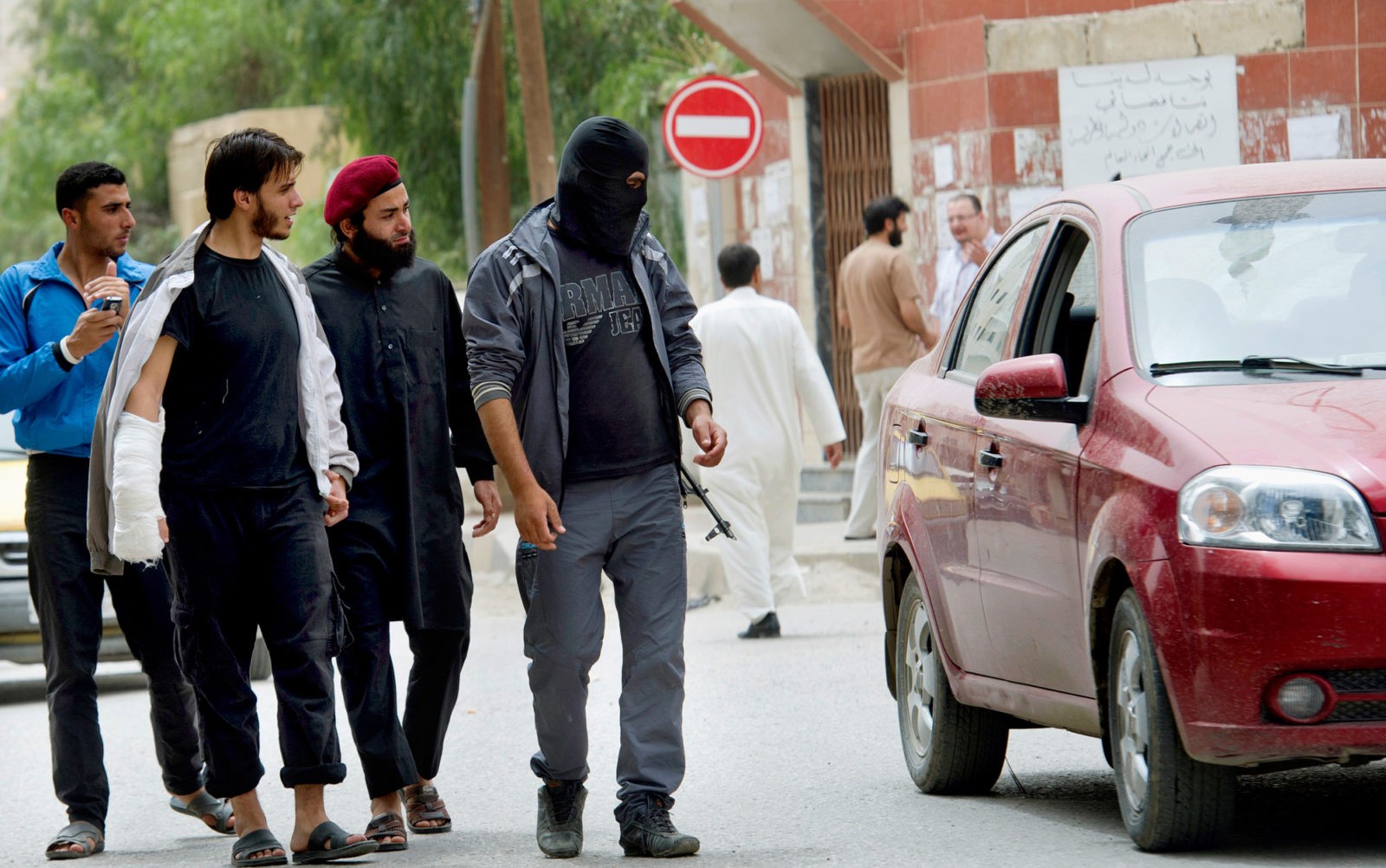
Scott Atran: Parochial Anthropologist
https://aeon.co/essays/why-isis-has-the-potential-to-be-a-world-altering-revolution
ISIS is a revolution
All world-altering revolutions are born in danger and death, brotherhood and joy. How can this one be stopped?