Haunted by history

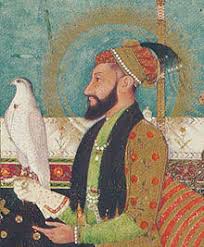
Aurangzeb, a good Muslim

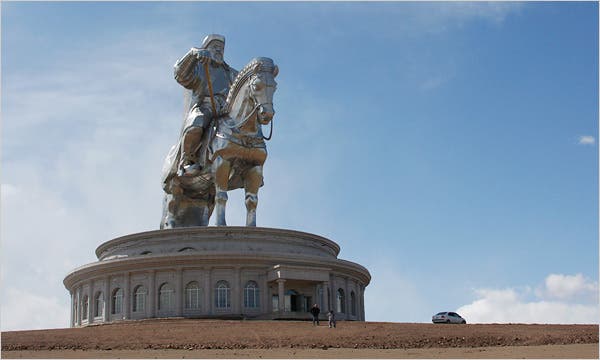
Today Genghis Khan is a hero in Mongolia. This, despite the fact that the rise of his Mongol Empire was associated with mass death. This mass death resulted in reforestation, which changed atmospheric CO2 levels.

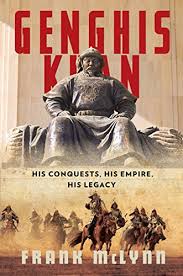
There are many histories of the rise of the Mongo Empire, but Frank McLynn’s Genghis Khan: His Conquests, His Empire, His Legacy, is probably the most balanced treatment.

During Genghis Khan’s lifetime, the most impactful and catastrophic conquests were of Central Asia and the obliteration of the Khwarezmian Empire. After the death of Genghis Khan, his heirs further obliterated the world of Islam, including killing the last significant Caliphs of the Abbassids. To a great extent, Genghis Khan ended with finality the world of the Iranian people of Turan, leaving the Tajiks as the Persianate rump. Economic historians have suggested that the destruction of Iranian agriculture (e.g., the qanat system) that occurred during the Mongol conquest was so great that the region did not recover until the modern era.
Muslim historians, some under the service of Mongol successor dynasties, have taken a mixed view of Genghis Khan and those who descend from him. On the one hand, their destructive impact is impossible to deny. The Mongols were one of the last of the steppe nomads to explode out of the Eurasian interior, but they were one of the largest military-political shocks, destroying multiple polities. But descent from Genghis Khan became prestigious in the Turkic world.

This is somewhat discomfiting and paradoxical because Genghis Khan was proudly pagan. And, it was not in dispute that the Mongol invasions had been brutally destructive. The prestige and glamor was clearly a nod to the fact that Genghis Khan’s conquests were evidence of glory sanctioned by God.

Despite Genghis Khan’s pagan beliefs, and the negative impact that the Mongol conquests had on Islam, somehow elements of Mongolic ruling culture became normative among the Muslims of Central Asia. This is how the name “Khan” became associated primarily with Muslims in the Indian subcontinent. Though there are non-Muslim Khan’s in South Asia, on the whole, the surname is associated with those of Muslim background, which is ironic given that it is a purely pagan title.

The details and subtleties of this history are on my mind because of the conversation I had yesterday with Neha Srivastava. It strikes me that in some ways she is haunted by history. In particular, the history of Turco-Islamic domination and brutality in the Indian subcontinent. She mentions offhand a Bollywood star giving her son the name Timur, which is reminiscent of a brutal Turco-Muslim conqueror, Timur the Lame.

This is where details became important. Neha no doubt remembers the brutal sack of Delhi. Though most of the dead were not Muslim, it is important to remember that Timur’s target was a polity ruled by Turco-Muslims, like himself. Importantly, and ironically, despite being a Muslim, Timur the Lame wrought his destruction exclusively in Muslim lands, or lands ruled by Muslims (India).

Though many facts of history are beyond dispute (e.g., Timur’s sacking of Delhi), the valence with which we recollect them varies. The Mongols view Genghis Khan as a great leader and a cultural figure of worth and note. Muslims take a more mixed view. Meanwhile, for European Christians and the Chinese, the Mongols are a purely destructive force. Whether the Mongols and Genghis Khan are worthy and of admiration is clearly filtered through a cultural lens.

Because I’m a bit of a Mongol history nerd, the name Timur to me actually is not closely associated with Timur the Lame! It as in fact closely associated with Khans of the Yuan Dynasty of China and Mongolia, who never converted to Islam. But then, I’m not an Indian Hindu.

Nevertheless, the issue of the name Timur is an illustration of the general phenomenon: a lack of the acknowledgment of the cultural brutality and domination which Turco-Muslims wrought upon the Indian subcontinent and its native peoples in the period between 1200 and 1800. Six hundred years of domination to varying degrees.

I will interject here an objection to what I see as some hyperbole. Oftentimes Hindus make the case for almost Nazi-like domination of Islamic power in medieval and early modern India. There are two major objections to this extreme characterization.

First, premodern societies did not have totalitarian state capacity. Both the Byzantine Empire and the Islamic polities were fixated on a universal state religion. But their coercive power had limitations. There were pagans who lived in southwest Peloponnese until about the year 1000 A.D., when they were finally converted. State Christianity did not have the power to coerce these isolated people, because the state was thin and weak. Similarly, the pagans of eastern Afghanistan, the Nuristanis, were forcibly converted to Islam in the last decade of the 19th century.

Second, the vast majority of the people in the upper Gangetic plain, the core of Turco-Islamic rule in the Indian subcontinent, remain Hindus. That is, practitioners of native Indian religious traditions. This is simply incompatible with the idea of centuries of totalitarian rule. Again, going back to the first point, premodern states had limited capacity for domination and coercion. The power of the Roman state or the Caliphate was an ideological one, as local officials were bound together by their allegiance to a figurehead. But if a local ruler or administrator wanted to operate at sharp variance from the ultimate ruler, it was entirely feasible. Central state capacity was weak.

The Islamicization of much of the Punjab and Bengal were not a function of the greater state capacity of the Turco-Muslim rulers of northern India. Rather, they were a function of the peculiar characteristics of unstable borderlands, which tend to be much more attracted to dynamic novel ideologies promoted by ruling elites, which in the late medieval and early modern period meant Islam. This is the same reason why Zoroastrianism (and Buddhism) was replaced by Islam much more quickly amongst the populace in Central Asian Turan than in Iran proper. Turan was frontier land. Iran was not.

With that preamble out of the way, it is not disputable to me that the Turco-Muslim conquest elites in the Indian subcontinent engaged in plunder, extraction, and subjugation, in a relatively brutal manner.Ā  The emergence of ISIS in the middle of the teens illustrates the nature of Islamic dominionism. The sexual exploitation of Yazidi women is in keeping with a tradition in Islam of sexual slavery of the women of conquered infidel peoples. This is not unique to Islam of course, but neither is not something one can deny as being part of Islamic history.

Now let us imagine an alternative history where the Turks who invaded the subcontinent were not Muslim. It is quite likely that like the Tai Ahom they would have become Hindu. It is quite likely that initially, they would have been just as brutal and exploitative as the Turco-Muslims. And, if they retained self-awareness as a distinct people for long enough that nature of a ruling class would persist despite the slow accretion of Indian cultural features. But, eventually, they would have become fully Indian, and gone into the mists of a legend like the Huna of yore.

The premodern world was brutal. The brutality of the Turco-Muslims was not unique. Julius Caesar may have been responsible for the deaths of 1 million Gauls. It must be noted here that the death was often not by direct killing, but through the starvation that occurred when populations were dislocated and dispersed. The brutality of the premodern world has an instrumental, material, rationale. Conquest was a way for elites to extract wealth out of the population. Death was not optimal, because extraction required bodies, but capture may have entailed some death.

Brutality was necessary, but not sufficient, to generate the trauma of modern Hindus.Ā 

But again, I need to step back, and admit something: there is some evidence that brutality is accentuated across ‘meta-ethnic’ boundaries. This comes from research by the quantitative historian Peter Turchin. He shows that civil wars tend to be characterized by less atrocity, while the most brutal killings occur across civilizational boundaries. The sack of Jerusalem during the First Crusade, for example.

This implies that the Turco-Muslim treatment of local Indian populations would be more exploitative and inhuman with a lack of common identity. The Turco-Muslims considered themselves white, and the natives black, and retained a separate language for much of their tenure. And, of course, they had a distinct religion from the native people.

In the modern Middle East, all of the subcontinental people are objects of contempt from the native Arab Muslims. But non-Muslims in particular seem to be the targets of unmitigated contempt (and, due to legal inequality, targeted for sexual predation).

Though on the whole, I would argue that the religious difference between the conquest elites and the native people makes the former more brutal toward the latter, I think the biggest distinction is that the conquest elites are more culturally destructive.

Neha discussed at length the impact on the temples of native peoples. Cultural displacement in terms of public religion is a key sign of hostility between the ruled and the rulers. The end of paganism in the Roman world began with the shutting down of public temples.Ā  Private paganism in household shrines continued for decades, but it slowly withered. I have written at length elsewhere about the robustness of Hinduism in the face of Islamic rule, so I will go no further on that issue. Rather, note that despite attacks on public Hinduism in North India the religion maintained and persisted due to its decentralized nature.

The crux of the issue is that modern Hindu Indians have to acknowledge that the core of Aryavarta was dominated politically by Muslims between 1200 and 1750. During this period Indian culture and society changed, some of it through interaction with the Muslim rulers, and some of it in situ. In either case, in some ways separating North Indian culture from the Islamicate period is insuperable. But Hindus know and understand that their role in this culture was as inferiors. Subordinates, if not slaves.

The flip side of this is that the Muslims of the Indian subcontinent are almost all descendants of converts from the local population, and their culture is clearly subcontinental. Though they may bear Arab, Persian, and even Turkic names, their faces are no different from their Hindu neighbors. It is hard to deny that fundamentally their past is one of subordination (as non-Muslims) and capitulation. They assimilated their own subcontinental identity, with brown faces, Indo-Aryan languages, and native cuisines, with the Islamic faith which had them face toward Mecca.

I may quibble and dispute some of the details of Neha’s assertion of inter-generational trauma due to the conquest (as I implied in the podcast, I believe women kidnapped and raped by Muslim elites today have Muslim descendants, so I would suggest that the trauma is elsewhere in the specifics), but the fact remains that Hindus with a profoundly different religious outlook and identity from Muslims are often uncomfortable praising a Mughal Golden Age where their own identity was of a conquered people. Dhimmis.

If Indian was 99% Muslim this might not be a great issue. Arabs can look dimly on their period of Ottoman hegemony in their nation-states, as very few Turks remain (there are Turkomans in Iraq!). But in a place like Uttar Pradesh, 20% of the population is Muslim. These people have a different identity in some deep ways from their Hindu neighbors, despite shared ancestry, language, and cuisine. I have never met a person from this background who was not proud and whistful about the period of Mughal rule in India. They identify this with this dynasty, and its predecessors, because of shared religious identity.

This is the fundamental tension in modern India. A substantial minority of the population is an adherent to the mythology of a conquest elite which the majority perceives to be traumatic, even genocidal. I do not have solutions for this issue, and I am not taking sides because it is really not my history anymore. But there it is.

Browncast Episode 106: Neha Srivastava, traditionalist Hindu

Another BP Podcast is up. You can listen on Libsyn,Ā Apple,Ā Spotify,Ā  andĀ StitcherĀ (and a variety of other platforms). Probably the easiest way to keep up the podcast since we don’t have a regular schedule is toĀ subscribeĀ to one of the links above!

You can also support the podcast as aĀ patron. The primary benefit now is that you get the podcasts considerably earlier than everyone else. This website isn’t about shaking the cup, but I have noticed that the number of patrons plateaued a long time ago.

In this episode Razib talks to Neha Srivastava. One of the great things about the internet is you can meet people with different viewpoints, but too often the options are echo-chambers or screaming matches. This was different. Neha outlined her own views and experiences as a middle-class Indian with conventional Hindu religious views, who is unapologetically Dharmic.

We talked about her nonprofit, Shaktitva, as well as her observations of American and Indian politics. We also touched upon whether she was going to stay in the United States (no) and whether she preferred a Chinese or American world-hegemon. We also discussed what it means to be a Hindu in India.


Fannie Freddie and the Chinese: The IOU Laws

Wrote this around 2008 to explain the financial crisis and the implications for US China relations.
Hope you see some relevance to current chaos, or at the very least understand the cynical humor.

Fannie Freddie and the Chinese: The IOU Laws
Hu’s your daddy now
or is it Yu is the Patsy

Those statements are going to make sense once you read this email. This is an attempt to explain what happening in world of high finance and world politics right now. This is Long, and you are ADD jump to the end and read the Law and the consequences.

There has been a lot of brouhaha on the Freddie and Fannie and their preferred shares.

As usual thats smoke and mirrors.
The bigger problem are Mortgage Backed Securities (MBS) issued by Fannie and Freddie and the Chinese who own a large chunk of them

For the uninitiated:
Somebody got a loan for a house. They promised to pay that back and make monthly interest payments well.The bank took that IOU note (and a lot of others) and sold it to Freddie and Fannie. Fannie and Freddie in turn collected all those IOU’s and bundled them into a Big Ole IOU. Then gave it a fancy name called Mortgage Backed Security (MBS) and that Big Ole IOU was now an Asset. If one wants to know more about MBS, and Ubernerd called Tanta has written more than you ever want to know at a place called Calculated Risk. For our purposes all you need to know is that MBS is name for big IOU which is made up of little IOU’s

See, now when I was growing up, an Asset was something you could wrap your hands around.Ā  Or you get someone else to wrap their hands around it. First a story
Right out of school, I started working in a audit firm as an articled clerk. It was a job a that paid a very much less than indentured servant (125 Rs, USD 12 per month !) and tasks not much better. One of the first on site audits I did was for Mercantile Investments, who financed cars on Hire Purchase. This type of business is called, Leasing these days; same stuff different name. So as I am checking receipts/invoices and I come across this whole pile that just says Payment to xxx. And its a lot of money (remember I was getting only 125 Rs) 3,000 Rs each month. This definitely warranted an investigation, so I asked Philip who headed the audit and was never around what I should do. Phillip (Babapulles) say “Send the guy a post card (this was before cellphone days) and ask him what it is all about”. Couple of days later, the receptionist tells me some one has come over to answer the audit questions. Now I had heard of the de Goon family of Sri Lanka but had never met one. The gentleman seated at the reception didnt need an introduction. This was an honest to God, de Goon. I didnt need no introduction to recognize a member of the de Goon family. The instinct self preservation kicked in, I apologetically said all I needed to verify if Company had actually paid de Goon. See, I had the best interests of Mr. de Goon in mind. End of conversation. Note to self: No more postcards to Mr Gune de Goon in Goontown. (Gune means good in Sinhalese).

So you ask what the hell has my job got to do with MBS and Fannie and Freddie. Please bear with me: there was a moral to that story. Continue reading Fannie Freddie and the Chinese: The IOU Laws

Review: Soldier Sahibs

This was written way back in 2002 for the Pakistani newsmagazine Herald (which just closed down unfortunately). Lets see how it holds up.

Soldier Sahibs is an old-fashioned and unapologetically imperialist book. And writer Charles Allen makes sure you know what you are getting into by giving it the flagrantly politically incorrect subtitle: The Daring Adventurers Who Tamed India’s Northwest Frontier. But imperialist does not necessarily mean inaccurate and Allen has taken a good deal of trouble to get his facts right. The book claims to tell “The astonishing story of a brotherhood of young men who together laid claim to the most notorious frontier in the world, India’s North-West Frontier,
which today forms the volatile boundary between Pakistan and Afghanistan.”
The men in question include John Nicholson, Harry Lumsden (founder of the Guides), Herbert Edwardes, William Hodson, James Abbot and Neville Chamberlain. ProtĆ©gĆ©s of Sir Henry Lawrence, these men were responsible for laying the foundations of British rule in the Punjab and the Northwest Frontier. The author’s intent is to tell the story of these young men and through their adventures, give the reader an idea of how the British conquered – or, as he would prefer, “pacified” – the ‘wild’ Northwest Frontier of India.
But while Soldier Sahibs gives a very readable account of the adventures of these (surprisingly) young men, it is not possible to piece together the broader history of those times from his book. Why the British were here in the first place and what were the factors that made a small island in Europe more powerful than any kingdom in India do not form any part of Allen’s concerns. Nor does he waste much time explaining the situation in the Punjab or of the East India Company at that time. In fact, the author does not even provide a map of the vast area over which his protagonists established their rule. If you are totally at sea about those times, then you may have to read a few other books to fully appreciate the goings-on in this one. But if you are one of those enthusiasts who cannot get enough of the Raj, the mutiny and all that jazz, then you will definitely enjoy this book. Its written in authentic ‘Flashman’ style, with wit and verve and loads of ‘local color’.
The English heroes may appear larger than life but by all accounts some of them indeed were larger than life. And being Englishmen, they left us a veritable storehouse of laconic and understated wisecracks. These include Nicholson walking into the mess to tell his fellow officers: “I am sorry gentlemen, to have kept you waiting for your dinner, but I have been hanging your cooks.” (The cooks had apparently poisoned the food but were detected and hanged, and dinner was served half an hour late).
Though Nicholson gets the most lines in the book, the stories of Edwardes of Peshawar and Bannu and Abbot of Abbotabad are also told in some detail. William Hodson, the villain who executed Bahadur Shah Zafar’s sons, also gets a sympathetic hearing. We are told surprisingly little about Sir Henry Lawrence, who is supposedly the godfather of this fraternity. And it is not always clear why certain officer’s lives are described in detail and others get only cursory mention. Lack or availability of sources may be the explanation for that .
In these times, it is impossible to read such a book and not look for parallels with the current efforts at “pacifying” Afghanistan. But these British adventurers and their peculiar code of life are poles apart from the westerners who are now coming to bring us into the civilised world. Occasionally, Madison Avenue will try to create a suitable heroic image for some American colonel or diplomat but the substance of this new empire is very different from the last one and so are its agents.
Nicholson and company may have been bigoted, male chauvinist psychopaths, yet they also had undoubted personal courage and their own peculiar brand of love of justice. In the Pakhtuns and the Punjabis, they found not just enemies, but also friends and fellow adventurers. It is fashionable these days to describe their local supporters as ‘traitors’ who took the side of a ‘foreign power’. But to the Sikhs, Punjabi Muslims and Pakhtuns who fought under Nicholson to reconquer Delhi, the capital was also a foreign power and one they did not remember fondly. And these British officers had always respected their honour and treated them fairly. They provided an administration that was in many ways a big improvement over the ‘locals’ they had replaced. In fact, it would not be remiss to say that the Punjabis and Pakhtuns who fought for the British may have been men of higher character and personal courage than most of their current detractors. Many things have improved since Nicholson rode across the plains of the Punjab blowing mutineers from canons but it is hard to avoid the suspicion that some things have also deteriorated.

ABCD Politics, Episode 2: Why I Am A Conservative

A new episode of ABCD Politics is out. For those of you who can, can you please subscribe on Apple Podcasts or Google Podcasts. And give us a rating too! Surya has submitted to Stitcher and Spotify, so it will be on those platforms soon too (my experience is that Stitcher approves fast, while Spotify approves slow).

The topic of the second podcast was nominally our own political evolution. It turned out to be mostly about me, and my own “conservatism.” Though Surya has followed my work, after a fashion, for 15 years, my politics are somewhat cryptic to him, so it was a useful exercise in exposition. Surya is a center-Left Democrat and ran as one in 2010. Myself, my own views are a bit more heterodox and difficult to pin down.

A simple way one can summarize my evolution is that I have gone from being a moderate libertarian in the early 2000s to more of a populist conservative in 2020, albeit of a moderate and cosmopolitan personal bent.

But when someone on Twitter asked to summarize my politics recently in five words or less, I said “family first family last.” What did I mean by this?

The issue came up on the podcast because I expressed by “pro-nuclear family” stance as one reason I aligned with the Right and was skeptical of BLM. One of Surya’s correspondents asserted that I didn’t characterize BLM correctly. As it happens, BLM has an “official” website. It has a section on the nuclear family, which I read a while back:

We disrupt the Western-prescribed nuclear family structure requirement by supporting each other as extended families and ā€œvillagesā€ that collectively care for one another, especially our children, to the degree that mothers, parents, and children are comfortable.

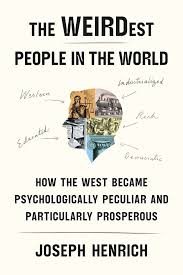
In early September the evolutionary anthropologist Joe Henrich will come out with a book, The WEIRDest People in the World: How the West Became Psychologically Peculiar and Particularly Prosperous. I obtained a review copy, so I will probably post my thoughts closer to the publication date. But, the book outlines a simple and widely discussed thesis: that unique aspects of Western Europe’s kinship and family structure that dates to the period after the fall of the Roman Empire were amenable to the emergence of economically dynamic liberal democratic societies.

The nuclear family is key to that argument. Obviously people can be happy in joint-families, clan compounds, or as part of dense tribal networks. But the nuclear family has some social and cultural consequences which I strongly favor. In the American context, the nuclear family is associated with positive outcomes for children, and a level of material and emotional well-being that many of us aspire to.

This does not mean that those who are not in nuclear families should be ostracized or thought of as second-class citizens. Rather, the idea is that society and politics should have the dominant family structure, the nuclear family, at the heart of its understanding, and that that should shape policy (e.g., tax-credits for having children). My impression and understanding are that the modern Left does not believe this privileging should occur (explicit in the platforms of groups like BLM above). Therefore, I am against the modern Left.

The Landmark Chola Invasion of Srivijaya

I found this video on the Chola invasion of Srivijaya and it is so well made and informative, about this little known but nevertheless a major event on Indian and SE Asian history, that i couldn’t help posting it here.

It is a shame that this video does not have more views.

The Chola invasion of Srivijaya dispels a major myth about Indian history that is bandied about often which is that India or Indians never invaded another nation.

The timing of this major world event is also quite interesting. It came about in the early part of the 11th century CE when the Greater India region stretched from Afghanistan and Balkh in the Northwest to the Phillipine Islands in the southeast and had been so for more than a millenium already. Indian religion and ideas also held great sway over the countries of China, Japan & Korea.

This was the phase of the greatest afflorescence of Indian civilization. Yet by the turn of the 2nd millenium, this civilization which the Arabs referred to as Al-HindĀ was already well past its high point. The kingdoms of the Tarim Basin such as Khotan, Kucha, Shanshan etc were already lost as were the Central Asian kingdoms of Balkh and Sughd (Sogdia).

Yet, most poignantly, in the very timeframe that the Cholas invaded Srivijaya in the southeast, the Turco-Afghan Mahmud Ghazni invaded from the Northwest and devastated North India.

What a turning point in Indian history were these initial years in the new millenium of the Christian era !


What Changes Needed for the US

Start with a quote from Matt Stoller (2011)
Change needs to happen—and it will happen, either through good leadership or through collapse.

The US has choices, most other countries dont.

With all the chaos and rioting there are no specific goals to make the US equitable, specially for the lower rungs of society.Ā  My thoughts of specific goals.

What should be done immediately

a) Give aid to direct individuals
This includes free testing and health care

b) Debt Jubilee, i.e. forgiveness of debt.
Rent, Mortgage forgiveness based on income/job.
NOT a deferral with a huge amount coming due in the future

Electoral Process

The President, Congress and Senators need to be more answerable to the public.Ā  The way the current system works, public votes and President, Congress and elected officials do the bidding of their paymasters, the big moneyĀ  Multinationals and Military Industrialist.Ā  This change is imperative for a proper functioning democracy.

So

a) No lobbyists, period.Ā  Caught lobbying or accepting lobby, at least a few years in Jail.
Lobbying is legalized bribery and corruption.

b) Campaign Finance: I would prefer only a govt funding, equal to all contestants.
Or only donations by individuals with cap on amount.

c) Two term limit for Senators

Finance Specific*

a) Let Too Big to Fail companies/banks go bust if they are not profitable ,
instead of propping them up with more and more trillion dollar handouts.

b) Stop derivatives being used for speculation/betting.
Can be used as hedge against asset on the books.
If the asset is sold, the derivative needs to be unwound.

c) Share buybacks be made illegal.

I dont think USD 6 Trillion injection into financial markets will solve the Covid19 pandemic or the chaos in the US.

To put the 6 Trillion into perspective.Ā  US GDP is USD 19 Trillion.Ā  Public debt isĀ  USD 18 trillion Interest public debt USD 479 billion/0.5 Trillion (10% of Budget)

*Some suggestions by VijayVan

Manufacturing

Its not about cutting costs per se. Think the Henry Ford saying, workers should be able to buy what is produced. For that the US must first throw out Free Trade and embrace protectionist. Start Manufacturing and give Price protection to what is manufactured.Ā Ā  Same for Oil, the US is self sufficient.

But all of this means ditching the Petro dollar, and the global monetary power that comes with it.Ā  So very unlikely those changes will be by choice.

Society:

A push for polices that re vitalize small towns with self reliant economies. Ā  Not just a suburban enclave dependent on commuters working in a nearby big city.Ā  Coupled with small or medium manufacturing.Ā  i.e. Supply chain is mainly within the US.

Maybe even a partial break up of Big Ag and land distribution (100 acres or so) specifically for Agriculture.Ā  I think subsidies for small scale farmers is fine.Ā  Much better that trillion dollar bail outs for Big Ags.

Wars

The US will have to make some serious decisions about being the global policeman, and conducting wars. (I doubt will happen without change in Campaign Finance/Electoral Process).Ā  The US Might has turned to “might happen”. Trillions on war, has not made the US safe.Ā  Never ending Wars and nary a benefit except debt and death.
This does not mean disbanding the military.Ā  Any country needs to defend itself against invasions.Ā  The choice is wars of aggression in distant lands or developing the economy.

US Spending on wars Iraq War: +1 Trillion Afghan War: 1 TrillionĀ  Military: 500 billion/year

India before the binary

How Britain’s colonial past can be traced through to the transphobic feminism of today:

The British Age of Enlightenment prized itself on scientific rationality, including with it strict taxonomies of racial and sex categorisation – i.e. your biology meant you were strictly male or female, and there was a rigid hierarchy of race superiority (with whites at the top). And so, Britain’s cannibalisation of the rest of the globe simultaneously erased rich non-Western trans histories.

Take, for instance, the transgender Hijra people of India, who, prior to British imperial rule, were exalted in their communities, tasked with important legal duties like collecting taxes and duties; in 1864, Britain imported its 1533 Buggery Act, which directly criminalised Hijra people and reduced them to second-class citizens. It was only in 2019 that this colonial law was rescinded. This obliteration of well-established transgender communities was replicated across the Global North; European colonists, when invading the Americas, pointed to the transgender Two-Spirit traditions of its indigenous people as proof of their primitivism.

It seems clear that the British introduced a rationalization. But this strikes me like saying the “British invented caste.”

This isn’t about Indians at all. Indians are seen as instruments in culture-wars.

Brown Pundits