
Please keep the other posts on topic. Use this for talking about whatever you want to talk about.
Please note our podcast, Twitter, and RSS feed. Also, our Patreon.
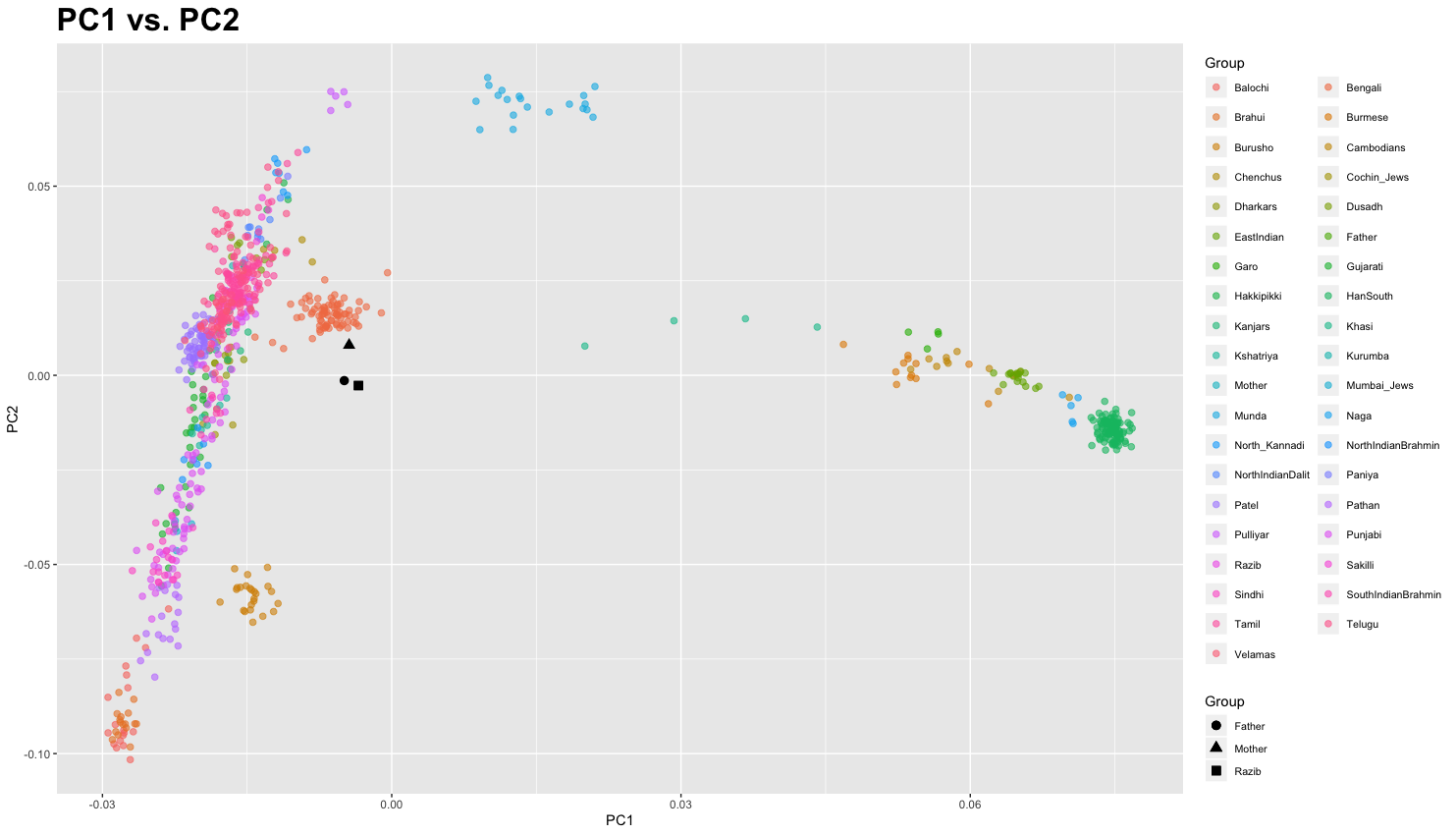
Using my own data to test some stuff, and I notice
1) My parents are both “outliers” from the Bangladeshis collected in Dhaka. Not too surprising, as my family is from low country Comilla, and more “East Asian” than usual.
2) My father is more “steppe shifted.” This always shows up in various analyses. And, it is not surprising. His maternal grandfather was from a Bengali Brahmin family (they all converted the previous generation).
3) Weirdly, I am quite near my father on this plot. Mendelian segregation I assume. I have a 23andMe and a SNP file generated from 30x WGS, and they land on the same spot. So it’s not some artifact.
Another month, another “Asian” grooming gang scandal. “Asian” usually, but not exclusively, seems to mean Pakistani British men.
A lot of the discussion around this issue centers on the perpetrators of the crimes. Their ethnoreligious distinctiveness. The cultural preconditions which allow for the development of these practices of abuse and exploitation as normative in certain circumstances and toward certain people (though the details differ, from what I know of South Asian communities, in general, there’s a fair amount of sexual abuse going on within the subculture that isn’t discovered because of norms of shame and concealment).
But, I want to focus on the victims. Whenever these stories surface the victims are invariably described as “troubled” and from “broken” homes. These were vulnerable children. Additionally, the powers that be did not see these girls as their girls. If gangs of Pakistani British men were abusing and raping the daughters of middle-class burghers, I am 100% sure that the police would pay immediate attention and follow-up on these cases no matter the sensitivities.
I think it is fine and important to highlight the subculture that fosters this sort of behavior through their assumptions about the sexual nature of non-South Asian women (e.g., I have had it explained to me by several men of Indian subcontinental origin whose tastes were toward the prurient that “our women are pure”). But these cases also illustrate stark class divides and the total lack of concern and interest by the bureaucratic and public service class toward individuals from the lower class.
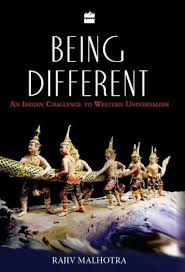 Having read a fair portion of Being Different: An Indian Challenge to Western Universalism, I can state now that it’s a book worth reading. The author, Rajiv Malhorta, expresses a distinctively Indian religio-cultural view coherently, clearly, and with a substantial foundation of scholarship.
In this way, I would suggest that Malhorta’s work is analogous to Tariq Ramadan’s exposition of a conservative Muslim world-view that is aware of, and engages with, Western values and traditions.
The main difference is that Ramadan’s work is more academic, which makes sense since he is trained as a classical European intellectual. In contrast, the main nagging issue I have with Malhotra’s work so far is that he regularly imputes elements of Western American Protestant culture and civilization to the Abrahamic traditions writ large. This makes sense since Malhotra’s biography suggests much of his adult life was in the United States. But whenever he writes “Judeo-Christian” about 75% of the time it makes more sense to write “American Protestant”, since that is really what the term is pointing to.
I assume that in the broad conclusions Malhotra and I come down on different positions. But the outlines of the methods and arguments he uses are quite familiar and intelligible, and that’s a nice change from other things that I have read.
Another BP Podcast is up. You can listen on Libsyn, iTunes, Spotify, and Stitcher. Probably the easiest way to keep up the podcast since we don’t have a regular schedule is to subscribe at one of the links above.
You can also support the podcast as a patron. The primary benefit now is that you get the podcasts considerably earlier than everyone else.
Would appreciate more positive reviews! Alton Brown’s “Browncast” has 30 reviews on Stitcher alone! Help make us the biggest browncast there is!
In this episode we talk to professor Wilfred Reilly, who teaches political science at a historically Black college in Kentucky. We talk about hate crime hoaxes, racism, wokeness and more..
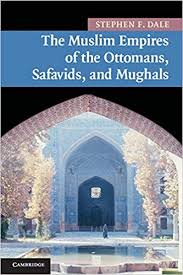 The Muslim Empires of the Ottomans, Safavids, and Mughal has been in my “stack” for a while. It’s a short and academically-oriented work. What’s great about this book is that it is cross-cultural and comparative. I don’t know about you, but these sorts of narrative frames make recall and retention far easier for me. The integration of facts with other facts means that the sum of the parts is greater than the parts evaluated alone. In this, it has similarities with Strange Parallels: Integration on the Mainland: Southeast Asia in Global Context, c.800–1830.
The title itself is informative. These were Islamic polities in a self-conscious manner. The Ottoman Sultan emerged out of a parvenue lineage on the western Anatolian frontier whose claim to rule was based on their status as ghazis. Warriors of the faith. Their Mandate was confirmed through victory. The Safavids had religious charisma before they were temporally powerful. They were hereditary leaders of a Sufi order (their adoption of Shia Islam was a relatively late event). Finally, the Mughals were arguably the least religiously inflected of the three early modern dynasties, despite their appeal to the ghazi ethos.
Rather, the Mughals were notable because of their lineage, which was the most prestigious of the three. The Timurids descended from Timur, obviously, but more importantly, they descended on their maternal side from Genghis Khan. Though Genghis Khan was a pagan, whose scions destroyed much of the Islamic civilization of the Near East (and killed the last Abbassid Caliphs), the raw power and impact of the conqueror was such that he cast a shadow over the whole Turco-Persian world.
The key issue here is that these were dynasties of the Turco-Persian world, more or less. These were not states of the Islamic Arab world, though the Ottomans eventually absorbed much of that world in their later expansionary phase. Nor were they states of the Far East, or even Inner Asia. Despite all their other antecedents,* these dynasties were of Turkic provenance, and yet their entry into Islam was associated with their entry into Persianate culture.
The Muslim Empires of the Ottomans, Safavids, and Mughal takes a chronological tack in that it explores the origins of the three polities as far back as 1000 A.D., and also addresses thematic elements (e.g., architecture, poetry, and economics). Because of the thematic component it is not a work that needs to be read in sequence chapter by chapter, though perhaps doing so would allow for full appreciation.
One thing that jumps out is that in many ways the Safavid Iranian regime is an outlier in many ways. This is obviously true in regards to religion. The Safavids began as a vaguely Sunni but very Sufi religious order in eastern Anatolia. But by 1500 they were promoting arguably ghulat forms of Shia Islam, before settling down on mainstream Ithna Ashari beliefs. It is to this period that connections between Iran, a term that they resurrected, and the Shia cities of Iraq and the Shia regions of Lebanon, were established. It is during this period that Iran was forcibly converted from a mostly Sunni cultural region with Shia pockets to a Shia domain.
The Safavid domains corresponded roughly to what we now know as the Iranian nation-state (Mesopotamia was part of the Safavid domains for a few decades here and there). Despite early attempts at expansion into their Anatolian homelands, rebuffed by the muscular Ottoman military machine, the Safavids were preoccupied with internal concerns. The religious transformation of a whole region through coercion expended a great deal of capital. The early Ottoman state before 1500, and the Mughal domains for its entirety, was different from the Safavids insofar as the ruling military elite were of a different religious identity from the majority whom they ruled (Christians and Hindus respectively).
In contrast, the Ottomans did not attempt to forcibly reshape the culture of their vast domains. The millet system established subordinate roles for non-Muslims, while Ottoman hegemony over their 16th-century conquests in Arab lands did not disrupt native elites (the Mameluke Sultanate was conquered, but the Mamelukes remained Egypt’s ruling caste for centuries under the Ottomans). Within Anatolia and parts of Rumelia a process of assimilation of Greeks, Macedonians, and Armenians, to a “Turkish” identity occurred organically through conversion to Islam. Over the centuries the cosmopolitan tastes of the early Sultans, who spoke Persian at court and styled themselves, successors of the Roman Emperors, gave way to a classical Ottoman identity as leaders of the Muslim world who nevertheless had their own linguistic identity.
The Mughals, though just to the east of Safavid Iran, were a polity characterized by extremely different concerns and resources. Mughal controlled India was the second most populous polity in the world after Ming China. It dwarfed Safavid Persia, even the Ottoman Empire. The Timurids conquered a civilization, or perhaps more accurately a coalition of civilizations. Unlike the Ottomans and to a lesser extent Safavids the Mughals did not create “slave” armies and “slave” bureaucracies. The native resources of India’s people were such that this was not necessary (the argument in regards to labor also is often used to explain why slavery was never popular in China). Hindu Rajputs served in the Mughals in military roles, while groups such as Kayasthas served them in civilian roles.
But the Mughal story is not simply one of “going native.” The Ottomans and Safavids relied on “slave” armies due to the fact that these were often more loyal to the regime than regional or tribal levies. The Mughals opened up India to vast numbers of Turkic warriors and Persian literati. These two groups were regime loyalists because like slaves they lacked local roots.
As Persia become more Shia, many of these foreigners who arrived in India were Shia, but there were also broader connections to the Hanafi Sunni world, as far afield as the Ottoman domains. For example, the Mughal Emperor Aurangzeb patronized the compilation of a series of religious codes, which apparently became quite well known and popular in Ottoman Anatolia.
It is often said that Indian Islam became rooted in the soil of the subcontinent and took upon syncretistic aspects. This is true as far as it goes, but it seems clear to me that the integration of the Mughal ruling class into Turco-Persian culture served as a major check upon this process. The Mughal Emperor Akbar clearly exhibited a tendency toward synthesis and innovation in his religious thought, but his views did not win the day. Rather, it is notable that The Muslim Empires of the Ottomans, Safavids, and Mughal reinforces the contention that each successive Mughal Emperor from Akbar, to Jahangir, to Shah Jahan, and finally Aurangzeb, adhered more closely to West Asian normative Islam.
A distinctive aspect of the Mughal polity is that it assimilated and promoted individuals who were ethnocultural distinct from the core ruling elite. In fact, arguably very disparate groups were all bound together as part of the core ruling elite. In particular, the Rajput generals who served the Mughals. This is in contrast with the Ottoman and Safavid cases, where conversion of the slave to Islam entailed eventual ethnic assimilation. The problem with Aurangzeb, despite his military victories, is that he began aggressively espousing a more West Asian style of ideological assimilating, coaxing and coercing Hindu military elites into Islam. The Mughal equipoise was broken, and while Safavid Iran gave way to polities which inherited all its major features (the Zand and Qajar regimes), and the Ottomans persisted in their long decline, Mughal India quickly shattered in the 18th-century, to leave behind a broad cultural influence.
 More generally The Muslim Empires of the Ottomans, Safavids, and Mughal illustrates that a ruling elites with a similar ethos can span multiple polities. Despite the religious distinctiveness of the Safavids, which became more clear over time, the three early modern Muslim polities fostered trade and intellectual exchange. Large colonies of Indian merchants were resident in Isfahan (from which they eventually sojourned to Astrakhan and eventually Moscow).
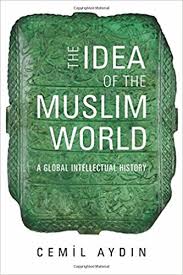
As noted in The Idea of the Muslim World Indian Muslims after the fall of the Mughal Empire had a major influence on Islam in what became Turkey. In Bernard Lewis’ oeuvre there is discussion about the West’s rise and its supremacy over the world of Islam, and the psychological shock that that entailed. But what about the Maratha captivity of the Mughals and how they shaped the confusion of Indian Muslims?
The Muslim Empires of the Ottomans, Safavids, and Mughal illustrates that cross-cultural and cross-national civilizational affinities and ties are quite common. Today many view the West as sui generis. In some ways that are true, in magnitude, and scope. But around the year 1500, a group of Turkic tribesmen had conquered remnants of Byzantium, the Persian Empire, and India. In the ensuing centuries, they transformed these regions, and were themselves transformed. Today to be Persian and to be Shia are almost synonymous (Tajiks tend to be Sunni of course). But this was the consequence of Turkic tribesman. Today Anatolia is mostly Turkish speaking, but that is due to centuries of cultural assimilation. Finally, many elements of Indian culture are hard to imagine without the Mughal period.
* The Safavids had Greek and Kurdish origins as well, though in their early period the Turkic ethnic component was most important. Similarly, the Timurids had recent Mongol ancestry, but their primary identity was with the Turco-Persian world. Finally, the early period of the Ottomans is obscure, but it is hard to imagine that these Anatolian Turks did not absorb some of the “substrate” elements. Mehmet the Conqueror had a Christian, possibly European, mother.
 A few years ago I made a passing reference to the “Kali Yuga” (I had been reading the Mahabharata), and an interlocutor expressed alarm. “Isn’t that an ‘alt-right’ idea?”
The truth is that the concept has become entrenched in parts of the Western Right through the influence of Theosophy and Julius Evola, but its origins and primary usage is non-Western. Obviously. Westerners repurposed the concept for their own usage (“appropriated” one might say).
I thought of this when our resident archetype of a particular type of “social justice” narrowly “liberally” educated commentator made an observation that some phrases had particular connotations among white nationalists. This was true on the face of it, but it struck me as illustrative of the pantheon of the powerful in the mind of this individual. The phrases in question, relating to anti-Semitism, are actually much more common among non-Western people today.
But this is not of any great consequence for many. Non-Western people do not exist except in relation to Western people, and non-Western people and their views are seen as purely derivative and reactionary to Western people.
In other words, Western people are the agents of history, the only observers of Schrodinger’s Cat.
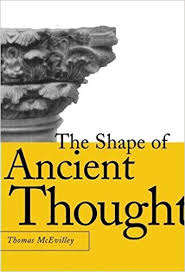
This is an ahistorical and non-empirical view. Whether you agree with the scholarship in The Shape of Ancient Thought: Comparative Studies in Greek and Indian Philosophies, the fact that this argument could be made in the first place stands testament to the rich textured complexity of the past.
Modern ideologies tend to flatten and diminish the complexity of history.
 I would be curious about reader experiences. The reason I ask is that a white friend who visits India for business told me the story of being asked about letting new male acquaintances suck his dick repeatedly. Apparently, since he had no local roots/connections these men felt ‘safe’ making this inquiry (one of the men apparently left a job in the Middle East because he kept sucking men’s dicks, and he was worried about “becoming gay”).
From an American perspective, this is peculiar behavior. But I understand it’s not that strange in a world-wide or historical context. I assume that large urban areas now have viable gay communities so that this sort of behavior is less common than it once was?
Book Review
Hamid Hussain
Ikram Sehgal & Dr. Bettina Robotka. Blood Over Different Shades of Green: East Pakistan 1971 History Revisited (Karachi: Oxford University Press, 2019)
This book is history of the last chapter of united Pakistan in 1971. Ikram Sehgal is in a unique position to write about the separation of eastern wing of Pakistan and emergence of independent Bangladesh. His father was Punjabi and mother Bengali. He had personal relations with Bengali and non-Bengali senior political and military leaders. He understands the passions involved on both sides. In addition, he was a young army officer and served in both theaters of war in 1971. He had a front row seat to the final act of the tragedy, and he gives his side of the story candidly.
First few chapters give details of social, political and economic differences between two wings. It then highlights events that gradually widened the gulf and then details about final days of united Pakistan and emergence of independent Bangladesh. Ikram also narrates his personal experience in 1971 war and many brushes with angel of death.
This book highlights for the first time, the role of 1965 India-Pakistan war in almost complete alienation of Bengali public. At psychological level, separation was complete after the war as almost all Bengalis were shocked to see that West Pakistan risked fifty five percent of its Bengali population surrounded by India on three sides and with very meagre resources to defend itself against India for few hundred thousand Kashmiris.
Civilian and military leadership dominated by West Pakistanis never understood Bengali view point. The defense doctrine of ‘defense of east Pakistan from west Pakistan’ was never seriously evaluated in the broader context of national security. If one region of the country arrogate itself the title of ‘heart of the country’ and relegate another region as less important ‘periphery’, it is bound to have serious reservation from the entity relegated as periphery. This was the reason that this doctrine was viewed as absurd from Bengali point of view.
In discussing Pakistani 18 Infantry Division operations in western desert, authors raise the question of why Jacobabad airfield was not activated regardless of whether GHQ asked for it or not? Air Commodore ® Sajjad Haider has provided the answer in his memoirs Flight of The Falcon. Air Chief Air Marshal Rahim Khan visited army headquarter on 04 December 1971 and was informed by Chief of General Staff (CGS) Lieutenant General Gul Hassan about the attack of 18 Division in south-west towards Indian city of Jaisalmer. Air Chief protested and informed him that closest Pakistan Air Force (PAF) bases of Sargodha and Karachi were over 300 miles away. He also explained that Jacobabad airfield could not be activated due to paucity of resources and even if decided PAF needed ten days to activate the airfield. He also informed CGS that Indian Air Force had three air bases in that area that could play havoc with the advancing Pakistani troops without air cover. Army went ahead with the operation despite Air Chief warning and hence the disaster.
There is a minor error regarding U.S. base in Pakistan. It is mentioned that U-2 surveillance flights operated from Badaber Air Station near Peshawar. Badaber was only a listening post and not an airfield. It was an electronic listening facility run by National Security Agency (NSA) and project was code named ‘Operation Sandbag’. Peshawar and Lahore airfields were used for U-2 surveillance flights. There were no permanent stationing of U-2 planes in Pakistan. Detachment 10-10 based at Incirlik, Turkey flew missions from Pakistan. U-2 pilot and some ground personnel were flown in a C-130 plane to Pakistan a day before the flight. A standby pilot brought U-2 from Incirlik to Lahore or Peshawar. In four years, there were only twenty four U-2 overflights. Out of these twenty four, ten originated from Pakistan; five from Lahore and five from Peshawar. (I have written a detailed piece about these missions titled Eye in the Sky).
This book adds to the literature of 1971 Indian-Pakistan war and independence of Bangladesh by a first-hand witness. Book is a must read for everyone interested in history of Pakistan and Bangladesh.
Hamid Hussain
28 December 2019