
On the rectification of names and religion

A major influence on my thinking about human social phenomenon is Scott Atran’s In Gods We Trust: The Evolutionary Landscape of Religion. Atran, along with other scholars such as Dan Sperber and younger researchers such as Harvey Whitehouse, work within a “naturalistic” paradigm, as opposed to the more interpretative framework currently ascendant within American anthropology.

The interpretive framework emphasizes “thick description,” and avoids generalities (unless they are convenient ones!), as well as exhibiting a suspicion of synthesis with the natural sciences. Ways of thinking such as post-colonialism are part of the umbrella of paradigms which are consonant with interpretive anthropology’s premises.

Both naturalistic and interpretive frameworks are useful. But I believe in modern discourse the latter is given almost monopolistic power to adjudicate on factual matters, even though in other contexts those who engage in interpretation are wont to say that facts are fictions!

Let’s start with the idea that the idea of religion qua religion is Protestant, Christian, or Abrahamic. I’ve seen all three flavors of the argument using a narrow definition of religion. It’s hard to deny that Christianity, and often in particular Protestantism, have resulted in a reorganization and reimagining of non-Christian religions. For example, the “confessionalization” of South Korea after World War II, and the transformation of Won Buddhism into an institution which resembles Protestantism would be a case in point. Or the emergence of Arya Samaj in the 19th century, and its relationship to the stimulative effect of evangelical Protestantism.

It is hard to deny confessional Protestantism is a very particular form of religion, and a clear and distinct one. The emphasis on individual volition in this view of religion makes it such that identity is clear and distinct through adherence to a precise formula and community. Practitioners are self-conscious in their identity. They come to it, it is not given to them.

But is it fair to say that religion by necessity must follow the outlines of confessional Protestantism? Or that it has to be a congregational faith with exclusive boundaries, as the Abrahamic faiths tend to be?

Not necessarily. AĀ Ju/’hoansi tribesman in the Kalahari does not follow any of the organized world religions. He or she surely does not have the word for religion in their language, unless he or she is in extensive contact with missionaries. But theĀ Ju/’hoansi have a rich supernatural world in which they believe, and which is seamlessly woven into their lives.

Do theĀ Ju/’hoansiĀ  have a religion or not? If you asked them they might not know what you are talking about. TheĀ Ju/’hoansi lack many of the institutions which modern societies have, so they don’t need all the labels of modern societies. Do theĀ Ju/’hoansi have “daycare”? Again, they would look at you in a very confused manner. But the do haveĀ Ā Ju/’hoansi some alloparenting. It’s just something implicit, tacit, and taken for granted. It might not be labelled daycare, but that’s what it is. Functionally they have daycare, even it’s not institutionalized.

To bring it back to the central focus of this weblog, there has been some assertion that Hinduism as such was invented/defined by the British. That Hinduism as a coherent ideology is a very distinct and novel thing from the welter of beliefs and practiced of Indians more generally.

It is clear there is some truth in this. The Hinduism of a Brahmin expositor ofĀ Sanatana Dharma is distinct from the local spirituality of aĀ adivasiĀ group, and both differ from something like Gaudiya Vaishnavism.

But the reality is that Hinduism is not particularly unique. American Presbyterians exhibit self-conscious identity and adherence to elite-mediated belief and practice. This sort of individualistic confessional Christianity is arguably the apotheosis of a modernist conception of religion. But this is a relatively new development in the West among Christians.
The vast majority of the European peasantry did not exhibit this sort of Christian self-consciousness before the later medieval centuries, and much of it did not become self-conscious until after the Reformation period. This is one reason that some Reformed Protestants argue that Europe was not Christianized until after the Reformation. Peasants may have had a sense that they were Christians, and others were heathens, but the full liturgy and deep catechism were not necessarily a part of their lives (in contrast to the elite).

And yet it seems ridiculous to assert in the context of the Crusades, the rise of Gothic cathedrals, and the conversion of Northern and Eastern Europe by missionaries, that Europe was not Christian before the late medieval period. Individual Europeans may not have been self-conscious confessional Christians, but everyone around them was at least nominally a Christian. Additionally, the Christian Church, whether West or East, saw itself as bringing salvation to everyone within the society, high or low, poor or rich, and devout or ignorant. Many Europeans were not Christian in the individual way modern evangelical Protestants would understand, but European civilization was Christian.

I think this is the best way to understand what Hinduism was, and what it became. Indian civilization was long seen to be distinct by the ancients. It was not a random and disparate collection of peoples, but a civilization with various centers, and jostling competition between aspirant elites.

It is well known in the pre-modern period “Hindu” seems to have bracketed people who lived in India. From the Muslim perspective all non-Muslims who lived in the subcontinent. It was a geographical designation more than a religious one as such. But it is clear that already by the time of the arrival of Muslims in the Sindh in the 8th century, and definitely by the era when Al-Biruni wrote his well known ethnography of South Asia around 1000 AD, that Indian religion had taken on some distinctive forms and outlines, even if it was not self-consciously termed Hinduism. It is clear because outsiders describe normative Indian religious practices and beliefs that we would recognize today (e.g., reincarnation).

There are two other elements to this broader issue. First, it curious that the British had to define Hinduism, when it seems Muslims had been doing so for the whole period after the initial incursions. Al-Biruni made the most thorough early attempt, and his writings on India would make an Orientalist proud. And I say that not as a dismissal, but a description. Al-Biruni seemed rather clear-eyed that Indian hostility to Muslim was due to the predatory character of the warlords who also patronized his scholarship. The focus on the British reflects the recency-bias in post-colonial studies, where the only colonialism and conquest of interest is tht which is executed by Europeans.
Additionally, I amĀ  convinced by the arguments in Buddhism and Islam on the Silk Road, Lost Enlightenment: Central Asia’s Golden Age from the Arab Conquest to Tamerlane, and Warriors of the Cloisters: The Central Asian Origins of Science in the Medieval World, that Turanian Buddhism was essential and instrumental in shaping Islam as we understand it from the Abbassid period onward (in particular, the emergence of madrassa and the hadith traditions). Though Turanian Buddhism is clearly not Hindu, connections to India to the south and China to the east were part of a broader “Buddhist international” which flourished in the 4th to 7th century.

This is not to deny the distinctiveness of the Islam Al-Biruni used as a contrast to Indian religious thought. But, by his life Central Asian Buddhism was extirpated, and he would not have been able to see the influence of that Indian-influenced tradition on Islam because it had become thoroughly integrated.

Second, Indian religious civilization was successfully exported to the east so it was not constitutively associated with being Indian. The Balinese of Indonesia and the Cham of Vietnam are recognizably Hindu. It would be curious to tell them that the British defined Hinduism in the early modern period…when they were practicing Hinduism 1,000 years ago. The Ankgor temple complex was built in the 12th century, when Hinduism was Cambodia’s dominant elite religion.
Finally, an addendum to my post on caste and genetics. I read Castes of Mind many years ago. I think many of the arguments in that book aren’t necessarily invalidated by the genetic data. But, we need to think hard about whether we really expected the genetic data given the thesis that British colonialism was highly determinative in shaping the hierarchy and structure of South Asian society.

In fact, the genetic data makes it clear that most South Asian communities have been distinct and endogamous for several thousand years. That the genetic differences between castes groupings andĀ jati within regions are closer to what you could expect of from differences between antipodes of a continent. And, within a given region ancestry which is closer to West/Central Eurasian tends to be enriched in groups “higher” up the modern caste ladder, across the subcontinent (at least if there is a correlation).

Additionally, this is not well known, but the genetic structure seems to exist even if you remove Indo-Aryans from the picture. Groups such as the Reddys and Nadars in South India who do not have any northern/western affinity at all are still genetically quite distinct fromĀ adivasis and scheduled castes in the local region. They also tend to have more West/Central Eurasian ancestry thanĀ adivasis and scheduled castes in the local region.
Everyone needs to take Chill Pill

None of us here on this blog can claim to be from some discriminated class/religion whatever.Ā  Just the ability to write (and have the time) to write in fluent English means you are one of the top 5% in opportunity in the world.

I like to identify with Shudra/Dalits, and can justify bcos my genetic inheritance has a large component of ASI.Ā Ā  Then equally well I id with African Americans in when in the US.Ā  That said will I invite a US gang banger into my house. Or a Sri Lankan gangster. I knew a few when I was young.Ā Ā  Now I cant deal with that type of young people as in guests to my backwater.Ā  On the streets a many chats/words and thats it.

Anyway, all this caste/religion is academic to the commenters in this blog. But still good.

As they say a picture is a worth a thousand words, the Bauls of Bengal.
Whats with the guy (whose voice I love) with an Afro. Where the heck did he get an Afro. The whole crowd looks like our generic Sri Lankan.

Hopefully some recall my comment everyone is Sri Lankan Dalit/Shudra. Kabir obviously has to deny Pakistani Christians look like Sri Lankans, and said they looked like Punjabis.Ā  Maybe Punjabis look like SriĀ  Lankans, for sure the eat and drink like Sri Lankans.


Genetical observations on caste

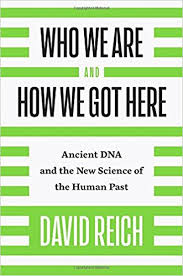
One of the more interesting and definite aspects of David Reich’s Who We Are and How We Got Here is on caste. In short, it looks like most Indian jatis have been genetically endogamous for ~2,000 years, and, varna groups exhibit some consistent genetic differences.

This is relevant because it makes the social constructionist view rather untenable. The genetic distinctiveness of jati groups is very hard to deny, it jumps out of the data. The assertions about varna are fuzzier. But, on the whole Brahmins across South Asia have the most ancestry from ancient “steppe” groups, while Dalits across South Asia have the least. Kshatriya is closer to Brahmins. Vaisya has lower fractions of “steppe”. And so on. These varna generalizations aren’t as clear and distinct as jati endogamy. Sudras from Punjab may have as much or more “steppe” than South Indian Brahmins. But the coarse patterns are striking.

As a geneticist, and as an irreligious atheist, a lot of the conversations about “caste” are irrelevant to me. They’re semantical.

You can tell me that true Hinduism doesn’t have caste, that it was “invented” by Westerners. They may not have had caste, but the genetical data is clear that South Asians were endogamous for 2,000 years to an extreme degree. Additionally, the classical caste hierarchy seems to correlate with particular ancestry fractions.

Second, you can say Islam, Sikhism, Jainism, and Buddhism don’t have caste. That they picked it up from Hinduism. Or Indian culture. That’s true. But I think Islam, Sikhism, Jainism, and Buddhism are all made up, just like Hinduism. I don’t care if made up ideologies don’t have caste in their made up religious system. I am curious about the revealed patterns genetically.

I have a pretty big data set of South Asians. Some of them are from the 1000 Genomes. Here is where the 1000 Genomes South Asians were collected:

Gujarati Indians from Houston, Texas
Punjabi from Lahore, Pakistan
Bengali from Dhaka, Bangladesh
Sri Lankan Tamil from the UK
Indian Telugu from the UK

Some of the groups showed a lot of genetic variation, so I split them based on how much “Ancestral North Indian” (ANI) they had. So Gujurati_ANI_1 has more ANI than Gujurati_ANI_2 and so forth.

Continue reading Genetical observations on caste

American Caste

Our featured post modernist scholar Daria Roithmayr appears to believes that America has four castes: caucasions, latinos, blacks, asians; and emphasizes the importance of caste (which she calls “race”) over class in understanding how the world works and changing societal socio-economic outcomes. And our featured hero, leader of the intellectual dark web, global respected elder, and leading global intellectual Glenn Loury believes in emphasizing class over caste. I am 200% with my hero Glenn Loury on emphasizing class over caste.

Discussions at Brown Pundits seem to be overrun with discussions on caste that I don’t fully understand. The parallels of caste in the muslim world (various different sects of Islam), Arya societies (Iran, Hindu Jain Buddhist influenced societies) and America are uncannily similar. Perhaps a discussion of American caste might help lower extreme passions and facilitate a more productive discussion of caste in muslim societies and Arya influenced societies.

Start watching 35 minutes in if interested.

Daria Roithmayr believes that due to a series of historical events humans are not born with the same social capital. This inequality in social capital is inherited across generations and she believes drives differences in average socio-economic outcomes between America’s four castes. The way she believes social capital in inherited across generations is:

  1. Inter-generational wealth transfer from parents to children [I think this is easily overcome]
  2. Rich kids go to better public schools funded by high property tax revenues [I don’t think school funding matters as much as she does. Expensive versus cheaper public schools matter far less than the power of “good company”, or the effect of kids being surrounded by other amazing kids.]
  3. Social networks [this or the power of “good company” is even more important and valuable than she thinks]
  4. Leadership of or influence on social networks [I don’t think I understand this point]

Daria Roithmayr is right that social capital advantage is inherited across generations. My belief is the way social capital transfers across generations is through affecting four types of privilege:

  1. Physical health [Sharira Siddhi in Sanskrit]
  2. Mental health [Chitta Shuddhi in Sanskrit]
  3. Intelligence [Buddhi in Sanskrit] {Intelligence is affected by physical and mental health as well as by meditation in eastern philosophy}
  4. Good company [This is the least important of the four and primarily works via the influence good company has on physical and mental health and intelligence. There is an eastern saying: “tell me your company and I will tell you who you are”. Social networks or what Glenn Loury calls “relations over transactions” is part of “good company”.]

The other issues Daria is discussing has a far smaller effect on inter-generational social capital transfer than these four.

Caste in Pakistan

I disagree with this notion completely. Caste matters a lot in Pakistan, especially when you need to get something done at a government office. A lot of ā€˜untouchables’ who converted to Islam still are known as ā€˜chuhras’ which literally means untouchable. For more information, you can read ā€˜The Unconquered People: The Liberation of an Oppressed Caste’ by John O Brien. If you go beyond the PakNationalist view of history, Sir Syed was a caste chauvinist, Ali Garh School and later college were reserved for Higher caste Muslims. Religious leaders like Ahmad Raza Khan Barelvi, Qasim Nonotwi (founder of Deoband), Mufti Shafi Osmani, Hussain Ahmad Madni were also against teaching ā€˜lower-caste’ muslims.

Yes, caste seems invisible in Pakistan’s bigger cities (Lahore and Karachi) and one can say that caste doesn’t play a role in daily life BUT it matters during elections, during matrimonial activities and during dealings with the state bureaucracy. If you ever go to a government office (Police, Judiciary, Income Tax), try looking at the leaderboard of that office’s previous incumbents there and notice how most people on that list have their caste listed after their name. Also, go to the district courts in Lahore or any city and see how many lawyers have mentioned their caste after their names.

Abdul Majeed

As an aside I was googling John O’Brien and came up with a few interesting snippets about the Pak Christian community:

c)Ā Great honour is given to the Bible and compared with many older and more developed Churches in other countries, there is real familiarity with its text and message. There is a richness here which cannot be overlooked. In fact it cries out to be contextualised and deepened. The singing of the Psalms in Punjabi is a very distinctive and enriching feature of church life here. Yet this esteem for Sacred Scripture could be undermining of a real sense of Church inasmuch as it is conceived in rather Islamic terms: there is an unspoken assumption (a false one) that the Bible functions in Church life and theology as the Quran sherif does in Islam. This leads to and is further exacerbated by the prevalence of a literalist and fundamentalist reading and preaching of the text. As a result, all sorts of self-appointed preachers abound, each offering a more exotic explanation and application of the text. Rivalries increase and with them, factionalism. There seems little sustained effort to promote a communitarian reading of Scripture, contextualised on the one hand, by the living tradition of the People of God and on the other, by the concrete struggle for justice and dignity which is the daily bread of our people.

A) Strengths:

The Church which under God’s grace, has come into being here in Pakistan has many fine qualities and strengths:

i. It continues to exist and grow in a non-Christian and non-supportive environment:

ii. It is very much a Church of the poor, God’s chosen ones:

iii. It is engaged in an on-going and far-reaching practical ecumenism:

iv. It is a Church with a profound religious sensibility:

v. There is a growth in local vocations to ministry:

vi. At all levels it is socially involved; both “religiously” and “developmentally”:

vii. It has a highly developed organisational infrastructure:

viii. Among the People of God there is a tangible love for “The Word”:

xi. The Church membership has retained a strong cultural identity: the Church in Pakistan is very much a Pakistani Church.

x. The communities have a very strong identity as “Christians”

xi. Among Pakistani Christians there is a very solid sense of family and kinship.

xii. There is a strong devotional life with many indigenous resources; songs, pilgrimages, Marian meals etc.

This is the light; if there is light there is also shadow!

B) Shortcomings:

i. At nearly all levels, the Christian community can be easily divided by the factionalism (partibazi) which characterises social relations and by the consequences of other internalised oppression:

ii. It is a Church massively reliant on foreign money:

iii. It is constantly under threat externally and internally from fundamentalism and sectarianism:

iv. The Liturgy has been translated but not inculturated:

v. There is an impoverished Eucharistic sense:

vi. A dependency mentality is still very stong:

vii. Politically, psychologically and even physically it tends to be ghettoised:

viii. The culture is consolidated but seldom critiqued by ecclesial praxis and therefore not sufficiently enriched by faith:

ix. In general terms, the leadership remains authoritarian or patenalistic, reinforcing the dominant socio-political pattern rather than offering an evangelical alternative to it:

x. The dignity and role of women are scarcely recognised:

xi. There is little or no missionary outreach:

xii. It mirrors the society in that personal freedom and responsibility are not really valued above conformity.

Book Review: The Sensational Life & Death of Qandeel Baloch

Qandeel baloch was murdered in cold blood two years ago. She had rose to prominence as a ‘bold’ social media personality, challenging Pakistani society’s consensus on ‘morality’. Her selfies, vlogs, Live videos and twitter posts were shared and re-shared thousands of times as soon as she posted them. Sanam Meher’s book on her life is a poignant portrait of Qandeel’s (real name: Fauzia Azeem) life, where she started, whom she encountered on her ascent up the ladder of popularity and the obstacles she faced by Pakistan’s entrenched patriarchal culture. The book is important not only because of Qandeel’s story but because it focusses on other people, such as Digital Rights Activtist Nighat Dad and a female police officer who was tasked with investigating Qandeel’s murder. While she was alive, I personally didn’t care much for her but I remember receiving the news of her killing while I was in a library preparing for my USMLE Step 1 and the shock that I felt. She has been re-branded as an icon of feminism after her death and the National Assembly closed a loophole in the law regarding ‘Honour Killings’ soon after her death.

P.S

Islamabad-based band Bambu Sauce sang a song titled ‘Wazir-e-Azam Qandeel Baloch’ a few days before she was killed. You can listen to it here:


Interview with a Tiananmen Square survivor

It has been 29 years since the Tiananmen Square incident, a students revolt that shocked the world, especially the photo of a young man standing in front of a tank.

I was working at a big cancer hospital last year and by complete accident, found a guy in the faculty who was at Tiananmen Square and escaped China in eary 1990s. I talked to him about it last year and an account of that was published in Daily Times. I changed some names and places due to privacy concerns.

Doctor Yang doesn’t look like a typical revolutionary. A diminutive, well-dressed man with an unassuming aura, he doesn’t fit the stereotype of an agitator. However, he has been a rebel at heart for a very long time. At the age of ten, he asked the local communist party leader why the fruits of liberalisation of economy seem to fall in the laps of party members only. Lucky for him, the communist leader was a friend of his father and he escaped any punishment for such ā€˜rebellious’ ideas. Growing up in the Chinese countryside during the 1980s, he was destined take over the farming job his father had performed before him. The family fortune had faced an about-turn after the ā€˜Revolution’ in 1949. His grandfather, a school teacher, was branded as ā€˜bourgeoisie’ and thus an enemy of the people. His father had to take refuge with his in-laws, in order to escape the wrath of the ā€˜Revolutionary’ government. Doctor Yang was lucky enough to get admission to a prestigious medical college in Beijing where he pursued his undergraduate studies. During the second year of his undergrad studies, an incident changed him forever. He was not a politically active student but he had decided to protest alongside his comrades during the months of May and June, 1989.


The winds of change were sweeping the world as the decades-long cold war between United States and Soviet Union was coming to an end. After the disastrous reign of Stalin, Khrushchev and Brezhnev had steadied the ship but mass scale industrialisation and social engineering had led to a society on the brink of failure. In China, Chairman Mao had presided over one of the biggest man-made famines in the history of humankind, in addition to subjecting his citizens to the ā€˜Cultural Revolution’. The United States had witnessed its own sociocultural changes in the immediate post-World War Two era which unleashed the combined genie of consumerism and marketing. By the 1980s, the United States was progressing economically while the Soviet economy was stagnant and China, under Deng Xiaoping, had decided to liberalise the economy. The focal points of these reforms were Hu Yaobang and Zhao Ziyang, who furthered the agenda set by Deng Xiaoping. Mr. Xiaoping is credited as the architect of a new brand of thinking that combined socialist ideology with pragmatic market economy whose slogan was “Socialism with Chinese Characteristics”. Deng opened China to foreign investment and the global market, policies that are credited with developing China into one of the fastest-growing economies in the world for several generations.

The liberalisation project in China faced numerous obstacles created by the ancien regime (including Li Peng, an adopted son of Zhou En Lai). Deng, instead of falling on the sword himself, credited Hu Yaobang for the changes. When widespread student protests occurred across China in 1987, Hu’s political opponents successfully blamed him for the disruptions, claiming that his “laxness” and “bourgeois liberalization” had either led to, or worsened, the protests. Hu was forced to resign as Party general secretary in 1987, but was allowed to retain a seat in the Politburo. Meanwhile, Hu’s standing among the youngsters had skyrocketed and they admired his fortitude and personality. Hu passed away on April 15th, 1989. A day after his death, a small-scale demonstration consisting of primarily college students, commemorated him and demanded that the government reassess his legacy.


Doctor Yang was among the students who thronged the streets of Beijing, protesting against the government. The protests starting in April, mushroomed into a daily occurrence until Primer Li Peng declared Martial Law in Beijing on 20th May. Around 250,000 soldiers were present in the capital following the order. Tens of thousands of demonstrators surrounded military vehicles, preventing them from either advancing or retreating. The troops were ordered to stand down after four days. The student leaders of the movement including Liu Xiaobo (who recently passed away while in custody of the Chinese government) wanted to turn the protests into a pro-democracy movement.


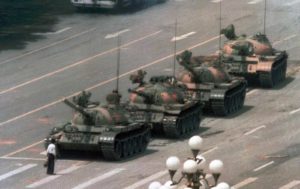
On June 1, Li Peng issued a report titled “On the True Nature of the Turmoil”, which was circulated to every member of the Politburo. The report indicated that students had no plan to leave the square and there was ā€˜Western’ backing for the movement. On the evening of June 3, army units descended upon the city and opened fire at the Wukesong intersection, about 10 Kilometres away from the Square. On 4th June, tanks rolled in Tiananmen Square, the epicenter of protests. The infamous ā€˜Tank Man’ picture from that day remains an iconic reminder of the incident. The official number of people killed due to that military action is a source of speculation since the Chinese government never released figures about that. Dr. Yang lost one of his friends that day and his roommate spent six months in jail after the event.


He channelled his rebellion from the corrupt communists to diseases affecting the human body, finished his medical studies and left the country at the earliest opportunity. He spends most of his time doing research in the United States. Sometimes, the best that a patriot can do for his country, is to leave it.

Caste in US medicine?

My last name ā€œTheetha Kariyannaā€ has its origin from a small village Theetha and added to it is my dad’s name Kariyanna (a local folk god). Back in my school days, the name was weird to my friends as the name Kariyanna also literally translates to ā€œblack brother.ā€ As a kid who was hesitant to loudly say his name clear and loud, I have grown up to say my name loudly with pride as I often do: ā€œHello there, I am Dr. Kariyanna, your heart doctor today.ā€ I was likely hesitant to say my name loudly because of its literal translation and the fact that it easily discloses my roots in the Kuruba community — sheepherders of south India who fall into the shudra category of the caste system. The fear and hate for the caste system started very early on in my life.

The caste system is thriving in medicine in the U.S.Ā viaĀ  Continue reading Caste in US medicine?

Swara Bhaskar’s comments on Pakistan the Failing State

https://youtu.be/QYKxr7gW8Ho?t=15m

Swara Bhaskar doubles down on her Pakistan commentsĀ that Indians shouldn’t care what the unsecular failing Pak state does.

I don’t have an opinion on her particular remarks but Pakistan was wrong to ban Veere di Wedding.

Otherwise I agree with Rajeev Masand’s masterful review where he gave it a 2 out of 5 though V&I agree it should be a 3.

Continue reading Swara Bhaskar’s comments on Pakistan the Failing State

Is American culture sharply increasing crime?

The US is currently experiencing the second largest increase in crime since statistics began to be tabulated, the largest increase in crime being in the 1960s and 1970s. FromĀ “Crime in California 2016” Table 5, page 9 in document, page 13 in PDF, the total number of forcible rapes in California increased by 49.3% between 2014 (8,562) to 2016 (12,785). From Table 1, page 5 in the document, page 9 in the PDF:

  • Homicides increased 13.7% between 2014 (1,697) and 2016 (1,930)
  • Robberies increased 12.6% between 2014 (48,650) and 2016 (54,769)
  • Aggravated Assault increased 13.8% between 2014 (91,681) and 2016 (104,307)

To better understand the massive US crime wave, I decided to calculate crimes committedĀ  by various ethnic groups.

This article will use California crime data since US national level data on crime for Latino Americans and Asian Americans is usually not publicly released by the US government; perhaps for fear of what such data would show. I suspect that US and Canadian nationwide data would show similar trends. California demographic data by ethnicity is taken fromĀ 2015 US Census Bureau estimates.Ā FromĀ “Crime in California 2016” Table 30, page 33 in document, page 37 in PDF, “Felony and Misdemeanor Arrests” 2016:

  • Caucasions were 4.99 times more likely to be arrested than Asians
  • Hispanics were 5.91 times more likely to be arrested than Asians
  • Blacks were 17.04 times more likely to be arrested than Asians
  • Non Asian Others (mostly native Americans) were 3.38 times more likely to be arrested than Asians

Arrest data by Asian country are also available; but Asians commit so few crimes that such data would be skewed by the law of small numbers. However you are free to research it yourself. The spreadsheet used for these calculations is available upon request.

Total crimes committed by caucasions, hispanics, blacks and “other” are released by category. “Other” is not broken down into Asian and non Asian other. However if we assume that non Asian others commit 3.38 times as much crime as Asians (a stretch to be sure), then:

Total homides by race fromĀ “Crime in California 2016” Table 31, page 34 in document, page 38 in PDF:

  • Caucasions were 2.44 times more likely to commit homicide than Asians
  • Hispanics were 4.44Ā times more likely to commit homicide than Asians
  • Blacks were 17.23Ā times more likely to commit homicide than Asians

Total robbery by race:

  • Caucasions were 4.63 times more likely to commit robbery than Asians
  • Hispanics were 7.96 times more likely to commit robbery than Asians
  • Blacks were 44.19 times more likely to commit robbery than Asians

Total rape by race:

  • Caucasions were 3.13 times more likely to commit rape than Asians
  • Hispanics were 5.44 times more likely to commit rape than Asians
  • Blacks were 12.24 times more likely to commit rape than Asians

Total assault by race:

  • Caucasions were 4.44 times more likely to commit assault than Asians
  • Hispanics were 5.48 times more likely to commit assault than Asians
  • Blacks were 15.44 times more likely to commit assault than Asians

Total kidnapping by race:

  • Caucasions were 3.92 times more likely to commit kidnapping than Asians
  • Hispanics were 6.52 times more likely to commit kidnapping than Asians
  • Blacks were 18.42 times more likely to commit kidnapping than Asians

If we assume that non Asian others are 3.38 times more likely to be incarcerated than Asians, then from 12.31.2.10:

  • Caucasions were 4.18 times more likely to be incarcerated than Asians
  • Hispanics were 5.8 times more likely to be incarcerated than Asians
  • Blacks were 25.2 times more likely to be incarcerated than Asians

Continue reading Is American culture sharply increasing crime?

Brown Pundits