Interview with a Tiananmen Square survivor

It has been 29 years since the Tiananmen Square incident, a students revolt that shocked the world, especially the photo of a young man standing in front of a tank.
I was working at a big cancer hospital last year and by complete accident, found a guy in the faculty who was at Tiananmen Square and escaped China in eary 1990s. I talked to him about it last year and an account of that was published in Daily Times. I changed some names and places due to privacy concerns.

Doctor Yang doesn’t look like a typical revolutionary. A diminutive, well-dressed man with an unassuming aura, he doesn’t fit the stereotype of an agitator. However, he has been a rebel at heart for a very long time. At the age of ten, he asked the local communist party leader why the fruits of liberalisation of economy seem to fall in the laps of party members only. Lucky for him, the communist leader was a friend of his father and he escaped any punishment for such ‘rebellious’ ideas. Growing up in the Chinese countryside during the 1980s, he was destined take over the farming job his father had performed before him. The family fortune had faced an about-turn after the ‘Revolution’ in 1949. His grandfather, a school teacher, was branded as ‘bourgeoisie’ and thus an enemy of the people. His father had to take refuge with his in-laws, in order to escape the wrath of the ‘Revolutionary’ government. Doctor Yang was lucky enough to get admission to a prestigious medical college in Beijing where he pursued his undergraduate studies. During the second year of his undergrad studies, an incident changed him forever. He was not a politically active student but he had decided to protest alongside his comrades during the months of May and June, 1989.


The winds of change were sweeping the world as the decades-long cold war between United States and Soviet Union was coming to an end. After the disastrous reign of Stalin, Khrushchev and Brezhnev had steadied the ship but mass scale industrialisation and social engineering had led to a society on the brink of failure. In China, Chairman Mao had presided over one of the biggest man-made famines in the history of humankind, in addition to subjecting his citizens to the ‘Cultural Revolution’. The United States had witnessed its own sociocultural changes in the immediate post-World War Two era which unleashed the combined genie of consumerism and marketing. By the 1980s, the United States was progressing economically while the Soviet economy was stagnant and China, under Deng Xiaoping, had decided to liberalise the economy. The focal points of these reforms were Hu Yaobang and Zhao Ziyang, who furthered the agenda set by Deng Xiaoping. Mr. Xiaoping is credited as the architect of a new brand of thinking that combined socialist ideology with pragmatic market economy whose slogan was “Socialism with Chinese Characteristics”. Deng opened China to foreign investment and the global market, policies that are credited with developing China into one of the fastest-growing economies in the world for several generations.

The liberalisation project in China faced numerous obstacles created by the ancien regime (including Li Peng, an adopted son of Zhou En Lai). Deng, instead of falling on the sword himself, credited Hu Yaobang for the changes. When widespread student protests occurred across China in 1987, Hu’s political opponents successfully blamed him for the disruptions, claiming that his “laxness” and “bourgeois liberalization” had either led to, or worsened, the protests. Hu was forced to resign as Party general secretary in 1987, but was allowed to retain a seat in the Politburo. Meanwhile, Hu’s standing among the youngsters had skyrocketed and they admired his fortitude and personality. Hu passed away on April 15th, 1989. A day after his death, a small-scale demonstration consisting of primarily college students, commemorated him and demanded that the government reassess his legacy.


Doctor Yang was among the students who thronged the streets of Beijing, protesting against the government. The protests starting in April, mushroomed into a daily occurrence until Primer Li Peng declared Martial Law in Beijing on 20th May. Around 250,000 soldiers were present in the capital following the order. Tens of thousands of demonstrators surrounded military vehicles, preventing them from either advancing or retreating. The troops were ordered to stand down after four days. The student leaders of the movement including Liu Xiaobo (who recently passed away while in custody of the Chinese government) wanted to turn the protests into a pro-democracy movement.


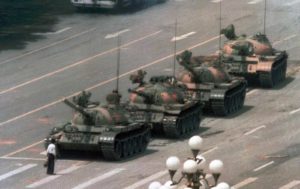
On June 1, Li Peng issued a report titled “On the True Nature of the Turmoil”, which was circulated to every member of the Politburo. The report indicated that students had no plan to leave the square and there was ‘Western’ backing for the movement. On the evening of June 3, army units descended upon the city and opened fire at the Wukesong intersection, about 10 Kilometres away from the Square. On 4th June, tanks rolled in Tiananmen Square, the epicenter of protests. The infamous ‘Tank Man’ picture from that day remains an iconic reminder of the incident. The official number of people killed due to that military action is a source of speculation since the Chinese government never released figures about that. Dr. Yang lost one of his friends that day and his roommate spent six months in jail after the event.


He channelled his rebellion from the corrupt communists to diseases affecting the human body, finished his medical studies and left the country at the earliest opportunity. He spends most of his time doing research in the United States. Sometimes, the best that a patriot can do for his country, is to leave it.
Caste in US medicine?

My last name “Theetha Kariyanna” has its origin from a small village Theetha and added to it is my dad’s name Kariyanna (a local folk god). Back in my school days, the name was weird to my friends as the name Kariyanna also literally translates to “black brother.” As a kid who was hesitant to loudly say his name clear and loud, I have grown up to say my name loudly with pride as I often do: “Hello there, I am Dr. Kariyanna, your heart doctor today.” I was likely hesitant to say my name loudly because of its literal translation and the fact that it easily discloses my roots in the Kuruba community — sheepherders of south India who fall into the shudra category of the caste system. The fear and hate for the caste system started very early on in my life.

The caste system is thriving in medicine in the U.S. via  Continue reading Caste in US medicine?

Swara Bhaskar’s comments on Pakistan the Failing State

https://youtu.be/QYKxr7gW8Ho?t=15m

Swara Bhaskar doubles down on her Pakistan comments that Indians shouldn’t care what the unsecular failing Pak state does.

I don’t have an opinion on her particular remarks but Pakistan was wrong to ban Veere di Wedding.

Otherwise I agree with Rajeev Masand’s masterful review where he gave it a 2 out of 5 though V&I agree it should be a 3.

Continue reading Swara Bhaskar’s comments on Pakistan the Failing State

Is American culture sharply increasing crime?

The US is currently experiencing the second largest increase in crime since statistics began to be tabulated, the largest increase in crime being in the 1960s and 1970s. From “Crime in California 2016” Table 5, page 9 in document, page 13 in PDF, the total number of forcible rapes in California increased by 49.3% between 2014 (8,562) to 2016 (12,785). From Table 1, page 5 in the document, page 9 in the PDF:

  • Homicides increased 13.7% between 2014 (1,697) and 2016 (1,930)
  • Robberies increased 12.6% between 2014 (48,650) and 2016 (54,769)
  • Aggravated Assault increased 13.8% between 2014 (91,681) and 2016 (104,307)

To better understand the massive US crime wave, I decided to calculate crimes committed  by various ethnic groups.

This article will use California crime data since US national level data on crime for Latino Americans and Asian Americans is usually not publicly released by the US government; perhaps for fear of what such data would show. I suspect that US and Canadian nationwide data would show similar trends. California demographic data by ethnicity is taken from 2015 US Census Bureau estimates. From “Crime in California 2016” Table 30, page 33 in document, page 37 in PDF, “Felony and Misdemeanor Arrests” 2016:

  • Caucasions were 4.99 times more likely to be arrested than Asians
  • Hispanics were 5.91 times more likely to be arrested than Asians
  • Blacks were 17.04 times more likely to be arrested than Asians
  • Non Asian Others (mostly native Americans) were 3.38 times more likely to be arrested than Asians

Arrest data by Asian country are also available; but Asians commit so few crimes that such data would be skewed by the law of small numbers. However you are free to research it yourself. The spreadsheet used for these calculations is available upon request.

Total crimes committed by caucasions, hispanics, blacks and “other” are released by category. “Other” is not broken down into Asian and non Asian other. However if we assume that non Asian others commit 3.38 times as much crime as Asians (a stretch to be sure), then:

Total homides by race from “Crime in California 2016” Table 31, page 34 in document, page 38 in PDF:

  • Caucasions were 2.44 times more likely to commit homicide than Asians
  • Hispanics were 4.44 times more likely to commit homicide than Asians
  • Blacks were 17.23 times more likely to commit homicide than Asians

Total robbery by race:

  • Caucasions were 4.63 times more likely to commit robbery than Asians
  • Hispanics were 7.96 times more likely to commit robbery than Asians
  • Blacks were 44.19 times more likely to commit robbery than Asians

Total rape by race:

  • Caucasions were 3.13 times more likely to commit rape than Asians
  • Hispanics were 5.44 times more likely to commit rape than Asians
  • Blacks were 12.24 times more likely to commit rape than Asians

Total assault by race:

  • Caucasions were 4.44 times more likely to commit assault than Asians
  • Hispanics were 5.48 times more likely to commit assault than Asians
  • Blacks were 15.44 times more likely to commit assault than Asians

Total kidnapping by race:

  • Caucasions were 3.92 times more likely to commit kidnapping than Asians
  • Hispanics were 6.52 times more likely to commit kidnapping than Asians
  • Blacks were 18.42 times more likely to commit kidnapping than Asians

If we assume that non Asian others are 3.38 times more likely to be incarcerated than Asians, then from 12.31.2.10:

  • Caucasions were 4.18 times more likely to be incarcerated than Asians
  • Hispanics were 5.8 times more likely to be incarcerated than Asians
  • Blacks were 25.2 times more likely to be incarcerated than Asians

Continue reading Is American culture sharply increasing crime?

Review: The Spy Chronicles

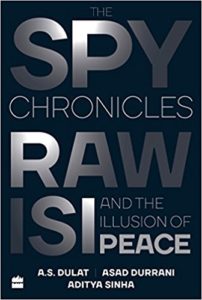
This is a review of “The Spy Chronicles” (not by me, but by our regular contributor Dr Hamid Hussain), a recent book co-authored by two former chiefs of ISI (the Pakistani intelligence agency) and RAW (the Indian intelligence agency). The book has generated some controversy (a lot of it far-fetched and irrational) and the Pakistani author (Retired General Asad Durrani) has been called to GHQ to provide an explanation and has been barred from leaving the country until an enquiry (conducted by a 3 star general) has been conducted.

The review is by Dr Hamid Hussain.

The full title is: Spy Chronicles: RAW, ISI and the Illusion of Peace. A. S. Dulat, Assad Durrani and Aditya Sinha (Delhi: Harper Collins), 2018.

This book is neither a memoir nor an organized attempt to explain a theory. It is essentially a transcript of conversations. It covers India Pakistan relations, Kashmir, Afghanistan and other general regional and international topics. Two informed individuals from rival countries engaged in a candid conversation and some of their views are not fully in line with the official stance of their respective countries.
In view of unresolved issues between India and Pakistan, there have been several international attempts to bring high former officials of both countries together for dialogue. One effort was to bring former intelligence officials of both countries together. This effort called ‘Intel Dialogue’ was organized by the University of Ottawa. Dulat and Durrani met each other during these ‘Track II’ efforts and developed a kind of friendship. Continue reading Review: The Spy Chronicles

World War 2’s impact on the racial balance of the world

This clip was interesting in WW2’s effect on the racial demographics of the West and white supremacy (that all Western powers including the Allies were keen to maintain).

Much as we lionise the role of Britain in this country for both World Wars; there is a feeling we are living in the aftermath of a massive decompression (lingering on because the Sovereign is still a living link to that period).

The hubris of Empire ultimately culminated in a reality where white people had to share the world and more importantly power. Unless there is a string of right-wing authoritarianism, genocide and/or ethnic cleansing the West is now perpetually multi-racial and multi-ethnic.

As the commentator above makes the point the first coloured migrants were “invited” to help rebuild society in the wake of post-war. It’s an important to remember that it’s rather churlish to invite a generation, then try to somehow disenfranchise them and then tell their children to go “back home.”

Drinking (alcohol) During Ramadan

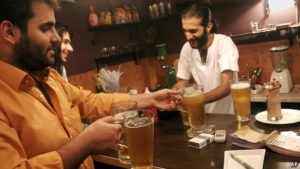
The Washington Post has an article by Khalid Diab about the complications that arise around the issue of obtaining alcohol during Ramadan. Excerpts are posted later. As Shahab Ahmed points out in his magnum opus (What is Islam), drinking alcohol is prohibited in Islam, but it is also an established feature of Islamicate culture; i.e. not only is it regularly used (by a minority), it is celebrated in poems and songs, there are rituals associated with its use, everyone knows someone who drinks and drinkers have their own (albeit not always comfortable) place in society. In some countries (Saudi Arabia, Iran) it is strictly prohibited and users can expect serious penalties if caught, but even in those countries a great deal of regular communal drinking does go on. A few more countries (like Pakistan) have prohibition, but with more exceptions than exist in Iran and Saudi Arabia (non-Muslims and foreigners can buy alcohol, some high end hotels have bars, and so on). In several other countries (Egypt, Tunisia, Indonesia, etc) alcohol is widely available and can be purchased in supermarkets and even in small roadside kiosks (what would be called a Khoka in Pakistan). But in all these countries, there is a visible change during Ramadan: many regular drinkers voluntarily give up alcohol for the month and those who continue to drink may go deeper underground than usual. I have friends who cannot go to sleep without one (or several) nightcaps, but who will not touch  drop during Ramadan. They invariably get drunk on Eid.

Some excerpts from Khalid Diab’s article follow:

Although alcohol is considered haram (prohibited or sinful) by the majority of Muslims, a significant minority drinks, and those who do often outdrink their Western counterparts. Among drinkers, Chad and a number of other Muslim-majority countries top the global ranking for alcohol consumption.

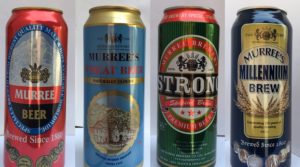
Have a Murree with your curry.. Beer from Pakistan

Continue reading Drinking (alcohol) During Ramadan

Book Review: Genghis Khan and the Making of the Modern World

Jack Weatherford is an anthropologist who has spent many years researching the Mongols in general and Genghis Khan in particular. The book is a very sympathetic portrayal of Genghis Khan and his descendants and their impact on world history. It is a very easy read and is an excellent summary of the rise of this amazing man and his (relatively few; a total population of less than a million) people to greatness. And there can be no doubt that Temujin is one of the most remarkable characters in world history; one of those (few) heroes about whom you can confidently say that without them, the history of his people would have been VERY different indeed. He is a one-man refutation of the idea that individuals, no matter how prominent, do not really matter and all we need to study are the aggregate/impersonal/stochastic processes that drive history. Continue reading Book Review: Genghis Khan and the Making of the Modern World

Sri Lanka, Tamils, Genocide, Ethnic Cleansing?

There have been a few comments with accusations of Genocide, Ethnic Cleansing of Tamils by the Sri Lankan Govt.

First the numbers which are thrown around.

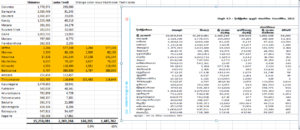
Lankan Tamils Living among Sinhalese
65% of the Sri Lankan Tamils live in Sinhalese majority areas.  After adding up, I was shocked as I was expecting somewhere around 30%.
The numbers are from the 2012 census.  The third column (in Sinhala) are the Indian/Upcountry Tamils.  In comparison less than 1% Sinhalese live in Tamil majority regions.

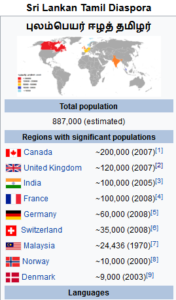
Diaspora Sri Lankan Tamils
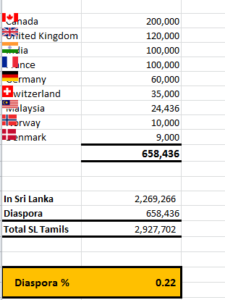
A number that has been thrown is 30% of Sri Lankan Tamils live outside the country.   The numbers say that it is 22%.
Not all of the Diaspora are refugees
a) Some migrate for economic and education reasons
b) The LTTE one child policy.  The LTTE required one child per family to become cannon fodder.   If the family had money, the LTTE would arrange to smuggle the child out to a Western country as a refugee. Thereafter the refugee would have to make monthly donations too.


Religious War
The SL Army or the Budhists would never intentionally destroy a Hindu Temple.  The Buddhist, specially those in the Army make vows and pray to Hindu gods for their protection.  Buddha cannot provide protection (like a God), he is a teacher in the Theravada Tradition.  No question Hindu temples were shelled in the North and East when the LTTE used them as shields.  During the last couple of years the Army has been engaged in rebuilding and repairing Hindu Temples

ex LTTE leaders as Govt Ministers
Chief Minister of Sri Lanka’s Eastern Province Sivanesathurai Chandrakanthan, popularly known as Pillayan and Vinayagamoorthy Muralitharan, also known as ‘Colonel’ Karuna was a deputy minister in the Rajapakse govt.  Karuna was responsible for killing of 600 Sinhalese and Muslim police officers who surrendered to the LTTE.   Ahh the vagaries of power politics.

Some Links, all by Tamil authors.

Mass expulsion of Muslims from Batticoloa, Mannar and Jaffna
http://dbsjeyaraj.com/dbsj/archives/26412

Rajini Rajasingham Thiranagama: Unforgettable Symbol of Sri Lanka’s Tamil Tragedy
http://dbsjeyaraj.com/dbsj/archives/33112

The Broken Palmyra, the Tamil Crisis in Sri Lanka, An Inside Account 1992by Rajan Hoole (Author), Daya Soma sundaram (Author), K. A. Sritharan (Author), Rajani Thiranagama (Author)
https://www.amazon.com/Broken-Palmyra-Crisis-Inside-Account/dp/B000OGS3MW/

Sinhalization of the North and the Tamilzation of the South
http://www.srilankaguardian.org/2011/06/sinhalization-of-north-and-tamilzation.html

Other articles by Sebastian Rasalingam
https://www.slguardian.org/category/clms/columnists/sebastian-rasalingam/page/2/

Brown Pundits