
Books on Indian history without recency bias
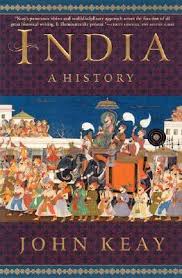 One of the problems with Indian history is that a lot of the books are strongly biased toward the Muslim and colonial periods. There are numerous reasons for this. People are interested in the Muslim and colonial periods for nationalist and anti-nationalist reasons, if that makes any sense.
But some of it is simply source availability of. When I am curious about the period between the Han dynasty and the Sui-Tang I’ll pick up a book like China between Empires: The Northern and Southern Dynasties. In contrast The Gupta Empire is an out of print monograph.
Because at some point the Rakhigarhi DNA results will be coming out I want to do some more reading on ancient and medieval (using those epochs loosely in the South Asian context) history, but so much of it is archaeological because of the thin historiographical tradition in South Asia.
Do readers have suggestions?
(Please calibrate to my level of knowledge. I’ve already read Early India)
Kargil War
This topic comes up every once in a while on twitter, so I am reposting an old post with a few new links and videos added at the end.. The main point is simple: Musharraf and a few of his cronies (Javed Hasan, General Aziz, General Mahmood), without having thought it through, conducted a foolish operation in Kargil that cost hundreds of lives on both sides and set back (perhaps destroyed forever) the chances of peace between India and Pakistan (set in motion by Vajpayee’s historic bus journey to Lahore). The operation was not only a strategic disaster, it was a tactical disaster..
First, some links with details about the operations: Continue reading Kargil War
3 questions about BP readers
I liked sbakkurum’s bio and it set me wondering about our readers/regular handles..
(1.) are you male or female?
(1b.) Do we have female commentators or do we have female readers?
(2.) is Kabir the only commentator with a liberal arts education?
(2b.) is anyone not a STEMMIE?
(3.) are you desi?
(3b.) what is ur ethnic origin?
(3c.) if you are Hindu; are you Upper Caste?
(3d.) If not are you Dalit or identify as a historically backward/oppressed caste?
(Bonus) how are you privileged in a South Asian context? How are you privileged (or not) in a Western context? How do you check your privilege?
11 dead in Thoothukudi (Tuticorin) Protests
Multi nationals are the same all over the world, exploitative.
10 persons were shot dead when police opened fire on a rally against a Sterlite copper plant.
As anger and resentment against Tuesday’s police action continued to smoulder, the Tamil Nadu government ordered several measures to control the unrest. Internet services were suspended in Thoothukudi and neighbouring districts of Tirunelveli and Kanyakumari .
Tuesday’s violence came on the 100th day of demonstrations against the plant, which environmentalists and residents claim is contaminating water sources — a charge the company (Vedanta Resources) denies.
The plant, one of India’s largest such facilities, has had a troubled history since it began operations in 1996. People have blamed it for their failing health and a major gas leak in 2013 led the Supreme Court imposing a Rs 100- crore fine. The plant has been closed down repeatedly in the past two decade, the last time by the Madras high court in 2013 over similar pollution concerns.
https://thewire.in/rights/tuticorin-sterlite-copper-plant-vedanta-modi-human-rights
For “Strategic Reasons”, Did Britain Want Pakistan in 1947?
I got these via an email from an author who apparently wishes to remain anonymous. Since any post about partition gets a lively debate going, I though I would put these up (again, I did not write these points, I am just the messenger 🙂 ):
On the issue of what Britain wanted to gain by choosing a divided India over a united India, one needs to keep in mind some of the points mentioned below:
After the End of The Second World War
A. Soviet Union was the strongest country in Europe.
B. It had already amalgamated central Asian republics into it.
C. In Europe it merged traditional Russian influence states like Ukraine, Latvia, Belarus etc.
D. It had the largest area under occupation in Europe where it had no
plan to release them from its influence.
E. East Germany, Poland, Yugoslavia, Checkosolovakia , Romania,
Albania Austria , Hungary etc were all under soviet influence.
F. To remain neutral, Austria had to work really hard to remain
equidistant from the West and the Soviet Union.
G. Afghanistan had been historically unstable and Soviet Union had
reached Uzbekistan, Tajikistan etc on its northern border.
H. The west tried really hard to keep Iran in their sphere of influence.
I. UK, France were nearly bankrupt because of the war and could not influence global geopolitical space.
J. US filled up the boots of UK and France as it was the only country in Western Hemisphere which came out more powerful and with a robust
economy at the end of the war.
K. Soviet Union despite its spread lacked a good warm water port or
access to seas in warmer zones.
L. Practically it was the largest landlocked entity ever created in history.
M. US and UK were apprehensive that Soviet Union will try to gain
access to warm seas through Afghanistan and western India.
N. It is said that both US and UK approached Congress for support to
create bases in NWFP, FATA, Balochistan and Kashmir to contain the
expansion of Soviet Union.
O. Congress refused to oblige or agree to the request.
What was happening in India :
A. In 1942 congress launched quit India movement, which was suppressed
and entire leadership of congress was put behind bars.
B. The Congress leadership spent entire war in Jail or house arrest.
C. But Muslim League and Jinnah supported the war efforts and were in the
forefront of collecting support , asking people to join war effort etc.
D. Jinnah opposed quit India movement and was with Britain during this time.
E. He along with other Muslim Leaguers were the only Indian leaders who were out of jail.
Speculation :
A. It is speculated that Jinnah was the only major leader who was in
direct and continuous contact with the British government.
B. It is speculated that the viceroy sounded off Jinnah when he took any
decision about the war effort and India’s participation in the war.
C. It is speculated that the relationship between Jinnah and viceroy and
British senior officials was most cordial.
D. It is speculated that during this period Britain sounded off Jinnah
on bases in northwest India to which Jinnah had no problems and
readily agreed but also cautioned that he was a minor player who could not
gurantee such a stance in an independent India.
E. It is said that Mountbatten was given 2-3 years to find a settlement about India but it is speculated that intelligence sounded Britush government on Jinnah’s illness and it is speculated that British knew that Jinnah had end stage TB of lungs and he may not survive 3 years.
F. It was also known that once news of his illness is made public, Congress will play waiting game to see him dead than decide.
G. It is speculated that when Jinnah came to know that Liaqat Ali Khan
knew about his illness and had tried to sell this information to
Bhulabhai Desai he was so angry and upset with Liaqat that he did not
speak to him for a long time.
H. It is speculated that news of Jinnah on the last stage of TB had spooked the British establishment so much that the date of independence was advanced to 15 August 1947 through a decision of the Cabinet, from June 1948, which had been approved by the British parliament.
Related reading:
The Shadow of the Great Game: The Untold Story of India’s Partition by Narendra Singh Sarila. Reviewed here.
Geo-political and Strategic Implications related to the Emergence of the Indian and Pakistani Nation. A paper whose full text can be found here.
Facts are Facts: The Untold Story of India’s Partition by Wali Khan. The book can be downloaded here.
Continue reading For “Strategic Reasons”, Did Britain Want Pakistan in 1947?
Review: 12 Rules for Life (Jordan Peterson)
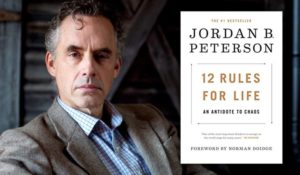
This is not the sort of book that usually interests me, but what with the controversy surrounding this man, I decided to look it up. To my surprise, when I requested it at my local library I discovered that I was 67th on the hold list! The man has clearly struck a chord; I have never seen a hold list that long in our (rather small) library. Luckily the system seems to have bought more copies, so I only had to wait a couple of months to get my copy. The book lists 12 rules that are an “antidote to chaos”. Somewhat to my surprise, they are generally good rules, though some of them are rather obvious, and even a bit hokey. Since many of you are not going to read the book, I will list them here:
- Stand up straight with your shoulders back
- Treat yourself like someone you are responsible for helping
- Make friends with people who want the best for you
- Compare yourself to who you were yesterday, not to who someone else is today
- Do not let your children do anything that makes you dislike them
- Set your house in perfect order before you criticize the world
- Pursue what is meaningful (not what is expedient)
- Tell the truth – or, at least, don’t lie
- Assume that the person you are listening to might know something you don’t
- Be precise in your speech
- Do not bother children when they are skateboarding
- Pet a cat when you encounter one on the street
Continue reading Review: 12 Rules for Life (Jordan Peterson)
How should we respond if someone says “mean mad asian man”?
Americans, unusually provincial by global standards, are generally unaware of the degree to which the rest of the world watch what Americans say. My fear is that attitudes such as Mr. Eric Dyson’s will fuel and exacerbate global anti-Americanism. Mr. Eric Dyson is personifying the caricature of the “Ugly American”.
Continue reading How should we respond if someone says “mean mad asian man”?
Comment of the Day
Since BP in general lacks positively-inclined Pak-nuanced voices; I thought this was an important comment to highlight.
There was more than Jinnah involved in the ‘Pakistan Movement’ even if it was a one man show when it came to actual negotiations with the British.
Maulana Shabbir Ahmad Usmani was instrumental in mass mobilization (using Islam khatray mein heh! naturally) and countering Congress’s anti-Jinnah propaganda campaign orchestrated by Maulana Husain Ahmad Madani of the JUH. This was the so called Muttahida Qaumiat movement that held that Jinnah and Aligarh Islamic Modernism was more dangerous than an independent India dominated by the Hindus.
In a nutshell, the insurmountable problem was simply this. Jinnah and some others (non-caste Hindus) wanted absolute safeguards for minorities before independence; Congress and caste-Hindus wanted independence first and then would decide whatever safeguards the minorities would get. As a part of this, Jinnah and others wanted a weak Centre and power devolution to the provinces/groupings while Congress (Nehru and Patel but not Gandhi, who was a hopeless romantic when it came to actual politics anyway) wanted a strong Centre and the provinces to have whatever powers the Centre didn’t want.
If you look at the Cabinet Mission Plan, that is EXACTLY what is being offered: a weak Centre. Of course Congress rejected it and Jinnah embraced it.
What must always be remembered is that the Pakistan Movement meant many different things to many different people.
Mein Kashmiri Brahmin hoon
His accent is obviously spot on; the fact that he’s Australian and has an American accent is a good example.
I find the Coloniser privilege in this video to be a bit OTT. Imagine if it was a black man speaking perfect Hindustani; there’d really be no interest. All a white man has to do is master the accent and then he can pass off as Kashmiri Brahmin; one of the “highest” stratas in Indian society.
It’s interesting that with Prince Harry marrying Meghan Markle; British society is really going the other way. The Royal Family, which is emblematic of privilege, is now connecting across the races and generations towards a new identity. It may very well be that the King George’s future Royal Cousins wouldn’t even be able to pass for Kashmiri Brahmins (they would be upto 25% Afram so who knows what they’d look like).
How many Desi parents would accept Meghan Markle for a Bahu?
Please see starting 1 hour, 4 minutes in:
A serious and important question for the entire Brown Pundit community: Should we do anything if someone such as Mr. Micheal Eric Dyson calls us a:
“mean mad asian man and the viciousness is evident”?
I don’t know the answer, but the attack is coming. Already a plurality of the world’s billionaires are Asian. And soon a majority will be Asian. When I was fifteen I saw academics from American university attack “Asian fat cats”; and call Hindus/Buddhists “Nazis” and “Fascists.” Back then American academics were anti conservative muslim too (81% of American muslims voted for GW Bush in 2000).
Mr. Jordan Peterson is not an American and very likely most of his fans are not Americans. Mr. Michael Eric Dyson acknowledged knowing almost nothing about Jordan Peterson personally and launched this attack abroad, in Toronto, before a very large Jordan Peterson supportive crowd. Mr. Dyson knew the foreign crowd would boo him. He said it anyway.
If Jordan Peterson with his enormous international prestige can be attacked in this way, any of us can be attacked as a “mean mad asian man” far more easily. [Asian woman can be attacked as a “mean mad asian.”]