Israelis love Indians and Indians love Israelis

Notice how Israelis are very respectful of and affectionate toward Bharat and Sanathana Dharma. No post modernist slander about right wing Hinduism, Sikhism, Buddhism being associated with Nazism. Israelis love to visit India and Indians love to visit Israel:

https://www.youtube.com/watch?v=LqSMoGMJZLg

India is probably the most pro Jewish and least anti Jewish country on earth. As the Brown Pundit Slapstik wrote,

http://www.brownpundits.com/2018/01/14/welcome-mr-netanyahu/

India swooned over Bibi during his visit to India. By contrast America is having a surge in anti Jewish sectarian bigotry.

Pakistan use to be very pro Jewish too 1947 through the 1960s

as per Tarek Fatah. Tarek Fatah in these two videos explains why India and Israel are such natural and good friends.

My hope is that PM Modi and the Lokh Sabha pass legislation that allows any Jewish person in the world–provided they can pass vetting related to crime–a pathway to Indian permanent residency and over the long run Indian citizenship. This would do a lot to reduce the fear most Jewish people feel about intense global anti Jewish bigotry.

Anti Jewish Bigotry

India has no more reliable friends and allies than the Jewish people and the Israeli people.

Of course Israelis need to do right by the Palestinians. India can best help the Palestinians by being Israel’s best friend. India should simultaneously be best friends forever or BFF of both Israelis and Palestinians.

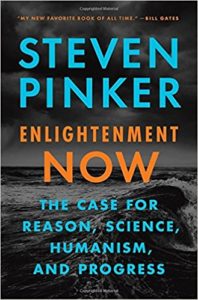
Review: Enlightenment Now. Steven Pinker.

I have not so much read the book as scanned it. For most of the book he builds a case for his basic claim that life, for most people, has improved to an amazing extent in the last 200 years and we can thank science, reason and humanism for all this progress.
I assume he has to provide so much data because he knows this is an unfashionable opinion within the postmodern liberal intellectual elite and this bothers him. By listing all these facts and showing us all these graphs, he thinks he can convince even his most skeptical critics that progress is real, and that it is much more widely distributed than most people imagine. Is there something missing from his account of progress? I think there definitely is. I do not disagree with his claim that progress is real. Hunger, disease, violent death, these are not trivial concerns. The tremendous progress in these areas is real, and it is meaningful. Intellectuals who criticize Pinker by pointing to persistent or new forms of ill health, physical suffering or violence should take a break and actually read the book, they will find that he has the data and it is not bad data. Either argue about his data with better data of your own, or argue on some OTHER grounds. On THESE grounds, he is solid. Continue reading Review: Enlightenment Now. Steven Pinker.

Should Hinduism survive?

I have read the annhilation of caste by Ambedkar in my teens,read Gandhiji’s Harijan ,one copy, where he answers to some perverse people who justify untouchability .I have read the horror stories of human sacrifices in parts of India coming from parts of Hinduism. And I have been revolted beyond measure and have at various times felt the sheer horror of it all. And I have abandoned Hinduism, I gave up my traditional faith, I have for various other reasons including personal ones come back to it, but in a different way. With more a sense of nyaya/vaisheshika, the need to rid oneself of delusions. I think untouchability, caste violence and violence in general against women, many of these are horrors we still live with and if One cannot get rid of these horrors in 150 odd more years. or not make very significant progress, then one must end it for it is not good and is not defensible. It has the right to flourish as that had been hijacked by historic forces. If it doesnt work in the end, then it must end too.

I once began reading the book of arundhati roy,” listening to the grass hoppers”, even after I had become atheist, I was in depression , and the book made it much worse, I didnt finish that book, I still have it somewhere. If there is nothing to be salvaged knowing all the worst there is, then there is nothing there to value any of it. But one shouldnt be ignorant. And make choices on that. There is something in its philosophies, if not vedanta, then nyaya, if not nyaya, then bhakti, if not bhakti, then yoga, if not yoga, then , karma yoga. Or may be a combination of many. It has a richness in its diversity, whether it be ramanuja who took a shudra as his guru,invited him to his home for meals and was not there when he did come, his wife served but later washed the home and bathed herself, and ramanuja on returning didnt like this, many such incidents pushed him to become monk instead tried to work to bring this to end.

There are problems in all people, in him and others as well, but this here points to atma stuthi(conscience) and sadachara( ethics of good people from all classes) , while these methods were hierarchically less in value compared to texts, They in time as more texts were written led to movements of various gurus possible.For ethical learning could happen with out the texts from the good people as well. This was the one good escape route for more general ethical learning that played a part in bhakti movement. While it is interesting that the earliest dharma shastra apastambha sutra was better than the later manusmriti, for it put mutually agreed ideas superior to vedas, for he considered “dharma and adharma do not fly around declaring this is righteous and this isnt, even gods and demi gods cannot declare so.”

As patrick olivelle says, apastambha argued that parts of vedas are lost and one can only infer from the behavior of people to find the true ideal dharma , so one must learn from customs of men and women. On the other hand manusmriti doesnt like reasoning to be the sole basis for declaring moral issues either. So while Hinduism over time began to value different opinions, it didnt find “reasoning” to be the primary source to discover this, Inspite of nyaya being a recognized tradition.

Happy Lahore day

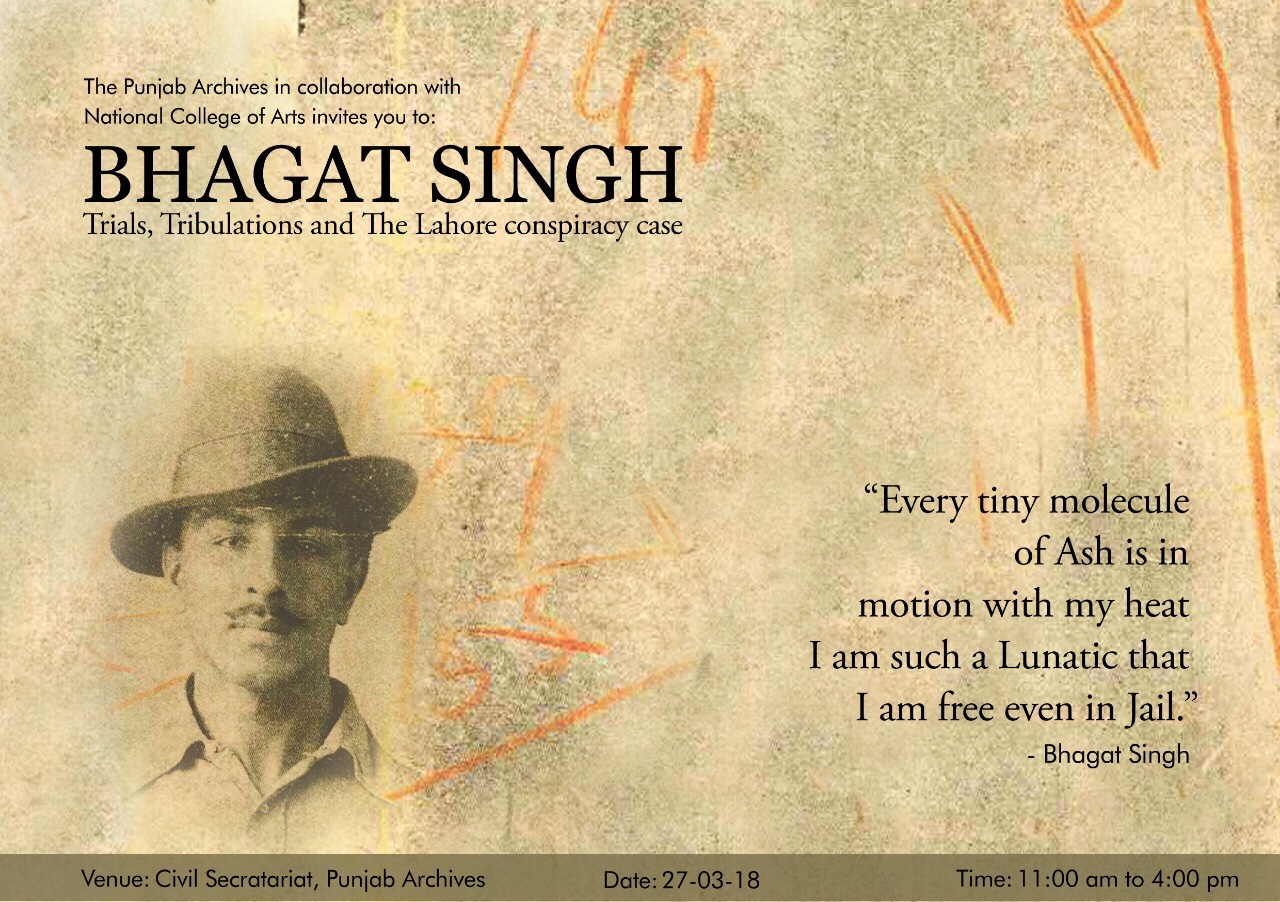
Good to see one of the greatest Lahoris honoured in Pakistan. It’s time Pakistan start to own its history (in a collaborative not confrontational way). I liked his saying though:

Paki Pundits

I’m responding to Kabir’s concerns that this blog is becoming far too Islam-focussed and not in a nice way.

I have been very busy so I’ve been following the threads quite lightly. Furthermore my perspectives are beginning to align online and offline (the advantage of blogging under your own name – difficult to troll).

So while I can appreciate why ethnic Pakistanis such as Kabir & myself may constantly refer back to Pakistan as a reference point, it’s becoming a bit obsessive on this blog.

If the whole point of Brown Pundits is for some commentators to bash Pakistan & Islam then that calls for introspection.

While there can be a healthy debate on whether the Islamic conquests, Partition and Islam are positive or negative influences on South Asia; the contention that Islam is the source of all misery is simply bunk.

Kerala, Tamil Nadu & Sri Lanka are probably the least Muslim regions in the Subcontinent since Islam was brought there by traders rather than conquerors. One could argue that it has much higher HDI than the rest of South Asia (Kerala & SL) but it hasn’t been all that more peaceful (Tamil politics in both countries has been turbulent).

One could of course counterclaim that the modern day polity of India was sullied by long periods of medieval Muslim rule. However Indonesia, Malaysia and even Turkey provide examples of very vigorous & even forward-thinking Muslim polities.

I’m not giving Islam or Muslims a clean chit but to dwell on them excessively, especially when one is not of the culture, smacks of Islamophobia. We have had some interesting discussions on Sri Lanka, caste politics, voting in Gorakhpur and other myriad topics however if the commentariat wants to obsessively continue to discuss Pakistan & Islam then let’s rename this blog to Paki Pundits so that we have a very clear focus..

Husain Haqqani

Is Husain Haqqani one of the best living Hindustani leaders?

Islamoskepticism or Islamophobia

Religions have many aspects to it,what matters for growth is that it comes down to being able to take criticism. If criticism leads to complex arguments, then depending on the nature of those arguments one can make progress, provided they can atleast temporarily keep the religious side interested with the belief that they do have a chance to come through.  So there has to reach a (seemingly) stable equilibrium between the critics and the believers. If this isnt possible then religious believers might find it difficult to sustain belief.

Islam truly is poor in its resources compared to other religions, it is precisely for this reason for its comparative poverty in its expression. Because it is anchored to Mohammad. we need to first find a way to compare between different religions, our understanding of this phenomena of “religion” has been shaped  largely due to christian/western worldview and its impact on how other systems of belief are perceived.Reason why we have many new world isms (Shintoism, Confucianism, Hinduism, Sikhism,Jainism, Buddhism). So lets compare instead by many making different criteria to see where they stand.A kind of card, too many red cards and that religion is the worst. On inequality, Hinduism is worst, on freedoms to criticize , Christianity/Islam are worst, on use of violence for conquest, Islam is again the worst with concept of “Jihad”,so is Christianity. political ambitions,theologically for expansion bringing them into conflict with others, Christianity,Islam are worst.Just look around for christian and Muslim expansion in last 1000+ yrs by both.   Finally we can come to the central pillars of religions which have founders, Jainism Mahavira,Buddhism Buddha, Christianity Jesus,Sikhism ,Islam Mohammad. Continue reading Islamoskepticism or Islamophobia

Pakistan, communists and a stained dawn

Abdul Majeed Abid

Yeh fasal umeedon ki hamdam,

Iss baar bhi ghaarat jaye gi,

Sab mehnat subhon shaamon ki,

Ab kay bhi akaarat jaye gi

(This crop of aspirations

will be ruined once again,

the toil of day and night

will be wasted another time.)

(Faiz, Montgomery Jail, 1955)

The view from jail

The year 2007 was eventful in Pakistan’s recent history. Political upheaval coupled with a rise in terrorism and a lawyers’ movement for the restoration of the judiciary gripped the country for most of the year. Musharraf, the military dictator, had forcibly removed the Chief Justice of Pakistan — sparking a movement led by lawyers across the country. Amidst all this kerfuffle arose a new band called ‘Laal’ with their song ‘Umeed e Seher’ (Hope for a new Dawn). The song became a sort of anthem for the lawyers’ movement alongside slogans against military dictatorship. The song was based on a poem written by Pakistan’s foremost progressive poet Faiz Ahmed Faiz and the band consisted of young academics who openly declared themselves Marxists. One of the band members was the General Secretary of a Communist Party in Pakistan. A communist party in Pakistan? That seems like an oxymoron, does it not?

Continue reading Pakistan, communists and a stained dawn

Brown Pundits