Razib Khan
·
November 2, 2025
·
Comments Off on
|
Insitome’s apps, Regional Ancestry, Neanderthal, and Metabolism, are now priced at only $19.99! |
 |
| June 27th, 2019 |
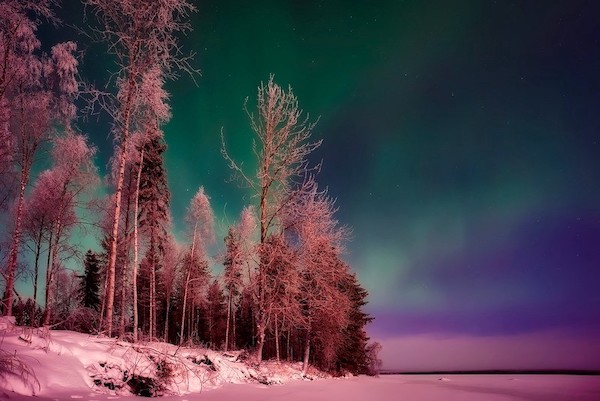 |
Humanity on the edge of the worldWhen the glaciers retreated 10,000 years ago, the far north of Eurasia was finally opened up for human habitation. In Europe, Scandinavia was settled first by our own species. Here they encountered an eerie world of cold dark winters, icy mountains, and rich seas. |
|
Scandinavian Genetic HistoryAs Razib wraps up the second season of The Insight, he talks to Torsten Gunther about what ancient DNA has told us about Scandinavian prehistory. Make sure to subscribe so you don’t miss the beginning of season three! (show notes). Also available on |
|
Copyright © 2018 Insitome 106 East 6th St Suite 230 Austin, TX 78701 USA. If you’d prefer not to receive these emails, unsubscribe. |
From the pre-print of the Narasimhan et al paper, we got hold of 3 ancient Bronze Age samples which the authors contend, based on their genetic ancestry (which had significant levels of AASI ancestry and no Anatolian Neolithic farmer ancestry (ANF)) to have been South Asian in origin.
Since these 3 samples were found outside of the geographical expanse of the Harappan civilization (2 from Shahr-i-Sokhta in Eastern Iran & 1 from Gonur (BMAC) in Turkmenistan), they have been designated as Indus Periphery samples – implicitly under the assumption that they were migrants from the Harappan civilization.
It has been a long time since the Narasimhan et al preprint had come out in 31st March 2018, and we still await the peer-reviewed publication of the paper. However, there are a few things we already know about the final paper. One of these is the fact that the final paper, in comparison to its preprint, will have significantly greater number of samples from Eastern Iran and Central Asia, including as many as 14 Indus Periphery samples.
This is exciting stuff !
More specifically, 10 of these Indus Periphery samples are from Shahr-i-Sokhta are from Eastern Iran and 4 from the site of Gonur in BMAC.
This is a very important information !
Let me explain how it is so.
The Indus Periphery samples have been assumed to be Harappan migrants from South Asia into Eastern Iran and Central Asia, an assumption which is largely correct.
However, the Narasimhan et al paper went one step further and argued that these 3 Indus Periphery samples can be taken as a good sample representation of the entire Harappan genetic diversity which spread over a vast geographical expanse from Afghanistan in the West to Western UP in India in the East and upto the northern half of Gujarat in the South.
Clearly, the mature Harappan civilization had emerged by the assimilation of several distinct but interacting early Harappan cultures. The Early Harappan period is broadly defined by 4 cultural groups –
The Kot Diji and Sothi-Siswal traditions were clearly the dominant cultural traditions in the formation of the Mature Harappan civilization and their sites were also typically larger in size than the other 2 traditions.
There are also greater nuances even within this broad 4-way classification. Therefore it is rather simplistic to assume that the 3 Indus Periphery samples give us a good estimation of the genetic diversity of the Harappans, without identifying the likely geographical origins of these Indus Periphery samples within South Asia.
And the fact that we have 10 Indus Periphery samples from Shahr-i-Sokhta and 4 from Gonur helps us a great deal in narrowing down their geographical origins within South Asia.
Archaeological evidence clearly shows that the site of Shahr-i-Sokhta only began to emerge around 3200 BC (very close in time to 1 Indus Periphery sample from this site which dates to around 3100 BC). And there is a lot of cultural similarities with the Chalcolithic cultural traditions of Baluchistan in the East, which has lead archaeologists to argue that there likely was migration from Baluchistan into Shahr-i-Sokhta.
To put it more directly and clearly, there was a significantly large input from the Chalcolithic people of Baluchistan in the formation of Shahr-i-Sokhta, including migration of people. The ancient DNA evidence has now confirmed it by showing the presence of as many as 10 Indus Periphery samples in Shahr-i-Sokhta (where perhaps the total no. of aDNA samples are unlikely to be more than 20-25).
By the way, hundreds of cattle figurines were discovered from the site of Shahr-i-Sokhta, and all the securely indentified figurines of cattle (more than 600 of them) are of the South Asian Zebu cattle.
The place in South Asia which was most directly involved in the formation of Shahr-i-Sokhta was Baluchistan and therefore it is quite safe to say that the Indus Periphery samples in Shahr-i-Sokhta are also migrants from Chalcolithic cultures of Baluchistan.
Furthermore, Shahr-i-Sokhta and the cultures of Eastern Iran in general and quite possibly Baluchistan as well, are said to have in turn significantly influenced the cultural formation of BMAC. So the 4 Indus Periphery samples from the BMAC site of Gonur could very well have been from these regions in Baluchistan or Eastern Iran in the South.
Now that we have identified the most likely place of origin of the Indus Periphery people within South Asia, let us understand the implications of this in terms of the genetic data.
On the 5th of August the Indian govt announced that it had changed the status of Jammu and Kashmir. I think Professor Christine Fair has written a pretty good summary of the change and its implications (you can see it here), and you can read her article or a host of other articles to get the details (she has a bad rep in Pakistan right now, but I think this article does a very fair job of summarizing the issues involved, if you are a Pakistani nationalists you can ignore her comments about Pakistan, but the rest is still pretty useful in my opinion). Anyway, the bottom line is that the erstwhile state of Jammu and Kashmir is no more. It was created after the Anglo-Sikh wars when the British sold Kashmir to the Dogra ruler and it operated as one of over 500 supposedly independent princely states in British India (the actual level of independence varied, none were truly independent in that a British “Resident” was around to make sure British interests were paramount, but the larger states had a good deal of internal autonomy, with their own armies and judicial systems); it included the vale of Kashmir (where most Kashmri speakers lived) as well as Jammu (mixed population, but dominated by Dogras), Gilgit and Batlstan (mostly Muslim and ethnically and culturally distinct from Kashmir) and Ladakh (Western Tibetan in terms of culture and religion). In 1947 the princely states were told they had to pick either Pakistan or India. The Dogra ruler dithered for a while (presumably because he wanted independence, and would prefer not to join either new state) but when Pakistan organized an invasion by Pakhtoon tribesmen to capture the state, he acceded to India and Indian troops landed to stop the tribal invasion and recapture Kashmir for India. They pushed the raiders back towards Muzaffabad, Pakistan also committed regular troops and the two dominions fought a mini-war for over a year. In late 1948 India took the case to the UN and the two sides agreed to a ceasfire that was supposed to be followed by a plebiscite, but that never happened. Instead both sides consolidated control over respective parts of Kashmir and the cease fire line has held with minor modifications since then. Pakistan insists that India should hold the plebiscite and let Kashmiris determine if they want to be with India or Pakistan. India insists that it is Pakistan that never fulfilled the first requirements for the plebiscite and that since then it has held elections in Kashmir and the issue is now moot. Or something like that, you can read more about the endless legal and procedural wrangles in a 1000 different posts from Pakistan and India and reach your own conclusions, but this post is not about the legal or diplomatic ramifications
In the last post by Razib, there is a lot of psycho-analysing being done by various commentators about what motivates Indians to deny AIT/AMT and support OIT. The underlying assumption being AIT/AMT is gospel truth. But is it so ? And if it is not, questioning the theory and bringing up facts that don’t support this theory should be looked at and discussed in a healthy debate.
Let me in the spirit of that debate share some pieces of evidence that massively undermine the Steppe PIE origin theory and also manages to indicate a possible SC Asian connection & migration to the steppe that is of the pre-Yamnaya stage.
I 
I just read a short but very thought provoking article by Will Dalrymple in the Spectator website (https://spectator.us/algeria-current-colonization/). Some people may find the article a bit off-character from Dalrymple because here he provides a critique of all sort of colonialism and imperialism in history, including Muslim. Anyway, there are several interesting points in the article but I found a particular point very fascinating because although the implication seems huge in history of the Sub-continent, I haven’t much thought about it before. Without further ado,
“In the bloody 1954-62 War of Independence which ended French rule in Algeria, perhaps as many as 25,000 French and one million Algerians lost their lives in Franco-Algerian fighting, a terrible tale brilliantly told in Alistair Horne’s classic study A Savage War of Peace. In contrast, despite horrific death tolls in Hindu-Muslim violence at Partition and the creation of Muslim-only Pakistan, only seven Brits lost their lives in 1947 during the British decolonization of South Asia. The man to thank for this, more than anyone, is probably Lord Cornwallis, the British general who received such an unfair caricature in the Mel Gibson movie The Patriot. Having surrendered British forces in America to Washington at Yorktown in 1781, Cornwallis was recruited by the East India Company to make sure the same never happened in British India. He achieved this by enacting one simple law which made it illegal, except in very exceptional cases such as indigo plantations or hill stations, for British individuals ever to own land in India. This meant no settler class developed, as in the 13 American Colonies or French Algeria. As a result, in 1947, the last British officials were able to board their ships in Bombay harbor with little more than a backward glance, a regretful shrug and a rush to buy leafy bungalows in Tunbridge Wells.”
On my other weblog a long post on how one shouldn’t reduced a group as simply an agent in another civilization’s history, The Native And The Coconut Civilization. This is relevant to some discussions on this weblog: some aspects of Indian/Hindu thought are simply viewed as reflections of Western history and ideas. Obvio