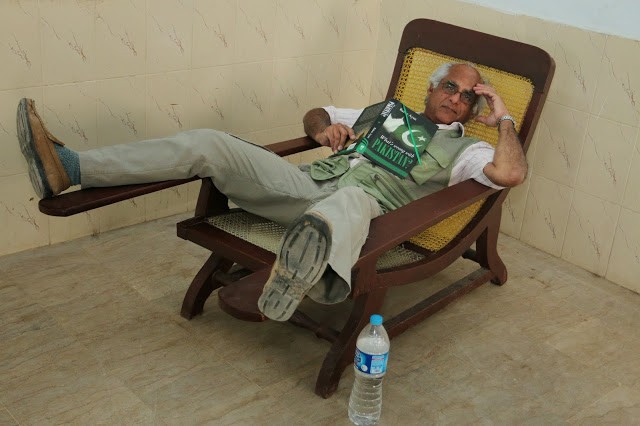
Quick Review: What is Islam, by Shahab Ahmed


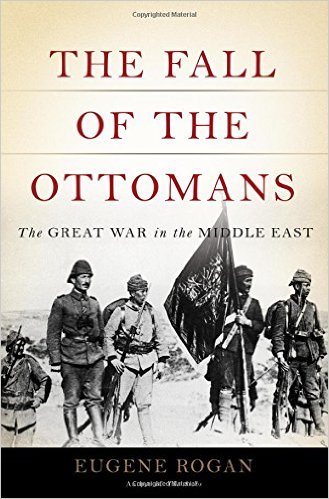
Shahab Ahmed tells us up front that he is not going to answer the question “what is Islam?”. And of course, he does not really do so, but the title (misleadingly) suggests that he will, and in the course of the book, he comes perilously close to trying (and failing) to do so without outright saying he is going to do it. In short, Shahab himself seems confused about what he is trying to achieve here. The book is a description of some (but certainly not all) aspects of Islamic culture as it developed and expanded, especially AFTER the initial Arab phase of empire building. And it is a long argument with various seen and unseen opponents who want to define Islam as some ONE thing. In the course of this argument, Shahab wants to show that Islam was very varied, but he also wants to show that it is not infinitely varied. In the course of an overly long book, he manages to show that Islamicate societies (a term he does not really approve of) had a very wide variety of beliefs and practices, though they also remained anchored within a certain tradition and in continuous argument with particular foundational texts. All of this may be a surprise to extreme puritanical Islamists AND to more or less ignorant anti-Islamists, but should be no surprise at all to anyone else. Why wouldn’t there be a lot of variety? Anyway, if you happen to spend your life arguing with people who have a very monochromatic view of Islam, then you can keep this book handy in order to prove otherwise. It is good for that.


Beyond that, it is a rich compendium of anecdotes (he has read VERY widely and quotes extensively from hundreds of sources) and you will learn a lot about the “Balkans to Bengal complex”, a cultural zone that Shahab Ahmed is particularly fond of and regards as archetypically Islamic. Incidentally, you will also be able to prove to your friends that Islamic history is characterized by an official/theocratic prohibition of alcohol AND a simultaneous cultural fascination and widespread use and even praise of alcohol, complete with social practices that incorporate regular use of alcohol (e.g. in poetry recitals and courtesan dance performances… though this also being a work of apologetics, the “courtesan” part is not highlighted). What you will NOT find is any mention of how the Islamic empire was created in the first place. Military force and politics are almost completely absent from this cultural history of Islamdom. Make of that what you will. But it is worth keeping in mind that the geographic region extending from the Balkans to Bengal did not just magically happen to switch religions, it was conquered…Still, the the book is worth reading if you want to know more about the cultural history of the core-Islamicate region. It is more or less useless as a book of history. And it is somewhere in between when it comes to theology and philosophy.

Overall, this is high class and erudite apologetics, and the anecdotes collected herein will stand the test of time; but I suspect that the postmodern arguments and apologetics will not age well. When the current phase of history has passed, readers will wonder why Shahab Ahmed is wasting their time with convoluted and wordy arguments about how legitimate or illegitimate this or that simple-minded view of Islam actually is. Then again, maybe postmodernism will not fade away as completely as I imagine (or wish for) and future generations will continue to be fascinated by the verbiage that just seems like waste of space to me.

Time will tell.

Post Script: A friend commented that “you cannot expect him to say more than that..” and I am adding my answer to this review:
I certainly expect a good historian (even a “cultural historian” ) to say much more than that!  I happen to be reading Tomb’s “The English and their history” at the same time and the difference is night and day. With Tomb’s book you actually get an attempt at describing the English and their history and culture and so on, with systematic, rational and evidence-based theorizing and refutation of theories. Whether you agree with his particular view or not, you get what he is saying and you get what he is arguing against. Much of the time, you get something close to a “full picture”. With Shahab Ahmed, you are in much more scattered territory and big aspects of history are skipped entirely; Worth reading, but less for its argument, more for its varied and interesting bits of information.

A Tale of Two Professors

Tale of Two Professors
Hamid Hussain
“The tragedy is not that things are broken. The tragedy is that things are not mended again.”  Alan Paton; Cry, the Beloved Country 
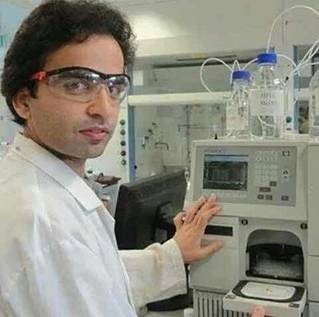
The story of Assistant Professor Hamid Hussain of Pakistan and Assistant Professor Naqib Ahmad Khpulwak of Afghanistan is another sad chapter of the unending violence plaguing the region.  On 20 January 2016, militants attacked Bacha Khan University in Khyber Pukhtunkwa (KPK) province of Pakistan killing twenty two and wounding twenty others.  Among the dead was Hamid who died at the prime of his youth while trying to protect his students.  He left behind a young widow and two children. He died ten days after celebrating his son’s third birthday.  Hamid hailed from a village in Swabi in Khyber Pukhtunkwa (KPK).  He was a bright student and after graduating from local college, he obtained his masters from University of Peshawar.  He earned a higher education scholarship and completed part of his PhD in organic chemistry from Bristol University in England.  Chemistry was his passion and he came back to Pakistan to teach at Bacha Khan University.  
 
Figure: 1: Assistant Professor Hamid Hussain
On August 24, 2016, militants attacked American University of Afghanistan in Kabul killing sixteen and wounding thirty six.  Among the dead was Assistant Professor at Department of Law Naqib Ahmad Khpulwak.  Naqib hailed from Jalalabad, Afghanistan.  He obtained his Bachelor of Law & Political Science degree from Nangarhar University where he graduated first in his class. He was a Fulbright scholar, studied at Stanford Law School and completed his Masters degree from Old Dominion University.  He returned to Afghanistan to educate children of his war torn country. 
 
Figure: 2: Assistant Professor Naqib Ahmad Khpulwak
Hamid and Naqib were the flowers of their nations dedicated to education and both were cricket fans.  Both came from a humble and rural background but excelled in their respective fields.  Both were bright students who studied abroad for higher education.  They could have easily found a fulfilling and rewarding career abroad but both decided to come back home and serve their nation. They chose institutions dedicated to educating their countrymen especially Pushtuns. Hamid and Naqib were killed not by some dreaded foreign enemy but by their own and not in a battle at the border but right within the walls of their education institution.   
Pakistan and Afghanistan are ravaged by the same demons but their leadership is involved in blames and accusations.  They are looking for hidden hands but never able to find that hidden hand as that is their own hand.  It is time for both countries to look inwards and find what is ailing their societies.  It is also high time to stop feeding the snakes of neighbors as time and again the monsters created to fulfill delusions have often entered their own homes and eaten their own children.  Civil and military leaders sitting in ivory towers are busy planning grand strategies and have assigned themselves the role of sole custodians of national interest.  They need to climb down and listen to the painful voices of their own countrymen.  The brothers of both victims have articulated the feelings of general public. Naqib’s brother while taking his brother’s dead body back home said that ‘we are the most unlucky nation alive’ and Hamid’s brother at the funeral said that ‘only when this pain reaches the homes of our leaders then they will realize what it feels like losing a son or a brother’. 
Hamid and Naqib were promising young men carrying the candle of hope in trying times of unpredictable violence in their countries.  The best tribute to these gentle souls is to have a program where faculty members of both universities teach a semester at the sister university. This will help to create an environment of trust and respect for each other.  People of both countries deserve much better future and only they can force their respective leaders to pull back from a destructive course. 
“Sorrow is better than fear. Fear is a journey, a terrible journey, but sorrow is at least an arrival”    Alan Paton; Cry, the Beloved Country 
Hamid Hussain
coeusconsultant@optonline.net
August 28, 2016

The Decline (and Attempted Rise) of the Sunnis in the Middle East

Israeli scholar Martin Kramer has written an interesting essay about the decline (and attempted rise) of  the Sunni Islamic position and aspirations in the middle east (excerpts at the end of this post). The first (and longer) section of the essay is well worth reading because it (to quote comrade Hamid Dabashi) “jolts our historical imagination and suddenly places it on the right, though deeply repressed, axis”. Almost for the first time in a popular Western essay (though not at all the first time in an Islamist essay), Kramer looks at the last 100 years of Middle Eastern history in a way that almost every Islamist will recognize in some form, i.e. as a story of the decline and fall of Sunni Islamic power and then of attempts to restore that power. The Ottoman Sultanate was a decrepit and declining power for centuries before it fell, but even in 1914 it was a power that could field armies that could fight (sometimes with great tenacity and surprising success) in conventional warfare against the dominant European powers of the age. This was certainly not true of any other Muslim power (or for that matter, any non-European power not named Japan) at that time and had not been true for over a hundred years. Within the Sunni Islamic universe, it was a symbol of Islamic civilizations continued presence at the table of world history.

With its fall and dismemberment, 1300 years of Sunni Muslims imagining themselves as one (and sometimes many) of the most important military powers in the world came to an end. There may not have been a single Sunni power that united nearly ALL Sunni Muslims since the decline of the Abbassids, but Sunni Muslims belonging to many rising and falling powers all saw themselves (with some justification) as capable and fearsome warrior peoples. As Arabs, Turks and Mughals they had conquered vast lands and ruled over many peoples, always as the dominant religion (even when rare rulers, such as Akbar, lost interest in being purely “Islamic rulers”, the Muslim elite remained a ruling elite). This position had started to fall apart in the 18th century (Mughal India, for example, had splintered and much of India had fallen under the domination of Marhattas and Sikhs; a change of circumstance that the descendants of the old Sunni ruling elite felt very acutely, and which they eventually tried to remedy in part by creating Pakistan). With the fall of the Ottomans, the true extent of the relative decline of Sunni Muslim civilization stared Muslims in the face. And it was felt that way by all intellectuals not completely converted to the Western gaze (and to some extent, even by those apparently converted to Western ideas and brought up immersed in Western learning).
This is the decline that was accentuated by the post-great-war division of the Sunni Arab heartland into multiple states by the British and the French (though the divisions were by no means completely artificial) and the temporary rise of Western-inspired socialist and nationalist ideas in the middle east. This is the story Kramer describes well.

Now, with the fall of Saddam, the ancient heartland of Islam has no Sunni state that can represent Sunni hopes or face down Shia Iran, much less Jewish Israel or the superpowers (old, decayed or rising). Recurrent attempts by Islamist movements to reverse this trend can be seen as part of the response to this century long fall. ISIS is just the most extreme and most vicious of these attempts. So vicious that most Sunnis do not support it. But drawing on the a narrative of decline and revival that less vicious Sunnis can also share. 

Now for the weaknesses of his argument. One, he restricts himself to the Sunni crescent (Palestine, Syria, Iraq, the Arabian Peninsula), in which those trying to pick up this flag include insanely extreme ISIS, a slightly less extreme alqaeda and a significantly less extreme Saudi Arabia. But there are other states dreaming of becoming the vanguard of the Sunni revival. Egypt under the brotherhood certainly had such dreams, but their attempt seems to have been set back for now. But Turkey’s neo-Ottoman dreams are real and they are by no means dead. And then there is Pakistan, more populous than any of these states and founded on a dream that may be sometimes contradictory and vague, but that has always included pan-Islamist overtones. Finally, don’t count out Bangladesh, Malaysia or Indonesia. To varying extents, there are Sunni Islamist dreamers in all these countries. And their dreams may catch fire too..

The second “weakness” is the last section, with its specific analysis of Israeli policy. I paid no attention to this section and have nothing to say about it. It is too close to his immediate policy concerns and it is probably going to be hard to disentangle his tactical needs from his strategic analysis. Anyway, I did not try.

The point is, if classical Islam means anything, then it cannot but give rise to such hopes and dreams. This is not something an Edward Said (who spent a lifetimes trying to ignore Islam and Islamism) or any intellectual brought up in the Western academic tradition represented by Said and his followers, likes to see. And  “Westoxicated” Muslims who are trained to think in modern Western terms (class struggle, racism, postcolonialism, capitalism, communism, whatever), are disproportionately likely to be our “native informants” in Western languages, explaining their homelands to their Western mentors and supporters. It is not surprising that this subculture has consistently failed to see the power of the Islamist dream or predict its growth and staying power.
But the times they may be changing…

Excerpts from Kramer’s essay:

It began with the fall of the sturdily Sunni Ottoman empire in which the Arabs of the Fertile Crescent had been securely nestled for 400 years. In 1914, the Young Turks blundered into the world war, putting the empire on the side of Germany and Austro-Hungary and against Britain, France, and Russia. In 1916, Sharif Hussein, a Sunni grandee in Mecca, declared the famous “Arab Revolt” against the Ottoman empire in coordination with Britain. In return, he demanded an Arab kingdom in expansive borders (see this map). Had he gotten it in one piece, there might indeed have been some prospect of a continued Sunni ascendancy.


Yes, that kingdom would have included Iraq, with its large Shiite population. But it would also have included Syria, with its solid Sunni majority, as well as Palestine and the sharif’s own Hijaz, both entirely Sunni. This kingdom would have possessed a decisive Sunni majority as well as the traditional capital cities of Sunni Islam.


The sharif thought such a kingdom was exactly what had been promised to him by the British in return for his open revolt against the Ottomans. But he didn’t get it. The Arabic-speaking provinces didn’t separate from the Ottoman empire in one piece. As a result of power rivalries, above all between Britain and France, they broke off in many pieces.


The Anglo-French Sykes-Picot partition, contra Haivry, didn’t work to establish “the hegemony of Sunni Arabs,” nor were its “borders aimed at ensuring Sunni Arab predominance.” For one thing, the French did everything in their power to undermine that dominance. In Syria, which they seized as their share in 1920, they parceled the country into even smaller statelets, including Alawite and Druze “states.” The French also privileged non-Sunnis, especially in military recruitment. By the time France unified Syria in 1936, abolishing the statelets, Syria had a sizable proportion of minorities who had tasted independence and power.


Next, the British also undermined traditional Sunni Arab ascendancy. True, they established a Sunni-dominated regime in Iraq, ruled from Baghdad by Faisal, one of the sharif’s sons. And they gave another son, Abdullah, a desert emirate in Transjordan. But by their support of the Jewish National Home policy adumbrated in the 1917 Balfour Declaration, they subtracted Palestine from the Sunni sum. Jerusalem had been a jewel in the Ottoman crown; now the Jews threatened to take it.


The British would also stand by as ibn Sa‘ud and his Wahhabi followers seized the Hijaz and deposed the sharif, their former ally. Today we regard the Saudis as mainstream Sunnis. But at the time, mainstream Sunnis regarded them as fanatic rebels who had constantly denied the legitimate Sunni authority of the Ottoman sultan. The Saudi seizure of Mecca and Medina in 1926 sent shock waves through the Sunni world.


To this must be added the earlier 1924 decision of the Turkish nationalist leader Mustafa Kemal Atatürk to stop pretending to defend the Ottoman caliphate and instead simply abolish it. Decrepit the caliphate may have been, but it symbolized the unity of Sunni Islam. Despite the vicissitudes of Islamic history, there had always been a caliph somewhere, a successor to the Prophet Muhammad and the heir and upholder of Sunni Islam. For the previous four centuries, the name of the Ottoman sultan-caliph had been mentioned in the Friday prayers in Baghdad, Damascus, Aleppo, Jerusalem, Mecca, and Medina.


..What we have witnessed these past few years, and especially since 2011, is not a Sunni collapse after a century of dominance. It is a Sunni revival after a century of slow but steady erosion. The rise of al-Qaeda in Iraq (AQI), the outbreak of the (largely Sunni) Syrian revolt, and the rise of the Islamic State (IS) are the most violent expressions of this broader revival. 


Mangal Pandey. Truth and Fiction

Mangal Panday – Film, Fiction & Facts
Hamid Hussain
 
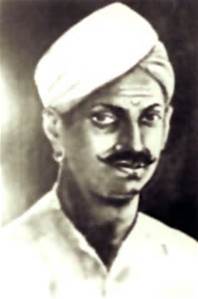
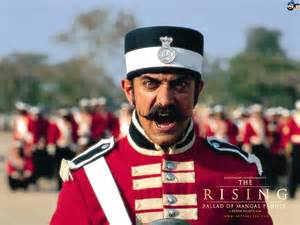
Mangal Panday – The Rising is a big budget Indian film and good research has been done about the history of this incident. Generally, a lot of cinematic license is used in most historical films but Mangal Panday has kept core historical facts intact. As expected, a lot of additional fictional material has been added to make it interesting. Films are essentially about entertainment and not substitutes for history books. There is quite a large body of written material available on the events of 1857. Colonial literature, post independence nationalist literature and leftist writers provide different interpretations of the events of 1857 uprising. I’ll limit myself only to the historical context.

Adrenaline vs. Accuracy
Scene 1– In the beginning of the movie, there is a scene of Afghanistan where Mangal saved his officer’s life during a fire fight. This is not correct. First Anglo-Afghan war was fought in 1839-42 and Mangal’s regiment 34th Bengal Native Infantry (BNI) didn’t serve in Afghanistan. In addition, Mangal was born in 1831 and joined his regiment in 1850, long after the first Anglo-Afghan war. 
 
Scene 2– There is a scene of a British officer of 34th BNI saving a Hindu girl from burning at her husband’s funeral pyre (satti). There is no evidence of an officer of 34th BNI involved in such an affair; however there are reports of such incidents. The most famous one is related to founder of Calcutta Job Charnock. He saved a beautiful Bengali Hindu girl from the satti pyre and later married her. He adopted local customs often wearing native loin cloth (lungi) in public. George Lawrence (brother of famous John and Henry Lawrence) served for forty three years in India and as a young officer serving with 2nd Bengal Light Cavalry he was witness to a satti ceremony in Neemuch. The poor girl’s husband had died in a far off land and his body was not even there at the pyre. She was to be burned alive on the pyre while her departed husband was represented by some of his clothes. Young Lawrence was perturbed and seeing some of his own troopers among the crowd asked them if they would help him if he decided to rescue the girl. Lawrence approached the pyre and told the young girl that he was willing to save her life. The girl thanked him but refused the offer stating that she was willing to die. 
 
Scene 3– Mangal using the new cartridge during firing practice biting it with his teeth. Practice for new cartridges was done at School of Musketry at Dum Dum and soldiers from different regiments were sent to Dum Dm. Drill Havaldar of 34th BNI Mookta Prasad Panday showed his reservation. On March 02, Major John Bontein of Dum Dum School of musketry wrote a letter that few Hindu sepoys have refused to use new cartridge. Soldiers of 2nd BNI (Grenadiers) and 7th BNI had no objection to use of cartridges but one sepoy Petum Singh showed hesitation.
There was serious reservation by many soldiers about new cartridges and reports started to appear in early January 1857 that sepoys were apprehensive about this issue. Many feared that it contained cow and pig fat and some thought it was a deliberate attempt to break their caste and ultimately convert them to Christianity. This feeling was strongest among high caste Hindu sepoys. They talked to British officers and suggested that either wax or oil be used instead of other material. 
 
The Regiment
Film has done very good job at portraying the regimental uniforms and insignia as well as regimental life of the time period. A brief history of Mangal’s regiment 34th BNI can help to understand the background.
Mangal Panday; sepoy number 1446 belonged to the 5th Company of 34th Bengal Native Infantry (BNI). This regiment was raised in 1786. In 1844, several Bengal infantry regiments showed signs of unrest and protested about bhatta (Foreign Service allowance) when ordered to garrison newly conquered Sindh. Five regiments; 4th, 34th, 64th & 69th Bengal Native Infantry and 7th Bengal Light Cavalry showed signs of unrest. Authorities dealt leniently with all other regiments but it was decided to disband 34th BNI as it held on the longest and finally it was disbanded on March 27, 1844 at Meerut.
34th BNI was re-raised in July 1846 at Ludhiana. In 1857, this regiment was about a decade old and not as cohesive compared to an old regiment. In early 1857, the garrison of Barrackpore consisted entirely of native troops from four regiments; 34th BNI, 70th BNI (commanded by Colonel J.D. Kennedy), 43rd Light Infantry (Commanded by Major Matthews) and 2nd Native Infantry (Grenadiers). Garrison commander was Brigadier Charles Grant. Barrackpore was also headquarters of presidency division and commanded by Major General J.B. Hearsey. Native infantry regiments consisted of ten companies of about 100 soldiers each. Companies were mixed in contrast to later class companies.
Total strength of 34th BNI in March 1857 was 1089. Three companies were stationed in Chittagong while some small detachments were on guard duties at other stations. Class composition consisted of 335 Brahmin Hindus, 237 Khatri (spelled Chuttrees in old documents) Hindus, 231 inferior caste Hindus, 200 Muslims, 74 Sikhs and 12 Christians. Subedar Major was a Brahmin Ram Lall and out of four Subedars, two were Brahmins (Sewumbar Panday; I’m unable to find the name of the other Brahmin Subedar), one inferior caste Hindu (Lala Gopal) and one Muslim (Muddeh Khan). Regiment was commanded by Colonel Stephen Glyane Wheler (he didn’t belong to the regiment and had been posted recently to command the regiment). Battalion Adjutant was Lieutenant Bempde Henry Baugh, Quartermaster and battalion interpreter was Lieutenant F.E.A. Chamier and senior British Non-Commissioned Officer (NCO) was Sergeant Major James Thornton Hewson.
Lieutenant Colonel Stephen Glyane Wheler
Captain C.C. Drury
Captain W.W. Aubert
Captain P.H.K. Dewaal
Lieutenant Bempde Henry Baugh
Lieutenant F.E.A. Chamier
Lieutenant Stewart Allen
Lieutenant J.T. Liscombe
Lieutenant G.R. Hennessy
Lieutenant A.C. Bunbury
Dr. James Allen
James Thornton Hewson
Ram Lall
Sewumbar Panday
Lala Gopal
Muddeh Khan
Commanding Officer
Commanding Chittagong detachment of 3 Cos.
Adjutant
Quartermaster and Interpreter
5th Company Commander
Commanding Fort William detachment
Assistant Surgeon of the regiment
Sergeant Major
Subedar Major
Subedar
Subedar
Subedar
Table: 1 List of Officers of 34th Bengal Native Infantry. Not all officers were present at regimental headquarters. Some were commanding detachments at other stations while others were away.
34th was disbanded on May 06 after Mangal Panday incident. European soldiers consisting of 84th Foot (commanded by Colonel Reed), a wing of 53rd and two batteries of artillery surrounded the parade ground where 34th was disbanded. Only seven companies of the regiment were disbanded. On the day of disbandment, 414 soldiers were discharged. Three companies (2nd, 3rd & 4th) were stationed at Chittagong and survived disbandment. Soldiers who were not present with the regiment as well as many Muslims and Sikhs of the regiment survived the disbandment. After mutiny, Indian army was reorganized as large number of Bengal infantry regiments ceased to exist. Old numbers were allotted to newly raised irregular regiments during the mutiny and those who remained loyal. In 1861, Fatehgarh Levy raised by Captain Shakespear Sage was designated 34th BNI but this regiment was also disbanded in 1882. In 1885, 34th was re-raised by Lieutenant Colonel Arthur W. Crookshank. 
 
The Spark
Scene 4 – The scenes of 34th refusing to use cartridges on a full parade, Colonel Wheler ordering artillery guns to be brought against the regiment, Mangal firing repeatedly at assembled British and native troops, 34th breaking the kote of arms and attacking British officers are all fictional. Some of these events are related to another regiment 19th BNI stationed at Barhampore. Captain William Gordon is also a fictional character and his duel with Mangal is also part of cinematic license.
There have been reports informing British officers that sepoys of different regiments were gathering and discussing their fears and rudimentary plans of how to protect their faith. Colonel Wheler was accused of preaching gospel to natives; a fact which he admitted later during inquiries. An anonymous letter to Commanding Officer of 43rd BNI Major Matthews summed up the fears of the sepoys. Sepoys expressed their fear in this letter that government was mixing bones in salt, flour and sugar, forcing people to eat together to break the castes, allowing Hindu widows to marry and all this was considered as an assault on the religion. The letter warned that ‘we will not give up our religion’ and that majority of the sepoys of Barrackpore garrison were of this opinion. A Jamadar of 34th BNI had warned his officers about general feelings among sepoys. General Hearsey had ordered a court of inquiry asking sepoys to express their grievances. Majority of soldiers expressed their suspicions about cartridges. These feelings were significant enough as General Hearsey wrote that ‘we have at Barrackpore been dwelling upon a mine ready for explosion’. Many British officers discussed frankly with their men at parades and in cantonment that British were not planning to interfere with their religion.
Immediate cause of trouble was 19th BNI. This regiment was stationed at Barhampore and commanded by Lieutenant Colonel W. St. L. Mitchell. Regiment’s Adjutant was Lieutenant J.F. McAndrew, Quartermaster and Interpreter Lieutenant James Vallings and Subedar Major was Shaikh Murad Bux. On February 25, an escort of 34th came from Barrackpore to Barhampore bringing convalescing Europeans and they had allegedly incited soldiers of 19th BNI. Earlier on February 18, another escort of 34th BNI had brought some stallions to Barhampore. 
 
Soldiers of 19th refused to accept greased cartridges on February 27th and in view of absence of any European troops nothing could be done. Later, some soldiers broke into kote and took arms to their lines. Later, at the insistence of their officers arms were returned. This was a serious offence but there were no other troops available at Barhampore to tackle 19th BNI therefore regiment was ordered to march to Barrackpore to be disbanded on March 31st. (Ironically, orders were issued that regiment should be disbanded in the same manner that 34th was disbanded in 1844 in Meerut. In one of the strange coincidences of history, 34th was disbanded second time merely five weeks later and the fire of rebellion started in Meerut). 19th BNI was disbanded while surrounded by European and native troops and soldiers were escorted by a wing of 84th Foot to Chinsura from where soldiers went to their homes. They openly accused soldiers of 34th BNI for inciting them. 19th and 34th had been stationed together recently in Lucknow prior to their move to Bengal. 
 
The incident of Mangal Panday’s firing on his officers occurred on Sunday March 29, 1857 between 4 and 6 pm. Mangal was high after having more than fair share of intoxicating ‘bhang’. Mangal was in front of the lines holding a loaded musket and a native sword (tulwar). He was wearing his red uniform jacket but loin cloth (dhoti) instead of uniform pants. He ordered drummer John Lewis to sound assembly. This sequence is accurately portrayed in film. Naik Emam Khan of the quarter guard rushed to Sergeant Major James Hewson’s quarters to inform him and he was the first European to reach the site. Mangal shot towards him but missed. Hewson took shelter behind the bell of arms. Havaldar Major Madhoo Tiwari rushed to battalion Adjutant Lieutenant Baugh’s residence to inform him. He arrived on the scene riding his horse. His orderly Sepoy Shaikh Paltoo of the Grenadier Company of the battalion was running after the horse. When Mangal saw Baugh approaching, he took cover behind the artillery gun in front of the quarter guard and fired his musket at Baugh and hit the horse. The horse fell and Baugh after disentangling himself fired his pistol but he also missed. Mangal didn’t have time to reload his musket as Baugh along with Sergeant Major Hewson with drawn swords were now almost on him. Mangal wounded both officers with his sword and the lives of both officers were saved by the heroic act of Sepoy Shaikh Paltoo who held Mangal from his waist. This gave enough time to both officers to retreat from the scene. During all this time, Mangal yelled at his fellow sepoys telling them to get ready. When no one joined him, angry Mangal abused them and said, “you have excited me to do this, and, now, you ban chutes (sister f******) you will not join me”. Jamadar Ganness Lalla and Color Havaldar Macklar Prasad Panday (both belonging to Mangal’s 5th Company) shouted at Mangal to throw his weapon and give himself up.
The guard of twenty sepoys under their Jamadar Ishwari Panday didn’t move. A crowd of about 400 sepoys in various dresses had gathered at the scene by this time. Only Sheikh Paltoo struggled with Mangal and held on him. Mangal had reloaded his musket by this time. Many soldiers of the regiment stood and none of them intervened to help their officers. Major General J. B. Hearsey arrived on the scene accompanied by his two sons’ Captain John Hearsey (38th BNI) and Lieutenant Andrew Hearsey (57th BNI) along with Assistant Adjutant General (AAG) Major Ross. Mangal shot himself but was wounded only in the right side of the chest ripping only muscles and also damaging shoulder and neck. His red coat caught fire at the entry wound that was put out. This minor detail is shown elegantly in the film with some close camera shots. Mangal was arrested and put in the quarter guard of 70th BNI. Later, he was treated by assistant surgeon of 53rd Foot Dr. T.B. Reid. Hearsey took his pistol out and ordered the guard to get back to their duty. He also promoted Shaikh Paltoo to Havaldar on the spot (he retired as Subedar). Most of the soldiers of the regiment simply watched the whole incident and did not make any attempt to restrain Mangal. However, few hit two British officers with musket butts when they were on the ground. 
 
Mangal was tried on April 06 by a fourteen member native general court martial. All members were native officers and court was headed by Subedar Major Jawahar Lal Tiwari (43rd BNI). One member Subedar Sewambar Panday was from Mangal’s own 34th BNI. Mangal was charged with inciting mutiny and using violence against officers. Mangal did not cross examine witnesses and only said that ‘I did not know whom I wounded and whom I did not. What more shall I say. I have nothing more to say”. Court gave a unanimous guilty verdict and eleven out of the fourteen members recommended death penalty for Mangal. Mangal was kept in the quarter guard of HM 53rd Foot. After the announcement of sentence, field officer of the week, Major W. A. Cooke and Ensign Chamier (interpreter) visited him and asked him whether he acted of his own free will. He stated that he acted on his own free will and expected that he will die. He also stated that he had no specific grudge against any officer and would have shot anyone who came near him. He also admitted that he had been taking opium and bhang recently and previously he didn’t use these drugs. He said that he was not aware at that time what he was doing. Mangal was hanged on 08 April 1857. 
 
Scene 5- In the end of the film, it is mentioned that an officer of 34th named Gordon was seen fighting alongside Indian sepoys. In the film, Gordon is the main English character. There was no officer named Gordon with 34th BNI. This is also a fictional tale. Mangal’s 5th Company commander was Lieutenant Stewart Allen. However, there were some Englishmen and many Anglo-Indians who fought alongside rebels. Some may have sympathized with rebel cause while others may have joined them to save their lives. One Scottish named Sergeant Major Robert Gordon fought alongside rebels at Delhi. Gordon was born in Scotland and came to India in 1840. He joined Bengal Artillery and rapidly rose through the ranks because he was literate. In 1852, he was appointed Sergeant Major of 28th BNI. In 1857, 28th BNI was stationed at Shahjahanpur (about forty seven miles from Bareli) and Captain Marshal James was the acting Commanding Officer. 28th BNI mutinied on May 31 killing their commanding officer and left for Bareli (about 100 Sikh soldiers remained loyal). Later, it arrived at Delhi along with the mutinous contingent from Bareli (18th BNI, 68th BNI and 8th Irregular Cavalry) under the command of Bakht Khan. 28th BNI came marching on the tunes played by the Anglo-Indian band of the regiment. In Delhi, Gordon was put in prison along with a handful of English and Anglo-Indians who had survived the massacre. Some accounts suggest that Gordon had converted to Islam and named Abdullah Khan. He served with rebel guns due to his training as a gunner. After the fall of Delhi, he surrendered to Brevet Major William Hodson at the tomb of Humayun. Hodson executed all Anglo-Indian band members after their surrender at Humayun tomb. A lengthy inquiry followed to ascertain whether Gordon worked with rebels under duress or willingly. Finally, it was recommended to discharge him from the army. In July 1859, he was put on a ship under arrest but after arriving in England, he was released. He disappeared from the pages of history after his arrival in England. 
 
Sex & Raj
Scene 6- Film has a scene of the bazaar of prostitutes of the cantonment. A European doctor examining prostitutes is correct portrayal as these measures were taken to decrease sexually transmitted diseases among soldiers. In 1850s, there were seventy five military districts and in every district prostitution was supervised by authorities. All prostitutes were registered, minimum age for prostitutes was fifteen and women were provided with their own living quarters or tents that were regularly inspected. Some establishments were quite large and brothel in Lucknow had fifty five rooms. Prostitutes infected with sexually transmitted diseases were removed and not allowed to practice their trade until recovered. Both native and European soldiers used these bazaars; however sepoys were discouraged to visit those prostitutes preferred by European soldiers. Most British soldiers were from lower strata of the society and were not held to the standard of a British officer. British soldiers visited prostitutes more often than sepoys. One reason was that British soldiers were not married while sepoys were usually married men. These bazaars were called ‘lal bazaars’ (red streets). Both heterosexual and homosexual relations were common in mid nineteenth century. British regiments spent several years in India and many a times children were born of such relationships. Special houses and schools were assigned as early as eighteenth century for these children. 
 
Scene 7- In the film, Captain William Gordon has an affair with an Indian girl Jawala. By the middle of nineteenth century, this trend had almost died down. In late seventeenth and eighteenth century, many Europeans kept native concubines as well as legally married local women both Muslim and Hindu. These women were kept in a separate house named Bibi Ghar. The practice was common enough that surviving wills from Bengal in the years 1780-85 show that one in three record bequest to Indian wives and companions. Some Englishmen retained their own religion and culture while others converted to Hinduism or Islam and became completely ‘native’. Some children of such unions roamed in two worlds comfortably while others drifted to one side. Some were educated in England and finally settled there while others grew up as natives in India. Few of the off springs of these unions even became celebrated poets and scholars of Urdu and Persian (Farasu, Shaiq, Sufi etc.). 
 
Most Company employees both civil and military joined the service at the age of sixteen. Several factors such as very young age, prolonged stay of decades in India, posting to a far off station with very little contact with Europeans and influence of native consorts and wives resulted in complete ‘nativization’ of some of these Englishmen. Near the end of eighteenth century, Company laws and rise of Evangelical Christian activity severely restricted such encounters and by the middle of nineteenth century, it was a rare phenomenon. 
 
British Resident in Delhi Sir David Ochterlony lived like an oriental nawab and had thirteen native consorts; the most famous one being Mubarak Begum. British Resident to the court of Marhattas in Pune General William Palmer married Begum Fayze Bakhsh of a prominent Delhi family. British Resident at Hyderabad Lieutenant Colonel James Achilles Kirkpatrick married Khair un Nissa; great niece of the Prime Minister of Hyderabad. James’s half brother William lived with his consort named Dhoolaury Bibi. 
 
Major General Charles Stuart had practically became a Hindu and lived with his Hindu wife. He was nicknamed ‘Hindu Stuart’ and ‘General Pandit’. He was buried in Christian cemetery in Calcutta but with his Hindu gods. The commander of British troops in Hyderabad Lieutenant Colonel James Darlymple married the daughter of Nawab of Masulipatam Mooti Begum. William Linnaeus Gardner married the daughter of Nawab of Cambay Begum Mah Manzel un Nissa. After freelance service with Marhattas and Nizam of Hyderabad, he raised irregular cavalry regiment named Gardner’s Horse for East Company. This regiment still survives as 2nd Lancers of Indian army. Gardner lived happily on his wife’s estate near Agra (Mah Manzal was adopted daughter of Mughal Emperor Akbar Shah II). His son James married Begum Malka Humanee; a niece of Mughal Emperor (she was also sister in law of Nawab of Lucknow). William’s granddaughter was married to a Mughal prince Mirza Anjum Shikoh Bahadar. Another soldier of fortune Hercules Skinner married a Hindu Rajput lady and several children were born from this union (she committed suicide when Skinner tried to take their daughters out of purdah to be educated and married to Englishmen). Their son James Skinner raised the famous irregular cavalry regiment Skinners Horse nick named ‘Yellow Boys’. This is now the senior most cavalry regiment of Indian army; Ist Lancers. James had fourteen Hindu and Muslim wives and consorts. He lived like a Muslim but later in life regularly read Bible and buried in St. James Church in Delhi. 
 
One of the last story of such love affairs is Colonel Robert Warburton of Bengal Artillery and Shah Jahan Begum; allegedly a niece of Amir Dost Muhammad Khan of Afghanistan. Warburton fought in First Anglo-Afghan war (1839-42) and was captured by Afghans. He fell in love with Shah Jahan Begum and married her. The offspring of this union was Robert Warburton; born in a fort near Gandamak in 1842 when his mother was on the run. He was fluent in English, Persian and Pushtu and served as Political Agent of Khyber Agency for eighteen years. In a strange irony, Warburton senior was born in Ireland and buried in Christian Cemetery of Peshawar while Warburton Junior was born in Afghanistan and buried in Brompton cemetery near London. 
 
References:
1- George Bruce Malleson. The Mutiny of The Bengal Army: A historical Narrative (London: Bosworth and Harrison, 1857).
2- History of the Indian Mutiny of 1857–8, in six volumes.
Volumes I and II by Sir John William Kaye, edited by Colonel G. B. Malleson
Volumes III, IV, V and VI by Colonel G. B. Malleson, 1864
3- Appendix to Papers Relative to the Mutinies in the East Indies. Presented to both houses of parliament 1857 (London: Harrison & Sons, 1857)
4- Rosie Llewellyn Jones. The Great Uprising in India: Untold Stories; Indian and British (Woodbridge: Boydell Press, 2007)
5- Richard Forster. Mangal Pandey: Drug-crazed Fanatic or Canny Revolutionary? University of Hawai’i at Mānoa http://www.columbia.edu/cu/cujsas/Volume%20I/Richard%20Forster%20-%20Mangal%20Pandey.pdf
6- Ronald Hyam. Empire and Sexuality: The British Experience (Manchester: Manchester University Press, 1990)
7- Durba Ghosh. Sex and Family in Colonial India: The Making of Empire (New York: Cambridge University Press, 2006)
8- Nils Johan Ringdal. Love for Sale: A World History of Prostitution (New York: First Grove Press, 2004)
9- Lionel J. Trotter. The History of British Empire in India 1844-1862 (London: Wm. H. Allen & Co., 1866)
10- United Service Magazine, No.188, July 1844
11- William Darlymple. White Mughals. (London: Harper Perennial, 2003)
12- Philip Mason. A Matter of Honor (Norwich: Fletcher & Son Ltd, 1976)
Hamid Hussain
Defence Journal, November 2012

British “other ranks” in the Indian army

From Dr Hamid Hussain

July 10, 2016
A query from someone whose great grand-father served in 54th Foot as private and spent a long time in India sent me on another journey of military archeology. There is not much known about life of British Other Ranks (BORs) in India and I tried to shed some light on the subject.
 ————————————————————————————
Dear Sir;
 It was an interesting journey of military archeology.  It started with 54th Foot but opened another door.  I have written a lot about Raj army and done work on Indian and British officers but never thought about British Other Ranks (BORs). This was new area and I tried to incorporate this subject in the story of 54th.
 Our chap William Lewis may have seen some important events during his stay in India.  He may have been with the regiment when it was rushed to Ludhiana in 1872 during major trouble caused by kooka sect of Sikhs and may be witness to one of the last case of blowing from guns.  He may have also seen the terrible deaths in the regiment from cholera epidemics.  Most importantly, he may be participant in the last parade of the regiment as 54th probably in Cherat when it said goodbye to its old colors in 1881 when 54th Foot was linked with 39th Foot to become Dorsetshire Regiment.  I hope the following piece will give some satisfaction to your friend with family connection to 54th Foot.
 Warm Regards,
Hamid
———————————————
The Flamers – 54th Regiment of Foot
Hamid Hussain


We have done with hope and honour; 
We are lost to love and truth.

We are dropping down the ladder rung by rung,
And the measure of our torment is the measure of our youth.

God help us, for we knew the worst too young;
Our shame is clean repentance for the crime that brought the sentence.

And we die and none can tell them where we died,
We’re poor little lambs, who’ve lost our way,
 Baa’ Baa’ Baa 

Gentlemen-rankers out on the spree,
Damned form here to eternity’
 God ha’ mercy on such as we,
 Baa, Yah, Baa
                                   Rudyard Kipling


 54th Regiment of Foot was a regiment of British army with a long and illustrious history.  The regiment with a history of two hundred and fifty years went through various transformations.  It was raised in 1755 as 56th Foot by Colonel John Campbell.  In 1756, when two senior regiments (50th & 51st Foot) were disbanded, 56th became 54th.  It was also called West Norfolk Regiment and served all over the globe.  In 1881, 54th Foot was amalgamated with 39th Foot to become Dorset shire Regiment.  In 1951, it was re-named Dorset Regiment.  In 1958, it was amalgamated with Devonshire Regiment becoming Devonshire & Dorset Regiment.  In 2005, it became Light Infantry and in 2007 First Battalion of The Rifles.
 
 A year after raising, 54th Foot went to garrison Gibraltar and returned to Ireland in 1765 after a decade of overseas service.  Regiment fought in American War of independence where it was part of Lord Cornwallis’s force.  Major John Andre of 54th Foot opened secret negotiations with Benedict Arnold commanding American forces at West Point.  He was captured when returning after one such rendezvous with details of all American forces in Arnold’s handwriting and later hanged.  54th Foot fought in the battles of Brooklyn and New London.  In the battle of Fort Griswold, they lost their commanding officer Lieutenant Colonel Eyre.  It burned the town of New London along with several prisoners thus earning the nick name of The Flamers. After the American war, regiment moved to Canada and returned to England in 1791.

 In 1801, regiment sailed for Egypt and earned the battle honor of Marabout. Regiment served several long tours at Gibraltar, West Indies and South Africa.  Regiment was at Waterloo but didn’t participate in the battle. In 1820, regiment landed at Madras to start its first long tour of duty in India. Cholera was raging in the presidency when regiment landed and first casualty was Sergeant Major Patrick Kelly. Regiment moved to Bangalore and remained there for four years.  Peace time idleness had its own complications and four officers of the regiment died in duels.  In 1824, regiment was ordered to join the force getting ready for First Anglo-Burma war where regiment earned the battle honor of ‘Ava’.  This was a trying campaign and disease took more toll than fighting.  In December 1825, when regiment returned to Madras there were only enough fit men to escort regimental colors. There were two British regiments in the force; 54th and 44th and both suffered heavily from disease.  This was the main reason that any plan of garrisoning European troops in Burma was abandoned. In 1840, regiment returned to England.  During its stay in India, regiment lost thirty officers including three doctors.

  The news of mutiny reached England in June 1857 and 54th was ordered to India.  It sailed to India in August 1857 in three detachments.  Headquarters section of the regiment along with commanding officer Lieutenant Colonel Bowland Moffat and his family sailed in Sarah Sands. There was a major fire at the ship with the danger of explosion of the powder and ammunition. Troops work tirelessly to put out the fire.  Regimental colors were secured in a saloon where fire was raging.  Regiment’s adjutant Lieutenant Houston and Lieutenant Hughes made the first attempt to secure the colors but failed due to fire and smoke.  Ship’s Quarter Master Richard Richmond covered his face with wet cloth and dashed to the saloon.  He took the colors down but fainted.  Private William Wiles ran after him and dragged him out as well as secured the colors. Damaged Sarah Sands limbered into the port of Mauritius.

 Headquarters section finally made to Calcutta in January 1858 exhausted and short of supplies after another perilous journey. They had run out of tobacco.  An American ship was anchored at Calcutta and an officer was sent to purchase tobacco from Americans.  After hearing the story of their journey, American ship captain gave them all his supply of tobacco and refused any compensation.  Regiment thanked the Americans by sending firework rockets in air and band played Yankee Doodle.  In 1858, various detachments of the regiment chased remaining rebel groups in Banaras, Azamgarh and Allahabad and Oudh.  54th lost more men from the weather than battle.  In the month of May alone, fifty four soldiers of 54th died of heat stroke. From 1859 to 1865, regiment was stationed at Bareilly, Fayzabad, Gorrackpor, Cawnpore and Calcutta. In 1866, it left for England. The nine year tour of India cost the regiment five officers and over three hundred and seventy dead and 350 invalided.
 In October 1871, regiment sailed again for Bombay for its third tour of India. In 1872, during the rebellion of the kooka sect of Sikhs, 54th was rushed to Ludhiana. However, civil authorities with the help of local state troops of Maler Kotla had severely dealt with the trouble by blowing forty kookas from the guns. In the summer of 1872, regiment lost 30 men from cholera. 54th was stationed at Jullundur, Amritsar, Phillour, Morar, Calcutta, Salimgarh and Meerut, Roorkee and Cherat. In 1879, trouble started in Burma and regiment once again landed at Rangoon.

 In 1881 regulations, 54th joined another regiment with special connection with India.  54th became 2nd Battalion of Dorset shire Regiment and 39th Regiment of Foot First Battalion of Dorset shire Regiment.  39th Foot was the first regiment to land in India in 1754 thus earning the title of primus in indis (First in India). On June 30, 1881, 54th Foot assembled for the last parade in memory of 54th and saluted their colors.  In the evening in the officer’s mess, the punch bowl was filled for the last toast for 54th and regiment faded from the pages of history.

 The story of 54th is typical of a British regiment of the era.  European soldiers in India were divided into four different categories.  First category was soldiers of fortune who started their career with local powers and after supremacy of East India Company (EIC), transferred their services to company army usually with irregular cavalry.  Company army consisted of native and European establishments. Europeans were officers in native establishments although in early history some non-commissioned officers were also posted to native regiments.  Third category was company’s European regiments where officers and privates were Europeans.  The last category was British regiments stationed in India for a specified period of time usually from five to twenty years. To differentiate them from local forces prefix HMs was added to their numbers. In 1759, HMs 84th Regiment of Foot was raised specifically for service in India.

HMs regiments embarking for India maintained a small depot in barracks at Chatham.  In eighteenth and early nineteenth century, travel from England to India took about six months and journey was hazardous. Many troop ships were lost on these journeys. HMs 91st Foot lost four hundred soldiers when their ship sank.  Soldiers were as disciplined at the time of sinking as they were on parade.  During the journey, when ship anchored at a port, soldiers were not allowed to disembark for the fear of desertion.  Soldiers spent most of their time drinking, gambling, shooting at sea birds and fishing.  Captain’s hands were full with court martials and awarding confinement and lashing. British soldiers landed at the ports of Madras, Bombay and Calcutta and marched inland to their cantonments.  Before the rail days, the march was by foot.  For each soldier there were 3-5 non-combatants and a whole native bazaar accompanied the regiment on the march.

 In early days, soldier’s barracks had no sanitation or water supply.  There was no system of garbage removal and a flock of vultures around the barracks removed lot of waste and were nick named adjutants. There was endemic sickness and mortality rate was over ten percent from sickness during peacetime. Climate and disease killed more European soldiers than combat.  50th Foot arrived in Calcutta in 1840 and lost twenty soldiers from Cholera in first few months.  After a brief trip to Burma, it came back only to lose eighty more men from Cholera.  It moved to Cawnpore to escape the dreadful epidemic but lost additional sixty eight soldiers. In comparison, in the fierce battle of Punniar against Marhattas in December 1843, regiment only lost only eight men and one officer.  HMs 3rd Light Dragoons landed in India in 1837 and the strength of the regiment was 420.  In 1853 when it left for England, only forty seven of the original soldiers returned home. In the first five years in India, regiment lost eight officers and 168 men from sickness (seventy three in a single month of June 1838). Royal Northumberland Fusiliers lost 232 men from sickness during fourteen years stay in India.

Hot weather and unpractical thick European outfit resulted in most uncomfortable situation for soldiers.  Monsoon brought fever and sickness. Soldiers turned to drink to forget the harshness of the environment and ever present danger of sudden death in the absence of combat.  Many commanding officers punished drunkenness in the lines by ordering two parades a day.  In hot weather, this aggravated the problem as thirsty and exhausted soldiers drank more and dying from heat stroke.
In general, British army was an army of poor soldiers of lower social class commanded by rich aristocrats.  Enlisted soldiers were poor and most joined the army to avoid starvation as they had no job. Some joined to avoid prison for a criminal offence.  Magistrates offered them to either go to the prison or serve the sovereign. Majority of soldiers were Irish and Scottish.  British soldiers enlisted for life (usually a 25 years stint) before short service was introduced in 1874 and regiments served long tours overseas.  Serving soldiers transferred to another regiment to stay in India when the tour of duty of their own regiment was up.  HMs 16th Lancers spent twenty four years in India and in 1846 when regiment left for India, a large number of troopers (240) transferred to HMs 3rd Light Dragoons to stay in India.  British soldiers and junior Non-Commissioned Officers (NCOs) were called British Other Ranks (BOR) and they came from poor families of lower socio-economic class.  The life in India with all its hardships was still better for them compared to England.  Many soldiers married local women and preferred to stay in India.

Very small numbers of wives were allowed to accompany the regiment on overseas duty.  The only sexual outlet for young soldiers was resort to the world’s oldest profession.  Colonial authority obsessed with control and regulations closely supervised brothels.  In 1850s, there were seventy five military districts and in every district prostitution was supervised by authorities.  All prostitutes were registered, minimum age for prostitutes was fifteen and women were provided with their own living quarters or tents that were regularly inspected.  These bazaars were called ‘lal bazaars’ (red streets). Some establishments were quite large and brothel in Lucknow had fifty five rooms.  Prostitutes were regularly examined by European doctors and those infected with sexually transmitted diseases were removed and not allowed to practice their trade until recovered.  Both native and European soldiers used these bazaars; however sepoys were discouraged to visit those prostitutes preferred by European soldiers.  Most British soldiers were from lower strata of the society and were not held to the standard of a British officer.  British soldiers visited prostitutes more often than sepoys.  One reason was that British soldiers were not married while sepoys were usually married men.   Both heterosexual and homosexual relations were common in mid nineteenth century.  British regiments spent several years in India and many a times children were born of such relationships.  Special houses and schools were assigned as early as eighteenth century for these children.

In later part of nineteenth century, living conditions of British soldiers in India markedly improved.  A number of soldiers after retirement also stayed in India and joined pensioner and invalid companies that performed some garrison duties.  Others joined civilian occupations related to activities in military cantonment such as military contractors and became quite proepserous.  Their pension made them live much more comfortably in India.  However, uprooted from their own culture, not allowed to mix with English of higher class in India and separated from teeming millions of Indians around them, they were isolated and a large number of them became alcoholics. The fate of those who returned to England depended on the strength of their family.  If they had strong family network, they were able to adjust, marry and live a normal life.  Those with no family network quickly spent their savings in drinking establishments and usually died on streets or in poor houses.
 On 28 January 1948, last British battalion Ist Battalion Somerset Light Infantry (old HMs 13th Light Infantry) embarked from Bombay thus drawing the curtain on two hundred years history of British presence in India.

 We broke a King and we built a road
A court house stands where the reg’ment goed

And the river’s clean where the raw blood flowed 
When the widow give the party
                                                                        Rudyard Kipling 

Sources:

–          Records of the 54th West Norfolk Regiment (Roorkee: Thomasen Civil Engineering Press), 1881

–          Richard Holmes.  Sahib: The British Soldier in India (London: Harper Perennial), 2005

–          The Keep Military Museum.  http://www.keepmilitarymuseum.org/

            –          Hamid Hussain.  Mangal Panday – Film, Fiction & Facts. Defence Journal, November 2012
Hamid Hussain
coesuconsultant@optonline.net
Defence Journal, August 2016

The Civilizational Unity of India

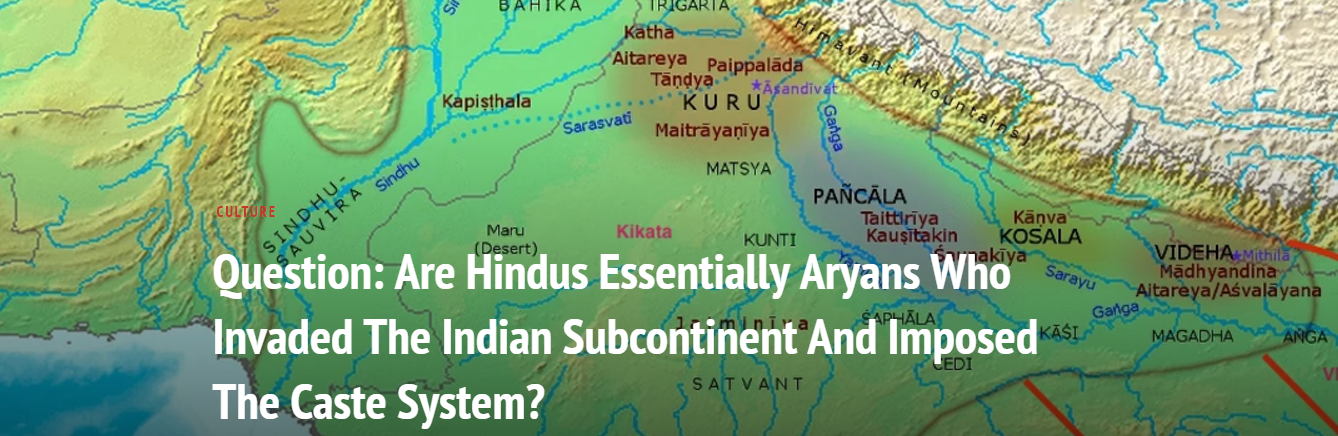
This article (excepts at end of this post) is a good summary of the (relatively reasonable) Hindutvadi arguments for regarding India as one civilizational and cultural whole (at least in historical time). i.e. you don’t have to share the author’s Hindutvadi beliefs to accept a lot of his arguments for the civilizational and cultural unity of India.
Of course, nation states may come and go and even civilizational boundaries can and do change; Tunisia and Libya used to be pretty Roman and now they are pretty Arab. stuff happens. One would not be likely to lose much money betting on Xinjiang being very Chinese for centuries to come. Han migration alone will take care of that. But still, there is a civilizational and cultural unity of India and that is not such a bad basis for a nation-state… It is certainly better than many other UN member nations have these days (hint hint..)

By the way, you will notice that even “soft Hindutvadis” with relatively rational arguments continue to have serious difficulty with the Indo-European invasion/migration into India. Come on dude, man up, stop getting scared of being steamrolled by superior propaganda apparatuses, own ALL your ancestors 🙂

.
By the way, he could have said more about Indian contributions to Arab, Persian and Central Asian civilizations (while acknowledging vice versa).
Excerpts:
….
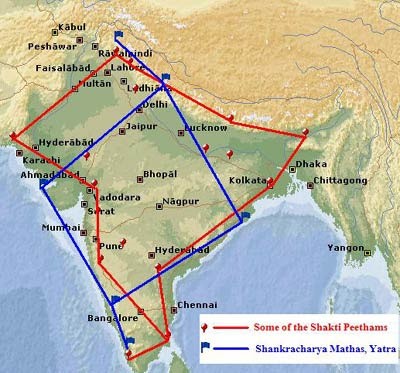
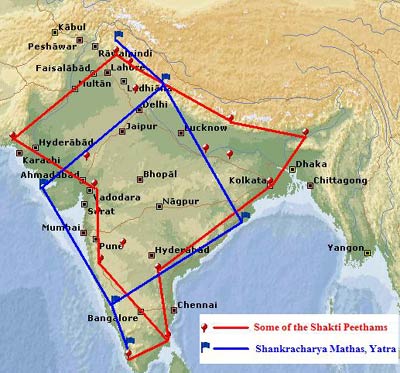
These ideas of our unity have permeated all our diverse darshanas. We have talked aboutBhakti and Vedanta and the epics of the Ramayana and the Mahabharata. But this idea of unity was not limited to particular schools. They were equally present in the tantric schools that exerted a tremendous influence on popular worship. Thus we have the legend of Shakti, whose body was carried by Shiva and cut up by Vishnu, landing in 51 places throughout the landmass of India that are now the site of the Shakti Peetham temples. The body of Shakti, or so the story goes, fell all the way from Neelayadakshi Kovil in Tamil Nadu to Vaishno Devi in Jammu, from Pavagadh in Gujarat to the Kamakshi temple in Assam and 47 other places.
 
Why would the story conceive of these pieces of Shakti sanctifying and falling precisely all over the landmass of India, rather than all of them falling in Tamil Nadu or Assam or Himachal (or alternately, Yunan (Greece) or China, or some supposed `Aryan homeland’ in Central Asia) unless someone had a conception of the unity of the land and civilization of Bharatavarsha? Whether these stories are actual or symbolic, represent real events or myths, it is clear from them that the idea of India existed in the minds of those that told these stories and those that listened. Together, all these stories wove and bound us together, along with migration, marriages and exchange of ideas into a culture unique in the story of mankind. A nation that was uniquely bound together in myriads of ways, yet not cast into a mono-conceptual homogeneity of language, worship, belief or practice by the diktat of a centralized church, intolerant of diversity.
 
And this unity as nation has been with us far before the idea of America existed. Far before the Franks had moved into northern France and the Visigoths into Spain, before the Christian Church was established and Islam was born. They have been there before Great Britain existed, before the Saxons had moved into Britannia. They have been there while empires have fallen, from when Rome was a tiny village to when it ruled an empire that rose and collapsed.
 
Thus the Arabs and Persians already had a conception of Hind far before the Mughal Empire was established. If we suggest that their conception of Hind was derived only from their contact with Sindh in western India, why would the British, when they landed in Bengal, form the EastIndia Company, unless the conception of the land of India (a term derived from the original Hind) was shared by the natives and the British? They used this name much before they had managed to politically hold sway over much of India, and before they educated us that no India existed before their arrival. Why would the Portuguese celebrate the discovery of a sea-route to India when Vasco de Gama had landed in Calicut in the south, if India was a creation of the British Empire?
 
The answer is obvious. Because the conception of India, a civilization based in the Indian sub-continent, predates the rise and fall of these empires. True, that large parts of India were under unified political rule only during certain periods of time (though these several hundreds of years are still enormous by the scale of existence of most other countries throughout the globe) such as under the Mauryas or the Mughals. But those facts serve to hide rather than reveal the truth till we understand the history of the rest of the world and realize the historic social, political and religious unity of this land. We are not merely a country; we are a civilizational country, among very few other countries on the planet.


…o there we have it. India is one of the few nations of the world with a continuity of civilization and an ancient conception of nationhood. In its religious, civilizational, cultural and linguistic continuity, it truly stands alone. This continuity was fostered by its unique geography and its resilient religious traditions. Unlike any other country on the planet, it retained these traditions despite both Islamic and Christian conquest, when most countries lost theirs and were completely converted when losing to even one of these crusading systems. The Persians fell, the civilizations of Mesopotamia and Babylon were lost, the Celtic religion largely vanished, and the mighty Aztecs were vanquished, destroyed and completely Christianized. Yet Bharata stands. It stands in our stories, our languages, our pluralism and our unity. And as long as we remember these stories, keep our languages and worship the sacred land of our ancestors, Bharata will stand. It is only if we forget these truths that Bharata will cease to be. That is precisely why the British tried to hard to make us forget them.


….
You are excluding Islamic contributions and Indian Muslims from your definition


This essay is about finding the historic roots of the Indian civilization and defining who we are as people and as a nation. We have had many migrants and invaders. While Islam has contributed to the Indian civilization, our roots are much older than when Prophet Mohammad first appeared in Arabia in the 6th century AD, so our civilization cannot be defined by Islam. Alexander the Greek came to our shores, so did the Kushans and Mongols and Persians and Turks. All of them added their contributions to our civilization as we did to theirs. The Mughal Empire helped in our political re-unification. But none of them define who we are.


We had the great Chinese civilization towards the north and the Persian civilization towards our west. Each of them influenced us as we influenced them. But because the Chinese came under Buddhist influence from India does not mean that they cease to be the Chinese civilization, an entity with a distinct cultural flavor and history from India.


Similarly, the Persians and the Turks came in many waves and contributed to Indian culture, even as we did to theirs. This does not mean that our civilization suddenly became Persian or Turkish. Some of these people settled in India, some of them brought a new religion called Islam and converted some of the existing people. All those who ultimately accept India as their homeland are accepted as Indians, for we have been a welcoming land. It would be a strange case indeed if conversion to Islam led people to deny the roots of their civilization. Do the Persians cease to be Persians, now that they are Muslims?


Islam does not define nationhood. If it did, the entire region from Saudi Arabia to Pakistan would be one country. Iran and Iraq would be one large Islamic country, rather than separate entities based on Persian and Babylonian civilizational roots. Indonesia and Malaysia would be one country.


Thus the civilizational roots of India belong to all Indians, Hindus, Muslims and Christians. Indonesian Muslims don’t trace their civilizational roots from Arabia, but from the Indonesian culture developed over the centuries. As Saeed Naqvi writes, the Ramayana ballet is performed in Indonesia by “150 namaz-saying Muslims under the shadow of Yog Jakarta’s magnificent temples for the past 27 years without a break” — Indonesians can apparently celebrate their civilizational roots without conflict of their being Muslims. There is no reason that Muslim Indians feel any differently unless led by the creation of fear or sustained demagoguery to believe otherwise.

Dhaka Attackers; BD elite and NYT are “shocked” by their origins..

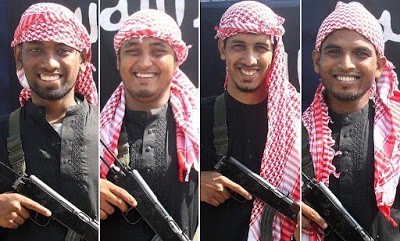
The New York Times has a piece about the backgrounds of some of the young men who carried out the horrific massacre in Dhaka on Friday.

It seems that some of the attackers came from very exclusive private schools and top universities, and were born in upper-middle class families. This should be absolutely unsurprising to anyone who follows the news without excessive ideological filtering, since Islamist terrorists (and terrorists in all other revolutionary and millennarian movements in history for that matter) have come from all social strata. The attraction that violent revolutionary ideologies hold for young educated people in particular is well established; from Saint Just to Osama Bin Laden, young men with high ideals have been drawn to such endeavors. Joseph Conrad would not find these people surprising in the least, but since late-decadent Western civilization is now crawling with “intellectuals” who are more likely to disdain Conrad than read him, they manage to get surprised rather regularly by such things.

As our Indian friends like to say, “hota hai” (it happens).

But what struck me was the reaction of the kid’s parents. It seems that they are a bit shocked by their kids decision to go off and fight for Islam… But at least one of them described his “pre-brainwashed” son as “..quiet and pious, someone who prayed five times a day and frequented the local mosque.”

Hmm. Maybe that is where he first got to thinking about the importance of doing something for Islam?

Sure, most people who pray five times a day and frequent the local mosque are “moderate Muslims”, not terrorists, and will remain moderate Muslims for life. But every once in a while, one will take all that teaching tragically literally. Mr Kabir surely did not want his son to do that, but equally surely, he (unintentionally) set his pious son on that road. Once in a while, someone will become a tad TOO committed.

A truly “moderate Islam”, one that does not idealize an ummah-based multi-national militarlily dominant superstate, CAN exist. But its theology and institutions are not deep enough and strong enough yet. Someday they will be. It is the only way certain Muslim communities will survive while co-existing peacefully with non-Muslims in states and arrangements that do not privilege Islam. But until then, “quiet and pious” kids will remain at risk for brain-washing.

There are places in the world where the choice of jihadist Islam does not seem very irrational, even by modern instrumental and pragmatic standards. And it is of course possible (though perhaps not as likely as my postmarxist friends may wish) that the neo-liberal world order is itself about to collapse. In which case “moderate Islam” will not be the need of many Muslims. In a dog-eat-dog world, with no “superdog” or superdogs acting as worldcops, there will be many hot wars, and many Muslim communities will survive by becoming more militantly Muslim. War is not the best time to be one who compromises with the enemy and tries to get along with everyone. Who knows, their superior asabiya may even gain them some solid victories.

But total world domination by an Islamic Ummah does not seem on the cards to me. Which means that while some Muslim communities may be better off becoming more fanatical, others will desperately need to become less so in order to survive with (or under) infidels in secular or non-Muslim-religious societies. In these places, the “quiet and pious” youngsters will be an at-risk population. Until “moderate” and co-existence-friendly models of Islam develop their own institutions and theological foundations, to the point that their youngsters can take them 100% literally and seriously and still see no point in picking up a machete to hack some Berkeley student to death. i.e., where they are no longer “compromisers”, but where their fully honest Islamism is not at risk for jihadism because their theologians have long since made all the compromises necessary. Some small sects have already reached that point (Ahmedis and Ismailis for example). Others are on their way, but on their way is still far from arrived.

Mr Kabir may have put his son at risk they day he praised him and honored him for being such a “quiet and pious” Muslim.

An uncomfortable thought.

PS: I MUST add that this “at risk” status is itself historically contingent. Generations of Muslims lived in “traditional” societies from India to Africa to China who never seriously entertained any thoughts of transnational Jihad and lived as decently with fellow non-Muslim citizens as humans can manage in this world. But this is not their world. IN the world of today, traditional, classical Sunni Islam (“moderate Islam”) has been reconnected with its early imperial-jihad-friendly roots in a world keen on identities and rife with resentments..and that is just where we are. Today, Mr Kabir’s son is at risk.
Yesterday, maybe things were different, or maybe they were not (this point is heavily disputed, so we can leave it at that). Maybe it varied. To some extent, it always does.
But we are where we are..
There remains another objection/ That, true or not, this sort of discussion risks bringing more surveillance, mistrust, discrimination, etc. on the heads of Muslims who are mostly neither terrorists nor particularly prone to terrorism. I concede that possibility, but I think we should be willing to take that risk. Avoiding it may only make it worse (such avoidance, taken to ridiculous extremes in some (well-meaning) cases is one of the factors fueling the rise of Trump)

‘We will be killed one by one’: Berkeley student hacked to death in Dhaka massacre made haunting call to her father as she cowered from terrorists.

Post Script: As friend Shahid Mirza has raised the issue of police surveillance, I have to add that this post is not meant as recommendation for or against police tactics in any country. Police tactics are at one level a very tertiary level things, mostly practical administrative matters, and at another level are limited and (and in the better cases, humanely so) by constitutional protections. Neither of these issues was my concern in this post (though I did allude to the fact that this discussion COULD be used to justify surveillance, discrimination, etc, and I remain convinced that while that WILL happen, it can and should be worked out by MORE discussion, not by avoiding the topic).
What triggered this post was Mr Kabir’s pious son and his obvious surprise that his son had veered so far from his own human interpretation of Islam.  The thought was this: There are  (and always have been, see Mirza Ghalib for example) Muslims who have personal theologies that are immune to the call of free-lance jihad. But these individual (sometimes pre-verbal) theologies (which Mr Kabir in this case probably has worked out in his head) are not necessarily communicated to the kids. A few exceptions may be doing so, but many times parents who are teaching kids to be pious Muslims seem to expect that their own humane interpretations will get transferred non-verbally. This does not always happen. Sometimes the kids learn to love Islam from their parents and then learn the hardcore version from the mosque or the internet and miss the fact that their parents had good, reasonable and humane reasons for avoiding THIS particular interpretation. Some no doubt start thinking their parents are hypocrites. This can be dangerous. Then again, so many things can be dangerous. Why focus on jihadism? I have to sort this out when i get some more time. But I think we have seen enough examples to make this a valid topic of discussion.
Police tactics are a whole other business. And I sincerely hope that in countries like the US their better traditions of enlightened liberalism, constitutional government and rule of law will survive the urge to follow Trump and his ilk towards some sort of pogrom, or worse. Of course, the uglier sides of human nature and social action may triumph in the US, as they triumphed in many other countries on many other occasions (and yes, I am aware of other aspects of human nature and social action that happened in the US too, like the near-extermination of the Siberian-Americans, and slavery and its later penumbra; “liberalism, traditions of constitutional government and rule of law” are not the only traditions here either, but the better ones exist, just as the bad ones do. We hope the better ones are stronger).
We shall see. As individuals, our role may be more limited than we wish.

Origins of the British East India Company Army

From our regular contributor, Dr Hamid Hussain.
Several questions came my way regarding origins of Indian army and that resulted in following piece. Only for military history interested parties.
Origins of Indian Army – Early Days of East India Company Army
Hamid Hussain
Mughal central authority was rapidly evaporating in eighteenth century India. Many local governors became de facto independent and many soldiers of fortunes were busy carving out their own fiefdoms. In this anarchy, foreign invaders as well as local robber bands frequently descended on helpless population for loot and depart as quickly as possible. East India Company (EIC) expanded its control of large swaths of India only due to superior military organization compared to the military organizations of its opponents. EIC, French, Portuguese, Mughal, Marhattas, Rohillas, Nawab of Arcot, Nizam of Hyderabad, Hyder Ali and his son Tipu Sultan of Mysore and Nawab of Bengal were competing for the spoils and each party was competing and cooperating depending on local circumstances. Many soldiers of fortunes found eighteenth century India a fertile ground. French, English, Dutch, Portuguese, German, Swiss, Pathans, Afghans, Arabs and Africans found ready employment with power brokers. They frequently changed sides depending on the prevailing situation. For example, in 1761, commander of Chittapet garrison Captain Coulson deserted to Hyder Ali taking with him his garrison and guns. EIC military establishments finally evolved into three presidential armies of Madras, Bombay and Bengal.

East India Company (EIC) recruited few European soldiers and native peons called chaprassis to guard their factories. EIC was a trading company and directors were hesitant to embark on any military adventure as it was a costly business. In 1744, war broke out between Great Britain and France, and their trading companies in India also got entangled in the conflict. French captured Madras in 1746 and EIC was forced to organize a military establishment. They raised European infantry, artillery and cavalry and native infantry. This was the foundation of Madras army also known as Coast Army. Bodies of sepoys of various strengths were under the command of their own chiefs. Sepoys brought their own arms consisting of matchlock, sword, spears, dagger etc. Chief was given the pay of the men under his command which he distributed. If he owned the arms and loaned it to his sepoy, he charged one rupee a month from the sepoy for the use of his arms. When two or more bodies of sepoys were employed together a European non-commissioned or commissioned officer was sent with the party. Early European soldiers of EIC were soldiers of fortune of different nationalities including English, French, German, Swiss and Dutch. Native sepoys included Rajputs, Hindustanis (mainly from Bombay), Arabs (mainly from their settlements in Bombay), Topasses (Christian offspring of Portuguese and native women) and Coffrees (natives of East Africa and Madagascar brought as slaves). Locals made a very small proportion of the contingent until 1756 when circumstances necessitated local recruitment. When most of the Madras troops were in Bengal, French captured Madras. After this setback company realized the need for a more disciplined force to defend its territories.
Major Stringer Lawrence is considered father of the Indian army. He laid the foundations of what was to become the Indian Army. In January 1748, Major Stringer Lawrence landed at Fort St. David to take charge of the fort when French had defeated the British. Later, Lawrence was appointed Commander-in-Chief of company’s army in India. A very able soldier Muhammad Yusuf was appointed commandant of all native sepoys and a Brahman Poniapa served as Lawrence’s interpreter.
Lawrence organized Europeans and native peons (chaprassis) into companies. They were organized into a regiment of two battalions; one European and one Sepoy (Indian). Both battalions were similar in structure and included seven companies each. A company had three Europeans officers and seventy privates. This regiment was involved in all the battles against the French forces in India. European cavalry was never more than a squadron strength and only maintained during a conflict and broken up during peace. The main reason was cost. In rare cases, native horsemen in the employ of a local ruler were borrowed but they were not effective due to poor discipline.
In 1759, sepoys were organized into five battalions that increased to sixteen by 1767. However, practically they worked in small parties of wings and companies as their duties included garrisoning small forts, escorting convoys or native chiefs and collecting revenues. It was the genius of two worthy adversaries of the company Hyder Ali and his son Tipu Sultan that helped to transform Madras army. In the fight against a well organized and professional adversary, Madras army also evolved into a professional army. Native cavalry and artillery establishments were raised much later. Native cavalry was raised in 1784 and native artillery in 1805. Early recruitment for EIC army was from a wide social base. A number of sepoys were from “untouchable” Paraiya community. All sepoys served together in composite companies with no consideration for caste sensibilities. Bengal army was an exception where high caste Brahmins dominated.
In western India, EIC only had control over Bombay and few islands near the harbor. In 1741, Bombay military establishment consisted of seven companies of Europeans with total number of 1500 (this included 900 Topasses). There were 700 chaprassis working for civil servants. By 1746, about 2000 natives had been enrolled in the Bombay military establishment. In 1748, one company of artillery was added. Major Goodyear was made commander of Bombay army. After defeat of French and Marhattas, Bombay army became the smallest establishment of three armies. After the conquest of Sindh in 1843, new regiments were raised to patrol the new border of Sindh and Baluchistan.
In Bengal few hundred natives, four companies of Europeans and one company of artillery were employed to guard factories. In January 1757, when Calcutta was retaken from Siraj-ud-Daula, a battalion of native sepoys was raised with three officers (one captain, one lieutenant and one ensign) from Madras detachment. In early organization of sepoy battalions, European officers were assisted by a Sergeant Major and few Sergeants. A native commandant and native adjutant also assisted commanding officer. Each battalion consisted of ten companies of which two companies were grenadier companies. Each company had a subedar, three jamadars, five havaldars, four naiks, two drummers, one trumpeter and seventy sepoys. Each company had its own standard of the same color as facings of the men with the badge of the subedar at the center. Grenadier companies had Union Jack in upper corner. By 1764, there were nineteen sepoy battalions of the Bengal establishment and they were numbered according to the rank of their captains. The senior most Captain was Giles Stibbert and his battalion was numbered 1. The Captains commanding battalions regulated the uniform of their men. However, once fixed, it could not be altered without the permission from the board.
17th battalion was one of the first battalion clothed in regular red uniform and called ‘Lal Paltan’. 26th battalion was raised in Cawnpore by John Byrne and called Dhobie Ki Paltan as a large number of washer men were recruited in this battalion. In 1765, army was organized into three brigades of seven battalions each. Each brigade also had one European regiment of nine companies, one troop (Rassalah) of cavalry and one company of artillery. When brigades were formed, Lord Clive fixed the uniforms for the brigades. First brigade blue, second brigade black and third brigade green (the latter was changed to yellow in 1779).
When EIC obtained the management of revenues of Bengal province, three regular battalions of sepoys were assigned to Revenue department and six purgunnah (provincial) battalions were also raised for the revenue board. In 1773, purgunnah battalions were used in operations against the robber bands of saniassis. These battalions suffered heavily and routed by saniassis. Three commandants Captain Thomas, Lieutenant Keith and Captain Timothy Edwards were killed. The disgraceful conduct of many sepoys resulted in breaking up of purgunnah establishment. Three regular battalions were returned to their brigades while remainder new purgunnah battalions were disbanded with the exception of 24th (two years later this battalion was brought into the line and numbered 14th). In 1775, standards of companies were replaced with only two standards for the battalion. In 1778, nine battalions trained by British officers for Nawab Vizier were transferred to EIC. In 1795, Native Militia was raised for judicial and commercial duties and regular battalions were removed from these unpleasant duties.
In 1781 regulations, articles relating to desertion and mutiny were translated in Hindustani and Persian and read and explained to sepoys every month. In 1801, ten sepoys from each company were trained as light infantry and marksmen. In 1803, three companies of pioneers were raised for the first time for EIC army. In 1808, this was converted into a regular Corps of Pioneers or Sappers and now had the strength of eight companies.
Civil servants had the sole authority over the military establishment. All orders of the council passed through civil servants to the military. In 1796 re-organization was carried out with a view of creating avenues of promotions for European officers. New establishment consisted of twelve regiments of two battalions each and each battalion consisted of ten companies. Each regiment had one colonel, two lieutenant colonels, two majors, seven captains, twenty two lieutenants and ten ensigns. The principle of regimental rank and promotion up to the rank of major was also adopted. Whenever officers went on home leave they resigned their commission and when employed on staff duties, they were struck off the strength of the corps. This opened the positions for officers.
Lieutenant Colonel commanding the battalion was responsible for the recruitment and maintenance of discipline. A sepoy enlisted for three years and on completion of three years, he could obtain his discharge on two months notice except in the time of war. Each recruit took an oath of fidelity. The pay for sepoy was seven rupees per month when in station and eight and a half rupees per month when marching or on field service. Soldiers had to construct their huts of accommodations in cantonments at their own expense. Punishment varied according to the crime. Mutiny was punished with death penalty while minor crimes punished by dismissal from service, corporal punishment or removal of privileges. In one case, when two subedars tried to dissuade sepoys not to volunteer for service requiring sea voyage, they were dismissed from service. They were paraded in front of the battalion, their commissions were torn, their swords broken and they were forbidden forever to enter any military station.
Early officers of EIC army were soldiers of fortune and discontent was mainly over salary and prize money. If a town resisted then normal procedure was to allow soldiers to loot the place for a specific period of time and this loot was later distributed among all according to their station in life. Many officers accumulated reasonable amount of wealth and went back to England. There were many cases of indiscipline due to disputes over prize money. Captain Alexander Delavaux was appointed Chief Engineer and Commandant of Artillery of Madras establishment in 1748. Next year he deserted and joined French at Pondicherry. His desertion was ironic as artillery was a special preserve and even Roman Catholics were strictly prohibited from recruitment in artillery. Even if an officer married a Roman Catholic girl, he was to be immediately dismissed from artillery. In 1751, there was discontent among European officers of Madras over money and thirteen officers sent a letter to council for redress. Three ring leaders; Captain William Richards, Murray and James Kilpatrick were put under arrest. Richards died soon after arrest, Murray escaped and deserted to French at Pondicherry where he was given a commission and Kilpatrick repented and was pardoned. In 1766, there was widespread discontent among European officers of Bengal establishment. A contingent from Madras was sent to prevent an outright mutiny.
A King’s Commissioned Officer when serving in India took precedence over a company’s officer. This meant that a junior most King’s commissioned Captain superseded senior most Captain in company’s service and this was a source of agitation among company officers. In 1758, Captain Gowen of Bombay establishment came to Bengal and Colonel Robert Clive gave him seniority in Bengal establishment. This resulted in disaffection among Bengal officers and eight Captains resigned their commission in a single day.
Main reason of discontent among sepoys was also related to money while in other cases poor handling by a commanding officer caused resentment among sepoys. In 1776, 10th battalion (Matthew Ki Paltan) showed discontent due to improper conduct of their commanding officer Captain Delafield. He faced a court martial and dismissed from service. In another case, native officers petitioned against their commanding officer Captain McLean and he was removed from the command. In 1781, 20th battalion mutinied at Midnapore due to dispute between Captain Grant and his men about the distribution of prize money. Battalion was disbanded, Grant was tried and cashiered and some of the men of the battalion drafted into other regiments.
There has been some confusion among historian about reluctance of sepoys about sea voyage.
In 1769, two Grenadier companies of the 3rd battalion were coming back from Madras via sea. They perished in a shipwreck and nothing was heard about them. This had a negative impact on the minds of native sepoys who already had serious reservations about sea travel. When EIC needed troops for its settlement in Sumatra in 1788, it asked for sepoy volunteers for service. Four companies were organized from these volunteers. EIC went out of its way to ease apprehensions of the sepoys regarding sea travel. A bounty of ten rupees was given to each man and special arrangements were made for sepoys during sea voyage. The sepoys observed the filling of water casks and each carefully marked and ample supply of each dietary item was provided. On return, the payment of duties was waived for Hindu sepoys for performance of their religious rites at Gyah. EIC sepoys volunteered for services requiring sea voyage when handled properly. In 1810, they served in expedition against Isle of France, conquest of Island of Java and occupation of many islands of Phillipines archipelago. In 1811 alone, seven battalions (7,000 sepoys) volunteered for service beyond sea.
In 1782, 4th, 15th and 17th battalions stationed at Barrackpore refused service when rumor spread that they were to proceed by sea. Later, 35th also refused the order. These four battalions were broken, a court martial was held and two subedars were blown from the cannon. In 1795, 15th battalion mutinied when it was ordered to go by sea to the settlement of Malacca. Instead of asking for volunteers, to save money and logistical inconvenience of collecting volunteers from different battalions, whole battalion was ordered for service without first confirming the wishes of sepoys. Soldiers reacted violently and suffered in the consequence. Battalion was disbanded, it’s colors burned and number fifteen was left vacant. These events show that sepoys participated in many expeditions travelling be sea when handled with care. However, whenever EIC cut corners for cost or officers were not careful, then sepoys showed hesitation about sea voyage. In view of hesitation of sepoys of Bengal establishment for sea voyage, a Marine battalion of twelve companies was raised for duties on islands.
EIC started as a trading company but quickly got entangled in local intrigues and power play. EIC needed a strong muscle to compete in the power arena that required establishment of an organized military machine. Native peons were transformed into professional soldiers. The impact of EIC army was not limited to military but had a broader social impact on natives. Illiterate villagers were exposed to modern ideas and native lives were changed for generations to come. Subedar Major Shaikh Hussain of Madras Infantry served a long career in EIC army. His son Mohammad Abdur Rahman was educated, became a doctor, joined Indian Medical Service in 1909, served in Great War and retired at Lieutenant Colonel rank. Sheikh Hussain’s two grandsons attended St. Paul school in England and later both joined Indian army. Atiqur Rahman nick named Turk was winner of sword of honor at Indian Military Academy. He joined 4th Battalion of 12th Frontier Force regiment (FFR), opted for Pakistan army in 1947 and retired as Lieutenant General of Pakistan army. The second grandson, Attaur Rahman nick named Ishi also joined a Frontier Force battalion. In 1947, he opted for India and later joined Foreign Service. He served as India’s ambassador to several countries.
Sources:
1- Lieutenant Colonel W. J. Wilson. A History of the Madras Army (Madras: Government Press), 1882
2- Colonel S. Rivett-Carnac. The Presidential Armies of India (London: W. H. Allen & Co.), 1890
3- Captain John Williams. An Historical Account of the Rise and Progress of the Bengal Native Infantry 1757-1796 (London: John Murray), 1817
4- Colonel John Biddulph. Stringer Lawrence: The Father of the Indian Army (London: John Murray), 1901
5- A Bengal Officer. Remarks on the Dress and Discipline of Bengal Army (London: Dean & Scott: Reprint of 1793 Edition), 1809
6- Edmund C. Cox. A Short History of the Bombay Presidency (Bombay: Thacker & Co. Ltd.), 1887
7- Manas Dutta. Revisiting the historiography of the Madras Presidency Army, 1801-1858. Journal of Humanities and Social Science. Volume 13, Issue 4 (Jul. – Aug. 2013), PP 46-49.
Hamid Hussain
June 29, 2016

Brexit

I continue to see almost universal condemnation or hilarity or schadenfreude about Brexit in my social media circle. Literally NO ONE is in favor it (except those who hate Britain and like Brexit in the sense of “this shit couldnt have happened to a more deserving lot”. I don’t know much about the actual mechanics and consequences and my current view is more or less “if all these intelligent people think it is a disaster, it is probably not going to be a good thing”, but I do feel that 50% plus of the British electorate (and a much higher percentage of the working class and the older citizens) voted for this thing, maybe we should also try to figure out why they voted the way they did? The easy answer is racism, but then, I am sure ALL these people are not just motivated by racism (how does that even work?) and I am sure there are lots of racists who voted for “remain” too (all the bankers can’t be suddenly free of racism 🙂 ). So here, in no particular order, are some comments I had on Facebook and I hope someone will let me know why I am wrong or where I may be right…Random thoughts on Brexit:

Xenophobia is part of this…but is it entirely foolish?
The Western super-elite (and their super-elite friends from other countries, including us, of course) are (at least materially) winners in this globalization until now and may feel great about it. But there are some other aspects to this love of complete and borderless globalization.

1. Obviously the Western proletariat are not happy and to think that they are just stupid people so their fears should not count, may be morally cloudy. It is likely (and perhaps even desirable) that neo-liberal globalization should continue, but those being expected to be swept aside may react..that too should be expected. Also, it is not just the proletariat. There is a substantial number of people who are attached to their own culture and cultural mores who are not comfortable with the new cultural rules of the postmodern Western elite (whether this is good or bad is a separate discussion). They do not want to become (and maybe cannot become) arugula eating, world-culture sampling, atomized, metrosexual individuals with fancy carbon footprints and anti-carbon-footprint posters on the wall. Their wishes may seem archaic and stupid to some of us, but they do exist. What is to be done about them? Have they been sold a bill of goods and are they feeling rebellious?

2.History has not ended. Organized groups (nations, religions, ideologies) control territory, try to expand their control and monopolize resources .. . It is possible that the nature of these boundaries and their defense will change as a connected world divides not on national or religious lines but between the new transnational super-elite and the underclass of all nations, but even that has not happened yet, not completely… Until then, the idea that we can just erase the border and let everyone go where they please seems unworkable and utopian. . The current system is based on certain cultures and their boundaries (which are always fluid, but DO exist) and how and by whom they are erased and replaced is important to many people. No?.

3.Some friends who live in Western countries (even in Britain) seem to be saying “you colonized us, now its your turn and you are complaining. Well, lump it”. But think about it…isnt this the xenophobes argument? that “these outsiders” hate us and our culture, and are only here to destroy us? We may feel we have a “right” to do that, but is it then very surprising if some of the older inhabitants don’t want to be destroyed? (this is NOT a majority view among my friends, but it does pop up. I am just saying, it is an interesting attitude when you think about it 🙂

I certainly do not have a clear position on this… I am still trying to learn. I could be converted 🙂 But I admit that I now tend to be skeptical of some of the elite-postmarxist eurocentric left-wing positions that are popular in my social circle. I am not convinced by the Right wing positions either, but they are so vanishingly rare in my group that I rarely have to bother arguing against them.

Finally, an exchange between me and a commentator (Mr Prasad) on 3quarksdaily.com sort of touches on these issues:

From Mr Prasad, talking about the above video:

This is grimly amusing to watch. Yeah, that convergence with Eastern Europe really is coming whether you vote remain or leave, because EE’s catchup growth is intrinsically easier than Britain’s. (Well, I suppose you can unwittingly try to speed it up, as today. Prediction: not much will change in that direction either.) They won’t merely be markets, they’ll also make products and do telemedicine and whatnot. You can’t expect Brits to perpetually make more than Poles for no earthly reason, simply because they are Brits. This globalization genie isn’t going to be squeezed back into the bottle, and the Chinese aren’t going back to starving in farms. Oh, meanwhile it’s more than just econ, those lorry drivers really are going to have job trouble when automatic cars become safer than regular ones.


The Trumpist / Sandersist solution is basically a collective stamping of feet angrily, denying trends instead of adapting to them. They rage (and how fashionably in the one case) about the evils of neoliberalism and the actually awful 1% and “the Establishment,” but fact is they have nothing half as good to offer as policy that’s growth-promoting and encourages measured global integration, together with redistributive taxation, retraining and moving up the value chain where at least you have comparative advantages.


What they offer is mood affiliation and folksy “real talk” masquerading as plain dealing. Real plain dealing would be “stop living in the past” and even (a variant on) that old chestnut “the rest of the world does not owe you a living.”


Next they can build a wall, or mine the English channel or something. Perhaps Farage can be deputized to whip the Hellespont, heck all of the Mediterranean why not.

My reply:
By the way, on The topic of “You can’t expect Brits to perpetually make more than Poles for no earthly reason, simply because they are Brits..” is a can of worms (as you well know). Leaving aside the issue of whether the Brits are (marginally) biologically smarter than the Poles (possible, but not very likely?), there is the issue of culture. If we assume that Danes and Gorkhas are equally intrinsically smart i.e. there is no biological constraint, then the remarkable difference in living standards and intellectual achievement (another can of worms, but lets go with it for now) has to be down to culture. If there is really something about British culture (nothing eternal, just what it has evolved to be at this particular stage in history) that makes it more successful (defined, for moment, in the way all my leftist friends would like to define it), then it is possible that this edge will persist for a few decades (which is about as far as we are really concerned with here). And the Brexiters would say that is exactly why they brexited, to keep it that way. Though it may be that Nirad babu was right..and whatever edge the English had is already gone. Which may mean that this particular vote was a tragic error.
No?

Mr Prasad:
Oh I certainly don’t mean to predict equal wages or productivity or innovation around the globe. Institutions, culture, and a head start all matter enormously, and I don’t buy the idea that all cultures and value systems are equivalently good or productive of progress and excellence. You knock on an open door with all that. [And the brexiters are right to notice that the replacement of melting pot strategies with multiculti isn’t working]. And why leave aside biology tout court, that’s just more theology. Especially going forward when there’s every reason to expect the Chinese will use CRISPR v10.0 to make their citizens more smart and healthy and what have you, and have a head start doing it.


What I think is simply:
a) that there will be a move in the direction of leveling, not that the outcome will be an absence of cross national disparity, and 
b) that the expectation in the normative sense, absent earthly reasons, that British *should* make more will seem less plausible with every additional corporation whose shareholders don’t care where the workers or customers are. Frankly they are more internationalist than the good comrades ever were. (Unlike the comrades they don’t feel more sympathy with Brits than Poles from across the Atlantic. Bully for them.)


And further that this trend cannot be stopped (at least without something drastic like large scale war – you can always hurt others by being willing to hurt yourself.) Western liberal states can mitigate downward pressures for working classes, try to move up the value chain, and should put in place something like a UBI (not that this is a panacea either, but it’s better than not having it).


Actual plain talk sounds like Lee Kuan Yew, not Jeremy Corbyn. But the chattering classes have revolution in their hearts. Bougies tend to find such dreams exciting, at least till their world starts to bern.


The exchange continues at 3qd: http://www.3quarksdaily.com/3quarksdaily/2016/06/mark-blyth-on-the-brexit-vote.html

Meanwhile, some people want a redo. In Islamic law, if you divorce your wife, then realize you were drunk and stupid, you can have her back, but she has to have sex with someone else first (she has to marry them too, but she really has to have sex). The Germans may demand some such humiliation if the Brits want a redo 🙂

Indian History, Brexit, Trump and the Bombay Fornicator

Continuing with the
random thoughts theme:
1. Indian History: I think this short piece is a reasonably good summary of our
current state of knowledge about the Aryans and India. ..except for the wholly
unnecessary waffle on “out of India” theory (the weight of evidence
against that seems overwhelming), this is a good place to start. I posted this
on twitter and got several reactions that seem to indicate that Pakistanis
(even educated and reasonable ones) tend to repeat 1950s textbook cliches on
this subject even more than I expected. I think we should all read more about
this topic 🙂

You can start here
with this summary by a rather extreme Hindu-nationalist (I don’t
know if the author would approve of this title, but i use it loosely and
without any pejorative intent; he can correct  me if he happens to
disagree). This author has consistently displayed a vast knowledge of ancient
India and is worth reading for that reason, whether you agree or not with his overall interpretation of history and culture.

From the same guy,  This description of an ancient indo-european feast is worth a
read as well.. 

And of course, you can
always start with Razib Khan’s blog posts about this topic including this, or this.… or this (with the caveat this his conclusions are likely to change
as more information comes in..as should the conclusions of anyone who is trying
to “seek truth from facts”, as comrade Deng would say 🙂

3. Brexit. I took no interest in this until it was over,
but it is apparently going to be a very big deal. Anyway, it does look like the credibility of both the left-liberal elite AND the finance-capital elite is at a new low among the proletariat. More to come on this topic I am sure..

I asked on twitter and
got this from @Sam_Schulman as an example of a good article about what happens
next: The Norway Model …

My first thought is that
this is likely not a useful comparison because there are too many differences
between Norway and Britain..and between the context in which they ask for deals
with the EU. but again, I don’t know much about this. Reading suggestions
welcome. 
3. Trump. I had written in March that his worthless team will sink him. I still
hopeful that his personal ignorance, superficiality and general lunacy, in
addition to his weak team, will cause him to lose big time in November, even
though there are real trends (as indicated by Brexit) that would be expected to
empower a candidate who opposes (or pretends to oppose) the globalist Left as
well as the globalist finance-capital Right…
But I think we do have
to keep fingers crossed. He is a conman and will disappoint everyone, including
those voting for him on nativist or proto-fascist grounds, but that does not
mean he cannot win. If Hillary goes too far into super-elite SJW territory and
Jihadi terrorists manage a serious atrocity very close to elections, then even
this Queens casino-operator could have a chance. I say this because I have a feeling that Hillary is something of a super-elite SJW at heart (though she is willing to sell out). There is a backlash against that ideology in the US these days (and as Brexit partially indicates, in other Western countries as well) and if she lets too much of that emerge, Trump may still have a chance, in spite of his obvious weaknesses and problems. 

Fingers crossed. And
hoping that the FBI does a good job of keeping the jihadis at bay.
4. The inimitable
Salman Rashid
writes about the Bombay Fornicator. A piece of furniture and a piece of history..

5. Orlando. Nothing new to say. As Loretta Lynch said, we don’t know for sure what his motives were. Well, we know for sure he claimed to be killing for Islam/Islamic-state, but it cannot be denied that there are possible sub-conscious motivations at work here in addition to the obvious “spirit of Jihad” thing. (gays, latinos, paranoid-schizophrenia?). Perhaps we can say: “Jihadist Islam that encourages “spontaneous lone-wolf jihad” and endorses violence against gays led a psychologically disturbed and culturally confused Afghan-American to make use of lax gun laws to kill random gay people” .
About the spirit of Jihad thing, I wrote in some detail after the San Bernardino attacks. I am copying and pasting the last few paragraphs here:
Can any Muslim become radicalized and fall victim to spontaneous jihad syndrome at any time?
This is the right-wing fringe’s mirror-image of the liberal belief that Islam never causes jihad and all of it can be explained by “inequality” or “Sykes-Picot” or some such story.  Both mirror-images are clearly false. The real situation is that we can look at the Muslims of the world and see several disparate groups; Shias, Ismailis and Ahmedis are outside the Sunni Jihadist universe and so are not going to spontaneously take up arms in the war between shariah-based Islam and other civilizations.  They are all relatively small minorities, but they are the most obvious examples of “Muslims who will not get radicalized and join the Sunni Jihad, foreign policy, Israel, Sykes-Picot and Picketty notwithstanding. These supposedly powerful motives for hating America will not cause these groups to go postal. There is a lesson in there somewhere.
 Coming to Sunni Muslims, we have a very large number are “moderate Muslims”, which is shorthand for Muslims who were not brought up in shariah-compliant households and who do not practice that kind of Islam. Their numbers vary from country to country, but one can say with a lot of confidence that they are not spontaneous jihad material either. They can covert, but it is a slow process, it is observable and even preventable (if they are kept away from hardline preachers). Then there are the shariah-compliant Muslims who believe that the Shariah’s orders for Jihad are meant for very specific situations where a Sunni state has declared Jihad and those situations (fortunately) do not exist. So they get on with life in all parts of the world. Many of them are model citizens because they avoid intoxicants, deal honestly and follow the law. A very tiny fraction of them may “radicalize” but most will not. The same applies to converts. So yes, about these (small) groups one may say “they can radicalize” , but very rarely. And even then, there are warning signs and it is never an overnight process. Finally, there are the true-believer Jihadists. They have obvious links with Jihadist schools, groups and teachers. They are small in number and they are not hard for the community to identify, if is so chooses. And they are indeed high risk. Liberals see none of them, right-wingers see too many. Both are wrong.
I guess what I am saying is that notions of Muslim hordes just waiting for a chance to attack are far outside the bounds of reality. Common sense can actually be a guide here. There is no need to throw the baby out with the bathwater and equally there is no need to be willfully blind to warning signs. Biased agenda pushers on BOTH sides of this debate have obscured common sense options. And while Liberals may underestimate or misrepresent the threat from radical Muslims, conservatives frequently generalize the threat to all Muslims.
Last but not the least, all nutcases cannot be stopped beforehand. Some surprises will always happen in a large and complex society . There is no risk-free society, with or without Muslims. But this is not World-War Three. Not in the United States. In parts of Europe the proportion of jihadists is likely higher (for various reasons, including racism and multiculturalist liberalism). Meanwhile, in the core of the Muslim world itself, all bets are off. There is no well-articulated theology of liberal Sunnism. Other organizing ideologies (like Marxism and pan-Arab nationalism) have manifestly failed. The authoritarian regimes that exist are (for now) the only game in town. These authoritarian elites, who disproportionately  benefit from the modern world,  impose their will using a combination of force, persuasion and foreign support. But they lack a deep legitimating ideology. This crisis of ideology is extremely serious, and it may devour some of those countries (though the survival of Jordan is a good example of the fact that even the most arbitrary modern states have more strength than we sometimes imagine). Those Muslim states that are further away from the Arab heartland (and the Israeli-Palestinian conflict) may do better. They can frequently rely on other identities to maintain the legitimacy of their states and new Islams can arise in them with time. But even they will not be compltely free of Jihadist conflict. No state is completely free of conflict of course, and many conflicts unrelated to Islam or Jihad could easily kill millions and destroy whole countries. But predominantly Islamic countries do have the added burden of the conflict of Classical Islamic ideals with modern civilization (not justWestern civilization), and it will take time to resolve this conflict.
Hold on tight.
– See more at: http://www.3quarksdaily.com/3quarksdaily/2015/12/san-bernadino-terror-attack.html#sthash.6IuA9qYd.dpuf
Brown Pundits