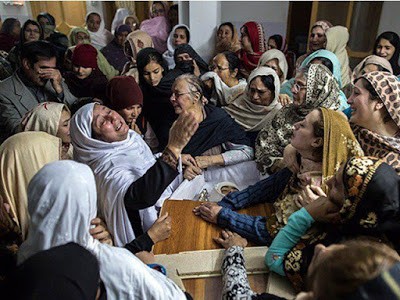
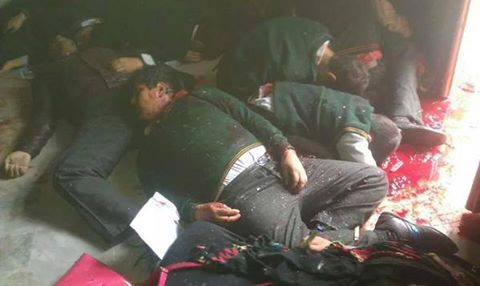
Three long, agonizing days have passed since the unspeakable
events in Peshawar on December 16. As people everywhere grapple with a tragedy
that is beyond comprehension, the one thing that unites all Pakistanis –
indeed, all those who care for humanity – is the desire to do whatever it takes
to fight back against the forces that unleashed this horror. Knowledgeable
Pakistanis and others have written insightful
analyses, offered moving
pleas, expressed new
hope, and made important
suggestions. There has been a gratifying upsurge
of revulsion against extremists that is already producing some concrete
results. But this is now, while the tragedy is still fresh in our hearts.
What of the longer term?
events in Peshawar on December 16. As people everywhere grapple with a tragedy
that is beyond comprehension, the one thing that unites all Pakistanis –
indeed, all those who care for humanity – is the desire to do whatever it takes
to fight back against the forces that unleashed this horror. Knowledgeable
Pakistanis and others have written insightful
analyses, offered moving
pleas, expressed new
hope, and made important
suggestions. There has been a gratifying upsurge
of revulsion against extremists that is already producing some concrete
results. But this is now, while the tragedy is still fresh in our hearts.
What of the longer term?
As human beings, we all know that the solidarity that we see
now will fade over time; the old differences will resurface; the grief will
dissipate, except for the families that actually suffered the loss of loved
ones. In this age of distraction, unity of purpose is ephemeral, and unity of
action even more so. Thus, it is critical that this passing period of common
rage and determination be used to set up concrete plans and policies that will
outlive our rage and achieve our purposes.
now will fade over time; the old differences will resurface; the grief will
dissipate, except for the families that actually suffered the loss of loved
ones. In this age of distraction, unity of purpose is ephemeral, and unity of
action even more so. Thus, it is critical that this passing period of common
rage and determination be used to set up concrete plans and policies that will
outlive our rage and achieve our purposes.
The immediate response to the tragedy will come from the
military, the intelligence services, the police, and the political leadership
of the country. The military response will be swift and brutal, as it should
be. And even the politicians may be able to overcome their petty differences
sufficiently to put better policies in place. But the problems epitomized by
the Peshawar attack were not created in a few months or years, and will not be
solved quickly. The question is whether the state of Pakistan will make
long-term changes that begin moving us towards a solution.
military, the intelligence services, the police, and the political leadership
of the country. The military response will be swift and brutal, as it should
be. And even the politicians may be able to overcome their petty differences
sufficiently to put better policies in place. But the problems epitomized by
the Peshawar attack were not created in a few months or years, and will not be
solved quickly. The question is whether the state of Pakistan will make
long-term changes that begin moving us towards a solution.
The cynic in me is skeptical, and this skepticism is shared
by others
who have followed the history of Pakistan. However, it is also true that great
calamities sometimes produce permanent changes that had appeared impossible
before. Perhaps this massacre of innocents will be such a “hinge event” for
Pakistan, but to make it so will require answering some hard questions and
making some difficult decisions. So, first the questions:
by others
who have followed the history of Pakistan. However, it is also true that great
calamities sometimes produce permanent changes that had appeared impossible
before. Perhaps this massacre of innocents will be such a “hinge event” for
Pakistan, but to make it so will require answering some hard questions and
making some difficult decisions. So, first the questions:
Question 1: Who is to be considered a “terrorist”?
Will this term be applied narrowly to those who directly challenge
state institutions such as the Army, or broadly to all those who attack
innocent people in the name of any
ideology or political purpose. This is not an issue peculiar to Pakistan – the
post-9/11 West has faced and failed to solve this problem. But clarity on this
issue is especially important in the context of Pakistan. This is because,
unlike the situation in, say, Sri Lanka with the Tamil Tigers, terrorism in
Pakistan is not rooted in a single concrete cause
but in a state of mind. This state of mind can, and does, promote diverse
causes: Enforcing strict religious laws; combating India; suppressing sectarian
rivals; creating a new caliphate; and even hastening the Day of Judgment. With
such a breadth of incommensurate and sometimes irrational purposes, one must
define terrorism not by its goals or its targets, but by its underlying
ideology. The thing that unites all those who kill innocents en masse in Pakistan (and indeed, all
over the world) is their deviant view of the value of human lives – they love
their cause more than they love their fellow humans. The term “human” is
critical here – not “Muslim” lives, or “military” lives, or “Pakistani” lives,
but “human” lives. Unless we use this greatest common denominator as our
definition, we will continue to
distinguish between “good” terrorists and “bad” terrorists – and perhaps
also some “neutral” terrorists who kill people we just don’t care much about. Even
the term “Taliban” is insufficient, since many terrorist groups don’t use that
name. But once we recognize the primacy of protecting all human lives, it is easy to determine who is a terrorist,
regardless of whether they fight for religious, sectarian, nationalist or
metaphysical causes. It is abundantly clear that groups (such as the
Tehrik-e-Taliban Pakistan (TTP)) that target military personnel are closely
linked with groups that target their sectarian rivals and specific communities
such as Shi’as, Ahmadis and Christians. Unless both types of groups are included in the definition of
“terrorists”, pools of infection will survive in Pakistan and will continue to
infect the population in the future.
state institutions such as the Army, or broadly to all those who attack
innocent people in the name of any
ideology or political purpose. This is not an issue peculiar to Pakistan – the
post-9/11 West has faced and failed to solve this problem. But clarity on this
issue is especially important in the context of Pakistan. This is because,
unlike the situation in, say, Sri Lanka with the Tamil Tigers, terrorism in
Pakistan is not rooted in a single concrete cause
but in a state of mind. This state of mind can, and does, promote diverse
causes: Enforcing strict religious laws; combating India; suppressing sectarian
rivals; creating a new caliphate; and even hastening the Day of Judgment. With
such a breadth of incommensurate and sometimes irrational purposes, one must
define terrorism not by its goals or its targets, but by its underlying
ideology. The thing that unites all those who kill innocents en masse in Pakistan (and indeed, all
over the world) is their deviant view of the value of human lives – they love
their cause more than they love their fellow humans. The term “human” is
critical here – not “Muslim” lives, or “military” lives, or “Pakistani” lives,
but “human” lives. Unless we use this greatest common denominator as our
definition, we will continue to
distinguish between “good” terrorists and “bad” terrorists – and perhaps
also some “neutral” terrorists who kill people we just don’t care much about. Even
the term “Taliban” is insufficient, since many terrorist groups don’t use that
name. But once we recognize the primacy of protecting all human lives, it is easy to determine who is a terrorist,
regardless of whether they fight for religious, sectarian, nationalist or
metaphysical causes. It is abundantly clear that groups (such as the
Tehrik-e-Taliban Pakistan (TTP)) that target military personnel are closely
linked with groups that target their sectarian rivals and specific communities
such as Shi’as, Ahmadis and Christians. Unless both types of groups are included in the definition of
“terrorists”, pools of infection will survive in Pakistan and will continue to
infect the population in the future.
Question 2: Where do
the terrorists get their ideology?
the terrorists get their ideology?
The painful answer here is that, in the case of Pakistan,
they get their ideology from an exceptionally literalist, inhumane and
narrow-minded interpretation of Islam. Like all great religions with a
substantial history, Islam has had many forms and interpretations in different
times and places. This plurality has largely been accepted by Muslim societies,
with some notably bloody exceptions. The form of Islam that has dominated in
the areas of Pakistan for many centuries is a relatively open-minded, even
syncretic, version of the sufi tradition. However, much more austere and
puritanical interpretations have sporadically infiltrated the region from both
the east and the northwest. This infiltration became more sustained during the
colonial and post-colonial periods – through the emergence of pan-Islamist ideas,
the ideologically rooted movement for the creation of Pakistan, the rise of
political Islam in the form of Jamaat-e-Islami, the influence of ultra-orthodox
seminaries, the influx of more orthodox Muslims, and, most importantly, the
importation of the Wahhabi ideology from Saudi Arabia during the years of Gen.
Zia-ul-Haq and the Afghan jihad against the Soviets. Today, violence in the
name of Islam is perpetrated by groups aligned with different Muslim sects,
with targets varying accordingly, but all these groups ultimately derive their
zeal from the same attitude: Regarding those with differing beliefs as inferior
and worthy of elimination (waajib-ul qatl).
they get their ideology from an exceptionally literalist, inhumane and
narrow-minded interpretation of Islam. Like all great religions with a
substantial history, Islam has had many forms and interpretations in different
times and places. This plurality has largely been accepted by Muslim societies,
with some notably bloody exceptions. The form of Islam that has dominated in
the areas of Pakistan for many centuries is a relatively open-minded, even
syncretic, version of the sufi tradition. However, much more austere and
puritanical interpretations have sporadically infiltrated the region from both
the east and the northwest. This infiltration became more sustained during the
colonial and post-colonial periods – through the emergence of pan-Islamist ideas,
the ideologically rooted movement for the creation of Pakistan, the rise of
political Islam in the form of Jamaat-e-Islami, the influence of ultra-orthodox
seminaries, the influx of more orthodox Muslims, and, most importantly, the
importation of the Wahhabi ideology from Saudi Arabia during the years of Gen.
Zia-ul-Haq and the Afghan jihad against the Soviets. Today, violence in the
name of Islam is perpetrated by groups aligned with different Muslim sects,
with targets varying accordingly, but all these groups ultimately derive their
zeal from the same attitude: Regarding those with differing beliefs as inferior
and worthy of elimination (waajib-ul qatl).
Question 3: Why does religious extremism lead to
terrorism?
terrorism?
Traditionally, extreme religiosity has manifested itself in asceticism
and piety, not violence. What is it about Muslim extremism in the 21st
century that leads inevitably to violence? The answer lies in the way Muslims –
not just extremists – have come to relate to their faith in recent times.
Following its early expansion, Islam quickly shed any puritanical tendencies it
had, becoming an instrument of politics at the collective level and a vehicle
for piety at the personal level. Kings – even if they were called Caliphs –
could not countenance a supra-royal orthodoxy and, contrary to popular belief,
the history of Muslim societies is one of religious flux rather than rigid orthodoxy
– punctuated occasionally by orthodox-minded kings such as Aurangzeb Alamgir. Extremists
of the kind we see today have always existed, but they have been treated as rebellious
outsiders (khawaarij) and suppressed strongly by the state. The celebration of
such groups as heroic is a phenomenon rooted in more recent history – particularly
in the revivalist vision with which many Muslim societies responded to colonial
subjugation. This vision saw deviation from the “true” faith as the main cause
of Muslim decline, and sought to purify Islam by returning it to its founding
principles. This attitude of originalism (which is much broader than just the Salafism
of Wahhabis) is a major source of violent fervor among Muslims today, enabled
particularly by three core aspects: 1) Belief in a mythologized history; 2) A
strongly bipolar view of the world in terms of believers and unbelievers; and
3) A literalist view of Islam and its practice. All three strains have acquired
special power in modern Pakistan through the revivalist ideological narrative
underlying the creation of the country. The vision of Pakistan was sold to many
– both before Partition and after – as that of an ideal “fortress of Islam”
that would revive the polity of the original “State of Madina” under the
Prophet Muhammad. Politicians
still use this trope to move their supporters. Of course, if Pakistan is to
be the fortress of Islam, it must have ferocious enemies, which are
conveniently available in the form of Christians, Jews, Hindus, etc. And
finally, if Pakistan is truly to revive the State of Madina, its people must
follow the original laws and texts of that state, not just in spirit but in
letter. From there, it is a short step to believing in the virtue of fighting
unbelievers, oppressing minorities and accepting laws such as the blasphemy
law, which prescribes irrevocable capital punishment for any disrespect of
Islam. Unfortunately, these attitudes are not confined to a few fringe
extremists, but are widely accepted by the Pakistani populace. They have been
woven into the distorted curricula taught in schools, reinforced by the
rhetoric of a religiously-defined nationalism, and promoted by the media
through the amplification of bigoted voices. The government of Pakistan has
systematically created an institutional framework to support this ideology
through laws and courts. The extremists have not needed to create intolerant
attitudes; government and society have already done that. The extremists just
take the ideas to the extreme – some might say, to their logical conclusion – identifying
suicide bombing with martyrdom, narrowing the circle of believers to only their
sect, and enforcing the blasphemy laws through vigilante action. These extreme
positions are possible only because less extreme versions of them are
considered mainstream, making it almost impossible to denounce the extremism
without risking a charge of blasphemy. This has to change if Pakistani society
is to make any real progress against terrorism.
and piety, not violence. What is it about Muslim extremism in the 21st
century that leads inevitably to violence? The answer lies in the way Muslims –
not just extremists – have come to relate to their faith in recent times.
Following its early expansion, Islam quickly shed any puritanical tendencies it
had, becoming an instrument of politics at the collective level and a vehicle
for piety at the personal level. Kings – even if they were called Caliphs –
could not countenance a supra-royal orthodoxy and, contrary to popular belief,
the history of Muslim societies is one of religious flux rather than rigid orthodoxy
– punctuated occasionally by orthodox-minded kings such as Aurangzeb Alamgir. Extremists
of the kind we see today have always existed, but they have been treated as rebellious
outsiders (khawaarij) and suppressed strongly by the state. The celebration of
such groups as heroic is a phenomenon rooted in more recent history – particularly
in the revivalist vision with which many Muslim societies responded to colonial
subjugation. This vision saw deviation from the “true” faith as the main cause
of Muslim decline, and sought to purify Islam by returning it to its founding
principles. This attitude of originalism (which is much broader than just the Salafism
of Wahhabis) is a major source of violent fervor among Muslims today, enabled
particularly by three core aspects: 1) Belief in a mythologized history; 2) A
strongly bipolar view of the world in terms of believers and unbelievers; and
3) A literalist view of Islam and its practice. All three strains have acquired
special power in modern Pakistan through the revivalist ideological narrative
underlying the creation of the country. The vision of Pakistan was sold to many
– both before Partition and after – as that of an ideal “fortress of Islam”
that would revive the polity of the original “State of Madina” under the
Prophet Muhammad. Politicians
still use this trope to move their supporters. Of course, if Pakistan is to
be the fortress of Islam, it must have ferocious enemies, which are
conveniently available in the form of Christians, Jews, Hindus, etc. And
finally, if Pakistan is truly to revive the State of Madina, its people must
follow the original laws and texts of that state, not just in spirit but in
letter. From there, it is a short step to believing in the virtue of fighting
unbelievers, oppressing minorities and accepting laws such as the blasphemy
law, which prescribes irrevocable capital punishment for any disrespect of
Islam. Unfortunately, these attitudes are not confined to a few fringe
extremists, but are widely accepted by the Pakistani populace. They have been
woven into the distorted curricula taught in schools, reinforced by the
rhetoric of a religiously-defined nationalism, and promoted by the media
through the amplification of bigoted voices. The government of Pakistan has
systematically created an institutional framework to support this ideology
through laws and courts. The extremists have not needed to create intolerant
attitudes; government and society have already done that. The extremists just
take the ideas to the extreme – some might say, to their logical conclusion – identifying
suicide bombing with martyrdom, narrowing the circle of believers to only their
sect, and enforcing the blasphemy laws through vigilante action. These extreme
positions are possible only because less extreme versions of them are
considered mainstream, making it almost impossible to denounce the extremism
without risking a charge of blasphemy. This has to change if Pakistani society
is to make any real progress against terrorism.
Question 4: Why does the state allow these attitudes to
persist in Pakistani Society?
persist in Pakistani Society?
The single biggest factor that allows the attitudes
described above to persist is the fractured state of the Pakistani state: Every political party and religious group has
its own exclusive center of power; the military is a state unto itself, with
its own policies and purposes; and the intelligence services are widely
believed to comprise an even “deeper” state that links up with extremist
groups. Even the traditionally weak Pakistani judiciary has shown signs of
“going rogue” in recent years, not always to the benefit of society at large.
All these centers of power sponsor specific narratives to exploit patriotism,
ideology and religion for their own purposes. In the prehistoric days of
exclusive state control over the media, this made little impact on the public,
but in today’s laudably open and cacophonous media environment, every narrative
can find a voice, leaving people confused and seeking certainty. Too often,
this certainty is provided – by the same agents through the same media – in the
form of bizarre conspiracy theories that rapidly become part of the national
psyche, going from rumor to fact to belief, and often connecting up with
pre-existing ideological and religious dogma. Dwelling in this forest of
whispers, it is hardly surprising that many people lose touch with the reality
of the rest of the world and slip into a state of mind where a mythology of
millennial wars, dark forces and the Hand of God guiding history begins to make
sense. The romance of crusaders, fortresses, black banners and caliphates
emerges from this, and is nurtured by the fictional history taught to the populace.
described above to persist is the fractured state of the Pakistani state: Every political party and religious group has
its own exclusive center of power; the military is a state unto itself, with
its own policies and purposes; and the intelligence services are widely
believed to comprise an even “deeper” state that links up with extremist
groups. Even the traditionally weak Pakistani judiciary has shown signs of
“going rogue” in recent years, not always to the benefit of society at large.
All these centers of power sponsor specific narratives to exploit patriotism,
ideology and religion for their own purposes. In the prehistoric days of
exclusive state control over the media, this made little impact on the public,
but in today’s laudably open and cacophonous media environment, every narrative
can find a voice, leaving people confused and seeking certainty. Too often,
this certainty is provided – by the same agents through the same media – in the
form of bizarre conspiracy theories that rapidly become part of the national
psyche, going from rumor to fact to belief, and often connecting up with
pre-existing ideological and religious dogma. Dwelling in this forest of
whispers, it is hardly surprising that many people lose touch with the reality
of the rest of the world and slip into a state of mind where a mythology of
millennial wars, dark forces and the Hand of God guiding history begins to make
sense. The romance of crusaders, fortresses, black banners and caliphates
emerges from this, and is nurtured by the fictional history taught to the populace.
Again, this is not a peculiarly Pakistani or Muslim
phenomenon – most countries have their national mythologies, in some cases
connecting with actual ancient mythologies (as with India and Israel) or seeing
the Hand of God or Destiny in their affairs (as with the British Empire and the
United States). The difference with Pakistan (and to some degree in Israel) is
that the myths have become central to national identity and even policy-making.
phenomenon – most countries have their national mythologies, in some cases
connecting with actual ancient mythologies (as with India and Israel) or seeing
the Hand of God or Destiny in their affairs (as with the British Empire and the
United States). The difference with Pakistan (and to some degree in Israel) is
that the myths have become central to national identity and even policy-making.
So how can all this be changed?
It is tempting to embrace an ultra-authoritarian model like
that of Ataturk in Turkey and now Sisi in Egypt, secularizing the country by
force and squashing dissent. History suggests that this is unlikely to work and
can be exceptionally dangerous. First, it is impossible to guarantee that
dictators in an authoritarian state will always be enlightened – in fact, that
is very unlikely (see Mugabe,
Robert G.) Second, deep beliefs do not disappear in a few generations
because they have been suppressed by force. The case of Muslim Central Asia is
instructive: A population indoctrinated into strict communist ideology for
decades has now become a fertile source of jihadists for extremist groups
everywhere. And Turkey, which was the most successful example of top-down
secularization in the Muslim world, is rapidly moving back to the old ways
before our eyes. The Chinese experiment goes on, but there are too many
differences for it to apply directly to Pakistan.
that of Ataturk in Turkey and now Sisi in Egypt, secularizing the country by
force and squashing dissent. History suggests that this is unlikely to work and
can be exceptionally dangerous. First, it is impossible to guarantee that
dictators in an authoritarian state will always be enlightened – in fact, that
is very unlikely (see Mugabe,
Robert G.) Second, deep beliefs do not disappear in a few generations
because they have been suppressed by force. The case of Muslim Central Asia is
instructive: A population indoctrinated into strict communist ideology for
decades has now become a fertile source of jihadists for extremist groups
everywhere. And Turkey, which was the most successful example of top-down
secularization in the Muslim world, is rapidly moving back to the old ways
before our eyes. The Chinese experiment goes on, but there are too many
differences for it to apply directly to Pakistan.
It is also important to realize that, in today’s complex
world, the state can only make a limited impact in trying to change society.
Any change towards a moderate, enlightened Pakistan must come from the people.
I believe that this is very possible, because most of the people who live in
the country come from an open-minded tradition, and still celebrate it in many
aspects of their culture. The role of the state should be to reconnect people
to that tradition, and to remove, as far as possible, the factors that impede
this reconnection. It is also futile to propose radical ideas such as declaring
Pakistan a secular state or immediately normalizing all relations with India. Sensible
as these ideas may be, they will take root only if they develop organically
within the society rather than being imposed in Kemalist fashion. The key is
that the trajectory of Pakistan must be changed – both by its people and by the
state. What the people must do is a complex topic that I will leave for another
time, but here is
world, the state can only make a limited impact in trying to change society.
Any change towards a moderate, enlightened Pakistan must come from the people.
I believe that this is very possible, because most of the people who live in
the country come from an open-minded tradition, and still celebrate it in many
aspects of their culture. The role of the state should be to reconnect people
to that tradition, and to remove, as far as possible, the factors that impede
this reconnection. It is also futile to propose radical ideas such as declaring
Pakistan a secular state or immediately normalizing all relations with India. Sensible
as these ideas may be, they will take root only if they develop organically
within the society rather than being imposed in Kemalist fashion. The key is
that the trajectory of Pakistan must be changed – both by its people and by the
state. What the people must do is a complex topic that I will leave for another
time, but here is
a (necessarily incomplete) to-do list:
Implement
fundamental reforms in the educational system
fundamental reforms in the educational system
Educational curricula at all levels should be changed to
emphasize a modern, rational, inclusive world-view rather than the obscurantist,
hyper-nationalist, mythologized and exclusivist narrative that exists today.
This will require: a) Teaching real history rather than a fictional one; b) Focusing
broadly on world history rather than
just on the history of Pakistan; c) Exposing students to the history of ideas,
not just the history of events and personalities; d) Encouraging the habits of
critical thinking and skeptical inquiry rather than a mindset of received
certainties; and e) Emphasizing engagement with the world of human endeavor
through the sciences, arts and humanities rather than immersing students in
abstractions of religious dogma. Let young minds learn that what we make of
this world depends on natural forces
and human actions, and that morality
comes from social responsibility rather than religious edicts.
emphasize a modern, rational, inclusive world-view rather than the obscurantist,
hyper-nationalist, mythologized and exclusivist narrative that exists today.
This will require: a) Teaching real history rather than a fictional one; b) Focusing
broadly on world history rather than
just on the history of Pakistan; c) Exposing students to the history of ideas,
not just the history of events and personalities; d) Encouraging the habits of
critical thinking and skeptical inquiry rather than a mindset of received
certainties; and e) Emphasizing engagement with the world of human endeavor
through the sciences, arts and humanities rather than immersing students in
abstractions of religious dogma. Let young minds learn that what we make of
this world depends on natural forces
and human actions, and that morality
comes from social responsibility rather than religious edicts.
Highlight the
diversity of interpretations within Islam rather than supporting a single
orthodoxy
diversity of interpretations within Islam rather than supporting a single
orthodoxy
Contrary to popular myth, puritanical beliefs are not the
only standard ones held by Muslims through the centuries. They often come from
more recent interpretations by the clerical class to whom the public has ceded
all religious interpretation. If there’s one thing that the state must do to
combat extremism, it would be to change this religious narrative. At the
present time, the amount of pure hate preached from pulpits and taught in
seminaries all over the Muslim world is mind-boggling. Ordinary people who live
immersed in this miasma are easily conditioned to accept such beliefs as part
of their faith. The state must provide alternatives to this – not by creating
some new “official version” of Islam, but simply by highlighting the many
interpretations of Islam that have been held in Muslim societies throughout
history. Extremism does not come naturally to human beings, and exposure to the
truth will always bring moderation.
only standard ones held by Muslims through the centuries. They often come from
more recent interpretations by the clerical class to whom the public has ceded
all religious interpretation. If there’s one thing that the state must do to
combat extremism, it would be to change this religious narrative. At the
present time, the amount of pure hate preached from pulpits and taught in
seminaries all over the Muslim world is mind-boggling. Ordinary people who live
immersed in this miasma are easily conditioned to accept such beliefs as part
of their faith. The state must provide alternatives to this – not by creating
some new “official version” of Islam, but simply by highlighting the many
interpretations of Islam that have been held in Muslim societies throughout
history. Extremism does not come naturally to human beings, and exposure to the
truth will always bring moderation.
Combat the cult of
death by respect for life
death by respect for life
The terrorists thrive on the idea of embracing death in the
hope of rewards in the hereafter. This allows them to devalue the lives of
everyone who disagrees with them. The best way to combat this is to oppose it
with a system that values all human
lives- not just Muslim lives. There is vast justification for this within the
Islamic tradition, but it needs to be codified into the law of the land. The
political rhetoric must also change accordingly from exclusivist to inclusive –emphasizing
equal respect for all communities within society. Most importantly, the state
must not allow the use of hate speech to stoke violence against any group. A
bright line must be drawn between personal free speech, which should be
protected, and incitement, which must be curtailed. People should be free to
express hateful views as individuals, but not from pulpits or in public forums.
And under no circumstances must the institutions of the state be perceived as
supporting or condoning such speech. Let the purveyors of hate live, but as
social and official pariahs.
hope of rewards in the hereafter. This allows them to devalue the lives of
everyone who disagrees with them. The best way to combat this is to oppose it
with a system that values all human
lives- not just Muslim lives. There is vast justification for this within the
Islamic tradition, but it needs to be codified into the law of the land. The
political rhetoric must also change accordingly from exclusivist to inclusive –emphasizing
equal respect for all communities within society. Most importantly, the state
must not allow the use of hate speech to stoke violence against any group. A
bright line must be drawn between personal free speech, which should be
protected, and incitement, which must be curtailed. People should be free to
express hateful views as individuals, but not from pulpits or in public forums.
And under no circumstances must the institutions of the state be perceived as
supporting or condoning such speech. Let the purveyors of hate live, but as
social and official pariahs.
Unify the
structures of government around service to society
structures of government around service to society
No state can survive if it is at war with itself. The
current situation where power groups within the government act to advance their
own narrow agendas has to change, and all these groups have to align themselves
towards a single purpose. In a modern state, this purpose can only be service
to society at large. Each institution will play a different part in this, but all
must agree on the same principles. Ideally, these must come from the elected civilian
leadership, but if they must be negotiated with greater participation from the
military and other institutions, so be it. The core element that must not be
sacrificed is a system of mutual checks and balance between the institutions of
power.
current situation where power groups within the government act to advance their
own narrow agendas has to change, and all these groups have to align themselves
towards a single purpose. In a modern state, this purpose can only be service
to society at large. Each institution will play a different part in this, but all
must agree on the same principles. Ideally, these must come from the elected civilian
leadership, but if they must be negotiated with greater participation from the
military and other institutions, so be it. The core element that must not be
sacrificed is a system of mutual checks and balance between the institutions of
power.
Stop using
militants as “strategic assets”
militants as “strategic assets”
There is a long and instructive history of societies using mercenary
militant groups as weapons against their opponents. In almost all such cases,
the militants turned against their patrons at catastrophic cost to the latter.
The classic example of this in Muslim history is the invitation of the fundamentalist
Berber group Al-Muraabitoon (Almoravids) by Muslim rulers in Spain to fight
against their Christian foes. The group did fight Christians effectively, but also
found their own Muslim sponsors insufficiently Islamic and proceeded to destroy
them. A similar process has unfolded in Pakistan, where extremist groups have
been nurtured as “strategic assets” by hyper-nationalist forces within the
power structure, mainly for use against arch-foe India, to (unsuccessfully)
create a zone of influence in Afghanistan and possibly to combat the influence of
Shi’a Iran. Like wild beasts kept as pets, these groups are now devouring their
keepers. It should be easy to decide
that this strategy has failed, and to stop feeding the beasts, but this will
require giving up dreams of an Indian
reconquista and a new caliphate. Recent
reports (pre-Peshawar) suggest that this has not yet happened.
militant groups as weapons against their opponents. In almost all such cases,
the militants turned against their patrons at catastrophic cost to the latter.
The classic example of this in Muslim history is the invitation of the fundamentalist
Berber group Al-Muraabitoon (Almoravids) by Muslim rulers in Spain to fight
against their Christian foes. The group did fight Christians effectively, but also
found their own Muslim sponsors insufficiently Islamic and proceeded to destroy
them. A similar process has unfolded in Pakistan, where extremist groups have
been nurtured as “strategic assets” by hyper-nationalist forces within the
power structure, mainly for use against arch-foe India, to (unsuccessfully)
create a zone of influence in Afghanistan and possibly to combat the influence of
Shi’a Iran. Like wild beasts kept as pets, these groups are now devouring their
keepers. It should be easy to decide
that this strategy has failed, and to stop feeding the beasts, but this will
require giving up dreams of an Indian
reconquista and a new caliphate. Recent
reports (pre-Peshawar) suggest that this has not yet happened.
Stop promoting
conspiracy theories and blaming others
conspiracy theories and blaming others
It is tempting for any individual or group to ascribe their
problems to circumstances beyond their control, but enough already with
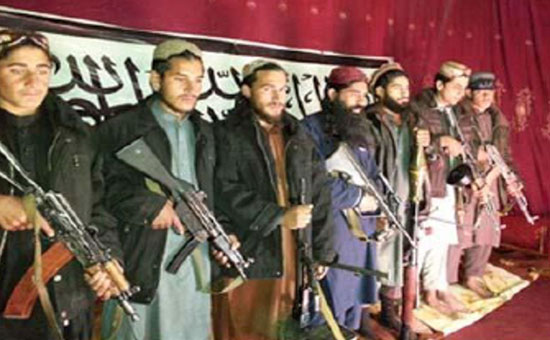
conspiracy theories! Even today, after the TTP have loudly accepted
responsibility for Peshawar, “responsible”
people are out in the media blaming the massacre on India.
problems to circumstances beyond their control, but enough already with
conspiracy theories! Even today, after the TTP have loudly accepted
responsibility for Peshawar, “responsible”
people are out in the media blaming the massacre on India.
Pakistan does have real enemies, but most of what ails it
has come from its own misguided policies. The Crusader-Zionist-Brahmin axis,
the CIA-Mossad-RAW alliance, the Protocols of the Elders of Zion, the
ubiquitous “foreign hand”, the impending arrival of “Dajjal” (the Antichrist), secret
atmospheric weapons (HAARP) causing floods and earthquakes, 9/11 trutherism –
these and many other outlandish conspiracy theories rife in Pakistan serve only
to distract people from the real authors of their woes. Ultimately, these can
only be combated by a better educational system, but to the extent that these
theories are promoted by specific power groups for their own narrow agendas,
they can be controlled at the source. The institutions themselves should develop
cultures where propagating such conspiracy theories is cause for ridicule. In
particular, the nexus between religious fantasies and conspiracy theories must
be broken.
has come from its own misguided policies. The Crusader-Zionist-Brahmin axis,
the CIA-Mossad-RAW alliance, the Protocols of the Elders of Zion, the
ubiquitous “foreign hand”, the impending arrival of “Dajjal” (the Antichrist), secret
atmospheric weapons (HAARP) causing floods and earthquakes, 9/11 trutherism –
these and many other outlandish conspiracy theories rife in Pakistan serve only
to distract people from the real authors of their woes. Ultimately, these can
only be combated by a better educational system, but to the extent that these
theories are promoted by specific power groups for their own narrow agendas,
they can be controlled at the source. The institutions themselves should develop
cultures where propagating such conspiracy theories is cause for ridicule. In
particular, the nexus between religious fantasies and conspiracy theories must
be broken.
Engage with the
world
world
The wonderful world we live in is the best teacher and moderator
of humans. A big factor behind the profusion of outlandish ideas in Pakistani society
is disengagement from the world. While the Internet and social media have
brought people closer across traditional barriers, this is a distorted
connection at best. More Pakistanis – especially young people – need to
experience the diversity of the world first-hand. The best way to do that is
for the government to support international travel and exchange programs for youth, which
would allow students of high school and college age to spend significant time
in other countries – notably those which are seen with the greatest suspicion,
i.e., India and Western countries. Such exposure at an impressionable age will
give Pakistani youth a real sense of the world and its pluralism, making it
more difficult for obscuranist forces to infect their minds with thoughts of
jihad and martyrdom.
of humans. A big factor behind the profusion of outlandish ideas in Pakistani society
is disengagement from the world. While the Internet and social media have
brought people closer across traditional barriers, this is a distorted
connection at best. More Pakistanis – especially young people – need to
experience the diversity of the world first-hand. The best way to do that is
for the government to support international travel and exchange programs for youth, which
would allow students of high school and college age to spend significant time
in other countries – notably those which are seen with the greatest suspicion,
i.e., India and Western countries. Such exposure at an impressionable age will
give Pakistani youth a real sense of the world and its pluralism, making it
more difficult for obscuranist forces to infect their minds with thoughts of
jihad and martyrdom.
As I write this, the outrage is still pouring in, but it is
too early to know if any of the changes suggested above will actually occur, or
if the questions raised here will be answered honestly. The establishment has
built the current structure with great effort, and there will be many who are
still reluctant to let go. To these, the people of Pakistan must speak loud and
clear: The time for vacillation is over. The cause is clear and the enemy
obvious. Those who still obfuscate these issues must be consigned to the garbage-can
of history.
too early to know if any of the changes suggested above will actually occur, or
if the questions raised here will be answered honestly. The establishment has
built the current structure with great effort, and there will be many who are
still reluctant to let go. To these, the people of Pakistan must speak loud and
clear: The time for vacillation is over. The cause is clear and the enemy
obvious. Those who still obfuscate these issues must be consigned to the garbage-can
of history.
The urgency of the hour notwithstanding, real change will take time
– decades and generations, not months and years, and most of it will come from
the people, not the state. Much will change during this time in ways that we
cannot imagine today, and not always for the better. The war that is underway
now is unlikely to be short, and though its details may still remain in flux, it
is critical to acknowledge the nature of
this war. It is not a war between believers and unbelievers, Shi’as and Sunnis,
or the West and the Muslim world. It is a war between two visions of life and
death; not a clash of civilizations, but
a war for civilization. On one side are nihilists who value their beliefs more
than the lives of their fellow humans, see this world as ephemeral, and seek
their rewards in the hereafter. On the other are those who do care for other
human beings and, however imperfectly, want to understand and improve this world.
No society interested in thriving can possibly choose the nihilist side over
the long term, even if it is dressed up in the garb of faith. Therefore, I will
go out on a limb and predict that the day will come when Pakistan, India, Afghanistan,
Iran, Syria, Saudi Arabia, Turkey, Israel, China, Russia, the United States and
many others will all fight as allies against an amorphous jihadist threat
stretching from Morocco to Indonesia. It may take ten years, or twenty, to get there, but that’s where things are going whether we like it or
not, and we will all need to decide which side we stand on.
– decades and generations, not months and years, and most of it will come from
the people, not the state. Much will change during this time in ways that we
cannot imagine today, and not always for the better. The war that is underway
now is unlikely to be short, and though its details may still remain in flux, it
is critical to acknowledge the nature of
this war. It is not a war between believers and unbelievers, Shi’as and Sunnis,
or the West and the Muslim world. It is a war between two visions of life and
death; not a clash of civilizations, but
a war for civilization. On one side are nihilists who value their beliefs more
than the lives of their fellow humans, see this world as ephemeral, and seek
their rewards in the hereafter. On the other are those who do care for other
human beings and, however imperfectly, want to understand and improve this world.
No society interested in thriving can possibly choose the nihilist side over
the long term, even if it is dressed up in the garb of faith. Therefore, I will
go out on a limb and predict that the day will come when Pakistan, India, Afghanistan,
Iran, Syria, Saudi Arabia, Turkey, Israel, China, Russia, the United States and
many others will all fight as allies against an amorphous jihadist threat
stretching from Morocco to Indonesia. It may take ten years, or twenty, to get there, but that’s where things are going whether we like it or
not, and we will all need to decide which side we stand on.