Thoughts on Palesrael
(Turkish Czar) Recep Tayyip Erdogan once noted that – “The minarets are our bayonets, the domes our helmets, the mosques our barracks and the faithful our army.” Of course he was too modest to say this but we suspect some of his followers/fans may have worship-fully cried out – “Erdogan is our Caliph.”
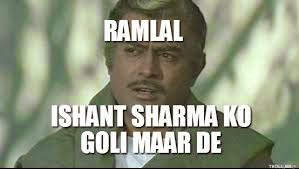
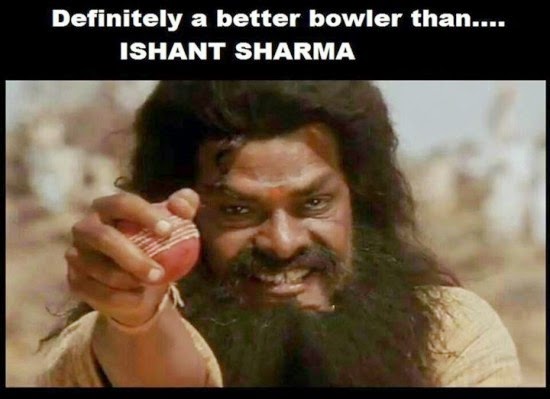
India is not blessed with too much military or ideological prowess (thankfully) but there is one indestructible weapon: the short ball from Ishant Sharma. The missile when launched will not be intercepted by any agency, not even the Iron Dome. The only problem is when the missile mis-directs and destroys its own.
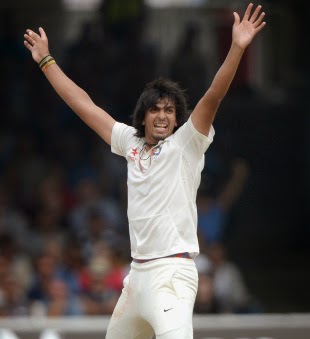
Still when you wait 28 years to win a test match at the Lord’s (and 3 years presently without an overseas test victory) you have to give the Ishant Sharma jokes a rest (temporarily). The next test is at the Rose Bowl (Southampton) in 5 days. May the best side win!!!
………..
A ball from a good length jumps up and makes Faisal Iqbal’s forward
defence look idiotic. It flies off the gloves to a deepish short leg. It
is one of five wickets in the innings for a 19-year old bowling on the
many remains of deceased seamers who went before him.
……..
Link: http://www.espncricinfo.com/england-v-india-2014/content/story/762919.html
…….
regards
While America awaits a Madam President in 2016, new-born Telengana has just been blessed with a Madam Ambassador, a living Goddess.

She has rare talent (and beauty), and we feel she will serve her native land just as well as her native game.
Our request to Sania Amma – kindly consider gifting the 1CR ($160,000) fee for the empowerment of women of Telengana. That would be an answer to so many prayers.
………
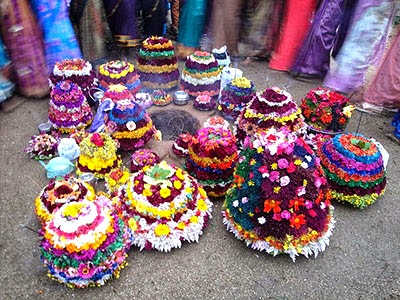
[ref. Wiki] Bathukamma is a flower festival unique to Telangana. It is celebrated for nine days during Durga Navratri.
It starts on the day of Mahalaya Amavasya and the 9-day festivities
will culminate on “Saddula Bathukamma” or “Pedda Bathukamma” festival on
Ashwayuja Ashtami, popularly known as Durgashtami which is two days
before Dussehra.
Bathukamma is followed by Boddemma,
which is a 7-day festival. Boddemma festival that marks the ending of
Varsha Ruthu whereas Bathukamma festival indicates the beginning of
Sarad Ruthu.
….
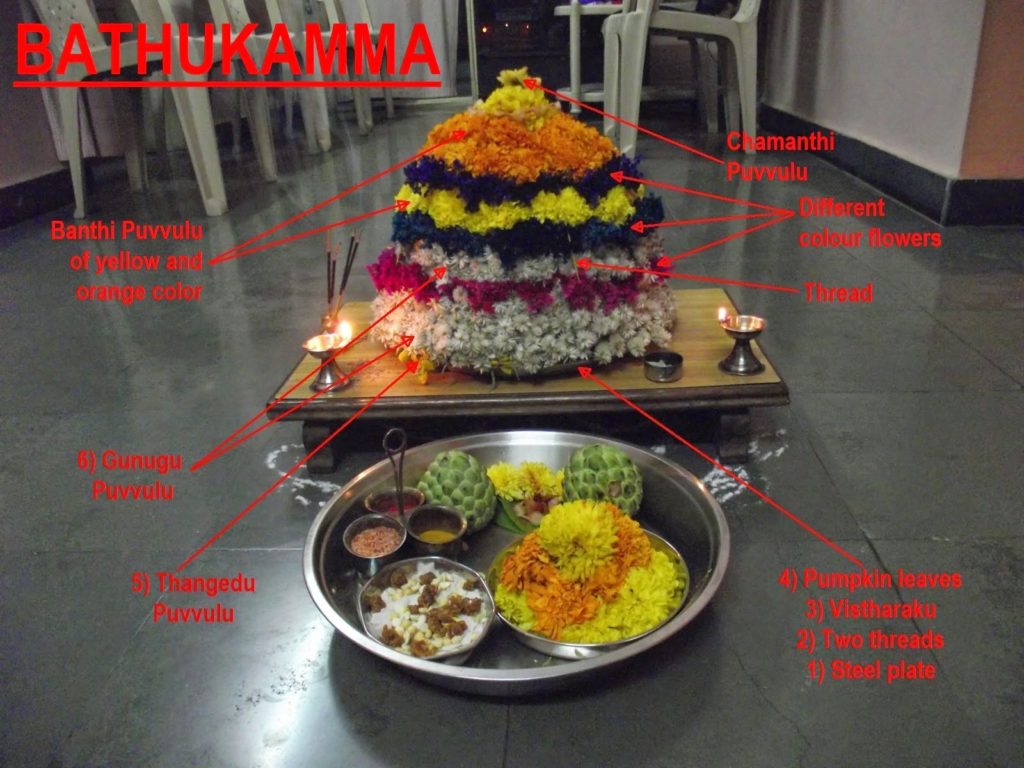
Bathukamma represents cultural spirit of Telangana. Bathukamma is a
beautiful flower stack, arranged with different unique seasonal flowers
most of them with medicinal value, in seven concentric layers in the
shape of potter’s clay like a cone.
….
In Telugu, ‘Bathukamma’ means
‘Mother Goddess Come Alive’ and Goddess Maha Gauri-‘Life Giver’ is
worshipped in the form of Bathukamma – the patron goddess of womanhood
(Maha Gauri Devi).
….
It is the festival for feminine felicitation. On this special
occasion women dress up in the traditional sari combining it with jewels
and other accessories. Teenage Girls wear Langa-Oni/Half-Sarees/Lehenga
Choli combining it with jewels in order to bring out the traditional
grace of the attire.
………
Indian tennis star Sania Mirza was on Tuesday appointed ‘Brand Ambassador’ of Telangana. She will promote the new “state’s interests” in India and abroad,
according to industrial infrastructure corporation managing director
Jayesh Rajan.
Chief minister K Chandrasekhar Rao handed over a
letter of appointment and also a cheque of Rs one crore to 27-year-old
Sania at an interaction session with industrialists here. “Telangana is proud of Sania who is a true Hyderabadi. She’s now ranked
number five in international tennis and we wish she becomes the number
one,” the chief minister said on the occasion.
……..
Indian
tennis ace Sania Mirza achieved a career-best rank of number five in
the world as the new WTA doubles chart was released on Monday.
Sania, who turned a pro in 2003 and overcame a career-threatening wrist
injury in between, has entered the top-five for the first time in her
career. Sania and her Zimbabwean partner Cara Black could not
go deep in the just concluded Wimbledon championships, but a second
round appearance fetched her crucial 130 ranking points, enough to push
her in the top-5.
“Its been a long hard journey since my
comeback to tennis from my third surgery when my career seemed to be
over.. It is a very satisfying feeling to have bounced back from those
despairing times and to be ranked in the top-5 of the world today,”
Sania said.
Her father and coach Imran Mirza said, “I’ve always
believed Sania had the potential to be a top-5 player. I’m happy she
has overcome heavy odds to justify her promise.”
……….
……….
regards
15 Lakhs rupees line of credit from Jagat Seth to the French East India company in 1757!!!!
Does anybody know how much money that is today?? No doubt we all want to be Marwaris (dream on).
………………..
There are perhaps few international forums which are free from commentary reflecting on the unscrupulous nature of Jews, how they actually “control the world” with 30 (billion) pieces of silver.
It is high time that people got to know the businessmen (baniya) community from India. The hatred that a Jew attracts on a global scale will look and sound familiar to a Marwari in South Asia. Everyone hates them, especially the (pseudo) intellectual super-caste folks from Bengal and the South, who dominate Indian media.
The typical sentiment that we have heard and read about in countless novels, plays, and movies is as follows. Our land was the golden land. Gradually it got tainted with the arrival of the Marwaris. They sucked the country dry. They preyed on our innocent women. They have no morals and ethics, all they know is the value of money. They are also religious nut-jobs who will deny non-vegetarians a roof over their heads. All the politicians are in bed with them. The old glory will return only when we finish them all off, when we can make shoes for the poor with the skin of the baniyas.
…….
As anyone who has ever studied business in India knows, the country
does not offer a level playing field for new entrepreneurs. Not only
does the large, if slowly crumbling, scaffolding of India’s socialist
heyday allow government and encrusted special dispensations of various
kinds to inhibit competition, but there also seems to be a deeply
ingrained bias among Indians themselves about who is capable of doing
business and who is not.
And who can blame them? For at least two millennia, the “jati,” or caste
system — the form of social stratification, and indeed suffocation,
unique to Hinduism and India — has regulated society into different
orders of mainly hereditary occupations. According to this vastly
influential scheme, which allocates kingship to the so-called warrior
castes and religious authority to the priestly castes, business is best
done by the mercantile castes, and best scorned by the high or middle
castes. When the outsider demands proof of how genes, or a combination
of genes and culture, can make for such a head start in the very adult,
secular, learnable activities of trade and commerce, the answer is often
sounded: “You don’t want to compete against a Marwari!”
They seem
to have a point. The most ubiquitous of the mercantile castes, the
Marwaris have a certain mystique in India for their legendary ability to
make and manage money. As Thomas Timberg, author of a recent monograph on the Marwaris,
shows, the Marwaris have for hundreds of years served as merchants,
bankers, venture capitalists, speculators and brokers, the managers of
both trust and risk in the Indian economy.
Although
entrepreneurial aspirations have skyrocketed in India since
liberalization in 1991, evidence of the old caste-based structure
continue to show on surveys of wealth creation. According to the Bloomberg Billionaires
list of the world’s richest people, three of the nine richest Indians
are Marwaris. The combined wealth of Lakshmi Mittal, Kumar Mangalam
Birla, and Savitri Jindal is nearly $35 billion.
A group more
dispersed and more enduring than even the great business families such
as the Rothschilds or the Rockefellers, and enabled by social structure
and history as much as dynasty and accumulated wealth, the Marwaris are
an interesting example of an indigenous capitalism pursued, one might say, in a partly collectivist spirit, an essential case study of the relationship of capitalism to culture and social organization.
The
Marwaris, though far-flung today across India and the world, trace
their roots to the harsh desert region around Marwar, in modern-day
Rajasthan in western India. The term “Marwaris” is in fact not a caste
name but an ethnic catchall for various merchant castes from the region.
According to Timberg’s survey, the influence of the Marwaris began to
spread outside their traditional domicile around the 16th century, when
they emigrated in significant numbers to places as far east as Calcutta
(today, Kolkata) and Dhaka (today the capital of Bangladesh) as bankers and financiers to the great Mughal dynasty.
Historically
the managers of India’s premodern “bazaar economy” and the bookkeepers
and funders of kings, the Marwaris were slowly drawn into the world
powers’ battles for control of Indian trade. “Between 1718 and 1730, the
East India Company took an average credit of Rs. 4 lakh per year from
the Jagat Seth firm,” Timberg writes of one of the earliest diasporic
Marwari “great firms.” “As late as 1757 they were lending Rs. 4 lakh per
year to the Dutch East India Company and 15 lakh to the French East
India Company.”
The firm lent to all comers who seemed
creditworthy. Slowly, as British power in India became not just
commercial but also political, many Marwari traders linked up with the
empire as its local commercial face, becoming commodity brokers in the
vast new colonial businesses of tea, opium and jute or agents for
British companies. (Some things don’t change. When the first-ever
McDonald’s opened in India, in Bombay in 1995 — where I ate my first
burger — it was no surprise that the store was being run in partnership
with Amit Jatia, a vegetarian Marwari.)
Later, when the first stock exchange in India — indeed, Asia — was established in Bombay
in the second half of the 19th century, many Marwaris were quick to
jump into what, until very recently, seemed to the more financially
conservative sections of Indian society to be just another form of
gambling, making and losing vast fortunes in their willingness to take
risks. The pan-Indian Marwari network made the financiers in their midst
also bankers of a sort, able to supply and redeem an indigenous bill of
exchange called the hundi and eliminating the risks of cash
transactions.
Socially conservative and tightly knit, the
prosperous Marwaris often served as a school of apprenticeship to clan
members from more modest backgrounds, many of whom eventually branched
out on their own: a kind of Marwar School of Business. Perhaps it’s only
in the last three decades or so that the principle of “Education can wait. Business can’t” has been abandoned by the great karta, or head of the Marwaris.
As
the Marwari ways became widely recognized — financial nous, thrift,
clan solidarity, appetite for risk, social conservatism, involvement in
both religious and secular philanthropy — so too did their mystique.
This subtly reinforced both the stereotype of the grasping Marwari and the occupational-specialization theory of caste,
as well as the larger social consensus that man’s life is embedded in
the rules and values of his own community, not nation or even
self-expression. Looking back at the entries in logbooks and account
books of past centuries, we learn so much about the grain of the Indian
past.
In post-liberalization, as the allure of a new pan-Indian
corporate “MBA culture” distinct from the old
community-and-apprenticeship way of thinking about business has taken
hold, the prospect of a life in entrepreneurship
has for the first time become widely dispersed across Indian society.
The question now being asked of the Marwaris, especially their large
pool of family-owned firms of the brick-and-mortar variety, is: Can they
continue to hold their own in the economy of the 21st century?
Paradoxically,
this challenge has been accompanied by an upswing in social status.
“The Marwari has never quite earned the respect from Indian society that
he has yearned for,” wrote the Indian corporate guru and business
historian Gurcharan Das.
That is now changing rapidly as Indian values become more
unapologetically materialist. Perhaps now we all want to be Marwaris.
…..
Link: http://www.bloombergview.com/articles/2014-07-20/mba-culture-crushes-caste-in-india
…..
regards
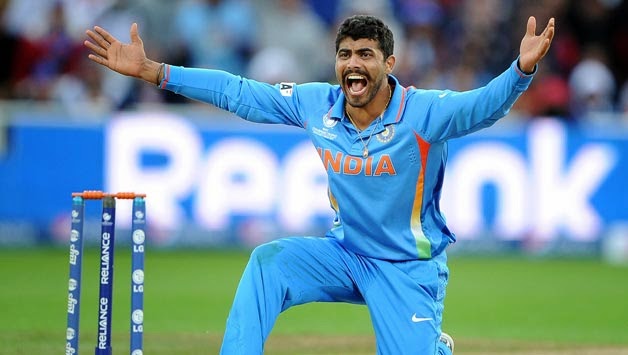
Everything that you know to be true is false.
a) 26/11/2012 Mumbai: England plays India on a turning wicket (as per “request” from Captain Mahindra Singh “Cool” Dhoni).
b) 21/07/2014 London: India plays England on a green-top full of pace and swing (as per “request” from Captain Alistair Cook).
You know that India wins (a) and England wins (b). Utterly, butterly, completely wrong.
The heroes for the historic win for India at Lords are (1) Ishant “bouncer” Sharma (ho ho ho), (2) Cheteshwar Pujara- the new Rahul Dravid, (3) dark horse, Ajinkya Ranade, (4) all-rounder par excellence, Bhuvneshwar Kumar (5) Mr Reliable, Murali Vijay, and yes…the destroyer Ravi Jadeja.
|
India
(2nd innings bat) |
342-10
(103.1) |
Runs
|
Balls
|
4s
|
6s
|
SR
|
|
|
Murali Vijay
|
c Prior b Anderson
|
95
|
247
|
11
|
0
|
38.46
|
|
|
Shikhar Dhawan
|
c Root b Stokes
|
31
|
45
|
4
|
0
|
68.89
|
|
|
Cheteshwar Pujara
|
c Prior b Plunkett
|
43
|
83
|
7
|
0
|
51.81
|
|
|
Ravindra Jadeja
|
c Cook b Stokes
|
68
|
57
|
9
|
0
|
119.30
|
|
|
Bhuvneshwar Kumar
|
c Bell b Stokes
|
52
|
71
|
8
|
0
|
73.24
|
|
India
(2nd innings bowl) |
O
|
M
|
R
|
W
|
Nb
|
Wd
|
RPO
|
|
|
Bhuvneshwar Kumar
|
16
|
7
|
21
|
0
|
0
|
0
|
1.31
|
|
|
Mohammed Shami
|
11
|
3
|
33
|
1
|
0
|
0
|
3.00
|
|
|
Ishant Sharma
|
23
|
6
|
74
|
7
|
2
|
0
|
3.22
|
|
|
Ravindra Jadeja
|
32.2
|
7
|
53
|
1
|
0
|
0
|
1.64
|
My fiancée was in the mood to watch Bollywood and I happily obliged. Even though my brothers are married to desis, both sister in laws are born abroad. Only mine is an Indian (with her mother’s relatives spread over Gujarat and her dather’s in the South & abroad; the great Sindhi-NRI diaspora at work).
A valuable overview of missile defense.
To the horror of peace activists everywhere (torture never works!!, missile defense never works!!!) the Iron Dome works. However this is a cautionary tale. The Israeli Defense Force (IDF) says that it needs 13-15 Iron Domes for full coverage, only nine are operational. Expense is probably not an issue, we will put on our best “Jews own the world” hat and assume that there will be a fair good number of billionaires willing to pony up for an Iron Dome with their name inscribed on it.
But it may also be the case that Israel does not take the threats too seriously and is using Hamas as a punching bag. Hamas no doubt deserves every bit of the bitter medicine but the problem is that the leaders (and even troops) are hiding in deep tunnels, while the civilians are bearing the brunt of this brutal war.
So….. if Israel has perfected missile defense, Hamas has also perfected missile offense. While Israel has attacked Gaza with tanks, Hamas has a few nifty (30m deep!!!) tunnels which are being used to launch surprise attacks inside Israel. Both sides gain from the ability to keep the water boiling at the right temperature (following what a famous Pakistani general had once said).
Worldwide muslims are living under varying degree of occupations by non-muslim powers in Kashmir, Xinjiang, Palestine and Chechnya (there are less prominent ones as well). Of course many more muslims are living under the domination of muslim dictators and tyrants. It gives us no pleasure to say that the first set seem to be better off than the second one. It is a false choice really, all muslims should be free to pray and fast (and not pray and fast as well) and get on with their lives.
………………………
Between the fall of the Jewish Commonwealth to the Romans in the first
century A.D. and the founding of Israel in 1948, Jews were remarkably
easy to kill. Not anymore.
…
Today, thanks to an innovative missile-defense system called Iron Dome (in Hebrew Kipat Barzel),
it’s harder than ever. Yet when it was first proposed, many Israeli
defense experts (and one way or another most Israelis consider
themselves defense experts) were reluctant to support the idea of a
defensive response to rocket attacks from Gaza and Lebanon.
….
Throughout the history of warfare there has been conflict between
those who believe in the strength of a defensive posture and those who
put their faith in the attack. Aside from the proponents of the nuclear
doctrine known as Mutual Assured Destruction, no one has ever seriously
claimed that an exclusively offensive or defensive strategy is viable.
Some military organizations have traditionally put more emphasis on
defense and others on offense.
….
Israel, because of its small size, has always preferred to fight
offensively. If there is going to be a war, let it happen on the other
guy’s territory. This made sense in the 1950s and ’60s. In 1973,
however, the IDF’s lightly fortified positions in the Golan Heights and
on the east bank of the Suez Canal were overwhelmed in the initial Arab
surprise attack.
….
This led to the delusion that the Bar Lev line in Sinai was somehow
an Israeli version of France’s disastrous Maginot Line at the beginning
of World War II. In fact, it was a set of positions built during the War
of Attrition (1968–70) to protect Israeli soldiers from Egyptian
artillery fire, and hadn’t been intended as a line of defense capable of
repelling a full-blown attack. The costly success of the IDF’s
offensive across the canal and the drive on Damascus in the north
convinced Israel’s military leaders that their attack-centered doctrine
was the correct one; it just needed better tanks.
….
In spite of this doctrine’s failure to work as planned during the
Lebanon war that began in 1982, Israel’s leaders remained committed to
an offensive-minded strategy. However, they knew that their enemies were
beginning to equip themselves with long-range missiles. Indeed, Egypt
had used a few early-model Scuds during the Yom Kippur War.
….
Thus, when the Reagan administration offered Israel the chance to
take part in the Strategic Defense Initiative (SDI) missile-defense
program in 1983, a small faction inside the IDF leaped at the chance.
….
Gradually Israeli leaders came to recognize that missile defense was
just as important as other forms of air power. Thanks in part to U.S.
funding, the Arrow missile-defense system was built and deployed along
with a limited number of Patriot-missile batteries. Israelis had long
been used to having bomb shelters in their homes and neighborhoods, and
they came to accept missile defenses as just another form of homeland
protection.
….
During the 1991 Gulf War, Saddam Hussein’s forces fired 42 modified
Scuds at Israel. The ensuing controversy over the effectiveness of the
Israeli and U.S. Patriot units that were hastily activated and deployed
in response taught both America and Israel some valuable lessons.
….
For
one, education and preparation count. The Israeli Patriot crews were
barely halfway through their training when the crisis broke out. Neither
Israel nor the U.S. Army had enough experience with these weapons to
understand how to effectively integrate them into a large-scale
defensive scheme. ….
The U.S. Patriot units did not arrive in Israel until
the war was already underway, and their improvised deployment has
generally been regarded as a failure.
….
Another problem was that space-based sensors on America’s Defense
Support Program early-warning satellites, which provided critical alerts
every time the Iraqis launched a Scud, were not directly hooked into
Israel’s air-defense system.
….
The satellites were designed to give early
warning of a Soviet nuclear strike, and their ability to detect Iraqi
missile launches was an unplanned side benefit. The Israelis learned the
hard way that they would need a complex, sophisticated, and extremely
fast-acting sensor system if they were to make missile defense work.
….
When the Second Gulf War broke out in 2003, Israel had deployed the
early version of its Arrow defense missile. It also had integrated
improved Patriot batteries and had developed an advanced
command-and-control organization to provide it with a multi-layered
national missile-defense system.
…
Yet when Hezbollah fired thousands of rockets at northern Israel
during the 2006 Second Lebanon War, existing missile defenses did little
or nothing to stop this attack. For some unknown reason, Israel was
unwilling or unable to obtain the American Centurion short-range
missile-defense system (based on the U.S. Navy’s Phalanx anti-missile
gun). Additionally, the proposed Nautilus chemical-laser system was seen
by experts as both too expensive and too easily overwhelmed, since it
could only fire seven or eight shots before it needed to be refueled.
….
Meanwhile, the Israeli defense firm Rafael was developing the concept
that would lead to Iron Dome. It would be based on Israel’s
longstanding expertise in radars and especially on the AESA (Active
Electronically Scanned Array) type radar. This technology uses dozens of
small transmit–receive modules to scan for targets. It does not need
any sort of mechanical sweeping apparatus, and its power output can be
easily adjusted to concentrate on any given part of the sky.
….
Israel had
first developed such radars as replacements for the older systems that
equipped its F-15s and F-16s.
…
Iron Dome uses a Multi Mode Radar (MMR) to detect and track enemy
rockets. If the rockets are going to land in an uninhabited zone, the
system does nothing; if the projectile is going to hit a neighborhood or
an area that has been designated as “protected” it will launch one or
sometimes two “Tamir” interceptor missiles in order to destroy the
incoming weapon.
….
Its rate of success, which the IDF claims is in the 85 to 90 percent
range has been challenged by, among others, Theodore Postol of MIT, a
longstanding, hardcore opponent of U.S. missile defense. …
The details of
the system’s effectiveness are closely held, but in its performance
against the improved “Grad” and other rockets that Hamas has been using,
the results speak for themselves.
….
The system is by no means perfect. When a rocket is hit, it does not
disintegrate into nothingness. Debris from both the missile and the
rocket fall to Earth and this debris can sometimes do damage, but this
is minimal compared to the damage a live warhead would do.
…..
Back in 2012 I wrote a piece
for the Gatestone Institute making the argument that the economics of
Iron Dome are not as bad for Israel as some people claim. Since then,
the price of the Tamir interceptor missiles has probably gone down
thanks to improved manufacturing techniques and the larger quantity of
weapons being built.
…..
Three points about the system are significant for Americans. First,
while the U.S. has been financing a great deal of Iron Dome’s
development and manufacturing, our military seems reluctant to take
advantage of the weapon’s availability. Second, the system is
continuously being improved; as with every military system there is a
constant need to update the hardware and software, and, thanks to Hamas,
the Israelis have a great deal of live-fire data on which to base their
upgrades.
…..
The third, not always evident, point is that there is a human
element in the operation of Iron Dome: Some crews are better than
others, and training and experience count. The technology by itself can
only go so far. American missile-defense crews get little, if any,
live-fire training. Simulators have their limits. In light of this, the
U.S. military should rethink the way it trains its missile-defense
troops.
…..
According to recent reports, Israel now has at least nine Iron Dome
units in operation. The IDF has said in the past that they need a total
of 13 to 15 units to cover the whole country. As production for Israel
winds down, the U.S. would be wise to consider buying a few units of its
own for use in South Korea and in places like Bagram Air Force Base in
Afghanistan. After all, the Taliban often use rockets similar to those
used by Hamas. We should expect that future enemies will use similar
weapons against similar targets. If an Iron Dome were to prevent the
destruction of a single U.S. C-17 transport plane, it would pay for
itself several times over.
…..
The U.S. is already scheduled to begin producing components for Iron
Dome, and there is no reason why it could not manufacture an
increasingly large part of the system. Rockets such as the Grad have
been an important part of the arsenal of insurgents in low-intensity
conflict, and are also an important weapon in more conventional warfare.
As time goes on, Iron Dome or weapons systems like it will be
integrated into the arsenals of all the major powers.
…..
Link: http://www.nationalreview.com/node/382931/
……
regards
OK Singapore is a weird place, it allows (we hope) internet porn while blocking Playboy (the interviews, people are missing out on the interviews!!!!)

But why ban Archie? Because….. presumably, just like Iran, Singapore does not have any gays. Not only that, just hearing about gays will pollute the minds of youngsters and they will turn int gays. What a nightmare.
When people talk about the positive influence of religion (which we do not deny) they should also acknowledge the immense harm that it does on both believers and non-believers alike.
…….
Singapore has banned a volume of the “Archie” comic book that featured a
same-sex marriage, adding fuel to a censorship row that erupted over a
children’s story about two male penguins hatching an egg.
“Archie: The Married Life Book Three” was taken off book shop shelves
following a complaint to Singapore’s Media Development Authority which
found it was not in line with social norms and breached their content
guidelines.
…
News of the ban, which was imposed earlier this year but came to light
late on Wednesday, comes a week after Singapore’s National Library Board
said it was to destroy three children’s books seen as being
pro-homosexual, including penguin story “And Tango Makes Three”.
…
That prompted about 400 people to turn out on Sunday for a “read in” of
the books in the national library’s atrium, while on Wednesday, three
authors resigned as judges from Singapore’s main literature prize in
protest against the move.
Singapore has tight rules on censorship, banning Playboy magazine and
blocking dozens of websites in what it has described as “a symbolic
statement of the types of content which the community is opposed to”.
However, whether homosexual content falls into that category is a thorny
issue. A growing groundswell of support for gay rights is being met
with noisy protests from religious groups, keen to maintain the status
quo of sex between two men being illegal.
Last month, a record crowd turned out for a gay-rights rally called
“Pink Dot” while several Christian and Muslim groups protested against
it by wearing white.
Minister for Communications and Information Yaacob Ibrahim has said he
supports the library’s stand, although unusually not all members of the
governing People’s Action Party (PAP) share that view.
“I do not believe homosexuality falls in the category of issues which
should be excluded,” said Hri Kumar Nair, a PAP member of Parliament in a
Facebook post titled Pulp Friction.
“But I think most neutrals would agree that children should read books with controversial themes supervised,” he added.
For Archie, the volume’s removal from book shelves in Singapore comes as
the redheaded American teenager is due to exit the comic world
altogether.
Next week, an issue will be released in the United States that shows him dying as he takes a bullet protecting a gay friend.
…..
Link: http://www.firstpost.com
…..
regards
Roy and Godse are dwellers of distant planets so one has to be careful while drawing equations. She is THE leading global thinker while he was just a deluded terrorist. But it should be highlighted that Roy is a fan of Comrade Charu Majumdar (see below), a terrorist of equal or much higher caliber than Godse.
What unites Roy, Godse and Majumdar is deep-seated Gandhi-hatred, and to mock non-violence as a way to solve (big) societal problems. Perhaps it is because deep down we are all defined by our caste. Roy, Godse and Majumdar are all Brahmins who despise the upstart Vaishya/Baniya (Gandhi).
………..
….After acknowledging that Mazumdar’s “abrasive rhetoric fetishses violence,
blood and martyrdom, and often employs a language so coarse as to be
almost genocidal”, Roy finds that despite all this blood lust Charu “was a
visionary in much of what he wrote and said. The party he founded (and
its many splinter groups) has kept the dream of revolution real and
present in India. Imagine a society without that dream. For that alone
we cannot judge him too harshly. Especially not while we swaddle
ourselves with Gandhi’s pious humbug about the superiority of ‘the
non-violent way’ …
………..
As far as blood lust is concerned, while Majumdar argued in favor of “making shoes for the poor with the skin of rick people” (Bengali- dhonir chamray goriber juto), Godse wanted a Muslim mukt Bharat (muslim free India).
Now Roy has made many Dalit activists extremely unhappy (see below). They want her to shut up about Gandhi and also shut up about Ambedkar. This is primarily because Roy (as dalit activists see her) is a forward caste celebrity trying to cash in on Ambedkar. They are not interested in her certificates because of her lack of a (caste) certificate. Throwing stones at Gandhi is not going to change that equation.
We learn that the book launch (for The Annihilation of Caste in Hyderabad by AR) was cancelled because of opposition from Dalits? We would expect S Anand (publisher) to scream out when there is attack on free speech on HIS own book. Before he and other left-liberals shout wolf again they will need to tell us why one form of censorship is bad, while others are benign.
……..
You would think, therefore, that Dalit intellectuals would only be happy
that Arundhati Roy is engaging with that text, that leading English
language magazines are telling the world about it, that we need to read
Ambedkar, and explaining why.
Strangely, some Dalit radicals and
intellectuals have a problem with Arundhati Roy reading, learning from
and expounding about Ambedkar. On March 9, Roy was to be in Hyderabad to
launch the book. But the event was cancelled because the publisher
feared protests from Dalit radicals who have been upset about the book. The Hindu quoted some of them:
“The
book is extremely important for Dalits and it not right to add
footnotes to the book. We feel Arundhati Roy has diluted Ambedkar’s
writing and there is every chance that the book might be misinterpreted.
Roy has always been a Maoist sympathiser and has never been vocal on
Dalit atrocities. So with that understanding, how can she write a
foreword for the book?” asked J. Srinivas, state co-convenor for the
Dalit Shakti programme, and a post-doctoral fellow at the University of
Hyderabad.
Renowned author and lawyer Bojja Tarakam, who
will be the guest at the event, also plans to raise objections
regarding the content. “Most of the preface is about Gandhi, rather than
Ambedkar. What is the need to write so much about him?” Mr. Tarakam
said. However, he opposed any kind of curbs on the release of the book
and felt it should be released in order to facilitate healthy discussion
on the subject.
In other words, Dalit intellectuals think
it is their right, by virtue of their caste, to decide whether a Maoist
sympathiser can write on Ambedkar; whether one can write on the Ambedkar
debate with Gandhi; or whether one is allowed to write more words in
criticism of Gandhi than in praise of Ambedkar. Annihilation of Caste was written for the upper castes, meant to be addressed to them.
……
Arundhati Roy, the Booker-prize-winning author who likes to shock us
periodically with her outlandish statements, is now in the business of
rubbishing Gandhi. She is sailing in the same boat as Babasaheb Ambedkar
– and Nathuram Godse, one might add. For Roy, Gandhi is Caste Bigot,
not Mahatma.
….
Godse put bullets into the Mahatma because he was allegedly too
pro-Muslim and anti-Hindu; Roy wants to erase the name of Gandhi from
every institution that currently carries it because, she says, Gandhi
was an out-and-out casteist.
….
According to this Times of India report,
Roy, speaking in the memory of the late Dalit leader Mahatma Ayyankali
at Kerala University, said universities named after Gandhi should be
renamed. Her reference was probably to Mahatma Gandhi University, a
leading educational institution in God’s Own Country.
….
The newspaper quotes Roy as excoriating Gandhi for an essay he wrote in
1936 titled The Ideal Bhangi to prove that Gandhi was casteist and
patronising towards Dalits. Today nobody would use the word “bhangi”
without inviting the charge of gross political incorrectness, but Gandhi
lived in politically incorrect times. Much of Ambedkar’s writings on
caste and religion too would not pass muster in today’s identity-charged
political discourse.
Arundhati Roy also despises Gandhi for his idealism.
There is some validity to the caste charge levelled against Gandhi. He
was a social conservative keen to reform caste, not annihilate it.
Ambedkar was irritated by Gandhi’s claim that caste was not central to
Hinduism but a sin committed by caste Hindus for which they must atone.
Many Dalits also see Gandhi’s decision to call “untouchables” Harijans
as condescending and obnoxious.
Gail Omvedt, another writer influenced by Marxist thinking, explains Gandhi’s approach thus:
“Gandhi was not simply a devoted Hindu, but also a fervent believer in
his idealised version of ‘varnashrama dharma.’ He felt that what he
considered to be the benign aspects of caste – its encouragement of a
certain kind of solidarity – could be maintained while removing
hierarchy and the extreme evil of un-touchability. This was in fact the
essence of his reformism.” Ambedkar saw caste as the very basis of evil,
which needed to be excised completely from the body politic.
Godse, a Brahmin, had views on caste that Gandhi would not have disapproved of. In his trial statement,
he says that he “worked actively for the eradication of untouchability
and the caste system based on birth alone. I openly joined anti-caste
movements and maintained that all Hindus are of equal status as to
rights, social and religious, and should be considered high or low on
merit alone and not through the accident of birth in a particular caste
or profession….I used publicly to take part in organised anti-caste
dinners which thousands of Hindus, Brahmins, Vaishyas, Kshatriyas,
Chamars and B—–s participated. We broke the caste rules and dined in
the company of each other.”
The interesting point is Godse hated Gandhi for his “appeasement” of
Muslims while Arundhati Roy criticises Gandhi for his alleged casteism.
Godse wanted Gandhi excised from this world, Roy wants Gandhi excised
from public memory for espousing the evil of caste.
Despite present-day antagonisms between Ambedkarites and Gandhians, it
is doubtful if Ambedkar himself, unlike Roy, would want Gandhi
forgotten, though he would certainly want him removed from a pedestal.
But if so far Roy’s views are analogous to Ambedkar’s, she seems to
despise Gandhi as much for his impractical idealism. In contrast, she
can forgive the murderous ideas of Naxal theoretician Charu Mazumdar for
being a visionary. This is what she wrote some years ago about her
travels in Naxal-land titled, “Gandhi, but with guns.”
After acknowledging that Mazumdar’s “abrasive rhetoric fetishses violence,
blood and martyrdom, and often employs a language so coarse as to be
almost genocidal”, Roy finds that despite all this blood lust Charu “was a
visionary in much of what he wrote and said. The party he founded (and
its many splinter groups) has kept the dream of revolution real and
present in India.”
“Imagine a society without that dream. For that alone
we cannot judge him too harshly. Especially not while we swaddle
ourselves with Gandhi’s pious humbug about the superiority of ‘the
non-violent way’ and his notion of Trusteeship: ‘The rich man will be
left in possession of his wealth, of which he will use what he
reasonably requires for his personal needs and will act as a trustee for
the remainder to be used for the good of society.’”
Put another way, Charu’s murderous idealism was fine, but not Gandhi’s.
Roy’s views, in fact, are in sync with what Godse himself had to say
about Gandhi, who said: “He (Gandhi) was, paradoxical as it may appear, a
violent pacifist who brought untold calamities on the country in the
name of truth and non-violence.”
Just as Roy ridicules Gandhi’s idealism about trusteeship, Godse mocks
Gandhi’s ideas of non-violence thus: “His activities for public
awakening were phenomenal in their intensity and were reinforced by the
slogan of truth and non-violence, which he paraded ostentatiously before
the country. No sensible or enlightened person could object to these
slogans.”
“In fact there is nothing new or original in them. They are
implicit in every constitutional public movement. But it is nothing but a
dream if you imagine the bulk of mankind is, or can ever become,
capable of scrupulous adherence to these lofty principles in its normal
life…In fact, honour, duty and love of one’s own kith and kin and
country might often compel us to disregard non-violence and to use
force. I could never conceive that an armed resistance to an aggression
is unjust.”
Roy eulogises Charu for his revolutionary ideals, even if achieved
through violence. But Gandhi’s idealism pursued without violence is
“humbug.”
It would appear that if Godse had only been a murderous Marxist, Roy would have approved of his act.
……
Link(1): http://www.firstpost.com
……
regards