Our modern age (brainless) doctors

When you go in for an operation in India, make sure that you leave the hospital with your wallet, specs, notebooks…and your complete set of body parts. If you do not, then it may be possible to find your (empty) wallet, but your body parts will be lost forever.

The whole society is being poisoned by profit motive so it is bad form to only point at doctors, there are now greedy teachers, corrupt police and all that. Still this is shocking news.

The hospital is trying to close legal options by paying compensation. USA style tort system will probably not work in India, earlier when a ghastly fire led to 90 patients dying in a (different) Kolkata hospital forcing a shutdown, it was the common man in the form of hospital workers who suffered.
……………
The bone flap of a 23-year-old that was being preserved in the operating theatre of Ruby General Hospital has gone missing.
The youth underwent brain surgery in the hospital in January last year.
The flap was opened during the surgery and was to be put back later on.
Neurosurgeons, however, said that missing bone flaps would not have any
bearing on the patient’s recovery and that artificial options would be
used instead
.

Arnab Dutta, 23, had jumped from the terrace of
his Lake Gardens apartment in January last year in a bid to commit
suicide after his father passed away. The computer engineering student
was rushed to Ruby General Hospital with a severe head injury, and where
he was operated on for brain haemorrhage.

During discharge,
the hospital told Arnab’s family that the bone flap was being preserved
to be replaced later, and that they should come back later. Arnab’s
family did not come back for months. In May this year, they asked the
hospital for the bone flap. The hunt for the piece of skull started, but
it was nowhere to be found, said a hospital source.

“Bone flaps are replaced once the brain
swelling comes down. But in many cases patients do not come back for
cranio-plasty, which is done mainly for cosmetic purposes. Otherwise,
once the overlying skin and hair covers that place, people can lead a
normal life with no effect on recovery,” said Anirban Deep Banerjee,
consultant neurosurgeon with Apollo Hospitals, Kolkata.

The
Ruby hospital authorities have assured the family of compensation. “We
will compensate the family,” said a hospital official.

……

Link: http://timesofindia.indiatimes.com/city/kolkata/Kolkata-hospital-loses-a-part-of-patients-skull/articleshow/37352089.cms

……

regards

What is your name?

An interview that is literally worth
life or death.
With Hindus in Bangladesh the ID
interview was fairly trivial. Just remove the underclothes, inspect the male
organ and (if you wish) cut it off. In the killing fields of Mosul things are a
bit more tricky. If you can hold your nerve you may be able to escape. OTOH a
lifetime of habits is difficult to change.And the killers are merciless…
…………..
As the militant group
the Islamic State in Iraq and Syria, or ISIS, has seized vast territories in
western and northern Iraq, there have been frequent accounts of fighters’
capturing groups of people and releasing the Sunnis while the Shias are singled
out for execution.
ISIS believes that the Shias are
apostates and must die in order to forge a pure form of Islam. The two main
branches of Islam diverge in their beliefs over who is the true inheritor of
the mantle of the Prophet Muhammad. The Shias believe that Islam was
transmitted through the household of the Prophet Muhammad. Sunnis believe that
it comes down through followers of the Prophet Muhammad who, they say, are his
chosen people.

….
What is your name? A quick look at an Iraqi’s national identity
card or passport can be a signal. Shias believe that the leadership of Islam
was passed down through the Prophet Muhammad’s son-in-law Ali and his sons
Hussain (or Hussein), Hassan and Abbas, among others. While some Sunnis and
members of other Islamic groups may also have those names, ISIS would most
likely associate them with the Shias.
….
Where do you live?  In every city and province, even
majority Sunni ones, there are enclaves that are known to be Shia. People who
said they came from one of those neighborhoods would most likely be killed.
….
How do you pray? Shias and Sunnis offer prayers in slightly
different ways, with Sunnis generally folding their hands or crossing their
arms in front of their stomachs and Shias leaving them extended, palms resting
on their thighs.
In a chilling video
that appeared to have been made more than a year ago in the Anbar Province of
Iraq, ISIS fighters stopped three truck drivers in the desert and asked them
whether they were Sunnis or Shias. All three claimed to be Sunni. Then the
questions got harder. They were asked how they performed each of the prayers:
morning, midday and evening. The truck drivers disagreed on their methods, and
all were shot.
….
What kind of music do
you listen to?
Recordings of
religious songs could also be a tipoff. Similarly, even the ringtone on a
person’s telephone could be a clue because it might be from a Sunni or Shia
religious song.

There are other clues,
but none are completely reliable. For instance, a number of Shias wear large
rings, often with semiprecious stones. But so do some Sunnis, and others. Generally,
Iraqi Shias and Sunnis are often indistinguishable in appearance. That is even
more evident in many families and tribes in which there has been intermarriage
for generations.
Given that the rigid
views of ISIS are fairly well known, it is perhaps natural to wonder why
hostages do not simply lie about their origins. It seems that many do, yet in
very tense, perilous encounters, people can easily get tripped up. Sometimes
another person in a group might inadvertently give someone away. Others refuse
to lie about their faith. 
…….
…….
regards

“Tomorrow they can be in India”

“They aren’t Muslims. Jihad means to defend. Jihad doesn’t mean to
kill,” …as he
showed graphic footage on his cellphone of be-headings and bombs
exploding in Iraq.
…”We could travel to Iraq to form a human chain to save people from
being tortured. We could fetch water and donate blood and do anything to
save our shrines”…

We agree with Prof Minai that states like Pakistan can be in mortal danger because of the example of what is going on in Iraq. However we would like to go one step further and point out that even India is not safe.


The basic problem is that there are huge Shia populations in South Asia, especially in urban India. In places like Lucknow they are as much as 40% of the muslim count. If the battle of Iraq reaches the existential crisis state (and it very already looks like one from a distance) then we can expect severe social upheavals, complete with bombing of Shia and Sunni mosques and Baghdad like Shia-on-Sunni-on-Shia attacks.

In the proper Middle East the Shia/Sunni populations are largely segregated except for parts of western (and eastern) Iran and eastern Saudia. Syria and Iraq may now elect for partition (there is not much of a choice).  

Only in India and in Pakistan there is a mixed muslim population and this may become as much of a problem as the original Hindu-Muslim problem.

Already versions of the two nation theory (our heroes are their villains and vice versa) have been tested and validated across the sub-continent, soon there may be more divisions leading to more pain for the common people (while the elites stay secure behind iron gates and armed watchmen).
……
Thousands of Muslims in India have signed up to defend Iraq’s holy
shrines and, if need be, fight Sunni Islamist militants in the country
where the civilian death toll from the Sunni insurgents’ advance is
estimated at least 1,300.

Denouncing the militants of the Islamic State in Iraq and the Levant
(ISIL) as terrorists, these Indian Muslims have filled out forms,
complete with passport-size photographs and photocopied identification
documents, to travel to Iraq.


Leaders of Anjuman E. Haideri, the religious organisation
spearheading the effort, said they might march to the Iraqi embassy in
New Delhi on Friday to deliver the forms.


….
A Shia cleric is leading the effort and the volunteers want to
protect shrines venerated by the sect in Iraq, but the group’s leaders
say their cause is not sectarian.


Already at the group’s headquarters located off Karbala Road in a
leafy New Delhi neighbourhood, picket signs of “It’s not Shias vs Sunnis
(it’s) Iraqis vs Terrorists” have been prepared.


….
“They aren’t Muslims. Jihad means to defend. Jihad doesn’t mean to
kill,” said Syed Bilal Hussain Abidi, a senior member of the group as he
showed graphic footage on his cellphone of beheadings and bombs
exploding in Iraq.


“We could travel to Iraq to form a human chain to save people from
being tortured. We could fetch water and donate blood and do anything to
save our shrines,” he said, surrounded by brightly colored files
stacked with volunteers’ forms.


….
Even though Muslims are a minority accounting for only 15 percent of
Indians, they still number about 175 million, making them the
third-largest Muslim population in the world.


….
Whether the volunteers will be granted visas and allowed to travel to
Iraq is not clear. Officials at the Iraqi embassy were not immediately
available to comment.


India’s foreign ministry has said it will not allow Indians to go to
Iraq because of the security situation in a country where 40 Indian
hostages are being held in an undisclosed location and 46 Indian nurses
are stranded in Tikrit hospitals.


….
But Syed Bahadur Abbas Naqvi, the group’s general secretary, said
that since the Indian government does not plan to send forces to Iraq,
the supporters have little choice but to head over there themselves.


….
So far, the volunteers, who range from engineers to students and
police officers, have signed a form that says: “I firmly believe that
terrorism of all kinds including the one which is being inflicted by
known terror groups in Iraq is not only a serious threat to innocent
Iraqis (irrespective of their religious beliefs) but is also a threat to
the entire humanity.”


The group said it has 100,000 signatories from across India and has
held several demonstrations “against terrorism” in Delhi and other
cities.


….
The group wants to defend shrines spread across Iraq in the cities of
Karbala, Najaf, Samarra and Kirkuk, but also stem the rise of crude oil
prices that have shot up as a result of the crisis and could hit
importer India hard.


“If they need help, we’re ready from Hindustan,” said Dilawar Abbas, a
group member, using another name for India. If the ISIL is in Iraq
right now, “tomorrow they can be in India.”

……

Link: http://in.reuters.com/article/2014/06/26/iraq-security-india-idINKBN0F117I20140626

…..

regards

Tiger watch

“Suddenly, my sister cried out: ‘Dada, bagh (tiger)’. I was stunned, and
my body froze. All I saw a flash of yellow. It took me a moment to
register the gruesome sight before me. My father was completely buried
under the beast.

When you enter the world of the Tiger you are always under 24/7 surveillance. The unseen eye watches you and destroys you. There will be no escape and no mercy.

Even now, people in the Sunderbans area (which is divided between India and Bangladesh) worship the tiger and the snake. These are the real gods with the power of life and death in their hands (paws). This is true even for people who follow Islam (which is a majority). For these folks, life in the present is no doubt of greater value than life in the next.
……

The
danger of venturing into the prohibited areas of Sunderbans was revealed
again on Thursday morning when a tiger jumped from the bank of a creek
and leapt back with a man in its jaws. This is the fourth time that a
human was killed by a tiger in the Sunderbans this year.

The
victim, 62-year-old Sushil Majhi, lived in Lahiripur near Datta river,
less than kilometre from a creek that runs deep into the forest. Along
with his son Jyotish, 40, and adopted daughter Molina, Majhi would often
row up the creek to catch crabs.

On Thursday, at the crack of dawn, the three set out on a boat to the forests of Kholakhali, an area where fishing is banned.

Jyotish sat in front of the boat, Sushil in the middle and Molina at
the tai. That is how they balanced the vessel while pulling in the net.

“Shortly after we reached the spot, around 7am, we got a whiff of a
strange odour. We immediately decided to turn back to a safer zone,”
Jyotish told TOI. They were paddling towards a less dense area when a
tiger that had been stalking them struck like lightning.

“Suddenly, my sister cried out: ‘Dada, bagh (tiger)’. I was stunned, and
my body froze. All I saw a flash of yellow. It took me a moment to
register the gruesome sight before me. My father was completely buried
under the beast. I could only see his legs thrashing about. I shook off
my numbness and grabbed a stick. Molina, too, took out a long cutter we
use to clear foliage in the jungle. Together, we poked and battered the
tiger, but it refused to give up,” he said.

Despite
being attacked, the tiger concentrated on its kill and once it got a
good grip, it held Majhi by his neck and jerked the body in a way that
it landed on its back, said Jyotish. “It jumped off and landed on the
bank in one giant leap. We saw it disappear into the jungle with my
father still in its jaws,” he added, shaking from the ordeal.

Jyotish and Molina raised the alarm and some fishermen paddled furiously in their direction.

“But they didn’t dare chase the tiger into the deep woods. Molina was
so traumatized that she lost consciousness. I didn’t take any further
risk and returned with her as quickly as possible,” said Jyotish.

Majhi’s body is unlikely to be recovered, as countless other human victims before him.

Sunderbans Tiger Reserve field director Soumitra Dasgupta said there
were reports of a tiger attacking a fisherman on Thursday morning.

“Fishing is banned in the forests where the incident took place,” he said.
 
…..

Link: http://timesofindia.indiatimes.com/city/kolkata/Sunderbans-tiger-attack-Sunderbans-Tiger-Reserve/articleshow/37280645.cms

…..

regards

Yoga for the 0.1% (and neocons)

“A free society does make people phenomenally
wealthy—and this is a wonderful, beautiful blessing—but not enough to
give people a satisfying life,” he continued,…. a self-declared “warrior
for free enterprise” 

From Nazi hipsters we now move on to neocon imperialists and the (in)famous American Enterprise Institute (AEI) which hosts Ayaan Hirsi Ali as a Fellow. Arthur Brooks wants to get in touch with his inner hippie and who better than Sri Sri Ravi Shankar to act as a go-between. Especially now that India has impeccable credentials as a Hindu nation, which has managed to drive out the British and Mughal empires with (mostly) spiritual power and a democratic revolution.

We agree that a change of image would be good for the neocons. The mad Iraq war that they helped launch has right now created the specter of 100 years religious war in the Middle East. If a little bit of yoga helps to calm the nerves, that may not be such a bad thing. For the millions (plus) victims of war unfortunately, this raising of inner consciousness will not be useful.
….
There were more turbans and saris among the suits and ties
than usual at the American Enterprise Institute this week when AEI
President Arthur Brooks welcomed Hindu spiritual leader Sri Sri Ravi
Shankar for a conversation on human flourishing.


“I wish I could
tell you global brotherhood is best served through greater and greater
amounts of money,” Brooks said as the heavily bearded Shankar, dressed
in a luminous white robe, sat quietly in a chair, “but I can’t tell you
that because it’s not true,” he concluded with a flourish. 

Everything
Brooks does is with a flourish, and his new venture into what some
would call humanism is a striking departure for the venerable
conservative think tank. “A free society does make people phenomenally
wealthy—and this is a wonderful, beautiful blessing—but not enough to
give people a satisfying life,” he continued, an insight that shouldn’t
be surprising until you consider the source: a self-declared “warrior
for free enterprise” who heads a group dedicated to spreading the gospel
of capitalism and governed by a board populated by hedge-fund
millionaires.

When Brooks first outlined his idea for a series of conversations dedicated to human flourishing and what makes people happy,
a colleague asked only half-jokingly, “Do you actually handle snakes?”
Emotional IQ, meditating, getting in touch with your inner self is not
the typical fare at AEI. “I’m such an evangelist for this, I get a lot
of ribbing,” Brooks told The Daily Beast. He explained that this is his
way of getting past the “left-right dichotomy that’s so boring and
unproductive” in politics today and getting to “the fundamentals of what
people are looking for in their lives.” 

In a think tank with 200 scholars, the reaction to Brooks’ spiritual journey
is a mixed bag. “Some people are all-in on this, and others are just
doing their work, no problem,” he says. One resident fellow who has been
in the room when Brooks tells AEI donors whose wealth puts them in the
top tenth of the 1 percent that conservatism isn’t about them, that it’s
about the least among us: “Even if it’s a ploy, that’s a message that
leaves a lot of them uncomfortable.” 


Others at AEI when asked if the 50-year-old Brooks is going through a
midlife crisis say they’ve seen no evidence of that. They point to his
longstanding interest in the subject of happiness; he’s published one
book and is writing another one. Besides, Brooks says he’s already had
his existential crisis. It occurred when he became a full professor with
tenure at Syracuse University. “I had more job security than a French
bureaucrat,” he says, and it wasn’t enough, he wasn’t happy.

“I
have the weirdest background for someone who is president of a think
tank,” he says, adding with a laugh, “I’m just a washed-up French horn
player.” Hardly, though he did leave college to pursue music and was the
principal French horn player with the orchestra in Barcelona, Spain. He
got his bachelor’s degree through correspondence courses, and went on
to get a Ph.D. in economics, becoming the true believer he is today in
the power of free enterprise to lift people out of poverty.

A
self-declared independent, he says AEI has a “moral obligation to look
for the deeper strands of thinking. It’s not to get more conservatives
elected or to hurt liberals,” he says. He sees a potential truce between
left and right. “Let’s declare peace on the social safety net and war
on crony capitalism.” Even so, AEI is mostly a bystander as Republicans
fight among themselves to squelch the Tea Party grassroots. Allied with
business interests and the Chamber of Commerce, Brooks acknowledges the
assault on capitalism, and with these conversations about human
flourishing seeks to address the growing divide in wealth. 


When the Dalai Lama visited AEI in February and told everyone he was a
socialist, it was an awakening of sorts for many of the more staid
scholars, and even better, from AEI’s perspective, was the Dalai Lama’s
admission that he felt more kindly about capitalism after his
conversation with Brooks. He called the AEI president “the spiritual
leader of the capitalist people,” a moniker that Brooks embraces.

Brooks cut to the chase with Shankar, asking “the big question”
on his mind: “What’s the secret to happiness?” The audience laughed at
the bluntness, and at the expectation that an answer could be had so
easily. “Just be yourself,” Shankar advised. Who influenced him the
most? His mother, he said, but “anytime, anywhere, people can inspire
you. It’s an internal phenomenon. You are in the moment. Inspiration is
opening the source of energy.” Brooks wondered if that meant he could
inspire Shankar, a comment that had the audience laughing once again.

Citing a study that shows only a third of Americans consider
themselves happy, Brooks asked what is the one thing Shankar would do to
increase that number. “Why one thing?” he responded playfully, before
explaining calmly that stress simply means too much to do, and too
little time. Either increase your energy level or reduce what you do. Go
slowly, he said, “Drive behind a bicycle.”

……

Link: http://www.thedailybeast.com/articles/2014/06/27/dc-s-top-neocon-finds-his-inner-hippie.html

…..

regards

#nipster

In February, Tim and Kevin started Balaclava Kueche,
Germany’s first Nazi vegan cooking show…the first episode: mixed salad, tofu scramble.
“The left-wing doesn’t have a prior claim to veganism,” says Tim.
“Industrial meat production is incompatible with our nationalist and
socialist world views.” 

Even Nazis can be hipsters and wear Che Guevara uniforms. It is a strange world indeed.

Back in his 2010 book What Was the Hipster?,
Mark Greif described the term as meaning a “consumer” who “aligns
himself both with rebel subculture and with the dominant class and thus
opens up a poisonous conduit between the two.” 


……
It’s a rainy Sunday evening in May, in the town of Weiden, in
northeastern Bavaria, and Patrick Schroeder, whom the German press has
dubbed the “Nazi-hipster,” is preparing for his big webcam entrance. As
the opening sequence for his weekly Internet TV show, FSN.tv,
plays silently in the background, he ties a bandana stitched with the
slogan “H8” around his mouth and fiddles with his mouse. A map of
Germany in 1937 hangs on the wall above him.


“If the Third Reich was so bad, it would have been toppled,”
he argues, before the filming begins. “Every half-intelligent person
knows there is no system where everything was bad.”


FSN.tv is Germany’s only neo-Nazi Internet TV show, and in
the two years since it has existed it has turned Schroeder into a
well-known, if highly controversial, figure in the German extreme right,
largely because he has been open about his desire to give the German
neo-Nazi movement a friendlier, hipper face.


Over the past year, partly because of leaders like Schroeder and
partly because of the unstoppable globalization of youth culture, the
hipsterification of the German neo-Nazi scene has begun to gain steam.
This winter, the German media came up with a new term, “nipster,” to
describe the trend of people dressing like Brooklyn hipsters at Nazi
events.


The term hipster has, of course, always been notoriously slippery. Back in his 2010 book What Was the Hipster?,
Mark Greif described the term as meaning a “consumer” who “aligns
himself both with rebel subculture and with the dominant class and thus
opens up a poisonous conduit between the two.”
 

But in Germany, as
elsewhere, the newly discovered hipster is often reduced to its more
superficial component parts: “skinny jeans, a bushy beard, bright
sunglasses” (Welt), “strange, nerdy and somehow different,” (Sueddeutsche Zeitung), “self-important culture snobs” (Tagesspiegel). Here, the hipster is simultaneously a uniform, a cooler-than-thou weltanschauung and signpost of globalized American youth culture and consumerism.


“We don’t want to cut ourselves off,” Knape says, about hipster
culture. “I see rap and hip-hop, for example, as a way of transporting
our message.” In recent years, a number of extreme-right hip-hop acts
have emerged in Germany — with names like Makss Damage and Dee Ex.
Despite the awkward politics of using hip-hop to preach the virtues of
German identity, they’ve amassed a small, but significant presence
within the scene. Dee Ex, for example, has over 7,000 likes on Facebook
and posts photos of herself in a revealing outfit on her blog. There is now neo-Nazi techno (biggest act: DJ Adolf) and neo-Nazi reggae. 

Knape, on his end, has also gotten increasingly invested in online
culture: “The Internet allows us to reach people we can’t reach on the
street.” Now young people can get in touch with him over Facebook or
e-mail without their parents, or anybody else, finding out. “They don’t
need to out themselves immediately,” he says. Knape is especially proud
of his viral-video outreach: last year, his group filmed a “Harlem Shake” video.
In the JN video, people in masks bounce around junked cars while one of
them holds up a sign saying “Have more sex with Nazis, unprotected.”
 It has over 17,000 hits on YouTube.


But, perhaps partly because of this
internationalization of German culture, Knape struggles to define the
“German traditions” he’s trying to preserve. It’s understandable:
Germany, even by European standards, is a supremely contrived state
composed of 300 formerly distinct political entities. Founded in 1871,
it is also younger even than Canada — there’s a reason Hitler had to
reach back to centuries-old, mythical folklore when trying to sell
people on the idea of Germanic superiority. 

Knape says he wants more
people to mark the “Sonnenwende” or solstice — a celebration the Nazis
tried to revive in the Hitler era — for example, and to preserve the
German language. He is concerned that “these days, we see a lot of
people mixing German and English” — though he acknowledges that when it
comes to technology, it’s “not easy to avoid.” He notes, with some
resignation, that there is no German word for “hashtag.”


In their latest 2013 report, the Bundesverfassungschutz
concluded that there are approximately 22,000 members of the extreme
right in Germany, including 9,600 who are “willing to engage in
violence.” According to official statistics,they committed 473 violent
crimes against foreigners last year — a shocking 20 percent rise over
the previous year.


In September, for example, three suspected neo-Nazis brutally beat a
15-year-old in Saxony, allegedly because the boy was half Taiwanese. The
same month, a Turkish immigrant was nearly beaten to death by a group
of nine alleged neo-Nazis in a train station in Saxony-Anhalt and this
February, a group of more than a dozen neo-Nazis walked into a community
center in the town of Ballstaedt, in the state of Thuringia, and began
assaulting the attendees at a party, sending two of them to the
hospital.


Although the extreme right has existed in Germany, in various forms,
since World War II, the neo-Nazi scene as it exists today largely took
shape in the 1980s, and spread dramatically after the fall of the Berlin
Wall. Especially in the post-reunification East, where young people
were suddenly robbed of the Communist strictures and institutions they
had grown up with, extreme-right politics provided an easy outside
explanation for their economic and cultural alienation:
multiculturalism, asylum seekers, American “imperialism,” Israel and
global big business.


Around the turn of the 21st century, the skinhead look waned and the
scene underwent another philosophical and aesthetic transformation.
“Society had started to react against the extreme right, and it became
less attractive for young people to stigmatize themselves,” says Simone
Rafael, the editor-in-chief of Netz Gegen Nazis,
a blog that monitors the extreme right. As a result, a new
extreme-right group, the Autonomous Nationalists (AN), began aping the
look of the extreme left — black hoodies, black pants and even Che
Guevara T-shirts (with the words “Not only Che would be with us”) — and
incorporating traditionally progressive issues like environmentalism and
animal rights  into neo-Nazi ideology. “Once [neo-Nazi leaders] saw it
was successful, it was taken up by the scene,” says Rafael.


These developments helped spur the notion, now championed by Knape
and Schroeder, that young neo-Nazis should be allowed to dress however
they want, as long as they have the “right” anti-immigrant, anti-Muslim,
anti-Semitic ideas. This newly relaxed approach allows neo-Nazi leaders
to attract young people from different subcultures and makes neo-Nazis
more difficult for their opponents to identify. “Now the neo-Nazi youth
culture is really broad,” says Christoph Schulze, one of several
left-wing activists who assemble the annual Versteckspiel (“Hide and seek”), a glossary of symbols used by members of the extreme-right to surreptitiously identify one another.


Those aforementioned symbols include everything from number codes
(the most obvious: “88” to replace “Heil Hitler” — because “H” is the
eighth letter in the alphabet) to logos (an eagle catching a Christian ichthys
— a symbol of Germanic strength over “degenerates”) to sayings (“14
words,” which stands for a quote by American white nationalist David
Lane). “The movement is always changing,” Schulze says. “One thing goes
out of fashion and there’s already something new. This year it’s the
hipster.”


The nipster came to widespread attention in February of this year,
when a photographer snapped a picture of a group of men wearing skinny
jeans, unruly beards, plug piercings — and, in one case, a tote bag with
the words “don’t shove me, I’ve got a joghurt in my bag” — at an NPD
march in Magdeburg.
The photo quickly went viral in Germany and bloggers
came up with the new portmanteau. Taz, the left-leaning Berlin
daily, made a list of other hipster stances the Nazis could adopt
(“change your favorite band when they become too mainstream.”). 


In recent years, a growing number of neo-Nazi groups have staged
savvy viral campaigns, including one where they dressed up as the Sesame Street
Cookie Monster and distributed pamphlets to schoolchildren, and another
involving a man in a bear costume calling himself the “deportation
bear” and posing in front of Hanover Turkish shops.
“They can easily
produce something that has the appearance of looking hip,” says Koehler.
“These aren’t just dumb East German youth — they understand how to
package their political ideology.” 


Tim and Kevin, two 21-year-old self-proclaimed “nationalists and
socialists” (“but anyone who reads this will know we’re Nazis”) from
Hanover — who did not want to give their real names — say they have also
noticed more people in the scene dressing like “hipsters,” with skinny
pants and tote bags. “It’s noticeable,” Tim says, over the phone, and
explains that everything that emerges in German mainstream culture ends
up in the [neo-Nazi] scene, just with a delay. “We don’t walk around the
city center with our eyes closed,” he says, “we see what people are
wearing on TV.” He also agrees that the Nazi Tumblr style has gotten
“more youthful” and “looser.”


In February, Tim and Kevin started Balaclava Kueche,
Germany’s first Nazi vegan cooking show. In each episode, the two
chatty, fast-talking men wear facemasks and earnestly explain to viewers
how to make an array of vegan dishes (the first episode: mixed salad, tofu scramble).
“The left-wing doesn’t have a prior claim to veganism,” says Tim.
“Industrial meat production is incompatible with our nationalist and
socialist world views.”  


And then there are the Identitaeren, a two-year-old group
with origins in France that has gotten widespread attention for its use
of stylish viral videos to promote anti-Muslim, anti-immigrant
sentiment. Although claiming to be anti-Nazi, they, like many members of
the extreme right, espouse a concept called ethnopluralism, which
argues that ethnic groups should only live in their respective home
countries.
Nils Altmieks, the movement’s boyish, 27-year-old current
leader, argues that Europe should be for Europeans — and not, for
example, Africans — and cites the United States as an example of the
dangers of embracing heterogeneity. “Multiculturalism isn’t a
contribution to cultural understanding, it’s a cornerstone for
conflict,” he says, over Skype. He becomes wishy-washy when pressed
about the exact borders of Europe (“Some might view Russia as European”) and can’t account for countries, like Canada, with high immigration and low crime.


German extremism researcher Alexander Haeusler has warned that the Identitaeren
are insidiously attempting to make “racism modern and hip.” Last year,
group members filmed themselves disrupting a multiculturalism conference
with a blaring boombox and they also have a dedicated video blogger — a
stylish-looking young man who often wears thick plastic glasses frames
and a hoodie and whose most recent dispatch is about the moral peril of eating ethnic food. In other videos they’ve dumped rubble in front of the office of a Green Party politician and posed with silly-looking 300-inspired shields
in front of the Brandenburg Gate. “We aren’t consciously a hipster
movement, but today’s young people grew up with this background,” says
Altmieks. “This is part of society.” His favorite movie, he says, is Braveheart. 


Coincidentally or not, the emergence of the nipster has taken place
at the same time as the rise of a new far-right political scene in
Europe: In this May’s European elections, the National Front — the
anti-immigrant party headed by Marine Le Pen — won the biggest voting
share of parties in the French elections, and the British United Kingdom
Independence Party won 27.5 percent of the vote in the U.K. Many people
link these parties’ success to their ability to package themselves as a
friendlier, less-threatening far right. Dutch political scientist Cas
Mudde has argued
that these parties largely swept into power by linking the euro crisis
“to their core ideological features: nativism, authoritarianism and
populism.” 


The current German wave of, for instance, hip, vegan neo-Nazis
functions in a similar way. Rafael says they attempt to slide into
debates where young people wouldn’t expect them, and then sell their
politics as a palatable outlet. “They use subjects like globalization
and animal protection as entry points, and then offer a very simple
worldview that makes complex subjects very easy to understand,” says
Rafael. “Of course, in the end, it’s always about racism and
anti-Semitism and nationalism.”  The danger — in both cases — is that
extreme-right positions might quietly shift into the mainstream.


Over the past two years, Cynthia Miller-Idriss, an associate
professor at American University in Washington, D.C., has been
conducting research with young people in Berlin schools who are on the
periphery of the extreme-right. She says that, if anything, the change
in neo-Nazi fashion has made it more difficult to step in when young
people are being embroiled in the scene. “If you were a teacher,” she
says, “you used to be able to identify a skinhead in your class and you
could think of ways to intervene. But now it’s harder to mainstream
society to understand who these young people are and to engage with
them.”


Miller-Idriss suggests that for a generation raised on Facebook and Twitter, it may no longer feel ridiculous to, say, love Rihanna
in real life but disparage black people on Facebook. “The social media
space allows young people to have different expressions of their
identities in different places,” she says. “This generation of youth
likes the idea of having more control over their own identity. They’ve
realized your style doesn’t have to be connected to your ideology. You
can dress however you want to and still be a neo-Nazi.”


The stakes in the fight against extremism, of course, are more than
just semantic. Several weeks ago, after Dortmund’s local elections, a
group of about 20 neo-Nazis appeared outside city hall to protest the
recent banning of an extreme-right group. They yelled “Germany for the
Germans” and “foreigners out” and began singing the national anthem
before attacking people outside the building with pepper spray and
broken bottles, injuring ten. Dortmund city councilors have been meeting
under police protection ever since. 


Back in Bavaria, Patrick Schroeder is driving around downtown Weiden
with his former co-host, Martin, a clean-cut 27-year-old computer
programmer. Martin is not his real name, but he’s already lost his job
twice because of his politics, and is worried about jeopardizing his
newest position. Both men are complaining about the repression they face
on the job market as neo-Nazis — since finishing his training as a
salesman, Schroeder has only worked for companies tied to the scene.
“We’re the new Jews in Germany,” he says, “except we don’t wear stars.” 


They pull into the parking lot of a local Ernest Hemingway-themed
restaurant and walk into a room crowded with people watching a soccer
game. Heads turn. Schroeder is wearing a T-shirt of an extreme-right
band called Terrorsphaera (“Terrorsphere”) with blood-like paint
splatters. Martin, on the other hand, is dressed in gingham shirt, and
looks like a character on Silicon Valley.
The waitresses are all blonde and wearing “We love Germany” T-shirts,
in honor of the upcoming World Cup, and as he sits down, the multiple
men in the room give him dirty looks.


Schroeder also seems aware that the concepts of Germany and Europe —
and, for that matter, America — are becoming increasingly theoretical.
In the background, a soccer game is playing on the bar’s big screens,
and it helps launch him on a tortured metaphor explaining why Asian
immigrants don’t qualify as Germans. “It’s like if the Chinese bought 22
Brazilians and gave them Chinese passports and used them to win the
World Cup,” he mopes.
“If everybody’s the same, then what’s the point?”


……

Link: http://www.rollingstone.com/culture/news/heil-hipster-the-young-neo-nazis-trying-to-put-a-stylish-face-on-hate-20140623

…….

regards

Why It May Be Different This Time

The media has lately been full of news about the rapid advances being made by the ISIS (Islamic State of Iraq and Syria) jihadis in Iraq and Syria. The reasons behind their success have been much discussed, and are by now fairly well understood. They are a resourceful, organized, well-funded group who are capitalizing on the extreme disaffection felt by many Sunni Iraqis chafing under the naked sectarianism of the Maliki non-government. This makes ISIS a serious threat to the interests of various Middle Eastern powers as well as the West. In this, they have much in common with Al-Qaeda, the Taliban, the Shabab in Somalia, Boko Haram, and such extremist jihadi groups seeking to repeal modern civilization in the name of a puritanical ideology. However, there is a factor that, in my opinion, makes ISIS a far more dangerous threat.

The Achilles’ heel of all jihadist movements (as opposed to, say, Hamas or Hezbollah) is their inability to resist the urge for violence. This acts as a self-limiting feature, and keeps these groups from winning the allegiance of large populations. I sometimes think of them as following an “ebola strategy”. Just as ebola kills its victims too quickly to truly become a sustainable pandemic, jihadi groups tend to alienate the populations they live in, and can only maintain whatever control they acquire by relentless violence. With this approach, they may succeed briefly in limited regions, but have no hope of truly gaining the allegiance of large populations in countries such as Pakistan, or even Libya or Syria.

The jihadis will truly become an existential threat to the rest of Muslim society the day they turn away from mindless violence and start building social capital. That’s why ISIS, with its financial resources and organizational savvy, is so especially dangerous. Because of the large area they have already acquired, the sympathy of a significant population based on deep resentment and, above all, their very deep pockets, ISIS is the first jihadi force that may actually be able to create a de facto state in the name of their ideology. And there is at least some anecdotal evidence – countered by many other reports, to be sure – that they are being quite selective in their oppression. If they continue this strategy, and use their financial resources to provide social support to the populations who are supporting them, they could create a state that, over time, might win over much larger populations in the Sunni Muslim world – especially in countries like Pakistan, where tens of millions are already invested in the notion of an “Islamic State”. They are held somewhat at bay by the fact that no successful “Islamic State” has existed outside of the idealized version from Islam’s earliest days. If any remotely apparently-functional “Islamic State” were to emerge, the barriers would fall and we could easily see a positive feedback process that would tip a lot of Muslim societies in a more extreme direction. It is also especially important that the core element of ISIS is Arab. Given the hierarchy of regard within the Muslim world, it is highly unlikely that Arab societies would gravitate to a non-Arab one – however successful it may be – but non-Arab Muslims in Central and South Asia (and perhaps elsewhere) will much more easily look up to an Arab society seen as virtuous – even when it is not successful as a state (which it certainly won’t be). Saudi Arabia may have served this purpose, but its alliance with the US is a major impediment. ISIS could provide a guilt-free option.

The last group to try building an “Islamic State” as an example were the Taliban in pre-9/11 Afghanistan, but they were never going to succeed because: a) They were not Arab; b) They had limited resources; c) They  failed to curb their violent instincts; and d) They had no sophisticated feel for history. Pakistan, of course, has been trying to make itself into an ideal “Islamic State” for decades, but the product doesn’t sell because it is based entirely on fictions. Attempts in Algeria and Egypt were nipped in the bud, and Turkey’s re-Islamization is still too modern – and too royalist – to attract transnational allegiance of fundamentalist Muslim populations. And, of course, both Pakistan and Turkey are non-Arab (though Turks can probably command allegiance in Arab societies based on the vestigial memories of Ottoman rule).

It is hard to say what the strategists of the Great Powers are thinking, but if their strategy involves allowing ISIS, even temporarily, to create an actual state in Mesopotamia, they will regret it sorely – and pay for it with blood and treasure for decades or longer.

Best (non-evil) company for working fathers

Yes, a time will come when a working father will be declared to be an endangered species. 

Even in India, we see a bit of this: as women are liberated from societal norms (patriarchy), men are liberated as well, and without the compulsion of feeding wife and family revert (that famous word) to a situation where they are barely able to feed themselves. Women who love such beta (theta? zeta??) men are disappointed. Women who love alpha men feel angry (and disrespected).

(This is not a rant against women’s lib, there is no justification for slavery)

As we know, there has been no such thing called society in the West for sometime now (UK 1980s) and now it is increasingly true in the (incrementally) liberated East as well. Of course we do have non-liberal societal models (in large spots in India and South Asia) as well but they are fighting a losing battle with modernity (and over the body of women).
………
So, the story that’s gone viral is that a little girl named Katie
somehow not only wrote but managed to ensure that her father’s employer
got the following letter:

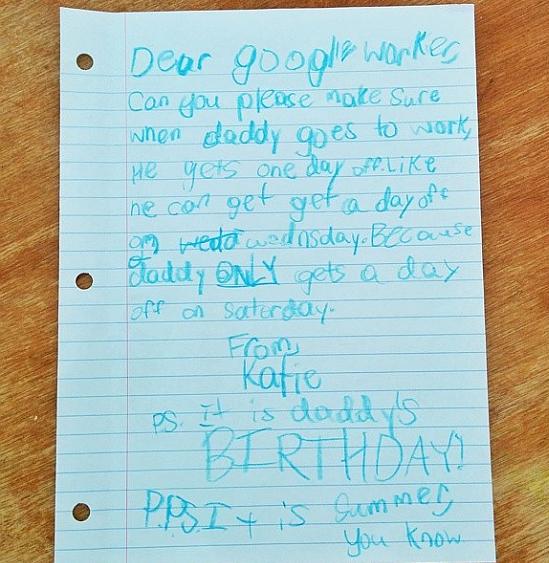
Dear Google worker,

Can you please make sure when daddy goes to work, he gets one day off.
Like he can get a day off on Wednesday.
Because daddy ONLY gets a day off on Saturday.


From, Katie


P.S. It is daddy’s BIRTHDAY!
P.PS. IT is summer, you know.


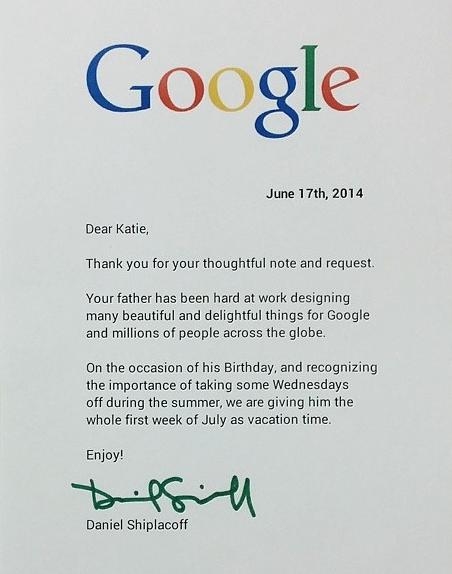
The employer’s response?

And because a good deed deserves praise, or because so many people
want it to act as an example worth emulating for their employers, the
letters have gone viral, ensuring great PR for Google as a result.
Clearly a good deed didn’t go unrewarded at least in this case.

…….

Link: http://www.outlookindia.com/blogs/post/Young-Girl-Writes-To-Google-Asking-For-A-Day-Off-For-Daddy/3297/31

……

regards

Glorious victory!!!

116.5 Eranga to Anderson,

OUT,

short ball, Anderson fends it off and loops a catch to backward square!!! Can you believe it!

JM Anderson c Herath b Eranga 0 (81m 55b 0x4 0x6) SR: 0.00

A superlative 2nd last ball victory of Sri Lanka against ex-colonial power England. A fitting farewell to Mahela Jayawardene and Kumar Sangakkara. The superstars also were part of Sri Lanka’s win over India in World T20 in Bangladesh. Bravo and goodbye.

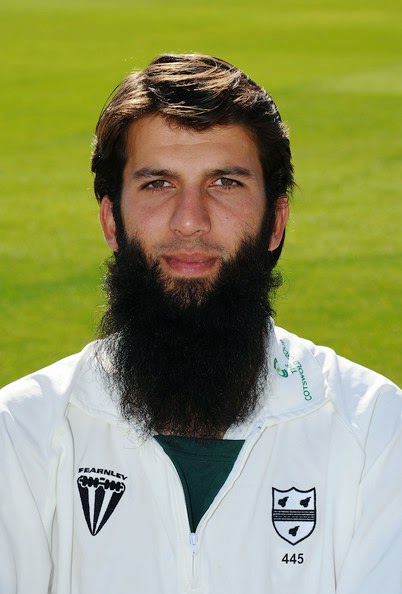
Also grand cricket from Birmingham born Pak-Brit Moeen Ali, who nearly achieved the impossible for England with a maiden Test century. Great company by Jimmy Anderson for a 55 ball, 81 min magnificent zero. Great beard and great expectations from now onwards!!!
……………………


Sri Lanka won when they had almost abandoned hope. From the penultimate ball of a gripping final day, Shaminda Eranga
found a hostile delivery to bring their first series win in England.
James Anderson, who could only fend it to the leg side in
self-preservation, dropped to his haunches in despair. Moeen Ali’s immense maiden Test century was briefly forgotten, submerged beneath an ecstatic Sri Lankan celebration.


An indomitable backs-to-the-wall display by Moeen had come so close to
sparing England: an unbeaten 108, unblemished even, made from 281 balls.
England’s last five wickets had clung on for all but two balls of the
final day. Pride had been salvaged, perhaps a captain had been spared
too, but it is Sri Lanka who can celebrate a special moment in their
Test history.


Sri Lanka’s last pair held out for five balls in the first Test at
Lord’s. This time the task was much harder for Moeen and Anderson: 20.2
overs. Even in Cardiff, when Anderson and Monty Panesar famously held
off Australia in 2009, they only saw out 11.3. This time Anderson
summoned a heroic 55-ball nought, all signifying nothing.


Tension slowly seeped into the final day as it only can in Test cricket.
The crowd was sparse – Yorkshire had folded its arms in condemnation,
convinced like all but the most incorrigibly optimistic that England’s
abject collapse to 57 for 5, well adrift of a target of 350, had sealed
their fate – but a night’s sleep had cleared muddled heads and
Headingley, treacherous Headingley, not the sort of pitch to turn your
back on, behaved like an old softie.


Moeen, a cricketing free spirit, played with such judgment and
self-denial that he must have explored parts of himself never visited
before. He surely surprised even himself, suppressing the silky ambition
of his batting during a strikingly unselfish innings in which his most
positive shots were expertly selected. In only his second Test, he made
light of his international experience with impassioned advice to
England’s tail.


Only with nine wickets down did Moeen seek to steal the strike, only now
did his timing begin to go awry as the demands weighed upon him. But
his concentration was unwavering. His century came with half-an-hour
remaining, flicking Nuwan Pradeep off his pads, but it had always felt
like an afterthought in an innings where he appeared entirely consumed
by England’s survival. This was not as much an innings as personal
growth before your eyes.


Even in defeat, there should be no doubt who will be the recipient of
England’s annual Beard of the Year award – and, if that is one of the
most frivolous awards around, this time it would have a more serious
message. There are times when the wider social impact of a performance
in sport must also be recognised even in a match report – and this was
one of them.


A sole spectator earlier in the Test who observed, however unthinkingly,
that Moeen’s beard suggested he should be blowing up buildings was
rightly reported to stewards and warned. Muslim cricketers have played
for England before, but none had been so visibly proud to be a role
model. With every stout-hearted block, Moeen made such comments appear
ever more ignorant and, for those who questioned as much, integrated
himself – and more importantly his beard – deep into the fabric of the
England side.

……..


Link: http://www.espncricinfo.com/england-v-sri-lanka-2014/content/story/755265.html

………..

regards

The (political) planes of Pakistan

Sept 10, 2007…Islamabad airport….Musharraf forcibly deported Sharif to Saudi Arabia…April 14, 2005….Zardari was taken
into custody from inside the aircraft when he landed at Lahore airport…
Oct 12,
1999…..PIA’s commercial plane carrying Gen
Musharraf was denied landing permission at the Karachi airport 

While all South Asian nations enjoy a bit of drama-bazi, it seems that in Pakistan things move at a higher plane…so to speak. It is a real musical chairs fun and games, Sharif trying to thwart Musharraf, Musharraf trying to stymie Benazir, Musharraf  stifling Sharif, Sharif sabotaging Qadri…the airports are where the action is. 
……..
Monday’s diversion of Dr Tahirul Qadri’s plane
from Islamabad to Lahore is the latest addition to a list replete with
the political role of aeroplanes in the country’s history.


Dr
Qadri is not the first political figure to have refused to disembark
from an aircraft without seeking some guarantees. Prime Minister Nawaz
Sharif and former president Asif Ali Zardari had also had to negotiate
with the administration inside their planes when they landed in Pakistan
during the rule of Gen Pervez Musharraf. The retired general himself
had taken over the government in a bloodless military coup after a plane
hijacking drama in 1999.

The latest scenes at the Islamabad and
Lahore airports refreshed the memories of the people who had witnessed
similar events six years ago when Mr Musharraf forcibly deported Mr
Sharif to Saudi Arabia after the latter attempted to return to Pakistan
from London and end his seven-year exile.

The Musharraf regime had
taken the plea that the Sharif brothers should not return to the
country because they had gone to Saudi Arabia under an agreement that
they would stay away from politics for 10 years.

However, Nawaz
Sharif and Shahbaz Sharif declared that they would return to the
country, come what may, after the Supreme Court ruled on Aug 23, 2007,
that they were free to come to their homeland.

On Sept 10, Nawaz
Sharif left London on a PIA flight with a team of journalists and some
PML-N members, but only to be deported again to Saudi Arabia in a
special plane.

And two days before his planned return to the
country, Lebanese politician Saad Hariri and Saudi intelligence chief
Muqrin bin Abdul Aziz had come to Islamabad to take him back to Saudi
Arabia in the special plane hours after landing at the airport here.

Mr
Sharif later returned to Pakistan on Nov 25, a month after then PPP
chief Benazir Bhutto landed at Karachi airport after ending her
self-exile.

In April 2005, former president Zardari was taken
into custody from inside the aircraft when he landed at Lahore airport
to lead the PPP in the absence of his wife Benazir.

The PPP
workers were not allowed to receive Mr Zardari at the airport and even
the journalists who accompanied the leader from Dubai were manhandled by
security personnel.

The plane crash of former president and army
chief Gen Ziaul Haq in August 1988 in Bahawalpur and the denial of
landing permission to the aircraft carrying former president Musharraf
in Karachi were the two main events that changed the political scenario.

It
was after the death of Gen Zia in the mysterious military plane crash
that the country saw a real democratic transformation and four elections
were held within nine years — from 1988 to 1997.

On Oct 12,
1999 then prime minister Sharif removed Gen Musharraf from the post of
chief of the army staff when he was on his way back to Karachi from
Colombo, where he had gone to attend the Sri Lankan army’s 50th
anniversary celebrations.

PIA’s commercial plane carrying Gen
Musharraf was denied landing permission at the Karachi airport. The
plane remained in the air till the time military commanders on the
ground toppled the government and arrested Mr Sharif, who later faced a
trial on charges of hijacking.

During the last days of Gen
Musharraf’s rule after the 2008 elections, there were rumours that a
special plane was parked at the Islamabad airport to take him abroad. He
denied the presence of any such plane, but later left the country after
resigning as president in the wake of a no-confidence motion against
him and started living in self-exile in the UK.

Just two months
before the general elections in May last year, Mr Musharraf returned to
Karachi to take part in the polls from the platform of his newly-formed
All Pakistan Muslim League.

On April 1, Gen Musharraf departed
for Islamabad from Karachi in a chartered plane. This time again, his
plane was diverted to Lahore, but only because of bad weather.

……

Link: http://www.dawn.com/news/1114707/political-role-of-aeroplanes-in-pakistan/

…….

regards

Brown Pundits