To Mosul, with love

Fascinating backstory about Mosul and Iraq in the 1970s. Those were the days.

In the mountains to the north of Mosul,
there lived a tribe which was said to worship Shaitan or Satan….since he was the barrier
between man and God, the path to salvation could be smoothened through
direct invocations to the antithesis of the sacred.

 
While this is only one man (and we suspect a Sunni muslim by faith) we have heard something very similar from our other muslim friends (all sunnis). Saddam was a bit like Indira Gandhi. Iraqis lived in peace till they were invited into acts of foolishness by the dastardly americans. Even Iraq attacking Kuwait was the fault of America….Ultimately it is all America’s fault.

We daresay this opinion/perception holds true not only amongst Indian sunnis but those around the world as well. As far as Indian Shias are concerned they are trying hard to keep an united front with the sunnis and downplaying the Shia-Sunni rivalry (again it is all america’s fault). At least everyone can agree on this point at least.
………………………..

The abduction of 40 Indians from Mosul, Iraq, has justifiably
triggered a wave of anxiety at their dreadful plight. Should New Delhi
fail to free the hostages forthwith, the anxiety would likely turn into
rage, inspiring stereotypical images of the Islamic world detesting
Indians,
of us living forever in the crosshair of blood-thirsty
militants. This narrative will inevitably portray Iraq as yet another
Muslim country hostile to India, a veritable enemy territory.


But all those who worked in or visited Iraq in the 1970s will narrate
you another story. They will tell you that unlike, say, the arrogant
Saudis and nouveau riche Emiratis, the Iraqis had an abiding love for
India,
not least because they looked upon it as a civilisation as old as
theirs. 


….
But this love wasn’t merely sentimental. It was as much based
on respect for India’s technological prowess and assistance to Iraq in
its quest to emerge as a modern nation-state. There was, even in those
days, admiration for India’s democracy and freedom and, above all, its
romantic, at times maudlin, Hindi films.

Indeed, it is vital to recover the narrative of Indians about the
Iraq of the 1970s. For one, it will underscore the grossly limited scope
of contemporary international relations studies, mostly defined and
designed to focus on the interests of global powers. Two, such a
narrative will tell you that Iraq wasn’t always an economically
backward, Islamic fundamentalist country. Three, and more important, it
will portray that a conflict between two nations has severe consequences
for a third country even though it doesn’t share borders with either.


…….

Those Indians who lived in Iraq in the ’70s are either very old or
dead. It’s, therefore, the responsibility of their children to bring the
complicated narratives of the ’70s into the public domain.


I’m one of those children, then a schoolboy who visited his parents
in summer or winter breaks every alternate year. My father taught
applied mathematics for eight long years in the University of Mosul, the
city from which the 40 Indians were abducted a few days ago.


To reside in Mosul was to breathe history, to even live it. The city
was said to have been inhabited continuously centuries before the Common
Era (CE). Here you could find the mausoleum of Prophet Younis, or
Prophet Jonah to the Christians. There were churches and monasteries
dating back to the sixth century, in sharp contrast to the monochromatic
portrayal of Iraq in the global media.


….
Even heterodoxy flourished. In the mountains to the north of Mosul,
there lived a tribe which was said to worship Shaitan or Satan. Their
logic of worshipping Shaitan was impeccable: Since he was the barrier
between man and God, the path to salvation could be smoothened through
direct invocations to the antithesis of the sacred. I was once taken to
the mausoleum which the tribe held in great reverence, for there was
buried one who had supposedly acquired enormous spiritual powers through
his appeasement of Shaitan. ….

….
Indeed, a land’s antiquity can be judged as
much from carbon dating as from its forms of worship and apocryphal
stories.


…..
Mosul was a fine city, spread on either side of the river Tigris.
Exclusive enclaves of villas dotted the suburbs, the labyrinthine old
quarters and bazaars dominated the city centre. At night, the city would
be lit up with a psychedelic touch. From the roadside cafes would waft
the aroma of chicken skewered on spindles that turned slowly over the
oven, as would drift the lilting voices of Arabic singers. On its roads
cruised spiffy cars, from Mercedes Benz to Volkswagen to Toyota to
Renault, long before they made the Indian roads as their own. Yet, late
night, drunken men returned from taverns in horse-drawn carriages, the
haunting echo of clip-clop mingling with delirious laughter.


….
Mosul, as also much of Iraq, didn’t just choose to dress its ancient
soul in the tawdry dress of modernity. It sought to alter the
sensibilities of its people, and provide a liberal gait to its ancient
style. The societal transformation was manifest in the substantial
presence of women in the public arena. They were in government jobs,
behind shopping counters, in healthcare and teaching professions. They
dressed as they wished, from draping themselves in the black chador to
trousers to skirts to micro-minis.

The freedom the women enjoyed was, in a way, ironical, living as they
did under the authoritarian regime of Saddam Hussein. But his rule
wasn’t just about keeping people under a tight rein. His Ba’ath party
espoused secularism, or strict neutrality towards religion, and
undertook the project of building a modern nation-state. Revenues
gushing from oil wells helped finance this modernist project. For
instance, college education was free, including even textbooks, subject
to the proviso that irrespective of the socio-economic status of the
student, he had to join the army as an ordinary soldier in case he
failed to clear the annual college examination in two successive years.


……
Indians were respected precisely because they played a significant
role in Iraq’s project to emerge as a modern nation-state. They held a
slew of technical teaching positions in universities, manned its
healthcare systems, built its roads and rail links, rejuvenated its
agriculture, and trained its air force pilots. These roles the Indians
have played elsewhere, but in Iraq rarely were they looked upon, as they
are in some Western Asian countries, as citizens of an impoverished
land selling their skills for better remuneration. For instance, Indians
driving out of cities were often waved past check-posts without
security search, an astonishing concession in a paranoid police system
that Iraq decidedly was.


…..
Perhaps their respect for Indians was because of the common
sensibilities ancient civilisations are said to spawn. It was this
sharing of sensibilities which perhaps explains the popularity of Hindi
films in Iraq. They were a rage, a new release drawing packed halls. My
most enduring image of their love for Hindi cinema was the audience
response to a scene in Sholay. It was that dramatic shot in which Gabbar
Singh, after mowing down Thakur’s family, points the gun to his
grandson, trembling in fear. The audience burst out shouting, “No, no,”
and took to hurling coke bottle caps at the screen. You would have
thought the Iraqis were incapable of fighting one bloody war after
another.


…..
However, it was on the pavements of Mosul I grasped the roots of
Iraqi’s respect for India. It had this curious tradition of students
spreading their bedrolls on pavements and studying in the bright glow of
city lights. Presumably the students belonged to lower socio-economic
strata, their home perhaps too overcrowded to prepare for examinations
diligently. On such nights they would communicate to me through a
smattering of English words and sign language that while Iraq had
exceptional wealth, the Indians possessed knowledge and brain-power.
……

The more articulate among them would ask me what it was to live in a
democracy, to vote and choose leaders, to enjoy the freedom of
expression. It was brave of those students to speak on politics. An
Iraqi friend of my father’s confessed that they refrained from
discussing politics in extended family gatherings, suspicious as they
were of cousins working as Saddam’s spies. One night an anguished cry
rent our neighbourhood. I was later told it was of a man whom the secret
police had whisked away for engaging in clandestine political activity.
Such men, it was said, never returned.


…..
To my childish eyes, Saddam didn’t seem a brutal dictator on the day
we were out on a picnic in the rugged mountains of the Kurdish area. We
heard the clatter of choppers as they hovered over us, descending
slowly, their tails swaying. From one of them stepped out Saddam,
briskly walking around shaking hands. He joined a circle of Kurds, their
arms interlocked, taking two steps forward and kicking their right legs
high, and then two steps backward to toss their lefts legs in the air.
The dictator stood so close I could have even touched him. In hindsight,
I guess it was a show mounted for television.


……
Nevertheless, I was impressed. Till then, the closest I had ever been
to a political leader was around 100 meters from Indira Gandhi, who had
driven down the roads of Patna, where I was schooled, in a convertible.
Later in the evening, I saw Saddam address a crowd from the balcony of
the governor’s residence. They cheered him uproariously every now and
then. I thought he was Iraq’s Indira, boasting an indomitable will and
enjoying tremendous popularity.


…….
All this was before Saddam entangled himself in the Sunni-Shia
competition and opted to become a footsoldier in America’s grand plan to
stem the Islamic revolution in Iran from spilling across it borders.
Like so many other West Asian leaders in the past, Saddam too wished to
emerge as a pan-Arab personality. In 1980, he unilaterally declared he
was abrogating the 1975 Algiers treaty that had settled the
Shatt-al-Arab border dispute between Iran and Iraq. A desultory,
disastrous Iran-Iraq war ensued, prompting Indian professionals to leave
the country.


…..
They left not only because of deteriorating security condition; it
was also because the government had diverted its financial resources to
war efforts and could no longer bankroll an expensive retinue of
expatriate professionals. Eight years later, the war ended, but not its
consequences.


….
Presiding over an impoverished state, Saddam demanded monetary
compensation from Saudia Arabia and Kuwait for having battled on their
behalf the Iranians and their Islamic zeal. 

…..
Perhaps he wouldn’t have
invaded Kuwait but for the duplicitous role American ambassador in Iraq
April Glaspie played. The transcripts of her telegrams to Washington
reveal she had tacitly encouraged Saddam to invade Kuwait,
or at least
conveyed the impression that the US wouldn’t intervene in an
Iraqi-Kuwait armed conflict. No doubt, Saddam’s troops overran Kuwait in
a swift raid, but it also became a pretext for the US and its allies to
launch the first Gulf War in Jan 1991. An impoverished Iraq was bombed
mercilessly.


…..
But its woes still didn’t end. Stringent UN sanctions were imposed on
Iraq, which was disallowed to determine the quantity of oil it could
sell. Battered, its economic recovery became impossible and, tragically,
infants began to die for lack of food and medicine. Then came George
Bush’s neo-cons, who pummeled Iraq further, in the hope of reconfiguring
the region to their imagination.


Over the last few years, the democratically elected government in
Baghdad had succeeded to put Iraq back on rails. Not only did militancy
show a downward spiral, Iraq clocked an impressive growth of 8.5 per
cent in 2012. In the same year, it pumped 3 million barrels of oil a
day, the highest since 1983. It had planned to commit $ 45 billion on
infrastructure in 2013, conveying its resolve to rebuild its economic
sinews.


…..
A confident Baghdad was also inclined to re-forge old ties with
India. In 2012-2013, Iraq accounted for 13 per cent of India’s oil
imports, taking the second slot among the countries meeting Delhi’s
energy needs. It offset the dip in supply from Iran because of UN
sanctions. In 2006-2007, India’s exports to Iraq were worth $ 200
million. The figure jumped to $ 1.3 billion in 2013. Iraq’s imports
showed even a bigger spurt – rising from $ 5.5 billion in 2006-07 to $
20 billion in 2012-13.


…..
When Iraqi Prime Minister Nouri al-Maliki visited India last year, he
expressed his wish for a larger Indian investment in the oil and gas
industry and cooperation in the healthcare and education sectors. To
demonstrate Iraq’s faith in Indian doctors, he checked in at a hospital
in Gurgaon. On average, 100 Iraqi medical patients come to India daily.


…..
But hopes of Iraq’s revival were cruelly dashed, yet again, because
of America’s adventurism, its penchant for regime change in countries
that had been opposed to it. Much of the turmoil in Syria had been
courtesy the Americans, who provided arms and logistical support to
militant groups arrayed against Syrian President Bashar al-Assad. It can
well be accused of encouraging if not directly supporting the Al Qaeda
footsoldiers who have banded under the banner of Islamic State in Iraq
and Syria (ISIS). It’s the ISIS that has swept through Iraq, triggering
an upheaval in which the lives of 40 Indians have been imperilled.


…….

Cut to 2003. When the Americans began to amass troops in Kuwait for
launching the invasion of Iraq, my father often thought of his Iraqi
friends. To allay his worries, I took from him the names of his
colleagues, believing academicians had greater chances of surfacing in
an internet search. Over weeks of relentless search, I stumbled upon a
professor whose name matched one on my father’s list. I wrote to him
friend asking him whether he had been in the University of Mosul and
remembered my father.


…..
I received a reply from him the next day. Yes, he said he had been my
father’s colleague and listed others from the faculty and their
whereabouts. They had all moved out of Iraq. Even the Jordanian
professor’s extended family had dispersed all over West Asia, and his
children were employed in the UAE. He said Iraq has lived through
terrible times, and fervently hoped Iraq could recover the happy
ordinariness of life now that Saddam had been deposed. But he added a
caveat, “Not under American occupation. Never.”


……
I wrote to him saying, yes, the burden of challenging the American
hegemony had now fallen on the Iraqis. He didn’t respond. The professor
must have thought of me as a foolish man, preaching defiance and
rebellion from the comfort of certainty denied to his country for a
generation.


…..
As we worry over the fate of 40 Indians, spare a thought for the
Iraqis, who became victim of the overweening ambitions of a dictator and
the callous arrogance of a superpower. Undoubtedly, we should bristle
against the Islamic militants. But we should also against the Americans,
who fight wars in distant lands, their own people insulated from
unimaginable miseries and dislocations of wars.

……

Link: http://www.firstpost.com/world/iraq-and-india-a-forgotten-love-story-1581885.html

……

regards

25 June 1975 (the importance of freedom)

Indira Gandhi proclaimed that
“food is more important than freedom”, JP had thundered: “Freedom…freedom of the human personality, freedom of the mind, freedom of
the spirit. This freedom has become a passion of my life and I shall not
see it compromised for bread, for security, for prosperity, for the
glory of the state or for anything else.”

It is said that freedom must not only be earned but every generation has to prove themselves worthy of freedom all over again. A good thing to remember as the threats to freedom are growing once more, this time from the right field.

No surprise, Indians today have mostly forgotten the darkest hours of the democracy that happened because the people in power wanted absolute power over the people, even to forcibly remove their ability to have children. Many people were thrown into prison simply on the basis of suspicion and hearsay (similar to the blasphemy accusations of today) and were tortured.

The lesson of 1975 is clear- the nation must try to (re)discover and stay true to her moral core. The people who protest against injustice are for the most part good people. They take enormous risk in doing what  they do, often against the wishes of their near and dear ones. They often suffer grievously at the hands of state-sponsored dacoits. The tendency to crush dissent and punish dissenters (and whistle-blowers) has to be curbed.

MG Devasahayam, first in the Army and then in the Administrative Service (IAS), provides a valuable eye-witness account of what really happened on and after June 25, 1975. Two things are very clear- evil grows when good people stay quiet, and evil can be destroyed by peaceful means as well. It is true that we do not have, right now, moral giants such as Jay Prakash (JP) Narayan, but then we must not lose hope. The hour will always produce the (wo)man.

Large portions of South Asia is presently drowning in orgies of violence, it is the need of the hour that we find ways to become better neighbors (as people, as communities, as nations) so that we can all join hands in the fight to eliminate poverty (while not compromising on freedom), which must surely be the greatest evil of them all.
……..

On the midnight of June 25, 1975, prime minister Indira Gandhi nearly
destroyed India’s democratic framework with a piece of paper that
proclaimed a state of emergency.
It was carried by her private secretary
to the President, who meekly signed it. The mis-governance that followed
extinguished freedom, suspended fundamental rights, fettered the press,
suppressed dissent. More than one lakh citizens were illegally
detained.
Draco­nian laws followed. Democratic governance collapsed.


….
At that time, I was the district magistrate of Chandigarh, a Union
Territory governed by the Centre. The home ministry and the PMO were
directly monitoring my “eminent prisoner”, Jayaprakash Narain, India’s
tallest leader after Mohandas Gandhi, and now Enemy No. 1 of the state.


He’d been arrested by the district magistrate of Delhi and sent to me
for safe custody. So I had a ringside view of the Emergency, right from
the corridors of power in Delhi to the streets of Chandigarh. Everyone
could see the Emergency drama around them, but I—a member of the elite
IAS, but primarily a freedom-loving citizen—had the opportunity to
witness, feel and be a part of the intense struggle of JP, the
“revolutionary in chains”.


 ….
In my own humble way, I initiated certain moves for reconciliation
between JP and Indira Gandhi so that the Emergency would be lifted and
democracy restored at the earliest. I’d even roped in Sheikh Abdullah
for the purpose through the good offices of Punjab chief minister Giani
Zail Singh. These efforts were repeatedly sabotaged by an
extra-constitutional authority at Delhi’s pinnacle of power.
….

Mysteriously, starting early November, the health of JP, who was lodged
at the Postgraduate Institute of Medical Education and Research in
Chandigarh, began to deteriorate sharply. I had every reason to suspect
that a conspiracy was on to incapacitate JP by damaging his kidneys and
put him out of harm’s way if not eliminate him. Probably, Delhi durbar
felt that JP was the only person of moral stature who could challenge
the dynasty. Later events proved me right.


…..
By divine grace, I could defeat the conspiracy by playing hardball
with the Centre with a pointed poser: “What if JP dies in detention?”
That sent shivers in the PMO, for just a few weeks earlier,  sleuths had
rehearsed a “death-in-detention” drill. Within a week, JP was released
on unconditional parole. In defiance of Delhi durbar, I commandeered
seats on a flight and sent JP to Jaslok Hospital in Bombay with his
brother Rajeshwar Prasad and friend Minoo Masani. We were just in time
for his kidneys to be saved. JP lived for four more years, albeit on
dialysis twice a week. 

For this audacity, I did incur the wrath of the
‘dynasty’ scion and his minions. But I had the honour of JP calling me
“the son I never had” and Dr Manmohan Singh complimenting me, saying,
“Deva, you did not merely save JP, you saved Indian democracy.”


….
In the 1977 election, JP led the Janata combine and threw the
Congress out of power. Needless to say, the conspiracy to damage JP’s
kidneys was never fully investigated and the Alva commission set up by
Janata government was wound up under intense pressure from vested
interests still owing allegiance to the Congress dynasty.


…..
Be that as it may, a ‘secret’ IB report leaked on June 11 lists me
among ‘eminent persons’ who are part of an anti-national, foreign-funded
“Superior Network of pan-India NGOs”, including Greenpeace and People’s
Union for Civil Liberties (PUCL). These NGOs are allegedly “taking down
development”, impacting GDP by three per cent and endangering “national
economic security” by articulating people-centric issues. 

Is that not
the sort of language used during the Emergency? The PUCL, founded by
that great patriot JP, responded that the report was an attempt to
intimidate and kill dissent from those who raise an often lonely voice
against life- and livelihood-destroying development programmes.

Indeed, I have been speaking up against big-ticket,
forest-destroying, coast-ravaging and livelihood-killing proje­cts such
as Vedanta and Posco. Also against  resource-guzzling, secretive and
extremely expensive nuclear projects such as the 2,000 MW Koodankulam
plant (to be expanded to 6,000 MW) and the 2,800 MW Gorakhpur plant (in
Haryana).


….
I oppose the Koodankulam project because it has devastated the
southeastern seabed and would rob lakhs of fisherfolk of a livelihood.
It could also hang like a sword of Damocles over millions of
project-affected people because of unsafe equipment. As recently as May
14, six personnel were seriously injured at the Koodankulam plant
because of malfunctioning valves. 

I oppose the Gorakhpur project because
the 320 cusecs of Bhakra canal water allotted to this plant would
deprive 1.4 lakh acres of farmland of water. The region is
semi-arid and the cotton, wheat, pulses and oilseeds grown here depend
on irrigation from the canal. Farming supports the lives of about a
million directly engaged in it here. Villages here are also the habitat
of blackbuck (a “near-threatened” species) and the project will cause
the animals immense harm. 

Another reason I oppose nuclear reactors  is
because post-Fukushima, they raise great worries about being a threat to
life itself. Nuclear energy, which generates just one per cent of the
country’s needs, is not the answer to India’s electricity problems. It
is also very expensive, if all costs—capital, construction,
commissioning, operation, decommissioning and safe storage of
spent-fuel—are honestly factored in.


…..
This ‘development’ model is anti-poor. Opposing them, in fact, is in
consonance with Prime Minister Narendra Modi’s governance agenda,
unveiled in the President’s add­ress to Parliament on June 9. It swears
by ‘sabka saath, sabka vikas’ or inclusive development and goes on to
say: “…my government commits itself to the goal of poverty
elimination. 

….
With a firm belief that the first claim on development
belongs to the poor, the government will focus its attention on those
who need the basic necessities of life most urgently. It will take
necessary steps to provide security in its entirety to all citizens,
through empathy, support and empowerment.” 

…….
It is precisely these
people-centric issues that the ‘listed’ individuals and NGOs are
advancing. Intriguingly, the IB report was leaked the very day after
this speech. Is it to scuttle Modi’s pro-poor agenda? The jury is out!


…….
Back to the Emergency. Even after four decades, this dark era continues to haunt the nation. Writing in Outlook
in June 2010, Arundhati Roy wrote: “June 26 is the 35th anniversary of
the Emergency. Perhaps the Indian people should declare that this
country is still in a state of Emergency.” When the UPA government
threatened Maoist sympathisers with imprisonment under the Unlawful
Activities (Prevention) Act, rights activists retorted: “We consider
this as an attack on civil society reminiscent of the Emergency era.”
Anchoring CNN-IBN’s Face the Nation debate on the censorship of Prakash Jha’s movie Raajneeti,
Sagarika Ghosh’s poser was, “Are we under Emergency?” What now, with
some top guns pushing for a harsher POTA and the decimation of ‘Maoists’
by deploying the military?


……
Despite the fact that the Emergency is remembered and recalled
whenever any blatantly unlawful act or excess is committed, people at
large, particularly those of the younger generation, have no idea as to
what it was all about. On the eve of the 36th anniversary of the
Emergency, veteran journalist Kuldip Nayar wrote: “The new generation
must understand that today’s non-governance or misgovernance is the
fallout of what Indira Gandhi had done 36 years ago by destroying an
established democratic order…. How do you make the new generation
relate to the Emergency imposed some 36 years ago this week? I have been
asked this question many a time…I do not have an answer.” Nayar’s
anguish is proof enough as to how this crucial part of India’s
freedom-killing post-­independence history has been pushed under the
carpet!


….
At the peak of the Emergency, when Indira Gandhi proclaimed that
“food is more important than freedom”, JP had thundered: “Freedom became
one of the beacon lights of my life and it has remained so ever since.
Freedom…transcended the mere freedom of my country and embraced
freedom of man everywhere and from every sort of trammel—above all it
meant freedom of the human personality, freedom of the mind, freedom of
the spirit. This freedom has become a passion of my life and I shall not
see it compromised for bread, for security, for prosperity, for the
glory of the state or for anything else.”


….
According to some accounts, JP was Modi’s guiding beacon during his
long sociopolitical journey. Will Modi—who worshipped at the ‘temple of
democracy’ before entering it—honour his icon’s freedom agenda or let
petty minds belittle it? This is the billion-people question for Modi!

…….


Link: http://www.outlookindia.com/printarticle.aspx?291101

……

regards

Islamabad (Chan Pir Badshah) blast

As they said: blow-back will be fierce. Our heartfelt wishes are with the families of the victims.

…………………
A powerful explosion at a shrine in the federal capital on
Friday night injured at least 39 people, seven of whom are said to be in
critical condition, DawnNews reported.

Initial TV
reports suggest that the blast took place at the shine of Chan Pir
Badsah in Pindorian neighbourhood near Shezad Town Police Station of
Islamabad.

An emergency has been imposed in Pakistan Institute of
Medical Sciences (PIMS) and Poly Clinic hospitals of the city where
injured were taken to after the incident.

Dr Aisha of PIMS Hospital told the media that 31 people were brought in the hospital out of whom four were critically injured.

Dr
Khurram, an official at Poly Clinic Hospital said that three critically
injured among eight people were brought in the hospital.

The
nature of the blast has not yet been verified but eyewitnesses told
DawnNews that the explosion took place when food was being distributed
amongst devotees.

According to a spokesman of Islamabad Police, security has been put on red alert at all entry and exit routes of the capital.

He
said that after cordoning off the site of the incident, police, Rangers
and Army commandos have launched a search operation to nab the
culprits.

…………..

Link: http://www.dawn.com/news/1114065/blast-at-islamabad-shrine-wounds-at-least-39
…..

regards

150,000

We need to catch sleep for a few hours, so we will miss the magical moment when the 150k page-views mark is left behind and beneath us (effectively clocking 30k page-views per month since inauguration late January).

We know who all the big players are as well as the bosses who deserve all the credit for this phoenix like rise of the new BP. Personal thanks are also due for giving us – the mango people – a micro-phone. And we have to admire how the newbie Naveen is firing on all cylinders, keeping the oldies on their toes.

Well played, all the brothers (we wish there were a few more sisters), all of you.

regards

Iraq: Indian Partition and Afghan Jihad combo package?

Parallels with Partition of British India 

A foreign superpower militarily defeats local dictatorial regime,and introduces an electoral polity to a local populace, which has not been exposed to it in past. Elites of the second largest religious majority (around 30-35% of populace), who enjoyed (or have a perception of enjoying) power under the earlier dictatorial regime, now fear of being electorally
swamped by the bigger religious majority. A full fledged ‘Direct Action’, sectarian cleansing and civil war follows. Been there, done that??

Parallels with Afghan Jihad

  1. No unified command/sole spokesperson in rebel ranks. Half of the Iraqi Sunnis (15-20% of Iraq’s populace) are Kurds who will resist any Arab overlords from Baghdad (be it Shia or Sunni). The Arab Sunnis (the other half of Iraq’s Sunni populace) are also a divided lot- Baathists, ISIS and many Sunni Tribals control different parts of NW Iraq and are coordinating tactically only to topple present Baghdad based regime. Some parallel here with the diverse lot of Afghan Mujahideens in 1980s/90s?
  2. A proxy war superimposed on domestic power struggle ( with Iran and KSA taking the place of Soviets and USA in Afghanistan )
  3. ISIS seems like an Iraqi-Sham version of Taliban.

Lessons for Iraq from experience of Partition and Afghan Jihad

  1. Those who ally with ISIS, may face a serious blowback later (like Pakistan and Afghan Mujahideen faced with Taliban).  
  2. A protracted conflict likely in Iraq unless rival Gulf powers back down
    (or one of them runs out of money or faces blowback from fanatics on own
    side). Afghan Civil war began in 1970s and is yet to end.
  3. A sectarian Partition in an environment of hostility may create  more problems than it would solve. It will take generations to undo the damage. 
  4. Since a mutually agreed foreign master does not exist, if the partition occurs, there is likely to be a highly contested border region (more like LoC in Jammu and Kashmir than Radcliffe line)
  5. Local Shia-Sunni minorities will suffer in general and perhaps cleansed near the contested border zones, if Partition occurs.
  6. Iraqi Arab Sunnis may end up suffering much more than Iraqi Shias- because of
    their far fewer numbers as well as fractured,
    non-elected rebel leadership with several extremist and authoritarian groups calling shots.

PS: It goes without saying, that from Karbala to Ottoman-Safavid struggle for Mespotamia to colonial Sykes-Picot border to the riches of Oil Fields to Saddam’s rule to Iran-Iraq War to Kurdistan’s struggle for independence to Syrian civil war to Maliki’s triumphalism, the region has a unique history of its own. The attempt here was to look at the event (perhaps in a very imperfect way) from the lense of South Asian crises that have played out along similar lines.

Iraq’s Reverberations in India

Indian Shias worried

With
holy Najaf and Karbala now in ISIS crosshairs, Indian Shias are an anxious lot.
Some 
protested against Shia persecution at Delhi’s Jantar Mantar  and about
3000 have volunteered  to go to help Iraq
. In Jammu and Kashmir, Kargil is
strongly backing Iraqi Nation.

In
Lucknow, Shia groups (alongwith many non-Shias) have also
appealed to people
of all religions to lend their moral support to people
being massacred by ISIS. 
Interestingly,
Shias found an unlikely ally in BJP’s outspoken Hindutva activist,  Subramanian Swamy who urged Indian
Government to offer military and economic support to Iraq and “stand with Shias
in the emerging Shia-Sunni attrition war.” because as per him, within
India the Hindu-Shia amity had been cordial for decades and non-alignment was
not an option here.

However,
Given India’s limited capacity (couldn’t handle even Afghan and Sri lankan mess in
her own backyard); heavy economic reliance on Gulf (Iran, Levant and Arabian
Peninsula ) for jobs, remittance and Oil; and the likely domestic terror
backlash; Is it really advisable for India to pick a side in what is now a full
blown regional Proxy cum Civil war?  I doubt.


Closer Economic Ties
with Iran

While
any militaristic siding with Iran in Gulf region may be beyond India’s capacity,
the thaw in Iran-US relations (due to rise of ISIS), has meant India
now able to pay some of pending oil payments.
In past, US has been a big hurdle
in India’s economic ties with Iran. Perhaps one can look forward to closer
Iran-India economic cooperation in future.


Stuck Nurses to Stay
Put

After
being promised wages by the rebels, the Indian Nurses stuck in Tikrit, have
decided to stay back.
 Some nurses
who returned from Iraq also want to go back
so that they can repay the loans. This does not come as a surprise to me-Indian
workers in Gulf and East Europe (unlike US) are by and large, a poor lot,
always ready to risk their lives for some quick cash.
Meanwhile, Twitter
Jihadis are claiming some Kashmiris and mainland Indians are fighting for ISIS

History of Iraq (and Middle East)

…as recorded by outsiders. To put it briefly (if unfairly) it is Sunnis against Sunnis (as in Egypt) and Sunnis against Shias (as in Iraq and Syria). Everyone is playing to win by annihilating the other. And in doing so, the hapless minorities (mostly Christians) will be crushed as well.

What is interesting to know that the heart of Shi-ism is actually Iraq, not Iran. If Dilip Hero is correct all Shia Imams have been Arabs so far. Can anyone confirm this?

Finally how will all this look from South Asia? Right now it is a nightmare with all the nurses and construction workers who are trapped between the devil and the deep sea. The only worse thing that can happen is if an off-shore branch of the ISIS (ISIL) opens in India and continues with the mayhem (it will probably come to Pakistan first). That is one scary thought.
………………………

Though well meaning, the repeated incantation of the inclusive mantra
fails to take into account the historic chasm between Sunnis and
Shias, or the conflict between the Egyptian state and the Muslim
Brotherhood
since its establishment 88 years ago. 


Western
policymakers should ponder the Protestant-Catholic divide in
Northern Ireland dating back to 1689 when Protestant King William of
Orange fought Catholic King James II
in Ireland. Political
reconciliation between the two communities came after three
centuries in 1997.


Whereas the Shia credo consists of five basic principles, the Sunnis
have three. Shias and Sunnis share the religious duties of daily
prayers, fasting during Ramadan, paying Islamic tithe and alms tax,
and undertaking the hajj pilgrimage to Mecca; Shias add loving the
Shia imams. Shia emotionalism finds outlets in mourning imams
at their shrines: Ali, assassinated; Hassan, poisoned; and Hussein,
killed in battle. Sunni Islam offers no such outlets for adherents.


…..

Sunnis regard religious activities as the exclusive domain of the Muslim
state. When the ulema, or religious scholars, act as judges,
preachers or educators they do so under the state aegis. By
contrast, in Shia Iran, the leading religious figures, titled grand
ayatollahs, being recipients of the Islamic tithe from their
followers, maintain theological colleges and social welfare
activities independent of the state.


…..

Contrary to popular belief, which holds Iran as the fountainhead of Shia
Islam, it was Mesopotamia, later called Iraq, that was the bastion
of this sect. All of 12 Shia imams were ethnic Arabs.


….

The ownership of Iraq alternated between the competing Sunni Ottoman
Empire and the Shia Persian Empire until 1638 when the Ottomans
annexed it. 
This put the Sunnis, a minority in Iraq, in control.
They treated Shias as second-class citizens. This continued after
the collapse of the Ottoman Empire in 1918. Faisal bin Hussein,
foisted on Iraq as king in 1921 by Britain, as the Mandate Power,
was a Sunni. After the anti-royalist military coup in 1958, power
passed to Colonel Abdul Karim Qasim, whose father was Sunni and
mother Shia. He was assassinated five years later.


….
The seizure of power by the Baath Socialist Party led by General
Ahmad Hassan Bakr, a Sunni, in 1968, put the minority sect firmly
in control. This continued under Saddam Hussein, his nephew, from
1979 onward. When the 1979 Islamic Revolution in Iran emboldened
Iraqi ayatollahs to speak up on behalf of their persecuted
followers, Saddam brutally quashed Shia protest.


….

Against this background, US President George W. Bush invaded Iraq in
March 2003 and overthrew Saddam’s regime. The 24-member Interim
Iraqi Governing Council, nominated in July by the US-led coalition,
reflected the sectarian/ethnic composition. The election to the
Council of Representatives in 2005 under the new constitution, held
under universal suffrage, exercised to the full, resulted in
majority Shias gaining office.


….

Sunni discontent swelled. By 2007, sectarian violence threatened to
escalate into civil war. But the Sunni tribal leaders’ severance of
links with the Al Qaeda in Iraq and an infusion of additional US
soldiers lowered Sunni-Shia tensions.


….

When Maliki became prime minister after the 2010 poll, he allocated
himself the additional ministries of defence and interior. He
appointed Shias to security posts, and squeezed out Sunni generals
and leading politicians. In the April general election, his party
won 92 seats on a popular vote of 24 percent, well ahead of the
next group with 7 percent of the vote.


……

Whereas the Sunni-Shia division emanates from religious history, the
tensions between the Muslim Brotherhood and the Egyptian government
are institutional. The Brotherhood was established in 1928 as youth
club to bring about moral and social reform, but was politicized
in 1939 by the accelerated arrival of the Jewish immigrants in
Palestine under the British Mandate. 


The Brotherhood reinvented
itself as “a Sunni way, a Sufi truth, a political organization, a
scientific and cultural union, and an economic enterprise.”


The Brotherhood expanded exponentially during World War II with
500,000 members. Its volunteers fought in the First Arab Israeli
War in 1948.  Blaming Egypt’s political establishment for the
debacle in that conflict, the Brotherhood resorted to subversive
activities and was outlawed by the government in 1948. The ban was
lifted in 1950, and the Brotherhood was allowed to function as a
religious body. Its opposition to secular policies of the military
government led by Colonel Gamal Abdul Nasser led to another ban in
1954.


Over the next six decades the Brotherhood’s fortunes have fluctuated,
with periods of brutal repression by the state relieved briefly by
uneasy tolerance.


Reversing Nasser’s policies, President Anwar Sadat (1970-1981) promised
that the Sharia would be the chief source of legislation. He
released Brotherhood prisoners, but fearful of its popular appeal,
he denied it license to contest the 1976 election. Two years later,
when he agreed to make peace with Israel without addressing the
crucial Palestinian problem, Brotherhood leaders turned against
him. In October 1981 four Islamist soldiers, belonging to a
militant jihadist group formed by Brotherhood defectors,
assassinated him.


After an intense drive to crush Islamic militants, President Hosni
Mubarak engaged ulema to re-educate the imprisoned Brethren and
other Islamists, two fifths of whom were university graduates or
students. After the 9/11 attacks, pressured by Bush to democratize
his regime, Mubarak allowed the Brotherhood to contest one-third of
the parliamentary seats in 2005. It won 60 percent of the races.
Mubarak flagrantly rigged the poll in 2010.


The 2005 blip in Mubarak’s fiercely anti-Brotherhood policy did not
mitigate decades-long coaching of security forces and intelligence
agencies to treat the Brotherhood as their number one enemy. It was
therefore unrealistic to expect officers of these agencies to
reorient overnight and serve a Brotherhood leader.


Against this backdrop of deep-seated division, the chance of the Obama
administration’s call for inclusiveness finding receptive ears is as
remote in Iraq today as it was with Morsi in Egypt. The historic
conflict will play out much longer and outlast the patience of
western democracies.

……

Link: http://www.outlookindia.com/printarticle.aspx?291122
…..

regards

General Zia in Jordan

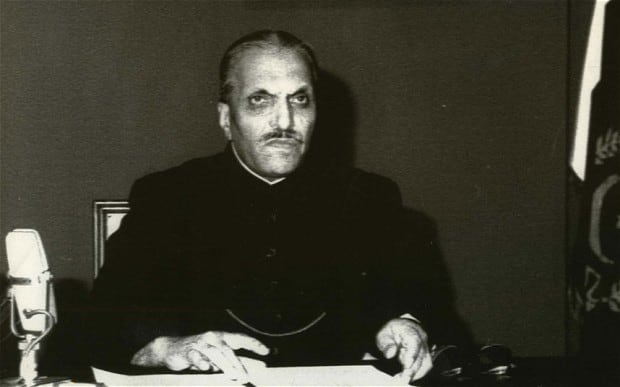
A note from Dr Hamid Hussein.
Incidentally, I happen to have heard from a first hand reporter that General Hamid (then chief of army staff) was also involved in the line of people who “forgave” General Zia and thus played a part in giving a specifically Deobandi color to Pakistan’s subsequent Islamization and its associated disasters.  As a side note, I think some sort of military takeover and the use of Islam to promote Pakistani nationalism were both going to happen anyway in Pakistan …Islamism is built into Pakistani Nationalism (remember the two-nation theory?) and was promoted in many ways by Bhutto himself; and no political party was likely to overcome the army after Bhutto himself undermined constitutional rule and proper procedures in a thousand different ways … but it is possible to imagine that if a future coup had been mounted by General Jilani or much later, by General Aslam Beg (to pick two random examples, neither necessarily being the most likely actor in any alternative history) they would have used Islam, but would not have been as interested in, say, destroying Pakistani cinema or putting women in purdah or beating up on Ahmedis, as Zia was because of his personal convictions.

Anyway, the story I heard was that General Nawazish (Zia’s superior in Jordan and the person leading the Pakistani military mission) criticized Zia for overstepping his authority and taking direct part in Jordanian military operations, and recommended action against him. This recommendation alone would have sunk his career, irrespective of what action was taken, unless the slate was somehow wiped clean. Zia got Pir Abdullah Shah and General Gul Hassan to help him on the the “mai-baap” frequency (senior officers being begged to help out a junior because he belonged to the same arm or the same unit, no particular personal qualities or links being necessarily critical in such an appeal) and Gul Hassan talked to General Hamid, who then told Yahya to “let the boy off the hook” and removed this blot from his record…. Thus adding a specially painful layer to Pakistan’s future pains.
btw, I wish Dr Hamid had given more details about the actual operations carried out by the Jordanian division commanded by General Zia. What role did he play in an operational sense? How involved was he in actual killing of Palestinian or Syrian forces? was he (God forbid) an effective commander?
Does anyone have any information to add in that respect?

(post script: the Pakistani charge d’affaires in Amman at that time has written a newspaper article in which he also states that General Zia’s role was much exaggerated in later years (he underplays it though, his role was not THAT peripheral, since he did help to hold a critical Jordanian division together, and there was real fighting against the Syrians in Irbid, but I have no doubt that later legends about Zia killing thousands of Palestinians are mostly just legends. by the way, the “istikhara” mentioned here need not be a literal istikhara (recourse to Quran to guess what course to follow) but may be other things, like a signal from the Americans)

Dr Hamid Hussein’s note follows:

June 18, 2014

Someone asked about the veracity of following statement;

“In 1970, when the Hashemite Kingdom of Jordan requested Pakistan’s help in putting down a Palestinian uprising, the Golden Arrow commanded by Brigadier Ziaul Haq restored order.”

I don’t know what is the context of the above statement but it is probably related to the role of Pakistani troops in Jordan’s clash with Palestinian radicals in 1970.  Pakistan army’s 7 Infantry Division based in Peshawar is called Golden Arrow.  Last several years, a much reinforced 7 Division (much larger than normal division size) is operating against militants in tribal areas.  In one short sentence the above statement is incorrect.  Unfortunately, in the absence of serious research culture, folklore is passed on as a historical fact in Pakistan. A while ago, I wrote a piece about Pakistan’s security cooperation with Arab states (Pakistan and Arab World: Security Cooperation, Defence Journal, July 2011) and one segment dealt with this particular episode.  The relevant segment is attached below that will hopefully clarify few things and give a glimpse of intrigues of byzantine proportions still practiced in the region;
“In 1969, Pakistan sent a military training mission to Jordan.  The mission’s primary task was to assess state of Jordanian forces in the aftermath of 1967 defeat at the hands of Israelis and recommend overhaul.  Officers from different arms (Infantry, Armor and Artillery) of army and air force were part of this mission.  Main objective of the mission was survey of Jordanian armed forces, find deficiencies, recommend solutions and guide in training.  Pakistanis got entangled in Jordan’s clash with Palestinians.  The simmering tensions between Jordanians and Palestinians resulted in September 1970 showdown when King Hussain ordered  Jordanian forces  to quell an attempt by Palestinian groups based in Jordan to overthrow the Hashemite kingdom.  There were exaggerated reports circulated by Palestinian sympathizers that Pakistani troops helped Jordanian forces in combat.  Later, after General Zia-ul Haq’s coup, those opposing him continued these unsubstantiated reports as Zia was in Amman during that time period.

Pakistani training mission consisted of only about two dozen army and air force officers and no combat troops (only exception was an Anti-Air Craft detachment sent in June 1970 at King Hussain’s request as he was worried that Syrian and Iraqi air forces may intervene in support of Palestinians).  Pakistan military mission was headed by Major General Nawazish Ali while Air Commodore Anwar Shamim (later Air Chief Marshal and Pakistan air force chief) was in charge of air force officers.   During main Jordanian offensive in September, Pakistani ambassador in Amman Nawab Rahat Ali Chattari as well as head of military mission Major General Nawazish were not in the country.  Brigadier Zia ul Haq was in charge of the military mission.  King Hussain asked Brigadier Zia to take over the command of a Jordanian division.  Pakistan’s charge de affairs got approval of this move from Ministry of Defence.

In Amman, 4th Mechanized Division commanded by Brigadier Kasab al-Jazy operated and 60th Armored Brigade of the division commanded by Colonel Alawi Jarrad was at the forefront.  After 1967 war, 3rd Iraqi Armored Division had stayed back in Jordan and was deployed in Zarqa.  King Hussain was suspicious about the motives of Iraqis and he deployed 99th Brigade commanded by Colonel Khalil Hajhuj of 3rd Jordanian Armored Division near Iraqis to keep them in check.  However, young Saddam Hussain emerging from his own recent successful power struggle inside Iraq shrewdly pulled Iraqi troops away from conflict area and finally removed them from Jordan to avoid getting entangled.

2nd Jordanian Infantry Division was based in Irbid near the Syrian border.  Palestinian guerrillas had taken control of the town.  Syria entered the fray in support of Palestinians by sending 5th Division commanded by Brigadier Ahmed al-Amir.  This was a reinforced division consisting of 67th Mechanized, 88th Armored and 91st Armored Brigades of Syrian army and Hittin Brigade consisting of Palestinians.  Commanding officer of 2nd Jordanian Infantry Division Brigadier Bahjat al-Muhaisen (he was married to a woman from a prominent Palestinian family) went AWOL and Brigadier Zia took command of the division at the request of King Hussain.  2nd Jordanian Infantry Division was shaky after desertion of Jordanian commander and Zia helped to keep the formation intact.  This division helped to take back control of Irbid.  Syrian armored thrust near Irbid was tackled by 40th Armored Brigade commanded by Colonel Atallah Ghasib of 3rd Jordanian Armored Division. Major damage to Syrian armor was done by Royal Jordanian Air Force.  Inside Syria, a power struggle between Saleh Jadid and Defence Minister and Air Force commander Hafiz al-Asad was at its peak and Asad decided to keep Syrian Air Force out of conflict.  In the absence of air cover, Syrian forces were mauled by Jordanian air force and within two days, battered Syrian troops retreated back.  Two months later, Asad took control of the affairs of the country sending Jadid to prison.  In 1970, Nawazish gave a bad Annual Confidential Report (ACR) to Zia although details of it are not available.  It is not clear whether report was written before or after September 1970.  Apparently, report was bad enough to possibly end Zia’s career at the rank of Brigadier.  Zia asked his former Commanding Officer (CO) of Guides Cavalry Colonel (R) Pir Abdullah Shah for help.  Abdullah asked then Chief of General Staff (CGS) Major General Gul Hassan Khan (Zia had also served under Gul Hassan) and report was quashed by army chief General Yahya Khan on Gul’s recommendation.”

Hamid Hussain

Mayhem in Mosul – Old Story, New Chapter

From Dr Hamid
Hussain, comments welcome. (I have some thoughts, but dont have time, I will try later this week to write something)
 
“War
has a grammar of its own, but its logic is not peculiar to itself.”  
Clausewitz

 
Recent
advance of Sunni extremist group Islamic State of Iraq and Syria (ISIS) also
known as Islamic State of Iraq and Levant (ISIL) in northern and western Iraq
took many by surprise.  In few days, ISIS
fighters took control of major cities of Tikrit and Mosul while country’s
security forces simply folded without a fight. 
Iraq disappeared from international headlines after the departure of
American troops from the country in 2011. Local conflicts with regional
destabilizing impact seen in Mali and Ukraine replaced Iraq and
Afghanistan.  Internal conflict in Iraq
remained a local affair for the last few years. 
Conflict in Syria sucked many of country’s neighbors and Iraq was no
exception.  Limited numbers of Iraqis are
fighting on both sides of the conflict. 
Iraqi Shia affiliated with some local militias are fighting alongside
Syrian security forces while Iraqi Sunnis are providing fighters and logistical
support to Sunni rebel groups in Syria. 

Recent
advance of ISIS creates new challenges as well as opportunities for all
players.  Key elements of the conflict
include internal power dynamics of Iraq and neighboring countries while distant
interested parties have a smaller but significant role to play.  Internal squabbles among newly empowered Shia
political elites in Baghdad and general Sunni alienation from new Shia power
brokers set the stage for psychological separation in the background of a
recent very brutal sectarian bloodbath all over the country.  Sunnis were divided along several lines and
tribal leaders with influence made separate deals with Iraqi government and
Americans to safeguard their tribal and personal interests.  Association of Muslim Clerics (AMC) took the
mantle of representing urban Sunnis, however in the process it either kept
quite or provided excuses for extremist violence against Shia civilians.  It also came under the influence of Saudi
Arabia and in the process all Sunnis were labeled as extremists as the
ideological fountain of ‘takfir’ (apostasy)
flows from the religious establishment of Saudi Arabia.  The fractious Shia coalition in Baghdad felt
in no mood to bring Sunnis inside the tent. 
There was a time when they could have made a deal with AMC and tribal
elite to marginalize extremist segment of population but the opportunity was
lost.  Strengthening of Sunni extremist
groups operating in Syria had direct impact on dynamics of Sunni power play
inside Iraq.


The
fires of sectarian hatred are raging all over the region and Iraq is in the
middle of this cauldron.  ISIS was able
to gain foothold in alienated Sunni communities of Iraq and some former
soldiers and tribesmen joined the new rising Sunni star on the stage.  In the backdrop of schism among Iraqis along
sectarian lines, local members of security forces simply melted away.  Most of them had joined the security forces
for a steady source of income and not for any national pride or patriotic
sentiments.


The
biggest losers at this stage are Iraqi Sunnis and Iraqi state.  The choice for Sunnis is now limited to live
under the extremist version of Sharia
of ISIS in areas under its control or to leave. 
If they stay put, they will suffer both from the excesses of extremists
controlling their lives and then the destruction inflicted by government forces
when they decide to take back the territory. 
The future of Iraqi Sunnis is quite bleak and most of them will be
caught in the crossfire.  Migration both internal
and external will also be very difficult as they will not be welcome in Baghdad
or Iraqi Kurdish areas due to widening gulf. 
Civil war in neighboring Syria assures closure of that avenue and
fragile Jordan can only accommodate a limited number.  Saudi Arabia and Turkey while eager to meddle
in Iraqi affairs on behalf of Sunnis are in no mood to allow large scale Sunni
migration. 

 
Current
rapid advance of ISIS has shocked many but it has probably achieved its maximum
security and more importantly psychological gains.  They will likely now consolidate only on
these two fronts as they are not much interested in governance.  They want to purify their subject’s faith and
eliminate infidels and apostates rather than providing clean water or good
education (there are few exceptions and in some cases militants restored public
services quickly and tried to present a gentler face of the organization).  They will instill more fear to paralyze
civilians and security personnel by disseminating images of public executions
which in my estimate will be likely in dozens. 
They will also take control of other small Sunni dominated cities as
main highways connecting north and south are cut off and there is no likelihood
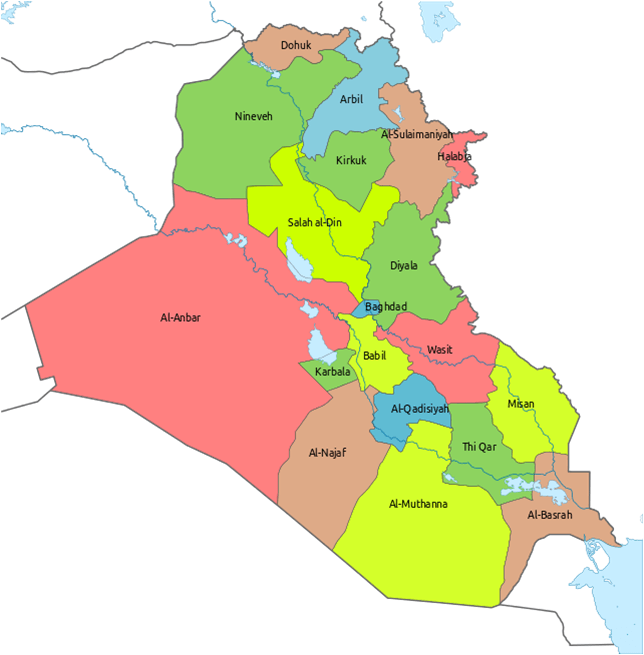
of any meaningful support to beleaguered cities.  Their control of Nineveh, Salahuddin and
Diyala governorates has effectively cut off northern Kurdish areas from Shia
dominated south.  However, they have reached
their military limits and have significant handicaps.  First, it will be hard for them to defend
large swaths of territory including major cities.  If they decide to defend their territory
against a conventional assault by Iraqi security forces, it will dissipate
their strength.  Once they come close to
Shia dominated areas, they will face the real challenge.  Security forces and Shia militias will be
fighting for their own version of faith. 
ISIS may try to augment its weakness by launching large scale suicide
bombings. 


Events
of last few weeks showed extreme fragility of Iraqi state.  General public has lost the faith in security
forces to protect them and it will be very difficult if not impossible to
repair this psychological damage.  Prime
Minister Nuri al Maliki’s statement telling citizens to arm themselves was an
act of extreme irresponsibility and more damage to public morale was done by
such government actions than the actual advance of ISIS.  The space left by the retreat of state will
be filled by non-state actors even in Shia majority areas and we are already
seeing the signs.  Shia militias and
their leadership that has been gradually absorbed into state structures and to
some extent pushed from the center stage will get a second chance to stage a
comeback.  Central government will lose
more control of poor Shia neighborhoods of Baghdad and southern port city of
Basra.  There is risk of re-emergence of
Mafioso style militias that will extract resources from local citizens in
return for promise of security from rabid extremist Sunnis of ISIS.  Clerical establishment of shrine cities of
Najaf and Karbala will be sucked into this conflict as they see threat from
Sunni extremists as an existential threat to Shia Islam.  They have to provide religious sanction for
defense of the faith and Ayatollahs will issue religious decrees to their respective
flocks regarding fight in defense of their faith.  All these measures will increase Shia
solidarity but at the expense of the central state as well as further widening
of the sectarian gulf.  These Shia
militias will tag along Iraqi security forces when they retake Sunni dominated
areas and exact a terrible revenge.  This
is not a hypothetical scenario but it actually happened in Iraq in recent past. 

 
Iraqi
Kurds are clear winners in both short and long term as long as they can keep
chaos away from their border.  Since
2003, Iraqi Kurdistan has been a de facto independent country.  They have established Kurdistan Regional
Government (KRG) consisting of four northern governorates (provinces) of Dohuk,
Irbil Sulemaniyah and Halabja.  Physical,
psychological and economic separation of Iraqi Kurds is almost complete.  The painful history of Iraqi Kurds in the
state named Iraq is full of pogroms and genocide and central state of Iraq is
synonymous with oppression and brutality for almost all Iraqi Kurds.  In the presence of U.S. troops, Kurds were forced
to limit themselves to only de facto independence but if Iraq disintegrates
along sectarian lines then Kurds will make a clean break.  Many will eagerly embrace them and even those
who do not favor outright independence of Iraqi Kurdistan will prefer to make
arrangements with an island of relative stability on the edges of a volatile
and violent arc. 

 
Iraqi
Kurdistan has made enormous progress in all fields and their leaders used
local, regional and international resources well despite a fair level of
corruption.  Main focus of Kurdish
leadership was economic activity and relative stability along borders with
Turkey and Iran.  They were able to
maintain a reasonable amount of stability along border despite very difficult
history and presence of significant numbers of Kurds in Iran and Turkey and
sectarian bloodbath inside Iraq.  When
ISIS moved into Mosul, Kurdish security forces quickly moved and took control
of the disputed city of Kirkuk.  Kirkuk
is the political, economic and psychological center and future capital of
independent Kurdistan.  Kirkuk has been a
major stumbling block in Kurdish-Iraqi relations and what Iraqi Kurds could not
wrest from Iraqi state in ten years, ISIS has presented them their crown jewel
without firing a single shot.  Kurdish
move was preventative to protect Kurdish population of the city but it also
achieved one of the strategic objectives of Kurds as they can now work to
incorporate Kirkuk permanently into KRG. 
In my view, this action is now irreversible and Kurds will not give up
Kirkuk even if rest of the Iraq becomes Switzerland.  The next step could be safe guarding and
finally incorporating two Kurdish majority districts (Khanaqin and Kifri) of
Diyala province into KRG.  This will
complete geographical consolidation of KRG. 


In
strategic terms, there is a rare convergence of interests among a wide range of
even hostile players.  Sunni extremist
outfits have declared an open war on Shia globally which means that Iraqi Shia,
Iran and Syrian government see them as existential threat.  Iran is moving extra intelligence and
security assets into Iraq to bolster Iraqi security apparatus.  Syrian government is already fighting ISIS on
its own territory and will be coordinating with Iraqi government.  Even Turkey’s Islamist government is not
Muslim enough for ISIS.  One of the first
actions of ISIS was to take dozens of Turkish security personnel and diplomats
hostage when they took control of Mosul. 
Ankara is seriously worried about this emerging threat along its
border.  Ankara has dialed back
significantly in Syrian theatre in view of increasing strength of extremist
groups in the opposition in the last two years. 
Now, many in Turkish security and intelligence establishment are having
serious second thoughts about the wisdom of current government’s policy of
diving head first in Syrian civil war. 
Advance of ISIS may result in revision of Turkish policy towards Syria.

 
Many
in Israeli strategic community are slowly realizing the tectonic shifts in surrounding
Muslim world.  The question about threat
to Israel from state and non-state actors needs to be re-visited.  Israel has successfully defended itself
against larger hostile neighboring states throughout its history.  The question is how it plans to face the
challenge from non-state actors.  Israeli
Defence Forces (IDF) is working on this new emerging threat along its borders
as extremist groups are gaining strength in Syria and Sinai.  I’m sure some in Israeli security and intelligence
community will be burning the midnight oil asking the question of what is the
risk of presence of extremist groups on Israeli border from a fragmenting Syria
or if other neighboring states like Egypt and Jordan are further weakened?  Some can argue that in short term; it is in
Israeli interest that ISIS can suck in Iranian security and intelligence assets
inside Iraq thus dissipating Iranian energies. 
However, threat from ISIS like groups is diffuse and cannot be
quantified in conventional terms.  Israel
has invested heavily in Iraqi Kurdistan in economic and security sectors which
benefited both parties.  This relationship
will be crucial in tackling ISIS especially if ISIS decides to open another
front against Kurds. 


Saudi
Arabia is providing ideological and financial support to many Sunni groups
operating inside Iraq and Syria.  Riyadh
is playing with fire and in its hatred of Shia; it decided to sleep with
another dangerous enemy.  Such fires
cannot be restricted to any geographical region and blowback is a rule rather
than an exception.  Many Sunni extremist
groups show contempt for the Saudi monarchy and have successfully hit targets
inside Saudi Arabia (in some of the chatter picked up by Pakistani
intelligence, militants ridiculed religious edicts of Chief cleric of Saudi
Arabia and custodian of the holiest mosque of Kaba labeling them as  â€˜courtier mullahs’.  The diaries of two Saudi militants captured by
Pakistani security forces in Mohmand tribal agency were filled with abuse
hurled at Saudi Royal family and promise of returning home to cleanse Saudi
Arabia after they are done with Afghanistan and Pakistan).   Saudis only need to look at Pakistan to see
the wages of such myopic decisions.  More
closely at home they can read their own history.  King Abdullah’s father Abdul Aziz Ibn Saud used
religious zealots Ikhwan for his own
interests to expand his fiefdom. 
However, at one stage same Ikhwan considered
even Abdul Aziz as apostate when he tried to prevent them from raiding neighboring
countries.  Abdul Aziz had to use the machine
guns of the ‘infidels’ to put the fear of God and decimated his one time ally.  The second incident is quite sanguine seizure
of the holy mosque of Kaba in Mecca by extremists in 1979.  Royal family had to publicly behead dozens in
different cities to put back the fear of God. 
It is time for Riyadh to review its Syrian policy and weigh its pros and
cons.  Events of the last few years
clearly show that the costs clearly outweigh any benefits to Saudi long term
security interests. 

 
Current
threat from ISIS is unconventional and response also needs to be
un-conventional.  This phase of the war
needs to be fought in the shadows.  Loud
noise from all directions is expected and pressure on Washington will be to do
something.  Retired American generals who
lost Iraq war, former intelligence operatives who were wrong so many times and
permanent fixtures of Iraq experts at various think tanks who had become
orphans after American departure have also staged a comeback parallel to ISIS
advance.  Surely, we will hear a wide
array of options for Washington.  Washington
has a habit of throwing more money and weapons at the problem with the hope
that the problem will go away.  This has
not worked before and will also not do the trick this time. 


Washington
spent billions of dollars on Iraqi army in the last decade providing them with
tanks, Humvees and heavy weapons.  In
less than a week, this army lost almost one third of their country without
giving a fight.  To add insult to the injury,
extremists got hold of all the weapons including Humvees and tanks.  They paraded in Mosul city riding in dozens
of brand new vehicles of security forces and police.  In addition, they helped themselves with a
bonus of about $400 million from Mosul banks and some reports suggest that
militants also took a joy ride in helicopters captured at Mosul.  Limits of American power are obvious to anyone
with average intelligence.  I think
Christopher Fettweis summarized it very eloquently that “bringing peace to every corner of the globe,
even those whose stability we have wrecked through our own incompetence, is not
necessarily in the strategic interest of the United States”.   I’m not in favor of supplying more money or
weapons to Iraqi security forces.  Only
contribution that I can see is to provide intelligence cooperation and very
limited use of surveillance and armed drones targeting large gatherings of
militants and leadership that can serve as a precursor before Iraqi security
forces move in.  There is not much
appetite in United States for more involvement in peripheries and less
involvement and less visibility are in U.S. long term interests. 

 
In
long term, Iraqis have to solve their internal differences but in short term, all
interested parties need to coordinate despite significant differences.  The best option is to have a small number of
intelligence and security officials of United States, Iraq, Iran, Syria, Turkey,
Israel and Iraqi Kurds establish ground rules for tackling the threat.  All these countries already have significant
intelligence presence in Iraqi Kurdistan and they only need guidance from their
respective governments to cooperate locally. 
Intelligence gathering and small scale covert operations targeting
militant leadership can be supplemented by limited use of armed drones.  Many Sunni tribesmen have joined the ISIS
offensive.  Washington has old
intelligence assets among this group when Awakening movement of Sunni tribesmen
was organized against Al-Qaeda during U.S. occupation.  These assets can be activated and
supplemented by other assets to identify and liquidate extremist
leadership. 


Major
intelligence and covert operations should be launched from northern Kurdish
areas.  Israel can be a significant
contributor on this front.  If Washington
and Tehran comes to an agreement, then Iran can launch a similar effort from
eastern front bordering Diyala governorate and from government controlled areas.  If initial intelligence and covert operations
are successful in downgrading ISIS command and control then Iraqi security
forces have to do the heavy lifting of taking back control of major
cities. 


Saudis
have tightened control of their border with Iraq over the last decade to
prevent graduates of Iraqi insurgency to practice their skills inside the
kingdom.  It is not likely that large
number of extremists will head for Saudi border.  Some may head towards Jordan after shedding
their weapons and uniforms.  Jordan has
its own fairly decent intelligence network targeted against extremist outfits
as well as fairly robust intelligence cooperation with Americans and
Israelis.  These assets can be used to
identify and liquidate extremist leadership. 
The only door left open for ISIS will be the western border with Syria
and here the most effective weapon could be drones.  In addition, small scale operations launched
by Syrian Kurds in control of northern Syria can hit retreating ISIS from the
flank.  An independent supporting role of
Russia to Syrian government by providing weapons especially aerial assets can
help in downgrading ISIS inside Syria.  All
these measures even if successful are short term and long term solution depends
on a grand bargain among Iraqis and conclusion of civil war in Syria.  The chances of long term settlement are
however bleak in view of widening sectarian gulf. 

 
Iraq has embarked on another cycle of violence and
we don’t how it will end but we are sure that it will be painful for every
Iraqi. An Iraqi student of a religious seminary Nizar Yusuf probably with more
wisdom than American generals and experts said in August 2003, “It’s already
started.  We know from reading history
that when it becomes bad, it only gets worse”. 
The lesson for everyone from another blood soaked page of Iraqi history
is that every effort should be geared towards preserving existing states no
matter how imperfect.  When these states
fragment from internal or external pressures, they leave only death, devastation
and tears in its path.  On the other hand,
once citizens of a country come to a conclusion that they cannot live together
as they have nothing in common then they have to make the painful decision of
separation to end the war in a generation rather than bestowing these wars to
their children and grandchildren. 

It’s a long
journey,

And in it, I’m a
stranger.

And the night
draws near,

And the day has
ventured home

                                                
    An Arabic song
(late Anthony Shadid very aptly titled his book on Iraq Night Draws Near)


Hamid Hussain

June 14, 2014


Super excellent news (if true)

Good for the Afghan police – that is if they really found the culprits and not just some random scapegoats (in South Asia you are always worried about this happening).

With madness all around we can expect only small mercies and tiny blessings. Herat has been the scene of Indian embassy attack recently. It was considered an unlikely place due to the proximity with Iran. But then mad people follow no logic.

…….

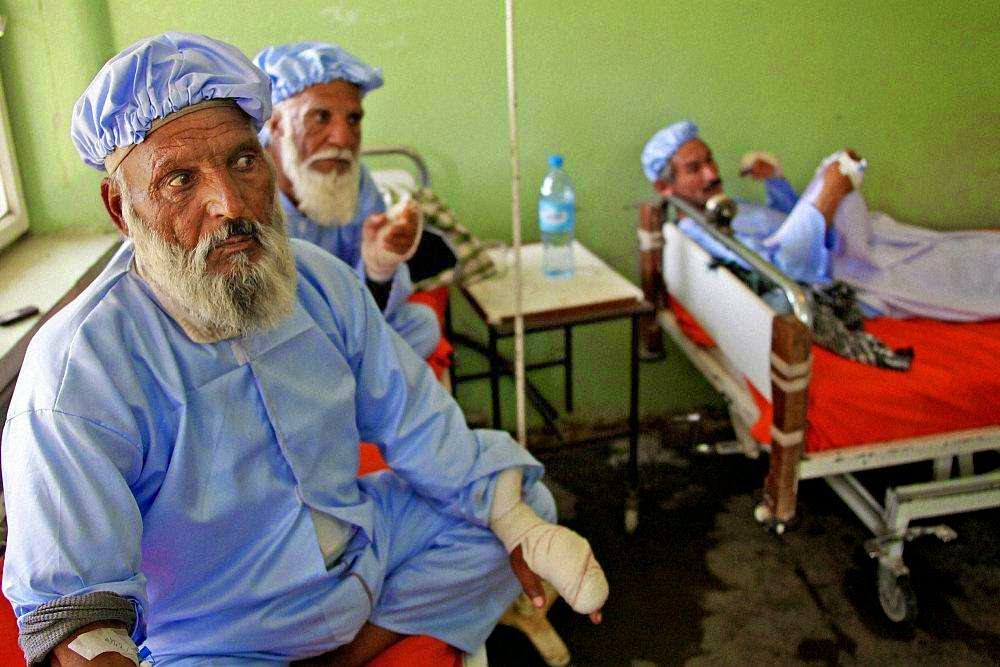
Afghan police hunted down and killed two Taliban insurgents who cut off
the fingers of 11 elderly men who voted in the presidential election
run-off, officials said today.


All voters in Afghanistan had their fingers marked with ink after voting
to prevent them from casting more than one ballot, but the ink also
identified those who participated in the election in defiance of Taliban
threats.


….
“Insurgent commander Mullah Shir Agha and one of his officers were
killed in a police operation yesterday in Herat,” a statement from the
interior ministry said.


“The pair were accused of having cut off the ink-dyed finger of 11 voters.”


The ministry said another insurgent involved in the attacks was injured in the operation and held by police.


….

Local police confirmed the operation, but said two Taliban fighters had escaped.


“The security forces are on them. They are members of Taliban and will
pay the price for their crimes,” Herat police spokesman Abdul Rauf
Ahmadi said.


Jan Kubis, head of the UN mission in Afghanistan, described the mutilations as an “abhorrent” act.

“These ordinary Afghans were exercising their fundamental right to
determine the future path of their country through voting and not
through violence and intimidation,” he said.


One spokesman for the Taliban denied involvement in the attack.

The Taliban had vowed to target voters on Saturday, when two candidates
stood in the second-round vote to succeed President Hamid Karzai.

……

Link: http://www.outlookindia.com/news/printitem.aspx?845010

……

regards

Brown Pundits