A Kerala entrepreneur’s jackfruit startup that’s fighting India’s diabetes ‘pandemic’

Come summer, Indians engage in a unique mango one-upmanship: Alponso or Langda; Ratnagiri or Devgarh Alphonso; Gujarati Kesar or Banarsi Chausa. If you ask me, this kind of mango tribalism is trite. The mango season is short. Eat whatever you can find.

But this is also the season of jackfruit, a fruit far more complex in flavour, and a veritable super food that Indians in its native land love to despise. Jackfruit of course has an exalted status in traditional Tamil literature, alongside banana and mango. Jackfruit can grow prolifically anywhere in peninsular India and the mid-to-lower Gangetic belt, pretty much.

I’ll share a couple of The Plate’s jackfruit stories here.

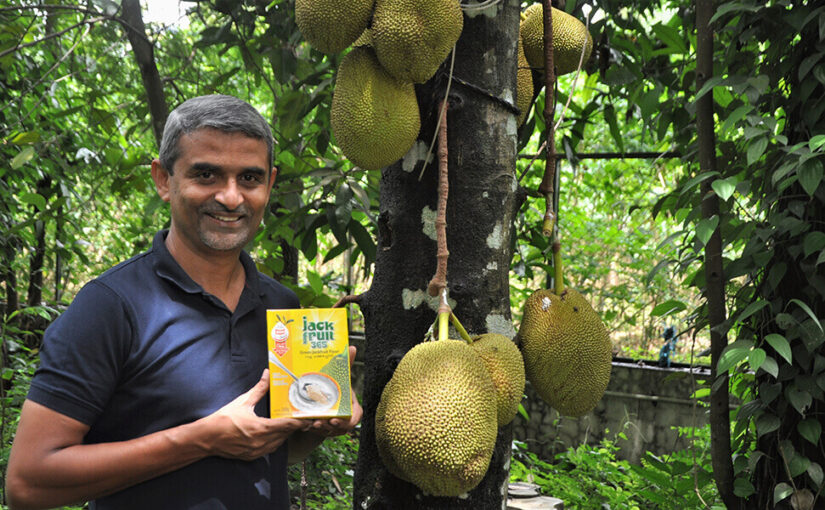
The first is about James Joseph, an ex-Microsoft executive who found a way to get healthy jackfruit into everyday Indian diet inspired by former Indian President APJ Abdul Kalam’s one-line brief to him.

Follow ThePlate.in to understand India from farm to plate!

X: https://twitter.com/thePlateIndia

Instagram: https://www.instagram.com/theplateindia/


Land of the Free, Home of the Brave

As I was going through my newsletter, realizing it had been neglected for some time, I decided to jot down a few thoughts here as well, touching on a theme related to life in the United States of America.

I suspect that most of the readership of BP is either based in the US or India (though I don’t have the exact numbers), with the exception of myself and our true Pandit (who, as a Sanskrit scholar, adds a unique perspective).

As I munch on a rather ordinary banana (I usually freeze my fruit, and frozen bananas in the UK are usually bursting with flavor), I reflect on my experience of what would be an academic year in the United States and offer some observations:

  • The competitive nature of the United States is palpable, especially in the Boston-Cambridge area. People here work *extremely* diligently, which contrasts with the less intense “rat race” of the Old World.

  • The Puritanical influence of New England is evident in the lack of a vibrant late-night culture. Even Cambridge, UK, which was until recently a quiet university town, boasts a livelier late-night café scene than Boston-Cambridge. The relatively new Madras Dosa Company stands out as one of the few places to grab a late-night snack near Harvard Square.

  • The United States seems to lack the same appreciation for aesthetics that characterizes the United Kingdom. This is a perpetual observation (or perhaps complaint) of design-conscious Dr. V, who is a Londonphile.
  • That lack of appreciation for aesthetics extends to food (not to mention just how ludicrously expensive food is here); my gripe with the local Bahá’í community is rescheduling our lunch to my preferred Nepalese restaurant from the staid Indian one chosen.
  • London undeniably holds the title of the South Asian capital of the world outside of South Asia itself. It’s the destination where Indians and Pakistanis, from the home countries, flock to unwind (it seems like half of Bollywood summers in London). In contrast, the “Desi-Brown” culture in the United States feels somewhat disconnected, with assimilationist tendencies prevailing strongly.

  • These are merely observations and anecdotes, not hard facts, but I must admit my fondness for the United States is also because we have a dual identity as both Trans-Atlantic (Ye Old Cambridge) and Trans-Asiatic (with India rapidly becoming another anchor) so it doesn’t feel like I’m rooted here. My roots are in Asia, my nest in the UK but I come to perch in the USA.
  • America exudes wealth and opulence, but it often comes at the price of everyone being caught in the relentless pursuit of keeping up. The depth and richness of life, even its decadence, seem somewhat overlooked. In some ways, Americans resemble the Chinese in their relentless drive to be number one. Few other nations and ethnicities seem willing to make such drastic sacrifices.

These musings serve as a prelude to what will be explored further in my next newsletter, written amidst the backdrop of a beautiful Raga.

How a small, sleepy town in Karnataka turned into the vegetable nursery of India

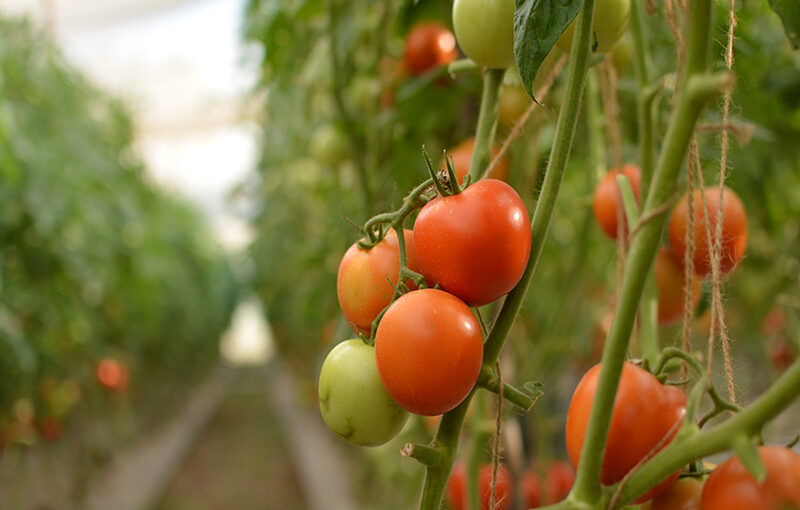
The right socio-economic conditions, availability of trainable talent, clement weather all year-round and a pioneering entrepreneur’s vision to harness it all setting up a sunrise-sector business turns a dozy place into a prosperous hub of startups. This isn’t yet another paean to Bengaluru’s status as the ‘Silicon Valley’ of India. It is the story of a place smack in the geographical centre of Karnataka, 300km to the northwest of Bengaluru called Ranebennur that’s the epicentre of India’s hybrid vegetable seed production.

Since seeds are the most critical and fundamental unit of input in agriculture, it would not be an exaggeration to call such a place ‘startup town’.

Seeds of success

Ranebennur is where India’s largescale, commercial production of hybrid vegetable seeds began in the late 1970s. Today, most major national and multinational agriculture companies from Syngenta to Pioneer to Namdhari have operations in the region. The farmers in this small region produce roughly Rs 500-crore worth of hybrid seeds of vegetables such as tomatoes, chillies, brinjal, okra and assorted gourds.

Such is the economic impact of hybrid seed companies on the local economy that it is common to find homes bearing homage to them. A seed company’s name inscribed in concrete suffixed with the word ‘krupe’ (benevolence) on the forehead of concrete homes painted in bright Vaastu-compliant colours ranging from parrot green to lemon yellow and Barbie pink isn’t a rare sight.

All of it is thanks to Manmohan Attavar a pioneering horticulture scientist and entrepreneur who must rank alongside MS Swaminathan and Verghese Kurien in the pantheon of modern India’s agriculture renaissance figures.

Manmohan Attavar, a pioneering scientist who created India’s first commercial tomato and capsicum hybrids

Read the full story here about how a pioneering Indian scientist-entrepreneur turned a non-descript town in Karnataka into India’s vegetable garden.

Follow ThePlate.in to understand India from farm to plate!

X: https://twitter.com/thePlateIndia

Instagram: https://www.instagram.com/theplateindia/


Pakistan; Myths and Consequences

This was an old article i wrote for the Indian magazine Pragati in 2013. That magazine has since disappeared, but some good Samaritan found this on the intertubes and I thought I would post it here for posterity. Some elements of my thinking have changed since then, and others have shifted in intensity, but i am posting this article as originally written;

Salman Rushdie famously said that Pakistan was “insufficiently imagined”. To say that a state is insufficiently imagined is to run into thorny questions regarding the appropriate quantum of imagination needed by any state; there is no single answer and at their edges (internal or external), all states and all imaginings are contested.  But while the mythology used to justify any state is elastic and details vary in every case, it is not infinitely elastic and all options are not equally workable. I will argue that Pakistan in particular was insufficiently imagined prior to birth; that once it came into being, the mythology favored by its establishment proved to be self-destructive;  and that it must be corrected (surreptitiously if need be, openly if possible) in order to permit the emergence of workable solutions to myriad common post-colonial problems.

In state sponsored textbooks it is claimed that Pakistan was established because two separate nations lived in India — one of the Muslims and the other of the Hindus (or Muslims and non-Muslims, to be more accurate) and the Muslims needed a separate state to develop individually and collectively. That the two “nations” lived mixed up with each other in a vast subcontinent and were highly heterogeneous were considered minor details. What was important was the fact that the Muslim elite of North India (primarily Turk and Afghan in origin) entered India as conquerors from ‘Islamic’ lands. And even though they then settled in India and intermarried with locals and evolved a new Indo-Muslim identity, they remained a separate nation from the locals. More surprisingly, those locals who converted to the faith of the conquerors also became a separate nation, even as they continued to live in their ancestral lands alongside their unconverted neighbours.  Accompanying this was the belief that the last millennium of Indian history was a period of Muslim rule followed by a period of British rule. Little mention was made of the fact that the relatively unified rule of the Delhi Sultanate and the Moghul empire (both of which can be fairly characterised as “Muslim rule”, Hindu generals, satraps and ministers notwithstanding) collapsed in the 18th century to be replaced in large sections of India by the Maratha empire, and then by the Sikh Kingdom of Maharaja Ranjit Singh. Continue reading Pakistan; Myths and Consequences

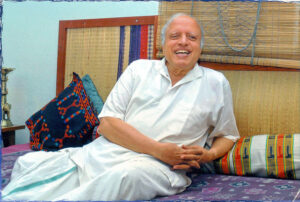
MS Swaminathan: architect of Green Revolution; the greatest Indian since Gandhi

On the occasion of India’s 65th anniversary of Independence, television channels CNN-IBN (now CNN News18), History Channel, and Outlook magazine jointly ran an audience poll, steered by a panel of “experts”, to ascertain the ‘Greatest Indian after Gandhi’.

Mankombu Sambasivan Swaminathan, who passed on at the age of 98 on September 28, 2023, barely made it to a shortlist of 50, let alone the Top 10 that contained Sachin Tendulkar and Lata Mangeshkar in a club overwhelmingly comprising politicians.

Such lists are gimmicks anyway and a result of political partisanship, recency bias and media narratives.

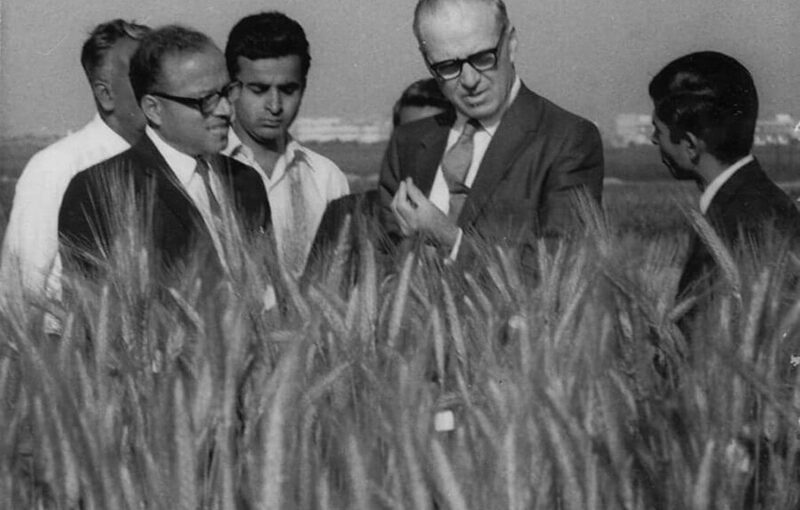
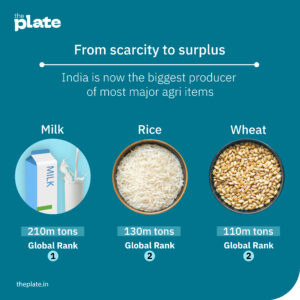
In this writer’s view, with no disrespect to those of yours, there isn’t anyone more worthy of the tag ‘greatest Indian since Independence’ than Dr MS Swaminathan. He provided the bedrock of science and built institutions up from scratch with scant resources to usher in the Green Revolution. His contributions made India not just food self-sufficient, helped 800 million poor escape hunger, but also turned it into a leading producer of every major agricultural commodity.


Faith and food

Swaminathan can be seen as the male embodiment of Annapoorna, a form of Parvati, the Hindu deity of food and nourishment, holding in one hand a Leitz binocular research microscope and his field notes in another, instead of the pot and ladle filled with food in popular religious iconography.

That both the Goddess of nourishment and Swaminathan, the scientific guarantor of food security, are now relegated in public consciousness is a measure of India’s progress and the liberty we now have to take access to food for granted.

Read the full story here

Follow ThePlate.in to understand India from farm to plate!

X: https://twitter.com/thePlateIndia

Instagram: https://www.instagram.com/theplateindia/

West Africa’s bitter chocolate harvest is a sweet deal for farmers in south India

The small, dark godown abutting M Dharmambigai’s large home with a larger courtyard in Kottur, a village 15 km to the south of Pollachi town in Tamil Nadu, has never housed stock so precious.

The value of gunny bags of cocoa beans stacked unevenly, without a great deal of care, is currently more than Rs 12 lakh and almost guaranteed to go up to Rs 15 lakh soon.

The lottery of climate change is such that the misery of farmers in one country is an opportunity to make windfall gains for others in a different continent.

The price of cocoa beans, the primary raw material for chocolate, has more than tripled in the last year. In March 2024 alone, it rose from $7100 a ton to $10455. In fact, chocolate prices now trade higher than industrial metals such as copper.

Can Indian cocoa farmers like her take advantage of rising global cocoa prices?

Read the full story here 

Follow ThePlate.in to understand India from farm to plate!

X: https://twitter.com/thePlateIndia

Instagram: https://www.instagram.com/theplateindia/

Ep. 71 Part 1 | Issues for Lok Sabha 2024 with Suraj | Modi, Rahul, BJP, INC, NDA, I.N.D.I.A.

I spoke to my friend Suraj Balakrishnan on the Issues that will Impact the Lok Sabha Elections, what makes PM Narendra Modi have such a high popularity despite two terms as incumbent as well as how the political dynamics would shape up in the country after 2024 Elections.

The Indic Explorer YouTube channel focusses on the interplay of Indic culture with modernity explored through different facets in the socio-cultural sphere.

Do subscribe to the channel at https://www.youtube.com/theindicexplorer

and follow me here

Twitter- https://twitter.com/theindicexplor1

Instagram- https://www.instagram.com/theindicexplorer/

Substack-https://digitaldharma.substack.com/

Spotify – https://spotifyanchor-web.app.link/e/MobfQp83uzb

Ep. 71 Part 2 | Poll Predictions in North Indian States

I spoke to my friend Suraj Balakrishnan on the political scenario and predictions in the key states in Northern India in 2024 Elections.

The Indic Explorer YouTube channel focusses on the interplay of Indic culture with modernity explored through different facets in the socio-cultural sphere.

Do subscribe to the channel at https://www.youtube.com/theindicexplorer

and follow me here

Twitter- https://twitter.com/theindicexplor1

Instagram- https://www.instagram.com/theindicexplorer/

Substack-https://digitaldharma.substack.com/

Spotify – https://spotifyanchor-web.app.link/e/MobfQp83uzb

What do they know of cricket who only cricket know?

What do they know of cricket who only cricket know?

This is the Immortal quote from arguably the greatest book written on any sport, in this case, cricket from “Beyond the Boundary” by CLR James. This was obviously inspired by Kipling’s poem, “The English Flag “where he asks “And what should they know of England who only England know?” to celebrate the British Empire’s global reach. James says what he said to convey that it’s always in one’s interest to evolve and never stagnate.  I was thinking about this after today morning’s seemingly bitter argument between two friends in one of these ubiquitous cricket themed WhatsApp groups about the primacy of IPL versus Test cricket with the conversation getting increasingly heated and personal. I am assuming thousands if not more such groups will be having similar debates and wanted to think this aloud – I don’t expect any brilliant new insight to emerge but sometimes writing this out may clarify our collective thoughts, or that’s the aim!

At the outset, comparing the two formats is blasphemy, one is a 150-year-old sporting institution with a rich history and legacy and IPL is a15 odd year young upstart that shocks the purists. A lot argue that these two are in fact two entirely different games. I wouldn’t go as far as that but let us see where they get together and where they differ.

Tests with their ebbs and flows almost mirror life, you lose the toss and have a disastrous first session, why the whole first and second day as well or like the first test in the England series that concluded recently, be behind the match so much but still Pope scores an all-time great or freak innings and England win. That causes all of us tragics to rant and rave but suddenly India turns up and beat them 4-1. Or the last Australia series where after the 36 all out ignominy of Adelaide, Melbourne, Sydney and Gabba became classics for the ages!  Similarly, all the Ashes rivalries, Bodyline Series, India Pakistan test matches and so on, each cricket lover will have 20 test matches close to their heart for a variety of reasons.

IPL in contrast is an Indian Bollywood like affair with auctions, mix and match of foreign and Indian players, owned by celebrities – Movie stars and businessmen and rules like Calvinball , sort of made up as we go along the tournament over the years . The impact player in the last 2 versions is an example – last year it was a novelty. This year the think tanks of the teams have got a plan to exploit it and we have seen an immediate impact already – scores of 270 plus are common and we may see a 300 soon. The theory is having an additional hitter mentally frees up the other batsmen to bat more freely than they may otherwise. Is this tinkering with the basic structure of a playing eleven – sure it is! However, the crowds love it and so we enjoy the hitting and feel mildly sorry for the bowlers. The cult following of certain teams ( CSK – my team!)  is something else. Anyone who has been in the ground at Chepauk especially if not any ground when MSD Dhoni enters to bat this year will have an experience of a lifetime!

Has the IPL rubbed off positively on the traditional form of cricket – Tests? Let us examine the evidence.  The scoring rates of tests this millennium is way higher than it was ever before. The number of draws is also very few and far in between and mostly we see a draw only in case of a weather exception. (The Sydney- one arm and one leg Horatio Nelson like stand of Ashwin and Vihari being a glorious exception!). It has also enabled batsmen to be way more adventurous in tests – Rishab Pant reverse scooping Jimmy Anderson in a test and Bumrah using slower balls to get Bairstow out in tests in England come to my mind. There are numerous such examples where the innovation, cheekiness and variations of the IPL are brought on to the test matches making them exciting. New talent from the hinterland is unearthed, the kids make their name and fame in IPL and do well for their countries in tests as well. Jurel being the latest case in point. Fear of losing and playing under huge pressure with a lot of crowds is something young Indian players learn very young to adapt and that stands them in good stead in tests too. range and power hitting as seen by the Indian youngsters as well as foreign players and the 150 km and more speeds cranked up by young bowlers is a treat to watch !

Is it all roses then and IPL has no faults?  The age-old virtue of grinding out a session appears to be a bit lost but there are still players like Pujara who do it to great success  ( He does not play much of IPL or no one selects him much !) . Much was made of the Bazball hype by England but when all all-time great test batsman like Joe Root reverse scoops Bumrah to the slips when the series was in balance , the idea lost its hype I would imagine even though the English and their cloying press still cling on to it. The Ashes later this year should settle that argument once and for all!

From Indian cricket point of view, there has been interesting ramifications. In Tests since the inception of IPL, the Indian test team for most parts has done exceptionally well, have been the no 1 test team for long periods of time, have won two away series in Australia and only South Africa has been the last bastion yet to be conquered. However, we have lost both the WTC finals, on the face of it that cannot have anything to do with IPL. More worryingly after 2008 we have not won any ICC white ball trophy, the cruelest cut being the final we lost to Australia last year at Ahmedabad. I do not fancy much our chances in the T20 WC as well later this year in the Americas. Can this too be correlated to IPL – let us see what is the evidence again if any.

One worrying trend is players prioritizing IPL over national duty – classic case seems to be Hardik Pandya, I do not remember him missing any IPL but in national colors, he seems to twist an ankle or pull a muscle even while sneezing. While the Aussies seem to have a party at the IPL almost appear to take it as a lark , earning big money in millions while in national colors, they seem to give their blood and more to win. Maxwell being the case study for this, RCB his team is the butt of a million memes and he does precious little for them on most occasions while for Australia he plays impossible knocks to win them tourneys!  I cannot think of any Indian player like that while like Pandya we may have several examples. Similarly the IPL spin offs owned by the same franchises have undermined test cricket in other countries as well. South Africa sent a third XI to New Zealand to play a test series as their main players were busy with their version of the T20 league. This can be explained away as a scheduling issue, though players can only play for so many days in a year and need to rest and recuperate. The balance between the pride from national Duty to the commercial windfall from T20 leagues is a tricky one. BCCI to its credit has tried to address this by specially incentivizing players for test wins, though the other boards may not have the financial muscle to do that.

IPL has done a lot to popularize cricket with women and children, it has brought a new demographic who hitherto were cold to cricket and made them follow the game and its nuances. Sure, it can be described as a pure tamasha but the basic skills of the game are on display and the next generation is getting hooked on to the game. Given cricket was always a game played by a handful of countries this is important for the game to survive for the next 50 years and more. There was a recent survey in India amongst kids younger than 10 years and for the first time ever football was rated as the game that they followed or played most! That means IPL is necessary for even tests to survive in a manner of speaking.

In summary IPL has its utility, it is more entertainment than pure sport but some elements of the sports are sharpened due to it and the benefits spill over to make the oldest format of the game, test cricket,  more interesting. The caution is young players prioritizing one for the other, it is perfectly fine that a young player prefers IPL over national test duties but the commercials and risk reward mechanism should be structured in such a way that the decision does not become a heavily skewed one to  favor League Cricket . We still will have a Bumrah , a Rishab Pant and a Travis Head making an impact in all formats of the game and entertaining us !

Modi 3 and the fruits of fiscal Tapasya


The following post is contributed by @saiarav from X or Yajnavalkya from Medium

Modi does the unthinkable – goes to polls with a non-populist (revdi-free) budget

At the start of this year, I had written about Modi’s excellent economic stewardship during his second term amidst a period of extreme economic turbulence globally – a once-in-a-century pandemic followed by a major war which roiled energy markets and rapid rate hikes in the West to combat inflation (Modi’s fiscal masterclass). I had noted then that Modi:

“has achieved the near impossible of following a disciplined fiscal policy while not just maintaining his political capital, actually expanding it”

But I had fully expected that he would open up the purse strings during the election year budget this February notwithstanding his public remonstrations against the growing revdi (freebies) culture. And for good reasons. One, Modi had gone in for a ‘revdi’ at the end of his first term in 2019 (the cash transfer scheme for 120 million farmers). And the economic scenario in 2024 was decidedly more mixed compared to 2019 with greater level of economic distress among the poor. Two, recent state elections had seen parties winning based on extremely aggressive freebie promises. For example, Congress won handsomely in Karnataka last year with promises of a slew of freebies (or welfare programs if you like) amounting to more than 2% of the state’s GDP. So I must not have been the only person who was stunned to see that Modi had decided that the normal rules of politics does not apply to him. And as of today, his judgment appears to be spot-on because the only debate about the 2024 elections appears to be what his margin of victory will be. The reasons for this  – the so-called “akshat-wave” after the Ram mandir inauguration, the opposition being in absolute shambles, the ever-increasing political stature of Modi – calls for a separate discussion. In this post, I peer into the future and see what Modi’s fiscal statesmanship could potentially mean for the country.

A 10-year long fiscal tapasya….

For reasons that are not entirely clear, fiscal conservatism has been an article of faith for Modi throughout his career as an administrator. He has held on to it steadfastly during his entire 10 years as the the Prime Minister. For anyone familiar with Indian politics, it is easy to appreciate how challenging it can be to stick to fiscal discipline even during times of buoyant revenues. This makes his unrelenting fiscal focus all the more remarkable considering that for most of his tenure, he has been hemmed in by weak tax revenues. Therefore, to call Modi’s 10 year long commitment to financial discipline as a tapasya (penance) would not be out of place.

…might finally yield a Rs.20T (~$50bn) -sized fruit during Modi-3

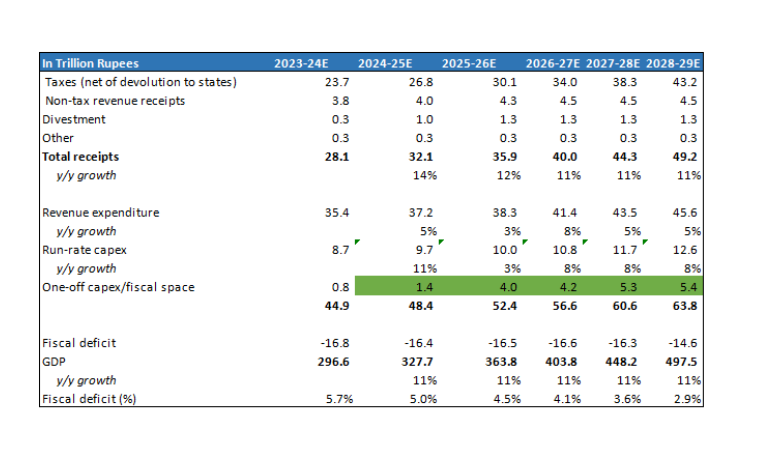
And Modi is on the cusp of reaping the fruits of that tapasya in his third term. Barring unexpected shocks – electoral and economic – he could be presiding over a period where the economy has sizeable fiscal resources to pursue its socio-economic goals; a rare event in independent India’s economic history. Underpinned by a solid cyclical recovery in the economy and strong buoyancy in tax collections (direct taxes likely grew at 20% in 2023-24, twice the pace of nominal GDP growth), Modi-3 is not only placed very comfortably to meets its 2025-26 fiscal deficit target of 4.5% (vs. 5.8% in 2023-24), it will also have its disposal, up to Rs.4 trillion of fiscal space during 2025-26 for spending on new programs or projects (or >1% of GDP) after meeting its regular revenue and capital expenditure obligations. That is the base case which assumes direct taxes grow at 15% annually. In a bull case of direct taxes continuing to grow at 20%, the above figure could be as high as Rs. 5.5 trillion. Further, this figure will continue to swell with each succeeding year as the economy expands and revenue growth outpaces the growth in base expenditure. During Modi’s third term, I estimate that the central government will have up to Rs.20 trillion of aggregate fiscal space for new programs/projects. Also, note that many of the programs of the central government include contribution from the states, which means the total fiscal resources available could be well higher than Rs. 20 trillion.

(For those interested in the math behind the above numbers, I discuss the same at the end of the post)        .

Potentially transformative, but availability of funds is not enough

What can one do with an annual budget of Rs.4 trillion? Well, for perspective, the Jal Jeevan Mission which was initiated in Modi’s second term with an annual budget outlay of Rs.0.7T (Rs.3.5T over 5 years, 60% funded by centre) will have provided tap water connections to 160 million households by end of 2024 (110 million connections provided as of April 2024). No commentary required on how transformative this project has been for the 100s of millions of beneficiaries.

In the first two terms, Modi’s focus was primarily on building physical infrastcucture – road building under Gadkari has been an unqualified success while in case of Railways, huge investments have been made, it is still a work-in-progress with mixed results so far. Even welfare schemes had a physical asset bias – from toilets to piped water to housing. While the government deserves a lot of credit for strong execution, it has to be underlined that these are relatively low-hanging fruits from a governance perspective. As the priority areas inevitably shift from road and railways to more complex ones, quality of policymaking, human capital and management will be the key drivers of outcomes, and not just availability of funds. To wit, it is way more difficult to develop 20 high quality IITs or a few hundred Kendriya Vidyalayas compared to building 100K kms of roads. Or just throwing around money into PLIs will not deliver a successful industrial policy.

An opportunity for Modi to cement his legacy – a wide range of focus areas to choose from

What areas Modi will prioritize with the Rs.4 trillion per year (~$50bn) of additional resources is anyone’s guess because this is one government which revels in keeping its plans a total secret. One can only say two things with certainty -one, Modi will be extremely keen to cement his legacy with a couple of flagship projects/programs which has a transformational impact on society. Two, the consummate politician that he is, he will have his eyes firmly on what programs will drive the optimal political benefit for the 2029 elections (and all the state elections over the next few years).

The list of potential programs is endless. Below, I discuss briefly a few ones which I see as critical ones. I classify them into 3 categories: A) long term strategic B) medium term economic growth and C) quality of life. Obviously, most of these programs will tick all three boxes, the classification is based on how a politician like Modi would want to see it. Admittedly, some of the resources might also simply get used up in standard fiscal management as well – ie Modi might simply want to reduce fiscal deficit at a faster pace, or execute the long pending reduction on tax surcharges on the rich or fill up the job vacancies in the government.


  1. Long-term strategic 
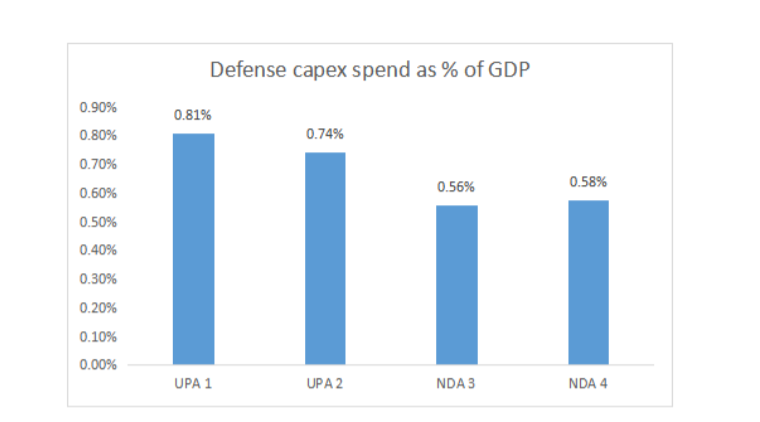
  • Increase defense capex spend – In contrast to his public image as a hawk on national security, the the spend on defense capex has been rather modest. In fact, as a % of GDP, it has dropped from the levels seen during UPA. With the China threat escalating in recent years, Modi would want to increase defense capex by at least 10 bps (100 bps = 1%), if not 20 bps and get back to UPA levels. That would be 0.35-0.70 trillion increase in annual outlay.
  • Increased R&D spend – India’s R&D spend is abysmally low at around 0.6% of GDP compared to 2.4% for China. The spend has seen a steady decline from the 2008 peak of 0.9% and private sector has shown very little inclination to spend on R&D with their contribution being only around one-third of the total spend whereas in countries like China and Korea, the figure is more than two-thirds. A key policy objective for the government, apart from increasing its own direct spend, should therefore be to bring in major policy incentives to crowd-in private investments in this area. As it happens, the government has already signaled that this will be a priority area in the third term, announcing a Rs.1 trillion fund to provide long-term interest free loans for R&D work. But much more needs to be done.
  • Energy security – There are two parts to this. One, as a major importer of oil & gas with demand continuing to grow for the forseeable future, the country needs to own equity in oilfields and LNG plants abroad to enhance its energy security. For example, if India wants to secure say ~20% of the nearly 5 million barrels/d of crude it will import this year, that will mean an investment of $40 billion. Of course, the investment will be done via the government owned oil companies and it will be partly funded via debt. But it might still entail the government infusing a $5-$10 billion of equity.

The second part is investment in energy transition. So far, the Modi government has bet big on solar but now it has also stated its intention of expanding its nuclear fleet (add 15 GW by 2030). While investments in solar power has been largely driven by private players, the government will need to play a big role in setting up nuclear plants. A back-of-envelope estimate for the cost of the plants would be $50 billion and it would be reasonable to assume that the government will have to invest close to half of that amount.

  1. Medium-term economic growth 
  • A PLI-powered industrial policy – An easy prediction to make is that a turbo-charged PLI program will be the topmost priority for Modi-3. After all, the biggest failure of Modi- 1& 2 has been the inability to kickstart growth of the industrial sector and deliver well-paying manufacturing jobs to to a burgeoning labor force. Success or failure to deliver on this during the third term will likely be the most consequential factor in 2029. With the success of the modest sized PLI programs so far, Modi will look to bet much bigger sums on the program. But, at the risk of repetition, PLI itself will not be sufficient. A lot more work needs to be done in terms of improving ease of Doing Business, bringing down land costs, labor laws, building a skilled workforce and so on. One specific area where I really hope Modi-3 focusses on is building a vibrant EV industry (nah, not the two-wheelers, cars are the real deal). We are already a few years behind almost every major auto market globally on EVs. If China is the undisputed leader in EVs today, it is because the government has pumped in nearly $200bn into the industry via subsidies, grants and incentives over the last two decades.
  • Agriculture – The government would be keen on doing something transformative in this sector, not least because it is still the largest vote bank, but I am not sure ploughing in large sums of money will solve the structural issues bedeviling the sector. Having got their fingers burnt during the second term with the farm laws, it is unclear to me what major policy action they could take up for this sector.


  1. Quality of life
  • Urban housing and infrastructure – Another easy prediction to make is this (especially urban housing) will be one of the biggest focus areas in the third term given Modi’s penchant for physical infratsrructure. The political dividends will be way higher than what he has received for roads since the change will not just be very visible to the average voter, it will also have deeply positive impact on his day-to-day life. Modi has already delivered well on rural housing but urban housing will be way more challenging, not least due to scarcity of land and a large, ever-increasing migrant population. It will require well-thought out policies and mich greater co-ordiation with the state and local governments
  • Health and education – The public investment in health and education has been woefully short forever and that trend has continued thru the Modi years. Between the two, I think Modi will focus on health because the political benefits accrue faster and it is also relatively less difficult to execute compared to education. On paper, both these sectors can easily absorb, individually, an additional 0.5% of GDP (I.e. almost the entire Rs.4 trillion fiscal space) given the historical underspend in the sectors. But, more than any other programs, funding is a much lesser factor compared to the ability to build quality organisations which can deliver.

The fiscal math

Assumptions 

  • Nominal GDP grows at 11% (6.5% real and 4.5% inflation)
  • Direct taxes grow at 15% annually while GST grows at 13%
  • Divestment (both PSU equity and physical assets) per year of Rs1.25 trillion

 Fiscal deficit falls to 4.5% by 2025-26 and below 3% by 2028-29.

A few points:

  • 2024-25E total capex was Rs. 11.1T but this included equity infusions to BSNL and funds for the Science Fund which will not be repeated.
  • The Jal Jeevan Mission wich has an outlay of Rs 0.7T in 2024-25 comes to and end during the fiscal year, hence lower growth in revenue expenditure in the next year. That, in turn, adds to the fiscal space.
  • Run-rate capex is for ongoing projects across various sectors – more than half of it is for Roads and Railways. The assumption is that the allocation to the two sectors have peaked and will see more a modest 8% growth growth forward.
  • Higher growth baked into 2026-27 revenue expenditure to factor in 8th Pay Commission.
 

Brown Pundits