Why Hasn’t Pakistan Collapsed Yet?

A cultural explanation, not an institutional one.

The comments on the last post revealed something important: there is a difference between learning about a culture and living inside it. The Indo-Muslim legacy sits precisely in that gap. It is not owned by a census or a successor state. It survives in people whose habits, tastes and instincts are shaped by it, even if they no longer identify with the religion that produced it.

Most arguments in the thread reduced the issue to arithmetic. “India owns the legacy because most Muslims stayed.” “Pakistan can’t own it because Delhi and Lucknow are in India.” These claims are tidy, but they miss the point. Culture does not follow borders. It follows continuity.

My own shift in identity made this clear. As I Hinducised through marriage, I also Persianised. The Islamicate part of me did not vanish; it was absorbed into a Bahá’í frame where contradictions resolved themselves in a Dharmic canvas. It taught me something simple: civilisations are not inherited by territory; they are inherited by people who keep caring.


1. Rushdie and the Islamicate Without Islam
Continue reading Why Hasn’t Pakistan Collapsed Yet?

The Hindification of Muslim Culture

Something in a recent thread caught my attention. A commenter praised several khayal singers, almost all Hindu, while omitting equally eminent Muslim vocalists. Kabir pointed this out, but the exchange exposed a larger pattern: the slow Hindification of Muslim cultural inheritances in India.

This is not new. It has happened before in the Balkans, Spain, North Africa, and now South Asia. When Muslim political power retreats but its aesthetic legacy endures, successor communities begin absorbing, domesticating, and rebranding the cultural capital that Muslim rule left behind.

Hindustani music is a prime example. The foundational grammar, khayal, thumri, tarana, bandish, raga–riyaz discipline, gharana boundaries, was shaped by Persian, Turkic, and Indo-Muslim lineages. Yet today, the most visible custodians of this tradition are overwhelmingly Hindu: Bengali virtuosos, Maharashtrian stalwarts, the great Dharwad families, plus a handful of Muslim houses that continue against the grain. A few dozen performers make a strong living; a select few have global reputations. But the overall demographic shift is unmistakable. Continue reading The Hindification of Muslim Culture

Is It Indian Culture or Hindu (Brahmin) Culture that creates excellence?

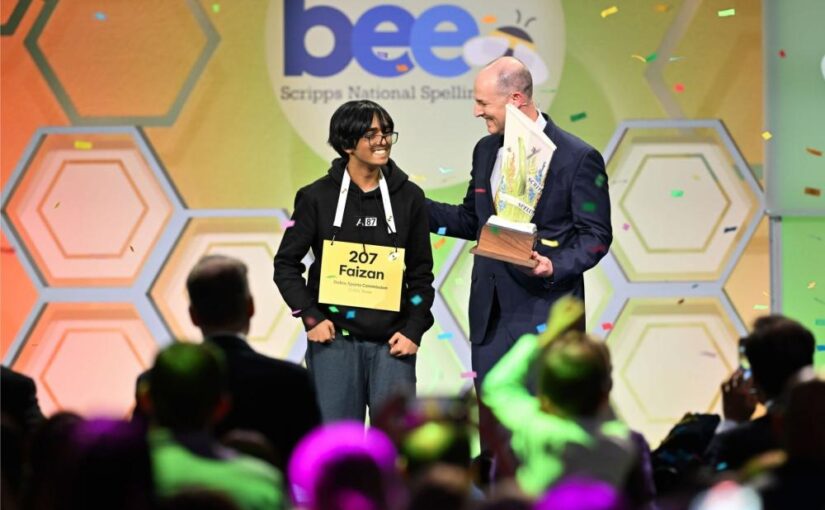
On Faizan Zaki, Spelling Bees, and Civilizational Osmosis

Another year, another Spelling Bee crown for an Indian American. But this one, the 100th Scripps tournament,  is different.

Faizan Zaki—young, brilliant, and by name Muslim—just became the latest in a long line of Indian-origin champions of America’s most idiosyncratic intellectual ritual. Faizan is the 32nd Indian American to win—meaning they’ve claimed 32 out of the last 40 Spelling Bees. But he is very likely the first Muslim American to do so.

Which raises an old but essential question: Continue reading Is It Indian Culture or Hindu (Brahmin) Culture that creates excellence?

Brown Pundits