
Pakistani Diversity

Q’s comment, on Kabir’s excellent post, deserves to be reproduced in full.

Several points are wrong here:

I have never actually met a Pakistani who thinks they are Arab or Turk ethnically. Claiming lineage is not ethnicity, not even the Syeds identify with Arabs although they will try to flex their Syed status occassionally. Many Syeds in the family, never heard anyone claim they were ethnically Arab.

Ergutral did not make people in Pakistan think they were Turks, what they identified with was the Islamic history and mannerisms being portrayed. A pasthun guy told me that it portrayed ‘our history’ and while I completely understdood the ‘our’ part because he was using it in an Islamic context (because he is a proud Pasthun, not Arab or Turk), but I did correct him that it was mostly fiction. Continue reading Pakistani Diversity
Some Thoughts on Pakistani Culture

Since XTM’s latest post discusses Pakistani culture, I am excerpting from one of my articles “Some Thoughts on Pakistani Culture”.  You can read the complete essay on my Substack

One of the dominant explanations for the decline of Hindustani music in Pakistan is that these musical genres were not compatible with Pakistan’s national identity. The 1947 Partition of British India was largely justified by the “Two Nation Theory”–the idea that the Muslims of British India were a different “nation” from the Hindus and were therefore entitled to their own state. It is argued that while the proponents of this view succeeded in achieving a sovereign Pakistan, they struggled to define a new cultural identity not shared with India. Since it was a part of the syncretic Indo-Islamic culture, classical music became entangled in this struggle to separate Pakistan’s culture from India’s.

In actual fact, there was no concerted action on the part of the state to define a national identity. Rather, many opinions were in circulation in which the xenophobic ones were not met with sufficient resistance. It is ironic that the one committee founded in 1968 to frame a national policy on art and culture, under the leadership of Faiz Ahmed Faiz, came to a conclusion contradicting the narrow-minded national identity viewpoint. In the report, Faiz responded to the contention that Muslim or Islamic ideologies were the rightful frame for defining Pakistani culture. He noted that this position “ignores the reality of the non-ideological components of culture, e.g. language, dress, cuisine, architecture, arts and crafts, non-religious customs and social observances, etc. These are mundane products of historical origin and geographical environment and cannot be dubbed Islamic or un-Islamic”. He noted that what differentiates one Islamic state from another is their nationhood or culture. Faiz concluded quite categorically that “There is little justification, therefore, for any ambivalent or apologetic attitude either towards Pakistan (sic) nationhood or towards Pakistani culture” (Salim and Ishfaq 2013: 50).

When I say that Pakistan is a South Asian country and that our culture is South Asian, I am referring to what Faiz called the “non-ideological” components of culture (language, food, dress, art etc).

I disagree with XTM that Pakistan should have opted to claim a Persianiate identity.  I think most Pakistanis would have found Persian even more foreign than they find Urdu.  I myself attempted to learn Persian at the Middle East Institute in Washington, DC.  I took the course for two semesters and while I did fine, it wasn’t a language that I particularly related to.

Where I differ from some of the “Saffroniate” commenters on BP is that I don’t think that the fact that Pakistan shares a lot of cultural elements with North India necessarily de-legitimizes the Pakistani nation-state.  It is just a fact that historically what is now Pakistan has been ruled from Delhi-based empires.


Why is Pakistani Culture obsessed with Policing Female Virginity?

We were at our favourite Persian restaurant. A young woman two tables away, not Persian herself, was telling her Persian father about her female friend in continental Europe.

The friend was Pakistani-origin. She had started dating a Latino man. The Pakistani friend’s mother, somehow, had a dream. In the dream, her daughter had lost her virginity.

The dream was the trigger.

The mother went into a spiral. The father, it was said, lost his job. The mother had a nervous breakdown. A trip back to the Muslim homeland was arranged. The daughter refused to board until she saw the return flight in her hand. Only then did she get on the plane. When she returned to the Muslim country, they told her she wasn’t going back to Europe.

We lost the rest of the story, and, over the rest of the meal, we thought about Sana Cheema.


What Sana Cheema Saw

Sana Cheema was a twenty-six-year-old Italian-Pakistani who had lived in Brescia since 2002. She wanted to marry a second-generation Italian-Pakistani man of her own choosing. Her father took her back to Gujrat, in Punjab, under the pretext of a visit.

She was strangled the day before her return flight to Italy. Her neck was broken. Her hyoid bone dislocated. Her father, her brother, and her uncle were charged. They had buried her quickly, without autopsy, and told relatives she had died of natural causes. The body had to be exhumed on a magistrate’s order after Italian media forced the case into daylight.


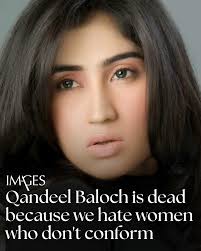
Qandeel Baloch, in the Same Line Continue reading Why is Pakistani Culture obsessed with Policing Female Virginity?

Brown Pundits