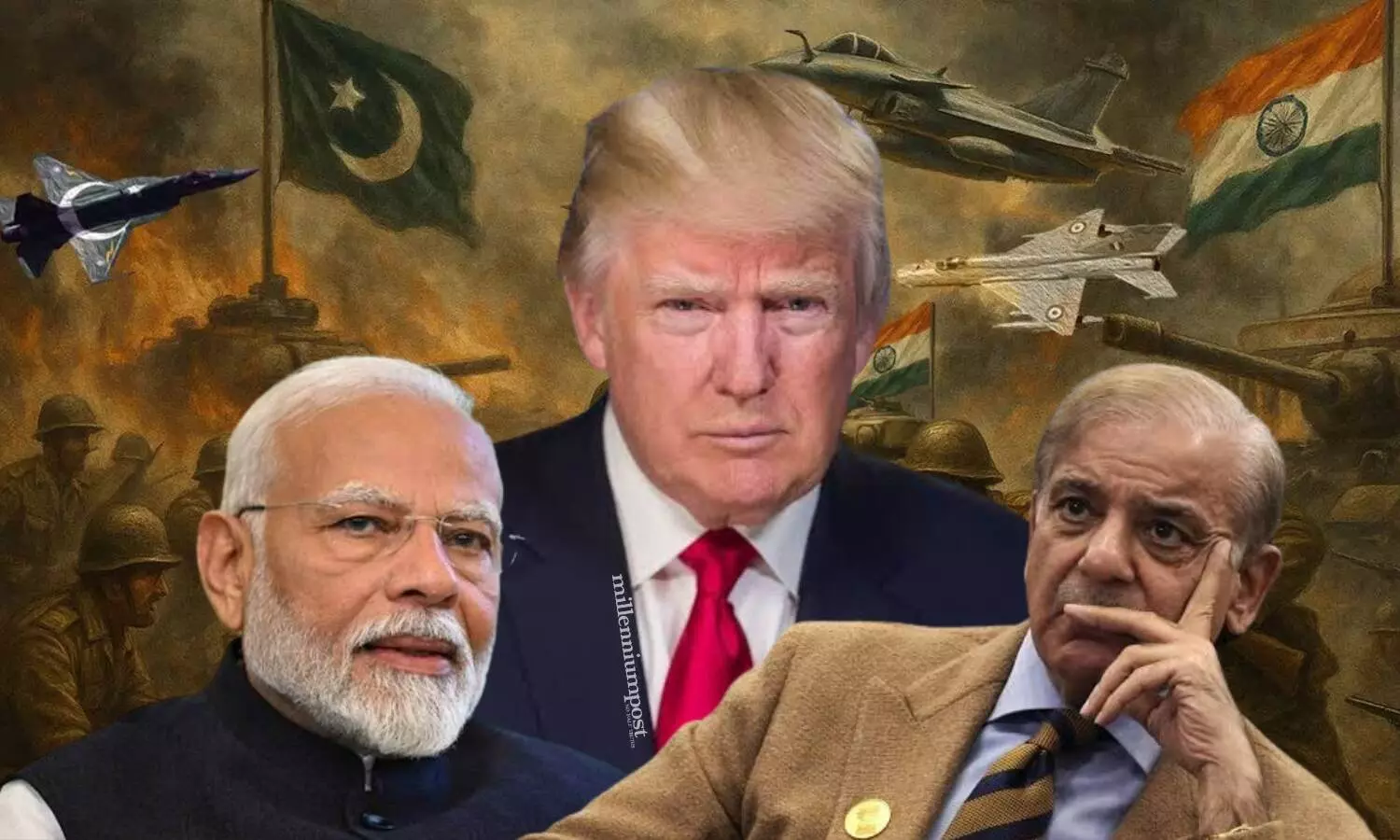
USA, India, Pakistan.. an eternal prickly braid

Trump makes U-turn, says 2 leaders of India-Pak 'decided' to stop conflict

Since the 1990s, Western powers (aka the USA and it’s vassals) have been building up a relationship with India that paints India as a fellow liberal Democracy (and a possible future partner against the new enemy bloc led by China). Beyond these propagandistic talking points, there is supposed to be real convergence on some big things: Demographics, slowly laid economic foundations and baseline cultural strengths combine to make India a rising economy; At a time when birth rates are below replacement in the first world, there is going to be no bigger source of labor or talent. If businesses have to “derisk” from china, they have southeast Asia and India as the natural targets. If other Asian countries are to resist total Chinese hegemony, there is no way to do that without Indian help. And so on.

Throughout this period there have been many prickly issues between the partners (eg a recurring complaint from India that the West supports Pakistan, which sends terrorists into India; on the other hand there is a recurring Pakistani complaint that the USA does not pay enough and (especially in the last decade) is too willing to accept India as the regional hegemon; and well justified complaints from everyone that India is too protectionist) but the public diplomacy has remained positive and feelgood for the most part. All that started to change somewhere in May 2025 and it has been rapidly downhill in the last one month as Trump has publicly attacked India for being protectionist, accused it of being a dead economy, and completely ignored Indian “sensitivities” about Pakistan.

Until now, Indian officialdom has tried to stay sober and avoid inflammatory responses, but they have also resisted the choice (already taken as the path of least resistance by UK, EU and Japan) of massaging Donald’s massive ego and nominating him for some Nobel prizes to get past any personal hurdles. But of course India’s social media army has no such hesitation and on that front the bonhomie of the last few years has completely evaporated, with Indian nationalists and White Nationalists (let us not be coy and recognize that MAGA is a White nationalist movement at heart) going at it hammer and tongs.

So what is going on? and why? and what happens next? I have no inside information, so I am perfectly placed to make some general comments and then ask better informed people to tell me why I am wrong. Here goes: Continue reading USA, India, Pakistan.. an eternal prickly braid

Browncast: Trump, Tariffs, Hurt Feelings, and India..

Another Browncast is up. You can listen on LibsynAppleSpotify, and Stitcher (and a variety of other platforms). Probably the easiest way to keep up the podcast since we don’t have a regular schedule is to subscribe to one of the links above!

In this episode I talk to Kushal Mehra (Host of the Carvaka podcast) and regular Brownpundit Amey Chaugle about the tariff kerfuffle… the public (and on Trump’s side, frequently intemperate) war of words between the USA and India that is partly about India’s protectionist tariff regime but maybe mostly about other things (such as Donald’s ego and his desire to get that Nobel Peace Prize)..
Dig in and add your comments. We too don’t know exactly why this is going on and where it will end..  🙂

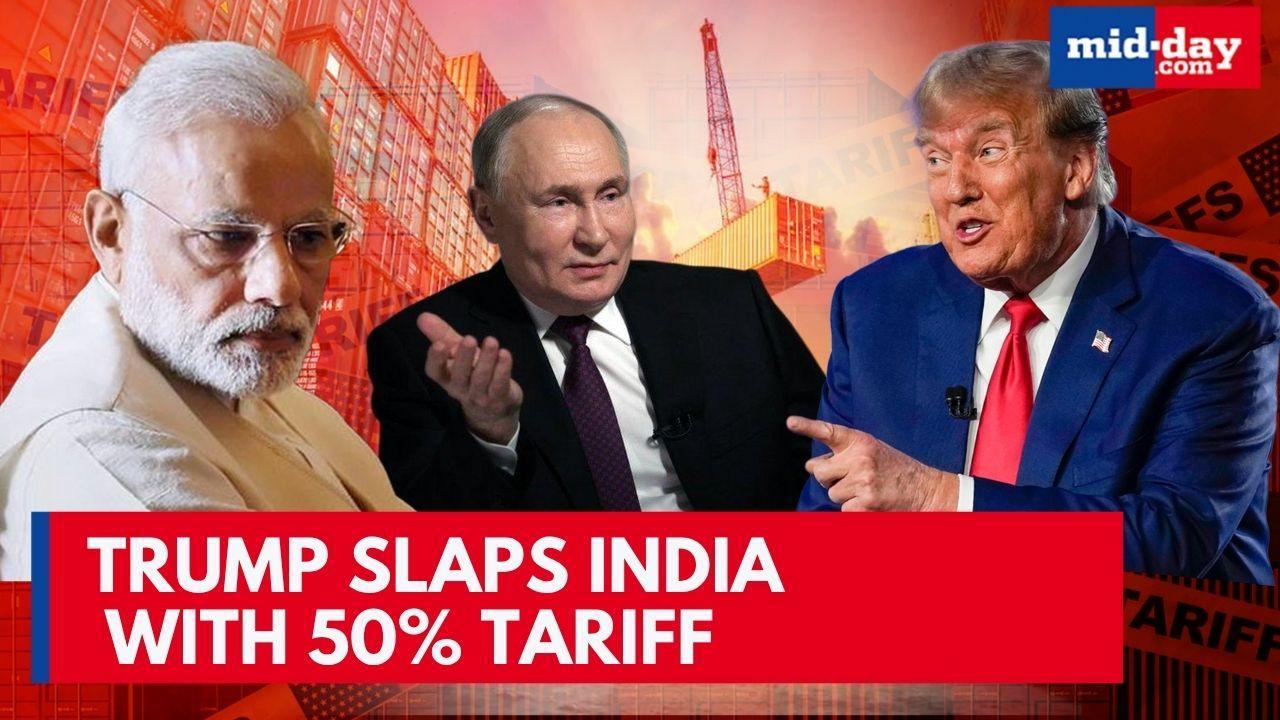
Trump Imposes Total 50% Tariff On Indian Goods, India Hits Back

How US Unemployment Numbers are Created

Many of us take numbers like Unemployment as Gods Truth.

First the last paragraphs of a CNN piece on Unemployment numbers
https://edition.cnn.com/2025/08/01/business/trump-job-report-number-fire

For example, the BLS posted a notice in June stating it stopped collecting data for its Consumer Price Index in three cities (Lincoln, Nebraska; Buffalo, New York; and Provo, Utah) and increased “imputations” for certain items (a statistical technique that, when boiled down to very rough terms, essentially means more educated guesses).

That worried Federal Reserve Chair Jerome Powell. In testimony before Congress in June, Powell said he believed the BLS data to be accurate, but he was upset about what could become a trend.

“I wouldn’t say that I’m concerned about the data today, although there has been a very mild degradation of the scope of the surveys,” Powell said at the time, in response to a question about survey data quality. “But I would say the direction of travel is something I’m concerned about.”

How many actually know that these numbers are model generated. At BLS (US Bureau of Labor Statistics) they use a version of the Birth and Death model. This is a model initially built to model Population Dynamics and other related Biological Processes (i). It is also used in Finance to Build Credit Curves which are used to Price Credit Default Swaps (CDS)

As I have worked a little bit on Credit Curves and CDS 15-20 years ago ((2005-2010) can add a little more detail. One samples the number of companies created, credit rating down grades, out of business etc. Then the Birth and Death model is used to get a broader picture and the Credit Curves created by numerical and statistical models.

There are other methods too, such as using the Prices of CDS at different maturities (end date). Then using numerical models to generate the forward curve (i.e. the credit regime in the next few years)

So now we realize that what we think is an absolute value of a Unemployment or Bond Price is really a kind of guesstimate laundered through numerical models. What about the Bond Price or a Stock Price someone pays. Is that an absolute VALUE. Again the issue is that what was the mental or other analysis that went into that Price offer. Could it have been erroneous. eg. A dear friend and classmate participated in the Sri Lankan mob protests (Aragalaya) in 2022. One of his reasons was that the economy fell because of “unprecedented reductions of taxes resulting loss of revenue of 30%”. Erroneous thinking as it was 7% reduction in VAT taxes on transactions for goods and servicing. The reduction excluded VAT on Financial Services. It is an arithmetic impossibility to have 7% reduction in taxes to cause loss of revenue by 30%.

Anyway back to US Unemployment Model and excerpts from description

Difficulty in capturing information from business birth and death units is not unique to the CES program; virtually all current business surveys face these limitations. CES adjusts for these limitations explicitly, using a statistical modeling technique in conjunction with the sample for estimating employment for private-sector industries. Without the net birth–death model-based adjustment, the CES nonfarm payroll employment estimates would be considerably less accurate.

You can read the steps in using data and creating the Unemployment figures here.
https://www.bls.gov/opub/hom/ces/calculation.htm#business-births-and-deaths

The BIG TAKE home, be it Unemployment Numbers or Bond Price, these are GUESSTIMATES laundered thru numerical and statistical models.   Worse these are not indicative at inflexion times of economic change.  i.e. Economic growth in the process of change to Economic Downturn or vice versa

Reference
(i) Novozhilov, A 2006: Biological applications of the theory of birth-and-death processes
In this review, we discuss applications of the theory of birth-and-death processes to problems in biology, primarily, those of evolutionary genomics. The mathematical principles of the theory of these processes are briefly described. Birth-and-death processes, with some straightforward additions such as innovation, are a simple, natural and formal framework for modeling a vast variety of biological processes such as population dynamics, speciation, genome evolution, including growth of paralogous gene families and horizontal gene transfer and somatic evolution of cancers


📯 Back at Peak: 22,453 Monthly Readers and Rising

Even the stats now confirm it: we’re back at our highest readership in our ~15 years.

22,453 monthly readers and rising. 100+ comments on most new posts.

No ads. No algorithm. No social media amplification. Just a small, steady core of thinkers, returners, and writers keeping the conversation alive. This isn’t mass media — it’s a deliberately narrow beam.

A place for:

  • Tight but Broad Church curation

  • Long-form thinking

  • Commentary that draws blood when needed but never aims cheap

The current moment feels like a return, not just of older names, but of why BP was built in the first place: a public space for Brown(ish) minds to work through power, faith, identity, language, and sometimes just the week’s news  on our own terms.


Related: Brown Pundits, big in India!

Sticky Thinking; A Quick Note on Originality & Visibility

This is just a quick note inspired by Indosaurus’s excellent suggestion; which I’d like to add to. I’m pinning this post to give it visibility.

First, it’s great to see the voluminosity of posting lately. Some days the blog pulses with original thought; other days, the comments surge while posts remain sparse. Both are signs of life and I’m glad for that.

But as Indosaurus rightly observed:

“A lot of the posts over the past 2 weeks are reposts from old publications elsewhere / mass media publications… I see no real point in posting to BP if it is going to get submerged off the top page within a few hours… Would it be possible to pin 100% original unpublished content to the top of the page?”

I think that’s a very reasonable proposal. There’s value in resharing good content, but I agree we should prioritize original, unpublished writing, especially content that reflects the spirit of Brown Pundits. So here’s what we’ll trial:

* Original, unpublished pieces will be pinned where appropriate. I request Editors / Authors to use their judgement / “nous” to sense what is original and / or value-add.

Please continue to post, read, comment, and share. But also reflect on what sticks, and why. Let’s keep the signal high.

I cannot moderate as effectively as before so I’ll relying on the Editors, Nivedita & Furqan, for support. I hadn’t realised I had made Furqan an editor a few days back as I wanted him to add Dead Poetstanis to BP.

As again we aren’t going to get this perfectly right as we grow so apologies if I/we misstep.


Community Guidelines – Please Read

Everyone, please take note of the following rules:

  1. Authors may not void or edit the work\comments of other authors.

  2. Maintain courtesy and respect in all interactions.

  3. Nivedita has been made Editor. I believe it’s important to have a strong female editorial voice on the weblog. She has full discretion to void posts or comments she finds inappropriate; she has no need to appeal to me first. If you feel a decision was unfair, you’re welcome to raise it with me privately.

If anyone violates these rules, please contact me immediately. I’ll address the issue on a three-strike basis.

Lastly, a gentle reminder: please don’t post or comment in anger. It rarely leads anywhere constructive. I am present, I am paying attention, and I do my best to be fair. It’s late and I have an early start, but I’m a little concerned about the tone of the threads tonight; let’s keep this space thoughtful, not reactive.

Thank you.

Koko, Williams, and me

By Furqan Ali

I wrote this poem on May 14, 2025, after watching a deeply moving video of Robin Williams (1951–2014) hugging Koko (1971–2018). Somehow, the moment stirred something in me, and I was compelled to write.

Koko was a Western Lowland Gorilla, a critically endangered subspecies. Every year, thousands of these gentle beings are killed due to habitat loss and the illegal bushmeat trade in parts of Africa.

Robin met Koko in 2001, shortly after she had lost her closest gorilla friend, Michael. She hadn’t smiled since his passing. But on this day, with Robin, she laughed freely and fully. And so did he.


Koko, Williams, and me

We who are left, how shall we look again

Happily on the sun or feel the rain [1]

I did understand the signs—

The hostility trampled on my head,

Nukes with round heads,

And socks with prints of blood.

I liked myself, my poetry,

And so was written thenceforth.

Williams too liked himself.

It was August, and

Maybe May is for me.

Along the fountain of my reckless heart,

Koko was sitting on pine,

And with the adjacent,

he was amusing on juniper.

Making comic faces

To mollycoddle the depression of the scene,

And yet the flow exceeded the fountain

Of ravishing, cute, and mesmerizing love

Towards the one being—

A love with borderless terrains,

Skyless limits, and wordsless intensity,

Though, I never trusted her,

With cold, inexplicable eyes,

And unlit nail paints and lips.

For her I strangled the ticking of the clock.

But my hands are crying;

the world can’t understand my signs,

And caravanserais longing

For another companion.

Koko, Williams, and me.

[1] Gibson

War in the Sanskritopolis

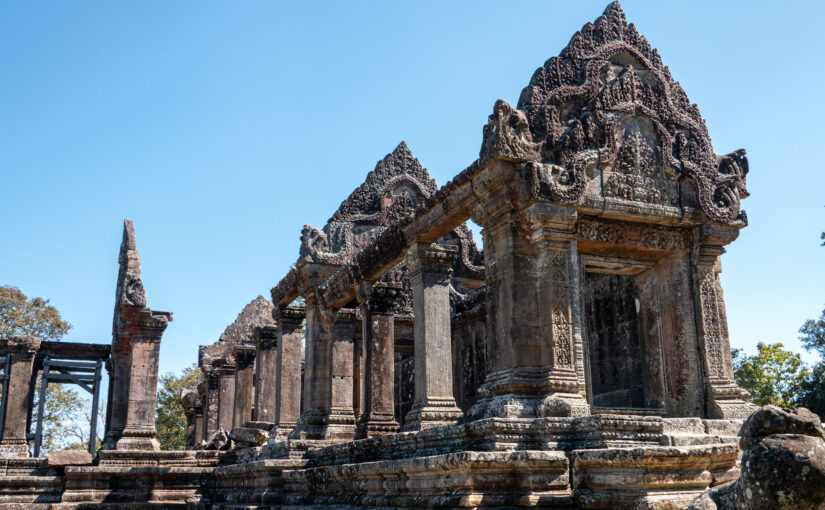
The long-running dispute between Thailand and Cambodia dates back more than a century, when the borders of the two nations were drawn after the French occupation of Cambodia.

Things officially became hostile in 2008, when Cambodia tried to register an 11th Century temple located in the disputed area as a Unesco World Heritage Site – a move that was met with heated protest from Thailand.

Why A Cluster Of Hindu Temples Is At Heart Of Thailand-Cambodia Conflict

It’s striking to see just how deeply Dharmic culture shaped Southeast Asia — not just as historical residue, but as a living civilizational layer. Buddhism, in many respects, prepared the civilizational terrain that Islam would later traverse.

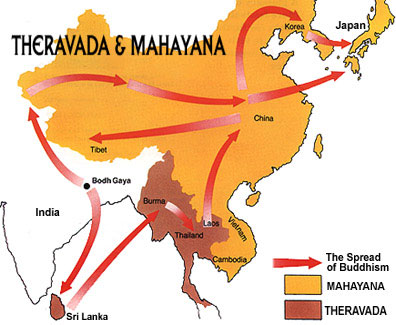
The Buddhist Studies: Theravada and Mahayana - buddhanet.net

Buddhism, too, was not monolithic. The Sri Lankan Theravāda tradition influenced the western flank of Indo-China, while Mahayana currents, traveling through Sumatra, appear to have looped back toward Guangzhou, feeding into the Sinosphere.

HISTORY OF MAHAYANA BUDDHISM | Facts and Details

The sectarian divergence between Thailand and Cambodia — Theravāda vs. Mahayana— adds nuance to territorial and cultural disputes like the Preah Vihear Temple, whose iconography and inheritance clearly align more with Cambodian history.

These are not just archaeological debates. They’re about cultural legitimacy, historical continuity, and civilizational memory.

In such moments, India, that is Bharat, must not remain a bystander. As the civilizational fountainhead, it should be playing a constructive role in cultural mediation and soft power diplomacy.

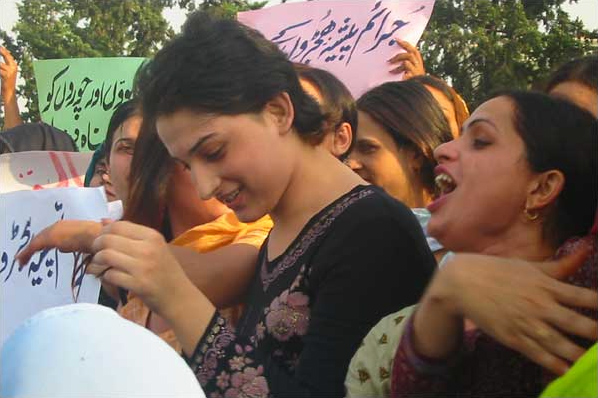
Open Thread; Trans in the Muslim World

Other Stories (thank you Nivedita):

🔗 India Today – Harshvardhan Jain Scam

A man posed as a diplomat, set up fake embassies, and ran a multi-crore loan fraud racket via fake companies. He even issued “official” visas.

🔗 Business Standard – Karnataka Vendor GST Nightmare

A vegetable vendor in Karnataka received a GST notice due to high UPI volume — triggering a cascade of tax bureaucracy.

🔗 Economic Times – Indian Man Stabbed in Ireland

An Indian man in Ireland issues a public warning after surviving a random stabbing in Dublin.

🔗 NDTV – Hyderabad Man Kills Wife

In Hyderabad, a man stabbed his estranged wife to death at a birthday party for a child.

Brown Pundits