
When I get to set a banner image I will post the article
Tag: Identity and culture
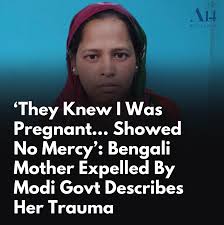
A Republic Cannot Deport, Humiliate or “Outbreed” Its Own People
“We are not from Bangladesh. We are Indian. Why did they do this to us?”
That question should shame the Indian state. On the facts as currently established, Sunali Khatun, a pregnant Indian woman, her husband, and their child were detained in Delhi, deported across an international border without due process, imprisoned in a foreign country, separated, and left to survive on charity and court orders. Their crime was not illegal entry. It was speaking Bengali, being Muslim, and being poor. This was not a mistake or overreach. It was state violence carried out through paperwork and silence.
India has procedures for suspected illegal migrants
They exist to prevent this outcome. They were ignored. There was no verification with the home state, no due process, no public record, and no accountability. A family was pushed across a border, reportedly beaten when they tried to return, and abandoned. That is not law enforcement. It is expulsion by force. When a state confuses language with nationality and religion with foreignness, it stops governing and starts hunting.
Citizenship is not a favour
It is a legal fact. India is not meant to be a blood, language, or religious state. Citizenship is defined by law, not accent or poverty. When the weakest are forced to prove citizenship under duress while the powerful are never asked, law collapses into power. This is how republics rot: not through coups, but through habits.
This is not an isolated lapse of manners towards the Muslim minority
It is the same logic in a smaller, more public form. When a Chief Minister can pull down a Muslim woman’s veil at a government appointment ceremony, and senior ministers can defend it as “show your face” patriotism, the message is clear: Muslim dignity is conditional, and visibility is enforced, not consented to. The argument is always the same. It is dressed up as procedure, security, or “rule of law,” but it operates as dominance.
Muslim Identity is seen as a National Threat
Today it is a veil tugged down in a room of officials. Yesterday it was a Bengali-speaking family pushed across a border. In both cases, the state treats Muslim identity as an offence to be corrected in public, and citizenship as something that can be suspended by suspicion. This is how discrimination becomes policy: first through humiliation, then through paperwork, then through expulsion.
Bengal, like Kashmir, is not a border zone to be cleansed Continue reading A Republic Cannot Deport, Humiliate or “Outbreed” Its Own People
Pakistani review of Dhurandhar
Came across this review of Dhurandhar and thought it was worth sharing. Especially given the repeated comments on “bias and anti-Pakistan” from folks who haven’t even watched it.
I watched it this past weekend, and will try and find time to compile my thoughts on it as a comment on this post.
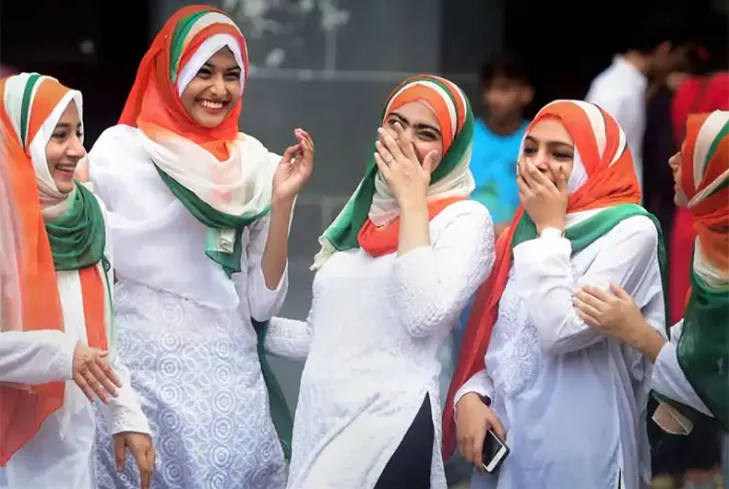
Who can speak for the “Muslim minority” of India?
Public debates on Indian Muslims often make one basic mistake: they collapse all minorities into a single category and then declare that “everyone is thriving because a few individuals have done well”. This flattens history, erases structure, and turns civilisational questions into census arithmetic.
1. Minorities Are Not Interchangeable
Jains, Sikhs, and Buddhists offer no meaningful analogy to Indian Muslims.
-
Jains were never politically central to the subcontinent.
-
Sikhs built a regional power, not a pan-subcontinental order.
-
Buddhists have been demographically marginal for a thousand years.
Indian Muslims were different. For centuries they formed the civilisational elite of North India; shaping courts, languages, music, etiquette, food, architecture, and the ways Indian states understood power. Delhi, Agra, Lucknow, Hyderabad were not enclaves. They were the centre of the political and aesthetic world of the Indo-Gangetic plain. A fall from centrality is not comparable to never having been central at all.
2. Individual Success Is Not Structural Health Continue reading Who can speak for the “Muslim minority” of India?
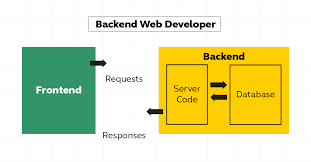
Notes From the Backend
Traffic has slowed a bit, and instead of trying to force momentum, I’ve gone into backend mode. When the front-end quiets, the only sensible response is to strengthen the foundations. That’s where all my energy has gone this week.
1. The theme is fighting me.
I’ve been stuck on a simple problem: author name, date, and comment count are not appearing under the post title.This is basic metadata. It should be visible. Instead, it’s buried at the bottom of every post. I mentioned this on WhatsApp; Furqan said the alternative theme I was looking at “looks archaic.” Fair. And yet the current setup is forcing my hand. To fix this I may need to build a child theme, which is technically more involved, but necessary if we want BP to look and function like a proper archive rather than a hobby blog. These are small details, but they shape usability.
2. Categories finally make sense. Continue reading Notes From the Backend
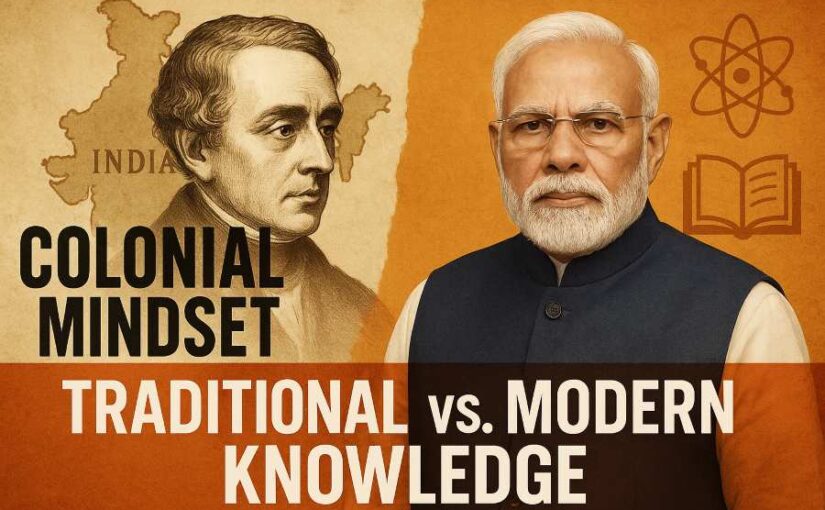
Macaulay, Macaulayputras, and their discontents
We had some discussion about Macaulay on X and I wanted to write a piece about it, but I also know I probably wont get the time soon, so I am going to just copy and paste the discussion here, I am sure people can follow what is going on and offer their comments.. (Modi’s speech link at end, macaulay minute text link as well)
It started with this tweet from Wall Street Journal columnist Sadanand Dhume:
In India, critics of the 19th century statesman Thomas Macaulay portray him as some kind of cartoon villain out to destroy India. In reality, he was a brilliant man who wished Indians well. Link to article.
I replied:
I have to disagree a bit with sadanand here bcz I think while cartoonish propaganda can indeed be cartoonish and juvenile, there is a real case to be made against the impact of Macaulay on India.. Education in local languages with hindustami or even English (or for that matter, sanskrit or Persian, as they had been in the past during pre islamicate-colonization India and islamicate India respectively) as lingua franca would have been far superior, and the man really did have extremely dismissive and prejudiced views, the fact that they were common views in his world explains it but does not excuse it. The very fact that many liberal, intelligent and erudite Indians of today think he was “overall a good thing” is itself an indication that his work has done harm.. BTW, there were englishmen in India then who argued against Macaulay on exactly these lines..
Akshay Saseendran (@Island_Thought) replied: Continue reading Macaulay, Macaulayputras, and their discontents
Spiritual mothers of South Asia
One of the remarkable aspects of South Asian nationalist ideologies is their emphasis on maternal figures. For instance, India’s national song, Vande Mataram, is an ode to a mother, while the national anthem, Jana Gana Mana, refers to Bharata Bhagya Bidhata as “the affectionate mother” in its full lyrics. Moreover, Bharat Mata serves as a prominent symbol in the ideology of RSS. This is not limited to India, similar maternal figures are also celebrated in the national anthems of Bangladesh and Sri Lanka. So, who are these mysterious mothers, and where do they originate from?
A lesser-known fact is that all these mothers have a connection to Bankim Chandra Chatterjee’s novel, Anandamath, published in 1882. At that time, Bengal encompassed a large region, including present-day West Bengal, Bihar, Jharkhand, Bangladesh, and Assam. The novel takes place in a fictional Bengal, where the inhabitants are acutely aware of their civilizational identity and are ready to take up arms to defend it. It revolves around three fundamental elements:
1. Civilizational ideology : It’s an ancient and highly inclusive form of Non-dualism that we first see in Brihadaranyaka Upanishad. The choice of Non-duality was not unusual, as Bankimchandra, like most of his contemporary Bengali scholars, had a Vedanta centric view of Dharma. In one of his essays, he even described western non-dualists like Spinoza and Herbert Spencer as European Hindus.
2. The Mother: She embodies the essence of this civilizational ideology and represents the land where it thrives. She is seen through three distinct forms, known as “what mother was,” “what mother has become,” and “what mother will be.”
3. Santan Dal (Children of the mother): It is a large paramilitary organization consisting of dedicated volunteers, led by celibate monks. Their singular purpose is to reclaim the past glory of the mother. They are not ritualistic and have just one anthem, Vande Mataram, dedicated to the mother.
The novel as well as the song Vande Mataram had a huge impact on the freedom struggle and soon the mother gained a pan-Indian fan following. Within a generation Bengali Mata became Bharat Mata and after independence the song Vande Mataram was declared to be the national song of India.
After Bankim Chandra’s death in 1894 this ideology was further popularized by Tagore. The mother featured in many of his songs, including Jana Gana Mana. SriLankan composer Ananda Samarakoon, who studied under Tagore at Vishwa Bharati University for a brief period, was deeply influenced by Tagore’s work. In 1940, he created the SriLankan Mata in a song titled “Namo Namo Matha,” which ultimately became the national anthem of Sri Lanka.
The story behind “Amar Sonar Bangla”, the national anthem of Bangladesh, is quite interesting. Tagore wrote this song before the partition of Bengal, so the word Bangla refers to the entire Eastern India and the “Ma” in this anthem is the same as the one from the original version of Vande Mataram. Because it doesn’t mention Bangladesh or Islam at all, a lot of Muslim organizations in Bangladesh weren’t too thrilled about it. But then in 1971, the leaders of Bangladesh wanted to step away from a religious identity, so they finally embraced it as the national anthem.
The link between RSS and Bharat Mata ideology was Anushilan Samiti, The first real organization motivated by Santan Dal. Although it was treated as a terrorist organization by the British rulers, it had supporters from all over India. One of them was K. B. Hedgewar, who went to Calcutta to study medicine and became a part of the inner circle of Anushilan Samiti. He returned to Maharashtra after his studies, but a few years later created a pan-Indian version of Santan Dal, known as Rashtriya Swayamsevak Sangh.
The Hindification of Muslim Culture
Something in a recent thread caught my attention. A commenter praised several khayal singers, almost all Hindu, while omitting equally eminent Muslim vocalists. Kabir pointed this out, but the exchange exposed a larger pattern: the slow Hindification of Muslim cultural inheritances in India.
This is not new. It has happened before in the Balkans, Spain, North Africa, and now South Asia. When Muslim political power retreats but its aesthetic legacy endures, successor communities begin absorbing, domesticating, and rebranding the cultural capital that Muslim rule left behind.
Hindustani music is a prime example. The foundational grammar, khayal, thumri, tarana, bandish, raga–riyaz discipline, gharana boundaries, was shaped by Persian, Turkic, and Indo-Muslim lineages. Yet today, the most visible custodians of this tradition are overwhelmingly Hindu: Bengali virtuosos, Maharashtrian stalwarts, the great Dharwad families, plus a handful of Muslim houses that continue against the grain. A few dozen performers make a strong living; a select few have global reputations. But the overall demographic shift is unmistakable. Continue reading The Hindification of Muslim Culture
BRAHM went viral
https://www.instagram.com/p/DRVLqaFESpt/
On “The Haraam Bit”: Free Speech, Trolling, and Our Red Lines
This post titled “The ‘haraam’ bit” sparked pushback both on the site and in our internal chat. This note sets out the problem, our editorial responsibility (as X.T.M I have overwritten this post), and what this means for BP.
1. What happened
An anonymous author (Bombay Badshah who has used a number of pseudonyms) posted a list of Pakistani-origin porn performers and highlighted a scene where a British Pakistani actress jokes about “haraam” and foreskin. He framed it as an “interesting observation.” The issue was not that he mentioned porn. It was how he used it.
2. Why the post was unacceptable Continue reading On “The Haraam Bit”: Free Speech, Trolling, and Our Red Lines