Mother India is Communal

I don’t really know what to say but it’s absurd. I can’t understand what’s so offensive about “Mother India.”

I’m walking around Chennai and so many Muslim ladies are wearing Niqabs (the eyes are only seen).

https://twitter.com/seedsofdoubt3/status/1078530333585346560?s=21

Continue reading Mother India is Communal

Structural Conflicts between Bharat and India

The Indian Republic has a problem. It is deep and structural and vexing. The wheels of industrialization have brought half the country in conflict with the other.

The country is seemingly convulsed with agrarian distress and farmer unrest. Some have located these issues in climate change, others in the prominence of neo-liberal reform. But the issue is far more structural. Half of India knows only to make a living from farming, and they are seemingly getting better at it every year.

India’s farmers have been outperforming the world in terms of growth quite comfortably.

So if we are having year after year of record agrarian yields and remain a next agro-exporter, whats the problem ? The problem is that the other half wants food at the cheapest prices possible. This other half lacks the decisive political numbers that the rural group does, but lives in the more vocal and wealthier urban areas. Farmers obviously  want better prices for their work, but urbanites are understandably wary of overpaying for food when they know they can spend their hard earned monies on modern goods and services.

But the conflicts dont end there. They extend into the realm of international trade relationships. India’s urbanites want to interact with the industrial world for personal growth and opportunity. India’s IT, pharmaceutical exports and remittances provide valuable foreign exchange for its fuel imports, and investment needed for modernizing its economy. But the industrial world is also super efficient at growing food and sees food as an important export. One American farmer can still produce what 50 Indian farmers can.

The Indian farmer thus requires protection from foreign competition, which is far more advanced technologically and is not constrained to small land holdings like he is. But such protection is not in congruence with the freer trade that its urbanites want and need for industrial growth.

Food inflation and international trade are thus two critical parameters on which rural and urban India face a structural conundrum. It is not that other cultures have not faced this crossroads before. Every country that has industrialized (Germany, Russia and China) has dealt with the question of its unproductive agrarian class. Authoritarian political structures meant that the ‘solution’ pursued by these countries brutalized the rural populace.

India’s democracy is deep and will prevent the urban elites from executing such brutality, despite their cultural and historical obsessions. Gaon tatva might seriously blunt Hindutva.

 

Brown Pundits – Episode 6, Chinese history, pop culture and strategy, with Tanner Greer

The latest BP Podcast is up. You can listen on Libsyn, iTunes and Stitcher. Probably the easiest way to keep up the podcast since we don’t have a regular schedule is to subscribe at one of the links above.

Thanks to everyone who reviewed the podcast! Please leave more 5-star reviews. If this podcasts interests enough people I’ll be getting us on other platforms.

This week a very special episode of Brown Pundits’ BrownCast with Tanner Greer of The Scholar’s Stage, one of my favorite weblogs. If I’m a philosopher in the armchair, Tanner is a practitioner in the field. He lived for several years in China, and his observations have a contemporary salience that our discussion last week probably lacked.

Pathans between Hind and Iran

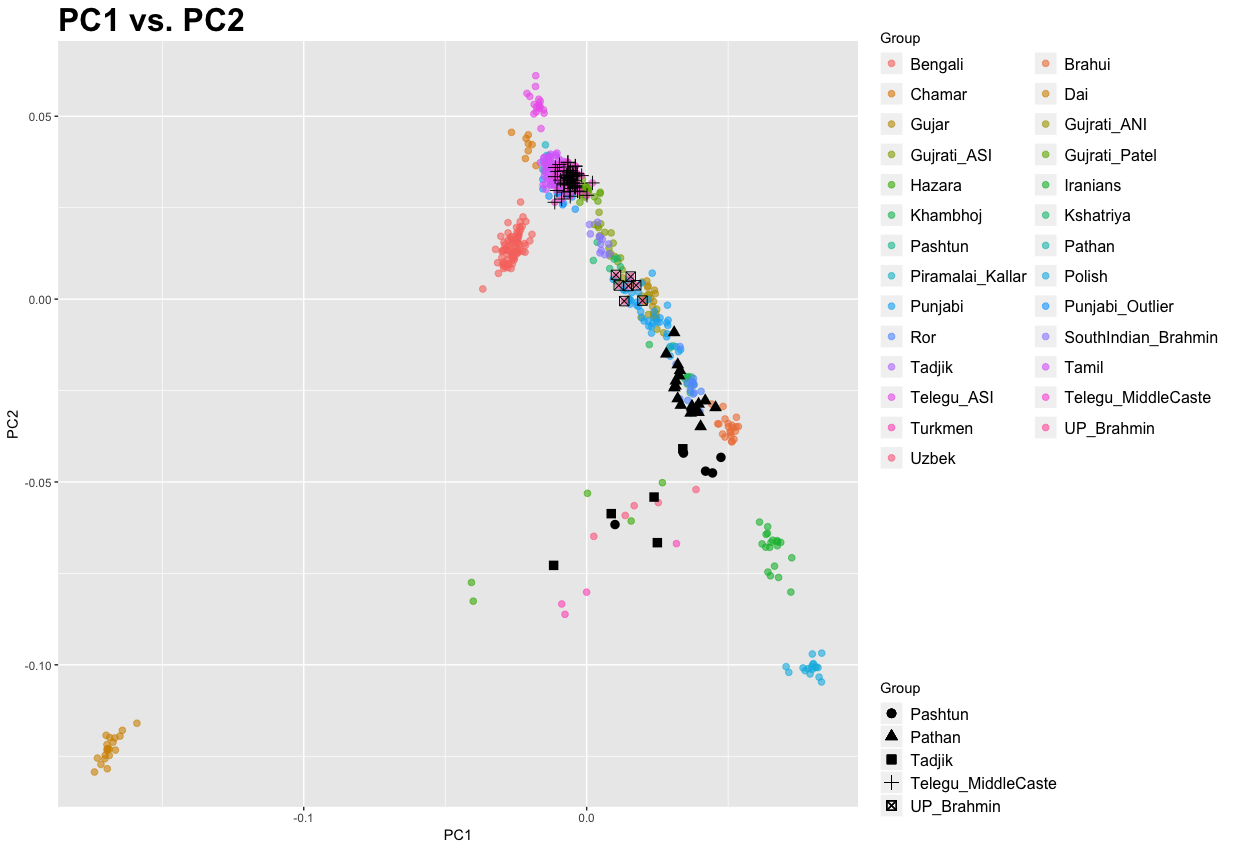
There was a comment below on the positions of Pathans genetically in relation to South Asians and Iranians. The “Pathan” samples are from Pakistan, while “Pashtun” are from Afghanistan. What you can see is that the “Pathan” samples are more like Punjabis, while Pashtuns are like Tajiks. The Iranian samples are from western Iran. You can see that the Pakistani Pathans are definitely a little closer to UP Brahmins than to Iranians. The Afghans are a bit closer to Iranians than UP Brahmins.

Here’s Treemix:

Continue reading Pathans between Hind and Iran

Indian to ban commercial surrogacy

I find the Indian government’s ability to own-goal itself and its own citizens to be simply astounding.

Brown Pundits – Episode 5, reflections on the Chinese age

The latest BP Podcast is up. You can listen on Libsyn, iTunes and Stitcher. Probably the easiest way to keep up the podcast since we don’t have a regular schedule is to subscribe at one of the links above.

Thanks to everyone who reviewed the podcast! Please leave more 5-star reviews. If this podcasts interests enough people I’ll be getting us on other platforms.

One of the most offensive things I have had to personally encounter in my life are people curious that a brown-skinned person would express an interest in China for purely intellectual interests (i.e., my wife is not Chinese, I have no business interests in China, etc.). As this century proceeds I think everyone, whatever one’s background, needs to rebalance their perception of what they need to be interested in, because the simple world of European supremacy between 1850 and 2000 is fading away…

Does Britain need a Trump to handle Brexit

Brexit is such a contentious matter that I don’t know where to start.

My Arch-Tory tribal instincts have overridden my normal active Social Justice Ghazi mode and I don’t like to see Britain humiliated in such a manner.

Theresa needs to channel her Trump and signal a collective fuck off to the EU. The lecherous manner in which Juncker was handling her earlier today was simply shameful:

Dance like a monkey American politicians!


I have no real comment, aside from the fact that when this video started and I realized what it was about, I began to laugh really loudly and without any self-control. Am I the only one?

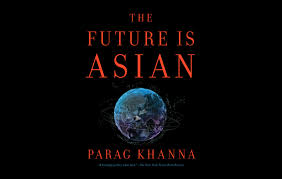
By coincidence I saw this video right after noting that Parag Khanna has a new book out, The Future Is Asian. Here is the summary from Amazon: “In the 19th century, the world was Europeanized. In the 20th century, it was Americanized. Now, in the 21st century, the world is being Asianized.” It should be re-Asianized (we’re friends on LinkedIn).

Brown Pundits