The Axis of Autocrats. China & Saudi; Pakistan’s evergreen friends

The recent news that Imran Khan has been able to prise 6bn USD in aid from a distressed Saudi Arabia reflects many things:

(1.) the Axis is going to be Saudi-Pak-China with Pakistan emerging as a sort of lynchpin. As with any Great Power in decline the US is going to try and throw its weight around.

(2.) while Trump is an astonishingly effective orator; his latest tweet on the bombing scare scandal at once rouses his base and inflames his enemies, it’s hard to see how he can effectively project American influence.

(3.) 9-11 is probably the most successful attack on the US not because of the actual attack but because of the botched response. The conflicts in Iraq and Afghanistan have delegitimised American foreign policy (to some extent) and also show the American reluctance to project troops abroad.

(4.) How does all of this relate to modern South Asia? Well the US-Pakistan relationship simply isn’t what it once was since the US doesn’t have as much use for Pakistan. As a power in general retreat from Asia, the US conceivably has much more in common (and points of vexation especially in relation to H1B1) with India than Pakistan.

(5.) Saudi Arabia and China are counter-cultural power; one espouses hereditary monarchy and the other communism with Confucian characteristics. Like Pakistan they are fundamentally “out of sorts” with the modern world and the ongoing cult (?) of liberal democracies.

(6.) This “Axis of Autocracy” may individually have competing interests (Saudi will ALWAYS maintain a strong relationship with the US, the China has some interest in Iran) but Pakistan binds them as the weakest member (sort of the Italy in the WW2 Axis).

(7.) Pakistan is the most likely stumble from crisis to crisis and especially in the latest “begging bowl incident” Imran was spurned away from both Saudi & China to go to the IMF. Khashoggi’s murder was serendipitous for Pakistan (are we sure it’s not an ISI false flag) as an isolated and under attack Saudi had to immediately shore up its alliance.

(8.) with the renewed impetus from a successful negotiation Imran can now play his hand against the Chinese. Though Pakistan’s foreign policy agenda is destructive (more Habsburg than Prussia); survival can focus the mind.

(9.) The only real way this Axis would be shattered if the “people” rose up and all three nations seem to have inoculated their citizens from the Western winds of liberal democracy. In some ways the Sabrimala Temple incident shows that Modern India is more an enemy of traditional Hinduism than anyone else.

Why Kill Jamal Khashoggi? (A personal view from Dr Hussain)

From Dr Hamid Hussain

Someone asked my two cent worth opinion on ongoing saga of Saudi journalist Jamal Khashoggi. More informed people have commented on the subject and many details are still murky. Based on my own work on the Kingdom’s power dynamics in the past, following is may take;

Thanks. With time, we change and our thoughts also evolve. This may be the case with Mr. Jamal Khashoggi and he may have been genuinely convinced that some kind of people’s participation in government is the way forward. However, we need to keep in mind the broader context as this incident is related to struggle inside the royal family. Khashoggi held some progressive views by Saudi Arabian standards related to extreme austere code of Wahabbism. However, he never questioned the legitimacy of the rule of al Saud family. He advocated increased consultation with population on important issues. He was employed by many government newspapers and any significant alternative view no matter how mild is simply a career ending move. He was not a dissident but mild critic of some policies of Prince Muhammad Bin Salman such as blockade of Qatar, Yemen war etc.

There are many Saudis in exile who are much harsher critics of royal family but why Khashoggi? More important to remember is his links with members of royal family who have been sidelined by the meteoric rise of the mercurial Prince Muhmmad Bin Salman (MBS) in 2015. Government’s view is published by a number of influential newspapers (Arab News, Sharq-ul-Awst etc) run by Saudi Research and Marketing Group. Owner of this group is Prince Turki Bin Salman. Khashoggi worked for some of these newspapers in the past. He also worked with former intelligence chief Prince Turki al Faisal and billionaire Waleed Bin Talal. He served in some advisor capacity to Turki projecting his softer image to the outside world. In 2015, Waleed opened a satellite channel Al Arab in Bahrain and in this venture partnered with Bloomberg News. Khashoggi was to be the star kid of Al Arab. This channel lasted mere eleven hours on air before it was shut down by Bahrain; a close Saudi ally and dependent on Saudi forces on its soil to protect its royal family from the restless Shia majority population.

MSB started grand purge on two fronts. One front was to sideline powerful brokers in royal family such as Crown Prince designate Prince Muhammad Bin Nayef; former interior minister, Prince Mitib Bin Abdullah; former head of Saudi National Guard (SNG). Head of SNG is a powerful position as SNG is royal family’s insurance policy against army coup. SNG recruits on tribal basis and head inserts his loyalists at various levels of positions. The second front was to weaken the financial muscle of some princes. This resulted in famous/notorious Ritz Carlton saga of billionaire princes hauled up there until they coughed up billions to get their limited freedom. Waleed was the prized prisoner of Ritz Carlton; the world’s only five star jail. Members of both groups cannot leave the country. On the other hand, other family members who have kept their heads down in the tent like Prince Turki are allowed to travel. With this in background, alleged rumor of an assassination attempt on MBS by his guards raised the fear factor by several degrees. Some reports suggest that most of his inner circle of security is now manned by foreigners.

Where Khashoggi fits into this picture? He was the window of these disgruntled royal family members to the outside world. Everybody in Washington who wanted to know what was happening in the Kingdom would knock at Khashoggi’s door. This was the main threat that MBS feared that angry royal family members may attempt to make some kind of deal with Washington to pull the royal rug from under his feet. A close study of MBS personality suggests that he acts rashly without thinking through and no one around him would even suggest an alternative thought. Hence, a very sloppy operation which is not even an intelligence operation. A rag tag team of guards, special forces people and a forensic doctor was to emulate a Mossad style overseas hit a la 2010 Dubai saga of assassination of a Palestinian operative.

Looking at the fall out of the operation, Khashoggi’s own words seem prophetic that ‘Saudi brand has been severely damaged’. What will be MBS likely response? The old Arab bedouine tradition is that when a big dust storm come down furiously (haboob), the Arab ducks down in his tent covering his head and wait until it passes away. For the next few weeks, MBS will be spending more time in his $500 million yatch parked in red sea than in his palaces. The only suggestion one can give to MBS is the words of one his own elders late King Abdullah bin Abdul Aziz; “a friend is someone who tells you the truth; not someone who believes in you’.

“Man’s history is waiting in patience for the triumph of the insulted man.” Rabindranath Tagore

Regards,
Hamid

Postscript:

Follow up intelligent questions from well informed people were inevitable thus a follow up. I wandered a little bit further as my personal quest of learning about military and conflict is to paint the horrible picture of the killing fields so that we can all avoid filling more graves.

Thanks Sir. You are correct. Trump will give him cover in view of personal/business relationship. However, there is a little bit shift in other power centers. In senate, recent vote to approve munitions to KSA was 53-47; a significant shift against KSA. If in mid-term, democrats take house of representatives, then there will be little more heat. In the long run, KSA is important and MBS cannot be pushed aside without arrangement with alternative leadership from royal family. This usually takes time. However in short term, single point agenda of getting Iran is making things complicated and they don’t want to quarantine MBS/KSA at this stage.

Anti-Iran camp of current administration coupled with almost messianic change in Bibi Netanyahu personality where he thinks his historic role is to strike nuclear assets of Iran is the possible ‘escape hatch’ for MBS. If Bibi wins in elections called early then watch for who he picks for IDF chief; who is retiring by the end of the year. In 2009-15, IDF COS, heads of all three intelligence agencies (Mossad, MI & Shin Bet) pushed Bibi back on military strike against Iran. This was complemented by Obama administration warning to Israelis that they will be alone in the mission with no military or diplomatic cover. Bibi wants a security team that will not second guess his mission. Bibi has covered a lot of ground by appointing his former national security advisor Yossi Cohen as head of Mossad, a more mellow head for Shin Bet and a new director of MI. The only chip left is COS. Two top contenders (Yair Golan & Aviv Kochavi) are their own men especially Kochavi is considered a ‘prince’; very well respected and highly professional man who cannot be bullied. Bibi may go for one of the two juniors ones for the post. If two conditions are met; first Bibi wins elections and still PM and then he picks one of the juniors as IDF COS, then I’ll put chance of Israeli strike on Iran around 50%. To hold the Arab bag, they will need MBS with General Sisi playing the second fiddle. Water is too muddy in the middle east to read tea leaves.

MBS is following the footsteps of all autocrats; thinking that they are invincible and normal rules don’t apply to them even if they see things like Saddam caught like a rat and Qaddafi dragged on the streets. This they watched with their own eyes and not something read in history books of decades or centuries old events. Power has its own logic not comprehended by commoners like us.

I can only think about words of Voltaire when I closely review personalities of three main actors on the stage for coming production; Trump, MBS & Bibi Netanyahu. “If you are desirous of obtaining a great name, of becoming the founder of a sect or establishment, be completely mad; but be sure that your madness corresponds with the turn and temper of your age. Have in your madness reason enough to guide your extravagances, and to not forget to be excessively opinionated and obstinate. It is certainly possible that you may get hanged; but if you escape hanging, you will have altars erected to you”.

As far as bankrupt leadership is concerned, Arab poet and philosopher Nizar Qabani has summed up nicely;

Every twenty years

Comes to us a gambling man

To stake our country and culture

And resources and rivers

And trees and fruits

And men and women

And the waves and the sea

At the gambling table

We die; broken, hated

Cursed like dogs

While our philosopher in his shelter cogitates destruction into victory

In the post-world war II period, in mad search for security, humanity has invented modern and more lethal killing machines to find itself less secure and living in fear. A whole new model of peaceful co-existence emerging from the wretched of the earth is needed. War mongers are busy 24/7 while those who wish peace are sleeping. They need to wake up, shake dust of their clothes and reach to the ‘other’ over the head of their leaders. The question for present generation is whether they will continue to fight the wars of their grandfathers and fathers on the altars of religion, nation etc. or choose a new path.

“Ishmael, my brother hear my plea

It was the angel who tied thee to me

Time is running out, put hatred to sleep

Shoulder to shoulder, let’s gather our sheep”

Shin Shalom, an Israeli Jewish poet

Regards,

Hamid

Why do nonmuslims treat muslims so badly (d)?

This is a follow up to Global alliances and wheels within wheels:

Global alliances and wheels within wheels

ISNA recently had a meeting in Houston.  Many of the “muslim” attendees were closet atheist ex muslims, atheist muslims, liberal muslims and minority muslims. Most of them treated ex muslim atheists respectfully and warmly. The extent to which even ISNA–which until recently was a conservative muslim organization–has moved on LBGTQ, atheism, European enlightenment liberalism, human rights, shariah, Islamism, Jihad, feminism is remarkable. Now in America, Canada, India even conservative mosques have meetings where they discuss how to interact with atheist ex muslims. Part of the reasons suggested in the panel discussion is because muslim Americans in particular socio-economically outperform caucasian Americans. But whatever the reason might be, atheist ex-muslims have received less push back from muslims than expected. And this is good.

However nonmuslims have treated atheist ex muslims with great anger, racism, bigotry, prejudice and sectarianism. For example Starbucks asked atheist ex muslims to leave their coffee shop. The extent of anger is so intense, that even ex muslims’ historic allies and friends–prominent global atheist organizations–have asked the atheist ex muslims to get out. Atheists are too afraid of backlash from xenophobic nonmuslims. Some of the reasons the three wise one (Ali, Armin and Muhammed Syed) speculated for why include:

  • Racism of low expectations. Authentic darkies can only support Islamists because they are not advanced enough or mature enough to support moderates, liberals or atheists. So nonmuslims need to back Islamists against moderates.
    • Only accept Islamists as “real muslims” or muslim leaders. Moderate muslims are not “real muslims” and are not muslim leaders.
  • “white guilt” which can only be assuaged by backing Islamists against moderate muslims
  • Only “white people” and non muslim Asians are powerful enough to influence or cause anything in the world. Everyone else is not powerful, intelligent or wise
    • Syed said that only “white people” matter
    • Ali says “America is not the only country in the world”
    • Only condemn white imperialism or non muslim Asian imperialism [I have seen young idealistic do gooder caucasian females condemn Japanese imperialism or Hinduism/Buddhism imperialism or the Chinese “rape” of Africa]
    • Islamist imperialism and empire is celebrated and fetished by many nonmuslims
  • Antifa, Black Panthers and Communists attacked the ex muslim atheists and were chanting the muslim azaan in a horrendous accent.
    • Muslim ISNA participants were horrified and scared by the crazies; and couldn’t believe they were on the side of muslims
  • A new video with footage about the Houston crazies is about to come out.

A question for everyone at Brown Pundits. Is part of the cause of this crazy-ness exposed by “What an Audacious Hoax Reveals About Academia”? [Hat-trip the wise sandrokottos.]

Continue reading Why do nonmuslims treat muslims so badly (d)?

Book Review: Pakistan Adrift by Asad Durrani

Book review by Dr Hamid Hussain

Former Director General Inter-Services Intelligence (DGISI) Lieutenant General ® Asad Durrani’ s memoirs Pakistan Adrift will be released in Pakistan in the second week of October 2018. It is a memoir of a former DGISI and ambassador and his perspective about events of the last two decades.

Durrani is considered a cerebral officer by his peers and had a good career profile. Like most officers in the business of intelligence, the most controversial part of his career was his stint as head of Military Intelligence (MI) and ISI. This book is his perspective about the events but provides the reader an insight into the dynamics of power at the higher echelons. He is candid in accepting his own mistakes especially role in distributing money to politicians. Supreme Court of Pakistan is hearing this case.

Two segments about his stint as ambassador to Germany and Saudi Arabia are his views about these two societies. The most interesting segment is the chapter on terrorism when he seriously discusses the subject, its various shades and the use of this term by various states to pursue their own interests. He also elaborates on the consequences of recent destructive policy of United States of dismantling fragile states that has unleashed new demons. Very little academic and policy discussion has been devoted to this crucial subject that has made world more dangerous, violent and unstable.

Durrani devoted a significant segment towards the issue of Afghanistan. His own personal experience as DGISI and observations on later events where he had some contact in the form of ‘track two’ parleys accurately reflects thought process of majority of Pakistani officers. This view is based on a genuine national security interest of Pakistan about its western neighbor as country bears the fallout directly. As these officers interact with Afghans in official capacities therefore they sometimes get blindsided. Pakistan has influence over some Afghan clients, but Afghans are very good at playing one against the other. They survived as an independent nation based on mastering this art. Amir Dost Muhammad Khan’s letters to Czar of Russia, Shah of Persia and British Viceroy of India in nineteenth century sums up the foreign policy of the country. A good friend of former Afghan President Hamid Karzai told me in 2002 what Afghans thought about the new phase? Many key Afghan players were of the view that ‘in the previous round, neighbors played their game and we ran away from the country. This time around, we are staying put and if neighbors don’t behave, we have sworn that we will make sure that the winds of chaos will not stay in Afghanistan but blow in the other direction’. Afghan and Pakistan liaisons with Americans in Kabul share a space. At prayer time, Afghans always insist that Pakistani counterpart lead the prayer. A Pakistani can be seriously mistaken by this gesture. When with Americans, Afghans are unanimous in their view that real problem is not Afghanistan but Pakistan. Like any other intelligence agency, ISI is a large bureaucratic organization and not monolithic. Mid-level officers of the organization may have a unique perspective about an event and in some cases not in agreement with policies adopted by the high command. My own work on the subject to get opinion of the boss and his subordinate about a given event or policy provided some limited insight about many shades of grey.

In this work, Durrani is confident in claiming that ‘since leaving service, I have spilled a few beans, so to speak, but not once have I been cautioned or charged with indiscretion’. This claim was severely tested recently. Three months ago, his informal conversations with former Indian intelligence chief about diverse topics were published in a book ‘The Spy Chronicles’ that caused an uproar in Pakistan. He was severely criticized and, in some cases, abused by his uniformed colleagues. Pakistan army headquarters summoned him for explanation and an inquiry was initiated. Hopefully this work will help in understanding his views and not add more indiscretions to his charge sheet.

Durrani’ s book provides a useful insight into the thought process of senior brass. Shaky civil-military relations with deep mistrust on both sides is explained by Durrani with many anecdotes. Recent events have shown that this Achilles heel of Pakistan has not shown any sign of improvement. In view of the recent events of Pakistan and in the neighborhood, it looks that Pakistan’s policy has been consistent about what it views as its core interests. This book should be on the reading list of those interested in Pakistan.

Asad Durrani. Pakistan Adrift: Navigating Troubled Waters (London: Hurst & Company), 2018, pp. 273

Chinese Century with Muslim characteristics?

https://www.facebook.com/nasdaily/videos/486608898507368/

Razib admonishes all of us for not knowing nearly enough about China. To lighten the tone I’ve shared Nas’s video above about Singapore.

It sounds cliche but it does seem that these Chinese are onto something. As I quipped on Twitter:

On a more serious note, Razib’s Open Thread has some really interesting factoids on China; I had learnt about the Dzungharian genocide from his blog many moons ago.

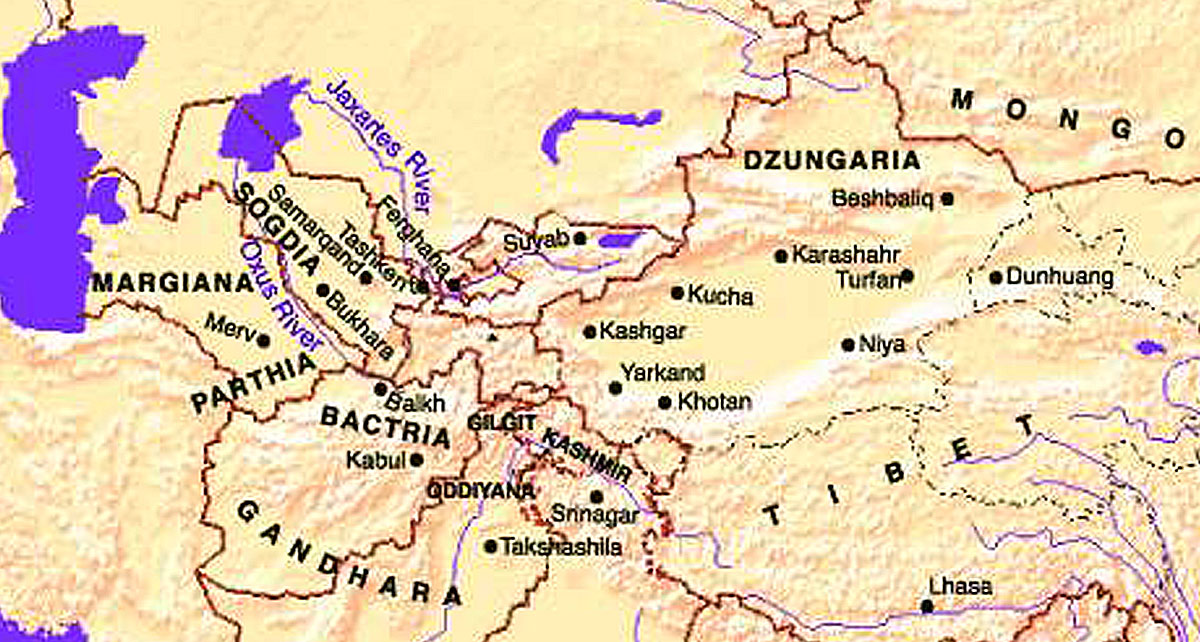
I used to love this turn-based game, when I was a lad, called Genghis and the adjacent territory next to Mongolia was Dzungharia. I never thought much about it but for the fact that it was always the first spot that Genghis would conquer as soon as the game began.  I never connected that Dzungharia was commingle with Uighurstan in Xinjiang; it seems a bit like Greater Armenia and the Kurds.

Image result for map of dzungaria

From a map of Inner Asia; it seems that Uighurstan is plugged into the Central Asian/Turanian network. Like the two Dashts in Iran that separate Iran from Khorasan it seems the Taklamakan Desert separates Turkestan from the Tibetan-Mongol orbit. Islam’s borders sometimes seems etched in geography; it’s not a coincidence that the Muslim further East in China practice “Islam with Chinese characteristics” as opposed to the more restive Uighurs.

I believe the map above has to date to pre 5th century Asia since Taxila was abandoned right about then. One interesting thing about maps is that depending on how you look at it there seems to be a strong clustering affect of Central Asia (Kashmir seems as Central Asian geographically as it does South Asian).

Unfortunately in our histories Iran has eclipsed the idea of Khorasan almost entirely and it’s importance to both South & Central Asian history.

Until the devastating Mongol invasion of the thirteenth century, Khorasan remained the cultural capital of Persia.[18] It has produced scientists such as Avicenna, Al-Farabi, Al-Biruni, Omar Khayyam, Al-Khwarizmi, Abu Ma’shar al-Balkhi (known as Albumasar or Albuxar in the west), Alfraganus, Abu Wafa, Nasir al-Din al-Tusi, Sharaf al-Dīn al-Ṭūsī, and many others who are widely well known for their significant contributions in various domains such as mathematics, astronomy, medicine, physics, geography, and geology. Khorasan artisans contributed to the spread of technology and goods along the ancient trade routes and decorative objects have been traced to this ancient culture, including art objects, textiles and metalworks. Decorative antecedents of the famous “singing bowls” of Asia may have been invented in ancient Khorasan.[citation needed]

The strange story behind the ‘Khorasan’ group’s name

After the region was taken over in an Arab conquest in the 7th century, Khorasan became a part of the Umayyad Caliphate, and with that, part of early Islamic culture. Notably, a widely discussed (though disputed) Hadith speaks of how “black banners will come out of Khorasan” in the end times. Will McCants of the Brookings Institute notes that the prophecies derive from the 8th century Abbasid revolution, a revolution that began in Khorasan and saw the end of the privileging of Arabs over non-Arabs in the Islamic empire.

Over the years, the Khorasan region had a fractious history, and was eventually swallowed up by a variety of different states. A part of Khorasan eventually became Khorasan state in modern Iran, and “Greater Khorasan” is generally used to refer to the larger historical region.

Between the saffron and scimitar

On my other weblog I have a post, On The Instrumental Uses Of Arabic Science, which reflects on the role that the idea of science, the Islamic world, and cultural myopia, play in our deployment of particular historical facts and dynamics. That is, an idea, a concept, does not exist on an island but is embedded in a cultural environment. Several different contexts.

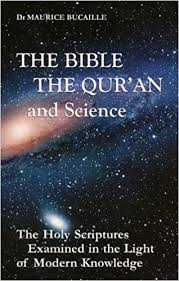
My father is a professional scientist, and a Muslim who lives in the West. In our house there was always a copy of The Bible, the Qu’ran and Science: The Holy Scriptures Examined in the Light of Modern Knowledge. To those not convinced about the beliefs of Islam, as I never was, it was not a convincing book. But it played a particular role in my father’s life of the mind as both a Muslim and a scientist. Its arguments were less important in their detail than that a French scientist had written a book showing that Islam and science were compatible and that in fact, the Koran had prefigured scientific truths.
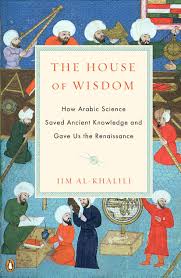
The intellectual achievements of medieval Islam, particularly the phase focused around the House of Wisdom, are a real thing in and of themselves. But more often they exist as tools for the implicit or explicit agendas of particular peoples with ends which are separate and distinct from an understanding of the past on its own terms.

For many Muslims, this period defines what Islam could have been. Should have been. More traditionalist Muslims will have a relatively understated take, and perhaps attribute the passing of this period due to external forces (e.g., the collapse of central authority by the end of the 9th century). More progressive Muslims will make a bolder claim, that Islam, that Muslims, made the wrong decisions internally (al-Ghazali often emerges as a villain).

A modernist, perhaps Whiggish, take would be that the 9th century of Islam was a “false dawn.” Illustrative of the acidic power of rationality, but an instance when it receded in the face of faith (the Mutazilites often become heroes in these tales). A more multiculturalist and contemporary progressive Western take would likely emphasize that Islamic cultural production was just as ingenious as that of the West, and its diminishment was due to the suffocating effect of colonialism.

But there are even more exotic takes one could propose. The shift from the Umayyads in Damascus to the Abbasids in Baghdad was a shift of the Islamic world from the west to the east. The prominence of Iranian culture during the latter period was palpable. The Caliph al-Mamun was half Iranian, and almost moved the capital of the Abbasids to Merv in Khorasan. The Barmakid family were ethnically Iranian, but also originally hereditary Buddhists. The historian of Central Asia, Christopher Beckwith, has alluded to an “Indian period” of Islamic civilization when the influence from Dharmic religion and Indian culture was strong. For example, Beckwith and others have argued that the madrassa system derives from that of Central Asian viharas.

But ultimately this post and this blog is not about Classical Islamic civilization and history. Rather, I want to pivot to the discussion of Islam and India.

This blog now gets in the range of the same amount of traffic as my other weblog. But a major difference is the source of traffic. About two times as many visitors to this weblog come from the USA as India. So Americans are dominant. But, on my other weblog, 15 times as many visitors come from the USA as India. Additionally, since this is a group weblog, I’m pretty liberal about comments, and so this weblog receives between 10 to 100 times as many comments as my other weblog. Obviously, since most people in the world are stupid, many of the comments are stupid. I try to ignore that.

Rather, let me focus on the “hot-button” issue of Islam and India, and how it impacts people here. In the comments of this weblog. Let’s divide the comment(ers) into two stylized camps. Or actually, one person and another camp. The person is commenter Kabir, who has taken it upon himself to defend the honor of Indo-Islamic civilization. On the face of it, that’s not a major problem, but he tends to take extreme offense and demand linguistic and topical policing that’s frankly rather obnoxious (this tendency extends beyond Islam, as he is a living personification of Syme). He’s a bully without the whip. Kabir is somewhat annoying, but I can honestly always just delete his comments. He’s one person.

Continue reading Between the saffron and scimitar

Iran as a modern Zoroastrian nation

After the counter-revolution the majority of Iranians have decided that they have had enough with Islam and want to return to their Zoroastrian roots. After the neo-Zoroastrians (they prefer to be called noZis) wrest back control, one of their first shock findings is that the birthplace of Zoroaster happens to be under the Naqsh-e Jahan square in Isfahan.

The noZis tear down the square and leave the rubble while they decide what to do with the site. In the interim all the medieval Muslim sites, which form the bulk of the architectural legacy of Iran, are benignly (or rather callously) neglected in favour of Persepolis (which is garishly rebuilt in what the  noZis think was Darius’s court) and other “reconstructed” Sassanian/Achamenian sites (many mosques have been discovered to have been built on top of fire temples).

Ferdowsi is the only Muslim poet truly privileged in noZi Iran but even the Shahnameh is under threat because it’s written in the “alien Arabic script” and not in the purer Pahlavi script (in fact some noZis argue that there should be a switch to the more “Aryan” Latin alphabet). At any rate the majority of Iranians are back to being officially illiterate.

Modern Persian is deemed to have far too many Arabic words and so the more rustic Dari of Yazd is chosen as a base language. Considering that this Dari was spoken by insular villagers the last millennium; it’s deemed that Avestan is the only acceptable source  language. Reality turns out to be a bit different; Old Persian in the Arabic script remains the dominant language of arts, calligraphy and culture while New Dari in Pahlavi becomes totally dependent on Anglo-French borrowings to become a complete language.

In the interim any Islamic poet, scientist or historian (even if Persian/Iranian) is sort of cast as the “other” and a scramble/obsession begins to discover ancient Persia’s scientific & aesthetic contributions. Some of Iran’s finest minds have been able to prove that ice cream in fact originated in Yazd.

Furthermore thousands and thousands of online noZis descend on the web to foam and obsess about Iran’s Muslim neighbours and to complain about Iran’s preferential treatment of her Muslim minority (they still maintain their own separate laws to the chagrin of the noZis).

They are also fuming at Eastern Iran’s still heavily Muslim region decision to secede into a new Khorasani state with Mashad & Herat as the capital. Iranian nationalists draw maps of Greater Iran that prominently figure Khorasan and constantly remind the Khorasanis that their Islamic identity is a myth and in fact they were Zoroastrians just a few generations back.

Ahmedis and Pakistan. Some background..

Atif Mian

Professor Atif Mian is a prominent Pakistani-American economist and a professor of economics at Princeton university. 2 weeks ago he was nominated to be a member of Imran Khan’s “Economic Advisory Council” (a think tank of sorts that is supposed to generate ideas for the new PTI government; it is not at all clear what influence, if any, this group will have in real life). This set off a controversy in Pakistan because Atif Mian is an Ahmedi and Ahmedis are widely reviled as heretics, apostates and traitors in Pakistan. After an initial attempt to defend his appointment (including the obligatory Jinnah quote and reference to the fact that an Ahmedi, Sir Zafrullah, was one of Jinnah’s closest advisers and Pakistan’s first foreign minister) the Imran Khan government backed down and asked him to leave the council.

Since then his defenders (mostly liberals who believe religion should play no role in such appointments and experts should be judged on their professional skills and not their religion) and opponents (Islamists, PTI-type Islamist-lite folks who believe Ahmedis in particular should not be appointed to any important position because they are fake Muslims and potential traitors, etc etc) have been arguing about this case on social media. This post is an attempt to provide background and clarify some of the issues raised by both sides.. (some of the background material was published earlier in a post I wrote in 2012 for 3quarksdaily.com)

Mirza_ghulam_ahmad
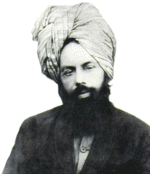
Mirza Ghulam Ahmed

The Ahmediya movement was started in Punjab in 19th century British India, by Mirza Ghulam Ahmed of Qadiyan. He seems to have been a quiet, religious loner who brooded about the challenges faced by his faith and his people. The decisive military and economic superiority of Western civilization over the Islamicate world had produced a variety of efforts at reform and revitalization. They ranged from the Wahabi-influenced puritanical Jihadism of Syed Ahmed Barelvi (who led an extremely fanatical jihadist movement in what is now Khyber Pakhtunkhwah, until he was defeated by superior Sikh firepower and a reaction to his extreme views among the local Muslims) to the anglophile reformism of Sir Syed Ahmed Khan (founder of Aligarh Muslim University). Mirza Ghulam Ahmed’s response was to start a movement of religious revival that was built around his own charismatic claims. Though he contradicted some mainstream Islamist claims about the finality of prophet-hood and the absolute necessity of military Jihad (military jihad as a Muslim duty is now so widely downplayed that it is hard for Westerners and even Westernized Muslims to figure out why his claim was considered so controversial). His movement was socially conservative and even puritanical and he vigorously defended Islam, especially against Christian missionaries and Hindu critics. He found some support among modestly educated middle class Punjabi Muslims (including Islamist icon Allama Mohammed Iqbal, who either flirted with joining the movement or actually joined for a few years, depending on what version you believe). As his movement (and his claims regarding his own status as prophet or messiah) grew, it also drew orthodox opposition, especially from the dominant Sufi-oriented Barelvi Sunni sect. Ironically this branch of local Islam enjoyed some American (and world media) attention as “moderate and tolerant Muslims” in contrast to their Deobandi/Wahhabi brethren in the aftermath of 9-11 (though this attempt to fight Wahabi/Deobandi fire with Sufi-Barelvi water seems to have run into some trouble recently).

This increasingly vocal opposition (complete with fatwas from Mecca declaring the Ahmedis as apostates liable to the death penalty if they did not repent) led to a sharper separation between Ahmedis and other Muslim sects, but the Ahmedis themselves always claimed to be Muslims and made efforts to remain fully engaged in “Muslim causes”. In their own view they were reforming and purifying Islam, not opposing it, so they had a legitimate interest in the cause of oppressed Muslims everywhere (e.g. they took a leading role in supporting Kashmiri Muslims against their Dogra-Hindu ruler). Some Ahmedis played a very prominent role in the Pakistan movement, including Sir Zafrullah Khan, who wrote a Pakistan proposal for the viceroy in Feb 1940 and shared it with Jinnah before the Muslim League passed its Lahore resolution in March 1940. He remained one of Jinnah’s closest associates and was the first foreign minister of Pakistan and Jinnah’s representative on the boundary commission that divided India) and others held prominent positions in the new state and fought for it with distinction (most famously, General Akhtar Malik in the 1965 war with India). It is likely that neither they, nor the relatively Westernized leadership of the Muslim league had a clear idea of what lay in store for them in Pakistan. Even more ironically, the Ahmedis themselves aggressively pursued “blasphemers” (e.g. Pandit Lekh Ram in Punjab in 1897). It is hard to read this Ahmedi polemic against Lekh Ram without thinking about where the Ahmedis themselves now lie in relation to the blasphemy meme. Continue reading Ahmedis and Pakistan. Some background..

Brown Pundits