
On the 5th of August the Indian govt announced that it had changed the status of Jammu and Kashmir. I think Professor Christine Fair has written a pretty good summary of the change and its implications (you can see it here), and you can read her article or a host of other articles to get the details (she has a bad rep in Pakistan right now, but I think this article does a very fair job of summarizing the issues involved, if you are a Pakistani nationalists you can ignore her comments about Pakistan, but the rest is still pretty useful in my opinion). Anyway, the bottom line is that the erstwhile state of Jammu and Kashmir is no more. It was created after the Anglo-Sikh wars when the British sold Kashmir to the Dogra ruler and it operated as one of over 500 supposedly independent princely states in British India (the actual level of independence varied, none were truly independent in that a British “Resident” was around to make sure British interests were paramount, but the larger states had a good deal of internal autonomy, with their own armies and judicial systems); it included the vale of Kashmir (where most Kashmri speakers lived) as well as Jammu (mixed population, but dominated by Dogras), Gilgit and Batlstan (mostly Muslim and ethnically and culturally distinct from Kashmir) and Ladakh (Western Tibetan in terms of culture and religion). In 1947 the princely states were told they had to pick either Pakistan or India. The Dogra ruler dithered for a while (presumably because he wanted independence, and would prefer not to join either new state) but when Pakistan organized an invasion by Pakhtoon tribesmen to capture the state, he acceded to India and Indian troops landed to stop the tribal invasion and recapture Kashmir for India. They pushed the raiders back towards Muzaffabad, Pakistan also committed regular troops and the two dominions fought a mini-war for over a year. In late 1948 India took the case to the UN and the two sides agreed to a ceasfire that was supposed to be followed by a plebiscite, but that never happened. Instead both sides consolidated control over respective parts of Kashmir and the cease fire line has held with minor modifications since then. Pakistan insists that India should hold the plebiscite and let Kashmiris determine if they want to be with India or Pakistan. India insists that it is Pakistan that never fulfilled the first requirements for the plebiscite and that since then it has held elections in Kashmir and the issue is now moot. Or something like that, you can read more about the endless legal and procedural wrangles in a 1000 different posts from Pakistan and India and reach your own conclusions, but this post is not about the legal or diplomatic ramifications
Tag: Kashmir
Genetics open thread
On popular request — or curiosity. Two recent studies are making the rounds:
-
Kashmiris and Central Asians: Nature – February 2025
-
Sri Lankans and South Indians: Nature India – February 2025
I’m generally skeptical of population genetics papers, what is their point exactly? But presumably this will awaken the Commentariat, who have been quieter lately.
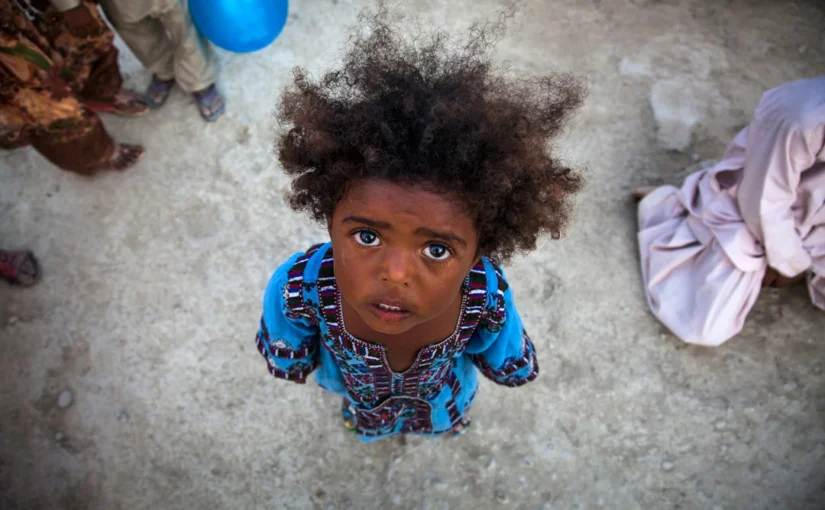
If nothing else, consider it intellectual cake; open to everyone, rich in speculation. As an aside the young girl featured is a Baloch.
Ladakh: From Promise to Protest
A Factual Account of Recent Developments
Overview:
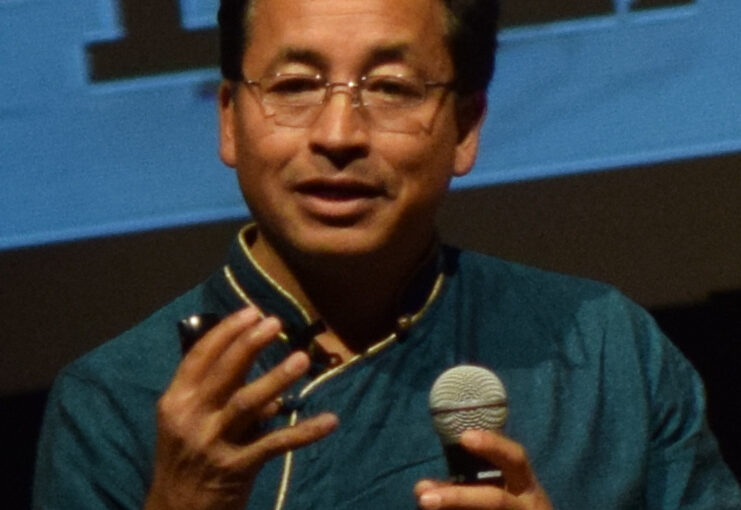
The region of Ladakh has seen a sharp escalation in political tension and civil unrest over the past 10 days. On September 24, 2025, four civilians were killed in Leh in police firing following public protests. This marks a significant turn in the trajectory of Ladakh’s relationship with the Union government of India, which had previously promised administrative empowerment and constitutional safeguards following the region’s bifurcation from Jammu & Kashmir in 2019.
Timeline of Key Events: Continue reading Ladakh: From Promise to Protest
Borders, Blind Spots, and the Mirror Game of South Asia
A recurring tension in South Asian discourse is the question of consistency: how states interpret borders, secession, and sovereignty; not in principle, but in practice.
Liberalstan’s case is that India acted selectively in 1947: Junagadh saw a plebiscite, Hyderabad faced military action, and Kashmir was referred to the UN. From this perspective, India chose whichever method suited its interests in each case. To Liberalstan, this isn’t pragmatism, it’s hypocrisy. The charge: if self-determination wasn’t good for Kashmir, why should it be for Balochistan? And what of Sikkim, Goa, Pondicherry, Khalistan, Nagaland, or the Naxalites?
Hindustan’s reply is rooted in realpolitik: decisions were shaped by demography, geography, and threats; not abstract norms. Q.E.A. Jinnah’s attempt to absorb Junagadh and court Jodhpur are seen as deliberate provocations, since Junagadh was Hindu-majority, non-contiguous, and largely symbolic (home to Somnath). After that, New Delhi abandoned any illusions of standard rules. From Hindustan’s view, Liberalstan’s moral framing is not only naïve but deeply asymmetrical; ignoring 1947, 1965, Kargil, Mumbai, and the long shadow of Pakistan’s own interventions.
When it comes to Balochistan, Hindustan notes its accession was closer to annexation, comparable to Nepal or Bhutan vanishing into India. Three major insurgencies since the 1960s complicate the narrative of “finality.” But here, Liberalstanflips the script: what is labeled a disputed territory in Kashmir is declared settled in Balochistan. This inversion doesn’t go unnoticed.
In truth, both sides are mirrors. Each demands flexibility for itself and finality for the other. Each invokes “consent”selectively; whether that of a prince, a people, or a state. The tragedy, perhaps, isn’t inconsistency but the absence of a shared regional framework for self-determination. One not held hostage by grievance, revenge, or exception.
Until then, accusations of hypocrisy will persist, each side fluent in the other’s blind spots.
🇮🇳Op Sindoor: A Podcast on Pahalgam, Pakistan, and the Limits of Peace
I’ve just listened to the first half-hour of Op Sindoor, the latest Brown Pundits Browncast featuring Amey, Poulasta, and Omar. The full episode runs over 90 minutes; I’ll be reflecting on the rest in due course. For now, some thoughts on the opening segment, which focuses on the recent terror attack in Pahalgam and its aftermath.
🧨 The Attack Itself: Pahalgam as a National Trauma
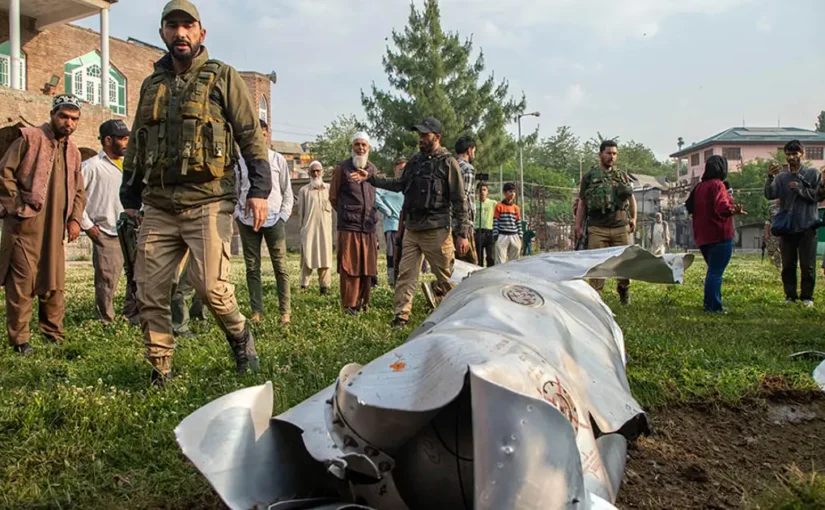
The episode begins by recounting the massacre in Pahalgam, Kashmir—a tourist meadow turned execution ground. Twenty-six people, most of them honeymooning Hindus, were murdered after being identified through religious markers: circumcision, Kalma recitations, names. The hosts don’t shy away from calling it what it is: a targeted Islamist attack. The group responsible, the TRF (The Resistance Front), is introduced as a Lashkar-e-Taiba cutout, designed to launder Pakistan-backed militancy through a local Kashmiri lens.
There is a palpable sense of cumulative fatigue in how the Indian speakers describe it—not as an aberration, but as part of a 30-year continuum of such violence. The emotional register is high, but justified. The use of plain terms like terrorists over euphemisms such as militants or gunmen reflects a long-standing frustration with how such attacks are framed in international discourse.
🤝 Modi, Nawaz, and the Civ-Mil Waltz Continue reading 🇮🇳Op Sindoor: A Podcast on Pahalgam, Pakistan, and the Limits of Peace
India and Pakistan, Back to the Future..
A group of terrorists attacked tourists in a remote meadow in Kashmir, identified those who were non-Muslim, and shot them dead (they also shot dead a Muslim tour guide who tried to oppose them). The horrendous and barbaric attack has led to a predictable outburst of harsh anti-Pakistan (and in many cases, anti-Muslim) outrage in India and the govt has already announced some steps against Pakistan and is presumably planning to undertake some more in the coming days.
Meanwhile, Pakistan (and individual patriotic Pakistanis) have taken to social media and traditional media to paint this as a “false flag attack” (i.e. carried out or planned by the Indian authorities themselves, presumably to allow them to retaliate against Pakistan; why?) or at least as India being “too quick to accuse Pakistan” (ie “we did not do it, and they are accusing us without proof”). This is all as expected in the usual India vs Pakistan show, but it is important to keep in mind that the situation has supposedly changed a little since 2019. Before that date there were many terrorist attacks in Kashmir and every major event would be followed by tit for tat exchanges along the line of control, but with both sides respecting “red lines”. Then in 2019 there was a large attack in Pulwama that was followed by an Indian retaliatory attack on a militant camp in Balakot in Pakistan proper (which crossed the previous red line of what retaliation was permissible). Since then there had been relative peace in kashmir and many commentators felt that the balakot bombing had established a new “red line”, that India will respond to any major attack in this or similar manner, so Pakistan has dialed down the terrorism it previously promoted in Kashmir. But if that is the case, then this attack obviously crosses that threshold and will lead to response. Irrespective of who is at fault and who did what, this was the supposed line and it has been crossed, so what next?
As usual, i dont know. But lets list the questions and possible answers.
- IF this was indeed planned by Pakistan, then the question is “why”? Why now?
Possible answers and objections: Continue reading India and Pakistan, Back to the Future..
Major Amin on the Failure of the Pakistani invasion in the First Kashmir War
Major Amin sent over an extract from his writings about the 1947 attempt to grab Kashmir using tribal lashkars and why it failed. Obviously from a Pakistani POV, but an objective one.. There are formatting issues that I found hard to fix, but you will get the gist.
Liaquat Ali Khan and Malik Ghulam Mohammad’s Kakkezi relative Railway battalion major Khursheed Anwar was the biggest reason for the tribal invasion’s failure on Muzaffarabad-Srinagar axis.
As per Sardar Shaukat Hayat who was closely connected with leading the invasion , the tribal invasion was planned in September 1947 but Khursheed Anwar disappeared to get married to a Muslim League worker.[1]
Pakistani state had two excellent choices , as military commanders to lead the main tribal attack on Muzarrafarabad-Srinagar axis . These were Major Taj Khanzada DSO,MC and Gen Zaman Kiani, sword of honour of IMA and ex chief of Indian national army.
Such was the criminal parochialism in the newly created Pakistani state that a railway battalion emergency commission was handpicked by PM Liaquat and his finance minister Malik Ghulam Mohammad,on grounds that he was Ghulam Mohammads Kakkezai clanmate and relative from Jullundhur.[2]
It was most irrational to pick up a man whose only qualification was petty intrigue and fomenting riots and who had no military knowledge.
But that is how the All India Muslim League was run , right from its creation in 1906.
Continue reading Major Amin on the Failure of the Pakistani invasion in the First Kashmir War
Kashmir Files : Short Review
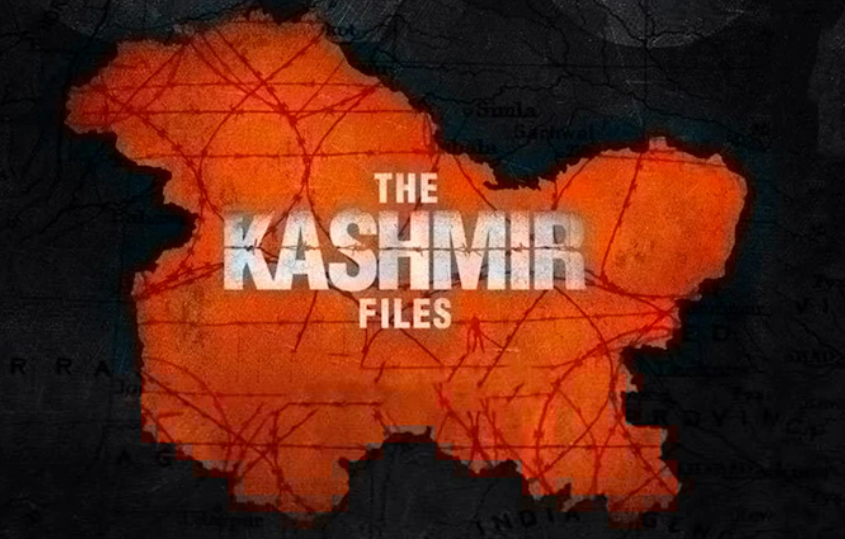
Short Review
#KashmirFiles – forgive my typos and terseness – i posted this in a hurry
I was pleasantly surprised by how effective the movie was in conveying what it started out doing. I had a very low bar after Tashkent files. Some would take umbrage to the Loud direction at times. Personally I think that was vivek agnihotri’s choice and overall the Loudness has the desired effect. Having seen more gory scenes in Visual medium and read more graphic details about Kashmir Pandit I did think the violence was NOT overdone though Loud at times. Rather some of the more ghastly things documented were not shown. RAPE which was common and effective tool used by Kashmiri Islamists to scare Pandits wasnt depicted in the movie. Anupam kher shines, among his finest performances. I even liked Mithun’s role. Darshan Kumar also pulled through on a tough role (though with glitches).
Overall acting is just above average – especially by actors in crucial moments in the film which somehow let me down – especially during the final monologue. It could’ve packed more punch with a flawless monologue like that of Kay Kay from Gulaal but it didn’t.
As a result I didnt get emotional watching the movie (except maybe the Biscuit scene by Anupam Kher) while I had shed some tears while reading Pandita’s moving memoir. To the readers, I would still recommend Pandita’s book over this movie but this movie will reach places which a book could never do. Book Review: Our moon has blood clots | by Gaurav Lele | Medium
Sad that a fine mind like Pandita has not *yet talked about the impact of the film (probably due to history with the director).
But most importantly the movie does what only a movie can (not books or newspapers or even podcasts). So it’s a very necessary counter weight movie especially in company of Haider and Mission Kashmir. The criticism I had watching was the absence of positive Kashmiri Muslim characters who helped Pandits risking their lives (though the final monologue makes that point along with many other nuances). Personally I think that’s not fair depiction but award winner “Haider” didn’t have a single positive Pro India character – all Kashmiris who were pro India were corrupt – so maybe judging Kashmir files with that level of harshness itself isn’t fair.
In that space #KashmirFiles corrects a lot of narrative around the Kashmir in general in Pop culture and also tells the stories of the Kashmiri Hindus with focus solely on their plight.
There are some errors and unbelievable plot points. The characters (5 dinner table characters) appear half baked and under acted at times. In many places multiple character arcs are fused into a single character which leaves things undercooked.
I also felt the #Article370 part is overplayed and made simplistic and dumbed down. That part almost feels like propaganda for current BJP government. Ofcourse it’s part of story so that’s fine in a story. #KashmirFiles
Personally I felt the multiple Amarnath killings should have also been part of the film – whose aim was to further prevent any attempts to lay claim to Hindu legacy of Kashmir. But @vivekagnihotri can’t get it all inside the movie.
JNU is naturally shown caricaturish – but frankly I care far more about Kashmiri Muslim caricature than JNU caricature. Also don’t think the bright minds of Azadi in JNU would be seed any space in one monologue :). But maybe that was wishful thinking by director. The use of CAA protest fame song – Hum Dekhenge is at times not loud but effective nonetheless.
In summary the movie shifts the Pop Culture pendulum on Kashmir to its end powerfully (probably overcompensates a bit), but is no means is it a complete film – its a message meant primarily to highlight the plight of the Kashmiri Hindu community. But it does so (with exception of the final monologue) making a caricature of Kashmiri Muslims as either fanatics or cowards when there have been documented instances of Kashmiri Muslims risking their lives for India in general and Pandits in particular. But that is what you get when the only person willing to voice this issue honestly is Vivek Agnihotri – when Bollywood in 30 years came up with ZERO films on this tragedy and what they managed at last was the PC and poorly made Shikara. In that context you have to not only live with Kashmir Files but somewhat embrace its core message.
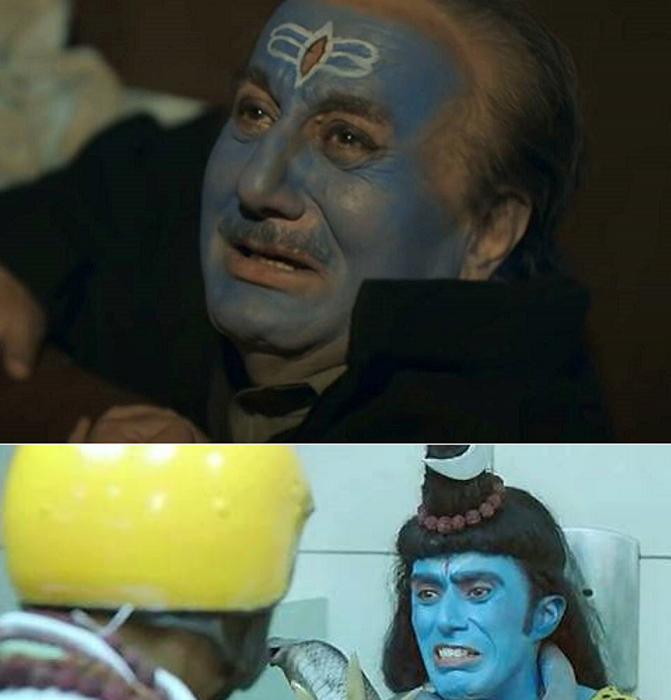
Kashmir files uses a lot of Hindu imagery and symbolism – sometimes subtly sometimes overtly. I felt the use of Shiv makeup Anupam Kher was deliberate – especially in the light of retrospective offense taken by newly aware(woke?) Hindus about the Shiv scene from PK.
#KashmirFiles has started a conversation and hopefully later entries in the debate will add more nuance which is missing in the movie.
Open Thread – 01/07/2022 – Brown Pundits
BrownCast with Rahul Pandita on Kashmir, Delhi Riots, Maoism
Another BP Podcast is up. You can listen on Libsyn, Apple, Spotify, and Stitcher (and a variety of other platforms). Probably the easiest way to keep up the podcast since we don’t have a regular schedule is to subscribe to one of the links above!
In this episode of Browncast Omar and I (Gaurav) talk to Rahul Pandita, the journalist and author. We spoke on a range of topics from Kashmir to Maoism. Rahul’s is a refreshingly insightful voice among the English speaking journalists based around Delhi – do check out his writings. His twitter bio is Rahul Pandita.
I would highly recommend his books – especially his memoir – Our Moon Has Blood Clots
Below the fold here I am posting the transcript as well. This is auto-generated and unedited, so expect to see MANY errors, but it may help you jump to whatever part interests you, or give you at least a gist of the conversation. Continue reading BrownCast with Rahul Pandita on Kashmir, Delhi Riots, Maoism