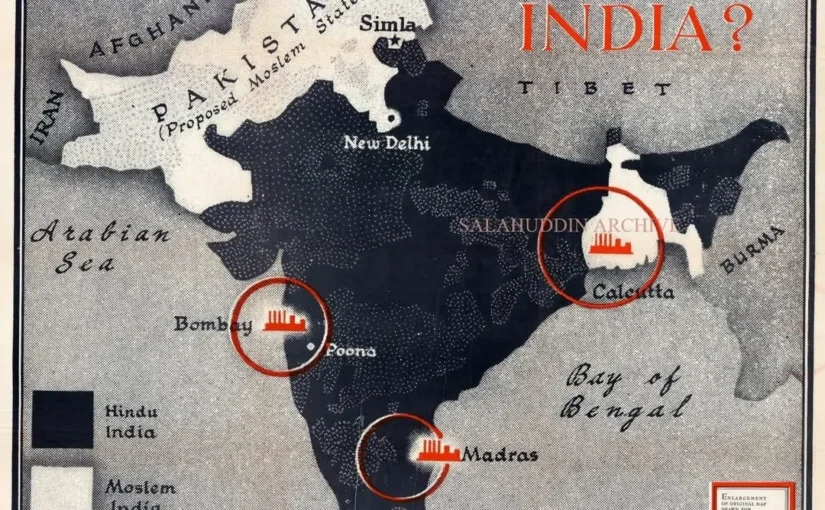
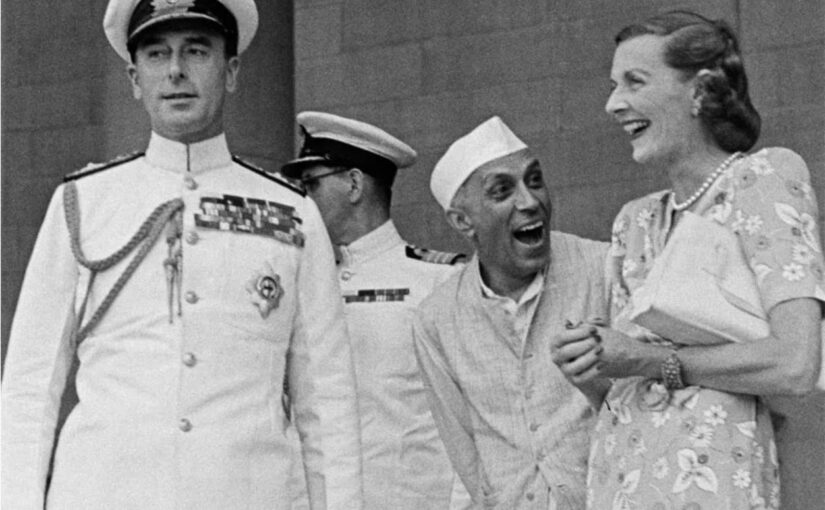
We write this from the chair of those who have just declined, again, to partition their own blog. The exercise concentrates the mind. Brown Pundits has a Saffroniate. It has a Crescentiate. It has an awkward intermediate seat between Viceroy and Prime Minister. We have chosen, repeatedly, to hold the centre.
We have observed that Nehru did not.
1. The Men.
Jinnah was self-made. He was technically brilliant. He was legalistic to the point of pedantry, which is the only kind of legalism that ever wins a constitutional argument. Nehru rode on his father’s coattails, on Gandhi’s affection, on the Mountbattens’ hospitality.
The asymmetry was decisive. One man knew the document. The other man trusted the room.
2. The Cabinet Mission Plan.
The Cabinet Mission Plan of 1946 already confederated India. Grouping A, Grouping B, Grouping C. The Centre held defence, foreign affairs, communications. Everything else devolved. This was workable. The League accepted it provisionally as the best available route to parity. Nehru wobbled, then in his July Bombay press conference reserved the Congress right to revise the groupings once seated in power. The League withdrew within weeks. The edifice collapsed.
The question the Saffroniate refuses to ask is the simple one. Why was it harder to confederate on linguistic lines than on religious lines? The States Reorganisation that the Republic executed in 1956 was already latent in 1946. Madras Presidency was a Tamil, Telugu, Malayalam, Kannada tinderbox. Bengal was Bengal. The Indus was the Indus. The Hindi belt was the Hindi belt.
Four groupings could have been negotiated. Continue reading Nehru Lost India, Not Jinnah