
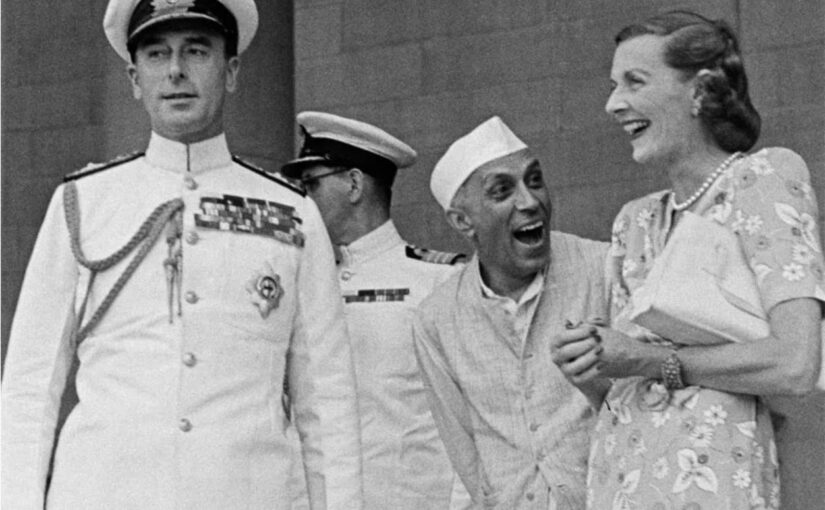
Nehru Lost India, Not Jinnah

We write this from the chair of those who have just declined, again, to partition their own blog. The exercise concentrates the mind. Brown Pundits has a Saffroniate. It has a Crescentiate. It has an awkward intermediate seat between Viceroy and Prime Minister. We have chosen, repeatedly, to hold the centre.

We have observed that Nehru did not.

1. The Men.

Jinnah was self-made. He was technically brilliant. He was legalistic to the point of pedantry, which is the only kind of legalism that ever wins a constitutional argument. Nehru rode on his father’s coattails, on Gandhi’s affection, on the Mountbattens’ hospitality.

The asymmetry was decisive. One man knew the document. The other man trusted the room.

2. The Cabinet Mission Plan.

The Cabinet Mission Plan of 1946 already confederated India. Grouping A, Grouping B, Grouping C. The Centre held defence, foreign affairs, communications. Everything else devolved. This was workable. The League accepted it provisionally as the best available route to parity. Nehru wobbled, then in his July Bombay press conference reserved the Congress right to revise the groupings once seated in power. The League withdrew within weeks. The edifice collapsed.

The question the Saffroniate refuses to ask is the simple one. Why was it harder to confederate on linguistic lines than on religious lines? The States Reorganisation that the Republic executed in 1956 was already latent in 1946. Madras Presidency was a Tamil, Telugu, Malayalam, Kannada tinderbox. Bengal was Bengal. The Indus was the Indus. The Hindi belt was the Hindi belt.

Four groupings could have been negotiated. Continue reading Nehru Lost India, Not Jinnah
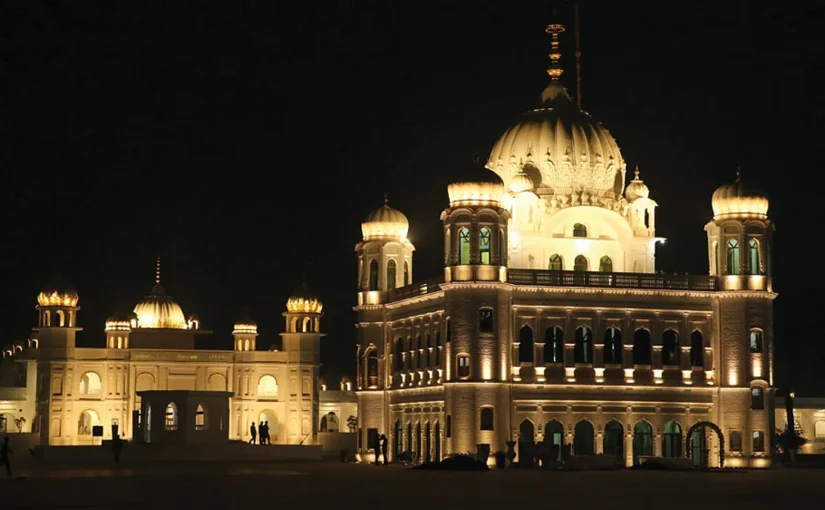
Founder Sites and Institutional Sites: A Note on Sikh Sacred Geography

This post is to be treated as Precedent on two matters.

First, on moderation

We have been alerted by Hamza that a number of Pakistani commentators on this site have been using anti-Dravidian racialised language against South Indian communities. This will not be tolerated on Brown Pundits.

Any comment that uses racialised language against Dravidian, Tamil, or South Indian communities will be removed, and the offending commenter will have twenty comments removed instantly as an automatic fine. There is no warning phase.

This is personal as well as editorial. DLV’s family was driven out of Sindh by Muhajirs at Partition. It was the Dravidians and the Tamils of Chennai who welcomed them, gave them a second home, and treated them as their own. Any racialised language against those communities on this site will be met with the full weight of the moderation tools available.

To Kabir’s credit, as far as we are aware, he is the only regular Pakistani voice on this blog who has never used racialised language of any kind, even in sharp disagreement. He remains institutional and high-minded even when the argument turns to nuclear rattling. He does not share in the wider Desi pathology with regards to skin colour and race, and that exception is worth naming. It may be the American side of him. Whatever the source, it is the standard this site expects of every commenter, Pakistani, Indian, Bangladeshi, or otherwise.

Second, on substance

The post below establishes a framework for how this site will discuss the sacred geographies of Partition going forward. The recent Kabir-Kishore exchange on Sikh holy places, is the occasion, but the framework is intended to apply across all such disputes: Hindu sites in Pakistan, Muslim sites in India, Sikh sites on both sides of the Wagah, Buddhist sites across the subcontinent. Future BP posts on sacred geography should refer back to the founder-institutional distinction laid out here.


Founder Sites and Institutional Sites: A Note on Sikh Sacred Geography

A recent exchange on this site sets out two claims about Sikh holy places. The first says Sikhs lost most of their sacred sites to Pakistan in 1947. The second calls that claim nonsense. Both are right, and the disagreement turns on a distinction neither has named: founder sites versus institutional sites.

The Pakistan-side Holy Sites

Continue reading Founder Sites and Institutional Sites: A Note on Sikh Sacred Geography

Brown Pundits