
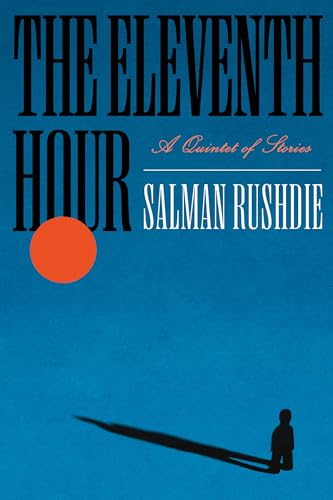
Salman Rushdie is one of the world’s most prominent English language writers and certainly among the most famous writers of Indian origin. His second novel, Midnight’s Children won the 1981 Booker Prize as well as the “Best of the Bookers”. Other well-known novels include Shame–one of the great novels about Pakistan– and The Satanic Verses.
The Eleventh Hour is a collection of five stories, two of which were previously published in The New Yorker. For the purposes of this review, I will focus on “The Musician of Kahani” and “Late”.
“The Musician of Kahani” is set in the fictional city of Kahani (Urdu/Hindi for “story”) though the setting is clearly modeled on Bombay–where Rushdie was born and brought up. The story revolves around Chandni Contractor (the titular musician) who marries into a prominent business family. After she suffers a stillbirth while her in-laws are throwing party after party celebrating the arrival of the baby, Chandni decides to take revenge on them through her music. Rushdie describes the scene as follows:
The day came when Chandni’s fingers began to move once more in their particular fashion. She was back in her own room in her family’s residence in Breach Candy. She had not thought, since her return, of sitting at her piano or picking up her sitar–both of which had been quietly returned to her–but this time when her fingers moved Meena was in no doubt that she heard music. First Meena heard it, then Raheem. It was music of a kind they had never heard before, and the instruments on which it was being played were unknown to them, It rose above their home like a pillar of smoke, like a column of fire, like the weapon of an invading alien species, and then it rushed across the city and the country to do its deadly work… (Rushdie 96)
As a musician myself, I was particularly intrigued by the supernatural power of music in this story. Continue reading Review: The Eleventh Hour by Salman Rushdie