
Come Fly with me to Far Bombay

I. Bombay: Between Beauty and Brutality
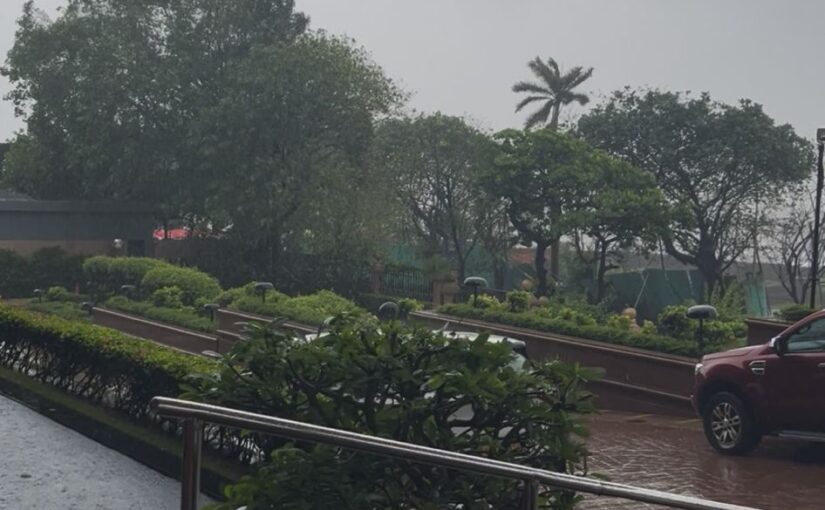
I’m writing from Bombay, where the monsoon floods are overwhelming; visually and viscerally. The rain hammers the city with a kind of sublime fury. From certain vantage points, it’s breathtaking. But it’s also undeniably brutal for those without scenic surroundings or structural shelter. It’s a reminder that Indian beauty is often doubled with burden.

II. Burden Burst: The Commentariat Awakens
Lately on Brown Pundits, I’ve noticed a revival. Old voices returning, new ones emerging, and many ideas worth engaging. But some themes have worn thin; for instance I’m in broad agreement with Indosaurus & I don’t want to waste too much breath on Audrey Truschke. And frankly, Aurangzeb is not a hill I want to die on. In fact, perhaps one of the key misreadings by Muslims in the subcontinent was turning every ideological disagreement into a hill to die on. Maybe it began with QeA-Jinnah and the Great Allama but it ossified into a pattern. Everything became a matter of principle, rather than pragmatism.

III. Concession Is Not Compromise
Compromise is seen as weakness, but I’m more interested in the capacity to concede especially when history clearly shows you’re wrong. The Mughals installed a two-tier system, subordinating Hindus and even native Muslims. Contrast that with the Suri dynasty, particularly Sher Shah Suri, who in just two decades built the Grand Trunk Road and reshaped governance without the alienation that marked the Mughals. If Hindutva attacked the Suri legacy, I’d call it pure bigotry. Sher Shah ruled with the land, not over it. Continue reading Come Fly with me to Far Bombay
Let Hindus Decide for India

There’s a quiet but persistent coalition, inside and outside India, that seems intent on denying Hindus the right to define their own future. It includes unreformed Islamists who refuse to reckon with modernity, English-speaking liberal elites still shadowboxing for Nehru, minorities with veto power but no stake in cohesion, and a chorus of Western (and increasingly Chinese) voices, eager to manage India’s trajectory from afar. What unites them? A shared discomfort with Hindu political consolidation.

Let’s be clear: Hindu identity is not a new construct. Whether you place its roots 3,000 or 5,000 years ago, it’s one of the world’s oldest living civilizational continuities. That identity has always been plural, regional, and evolving. But it has also always been there; visible in memory, ritual, geography, and language. Today, that identity is waking up to its political form. And it will not be put back to sleep.

Hindutva is not going anywhere. Nor is the Indian Union. Those who hoped Kashmir would stay outside this arc have already seen the direction of travel. Pakistan’s decision to opt out of Hindustan, and then build an identity against it, has led not to strength but to strategic stasis. Bangladesh, too, for all its cultural richness, now stands as a separate civilizational lane. And so we arrive at the core truth: Hinduism and India are coterminous.

This isn’t a call for exclusion. But it is a reminder that those who opted out do not get to dictate terms to those who stayed in. That includes foreign commentators and diasporic gatekeepers alike. There is a difference between pluralism and paralysis. There is a difference between nationalism and denial. And if majoritarianism is the anxiety; perhaps the deeper fear is that Hindus are no longer apologizing for being the majority. Let India decide. Let Hindus decide. Let the world, finally, learn to listen.

Brown Pundits