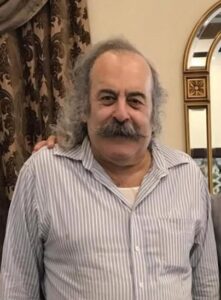
Major (retd) Agha Humayun Amin passed away in Lahore on February 21st 2025 at the age of 64 (or so, I never learnt his exact date of birth). The son of an army officer (his late father Brigadier Amin was an Engineers officer who laid the famous triple minefield near Sialkot in 1971), Agha joined the army in 1981 in the 67th Long course. He was commissioned into a cavalry regiment (PAVO cavalry, a storied regiment of the British Indian Army, a fact of which Major Sahib was very proud).
Agha was very popular with his coursemates, but tended to run into trouble with his superiors because of his unconventional lifestyle and unwillingness to be a sycophant. He and the army therefore parted ways in the 90s and he spent a good part of his remaining life in Afghanistan, working as a free lancer and providing various services to companies operating there. But his main interest and the quality that made him famous was his interest in military history. He was Pakistan’s premier military historian and the author of multiple books and over 200 articles in various publications. He was a stickler for accuracy and had no time for people who were ready to bend the facts to fit a paticular narrative. For Major sahib, the truth was sacrosanct and errors of fact were unforgiveable. Interpretation is a different matter. His opinons tended to be salty and sometimes unconventional (but equally, sometimes they felt shocking because in a country where delusions and fantasies can rule, a very conventional assessment could sound shocking).
I personally met Major Amin online about 20 years ago and we remained in touch online till the day he passed away, but I only met him a few times in person on visits to Lahore (he also met my father a couple of times there), so I am not the best person to comment on his personal life, but agha sahib seems to have had a LOT of friends and was very much a “yaraan da yaar” (loyal to his friends, and down to earth and fun loving). But I can tell you that i have not met anyone in Pakistan who read more books than Agha sahib. Military history (especially the history of the British Indian army) was his forte and he seems to have read everything and had opinions about everything, but he also read a lot of psychology and had a fondness for Western art (where his favorites were 19th century and early 20th century realistic and impressionistic art). His own worldview was very old fashioned in some ways: he admired great men (of any party or ideology) and had no time for the kind of bureaucratic mediocrities who get promoted by being sycophants. He was also a believer in inherited qualities and generally dismissive of Democratic pieties, but his focus was on military excellence (or mediocrity, as the case may be).
We are lucky to have had someone like him in the subcontinent. Thanks to his efforts, a LOT of detailed (and accurately detailed) information about the recent military history of the Indian subcontinent has been preserved. He will be missed.
Writings and podcasts with Major Amin at Brownpundits can be found here.
Justice Sajjad Sipra (who happens to have been my maternal uncle) passed away in Services Hospital Lahore on January 7th 2025 at the age of 88. I wanted to write a short note focused mostly on his public life, as a tribute and as a way to preserve some of his memories. His niece set up a website in his honor (https://sajjadsipra.com/ ) with several more personal memories and tributes, please do visit it to learn more about this extraordinary man. Continue reading Justice Sajjad Ahmed Sipra; 1936-2025
This was on old post about blasphemy laws that I wrote in 2015 and revised in 2021. It is on the site, but hard to search for, so i decided to repost it now that blasphemy is again in the news with two recent episodes where the police were able to arrest the accused (ie save him from mob killing) but then the police themselves executed the blasphemer in custody. There has been an episode in the past where a Shia who had blasphemed against the sahaba (the companions of the prophet) was killed (with an axe) by a police officer while in custody and there have been a couple of episodes where blasphemers were killed by other prisoners, but this trend of execution by the police is now at a new level. The police officers who carried out the execution were garlanded and immediately received promises of millions of rupees in rewards (though with Pakistan reaching new levels of conmanship, it is likely that some of these pledges are fake). So now, not only will the mob kill you any time you are accused of blasphemy, if the mob fails, the police will finish the job the same day.
Of course, if it does reach trial, the courts will always sentence to death in any case because judges who let off previous accused have also been killed.
SO it goes.
Meanwhile, as liberal muslims and Liberals and Leftists in the West who want to use orthodox Muslims for their own purposes and want to find ways to oppose blasphemy laws without upsetting Muslims will dig up their usual “colonial era blasphemy laws in Pakistan” story to see if blame can be pinned on some dead entity, such as the British empire. So I wanted to have a post handy where I could direct them; so here it is, a quick overview of the blasphemy issue in Pakistan
A blasphemy law was part of the 19th century Indian Penal code as section 295.. It was not a bad law at all and the lazy habit of blaming it for later blasphemy law crap in the Indian subcontinent is just that: a lazy habit.
Here is section 295 of the Indian Penal Code of 1860:
Injuring or defiling place of worship with intent to insult the religion of any class.—Whoever destroys, damages or defiles any place of worship, or any object held sacred by any class of persons with the intention of thereby insulting the religion of any class of persons or with the knowledge that any class of persons is likely to consider such destruction, damage or defilement as an insult to their religion, shall be punishable with imprisonment of either description for a term which may extend to two years, or with fine, or with both.
The aim of the law was to prevent/punish things like someone throwing a dead pig into a mosque or a cow’s head into a temple. An actual physical desecration is to be punished. This seems like an eminently sensible law and cannot really be blamed for all the evils that came later. But in the 1920s there was a famous case in Lahore where a Hindu publisher was arrested by the colonial authorities after Muslims agitated against him for having published a book called Rangila Rasul (“merry prophet”). The British colonial authorities tried to prosecute him for hurting the religious sentiments of Muslims, but the high court in Lahore (quite properly) found him innocent because there was no law on the books against just publishing a book, no matter how offensive it may be to some religious group. Fearing future communal discord from such provocations, the British then had the legislative assembly add section 295A to the law in order to criminalize deliberate attempts to “outrage the religious feelings of any community”. This section states:
Whoever, with deliberate and malicious intention of outraging the religious feelings of any class of citizens of India, by words, either spoken or written, or by signs or by visible representations or otherwise], insults or attempts to insult the religion or the religious beliefs of that class, shall be punished with imprisonment of either description for a term which may extend to 4[three years], or with fine, or with both. But even with this new and expanded article 295A in place, prosecutions for blasphemy were few and far between until, in the 1980s, General Zia added two new sections to the law in Pakistan and really set the ball rolling. These infamous sections are labelled 295B and 295C.
295-B: Defiling the copy of Holy Qur’an. Whoever wilfully defiles, damages or desecrates a copy of the Holy Qur’an or of an extract there from or uses it in any derogatory manner for any unlawful purpose shall be punishable with imprisonment for life. 295-C: use of derogatory remarks etc., in respect of the Holy Prophet: – who ever by words, either spoken or written, or by visible representation, or by any imputation innuendo, or insinuation, directly, defiles the sacred name of the Holy Prophet Muhammad (PBUH) shall be punished with death, or imprisonment for life and shall also be liable for fine.
Note that the law no longer requires that the offense be malicious in intent. Intent is no longer an issue. Insulting the Quran or the prophet, even unintentionally, is now punishable by death. To seal the deal, in 1991 the Federal Shariat Court of Pakistan struck down the option of life imprisonment and made the death penalty obligatory. And of course, the new amendments only apply to blasphemy against Islam, not against all religions (in this sense, the new laws are more “rational” and internally coherent, since all religions blaspheme against all other religions as a matter of course, so the original law was not coherent in principle, though still workable in practice). Between 1984 to 2004, 5,000 cases of blasphemy were registered in Pakistan and 964 people were charged and accused of blasphemy; 479 Muslims, 340 Ahmadis, 119 Christians, 14 Hindus and 10 others. Thirty-two people charged with blasphemy were killed extra-judicially during that time. More have died since. Eighty-six percent of all the cases were reported in Punjab.
Every time the shit hits the fan, many liberal people start hoping that this blasphemy law can be changed to finally stop or slow down this torrent of prosecutions and killings. Others have noted that the law is not the problem, free-lance enforcement of a broader blasphemy meme in the Muslim community is the problem and will likely persist even if the law is repealed.
In my view the law is not the only problem, but it IS a very potent symbol of the surrender of state and society in front of the blasphemy meme. Repeal of the law will not kill that meme, but repeal of the law will be an equally powerful signal that things have changed and that state and society no longer approve of the killing of blasphemers. It will not end the problem, but it will be the beginning of the end. Repeal of the law is not a sufficient condition for this nightmare to end, but it is a very important necessary condition.
There is an old post about blasphemy laws from 2015 that i revised in 2021. It is on the site, but not well written and hard to search for, so i decided to repost it because blasphemy is in the news again and I cannot count the number of times someone has managed to say “colonial era blasphemy laws in Pakistan” in a misleading manner. I wanted to have a post handy where I could direct them, so here it is, a quick overview of the blasphemy issue in Pakistan
A blasphemy law was part of the 19th century Indian Penal code as section 295.. It was not a bad law at all and the lazy habit of blaming it for later blasphemy law crap in the Indian subcontinent is just that: a lazy habit (mostly promoted by LeLi Indians and Pakistanis desperate to find someone else to blame)
Here is section 295 of the Indian Penal Code of 1860:
Injuring or defiling place of worship with intent to insult the religion of any class.—Whoever destroys, damages or defiles any place of worship, or any object held sacred by any class of persons with the intention of thereby insulting the religion of any class of persons or with the knowledge that any class of persons is likely to consider such destruction, damage or defilement as an insult to their religion, shall be punishable with imprisonment of either description for a term which may extend to two years, or with fine, or with both.
The aim of the law was to prevent/punish things like someone throwing a dead pig into a mosque or a cow’s head into a temple. An actual physical desecration is to be punished. This seems like an eminently sensible law and cannot really be blamed for all the evils that came later.
But in the 1920s there was a famous case in Lahore where a Hindu publisher was arrested by the colonial authorities after Muslims agitated against him for having published a book called Rangila Rasul (“merry prophet”). The British colonial authorities tried to prosecute him for hurting the religious sentiments of Muslims, but the high court in Lahore (quite properly) found him innocent because there was no law on the books against just publishing a book, no matter how offensive it may be to some religious group. Fearing future communal discord from such provocations, the British then had the legislative assembly add section 295A to the law in order to criminalize deliberate attempts to “outrage the religious feelings of any community”. This section states:
Whoever, with deliberate and malicious intention of outraging the religious feelings of any class of citizens of India, by words, either spoken or written, or by signs or by visible representations or otherwise], insults or attempts to insult the religion or the religious beliefs of that class, shall be punished with imprisonment of either description for a term which may extend to 4[three years], or with fine, or with both. But even with this new and expanded article 295A in place, prosecutions for blasphemy were few and far between until, in the 1980s, General Zia added two new sections to the law in Pakistan and really set the ball rolling. These infamous sections are labelled 295B and 295C.
295-B: Defiling the copy of Holy Qur’an. Whoever wilfully defiles, damages or desecrates a copy of the Holy Qur’an or of an extract there from or uses it in any derogatory manner for any unlawful purpose shall be punishable with imprisonment for life. 295-C: use of derogatory remarks etc., in respect of the Holy Prophet: – who ever by words, either spoken or written, or by visible representation, or by any imputation innuendo, or insinuation, directly, defiles the sacred name of the Holy Prophet Muhammad (PBUH) shall be punished with death, or imprisonment for life and shall also be liable for fine.
Punishment was later upgraded to the death penalty.
Note that the law no longer requires that the offense be malicious in intent. Intent is no longer an issue. Insulting the Quran or the prophet, even unintentionally, is now punishable by death. To seal the deal, in 1991 the Federal Shariat Court of Pakistan struck down the option of life imprisonment and made the death penalty obligatory. And of course, the new amendments only apply to blasphemy against Islam, not against all religions (in this sense, the new laws are more “rational” and internally coherent, since all religions blaspheme against all other religions as a matter of course, so the original law was not coherent in principle, though still workable in practice). Between 1984 to 2004, 5,000 cases of blasphemy were registered in Pakistan and 964 people were charged and accused of blasphemy; 479 Muslims, 340 Ahmadis, 119 Christians, 14 Hindus and 10 others. Thirty-two people charged with blasphemy were killed extra-judicially during that time. More have died since. Eighty-six percent of all the cases were reported in Punjab.
Every time this shit hits the fan, many liberal people start hoping that this blasphemy law can be changed to finally stop or slow down this torrent of prosecutions and killings. Others have noted that the law is not the problem, free-lance enforcement of a broader blasphemy meme in the Muslim community is the problem and will likely persist even if the law is repealed. In my view the law is not the only problem, but it IS a very potent symbol of the surrender of state and society in front of the blasphemy meme. Repeal of the law will not kill that meme, but repeal of the law will be an equally powerful signal that things have changed and that state and society no longer approve of the killing of blasphemers. It will not end the problem, but it will be the beginning of the end. Repeal of the law is not a sufficient condition for this nightmare to end, but it is a very important necessary condition.
This was an old article i wrote for the Indian magazine Pragati in 2013. That magazine has since disappeared, but some good Samaritan found this on the intertubes and I thought I would post it here for posterity. Some elements of my thinking have changed since then, and others have shifted in intensity, but i am posting this article as originally written;
Salman Rushdie famously said that Pakistan was “insufficiently imagined”. To say that a state is insufficiently imagined is to run into thorny questions regarding the appropriate quantum of imagination needed by any state; there is no single answer and at their edges (internal or external), all states and all imaginings are contested. But while the mythology used to justify any state is elastic and details vary in every case, it is not infinitely elastic and all options are not equally workable. I will argue that Pakistan in particular was insufficiently imagined prior to birth; that once it came into being, the mythology favored by its establishment proved to be self-destructive; and that it must be corrected (surreptitiously if need be, openly if possible) in order to permit the emergence of workable solutions to myriad common post-colonial problems.
In state sponsored textbooks it is claimed that Pakistan was established because two separate nations lived in India — one of the Muslims and the other of the Hindus (or Muslims and non-Muslims, to be more accurate) and the Muslims needed a separate state to develop individually and collectively. That the two “nations” lived mixed up with each other in a vast subcontinent and were highly heterogeneous were considered minor details. What was important was the fact that the Muslim elite of North India (primarily Turk and Afghan in origin) entered India as conquerors from ‘Islamic’ lands. And even though they then settled in India and intermarried with locals and evolved a new Indo-Muslim identity, they remained a separate nation from the locals. More surprisingly, those locals who converted to the faith of the conquerors also became a separate nation, even as they continued to live in their ancestral lands alongside their unconverted neighbours. Accompanying this was the belief that the last millennium of Indian history was a period of Muslim rule followed by a period of British rule. Little mention was made of the fact that the relatively unified rule of the Delhi Sultanate and the Moghul empire (both of which can be fairly characterised as “Muslim rule”, Hindu generals, satraps and ministers notwithstanding) collapsed in the 18th century to be replaced in large sections of India by the Maratha empire, and then by the Sikh Kingdom of Maharaja Ranjit Singh. Continue reading Pakistan; Myths and Consequences
A new podcast with Karol is posted on Bangladeshi politics, culture and economics (me and Amey co-host). At one point Karol notes that Sheik Hasina, the Prime Minister, has a son who is being groomed to be heir apparent, but he is married to an American and lives in the DC area and does not seem very enthusiastic about taking the reins of power in the future.
I decided to look up this person, and quickly and easily found his daughter’s public Instagram…and she does not seem to be very appropriate as the daughter for someone who wants to become the leader of a Muslim nation… (there are angry comments from Bangladeshis on the gram; you can look her up in more official photos, and it’s pretty clearly her now that she’s in her early 20’s).
Posted on by omar. Reposting today because that old post got lost and I recovered this via the wayback machine.
A light goes out in Lahore
Professor Syed Ali Haider, professor and chairman of ophthalmology at Lahore General Hospital and renowned vitreo-retinal surgeon got up on Monday morning (Feb 18 2013) to take his son to school. His son Murtaza Haider was 11 years old. In front of Forman-Christian college, literally yards from the house of the deputy prime minister of Pakistan, gunmen on a motorbike opened fire on them. Dr Ali Haider and his 11 year old son were shot dead, both with gunshots to the head. There are “no witnesses”. No one took down a description of the killers, much less the make and model of their motorbike. Nobody has been caught. It may be that nobody will be caught. Or it may be that someone will be caught, and as in hundreds of previous cases, will be released.(Killers were later caught in an unrelated case, they were indeed Shiaphobes from the Sipah e Sahaba/lashkar e jhangvi). It is even possible that the government of Punjab will for a few years pay a stipend to the killer’s family just in case they have to lock him up. They have done that in the past. The quality of mercy is not strained in Punjab.
But there is no great mystery about why Professor Ali Haider and his 11 year old innocent child were shot in the head. They were shot because they were Shias and a small but powerful faction of Pakistan’s Sunni majority has declared them “kafir” (infidel). They were also shot because he was a prominent, highly educated, highly esteemed member of the community. What use is a message if it is not heard? The killers wanted to be heard, loud and clear. It will not be a stretch to imagine that they are also proud of their act; satisfied that their op went off without a hitch. At their post-murder celebration they may have told stories and laughed; perhaps some of the laughs and stories were about the boy and how his eyes looked just before he died. It was right in front of the deputy PM sahib’s house, so they probably did not have the time to make a video. But they do that too. They make videos, and then post them on youtube with songs in the background. They are not ashamed. They are looking forward to doing it
again.
So who did they manage to kill this time? Syed Ali Haider was born in Multan, the son of Dr Syed Zafar Haider and Dr Tahira Bokhari. Dr Zafar Haider had then recently returned after more than ten years of training and working in England and was a junior professor of surgery at Nisthar Medical College in Multan. His son went to school at Burn Hall school in Multan. He graduated from Government college Multan and joined King Edward Medical College Lahore in 1981. A shy and unassuming young man, he was serious and studious; he stayed out of the limelight even as his father taught at the same college as an almost legendary professor of surgery (and the country’s most famous specialist in the surgical problems of the thyroid and parathyroid glands), and his mother took over as professor and then head of the department of anatomy at the same institution. After graduation he went to UK and became a Fellow of the Royal College of Surgeons in Edinburgh, home of countless famous surgeons and physicians. He then did a fellowship in vitreo-retinal disorders at Oxford university before returning to Lahore and joining the medical school there. He not only returned to work and teach in Lahore, he tried to convince many others to do the same.
In a very short time he became the head of the ophtalmology department at Lahore General Hospital and transformed it from a backwater into the country’s premier center of retinal disorders. When MNA Jamshed Dasti’s men injured Dr Meher Iqbal in the eye in Muzzafargargh, it was Professor Ali Haider who operated on Dr Iqbal’s injured eye. Hundreds of patients, rich and poor, literally owe their sight to Professor Ali Haider. Each year he went to his village near Pakpattan and set up a free eye camp where he donated his services and one million rupees worth of free medicines, lenses and implants. He also worked at Shaukat Khanum Memorial Cancer Hospital and operated on retinal tumors, mostly on patients who could not afford to pay him a penny for his services. It is customary to say good things about the recently deceased, but I challenge anyone to find anyone in Lahore (or anywhere else) who does not regard Professor Haider as something of a saint. Dhoondo gey agar mulkon mulkon, milney key nahin nayab hain hum.. (you may search across the globe, you will not find another, he was unique).
And no one was prouder of Ali Haider than his father, professor Syed Zafar Haider. A few months ago a friend asked the legendary professor how his son was doing. With obvious pride Dr Zafar Haider replied “Dr Sahib, hum ney tau sari umar kuch nikala hai..sainkRon thyroid or parathyroid nikaley; per Ali tau aagey nikal gaya. Uss ko dekhiey, woh to sainkRon ko beenaee day raha hai”. (Doctor sahib, we just used to take things out…took out hundreds of thyroids and parathyroids, but Ali has gone beyond us. He has given sight to hundreds”). The hardest heart must shatter when it imagines the feelings of Dr Zafar Haider today.
Dr Zafar Haider’s father, Syed Mohammed Shah, was a lawyer in Pakpattan. Hailing from the nearby village of Chak Haiderabad (named after the same illustrious family), he was a successful lawyer who made sure his younger brothers and his three sons recieved the best education Pakistan had to offer. Abbas Haider became a dentist, Zafar Haider a doctor and Afzal Haider a lawyer. Dr Zafar Haider went to UK to do his FRCS and then stayed on to specialize in the surgery of the thyroid gland. On his return he became a professor of surgery at Nishtar Medical College in Multan and then at King Edward Medical College in Lahore. Professor Zafar Haider was a man of great learning, highly cultured, erudite and witty. He did not suffer fools gladly and could be intimidating to his students and juniors, but anyone who managed to hang around became his devotee for life. He was our teacher in medical school and I had the honor to spend a few months as a house surgeon in his unit. A few anecdotes may help to bring his multifaceted character into better focus.
One day, when he was still a young professor, Dr Zafar was delivering a lecture when the ringing of a bell was heard in the hallway outside. An irritated and obviously angry Dr Zafar Haider opened the door sharply to reprimand the perpetrator only to see a junior lab attendant merrily riding his bicycle down the hall on his way out of the building. Softening immediately, Dr Zafar stepped back in with a smile and quoted the verse “Har zara apni jagah aftab hai” (even the tiniest atom is a sun in its own place). He had an endless supply of urdu verses for every occasion and could more than hold his own in “bait bazi” (matching verse to verse in competition). He was a stickler for form and expected to be treated like a god in his unit, but unlike many fake divinities who filled the halls in medical school, he was the real article. He could stop at the bedside of a patient and suddenly launch into lecture on some arcane surgical topic, complete with its history and anecdotes about famous luminaries in that field. One day we were making rounds and had walked by ten patients in ten minutes when we came to a patient with a foot injury and for some reason Dr Zafar stopped and started talking about amputations. For the next 30 minutes, without any preparation or planning, we were treated to a history of amputations, from ancient times to the 20th century, complete with anecdotes including one that has somehow stuck in my mind about Symes performing his new amputation and promising the patient that he will walk to London on this foot. Dr Zafar taught generations of doctors and treated generations of patients, thousands of them operated upon for free in Nishtar hospital and Mayo hospital. And yesterday he buried his only son in the same town.
An extremely honest and hardworking man, he was briefly appointed medical superintendent of Mayo Hospital Lahore. Almost overnight, the hospital was transformed in appearance as well as function. Dozens of tiny well tended gardens bloomed where there had only been patches of brown scrub. Medicines magically appeared in the wards and poor patients were getting life saving medicines from the hospital store; the same hospital store that had never seemed to have most medications in stock. Just to make sure he also had a sign put up in the country’s busiest emergency department saying “Please do not bring medicines from outside; the hospital will supply all essential medicines”. One day the child of the chief secretary punjab suffered a minor burn on his hand and Professor Zafar Haider admitted him to the ward. People wondered why he had been admitted for such a minor injury. Professor sahib said “you have one night, order burn medicines we can never get, the Punjab government will deliver instantly; keep them safe, some poor people will get saved in the days to come”. The day he was replaced he personally ordered the staff to carry hundreds of intravenous bags to the children’s ward so that they would have life-saving drips on hand when children with diarrhea came in. He was afraid that after he left charge, the store would no longer supply the said drips. He said “Dr sahib, hum Hussein key ghulam hain, paani kaisey rok saktey hain”. (“Dr sahib, we are followers/slaves of Hussain, how can we refuse water to someone?”) Sadly that slavery cost him his son and his grandson last Monday. What an awful tragedy. What a crying shame.
Brigadier Malik Mohammed Aslam was born in August 1938 in the village of Choi in the Salt Range (Northern Punjab). He passed away after a long and eventful life on June 30 2023. I wanted to write a few words for a couple of different reasons: one, he was my father’s closest friend and one of the most extraordinary human beings I have ever met; but second (and perhaps more important for the historical record) he played an important role in the defense of Lahore in 1965 and yet this role is not recorded anywhere. I wanted to correct that oversight.
Brigadier Aslam attended Military school Sarai Alamgir and passed out from PMA with the 17th long course with the Norman Medal and other honors. He was commissioned in the artillery and was serving in Lahore in 1965 as a young captain. In August 1965 Pakistan had sent armed raiders into Kashmir (operation Gibraltar) to spark an uprising there. That operation failed miserably and instead the Indian army captured Haji Pir pass and threatened Neelam valley and Muzaffarabad, so the Pakistan army invaded Chamb (operation Grand Slam) to relieve pressure and perhaps get a breakthrough from that direction. While all this was going on in Kashmir, the high command in Pakistan remained confident that India will not expand the war to any other theater (this moronic confidence came about because Bhutto and friends had sold the Gibraltar idea to Ayub (who was a bit of a coward) with the assurance that India will never dare to extend the war to the “regular border” and it will remain confined to Kashmir). Indian PM Shastri was thought to be a weakling and Indian performance in Rann of Katch had been unimpressive, so the army high command bought this dumb idea. But on the night of 5-6th September the Indian army launched an attack on Lahore and the Pakistani army was caught off guard. The local GOC had started moving some troops forward, but most of the troops were still in Lahore cantonment when the Indians attacked. Captain Aslam, commanding a field battery, was woken up by the sound of gunfire. He tried to call his superiors to find out what was going on but nobody in corps HQ in Lahore had any orders for him and he was told to wait till they got in touch with superior officers. On his own initiative and without wasting any further time, Captain Aslam opened fire with all guns and was the first and only artillery battery to do so. This fact can be confirmed with other participants in that night’s events. He kept firing for the next 17 days and two of his barrels melted in the process. Several small and large decisions that night helped to save Lahore, but this was definitely one of them. (though to be fair if the Indian army had been better led, they could have taken Lahore that morning; that they failed is also due to the incompetence and cowardice of their commanding officer, general Niranjan Prasad (whom Harbaksh Singh wanted court martialed for cowardice). Continue reading Obituary: Brigadier Malik Mohammed Aslam, 1938-2023
Two pieces from Dr Hamid Hussain on the higher judiciary in Pakistan. Well worth a read. Third piece is awaited.
What follows was written by Dr Hussain.
Societies in general are becoming polarized and Pakistan is no exception. In times when main source of information is tweets, face book posts and a vlog by a youtuber, no one has the time or inclination to try to get information. Everyone picks his own set of facts that fits into his pre-conceived idea. Facts are not shaping the opinion but it is the other way around where facts are adjusted to one’s opinion.
Judiciary has emerged as an important player in the power play. In the last few months, I have made an attempt to write about the subject that was a new ground for me. I got educated and enlightened by many well informed folks. This is first of the three part series on the subject matter. Only for those interested in the background of unfolding events.
A lot of our regular listeners have been asking for Major Amin’s views on the current crisis in Pakistan. We are fortunate that he shared his views today and gave a short summary of the political history of Pakistan, the current crisis and especially the role of the army and the impact its mishandling has had on its image.
You can listen on Libsyn, Apple, Spotify, and Stitcher (and a variety of other platforms). Probably the easiest way to keep up the podcast since we don’t have a regular schedule is to subscribe to one of the links above!