Pakistan’s Inner Logic

On Nivedita & Archer’s joint request (Mamnoon/Tashakor/Merci for the kind words); I’m going to expand on my comment:

Kabir is definitely right. Ethnicity in Pakistan is complex; there are three tiers of society. The English speaking elite (Imran is part of that so is Kabir), who are “Pakistanis” and ethnicity isn’t really reflected on…

This comment, which the BP archives have tons of similar posts on (BP was venerable even in 2014), sketches the bones of Pakistan’s sociological map. But what lies beneath the skin?

Pakistan is feudal; India is not.

That one statement alone explains much. Landholding elites dominate politics, rural economies still function on patronage, and class mobility is rare. Caste, though “denied,” is real and sharper, in some ways, than it could ever be in India (the reservation system does not really exist in Pakistan except for religious minorities but not for socio-economic castes). Pakistanis can sniff out class in one another with a dexterity that’s probably only matched in the United Kingdom, which is the home of class stratification (I remember reading Dorian Gray in Karachi in the early millennium and shocked how similar late Victorian early Edwardian England was).

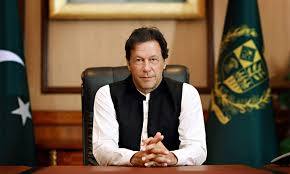
The postcolonial state froze itself in amber. There has never been a serious leftist rupture, excepting 1971’s successful Bengali revolution. Even Imran Khan, who styled himself a reformist, is a product of elite schools, Aitchison College, Oxford, and aristocratic lineage. His “Islamic socialism” was only ever viable because Pakistanis still believe in myths of the benevolent landlord.

And yet, Pakistanis sometimes seem happier than their Indian counterparts, even if not remotely successful. Why? Continue reading Pakistan’s Inner Logic
Pakistan, a young state but an old nation

no one is born a Bahá’í; even those who are “Bahá’ízadeh” (those born to Bahá’í homes) must first affirm their belief at fifteen and confirm it at 21

Dawn Posting

Most of my writing these days happens either at the dead of night, bleeding into the Dawn. This is when the world is quiet enough to hear one’s thoughts.

I’ve asked the Editors to lean into their moderation. But I’ve also emphasized that a copy of the moderated comments should be preserved in their original form; so that, if there’s an appeal or a misreading, I can assess it personally. My instinct has always been to under-moderate. I would rather allow something unpleasant to be said than suppress something vital.

That said, miscommunication is inevitable in a forum like ours. I recently had my own moment of misunderstanding with Indosaurus. But in many ways, that’s exactly what makes Brown Pundits an exciting space. We are not a hive mind. We’re a broad church; Anglican in temperament, not Catholic in control. Communion, not command.

The Commentariat Continue reading Pakistan, a young state but an old nation

Pakistan: The Realpolitik State

In a recent exchange, Kabir suggested that Pakistanis often feel unwelcome in our discussions on Brown Pundits, and that constant criticism of their country creates a sense of unease. It is worth pausing to reflect on this. Pakistanis, like all of us, are shaped by history and circumstance. And yet, there is something in the cultural tenor of Pakistan that makes open engagement difficult.

I say this not to provoke but to observe. Pakistan, as a society, often leans heavily on hierarchism, patronage, and a culture of deference. To borrow an old saying about the Somalis, that every man thinks himself a Sulṭán, one might say that Pakistanis often view themselves through the prism of status and validation. This instinct is hardly unique; Indians, too, have their caste-bound privileges and invisible hierarchies. But in India, these structures are embedded in a dense cultural fabric; family, caste, neighbourhood, ritual, that, for all their flaws, anchor society. Pakistan, by contrast, feels less rooted. It is a younger country (with old traditions), with fewer inherited cultural layers to draw on.

This is not simply an abstract point. When I married, we drew freely from Hindu rituals (dual ceremonies, Bahá’í incl.), Persian customs, and Sindhi traditions, blending them into something whole. But I realised there was nothing distinctly “Pakistani” to contribute; no cultural motif that stood outside India or Iran (we didn’t do a Walima, which is Muslim). Pakistan is, in many ways, a derivation: a state forged through separation, rather than a civilization with deep roots of its own. The cultural space it occupies has been overlaid with militant nationalism and, too often, Hindu-phobia (Kabir is so inured to it that he isn’t able to recognise that but on the flipside so is the Commentariat towards Islam).

To acknowledge this is not to deny the prejudices of Indians toward Muslims, which are very real and enduring. Nor is it to ignore the deracinated, secular archetype embodied by figures like Benazir Bhutto, who seemed neither fully Muslim nor fully Western, suspended between worlds and who are the cultural elite of Pakistan (what they give up on their bridge is their Hindu origins; more than being half-Persian, Benazir’s nani was Hindu). It is simply to note that Pakistan’s cultural story remains unsettled & thus interesting.


Validation and Audience Continue reading Pakistan: The Realpolitik State

Open Thread: Pakistan Floods – Let’s Talk

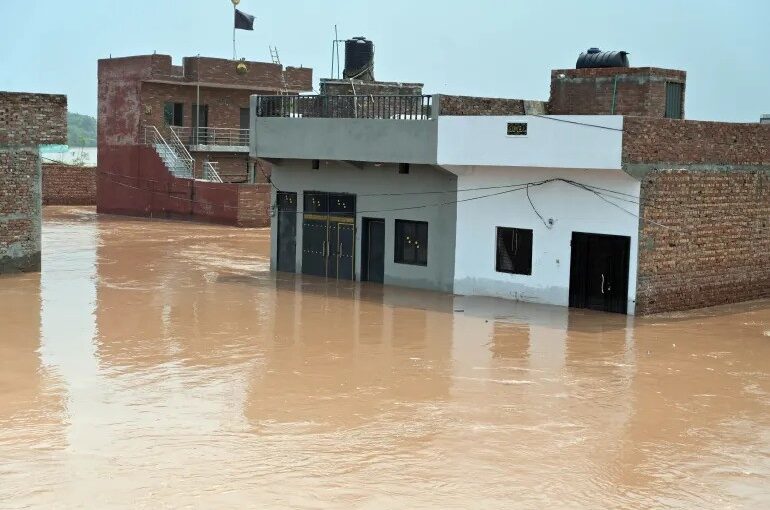
Massive floods have hit Pakistan’s Punjab province after record-breaking monsoon rains and the overflow of major rivers. Officials report nearly 300,000 people displaced from the province alone and more than a million affected as the Ravi, Sutlej, and Chenab overflowed their banks. Over 1,400 villages are underwater, and there are growing fears of disease outbreaks and food shortages.

👉 ‘The water left nothing’: Pakistan’s Punjab province reels from deadly floods (The Guardian)

This thread is for everyone to share thoughts, updates, and questions about what’s happening.

Jump in and share your perspective.

Faiz, Subh-e-Azadi, and Pakistan’s 78th Birthday:

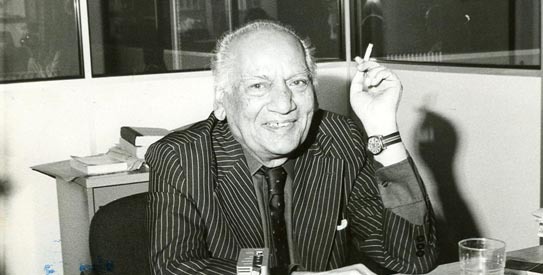
Today (well, technically yesterday, since it’s past 12) is Pakistan’s Independence Day. I personally felt no extraordinary zeal or zest for the land of the pure. Is it my lack of patriotism (sun), my anxiety about belonging (moon), or rising sedition? (Please pardon my astrological metaphors; recently learned from a friend.)

I never—of course, I am exaggerating; that’s what poets do anyway—felt much for my own birthday. Perhaps I am still unable to grasp the importance (or the dread and brevity) of the flow of time.

If time is creativity unfolded, I don’t feel progress. If it is a movie playing with no rewind, I still lack the desire to go back.

Continue reading Faiz, Subh-e-Azadi, and Pakistan’s 78th Birthday:

Quite Hectic Days

Recently, I’ve been traveling a lot for my formal project: assessing the governance framework of 46 HEIs (universities) in Pakistan. We’re looking at the de jure autonomy of universities (in governance, finance, staffing, academics, and research) versus the de facto reality. Where, like many other sectors, higher education is overregulated.

We’re struggling a lot. Universities are mushrooming (95 in 2002 to 269 in 2024) without any meaningful output, just producing PhDs like rabbits (177 in 2002 to 3489 in 2024). Result: not a single Pakistani university ranks in the global top 350.

I’ve visited different universities. (inter-alia):

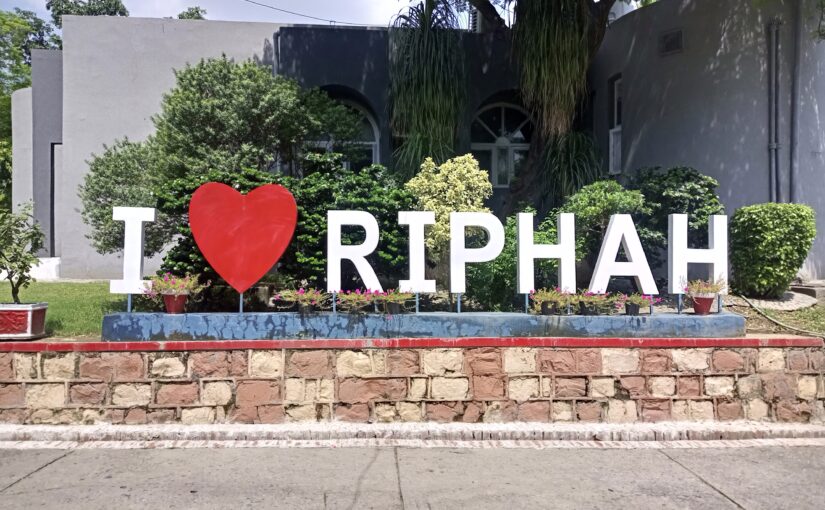
Riphah International University, Islamabad – a private HEI. The I-8 campus is small, but with multiple campuses they cater to around 30,000 students. What’s interesting is how deeply Islamic morality is embedded in their institutional values. It’s the only university (out of the 8–9 I’ve visited so far) whose vision and mission are explicitly integrated with Islamic principles. They even have around 10 credit hours dedicated to teaching morality. Quite remarkable in this era of modernity and expediency. Continue reading Quite Hectic Days

Southasia Is One Word

Reflections on Pervez Hoodbhoy at MIT

Zachary L. Zavidé | Brown Pundits | May 2025

Pervez Hoodbhoy needs no introduction. As one of Pakistan’s leading physicists and public intellectuals, he has long stood at the uneasy crossroads of science, nationalism, and conscience. He spoke this week at MIT’s Graduate Tower — the final stop on a grueling five-city U.S. tour, a new city every two days — in support of The Black Hole Initiative, a cultural and intellectual space he’s building in Pakistan. Despite its ominous name, the initiative is a wormhole, not a void: a cross-disciplinary bridge connecting physics, literature, art, and civic life.

What followed was less a lecture, more an exposition — sober, lucid, and grounded in decades of hard-won clarity.


The Logic of Annihilation

Dr. Hoodbhoy walked us through Pakistan’s nuclear doctrine: under long-standing military assumptions, if the north–south arterial route is severed, a tactical nuclear strike becomes viable. But the calculus is disturbingly abstract. Hiroshima’s 20-kiloton bomb killed 200,000. India and Pakistan each possess an estimated 200 warheads. One general once told him that, by crude arithmetic — obscene as it sounds — “only” 80 million would die in the event of a full exchange. Continue reading Southasia Is One Word

Constitutional Preambles in South Asia

an old article from our archive that has become hard to find, so reposting.

Most Countries around the world have a single consolidated written document as their Constitution (UK, New Zealand, Israel and Canada being notable exceptions here) and among these, a great many also have a preamble- a brief introductory text, preceding the main body of the written constitution. Preamble is essentially a polemic/set of guiding principles/visionary statement on the part of Constitution makers, before laying the foundation of a State in the main body. While it is of little consequence in day to day workings of a State, a Preamble does give us a fascinating insight into the ideals and cultural-historical myths propagated by a State- the context, the bigger picture, THE purpose behind that particular State’s existence.
Japan’s post-war preamble, for instance, vouches for International Peace and affirms that people of Japan shall never again be visited by horrors of war due to Government actions. French Preamble recalls Declaration of the Rights of Man and of the Citizen from 1789 and establishes France as a secular and democratic country. Likewise, North Korean Preamble promises a self-reliant socialist state that has realised the ideas and leadership of Kim Il Sung and Kim Jong Il.
And what do South Asian Preambles say? All 7 South Asian Countries
have a written constitution and all, but Maldives, have a preamble. Here’s the list:

Continue reading Constitutional Preambles in South Asia

Capsule Review: The Return of Faraz Ali


Aamina Ahmed is an expatriate Pakistani (born in the UK, currently teaches in the USA) who has written a novel set in the intersection of the Red Light area of Lahore and the rich and powerful of the state, around the time of Yahya Khan’s martial law. The story is well crafted and the book is well written and has a “message” about inequality, oppression, patriarchy and fascism, but unfortunately her lack of direct experience of Pakistan does show. The plot is more or less believable, but the details and dialogues are off. Anyone with some familiarity with the Punjab police and the way people actually talk or react in Lahore will feel that this is a foreigner writing about Pakistan. Certainly there are books written by foreigners that sound and feel very authentic (Memoirs of a geisha comes to mind), but unfortunately this is not one of those books. Part of the problem is not Aaminah Ahmed’s fault, as any writer in English has to deal with the fact that most of the dialog actually happens in Punjabi or Urdu, but her foreign-ness goes a little beyond that.
That said, she has done her research and read everything she could about that era and it shows. Wajid and Ghazi and their adventures fighting the Germans in North Africa are clearly modeled on the experiences of Yahya Khan and Yaqub Khan, who were both German prisoners in WW2. A bengali officer shooting himself in Dhaka in 1971 is a story recorded in several memoirs from that era, and so on.
The book does try a little too hard to play around with the various timelines and while she does bring then together at the end, it can be hard to keep up with who is who. Still, the book is a fun read and the political and ideological slant is liberal and cosmopolitan. Worth a read, but could have been better.

Dr Manzur Ejaz. 1949-2025


Classical Poets: Understanding Mian Muhammad Bakhsh - Dr Manzur Ejaz with Wajid Ali Syed

Leading Punjabi intellectual and writer Dr Manzur Ejaz passed away at his home in Virginia on 3/30/25. Dr Ejaz was born in a village (chak 60/5-L Burjwala, Sahiwal) in central Punjab shortly after the creation of Pakistan. He contracted polio as a child and was partially paraplegic as a result, but he never let this hold him back. Familiar with traditional rural punjabi culture from his very traditional home, he became a left wing activist in college and remained active in Left wing politics all his life.

He did his masters in philosophy from Punjab University in 1970 and joined the same as a lecturer in philosophy. He remained a committed Marxist and also developed the idea that oppression took many forms and one of its forms was the denial of the language of the common people in favor of imperial languages that were used to impose a new imperial reality on the people. He always insisted that the cause of Punjabi language must be a central concern for any Punjabi Leftist and there could be no working class politics that did not include the defense and promotion of the only language in which that class was able to fully express themselves.  It was at this point that Dr Manzur Ejaz and other Punjabi activists led by Najm Hussain Syed (the most famous Punjabi critic and writer of our age) started a weekly meeting (the “sangat”) to promote the modern study of classical Punjabi literature. They tried to hold their meetings in the university but this was the era in which the jamiat (student wing of the Jamat e Islami) was taking over Punjab university and they created hurdles such that the meeting was moved to Najm Sahib’s house and met there regularly until the Covid era, when it was converted to a virtual meeting. Around that time Dr Ejaz also met his future wife (he said the first time was at a bus stop) and Attiya Kokab and Dr Manzur got married in the late seventies and remained together ever since. Continue reading Dr Manzur Ejaz. 1949-2025

Brown Pundits