Browncast Episode 55: 17 years in the blogosphere

More innocent times

Another BP Podcast is up. You can listen on LibsyniTunesSpotify,  and Stitcher. Probably the easiest way to keep up the podcast since we don’t have a regular schedule is to subscribe at one of the links above.

You can also support the podcast as a patron. The primary benefit now is that you get the podcasts considerably earlier than everyone else. I am toying with the idea of doing a patron Youtube Livestream chat, if people are interested, in the next few weeks.

Would appreciate more positive reviews!

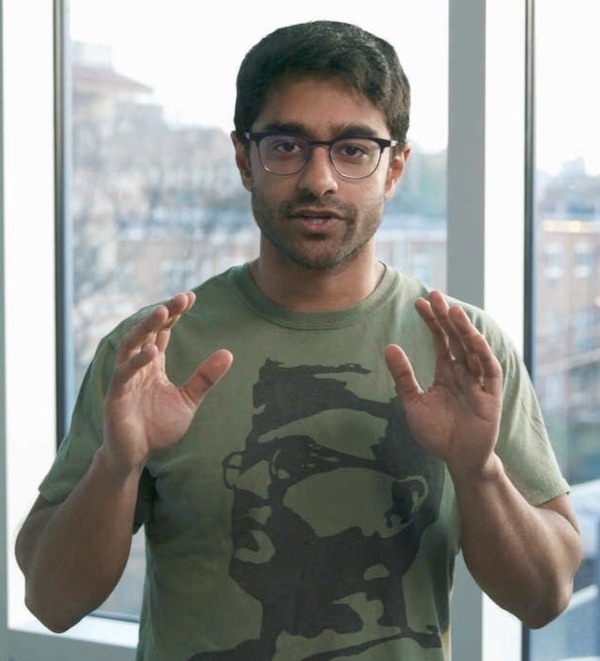
On this episode, I talk to my old friend Aziz Poonawalla. Aziz and I have been in the “blogosphere” for 17 years, and we talk about its rise and fall, and our thoughts about the Twitter world. Aziz and I also differ on a lot of issues. He is a liberal observant Muslim (Bohra Ismaili), and I am a conservative atheist. So we end up the conversation talking about politics, and Aziz’s roots in the Dean campaign of 2003.

Why Cambridge University needs a central Asian Kitchen

We threw a hugely consequential event last night in Cambridge. The University sent very senior reps to participate in the discussion and change is in the offing.

It’s interesting that I’m directly involved in the two great BAME initiatives that are emerging from Gown (which is what we call the University); BREAD and CAMbFIRE.

The university needs to do more to alleviate the intense alienation that is there in Cambridge. However I’m the sort of the person that I’m not confrontational but rather conversational.

I also follow the wisdom of my Parsi kinfolk when they first came to India. A good immigrant is “sugar in the milk“; we should be sweetening society where we can rather than simply transforming it.

So it’s a two way process however the host society must also make accommodation for the new arrivals.

I realise that with the BAME community, the silent humiliations and mockery builds up until it bursts the dam and the angry activists come through with these demands. Then the stereotype of an angry immigrant emerges.

My suggestion is that if we stop otherising “the other” (both host and guest) then we can deal with each other as human beings. That’s why I focus on these conversational and cultural initiatives; as a Baha’i I work towards unity.

However throughout the University there happens to be 30 college formals happening every evening. They serve Western food and usually people have to wear gowns to them.

If the University were to repurpose one of its old building in town and make an Asian Mess (with proper Asian chefs); it would do so much to serve the BAME community. One could argue why not Latin American or African but the Asian community is now 10+% and Asian cuisine is very particular (I would define Asia as per the US Census, Pakistan to Pacific).

Integration is not assimilation and it would be nice to have a less stuffy space that would cater to a growing community.


AOC’s brain has gone and done it now!


I call Saikat Chakrabarti “AOC’s brain.” I think it is likely that he is responsible for her tweet’s that mention prescriptivism:


Chakrabarti went to Harvard, studied computer science, then Wall Street, before becoming a founding engineer of Stripe. Stripe is valued north of $20,000,000,000 right now, so his paper wealth is likely putting him in the 0.1% or more (unless he cashed out early, which would mean he’s more liquid, though less wealthy).

In addition to his far-Left politics, professional and financial successes, he seems to lift judging by the photos. So good for him!

Today he got in trouble for wearing a t-shirt with a photo of Subhas Chandra Bose. Bose was a radical nationalist, but complex otherwise. Today he is being reduced to his alignment with the Axis-powers a meeting with Hitler (after all, in the West, all that matters is your meeting with Hitler during World War II, not what was going on in far off Asia).

The weird thing is if Chakrabarti wore a Che Guevera t-shirt I don’t think it would be a major issue. But to me, that would be worse, because Che acted with brutality in favor of international Communism of his own free will. Bose’s alliance with the Axis-powers was clearly driven mostly by pragmatic concerns. An analogy here might be Finland’s alliance with Nazi Germany, so as to fend off absorption into the Soviet Union.

Of course, the online Left has never been much for subtly. Do unto them, as they would do unto you. I hope Chakrabarti gets what he deserves, but I doubt he will. Blue-checks take care of their own kind…

The Tebbit test is racist

In the recent World Cup my heart says Pakistan for some reason. I was feeling somewhat traitorous and disloyal because of the infamous Tebbit test as to whether a British Pakistan would (or rather would not) support England in a match against Pakistan.

As I grow older and wiser I realise now this is simply coded racism. The concept of British nationality is the Union of the 4 Nations (Ireland sort of broke away but no matter) and 3 Kingdoms.

So nobody would bat an eye lid if a Welshman, living in England and maybe even born in England, would loudly cheer for Wales in an England-Wales rugby match.

We don’t have team Britain in the Cricket but Team England. I don’t feel English and Asians have never been asked to be English. If an Asian came up to me and told me they were English; I would look down on him as a coconut.

This is different to Scotland, where a civic nationalist has arisen. The largeish Pakistani community there feels both Scottish and Pakistani whereas Englishness is linked to blood and soil (there are exceptions for mixed race individuals and the Black community since there are almost an extension of the working class).

Would I have it any other way? Not really but then if the Welsh, Scots and the Irish can be fiercely patriotic and still be welcomed as British, I can’t see why the same shouldn’t apply for me.

Supporting Pakistan doesn’t make me any less British.

Generations don’t exist, and neither do “immigrants”

Don’t mess with Razib

I have heard it stated by some scholars that generations don’t exist, but cohorts do. That is, our bracketing of ranges of people into particular generations is artificial and bins what is truly a more continuous variable into a few categories. The same criticism applies to the Myers-Briggs typology in personality (the main reason psychologists prefer the “Big Five”).

But the flip side of this issue is that to talk reasonably about some phenomenon you have to bin and categorize continuous variables. Human races may not have hard and fast boundaries, but human genetic variation is difficult to talk about unless you use some categorical shorthand.

Some of the same applies to the term immigrant and native-born. The reason I’m putting up this post is that there was a discussion online about whether there can be something called a “second generation immigrant.” That is, someone whose parents were born abroad, but they themselves were born in the country of their citizenship. Myself, I think the term immigrant should only apply to those who were born abroad. Native-born and immigrant are disjoint distributions.

But, there are more than a few categories here within the dichotomy. When you arrive in your life, and where you arrive, matters a great deal.

Continue reading Generations don’t exist, and neither do “immigrants”

No honor among brownz

Subway Got Too Big. Franchisees Paid a Price: Sabotaged meatballs. The wrong soap. Franchisees say supervisors manipulated inspections — then took their stores. A company ‘hit man’ says it’s true:

That was when Ms. Greco took over Subway, and the company’s store count began to shrink. In the East Bay, Mr. Tripathi was under the jurisdiction of a development agent named Chirayu Patel, known as Akki. He oversaw a huge, choice territory that included most of Northern California and western Nevada. Mr. Patel also owned dozens of Subway stores.

I was curious about this story because when I was in college Subway was my “fast food” of choice. But it was interesting to see that under the surface of a story about corporate malfeasance was another about South Asian (Indian) petty corruption. There are whole entrepreneurial subcultures in the USA which are highly South Asian, and conventional business reporters are probably missing some dynamics.

Here is another about Sikh truckers in California.

Markian asexualising Colored women?

I’ll start this piece with an observation- I follow this chap on Facebook and have noticed something rather odd (subliminal) about his videos. I first came across his viral video on what it’s like to have an Indian girlfriend.

https://www.facebook.com/markianb/

Whenever he needs a platonic girl friend she’s usually black or brown. Whenever it’s a girl or romantic interest she’s blonde (unless it’s a video about specifically having an ethnic girlfriend).

The default romantic interest is blonde while a black(ish) woman is the *friend.* I’m assuming Markian has some sort of Armenian ancestry. Continue reading Markian asexualising Colored women?

It’s not always Racism

A few trends emerged over this week’s. This is separate to MJ’s powerful post, which is about a different framework altogether.

(1.) people are quick to blame racism for everything. In an age of no discrimination; people are going to select on intelligence, beauty and other such features.

(2.) BAME is rapidly being tagged with LGBT.

(3.) BAME runs the risk of being physically unattractive since anything goes.

(4.) White people are even prominent in BAME space so in a lot ways these new identities are more about attention for newer types of elite.

(5.) Elitism may not be about race but class and other selecting factors.

(6.) Utopian conversations is about a world “without an elite” are bs. We should rather have honest conversations about what the elite should be and to what extent should they be in control.

(7.) ego-trips are a thing in idealistic politics and being self-aware is important (thankfully I have V to keep me in check constantly).

(8.) Much like the Jews in the era of civil rights; Dharmic (model) minorities in the West are rapidly gaining control of the anti-establishment narrative in order to colorise the elite. It’s questionable once this batch of Indians, Chinese and other Asians are fully WASPified whether they will retain their sympathies for the next wave of coloured aspirants.

(9.) the contentions that White people and the West are hide-bound racists elides the narratives that we all have a “home back home.” The question as to why none of us want to resettle East is complex (colonialism ruined our countries, material and social opportunity in the West) but it’s a painful contradiction.

(10.) unlike the Aframs, Aboriginals and Native Americans; the West has very few “involuntary minorities.” So any criticism of the West have to tread a fine line and negotiation (hence why I’m suspect of immigrants who join anti-establishment parties).

I am Brown, so what?

It has been six months since I assumed office as the key student-facing sabbatical officer of the University of Cambridge Graduate Union, in my fourth stint as a student leader in the Cambridge University student unions. The role has involved campaigning on multiple fronts, including on rent, divestment, anti-racism and international student concerns, and I have enjoyed it thoroughly. In this period, I have proposed policy motions on three areas of focus: housing and living expenses, fair pay and support for teaching (and research) opportunities for students, and departmental welfare. I have also reformed the GU executive committee with the introduction of working groups for each part-time officer and the establishment of an intersectionality forum. The other major part of my period here has been representing postgraduate students in University committees. Be it the Graduate Tutors’ Committee, Environmental Sustainability Strategy Committee, Academic Standards and Enhancement Committee, University Research Ethics Committee, Societies Syndicate or even the Consultative Committee for Safety in the University of Cambridge, committees are where most of the administrative work of the University gets done with major stakeholders involved. They have had interesting topics discussed from apprenticeships for students to student finances and mental health in the various committees.

Important and interesting!

However, there are times when a certain other side comes through. A side so subtle that it may be missed in all the politeness and propriety that characterize certain formal and semi-formal interactions in the University. Notwithstanding that some of these meetings can be very technical, the committees address key points that require a student voice. That relate to the student experience. That need the perspective of those that consult and engage with students across the Collegiate University. In most meetings I have been quite active and vocal about concerns and points. People have been respectful and nice. Polite. Inclusive. Except when they have not. On paper and on the face of it, things have always been inclusive. The chairs have always given me a chance to speak. The members have listened. Yet, there have been times when in a room full of white people and myself being the only BAME person has struggled to feel included in the discussion, even if I had done as much work, if not more, and known as much about a certain topic. There have been times when I have felt the need to prove myself in the room when I needn’t have. There have been times when I have led a campaign for months and have a lot to share and build on, and a University official would look at my (white) colleagues and address them instead. Speaking on the points relevant to either what I was just saying or something related to a campaign I was helping build!

There are times when I have raised certain points, only for them to be side-lined and that too on flimsy reasons. There have been other times when the only time I was even addressed was when a very specific point was raised by me, after which the reference was taken for the same, and the discussion went right back to disregarding my presence. I could as well have worn an invisibility cloak, to come out for that point, and go right back into it, without anything or anyone being affected. There was a time when this reached a level where I left a semi-formal meeting simply because I could not bear it anymore. Not wanting to pin down any individual here, I felt like this is something that is important to share, important to talk about, important to stand up against. I would not go so far as to say that it is an entrenched racist bias in the system as much as there is still a need to have training on unconscious biases and cultural differences across the University. Last year when I saw and heard how racism even plays a role in student politics elections, on the campaign trail, and how it affected a certain election (a big part of that upset was blatant racism, that was not even subtle), I was disillusioned and yet hopeful. It seems the problem is deeper.

Racism on the surface is eradicated. Yet, there is unconscious bias at various places. Still at the very highest levels of the university, most positions are occupied by white men. I am sorry but I cannot mince any words here for political correctness. Recruitment of BAME academics, representation of BAME students and staff, and funding of BAME activities (slightly better with the University Diversity Fund) are still some of the places where a lot can be done. There are still instances when the cultural differences of BAME students are not appreciated to the level it could and should be, possibly because of lack of awareness of those differences. There is also a tendency to homogenize the needs, interests and views of the BAME community, both by those outside the community and even those who claim to represent the community. If one does not conform to some ideas and political ideologies to a certain extent (sorry but that has to be the hard Left in this case; I believe in socialism but not to the extent where anyone not conforming to my views is not allowed a chance to speak), one cannot be a `good BAME representative’. Apparently. The other-ing of people, even within the BAME community, is also a highly nuanced topic, best kept for another article. Even within campaigns such as the LGBTQ+ campaigns, the lack of BAME voices is troubling, as is the selective targeting of BAME members of campaigns (such as in the protests in the anti-Noah Carl campaign in St. Edmund’s College, when three BAME students were suspended even though they were a few of the many white and non-white participants), and that again is best left for another article. Prevent is a big issue still and a tool sometimes unfairly used.

Even among certain peers and colleagues, without disparaging or targeting anyone in particular, there are times when I have to work towards trying to be a part of the group or feel appreciated. Why should I? Why should I try to conform to archaic ideas of white-ness? Why should I stand on standards set by others? I am Indian and very proudly Indian. I am patriotic (and certain fairly white BAME individuals would have a problem with that too, tagging me as ‘ultranationalistic’) and proud of my heritage, culturally and socially. I have my set of ideas, ethics, values and views, and I would not on seven lives want to compromise on them to fit in. I do not want to fit in and do not need to fit in. And yet I am supposed to or there are those who would be all ears for my ‘concerns’ in the cold, impersonal way you would listen to a distant anecdote of Timbuktu. Why? I am not just a smiling face working away hours to please a person or to prove a point. Why should the abilities of a brown individual be questioned at every turn (even recently a member of the Cambridge University Hungarian Society asked me whether I was elected to my position!). I am as deserving as any other, if not more in some ways, to do what I currently do. And yet I am more than just my curriculum vitae, my credentials and my work. I am a human being with ideas, emotions, perspectives, and, most importantly, just my humanity. In today’s increasingly impersonal and capitalistic world, everyone is after something: proving a point, getting somewhere, achieving something. For what? We will all die and yet may not find either the theory of everything or become the richest person ever (for there can always be a beyond). And it is even worse when those standards of reaching somewhere are oriented around guidelines set by a certain community or people. I do not agree with that. I actively deny that and reject that. Period.

Even in the larger Cambridge town, there have been such disturbing cases. Only today, I was taking a knife for cutting bread to a garden party that the student unions were hosting and this van is passing by, and there is a man on the passenger seat who spits right in front of me (which I would like to believe he did, regardless of me) but his look and the way he kept looking back at me showed a certain paranoia, a certain suspicion that was baseless. I was reminded of the famous ‘I am Khan and I am not a terrorist’ line! Elsewhere, once while playing pool, I joined in with some guys at the WTS Sports club, and the club has a system of putting in coins for the light. Since I was just joining in and rather waiting for my real friend group to turn up, I did not contribute any cash. This white man who was also playing comes up to me and sarcastically asks whether I want to piggy-back on their money. As if! The gall! Such disrespect! It was not India that had piggy-backed on England for centuries but the other way around! Just putting that historical context in place. I moved away after saying that I have better things to do than that and later he seem to have mellowed down (and I could not care any less, for that).

We live in an age where colonialism is a distant memory and where the Enlightenment has hopefully made the rights and liberties of the individual a priority along with respecting the disparate identities and associated interests and concerns in society. If Cambridge must truly be inclusive and BAME friendly, we need to focus on these aspects. Not just have things on paper or in the front but back it up with training of students and staff, on cultural differences and sensitivity, and make the BAME members of the university feel more included, valued and respected.

Let us truly build an inclusive Cambridge (if we can)!

Why the Diaspora is not as interesting to me

A friend of the podcast mentioned with a bit of surprise that so much of it was focused on India as opposed to the Indian Diaspora (you can substitute “South Asia(n)” into “India(n)”). When this weblog was started at the end of 2010 it was probably more Diasporic in orientation. That was the era when Sepia Mutiny was winding down, after all.

Today I’m not as interested in Diasporic topics for two reasons. First, the Diasporic identity in the USA is pretty stable and clear. Most Indian Americans are basically Americans with their own particular cultural twist or accent.  This is widely understood. In particular, culturally young Indian Americans have assimilated to the same broad identity as liberal white Americans (with some exceptions). The big questions of who and what brown Americans are going to be seem to have been answered.

The second issue is that India is a bigger deal today than it was in the 2000s. From a purely anthropological perspective, what’s going on with 1.3 billion Indians (+ 400 million other assorted South Asians) is more interesting to me than the concerns of tens of millions of Diasporic browns.

(the exception is something like an interview with an India American going through the modern arranged marriage; in contrast, telling me you only date other South Asians is not too interesting, as it’s basically what everyone else does, but brown)

Brown Pundits