I was meaning to write this for some time now but somehow I kept postponing. Razib’s recent post about Mehdi Hasan inspired me to sit down and finish what I was thinking of writing down (https://www.brownpundits.com/2019/07/31/mehdi-hasans-hypocrisies/). This long post is not about Mehdi Hasan par se, or even Ilhan Omar (sheepishly admitting her clickbait value). This is mainly about prominent Muslims in American public life and public perception of Muslims. In the first part of this post I will discuss direct political aspects of Muslim public representation and in the second I will dive into some of the relevant socio-political and moral issues.
Barack Hossain Obama became the first African-American person to be elected President of United States in 2008. He was reelected in 2012. Now, there are lot of grounds for criticism of Obama’s presidency. His leadership in lot of important matters, particularly in foreign affairs , have come under lot of criticism since the end of his presidency. In domestic matters too, his leadership record has lost lot of luster even among his supporters. However, most Americans agree that Barack and Michelle Obama occupied the White House with exemplary dignity and fulfilled the inspirational role that Americans generally expect the presidential office to provide in this very republican (small R) of countries.
The Obamas were very acutely aware of the huge responsibility they had as the first African-American couple in the White House. They knew personal scandals, failure to control and command, would create huge barriers for the next ethnic minority aspiring to be president. That’s why they were dignified and moderate to a fault in their conduct. In that consideration, the Obama presidency was an unqualified success. Today Barack Obama is the most popular living President to Americans with 60% approval rating (https://today.yougov.com/topics/politics/explore/public_figure/Barack_Obama) and Michelle Obama is frequently polled as the most admired woman in America. The next presidential candidate of African-American descent who will reach the final stages of election, will not face any questions because of his/her ethnic background except from the incorrigible bigots.
John Fitzgerald Kennedy became the first Catholic president in 1960. It’s hard to believe now but prejudice against Catholics was very widespread among mainstream Protestants of America, who were the overwhelming majority, until fifty years ago. When populist nativists of the early 20th century railed against domestic and foreign enemies of the people, ‘Jews, Papists and the N-word’ was the standard phrase used. Kennedy was aware of the great headwind facing him in seeking primary nomination and then eventual victory. He famously said before the election, “I am not the Catholic candidate for president. I am the Democratic party’s candidate for president, who happens also to be a Catholic. I do not speak for my church on public matters, and the church does not speak for me,” (https://www.wbur.org/news/2017/05/25/kennedy-catholicism-presidential-campaign). He kept emphasizing this point before the election and was mindful of his role as the first Catholic president after getting elected. Suffice it to say anti-Catholicism ceased being significant in American political sphere after the Kennedy’s presidency.
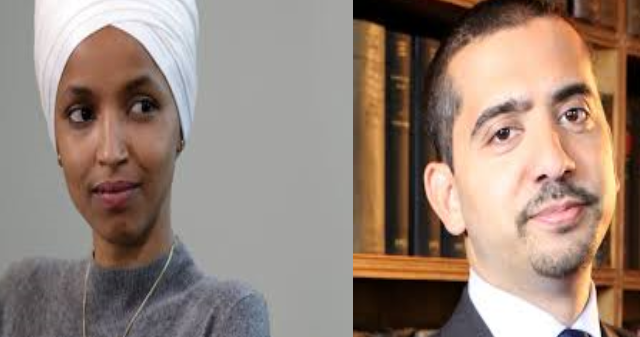
Ilhan Omar became the first visibly-Muslim, hijab-clad elected representative at federal level in 2018. Understandably, her ascension to national stage created huge amount of interest, savory and unsavory, in all corners of the politically engaged section of the people. I am not going to mention the long list of accomplishments and controversies Ilhan Omar has been registering in almost daily basis since her election. It will not be an exaggeration to say that she has become one of the most prominent banner issues that are feeding the frenzy of the two battling political armies in national arena. She is inflaming passion even more than Alexandria Ocasio-Cortez, who may be representing more the economic division than the cultural division represented by Omar.
I personally think that Ilhan Omar is not a very religious Muslim, the identity aspect of the religion is more important to her. Rather than cosmic theology, her religious identity offers her a worldview theology; providing explanation of power relations among communities, groups and institutions of today’s world. Socio-cultural beliefs define the modern political man and Ilhan Omar represents the current cleavages more starkly than almost any other public figures.
However, Ilhan Omar was not lucky enough to get the elite education and varied experience that both Obama and Kennedy had. Experiences greatly influence worldview. A liberal, integrative, long-term worldview that typify Obama, Kennedy, may be too much to ask from her. I personally think she is not very sophisticated but that is not germane to this discussion. However, among her most prominent public defenders there are many who have benefits of background and who are very articulate. That brings me to public personalities like Mehdi Hasan.
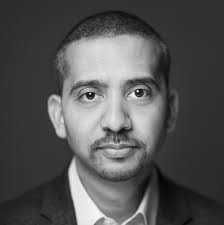
In the last couple of years, several Muslim media figures have been regularly invited into mainstream media like CNN, MSNBC, NYTimes, WaPost whenever some events related to Muslims became prominent in the fast churning stream of news and views. Mehdi Hasan, Wajahat Ali probably commanded bulk of those airing of Muslim perspectives. They are among the staunchest defenders of Ilhan Omar (also of other minority social justice public figures) in media. They are also among the most vehement critics and denouncers of Trump, Trump-supporters, the Republican Party and American foreign policy in general. They had been like this since Trump became the Republican nominee. I remember how I first saw Wajahat Ali in CNN before the 2016 election when he repeatedly and day after day described Trump as ‘impotent’. I cringed every time I heard that, but it could have been just me.
Now, people like Ilhan Omar, Mehdi Hasan and Wajahat Ali have lot of justification to go ballistic against Trump and his supporters. I think that Trump is significantly more racist than an average white American septuagenarian, his policies have targeted Muslims discriminatorily, his utterings have stoked outpourings of anti-Muslim hate, Muslims in America may become further victimized if Trump is reelected. However, opportunities of public criticism should not just opportunities for lashing out. We should evaluate effects of these criticisms, whether they are benefitting the country or even Muslims themselves. There is also an ethical aspect of this public criticism, which I will discuss in part II of this blogpost.
Ever since the 9-11 attacks the partisan divide in attitudes towards Muslims and Islam has gradually diverged in America. There are reasons to believe that the divide has become starker in recent years. A recent survey conducted before the 2018 elections show that 71% percent of self-described Republicans agreed they don’t believe Islam is compatible with American values, compared to an overall 42%. 60% of Republicans agreed with the idea that Muslim Americans weren’t as patriotic as non-Muslim Americans, compared to 38% generally (https://www.theguardian.com/world/2018/nov/01/new-america-study-report-republicans-muslims-trump-midterms). The wide difference between the Republican numbers and the average for the population means the difference in attitude between the two parties is very wide. Few wedge issues signal the difference between the two parties more clearly now than their respective attitude towards Muslims in America.
Shadi Hamid has said that he is comforted that at least one of the two political tribes of America is acting as a shelter for American Muslims in these troubled times (https://gen.medium.com/how-donald-trump-made-me-a-muslim-7f28abcfd33a). Muslim Americans reciprocate the Democratic support faithfully. It is estimated that about 90% of them vote for the Democratic party in national elections now, before 9-11 the figure was more even. As much as 30-40 Muslims voted Republican in the 1990s. Other analysts OTOH have expressed reservation about the state of Muslims in the political polarization. Republican disdain for the Democratic Party and suspicion about Muslims in America may be reinforcing each other, worsening the political divide. Moreover, it’s not that Muslims find a very natural place in Democratic Party that is mainly characterized by secularism and progressivism. Shadi Hamid recounts that a religious Muslim told him, “I can sense the disdain from the Democratic Party towards my faith, even as they don a cape against Islamophobia. The underlying view Democrats have [about] anyone seriously religious is that they’re, at best, silly and gullible, and at worst, dangerous.” (https://www.washingtonpost.com/outlook/for-religious-american-muslims-hostility-from-the-right-and-disdain-from-the-left/2019/07/25/7121e4ce-99e4-11e9-830a-21b9b36b64ad_story.html?utm_term=.f693a53b2fd8 )
For a minority that comprises only 1% of the voters, this kind of polarization should be very alarming. Its true that there are other minorities who also are reliable member of the Democratic clan. Black-Americans generally vote for the Democrats in the 90s while Jewish voters vote in the 70-80% range. However, the socio-political positions of Muslims are not same as Blacks or Jews. Black American voters comprise about 12% of the total voters; they are indispensable core of the Democratic coalition and a un-ignorable part of America for Republics. Moreover, sufficient number of Black Americans take part in Republican politics and intellectual development , making them always cultivable for Republican political leadership. While Jewish voting population is close to 2% of total, they have very powerful representation within the Republican establishment.
We must consider this context when examining the role of Muslim political and media personalities in the political sphere. It seems to me the most visible Muslim personalities in politics and media, determinedly and gleefully want to exacerbate the partisan divide. Few rational observers would disagree that Donald Trump has been most un-presidential in his public sayings during this political phase of his life. Even labelling those words as juvenile would probably be unjust towards the youth. However, these Muslim public personalities seem to think that going toe to toe and tit for tat with Trump and the Republicans, are the best tactics for Democrats and Muslims. I think, apart for impact on partisanship, there are important ethical aspects in these public exchanges that also have deep and wide consequences, which I intend to discuss in the second part.
These Muslim public personalities want total war against Trump and Republicans where crossing the line or fraternization with the enemy will be unthinkable. A few days ago, a very prominent Muslim religious leader, Hamza Yusuf, got widespread notice among Muslim Americans for joining a multi-religious state department commission on Human Rights (https://www.aljazeera.com/indepth/opinion/time-muslim-americans-condemn-hamza-yusuf-190715130254222.html). Many people would argue this as a very sensible move considering the plight of Muslims in many countries of the world and the very important role that America has in global concerns about those hapless Muslims. However, for political activist Muslim-Americans, Hamza Yusuf joining a Trump presidency commission was an ultimate betrayal, an act of Vichy French ignobility.
A Blitzkrieg style total war wouldn’t be so reckless if the chances of victory were good. However, chances don’t look good at least in the short term. When Trump became presidents, Democrats and liberals were openly speculating how he would be removed from power within one or two years because of all the scandals and malfeasance in the past and before the election. With low presidential approval ratings acting as comfort blanket, few Democrats were thinking Trump would last the full first-term, let alone getting reelected. Now desperation is in the air. Democrats openly speculate that Trump is heading for a second-term and Democrat’s chances are not so good. Betting markets reflect that increasing despair also. This political atmosphere again demand that Muslim Americans take long hard look how their political and media personalities are representing them in the public sphere. I have not read any reports of how Muslim Americans view role of their representatives in the public arena but from my personal interactions I gather that most of them are very uncomfortable being the spearhead of the resistance. Lot of them say that they physically wince whenever Ilhan Omar is in the news and they wish she would be far less prominent.
However, coalition-building, gradual advances may be things of the past and the spirit of the times may demand reckless combativeness. Just as revolutions in military affairs made Blitzkrieg possible, revolutions in socio-political affairs of current era may be favoring bold tactics. After all, Republicans had their May 1940 moment in November, 2016 in a most improbable victory with a most improbable candidate who refused to occupy the center ground. In these kind of historical victories, being the armored spearhead of deep battles brings everlasting glory. Nevertheless, people should also remember that Blitzkrieg grinded to a halt in 1941 in face of obdurate structural conditions and determined resistance. The spearheads were obliterated.

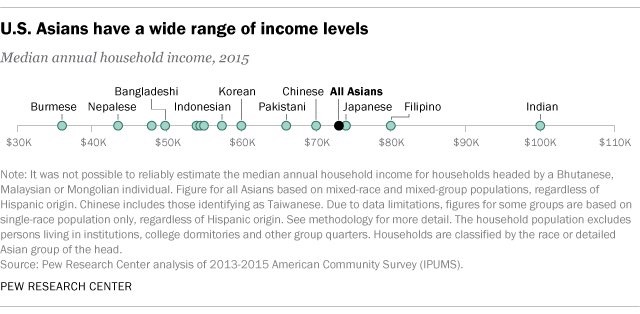
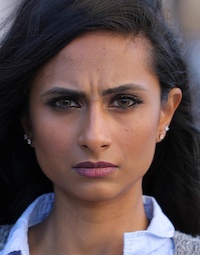 But sometimes terms made can be remade and refashioned. An Indian American friend in Silicon Valley noticed a few weeks ago that some Indian American activists and public intellectuals are using the term “black and brown” to include Indian Americans. This is rather easy because Indian Americans are literally brown. And in fact, they are browner on the whole than most Latinos.
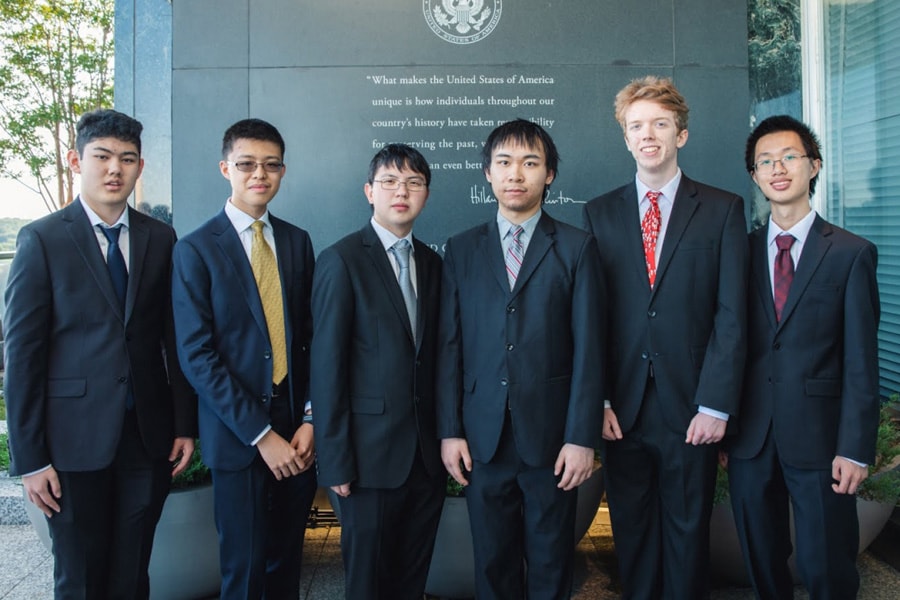
 Several readers have brought it up in the comments, and it even cropped up in a secret message group I’m in, so I need to talk about this issue I guess. There is a serious lack of representation in the 2019 winning team from the United State of America in the International Math Olympiad. Except for a token Tocharian, it looks as if every member of the team is of East Asian heritage.