
A Counterfactual Iran, 1979–2026
This is a thought experiment, not a manifesto. The Shah was finished by 1978. SAVAK, the Rastakhiz one-party state, the inflationary shock of the 1973–74 oil windfall, the rural migration dumped into an unready Tehran. The question is not whether Mohammad Reza Pahlavi survived. The question is what replaced him, and what that Iran looked like in 2026.
Start with the baseline the Islamic Republic inherited and dismantled.
Between 1960 and 1979, the Iranian economy grew at 9.1% per year. That is the Central Bank of Iran’s own figure. By 1977, Iran was the world’s 18th largest economy, ahead of Turkey at 20th and South Korea at 28th. Real per capita income had tripled in three decades. The White Revolution, launched in 1963, had already delivered universal suffrage for women, mass university expansion, the Literacy Corps, the Health Corps, land reform that turned roughly 90% of Iranian sharecroppers into landowners, and a domestic industrial base that was exporting motor vehicles to Egypt and Yugoslavia by the early 1970s. The regime was brutal. The development was real. Both things are true.
Then compound the counterfactual. Central Bank data shows Iranian GDP growth collapsed to 1.9% per year between 1979 and 2020, a near-fivefold reduction sustained over four decades. In 1980, Iran’s nominal GDP per capita was $2,374, higher than Turkey’s $2,169, Korea’s $1,711 and Vietnam’s $514. By 2024, Iran sits around $5,000 per capita, Turkey around $15,000, Korea above $33,000, Vietnam around $4,500 and rising fast. Every comparator with a functioning state has overtaken Iran. Iran has been lapped by a country (Vietnam) that fought a twenty-year war with the United States, lost it, and rebuilt from rubble.
Now run the counterfactual forward.
The Transition
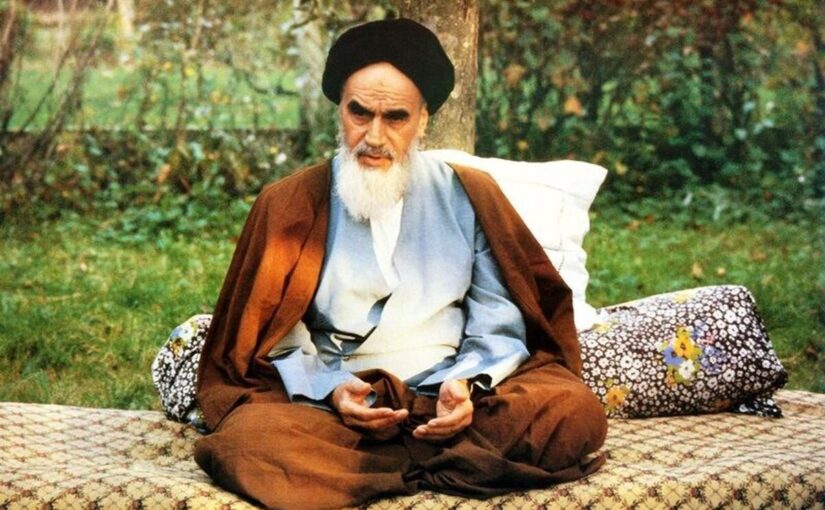
Continue reading The Iran That 1979 Erased: What If Khomeini Had Lost?