Why Can’t South Asia Move On?

South Asia, for the most part, makes the young old. The West keeps the old young.

In the East, life is fairly intergenerational. A boy grows up at the same table as his grandfather, so he inherits the old man’s quarrels whole. In the West, people live in age cohorts. The old are left to be old, and everyone else tries to stay young. Hyper-individualism has its costs, but it does one thing well. It lets the past rest.

I had forgotten this. My own context is selectively Western. My motto ordinarily is let ideas procreate, let them battle and let the best one win. This is what I try to apply in my daily life. Then I look at Brown Pundits and watch our conversations litigate events from 200 years ago as though they happened yesterday. Why can’t South Asia move on? Because almost nothing is lost between generations. The old wound arrives in each new mind at full strength.

It does not follow that the future-facing West wins. Forever young is the vanity of youth, furthermore weaker emotional health is a by-product of the intense loneliness prevalent in the West. One side cannot let go of the past and the other cannot remember it. Each is certain it is right, and that certainty is what makes these conflicts intractable. Nobody allows for the possibility of being wrong.

Jordan Peterson says that when you realise mid-argument that you are wrong, you dissolve in tears, because “the tears are grief for the part of you that has to die.” Tears reset the brain. For a moment it is plastic again, a child’s brain, and a child can still learn. You accept that some of what you believed was wrong.

That is the skill, and it belongs to no single culture. The values can stay eternal, rooted in divine law if you like. Everything else must stay nimble, soft enough to be rebuilt. The old ways are welcome to stay. They only have to be willing to weep every now and then.

The High Signal Mandate

Brown Pundits is not in the news business. We are not in the takes business. We are not in the engagement business. We are in the signal business. This is our creed.

Signal is the mandate. Noise is the enemy. Every piece (like the Prussia of the Ummah) on the blog must clear that bar or it gets rapidly down-posted. We owe the reader nothing less.

The signal compounds.

What does signal mean here? Three things, in order of weight.

Continue reading The High Signal Mandate

Sanam Saeed at Cannes, Alia Bhatt Out of Frame?

I. The Cannes Frame

The clip is short and damning. Alia Bhatt walks the Cannes red carpet as L’Oréal’s global face, waving at a thicket of photographers who never quite lift their cameras.

Sanam Saeed arrives in a white peacock couture by Hussain Rehar, fifty artisans and 2,354 hours, a tribute to Shamim Ara that the photographers actually shoot. Rehar’s accompanying showcase at Château St George is titled Lahore: A Knot in South Asia’s Loom, sitting one cabinet over from Gucci and Roberto Cavalli. The title is doing the work.

Cannes 2026 was supposed to be Bollywood’s annual export ritual. Instead, Pakistanis slid past the L’Oréal machinery and produced the festival’s most discussed South Asian image.

II. Taste Without Empire

Continue reading Sanam Saeed at Cannes, Alia Bhatt Out of Frame?

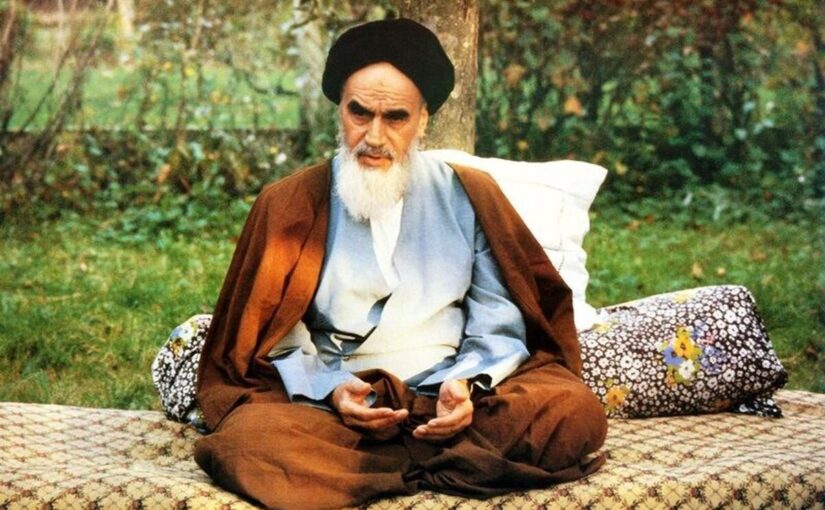
The Iran That 1979 Erased: What If Khomeini Had Lost?

A Counterfactual Iran, 1979–2026

This is a thought experiment, not a manifesto. The Shah was finished by 1978. SAVAK, the Rastakhiz one-party state, the inflationary shock of the 1973–74 oil windfall, the rural migration dumped into an unready Tehran. The question is not whether Mohammad Reza Pahlavi survived. The question is what replaced him, and what that Iran looked like in 2026.

Start with the baseline the Islamic Republic inherited and dismantled.

Between 1960 and 1979, the Iranian economy grew at 9.1% per year. That is the Central Bank of Iran’s own figure. By 1977, Iran was the world’s 18th largest economy, ahead of Turkey at 20th and South Korea at 28th. Real per capita income had tripled in three decades. The White Revolution, launched in 1963, had already delivered universal suffrage for women, mass university expansion, the Literacy Corps, the Health Corps, land reform that turned roughly 90% of Iranian sharecroppers into landowners, and a domestic industrial base that was exporting motor vehicles to Egypt and Yugoslavia by the early 1970s. The regime was brutal. The development was real. Both things are true.

Then compound the counterfactual. Central Bank data shows Iranian GDP growth collapsed to 1.9% per year between 1979 and 2020, a near-fivefold reduction sustained over four decades. In 1980, Iran’s nominal GDP per capita was $2,374, higher than Turkey’s $2,169, Korea’s $1,711 and Vietnam’s $514. By 2024, Iran sits around $5,000 per capita, Turkey around $15,000, Korea above $33,000, Vietnam around $4,500 and rising fast. Every comparator with a functioning state has overtaken Iran. Iran has been lapped by a country (Vietnam) that fought a twenty-year war with the United States, lost it, and rebuilt from rubble.

Now run the counterfactual forward.

The Transition

Continue reading The Iran That 1979 Erased: What If Khomeini Had Lost?

Brown Pundits