Tamil Islam Is Not a North Indian Story

Sbarr sent a simple reel: a female Tamil Muslim politiciann in Ranipet, near Vellore, waving an LTTE flag during an election campaign. What followed was not simple at all. The reaction treated the image as an ideological provocation rather than a local political act. Why is a Muslim woman waving a Tamil separatist symbol? What does this say about loyalty, religion, or the nation?

Islam in South India did not arrive through conquest. It arrived through trade. Arab merchants settled along the Malabar and Coromandel coasts centuries before the Delhi Sultanate existed. They married locally, learned the language, adopted food, dress, and social habits, and became Tamil, Malayali, or Konkani Muslims. Religion changed. Civilisation did not.

This is why South Indian Islam does not behave like a foreign layer imposed on a hostile society. It is woven into the local fabric. Tamil Muslims are Tamil first in language, culture, and political instinct. Their solidarities are shaped by region before theology. This is not syncretism as rebellion. It is indigeneity as habit.

Tamil identity in Tamil Nadu routinely transcends religion. I was reminded of this years ago in Chennai, asking my dentist, who was Christian,about her name. Like many South Indian Christians, it was a mix of Hindu and Christian forms. I asked whether they were also Tamil. She looked at me as if the question made no sense. Of course she was Tamil, “very Tamil.”

That response explains more than a thousand editorials.

In Tamil Nadu, religion is real but it is not totalising. Tamilness is older, deeper, and more organising. This applies to Hindus, Christians, and Muslims alike. Political expression follows that logic. A Tamil Muslim expressing Tamil nationalist sentiment is not a contradiction. It is normal.

This is what happens when South India is constantly interpreted through North Indian assumptions. Islam is assumed to be oppositional. Symbols are assumed to be exclusive. Politics is assumed to be communal by default. None of this holds in the Tamil world.

Tamil lands occupy a distinct face of Indian civilisation. Fully part of India, yet unmistakably their own. Deeply Indian, yet not reducible to Gangetic history or North Indian templates. This is not fragmentation. It is civilisational strength.

India has always had multiple faces. The Tamil one is maritime, linguistic, ancient, and self-assured. It absorbed religions without surrendering itself to them. That is why its Muslims do not behave like guests. They behave like natives.

The reel was never the problem. The inability to see India’s southernmost face was.

Dravidian Progressivism is a Scam

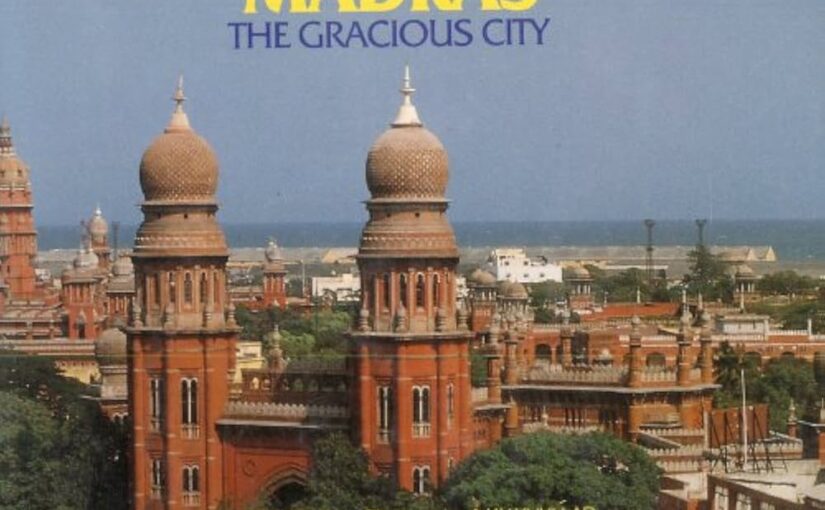
Chennai, without any doubt, is one of the better cities in the country. I agree with many of the issues raised by XTM here. Along with Hyderabad, Ahmedabad, and Bangalore, Chennai continues to fare better in many aspects of life compared to Mumbai, Delhi, Kolkata, and even Pune.

My Experience

While I appreciated the cleanliness and infrastructure of Chennai, I cannot say I came away with the same impression as XTM. Of all the Indian cities I have visited, I found Chennai less hospitable than Ahmedabad, Hyderabad, or Delhi. Even as a fluent English speaker, I struggled to hail autos or get directions. Surprisingly, I did not face this issue in the rest of Tamil Nadu. For older Hindi speakers with limited English, the experience is even worse. The issue is not simply language, but linguistic chauvinism (also present in Karnataka and Maharashtra, though to a lesser extent). A non-Tamil speaker often looks for Muslim individuals to ask for help in Chennai.

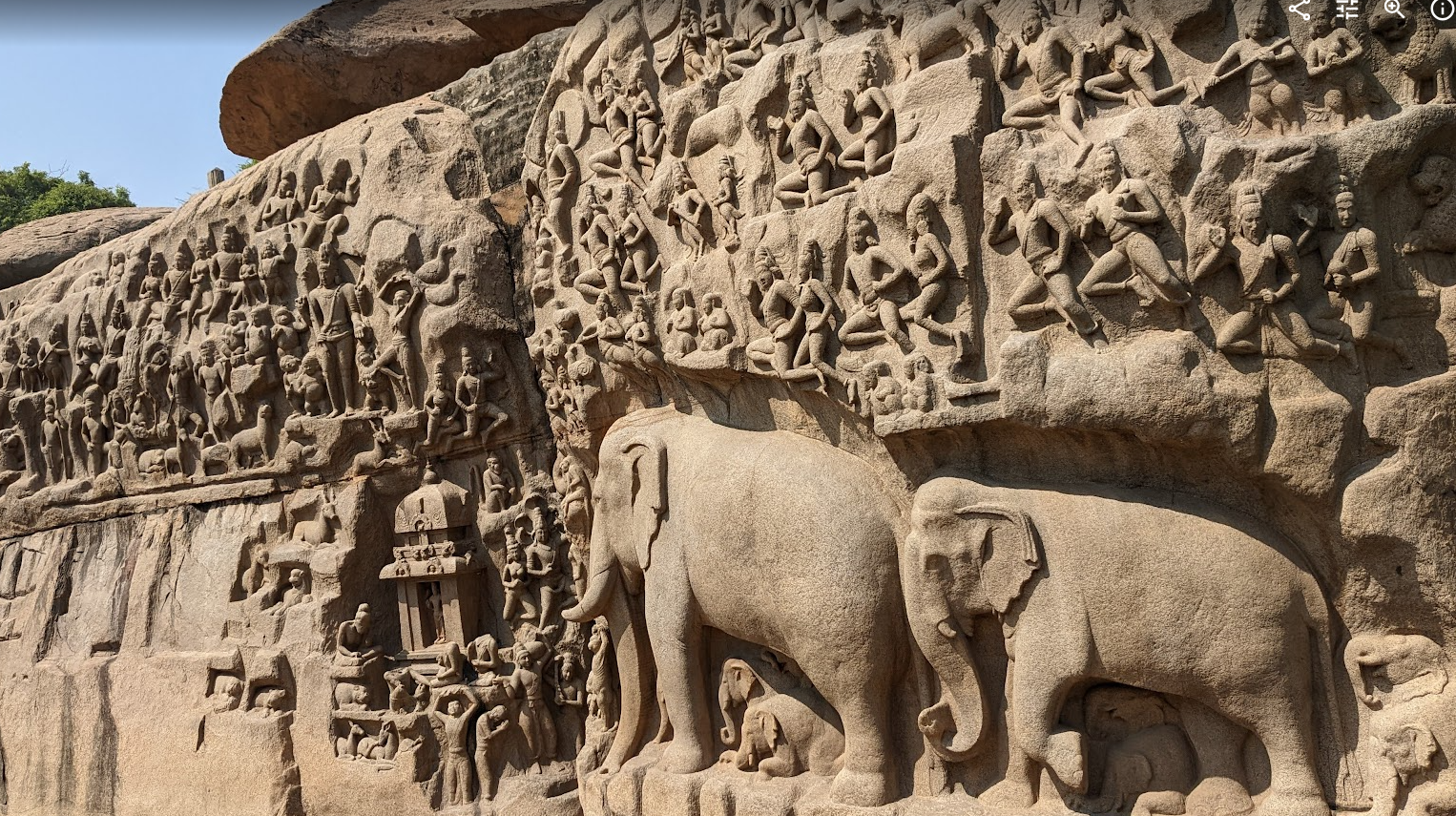
I had a wonderful time in Mamallapuram, enjoying the Pallava ruins and the beach, thanks to a very helpful Muslim auto driver. But enough of auto-wala stories.
Culture and Politics

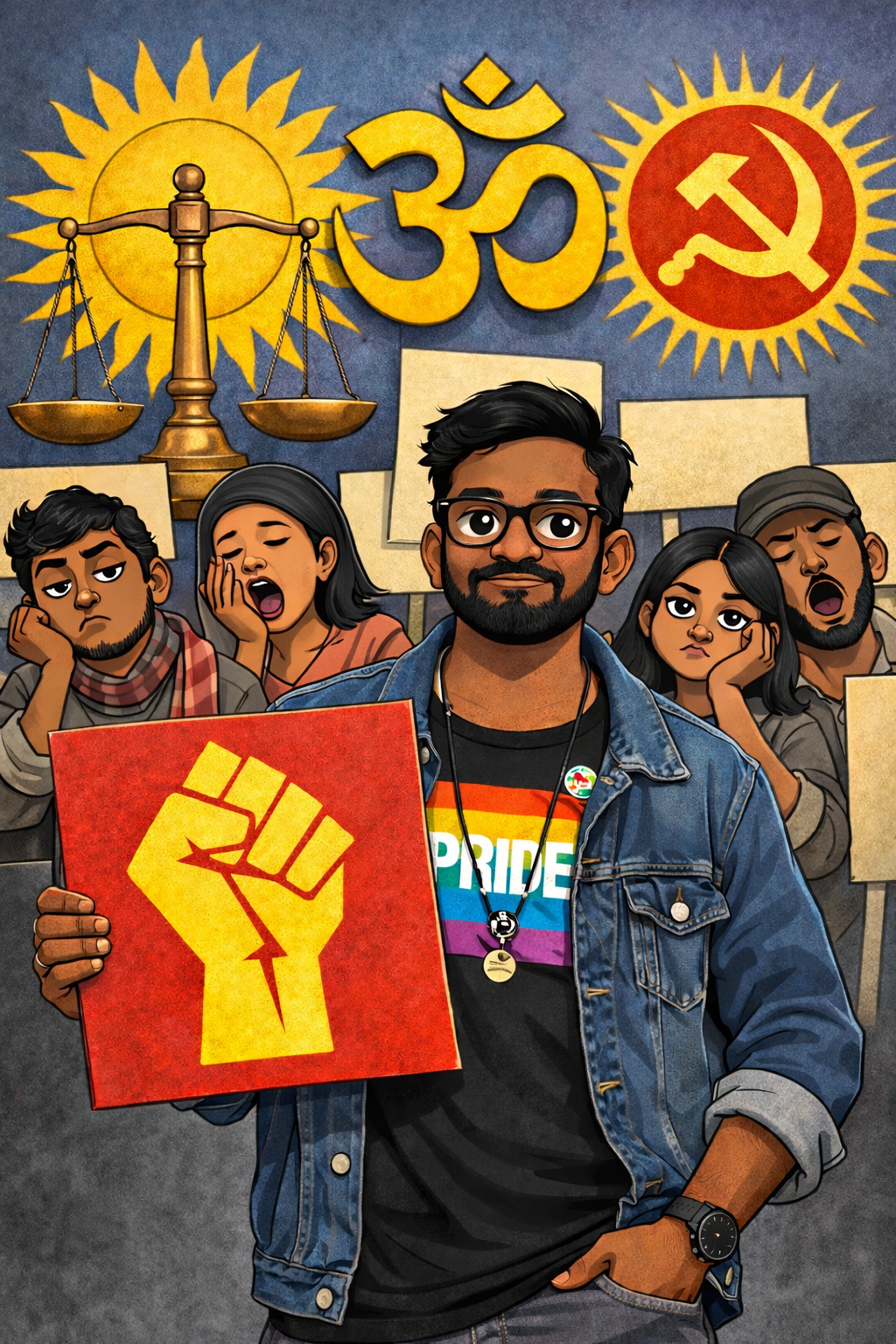
Without comparing cities directly, it is important to recognize that culture may play a role in Chennai’s successes. However, correlation should not be confused with causation, and credit should not be misplaced. Any link between Chennai’s well-being and Dravidianism is tenuous or purely incidental at best. While successive Tamil Nadu governments aligned with Dravidianism have been relatively successful (especially compared to the North) in providing welfare nets, what direct connection do these well-run policies have with Dravidianism?

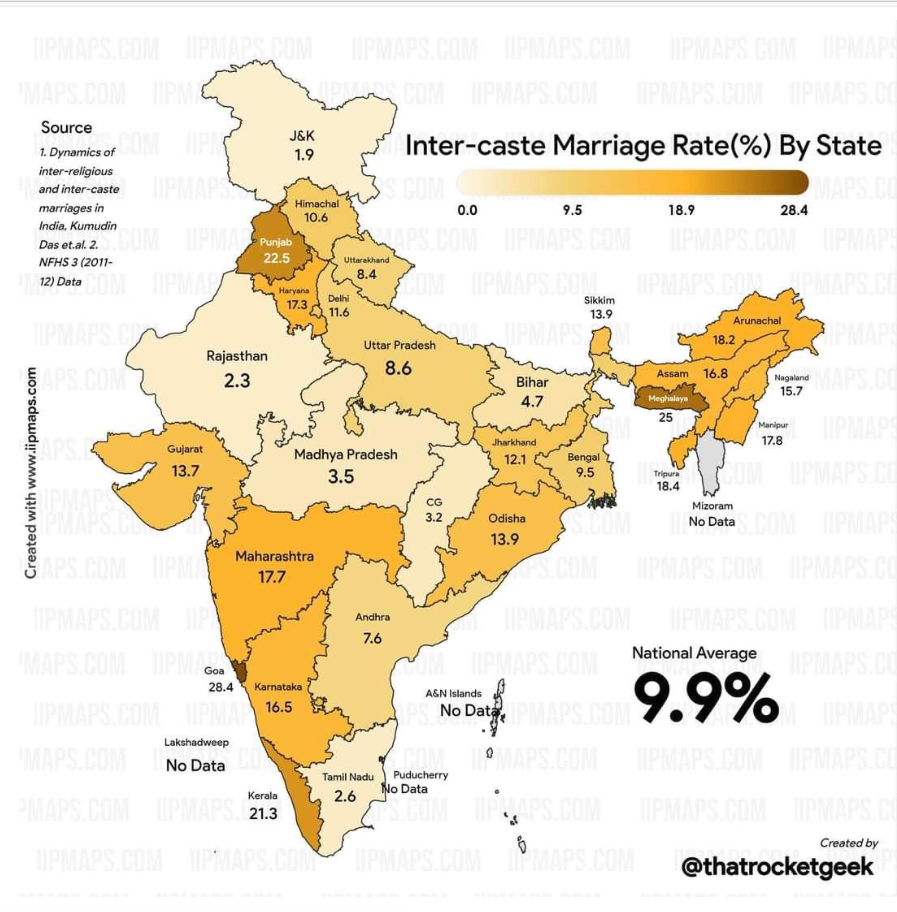
Let us compare Tamil Nadu with the rest of India on the metric that Dravidian progressivism claims to address: CASTE
Link:

Scroll piece : Caste endogamy is also unaffected by how developed or industrialised a particular state is, even though Indian states differ widely in this aspect. Tamil Nadu, while relatively industrialised, has a caste endogamy rate of 97% while underdeveloped Odisha’s is 88%, as per a study by researchers Kumudini Das, Kailash Chandra Das, Tarun Kumar Roy and Pradeep Kumar Tripathy. 

Put differently: caste endogamy seems unaffected by how anti-Brahminical or “progressive” a state claims to be. Tamil Nadu, the heart of the Dravidian movement, remains at below 3%, while Gujarat—often seen as Brahmanical and vegetarian—stands around 10% (15% in a 2010 study, though possibly overstated). However one frames it, Gujarat has more inter-caste marriages than Tamil Nadu.

Surprisingly, even Haryana and Punjab—traditionally associated with Khap Panchayats and honor culture—show significant inter-caste marriages, along with Gujarat, Maharashtra, Karnataka, and Kerala.

While data on Haryana, Punjab, and Goa is contested, Tamil Nadu consistently lags, whereas its neighbor Kerala consistently leads, along with Maharashtra.

Crossing from Kerala into Tamil Nadu, the difference is stark: one in five marriages in Kerala are inter-caste, compared to fewer than one in thirty in Tamil Nadu. Would it be fair to blame Dravidian politics for this? That claim has more merit than attributing Tamil Nadu’s successes to Dravidianism. Tamil Nadu ranks alongside Madhya Pradesh, Rajasthan, and Kashmir, while Karnataka, Kerala, and even Andhra/Telangana are far ahead.

Even Kashmir, with a 65% Muslim population, has an inter-caste marriage rate just below 2%, lower than Dravidian-ruled Tamil Nadu. So, after 500 years under a “casteless” religion and 100 years of “progressive” Dravidianism, both Kashmir and Tamil Nadu lag behind Gujarat, Bihar, and Uttar Pradesh.

Link:

Additional Observations

This data does not fit neat narratives. I was surprised to see higher percentages of rural inter-caste marriages. Rates are negatively correlated with wealth and income (more strongly with assets such as land). Landed communities show stronger caste endogamy, for historically and pragmatically clear reasons. That Brahmins, as a group, have the highest inter-caste marriage rates is unsurprising, given how progressive (some might say deracinated) Brahmins have become in India.

One social metric where Tamil Nadu performs well is female foeticide. Tamil Nadu and Kerala are among the leading states less affected by sex-selective abortions compared to the rest of India.

Tamil Brahmins have generally been more socially aloof compared to Brahmins elsewhere in India (both anecdotally and objectively) and disproportionately occupied government posts in the late 19th and early 20th centuries. The Justice Party movement, which arose in response, was initially a elite-feudal project, though Periyar’s early movement (also virulently anti-Brahmin) was more inclusive of Dalits and non-dominant castes. Over time, while retaining its anti-Brahmin rhetoric, the movement became a proxy for domination by landed and wealthy communities. Dravidianism today (or perhaps always) resembles what it claimed to oppose—Brahmanism. The dominant elites have simply shifted from Brahmins and the British to others who hold power today. Hatred alone does not create positive change.
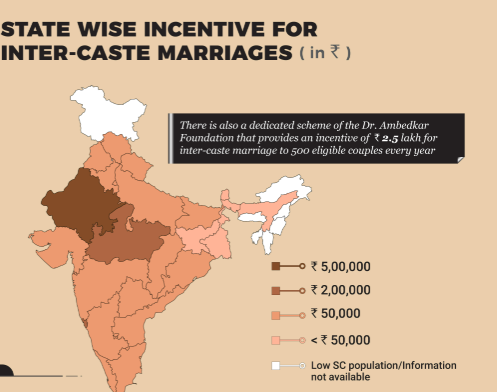
It seems Rajasthan and Madhya Pradesh understood the incentives for reform, while Tamil Nadu did not.

Anecdotes or caste violence are often dismissed when praising the Dravidian model of social progressivism. Comparative caste violence data is brushed aside under claims of underreporting or lack of Dalit assertion in other regions. But caste endogamy cannot be ignored. If anything that truly encapsulates Caste is endogamy.

Post Script:

Tamil politicians, both DMK and AIADMK, have run better governments in terms of welfare, industrialization, and infrastructure, and they deserve credit for that. However, linking these achievements to culture may not be wise. Geography is a more convincing explanation.

 

Chennai Is Not an Accident

There are places in the world that do not behave the way theory predicts. Chennai is one of them. Tamil Nadu is among India’s richer states. It is urbanised. It is educated. It is globally connected. And yet it retains a form of social cohesion and human reflex that hyper-capitalism usually dissolves.

This is not nostalgia. It is observation.


A Different Social Reflex

In much of the world shaped by late-stage capitalism, interaction is transactional by default. Help is conditional. Suspicion precedes generosity. Risk is individualised. In Chennai, the reflex is still different. People intervene without being asked. Strangers stop when something is wrong. Assistance is offered before motives are assessed. Money is often refused. This is not charity. It is social instinct. That instinct survives even in moments that theory says it should not: late nights, urban settings, infrastructural failure, ambiguity. The absence of alcohol matters. The presence of peer groups matters.

But more than anything, the cultural baseline matters.


Why Tamil Nadu Resists Homogenisation Continue reading Chennai Is Not an Accident

TM Krishna & Harsh Mander on Tamil Nadu’s resistance of the RSS

This podcast is part of Season 2 of “Partitions of the Heart”.  “Saffron Siege” runs from 17 September to 3 December 2025, with a new episode releasing every Wednesday.

In this episode, musician and political commentator T M Krishna speaks to Harsh Mander about Tamil Nadu’s long history of social movements that has led to this resistance. They examine how the state’s linguistic and language-based faith traditions have stood as a bulwark against the RSS’s attempts at homogenisation under a Hindutva umbrella. Krishna points out the multiple streams of religious influence on arts in India, especially in music, and how the RSS has tried to deny this past in service of the ideological project. “Carnatic music is symbolic of something for the RSS. It is symbolic of that puritanical and cultural superiority… Homogenisation, or rather a linearisation, of that is convenient for them.”


Jasmine’s journey: From the fields of Madurai to French luxury perfume

Seethapuram is a small, squalid village home largely to Telugu-speaking Naickers, at the foot of the Western Ghats, some 50km northwest of Madurai. Overnight showers, unseasonal in late March, make it hard to see puddles from open sewers in the darkness of 3am. The village is not just stirring; its people are out and about. Chinnaraman, 54, and his wife Murugayi, 48, are both dressed in sky-blue full-sleeved shirts. She wears hers over a sari, and he adds a grey flannel jacket on top. They are ready to leave for their farm, a ten-minute ride over undulating terrain on a grunting 100cc bike. Continue reading Jasmine’s journey: From the fields of Madurai to French luxury perfume

West Africa’s bitter chocolate harvest is a sweet deal for farmers in south India

The small, dark godown abutting M Dharmambigai’s large home with a larger courtyard in Kottur, a village 15 km to the south of Pollachi town in Tamil Nadu, has never housed stock so precious.

The value of gunny bags of cocoa beans stacked unevenly, without a great deal of care, is currently more than Rs 12 lakh and almost guaranteed to go up to Rs 15 lakh soon.

The lottery of climate change is such that the misery of farmers in one country is an opportunity to make windfall gains for others in a different continent.

The price of cocoa beans, the primary raw material for chocolate, has more than tripled in the last year. In March 2024 alone, it rose from $7100 a ton to $10455. In fact, chocolate prices now trade higher than industrial metals such as copper.

Can Indian cocoa farmers like her take advantage of rising global cocoa prices?

Read the full story here 

Follow ThePlate.in to understand India from farm to plate!

X: https://twitter.com/thePlateIndia

Instagram: https://www.instagram.com/theplateindia/

Thuglaq turns 54 and The Forgotten art of Dialectic!


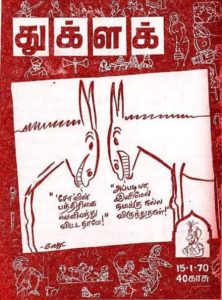
The late “Cho” Ramaswamy was a Indian actor, comedian, editor, political satirist, playwright, film director , Member of Parliament and lawyer . in 1970 he had an argument with his friends who dared him to start a magazine  and to win the bet , he launched a political magazine that turned 54 this year. The first issue had this iconic cartoon where one donkey says to the other ” Looks like this Cho fellow has launched a magazine” and the other replies “Great , we will have a feast then!”.  The cartoon donkeys make their appearance once in a few years while all of us readers have been reading Thuglaq for decades !

I happened to attend the 54th annual meet of Thuglaq, the one-of-a-kind event where the entire rank and file of the magazine meet with its readers, on Pongal day ,as it always happens. This unique practice was started by Cho and after his death in 2016, S. Gurumurthy, the Chartered Accountant, Journalist and RSS Idealogue has been successfully running the magazine while maintaining such traditions as well. Cho, while his sympathies for the right wing and Modi was always transparent , also was known for changing his views as the situation on the ground demanded and did not hesitate to critique even sharply the parties he supported. He was famously responsible for the TMC (Tamil Manila Congress – Moopanar and P.C Chidambaram led) formation and TMC – DMK alliance and helped in shaping the BJP-DMK Alliance during Vajpayee’s time as well when he went against his childhood friend Jayalalitha. Under Gurumurthy, while Thuglaq retains most of the founding tenets of the magazine, discussing mostly only politics and a sliver of spirituality, the irrepressible and at times irreverent humor of Cho is definitely missing. Gurumurthy seems to have almost made it a dry right leaning political magazine to the mild disappointment of long-time readers like me.


In spite of the strong shift to the right, Gurumurthy has retained and even strengthened some unique features of Thuglaq. One being inviting political leaders of all hues including the ones he opposes like DMK, Congress, Communists to share their experiences and points of view in the magazine. And to continue and strengthen this annual unique event on Pongal day when the Editor of the magazine and his entire staff meet and interact with all the readers and invite political leaders to address and interact with the audience as well. Who’s who of Indian politics have attended these meetings – Advani, Modi and most of the BJP Leaders, the erstwhile Janata leaders like VP Singh,  senior communist leaders and Tamil Nadu leaders across political parties.


For this year’s event, the two main guests were Shashi Tharoor from Congress and K Annamalai, the firebrand BJP Tamil Nadu Chief. Sadly, since Annamalai was coming in from a meeting at Delhi, his flight was delayed and by the time he entered the Music Academy Hall, Shashi had finished his speech and had left. The program began the way it always does, with the editor introducing the entire staff of the magazine on stage starting from the veteran reporters like Ramesh whom most of Tamil Nadu knows to the attenders.  This is again a unique gesture that surely must be appreciated. Then selected readers from the audience come to the stage and make their comments, queries and criticisms to which Gurumurthy replies. This year, apart from the  regular questions about state and national politics , there were a few questions and concerns regarding the Maldives standoff and Guru gave his opinion and also deferred to the veteran diplomat and politician and ex Minister that Shashi is and requested him to give his point of view when his turn came. The audience as expected was mostly sympathetic to BJP’s cause.

Shashi spoke well, noting down all the key concerns and objections raised by the audience against Congress and addressed them valiantly. He also accused Modi government of subsidizing North at the cost of the South, lamented the subjugation of federalism and also explained the Maldives situation in an objective way without blaming the BJP government but cautioning it to be careful not to push Maldives into the axis of China.   Ram temple issue being a topical one, he took it head on saying that he will visit the temple but not on the 22nd as he has in any case not been invited and would not want to go even if he were as he felt it was made into a political event. This caused some unrest in the audience as it did when he was overly critical of Modi. Overall, it was a measured speech, fully knowing it was a partisan audience who were against his world view, Shashi Tharoor, I felt stood his ground gracefully.  It was comforting to see Gurumurthy come up to the stage after and admonishing the audience for interrupting Tharoor’s speech, commenting that since Dr Shashi Tharoor maintained the decorum of the forum, it behooves the audience too to do the same even if they believe he is all wrong.


Then came the star of the show, Annamalai who has caught the imagination of the public in the state especially those who desire an alternative to the Dravidian parties. His was a systematic take down of the DMK, its history and all that he felt was wrongs done by them. He also attempted to answer all the criticisms laid by Dr Tharoor, replying to the preferential treatment to the North charge, gave a population-based defense of the budget allocations favoring the North. He explained the BJP’s plans for the south and Tamil Nadu in particular.  Gurumurthy too jumped on to the same North – South subject later and gave a historical perspective based on argument that the north suffered more from the partition which at least I could not buy fully.


A few broad inferences for me from the event

For Congress, it appears as though this boycotting of hostile TV Channels and media is a petulant and self-defeating act. I too cannot stand some of these loud TV Channels and can understand the reasoning but if one is running a political party, surely one needs a thicker skin and like Shashi Tharoor showed, one can hold their point of view even among a partisan hostile crowd and come out with head held high! I overheard a lot of the audience commenting that “Tharoor is a good leader but will he survive in the Congress”. It is up to the Congress to convince people of that and give such leaders more responsibilities and have them engage with people more.


For BJP, this preferential treatment of North over South and the damage to the federal structure narrative is hitting home to the audiences in this part of the world and even to those who are favorably disposed towards it. The narratives countering it, the ones I heard from Annamalai and Gurumurthy were not entirely convincing. There have been other arguments on this subject which have featured in BP Podcasts by folks like Maneesh about Freight Equalization policies and such which seems to have some merit in them but are seldom heard here. Are those too nuanced and complex arguments, am not sure but the ones that I listened to now still leave me with the feeling that we in the south have been hard done by both the Congress and more so by the BJP Government.

Interacting with the audience live, especially if it is a large one and answering them impromptu seems to be a rare occurrence and should be celebrated more. The audience too needs to learn to respect the speaker and not jeer if an opposing point is presented. The audience in this event have been that historically and when they went a bit haywire, they were immediately pulled up. Politicians, those who are well qualified (Please note I do not say educated!) and passionate about a subject can still convey their stances without resorting to name calling and hyperbole. Both Shashi Tharoor and Annamalai were strong but objective and respectful in their speeches.

The argumentative Indian can also be objective and respectful and can engage in constructive dialogue and achieve much more!

The YouTube Recording of the entire event.

Brown Pundits