Razib Khan corona-casting in the time of coronavirus

I recently talked about coronavirus with our old friend Kushal Mehra. I decided this is probably a time where I can post all the different coronavirus related podcasts I’ve done. I started on February 17th, on my podcast with Spencer Wells. You can see all the podcasts in rough order of date recorded…

It’s not live yet, but I’m going to have an episode on Two for Tea soon (it was recorded before the two below, so I put it here).

Interview with a Mujahid: Maj Gen Tajammal Hussain Malik

The late Major General Tajammal Hussain Malik had an illustrious military careere (and a very controversial retirement career). In 1965 his unit played an important role in the defense of Lahore (a battle that the Indian army could have won if led by someone like Sagat Singh, but luckily for Pakistan, their GOC was Niranjan Prasad and Lahore was saved) and in 1971 his brigade was the only major force that the Indian army could not break in its lightning campaign in East Pakistan. Gen Tajammal was also a true believer who dreamed of the standard “Pak army true believer” stuff (abolish provinces, impose shariah law, unite the ummah), but with the interesting twist that he hated the crook Zia ul Haq and actually planned to assasinate him on 23rd March 1980 (his second coup plan, more serious than his first, which had been little more than a vague thought that arose when he was denied a well-deserved promotion). By the way, when Islamophobes think of Pakistan they tend to imagine that the median army officer is as fanatical as Gen Tajammal (though they obviously assign a more negative valence to that fanaticism than Islamophiles do), but as the following interview makes clear, his level of belief is not exactly common in the senior ranks of the army.

Anyway, here is an interview that Major Amin conducted with Gen Tajammal in 2001 (a couple of years before Gen Tajammal passed away). I am posting it here both as an important historical document and as a window into the mind of someone who was NOT the median Pakistani army officer, but is probably representative of what we may call the “PMA ideal”: an officer who combined professional competence with a Nasim Hijazi level view of history, a PMA-level view of Pakistani politics and a naive but intensely sincere faith in what can only be described as the Chakwal version of Islam. Comments welcome. (I put Major Amin’s words in red, the rest is Gen Tajammal speaking)

Postscript: I have added the full text of an article Abdul Majeed Abid wrote about General Tajammal in the Pakistani newspaper “The Nation” at the end of this interview.. it add more detail to the picture of Gen Tajammal.

Major General Tajammul Hussain Malik

Agha H Amins Note:—

This is the man who was praised by Indians and they established a commission to study his masterpiece Battle of Hilli .He was praised by his Indian battle opponent in his book “Indian Sword penetrates East Pakistan” as a singularly brave man .

He was miles above pygmies like Zia , Ayub and Musharraf. When we joined the army, we were inspired by his battalion 3rd Baloch’s attempted coup of 23 March 1980 to wipe out despicable clown Zia and his dirty clique !

We had to wait till glorious 17th August 1988 when that plane finally crashed right into the Hindu Shamshan Ghat on Basti Lal Kamal !

One good thing that General Beg did immediately after that glorious crash in 1988 was to restore Tajammuls complete military honours and privileges. Tajammul was serving a sentence of 14 years RI for planning to liquidate all army generals and Zia on 23 March 1980, a brilliant scheme indeed !

Tajammul has thrown light on Zias shallow personality in this interview !

May God Bless His Soul !

Major Agha H Amin (Retired)

Maj Gen (Retd) Tajammal Hussain Malik

A.H Amin

September 2001

Please tell us something about your early life, parents? Continue reading Interview with a Mujahid: Maj Gen Tajammal Hussain Malik

Hindus are the most authentic Indians

As someone who was raised in the United States as a person of brown complexion, I grew up as an “Indian.” This, despite the fact that the last time any of my ancestors were Indian nationals was before 1947. The main reason is that it is really hard to get people in 1980s America to know what “Bangladesh” was. Yes, there was a famine and a concert in the early 1970s, but this was not very well known. Since I had brown skin, and my parents ate spicy food, it seemed plausible to accept that I was Indian and just “go with it”.*

But, a problem with being Indian is that people assumed I was Hindu. I was raised Muslim (though never really a believer myself), so I had no ownership or connection to Hindu identity. Therefore, I would have to explain the religious discrepancy to my interlocutors. It wasn’t a major issue for me. After all, I wasn’t religious myself.

As a grown adult, with children of mixed background who find my exotic antecedents amusing, I have had to reflect more on the relationship between India and its native religious traditions and identities. Hindus often make the accusation to Indian Muslims and Christians that these religion’s holy sites are elsewhere. In contrast, southern Asia is the locus of “Hindu” spirituality. The sacred geography of Islam in Arabia, the Levant, and for Shia and Sufis more broadly across the Near East (with some expansion in other areas for Sufis, though these are secondary). For Christians, the locus is in the Near East and Europe. But I think this focus on Islam and Christianity takes the eyes off the major prize.

What does it mean to be Hindu?** I think that it is clear that Hinduism is a precipitation of the indigenous religious traditions of India, a fusion of numerous strands which are quite distinct. As a non-Hindu it is not my role to adjudicate on what is, or isn’t, Hindu, but it seems quite clear that there is something distinct from Islam and Christianity, and that that distinctiveness is usually due to indigenous aspects (some of which were exported through Buddhism out of India). Al-Biruni saw this. Hindus themselves saw this even if they did not think of themselves as a confessional religion.

This doesn’t mean that non-Hindu Indians and subcontinentals are not distinctively South Asian. Look at a street scene in Pakistan, and it looks more like New Delhi than Tehran. The people, the color, the foods and density. But for various reasons Pakistanis have rooted their identity in Islam, and this makes identification as subcontinental awkward for many Pakistanis, because Hinduism suffuses subcontinental identity. The word Hindu after all originally just meant Indian.

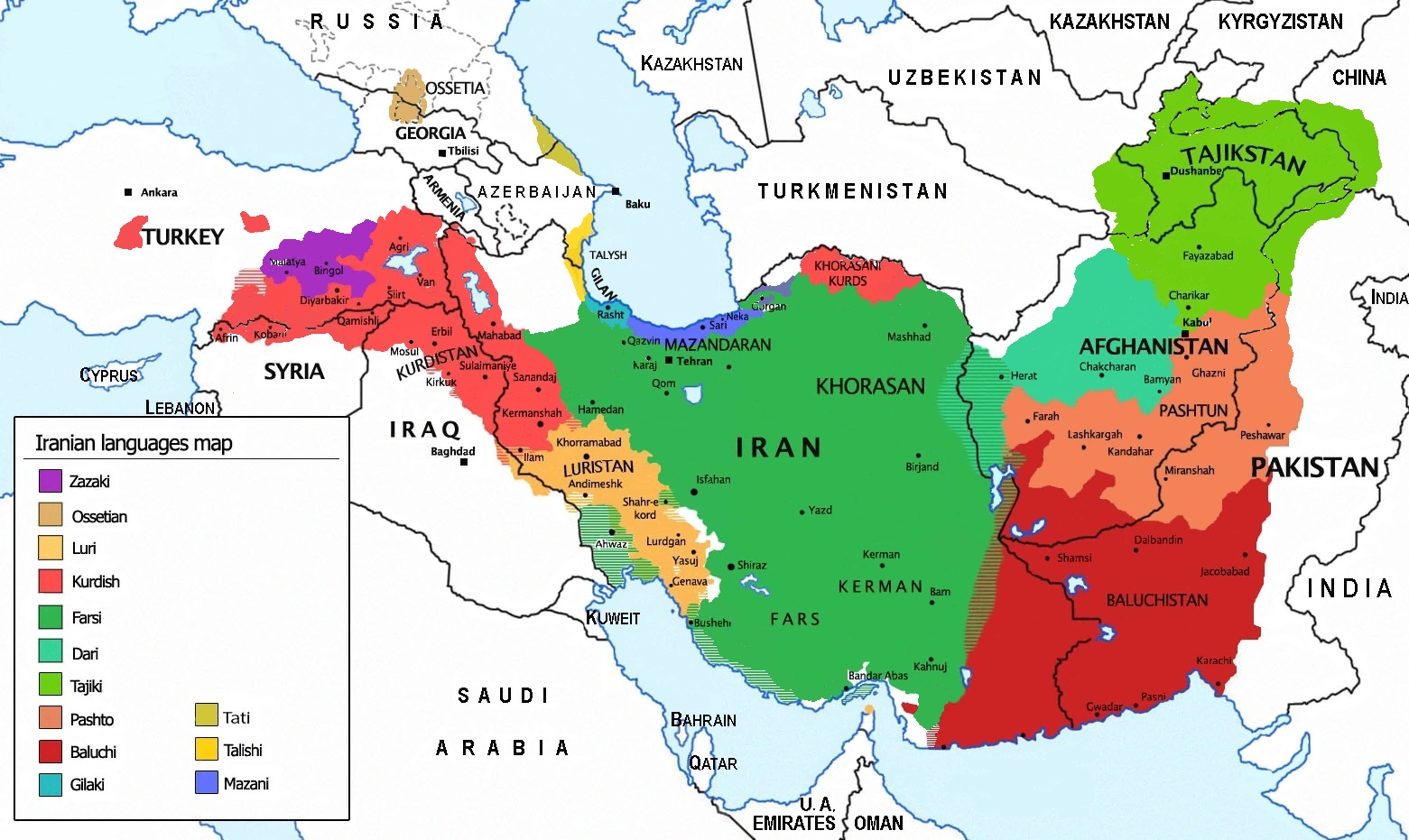
Let’s use an analogy. Imagine that Iran was divided into multiple states. One to the west was mostly Shia. One to the east, inclusive of Tajiks, was mostly Sunni. Finally, in the middle was a numerically preponderant Zoroastrian state with a Muslim minority. I think it would be hard to deny that Zoroastrian Iranians would feel a stronger identification with being Iranian full-stop, because Zoroastrianism is a religion which emerged in an Iranian matrix (Bahai and secular Zoroastrians in the USA give their kids more “Iranian” names usually than even nominal Muslims). In contrast, Muslim Iranians would feel affinities with Arabs and Turks and other groups all around them through fellow-feeling of religious brotherhood.

The point of this post is not to take a particular stance on whether India is or isn’t secular, or should or shouldn’t be secular (whatever that means in India, which is different from the United States). Rather, it’s to acknowledge the “elephant in the room.” Growing up around my parents’ Indian, Pakistani, and Bangladeshi friends, there was always the reality and tension that they had non-subcontinental attachments and identification, in theory. The theory part is made salient by the reality that my parents socialized with Hindu Indians and Bangladeshis (generally Bengali, but not always), but never with Muslims from other regions (the sole exception was when I had an Indonesian best friend, though my parents complained that the Indonesians weren’t very good Muslims anyway so what was the point?). They were foreigners in concrete terms, though there was an abstract brotherhood implied by faith.

Growing up in a family that is Muslim being exposed to the religion at the multiethnic masjid was a cosmopolitan experience. It was a West Asian dominated space. The difference with brown people that are Hindus is that with rare exceptions every religious space has a rootedness in being Indian. To be religious is to reinforce Indianness, subcontinentalness, South Asianness.

The title of the post is pretty explosive. But I am pretty sure none of my descendants that I will live to see (grandkids) will identify as Bangladeshi or subcontinent, so I think perhaps I can be a bit objective and detached. My legacy is going to be in North America, not South Asia. My family’s transition into being Muslim centuries ago opened up a whole new international world. But it also unmoored us from the soil in which we were nourished. Bangladeshi Muslims are still trying to deal with that and work through it.

* To be clear, I never said I was born and raised in India. I would simply say I was born in Bangladesh, which is near, and like, India.

** I can substitute “Dharmic” for Hindu and keep 90% of my argument the same

Open Thread, 04/18/2020 Brown Pundits

ISLAM!!!

This is the thread where you can talk about whatever you want to talk about.

I am curious about how people view the lockdown and India’s response to, and experience, with COVID-19. Thoughts?

(also, you can talk about whatever so long as it’s not vulgar or spam)

Ghaznavids from 1021 to 1186

The following is a set of pictures from Major Amin (a well known military history specialist in Pakistan) that give the flavor of the 200 year run of loot, plunder and internecine warfare that characterized the Ghaznavid dynasty (including alliances with Indian rulers and officials who were willing to work with them). These are just headlines, interested readers will have to look up more detail in other articles and books (or in wikipedia, which is always helpful). There is a volume 1 that I will post when i get some more time.

By the way, this topic reminded me of a little episode from our school days. We had a Christian history teacher (a Mr Lawrence) who had written a kind of guidebook that all of the students used to study 8th grade history. In the chapter on Mahmood Ghaznavi, he had listed the reasons for his attacks on India. The list included items like spreading Islam and putting down miscreants and point number X was “loot and plunder”. Our Islamic studies teacher found out and started a campaign against Mr Lawrence for bringing Islamic heroes into disrepute. This led to the inevitable excision of this chapter from the book, but students had copies that had already been printed; they had to have the offending passages either torn out or crossed out. So it goes..

Continue reading Ghaznavids from 1021 to 1186

Browncast Episode 94: Amey and Amit, Indians, not South Asian

Another BP Podcast is up. You can listen on Libsyn, Apple, Spotify,  and Stitcher (and a variety of other platforms). Probably the easiest way to keep up the podcast since we don’t have a regular schedule is to subscribe to one of the links above!

You can also support the podcast as a patron. The primary benefit now is that you get the podcasts considerably earlier than everyone else. This website isn’t about shaking the cup, but I have noticed that the number of patrons plateaued a long time ago.

I would though appreciate more positive reviews! Alton Brown’s “Browncast” has 30 reviews on Stitcher alone! Help make us the biggest browncast! At least at some point.

This episode is a discussion with regular guests Amey and Amit, two Right(ish) and American(ish) people of Indian origin. Their main beef on this podcast is with terms such as “South Asian”, and it means and doesn’t mean…

Being right-wing is just a thing, no matter the color

The Juggernaut has an amusing piece Seema Verma and the #DesiWallofShame, which basically assumes that any brown person (Indian American) who has non-liberal beliefs must be exhibiting either false consciousness or self-interest. The piece reminded me of this PLOS ONE piece, The Moral Stereotypes of Liberals and Conservatives: Exaggeration of Differences across the Political Spectrum:

Across the political spectrum, moral stereotypes about “typical” liberals and conservatives correctly reflected the direction of actual differences in foundation endorsement but exaggerated the magnitude of these differences. Contrary to common theories of stereotyping, the moral stereotypes were not simple underestimations of the political outgroup’s morality. Both liberals and conservatives exaggerated the ideological extremity of moral concerns for the ingroup as well as the outgroup. Liberals were least accurate about both groups.

This part of the piece was quite funny to me:

In the months after Verma was confirmed in 2017, South Asian American activists such as Deepa {{{Iyer}}}, Anirvan {{{Chatterjee}}}, and Esha {{{Pandit}}} started noticing that there was an abundance of Indian Americans in the highest echelons of the Trump administration.

“It was so surprising and jarring to see someone brown supporting policies which harm South Asian communities, immigrant communities, refugees, Muslims, and other communities of color,” explained Iyer. For example, Trump’s efforts to deport DREAMers and other undocumented immigrants could affect over 22,000 Indians and Pakistanis. “A group of us that felt like it would be important to raise awareness and ask, ‘What does that mean when they’re supporting and advancing the goals of administration that is clearly pursuing an agenda of Islamophobia, xenophobia, racism?’”

Many years ago there was an attack on Michelle Malkin as the “Asian Ann Coulter.” Malkin, and even some liberals, suggested that really she was just Michelle Malkin. Her “Asian” ethnicity was immaterial.

Similarly, don’t be surprised that someone of a particular color or ethnicity has views that differ from your own. People are diverse in their views, no matter their physical type or cultural heritage. Since Deeper {{{Iyer}}} is a progressive she doesn’t think that she could ever be racist, but the idea that just because someone is of a particular color they should be the ideology that you prefer they be, that’s kind of racist.

The stupid part of the #DesiWallOfShame is that you should “shame” Veerma, Pai, or Haley, based on their beliefs and actions. Their ethnicity is irrelevant. There’s no #GermanAmericanWallOfShame for Donald Trump.

The Elephant and the Dragon

This comment reflects in many ways important elements about how and why the Chinese view the Indians as they do:

… your question has answers in two periods. The second and most recent was during the cold war, shaped by Chinese elite (diplomatic) interaction with their Indian counterparts during this period who came to see Indians as unserious prevaricators. Big talkers and little doers, whether or not you agree with this assumption, it is what drives Chinese elite opinion today.

The first and older break was an earlier schism in worldview at the dawn of the 20th century when Chinese elites chose to take the path of Darwinian materialism towards national salvation. This meant radical politics and a restructuring of Chinese society towards any ends at any cost as long as it meant material prosperity and power. This left China lurching between fascism and communism. At the same time they came to view simultaneous Indian political trends, another vast nation under Western power, as being embodied by Tagore and Gandhi. That is focused towards traditionalism and eastern metaphysics as a path to revival. This is again may or may not be true but it became the default opinion. This was actually shared by elements of the Chinese elites as well, though the losing faction. The winners of the debate viewed such a policy as childish escapism verging on nihilistic passivity in the face of real threats and India, as the eidolon of such defeated views became tarred by association.

As I have noted before, Adam K. Webb’s Beyond the Global Culture War highlights attempts by early 20th century Asian traditionalists to coordinate. Some of the same characters appear in Mark Sedgwick’s Against the Modern World: Traditionalism and the Secret Intellectual History of the Twentieth Century. For all the influence of Fabian socialism on Nehru and the early leaders of India, nothing on the scale of what happened in China to the traditional society occurred in India.

But today as many Chinese transition to post-materialism they are looking back to their own past. This is natural. But the past destroyed is not so easy to access and rebuild.

Addendum: Chinese liberals and progressives of the early 20th century adopted and modified racial theory from Europeans.

Nicknames in the British Indian Army

An oldie from Dr Hamid Hussain

Nicknames
Hamid Hussain
 
In British army, officers were sometimes given nick names.  This tradition continued in British Indian army when Indians were commissioned as officers.  The trend continued in present day Indian, Pakistani and Bangladeshi armies with addition of some native touch.  Some nick names were simply abbreviations of original names.  Lieutenant General B. M. Kaul (5/6 Rajputana Rifles) was nick named ‘Biji’.  His first name was Brij Mohan which was abbreviated to ‘Biji’. Brigadier H. D. Bilimoria was nicknamed ‘Russi’ while some friends called him ‘Billi’ and Major General Iftikhar Khan (7 and 3 Cavalry) was nick named ‘Ifti’.  Some modified abbreviations of original names were also used.  Lieutenant General Altaf Qadir (4/12 Frontier Force Regiment) was called ‘Toffy’ probably transformation of his first name Altaf while Lieutenant General Habibullah Khan Khattak (Baloch Regiment and 1 Bihar Regiment) was called ‘Beebo’.
Many Indian officers had long names that were difficult to pronounce therefore they were given Christian nick names by their fellow officers as it was easy to pronounce.  Field Marshal Kodandera Madappa Cariappa (1/7 Rajput Regiment)) was nick named ‘Kipper’, General Kodendera Sumaya Thimayya (4/19 Hyderabad Regiment) was called ‘Timmy’, Field Marshal Jemi Hormusji Framji Manekshaw (4/12 Frontier Force Regiment & 2/8 Gorkha Rifles) was called ‘Sam’, Lieutenant General Atiq ur Rahman (4/12 Frontier Force Regiment) was called ‘Turk’, Major General Yusuf Khan (7 Light Cavalry) was called ‘Joe’ and Major General A. A. Rudra (28 Punjabis) was nick named ‘Jick’.
Some nick names originated as a complement of a quality of the officer or some weak point.  Others got weird nick names for different reasons.  Lieutenant General Amir Abdullah Khan Niazi (1/14 Punjab Regiment) won his Military Cross (MC) in the killing fields of Burma, pinned by Viceroy Lord Wavell.  He fought well and his superior British officers were impressed and nick named him ‘Tiger’.  He was known in the army as Tiger Niazi.  When he landed in East Pakistan in 1971, he announced that ‘Tiger Niazi’ has arrived.  A Bengali commander Kadar Siddiqi (a non-commissioned officer of 2 East Bengal Regiment) quipped that “there are no tigers in Mianwali (referring to Niazi’s birth place).  Here you are among tigers”.  Kadar fought against Pakistan army and earned for himself the nick name of ‘Tiger’ and later popularly known as ‘Tiger Siddiqi’.

Continue reading Nicknames in the British Indian Army

Brown Pundits