Bollywood calling Pakistan. Again.

So a new trailer for a hindi acshun phillum dropped recently, and its another one of those that throws around the ‘based on true events’ tag for additional street cred. This time around though, there’s a bit of a twist. The plot apparently centers around the Lyari Gang wars in Karachi, with some additional fictional tempering of course.


Unsurprisingly, this will elicit a whole gamut of reactions from either side of the Radcliffe line, especially due west. The preview is unusually long, and somewhat unsurprisingly filled with shocking violence – the recent success of movies like Kill and Animal were bound to result in a race to ever-increasingly levels of ‘ketchup’ and fireworks. But apart from that, at least to me, didn’t seem very novel or interesting. I am mildly curious about the world building that the movie manages to pull off.

Sanjay Leela Bhansali’s Netflix series Heeramandi is another example of this phenomenon. Where the Indian movie industry is accused of ‘cultural appropriation’ and telling a story that is “Pakistani, and not Indian”. With that one, as much as I am… unimpressed with Bhansali’s output – I view him more as a choreographer, less of a filmmaker, one who is far more successful at spectacle, not so much with cinema – I still think that the stories of the subcontinent should be accessible to all. Lahore after all, especially pre-partition Lahore is as much a legacy of Ganga Ram as it is of the Mughal Empire, or the Sikh, for that matter.

This time around however, the setting isn’t historical or pre-partition. Is there an argument to be made that this is “cultural appropriation”?

For me, more than anything, its yet another missed opportunity. In an alternate timeline, a movie like this would have been a golden opportunity for Pakistani actors to get visibility on a much larger Indian stage, and the quality of the output could have been immeasurably raised with behind-the-scenes contributions – production design, location and language expertise, to name a few.

Somewhere down the line, if things finally start reverting to ‘normal’, perhaps future projects like these will incorporate Pakistani participation and be better for it.


Racism Is Wrong. So Is Calling People Sub-Human.

It is wrong to dehumanise anyone. One of the recurring issues on BP is this histrionic insistence that individuals “own” the truth. The truth is broad, multi-layered, and something we all approach imperfectly. No single person has a monopoly on it.

I obviously reject racism in every form; that should go without saying. But I also find it nonsensical to claim that it is a moral imperative to call a racist “sub-human.” That is a classic moral slippery slope. Once you begin dehumanising others, even for views you find repugnant, you simply replicate the logic you oppose.

What I’ve noticed recently is that people are increasingly confusing ego with ideology. That never ends well. This is a blog. Nothing here is existential. We should be able to disagree fiercely without crossing into territory that strips others of their humanity.

I am back

I am now going to manage the blog more actively.

Everyone please behave. I have restored all deleted comments (I haven’t read them).

I’ve also realised that the Commentariat are actually manifestly ungrateful.

I expect everyone to adhere to civility; if I don’t like the tone of a comment, I will simply trash it. This is a no-nonsense policy that applies to ALL.

Also to all authors, contributors and editors please make sure you are above board; don’t descend into the pettiness.

An internal note I sent earlier to all authors/contributors/editors: Continue reading I am back

Authors, please dont post against each other

It makes no sense to write posts against each other here. Just do what you want in the comments (and the author can moderate those).

We will recover from this. I just deleted several posts and I hope the authors will not start it up again 🙂

And Kabir, please, try to limit yourself to one post a day. Educational and informative ones are better than daily “RSS is coming” warnings 🙂


Does India need more Radhakrishnans? Is it getting them?

This opinion piece on the Print’s website lays out a familiar argument about shifting academic focus towards Indic heritage against excessive hagiographic obeisance at the altars of ‘western’ scholarship. But apart from the standard diatribes, the name Sarvepalli Radhakrishnan jumped out for me.

Where are the Radhakrishnans of our time?

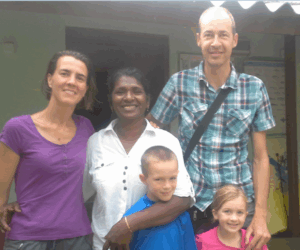
Sri Kumari my Late Partner

YouTube link

This is a video of a Adivasi dance.  I watch it often.  One of my partners (late) looks like the tall woman on the left.   The video

My partner Kumari of about 10 years passed before she got to 50.  Diabetic complications

Her name Dona Chitrangani Sri Kumari
Sri Kumari another name for Kali.
Name was given because her parents made a vow at Muneshwaram Kovil to Kali get a child.

Her parents were killed by the LTTE when she was about 14 (1990 or so).  When Kumari and I came here to this village, it was only then Kumari realized her parents had been killed by the LTTE nearby

Kumari was tall for a Sri Lankan woman, about 5’7″

Economies of UP and Bihar

In the rankings of major Indian states based on per capita income, UP and Bihar have been occupying the last two places for quite a while. Their per capita incomes are approximately half and one third of the national average, which has sparked considerable discussion lately. While most people focus on usual suspects like overpopulation and corruption, some argue that the absence of coastlines also plays a significant role. This idea has appeared in this blog several times, and I will offer my two cents.

On the surface, the argument seems reasonable, given that both Bihar and UP are non-coastal states and many coastal states are doing extremely well. However, a closer look reveals a lack of empirical evidence to support this claim. To begin with, the correlation between higher per capita income and having a coastline is relatively new. Back in 1990, of the eight major coastal states, only Maharashtra was performing exceptionally well. Gujarat was above average, while Karnataka, Kerala, Tamil Nadu, Andhra Pradesh, and Bengal were either average or slightly below. Orissa, on the other hand, was quite poor. This suggests that it was economic liberalization, rather than the mere presence of coastlines, that primarily fueled the growth in South India.

The correlation between coastal status and economic performance appears even more spurious when we examine other non-coastal states. There are eight large non-coastal states with populations exceeding 20 million, excluding UP and Bihar. Their combined per capita income is almost same as the national average. In fact, two of these states, Telangana and Haryana, rank among the top three. If being landlocked is indeed such a significant disadvantage, why doesn’t it similarly impact these other non-coastal states?

Let’s explore the coastline related industries further. India’s blue economy, which includes sectors like coastal tourism, fisheries, shipping, and offshore energy, constitutes only about 4 percent of the country’s GDP. Given that coastal states account for 55 percent of India’s GDP, it’s evident that coastlines aren’t as impactful economically as one might assume. The transport sector in India represents roughly 5 percent of the GDP, but a significant part of this involves passenger and local freight transport. The part consisting of transport between port and non-coastal states is relatively small, and the extra burden is equivalent to a tax of less than 5 percent on all imported or exported goods.

So one could probably argue that if UP and Bihar were coastal, their per capita incomes might be 5-10 percent higher. However, this doesn’t change the big picture.

BP may have just jumped the shark

In the never-ending saga of BP, we may have just hit one of the more outlandish claims:

“Like I said, I’m not defending his comments. I wouldn’t have made them.

Regardless of any provocation, calling someone ‘subhuman’ and ‘neanderthal’ is not on—especially when those words are used by a Brahmin. It’s casteist.”

I’m fully in favour of interrogating caste. But the idea that the twice-born must exercise an extra layer of self-censorship before using a generic insult is excessive. An insult is an insult; attaching caste-specific moral disclaimers to ordinary online behaviour doesn’t clarify anything. It just adds ritual guilt where none is needed.

I support the critique of caste bias, but my fundamental sympathies are with Dharmic civilisation; precisely because Dharma is pluralistic enough to allow a hundred flowers to bloom. That pluralism should extend to how we discuss caste, not collapse into moral policing tied to someone’s birth category.

Mid-Nov Circular

Dear all,

With everything going on in the last 48 hours, we wanted to send a short note to everyone directly. BP has sputtered back to life in the past year, and with that revival comes all the familiar subcontinental pathologies: everyone believes they’re right, everyone believes moderation is biased, and everyone believes someone else is being unfair. In that sense, BP is working exactly as it always has.

We want to restate something very clearly: we’re not going to run a hyper-moderated blog. It takes too much time, too much energy, and, crucially, it’s an unfunded mandate. Nothing is more dispiriting than a dead space. Our approach has been simple and consistent:

1. Authors control their own threads.

If things escalate on your post, you shut it down when and where you see fit. That’s the cleanest system and the only one we can realistically sustain.

2. No bans, shadow bans, or entrapment games.

Once we go down the path of micro-policing, BP loses its character. That’s not the direction we want to take.

3. We do not manufacture controversy.

If anything, the only thing we are biased toward is what the audience reads and engages with. That’s it. Everything else is noise.

Reflections:

Some of you will have seen the recent exchanges where accusations were thrown in both directions, and where intentions were questioned. Without going into details: this is exactly how online political communities melt down; by assuming the worst in each other and by escalating minor provocations into existential battles. It’s the same pattern we saw a couple of years ago at a public talk by Rahul Gandhi in Cambridge: someone asked a loaded, “gotcha” question, the out of context reply went viral, people got outraged, and the whole thing became a cycle of reaction and overreaction. We’re drifting into the same dynamic.

Let’s not.

BP works only when people post, comment, disagree, and move on. If that stops, the blog dies. And as Omar’s recent post highlighted, we want authors to write more, not less.

So our simple request is this: Calm down, carry on, manage your own threads, and do not fall prey to the outrage factory.

If you feel strongly about a situation, reach out; if you want more balance, we’re happy to add an additional admin to offset the load (BP’s editorial board already functions with more factions than the Lebanese Parliament); if something crosses a line, handle it on your post. But let’s not turn BP into a miniature Whitehall where everything becomes bureaucratised. We’ve done extremely well this past year. Let’s keep the energy without burning down the house.

Warmly.

Brown Pundits